
Reviewed · COOKING CLASSES
Traditional Portuguese Cooking Class in Lisbon
Lisbon’s food culture makes more sense once you have chopped, stirred, fried, and tasted your way through it. This three-hour class brings you into a modern, friendly kitchen to prepare a four-course Portuguese meal, with pastel de nata and local drinks included.
I like the small maximum of 10 people, which gives you a real chance to handle ingredients rather than watch a chef work. I also like the relaxed teaching style, with instructors such as Miguel, Beatriz, Pedro, Teresa, and Rita guiding the group through recipes while sharing food traditions and personal stories.
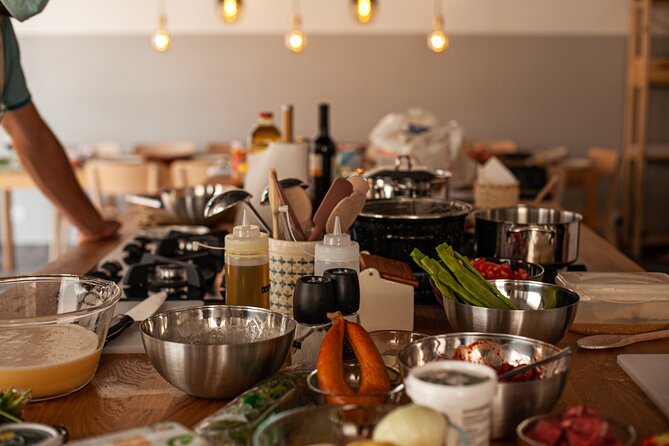
The main thing to understand is that this is a family-style cooking session, not a formal culinary school. You may help with part of a dish rather than cook every recipe from start to finish, and the kitchen can feel lively when two groups share the space.
In This Review
- Key points at a glance
- What the Lisbon cooking class is really like
- Starting with drinks, snacks, and Portuguese food customs
- Preparing starters that explain Portuguese cooking
- Sharing the work on the main course
- The pastel de nata moment
- Eating together after the cooking
- The instructors and teaching style
- Is $102.84 a fair price?
- Morning lunch or evening meal
- Who should book this class?
- Should you book Homecooking Lisbon?
- FAQ
- How long does the Portuguese cooking class last?
- Where does the class begin?
- Where does the activity finish?
- Is the class offered in English?
- How many people can join the class?
- Is the menu the same for every class?
- Will I make pastel de nata?
- Are drinks included?
- Can children drink alcohol during the class?
- Can I cancel for a full refund?
Key points at a glance
- Four-course Portuguese meal: Prepare a selection of classic starters, mains, and desserts, then eat together.
- Pastel de nata included: Make the famous custard tart using pre-prepared puff pastry.
- Seasonal menus: The dishes change during the year, so the listed sample menu is not guaranteed.
- Wine and snacks: Portuguese wine, beer, soft drinks, water, juices, tea, and finger foods are provided.
- Small-group teaching: The class has a maximum of 10 people, with morning and evening options.
- Useful location tip: The meeting point is at R. Aliança Operária 54, and you should check the exact venue carefully before setting out.
What the Lisbon cooking class is really like

Homecooking Lisbon’s class is built around one simple idea: food is a better way to meet Portugal than a lecture. You spend about three hours preparing a meal, learning basic techniques, hearing why dishes matter, and sitting down to eat what the group has made.
The class is offered in English, so you can follow the instructions without needing cooking vocabulary in Portuguese. You do not need to be an experienced cook. The instructors are described as patient and encouraging, and the recipes are explained step by step rather than left to guesswork.
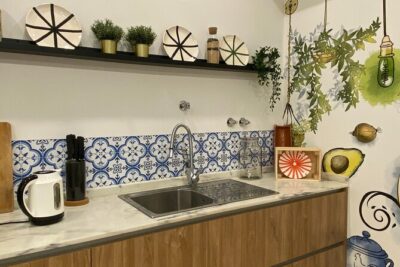
The setting is part of the appeal. The kitchen and dining area are modern, clean, and inviting, with enough room for a small group to work without feeling packed in. The class is not in the center of Lisbon, so allow time to reach the address at R. Aliança Operária 54, 1300-049 Lisboa. Public transportation is nearby, and one family found it easy to take a taxi there and a bus back into the center.
There is one practical wrinkle: one booking was given the address for a different location. Check the exact meeting point with the company before you leave, especially if you see more than one Lisbon venue connected with the class.
More Cooking Classes in Lisbon
- Lisbon: Pastel de Nata Baking Class
★ 4.9 · 2,106 reviews - Lisbon: Traditional Portuguese Cooking Class
★ 4.9 · 592 reviews - Lisbon: 2-Hour Pastel de Nata Cooking Class
★ 4.8 · 461 reviews
Starting with drinks, snacks, and Portuguese food customs
The session begins with drinks and finger foods, giving you something to enjoy while the kitchen gets organized. Portuguese wine and beer are included, along with non-alcoholic choices such as water, juice, and tea.
This is more than a nice extra. A cooking class can feel rushed if everyone arrives hungry and immediately gets assigned a task. The opening snacks make the mood easygoing and give you time to meet the people sharing your worktable.
Alcohol is not served to anyone under 18. Those participants receive water, juice, or tea instead. The class also includes Portuguese liqueurs to sample after the meal according to one account, though the central drink offering is wine, beer, and soft drinks.
The social side matters here. You might arrive alone, with a partner, or with a family group and still find a natural way to take part. One solo participant particularly appreciated how the shared work encouraged conversation. The format is communal, so it suits people who enjoy a little company rather than a quiet, private lesson.
Preparing starters that explain Portuguese cooking
The sample menu includes several possible starters: caldo-verde, pica-pau, and amêijoas à Bulhão Pato. These give you a useful introduction to different parts of Portuguese cooking.
Caldo-verde is a comforting soup, traditionally associated with potatoes and finely sliced greens. It shows how a few simple ingredients can produce a dish with a strong place in Portuguese home cooking.
Pica-pau is a small-bite dish often built around seasoned meat. It fits the class well because it can be shared while everyone is still working.
Amêijoas à Bulhão Pato, clams cooked with garlic and coriander, bring a clear taste of Portugal’s connection with the sea. The dish is especially useful for understanding how a short list of fresh ingredients can carry a recipe.
You should not expect to prepare every starter listed above. The menu changes with the season, and the cooking team chooses ingredients when they are at their best. A bean and chorizo stew such as Feijoada Transmontana is not likely to appear in the hottest part of summer, for example.
That seasonal approach is a good sign for food quality, but it means you should not book solely for one particular dish. If Bacalhau à Brás or clams are the reason you are interested, ask the provider what is planned for your date.
Sharing the work on the main course
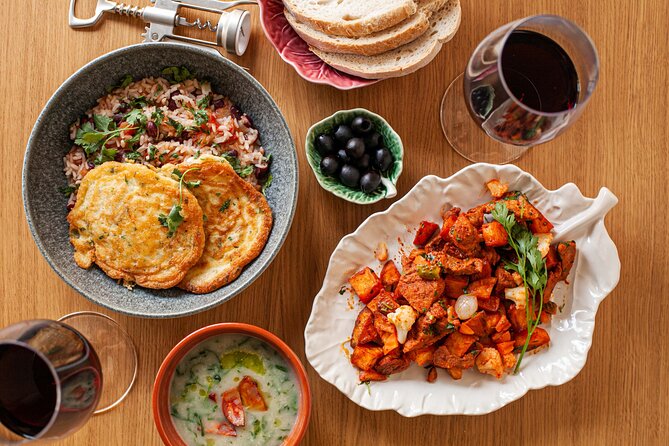
The main-course possibilities include Bacalhau à Brás, pataniscas de bacalhau, carne de porco com amêijoas, and migas with pork ribs. Cod appears often in Portuguese cooking, and this class gives you a chance to see it used in more than one way.
Bacalhau à Brás combines salt cod with potatoes and egg in a dish that is both homey and distinctive. Pataniscas are cod fritters, offering a different texture and a more hands-on preparation. Pork with clams shows the Portuguese habit of pairing land and sea ingredients in one plate.
Migas with pork ribs bring another regional style to the table. The sample dishes can also include eggs, potatoes, rice, beans, or other familiar Portuguese ingredients depending on the seasonal menu.
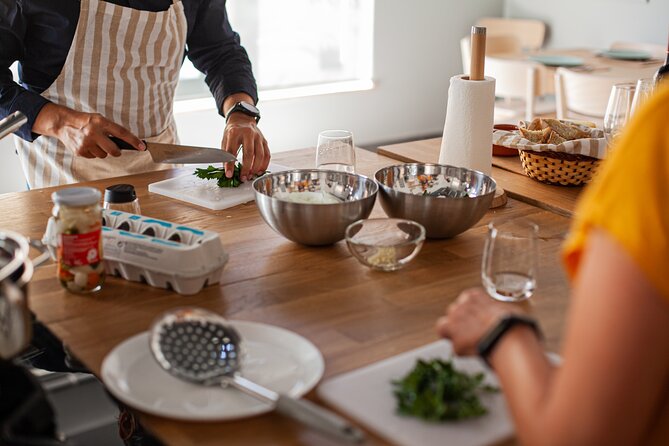
The cooking is organized as a shared meal. You may chop vegetables, mix batter, prepare a sauce, or work on another part of the menu while someone else handles a different dish. This keeps the session moving, but it also explains why you will not necessarily learn every recipe in full.
I see this as a strength if you want a social cultural activity. You will help produce a proper meal and learn the logic behind several dishes. If you want to master each recipe independently, the class may feel less complete. Recipes are provided afterward by link, which helps you recreate the meal at home.
Some people may find the first part a little chaotic because several dishes are being prepared at once. Once everyone understands the rhythm, the work becomes more natural. The instructor guides the group without doing everything for you, so you still have a meaningful role.
A different kind of day out, same corner of Portugal:
- Lisbon City Center Tour – The Unmissable Lisbon
★ 5.0 · 22,234 reviews - Lisbon: Sintra, Pena, Regaleira, Cabo da Roca & Cascais
★ 4.7 · 19,656 reviews - Sintra: Pena Palace and Park Entrance Ticket
★ 4.2 · 17,410 reviews - Lisbon: Jerónimos Monastery Entrance Ticket
★ 4.1 · 14,164 reviews
The pastel de nata moment
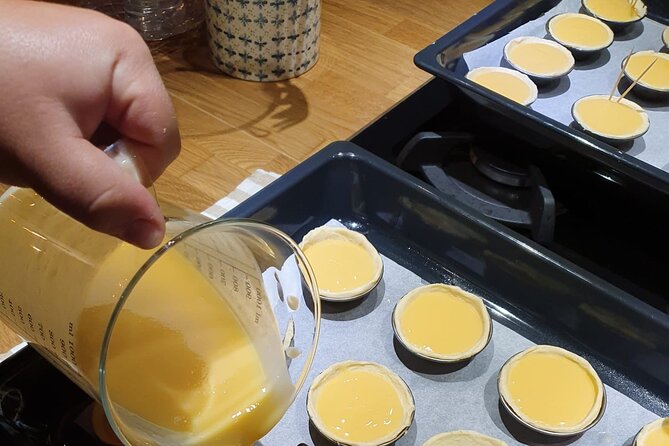
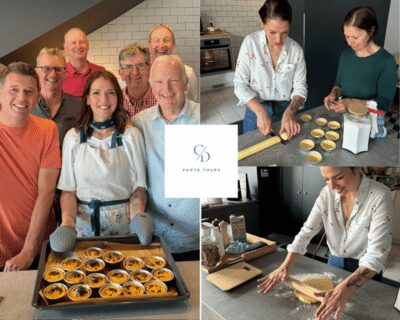
Pastel de nata is likely to be the part many people anticipate most. You prepare and bake the custard tart using pre-prepared puff pastry.
That detail matters. You are learning the filling and baking process, but you are not making laminated pastry from raw dough. This keeps the class within three hours and makes the task manageable for beginners, but serious pastry students should keep their expectations in check.
Still, making the dessert yourself gives you a better sense of how the tart comes together than simply buying one at a bakery. The class also offers other possible desserts, including arroz doce, a Portuguese rice pudding, and torta de laranja, an orange roll.
Again, the dessert is seasonal or menu-dependent. Pastel de nata is specifically part of the experience, while the other sweets are sample possibilities. If the tart is your priority, this is the one dish most clearly tied to the advertised class.
Eating together after the cooking
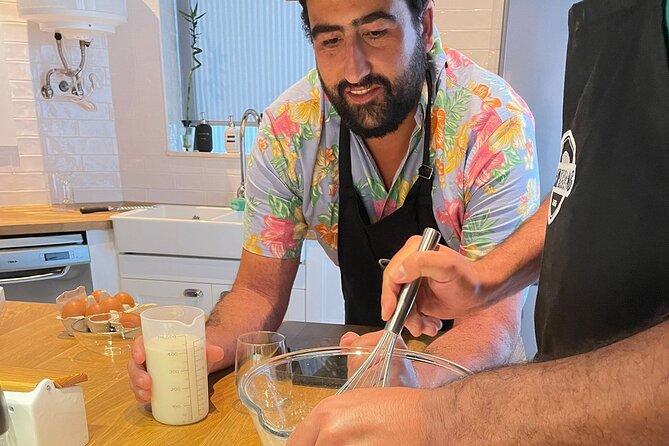
Once the food is ready, the group eats family style. This is where the class shifts from instruction to shared meal, and it gives you time to taste the results without being hurried out.
The meal can include several dishes made by different people, so you get a broad sample of Portuguese flavors. Wine and beer remain available for adults, with soft drinks and water for everyone else.
I like this arrangement because it turns cooking into a social evening rather than a series of isolated demonstrations. You can compare how each dish turned out, ask follow-up questions, and hear more about Portuguese food and culture.
The tradeoff is control. You do not choose every dish, and portions are shared across the table. If you have strict dietary needs, allergies, or strong dislikes, the supplied details do not promise special adaptations, so contact Homecooking Lisbon before booking.
The instructors and teaching style
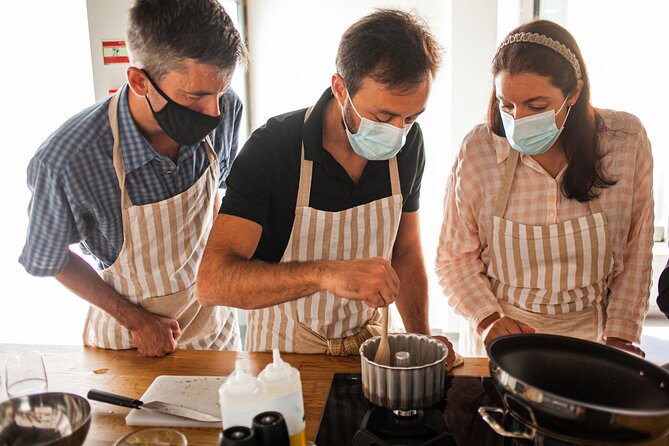
The named instructors connected with this class include Miguel, Beatriz, Pedro, Teresa, and Rita. Your chef will depend on the date, so you should not assume a particular person will lead your session.
The teaching style is friendly and personal. Beatriz is described as using family stories and amusing details to explain the food, while Miguel is noted for clear demonstrations and an easy manner with children. Pedro is praised for teaching traditional dishes in a memorable, low-stress way.
Teresa’s approach is especially suitable for mixed groups. She makes sure everyone feels included, even when the shared preparation gets busy. Rita and her team are described as warm and well organized.
The common thread is participation. The chef guides rather than takes over, and the class is not presented as a rigid technical course. That makes it a good fit for beginners, couples, families, solo participants, and people who simply want a tasty activity on a Lisbon visit.
Children as young as 10 and 12 have taken part successfully with their families. The class is also suitable for adults with little kitchen experience. A serious home cook may find the loose, family-style format less demanding than expected, but that is part of its character.
Is $102.84 a fair price?
At $102.84 per person, this is not a cheap meal. You are paying for instruction, a full cooking session, a four-course menu, snacks, drinks, the venue, and the chance to meet other people.
The value is strongest if you would otherwise book a food tour and a restaurant meal. Here, you get an activity plus dinner, and you leave with recipes and a better understanding of the dishes on Lisbon menus.
The price is less compelling if you want a private lesson, a highly technical pastry course, or complete control over the menu. The class is communal, and you may only prepare parts of certain dishes.
With a maximum of 10 participants, the cost also buys a reasonable level of access to the instructor. That small scale is important. In a large class, you might spend most of the time watching. Here, you are more likely to chop, stir, season, and help plate the meal.
The high overall rating and 97 percent recommendation suggest strong satisfaction, but I would still judge the purchase by the format. Book it for food, company, and cultural context, not just for a restaurant-quality dinner.
Morning lunch or evening meal
You can choose a morning or evening start. A morning session works well as a lunch activity and may suit families or anyone who wants a relaxed afternoon afterward.
The evening class has a more natural dinner-party feel, especially with wine, shared dishes, and dessert. It may be the better choice if you want the cooking session to replace an evening meal.
The listed duration is about three hours, so leave room around it rather than scheduling a museum or show immediately afterward. Cooking times can vary, and the point is to enjoy the process rather than race through it.
Who should book this class?
I would recommend it to you if you want to understand Portuguese food by making it. It is a strong choice for:
- First-time visitors who want more than restaurant recommendations
- Families with older children
- Solo visitors who enjoy meeting people through food
- Couples looking for a shared activity
- Beginner cooks who prefer clear guidance
- Anyone keen to make pastel de nata
I would be more cautious if you need a private setting, a strict dietary plan, or advanced cooking instruction. The menu changes, the work is shared, and two groups may sometimes use the same space, creating extra noise.
Cancellation is free up to 24 hours before the start time for a full refund. Changes or cancellations within 24 hours are not accepted for a refund. The class also requires good weather and a minimum number of participants, so a cancellation by the provider can result in another date, another activity, or a full refund.
Should you book Homecooking Lisbon?
Yes, if you want a friendly, hands-on introduction to Portuguese cooking with a full meal at the end. The small group, included drinks, seasonal ingredients, and capable instructors make the $102.84 price reasonable for a three-hour food activity.
Before booking, check the exact location and ask which menu is planned for your date. If you are comfortable sharing tasks rather than cooking every dish alone, this is one of the better ways to connect Lisbon’s food with its everyday culture.
FAQ
How long does the Portuguese cooking class last?
The class lasts approximately three hours.
Where does the class begin?
The meeting point is R. Aliança Operária 54, 1300-049 Lisboa, Portugal.
Where does the activity finish?
The activity ends back at the meeting point.
Is the class offered in English?
Yes. The experience is offered in English.
How many people can join the class?
The class has a maximum of 10 participants.
Is the menu the same for every class?
No. Menus change seasonally, so the sample dishes are not guaranteed for every date.
Will I make pastel de nata?
Yes. Preparing and baking pastel de nata is included, using pre-prepared puff pastry.
Are drinks included?
Yes. Portuguese wine and beer are included for adults, along with non-alcoholic drinks such as water, juice, and tea.
Can children drink alcohol during the class?
No. Alcoholic drinks are not served to participants under 18. Water, juice, or tea are available instead.
Can I cancel for a full refund?
Yes. You can cancel at least 24 hours before the start time for a full refund. Cancellations or changes made less than 24 hours before the start time are not refunded or accepted.
More Workshops in Lisbon
- Pastel de Nata Pastry Class: Bake and Enjoy Your Own Treats
★ 5.0 · 485 reviews - Lisbon Portuguese Cooking Class with 3-Course Dinner
★ 5.0 · 445 reviews - Lisbon: Azulejos’ Design Create Your Own Tile Workshop
★ 4.9 · 420 reviews - Lisbon: Surfing Lesson on Costa de Caparica Beach
★ 5.0 · 322 reviews
Recently reviewed around Lisbon
- Lisbon: Catamaran Luxury Sunset and Wine Tour★ 5.0 · 119 reviews
- Lisbon’s authentic Food and Wine tour with a Winemaker★ 5.0 · 67 reviews
- Morning Sailing Tour in Tagus River from Lisbon★ 5.0 · 68 reviews
- Lisbon: Belem Walking Tour with Jeronimos Monastery Tks Included★ 5.0 · 115 reviews
- PRIVATE Unforgettable Full Day Tour to Sintra from Lisbon★ 5.0 · 236 reviews
- Discover Lisbon’s Alfama: Secrets of the Old Town★ 5.0 · 104 reviews
- Sesimbra Wild Beach Tour from Lisbon★ 5.0 · 57 reviews
- Private Jeep Tour from Lisbon – Arrábida, Sesimbra & Beach Picnic★ 5.0 · 48 reviews
Cooking Classes, compared.

Pastel de Nata Cooking Class with Grandma’s Recipe
Read our review →
Pastel de Nata Cooking Class with Port Wine – Sé
Read our review →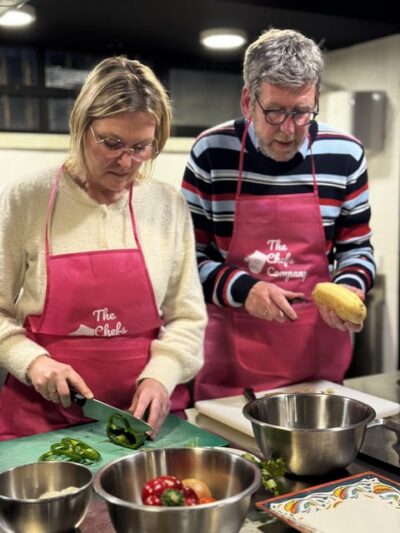
Lisbon Portuguese Cooking Class with 3-Course Dinner
Read our review →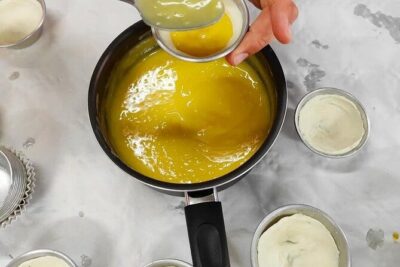
Pastel de Nata Cooking Class with Porto Wine (Sé do Porto)
Read our review →Browse the lists this tour appears in