Reviewed · LISBON TOURS
Discover Lisbon’s Alfama: Secrets of the Old Town
Lisbon’s old center makes the most sense on foot, and this walk links the city’s grand Rossio square with the steep lanes of Alfama. You’ll hear stories about earthquakes, destruction, churches, castles, and local legends rather than simply ticking off monuments. The route finishes near Lisbon Cathedral, a useful spot for lunch.
I like the small booking price and the chance to step inside Igreja de São Domingos, where the building itself carries scars from Lisbon’s past. I also like the human touch: Valeria is praised for her warm manner and clear knowledge of Lisbon’s story. The catch is important, though: the $3.62 payment is not the full expected cost, since a €10 to €20 contribution to the guide is requested at the end.
In This Review
- Key points at a glance
- From Rossio Square into old Lisbon
- Teatro Nacional Dona Maria II from the outside
- The scarred walls of São Domingos Church
- São Jorge Castle and the hill above Alfama
- Alfama stories, legends, and Lisbon’s earthquakes
- What the $3.62 price really means
- Timing, meeting point, and the finish near the cathedral
- Who will get the most from this walk
- Should you book Discover Lisbon’s Alfama walk?
- FAQ
- How long does the Alfama walking tour last?
- Where does the tour start?
- Where does the tour end?
- Is São Jorge Castle admission included?
- Is there an extra payment for the guide?
- Can I cancel for a full refund?
Key points at a glance
- Walk from Rossio to Alfama: Start in Praça do Rossio and cross from central Lisbon into the old town on foot.
- São Domingos Church inside visit: Spend time inside one of Lisbon’s most memorable churches and hear its unusual history.
- Earthquake stories included: The guide explains how earthquakes and other destruction shaped the city.
- São Jorge Castle from outside: Learn about the castle hill and its long human occupation without paying an entry fee on this tour.
- Finish by Lisbon Cathedral: End near restaurants, making the walk easy to pair with lunch.
- Budget with a clear tip note: The low upfront price is followed by a suggested €10 to €20 contribution to the guide.
From Rossio Square into old Lisbon
The walk begins at Praça do Rossio, officially Praça Dom Pedro IV, one of Lisbon’s key central squares. This is a practical starting point because it puts you close to public transportation and gives the route a clear sense of movement. You begin in the heart of the modern city, then work toward the older quarter and its hilltop landmarks.
The first stop takes about 20 minutes. Expect an introduction to the route and to several important parts of central Lisbon before the group turns toward Alfama. This opening matters because Alfama is easier to understand when you first see how it connects to the city around it.
You are not being dropped beside one famous building and rushed away. The appeal is the gradual change in streets, buildings, and atmosphere as the walk moves east. The exact streets between the listed stops are not specified, so you should think of this as a guided orientation walk rather than a fixed museum-style tour with every minute mapped out.
The group can include up to 100 people. That is a generous maximum for a walking tour, and the experience may feel less personal if the departure is full. On the other hand, the open-air route does not depend on a small interior space, and the guide can keep the walk moving through the city.
Other Lisbon days travellers weigh against this one:
- Lisbon City Center Tour – The Unmissable Lisbon
★ 5.0 · 22,234 reviews - Lisbon: Sintra, Pena, Regaleira, Cabo da Roca & Cascais
★ 4.7 · 19,656 reviews - Sintra: Pena Palace and Park Entrance Ticket
★ 4.2 · 17,410 reviews
Teatro Nacional Dona Maria II from the outside
The next pause is at Teatro Nacional Dona Maria II, with about 10 minutes set aside to see the theater from outside. This is a short stop, but it helps explain the role of Rossio as more than a place to take photographs.
You will hear about the theater and its place in Lisbon, while the building provides a strong architectural marker early in the walk. Since there is no interior visit, this section suits you if you want context without spending time in a performance venue.
Do not book this tour expecting lengthy access to every attraction. The theater is an exterior stop, and São Jorge Castle is also covered from outside. That keeps the price low and allows the guide to cover more ground, but it means you will need a separate castle visit if entering the grounds is a priority.
This balance is one of the tour’s main trade-offs. In two and a half hours, you get a useful introduction to several landmarks. You do not get full admission experiences at each one.
The scarred walls of São Domingos Church
Igreja de São Domingos is the most distinctive stop because you go inside. The visit lasts about 15 minutes, enough for the guide to point out the church’s history and unusual details before the walk continues.
This is where the tour’s focus on destruction becomes especially useful. Lisbon’s past is not presented as a polished string of pretty facades. The guide discusses earthquakes and damage, and São Domingos gives that subject a physical setting. Look closely at the interior rather than expecting a perfectly restored church.
The church visit also breaks up the outdoor walking. That matters on a hot day, during light rain, or simply when you want more than views from the street. Admission is listed as free, so there is no separate entrance charge included in the tour price.
Valeria receives specific praise for being pleasant, easy to talk to, and well prepared on Lisbon’s past. A guide with that sort of relaxed delivery can make a short church visit work well. You can ask questions without the stop feeling like a formal lecture.
Still, 15 minutes is brief. If São Domingos is one of your main interests, you may want to return on your own and spend more time looking at the building. The walk gives you the story and the first look, not a long study visit.
São Jorge Castle and the hill above Alfama

The route then reaches Castelo de São Jorge, one of Lisbon’s best-known landmarks. The tour discusses the castle and its hill, but the stop is outside and admission is not included. The planned time is about 15 minutes.
The hill has a very long record of human occupation, reaching back to at least the eighth century BC, while fortifications on the site date to the first century BC. That context gives the castle more weight than a simple medieval photo stop. You are looking at a strategic height that has mattered for centuries.
The castle’s position also helps explain Alfama. From this part of Lisbon, the old quarter spreads down the slope toward the river. The route’s emphasis is on the place and its story, not on entering the castle walls.
If you want to tour the castle interior, climb its ramparts, or spend time with the views from within, plan a separate visit and budget for its entry fee. The walk is better for deciding if the castle deserves that extra time. It gives you the historical frame without turning the experience into a castle admission tour.
Because the tour is on foot and Alfama is hilly, this is the point where your fitness level matters most. The supplied guidance calls for moderate physical fitness. Wear shoes you can walk in comfortably, and remember that you may be moving uphill and over uneven streets even though no exact gradient or distance is provided.
A different kind of day out, same corner of Portugal:
- Lisbon: Jerónimos Monastery Entrance Ticket
★ 4.1 · 14,164 reviews - Lisbon: History, Stories and Lifestyle Walking Tour
★ 4.8 · 10,902 reviews - Lisbon: Sunset Boat Party Cruise with DJ and Open Bar
★ 4.5 · 10,378 reviews - Lisbon: Pena Palace, Sintra, Cabo da Roca, & Cascais Daytrip
★ 4.7 · 9,981 reviews
Alfama stories, legends, and Lisbon’s earthquakes
The title promises Alfama’s secrets, and the strongest part of that promise is the spoken storytelling. The guide includes intriguing stories and legends, along with an explanation of earthquakes and destruction in Lisbon’s past.
That combination gives you two ways to read the old town. Legends provide color and local character. Earthquake stories explain why parts of Lisbon look the way they do and why the city’s buildings, streets, and churches cannot be understood only through dates and names.
I especially like this approach for a first day in Lisbon. You get a basic map in your head, hear the larger story of the city, and finish with enough information to choose where to return. A good walking guide does not need to show you every corner. The real value is helping you notice more when you walk alone later.
The experience is offered in English. An expert local guide leads the walk, though the available information does not promise a particular guide for every departure. Valeria is one named guide associated with the experience, and her friendly, easy-to-talk-to style is a useful sign for anyone who prefers conversation over a stiff presentation.
The route’s storytelling focus also means you should not expect a detailed architectural seminar or a long stop at every landmark. The walk has several short visits, so the guide must keep the pace steady. Ask questions when you can, but allow the group to move on.
What the $3.62 price really means
At first glance, $3.62 per person looks almost impossibly cheap for two and a half hours with a local guide. It is an excellent entry price, but you need to read the cost correctly. A contribution of €10 to €20 for the guide is not included.
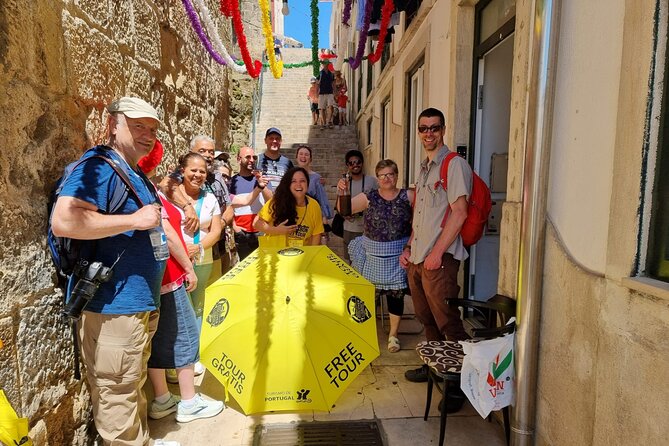
The experience is described as a free walking tour model, with the small amount paid at booking and a tip requested at the end. One review explains that participants were told the tour was free on arrival and asked to tip because the guide’s payment was tied to the number of people on the walk.
That explanation may surprise you if you think you have already paid for a standard fixed-price tour. I would treat the contribution as part of the expected cost, not as a completely optional afterthought. Depending on the amount you give, the total is closer to a low-cost guided experience than a $3.62 activity.
Even so, the value can be good. For roughly the cost of a casual snack plus the guide contribution, you receive about 2.5 hours of orientation, local stories, a church visit, and a route through some of Lisbon’s central landmarks. There are no transport tickets or alcoholic drinks included, but you do not need transportation during the walking route.
The model works best if you appreciate flexibility. You pay a modest upfront amount, listen to the tour, and decide what the guide’s work was worth within the suggested range. If you dislike unclear pricing, go in prepared with euros and understand the contribution before you arrive.
Timing, meeting point, and the finish near the cathedral
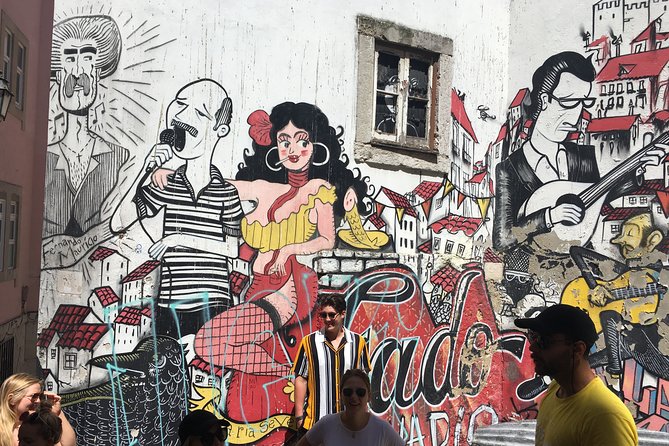
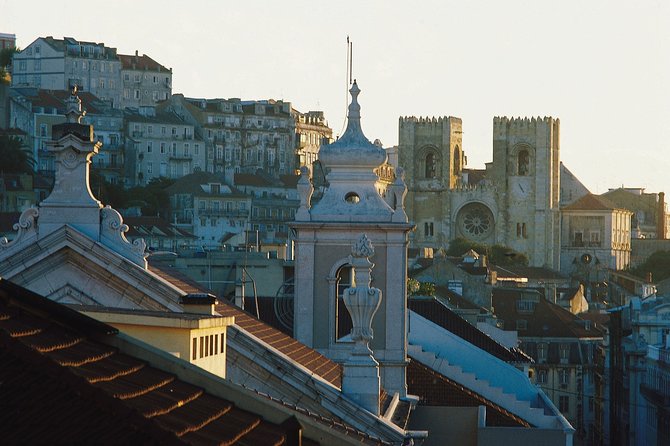
The walk begins at Praça do Rossio and ends at Lisbon Cathedral, also called Sé de Lisboa, in Largo da Sé. The end point is useful because restaurants are nearby, making it easy to continue with lunch instead of losing time finding your bearings.
The stated duration is approximately two hours and 30 minutes. Stops account for about an hour altogether, so the remaining time covers walking, explanations, and the movement between locations. Allow a little extra time around the scheduled finish if you have a reservation immediately afterward.
The experience is available with a mobile ticket, and confirmation is received at booking. It is near public transportation, though no transport ticket is included. You should arrange your own way to Rossio and keep your phone available for the booking details.
The route requires good weather. If poor weather cancels the walk, you are offered another date or a full refund. There is also a minimum number of participants, so a cancellation for low enrollment can lead to another date, another experience, or a refund.
Free cancellation is available until 24 hours before the start time. A cancellation inside that window is not refunded, and changes made inside it are not accepted. That is a fair policy, but it rewards early planning.
Who will get the most from this walk
This is a good fit if you want a first look at Lisbon’s old center without paying for several separate admissions. You will get the most from it if you enjoy stories, short landmark stops, and a guide who can connect the city’s disasters with the places still standing.
It also suits people who want to keep the rest of the day open. After the walk, you can eat near the cathedral, return to São Domingos, or decide if São Jorge Castle deserves a paid visit. The route gives you choices instead of filling your entire day with one attraction.
The tour is less suitable if you want a slow, small-group experience with long time inside monuments. A maximum of 100 participants is allowed, and the castle and theater are exterior stops. You should also reconsider if steep walking is difficult for you, since the tour calls for moderate fitness and covers Alfama’s hilly area.
Families, solo visitors, and first-time Lisbon visitors can all use this as a city orientation, provided they are comfortable walking for about two and a half hours. Since the tour is in English, you should be able to follow spoken explanations in that language.
Should you book Discover Lisbon’s Alfama walk?
Book it if you want a low-cost introduction to Lisbon’s old quarters, enjoy local legends, and value a guide’s explanation more than paid entry into every monument. The inside visit to São Domingos Church and the earthquake stories give the route more substance than a simple photo walk.
Go in with realistic expectations. Your real cost includes a suggested €10 to €20 guide contribution, the group may be large, and São Jorge Castle is viewed from outside. Bring comfortable shoes, plan for hills, and leave room around the two-and-a-half-hour schedule.
For a first morning or afternoon in Lisbon, I think this is a sensible choice. It helps you get oriented, puts Alfama’s landmarks into context, and finishes near food and public transportation. If you want an intimate tour or full castle access, choose a different experience. If you want useful stories and a practical first walk through the old city, this one earns its strong rating.
FAQ
How long does the Alfama walking tour last?
The walking tour lasts approximately two hours and 30 minutes.
Where does the tour start?
The tour starts at Praça do Rossio, also known as Praça Dom Pedro IV, in Lisbon.
Where does the tour end?
The tour ends near Lisbon Cathedral at Largo da Sé 1. Restaurants are available nearby for lunch.
Is São Jorge Castle admission included?
No. The castle is covered from outside, and no castle admission is included.
Is there an extra payment for the guide?
Yes. A contribution of €10 to €20 to the guide is not included in the booking price.
Can I cancel for a full refund?
Yes. You can cancel at least 24 hours before the experience start time for a full refund. Cancellations or changes made less than 24 hours before the start are not refunded.
Recently reviewed around Lisbon
- Lisbon: Catamaran Luxury Sunset and Wine Tour★ 5.0 · 119 reviews
- Lisbon’s authentic Food and Wine tour with a Winemaker★ 5.0 · 67 reviews
- Morning Sailing Tour in Tagus River from Lisbon★ 5.0 · 68 reviews
- PRIVATE Unforgettable Full Day Tour to Sintra from Lisbon★ 5.0 · 236 reviews
- Lisbon: Belem Walking Tour with Jeronimos Monastery Tks Included★ 5.0 · 115 reviews
- Sesimbra Wild Beach Tour from Lisbon★ 5.0 · 57 reviews
- Private Jeep Tour from Lisbon – Arrábida, Sesimbra & Beach Picnic★ 5.0 · 48 reviews
- Lisbon Daytime & Sunset Tradicional Boat Tour Sightseeing Cruise★ 5.0 · 82 reviews
Lisbon Tours, compared.
Lisbon City Center Tour – The Unmissable Lisbon
Read our review →
Sintra, Pena, Regaleira, Cabo da Roca & Cascais
Read our review →

Sunset Boat Party Cruise with DJ and Open Bar
Read our review →
Pena Palace, Sintra, Cabo da Roca, & Cascais Daytrip
Read our review →