
Reviewed · HISTORICAL TOURS
Lisbon: History, Stories and Lifestyle Walking Tour
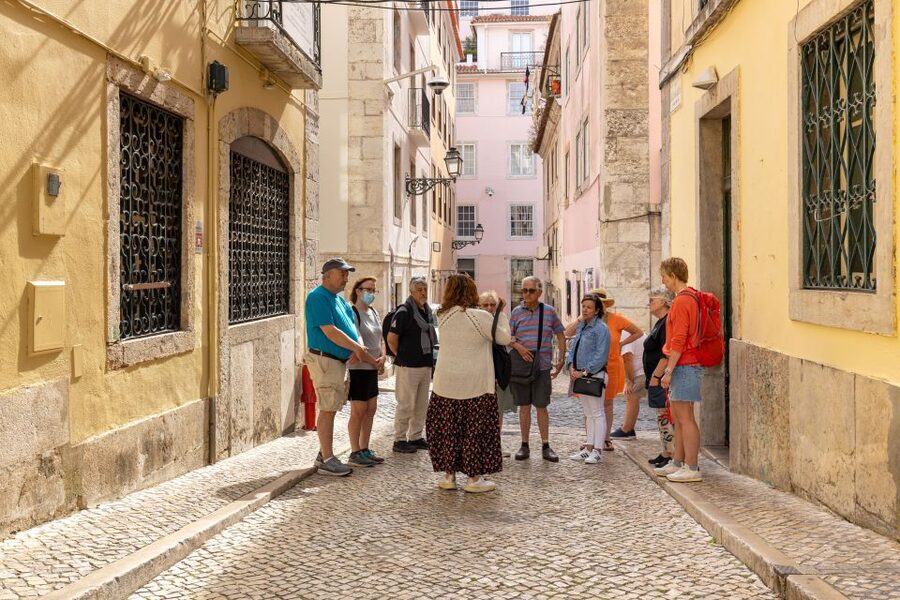
Lisbon’s hills make a good walking tour especially useful, and this one links the city’s best-known viewpoints, old quarters, churches, and political landmarks in three hours. You move from Bairro Alto to Alfama, with a classic tram ride and a coffee-and-pastry break along the way.
I like the mix of major sights and local stories, especially the 1974 Carnation Revolution at Carmo and the personal touch some guides bring from growing up in Lisbon. I also like the small-group option and the simple extras: a tram ticket, coffee, and pastel de nata are included.
The catch is the terrain. Lisbon is hilly, with uneven streets, stairs, and plenty of walking, and the tram can be delayed or disrupted. The tour is taken at a relaxed pace, but you should still wear good shoes and leave some spare time afterward.
In This Review
- Key points to know before booking
- Why this three-hour route works in Lisbon
- Bairro Alto and the city’s changing shape
- São Pedro de Alcântara and the first big view
- San Roque Church, small details inside
- Carmo convent and the story of 1974
- Santa Justa and the Baixa grid
- Baixa, a short break, and a taste of Lisbon
- The tram ride to Portas do Sol
- Portas do Sol and the eastern old quarters
- Alfama, fado, festivals, and narrow lanes
- Lisbon Cathedral and a useful finish
- The guides make the biggest difference
- Is $29 good value?
- Who should book this walking tour?
- Should you book it?
- FAQ
- How long does the Lisbon walking tour last?
- What is included in the price?
- Which languages are available?
- Does the tour include a tram ride?
- Is this a private tour?
- Can I cancel for a full refund?
Key points to know before booking
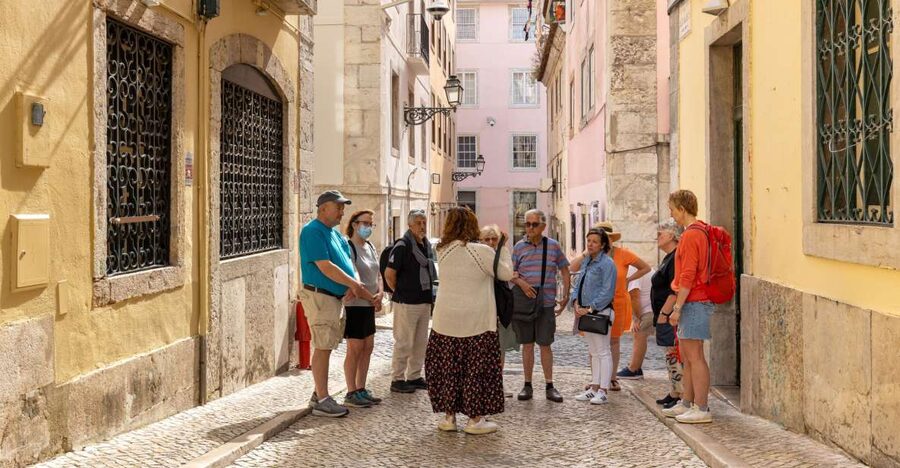
- A five-century-old starting point: Begin in Bairro Alto, a district shaped by Lisbon’s growth and rebuilt after the 1755 earthquake.
- Two excellent viewpoints: See Baixa and the Tagus from São Pedro de Alcântara, then take in Alfama and the river from Portas do Sol.
- A real Lisbon tram ride: The route includes a ride through the old quarters, not just a photo beside a tram.
- History beyond monuments: Carmo connects the city’s medieval past with the Carnation Revolution of 1974.
- A useful first-day orientation: The route covers several central districts, helping you decide where to return later.
- Good value at $29: Three hours, a live guide, tram ride, coffee, and cake make this a strong introduction to Lisbon.
Why this three-hour route works in Lisbon
Lisbon is not a city you understand from one grand square. Its story is spread across steep streets, tiled façades, church interiors, lookout points, and neighborhoods that still feel separate from one another.
This tour gives you a broad first look without trying to cover every major attraction. You walk through Bairro Alto, descend toward Carmo and Baixa, ride a tram toward the old eastern quarters, and finish in Alfama at Lisbon Cathedral.
That route matters because it shows how Lisbon changes as you move through it. The upper districts feel residential and layered. Baixa is more open and orderly, shaped by rebuilding after the 1755 earthquake. Alfama is tighter, older, and more tangled, with lanes leading toward the Tagus.
I would use this tour early in a Lisbon stay. It helps you get your bearings fast, while the guide’s suggestions can point you toward places to revisit for food, music, museums, or evening walks.
The tour lasts three hours, though guides may run slightly over when questions and conversation are flowing. Keep a little space in your schedule rather than booking a timed attraction immediately afterward.
More Historical Tours in Lisbon
- Lisbon: Live Fado Show with Port Wine in Historic Center
★ 4.7 · 4,166 reviews - Lisbon: Fado Show with Wine in a Historic Venue
★ 4.8 · 1,294 reviews - Explore Lisbon by Tuk Tuk: History and Viewpoints
★ 5.0 · 840 reviews
Bairro Alto and the city’s changing shape
The tour begins in Bairro Alto, which dates from the 16th century. Today, many people know it for nightlife, but its older importance comes from how it grew as Lisbon expanded beyond the medieval core.
The guide uses the district to explain the city’s development and the effect of the 1755 earthquake. Families moved from damaged parts of Baixa and nearby districts, and the area became part of Lisbon’s long rebuilding process.
This is a useful opening because it puts the neighborhood into context before you start collecting isolated facts. You are not just seeing a maze of streets. You are seeing one chapter in the city’s move from medieval town to modern capital.
The mood can change quickly here. A quiet lane may sit close to a busy street, and the district’s evening reputation may not be obvious during a daytime tour. That contrast is part of the appeal, though people wanting a purely calm walk may find the central streets lively.
São Pedro de Alcântara and the first big view
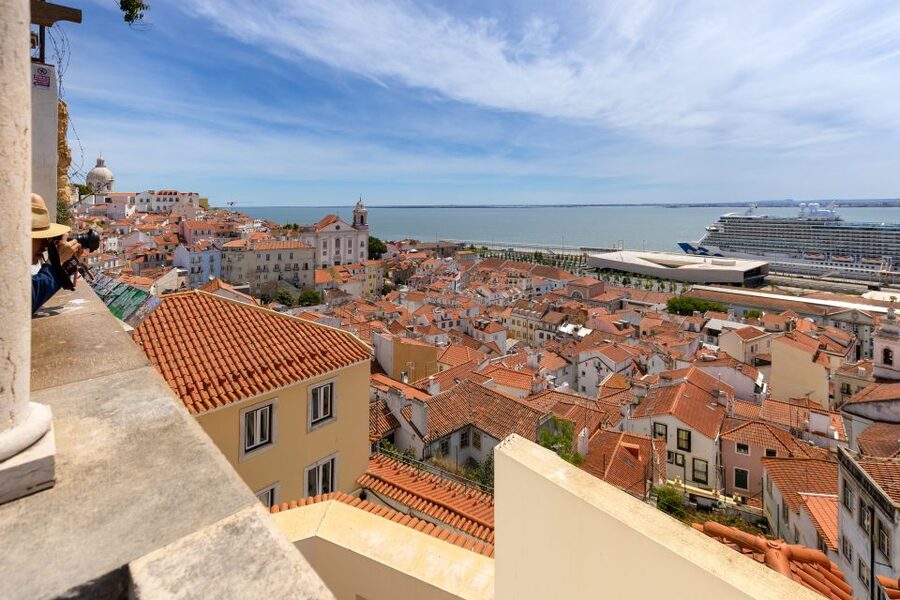
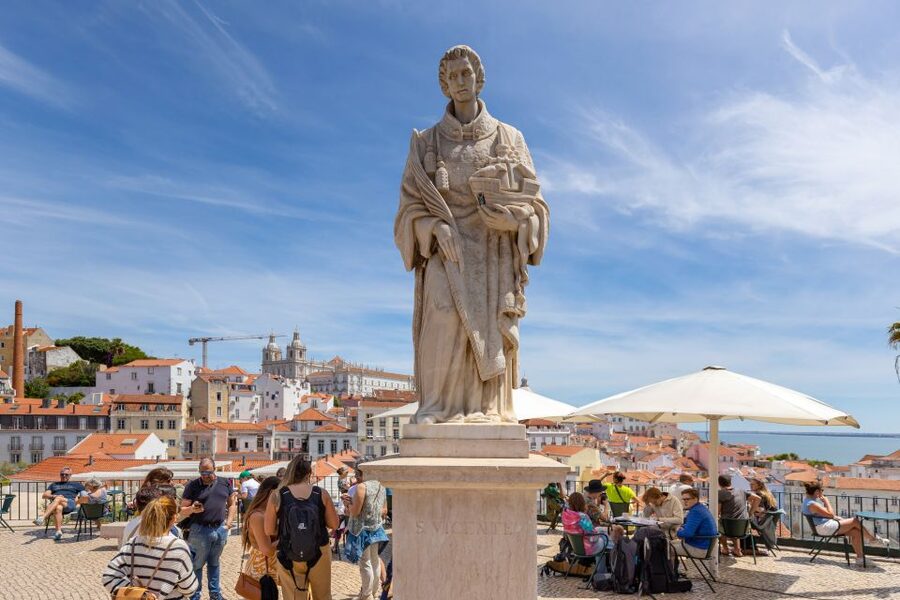
The route passes through the garden at Miradouro São Pedro de Alcântara. This is one of the stops where the city suddenly opens up, giving you a view across Baixa toward the south bank of the Tagus.
A good guide will help you read the view rather than simply point a camera at it. You can connect the lower city, the river, and the hills around you, then understand why Lisbon’s lookouts are such a central part of daily life.
I especially like this stop early in the tour. After walking through dense streets, the broad view gives you a mental map of the city. It also creates a natural pause, so the walking does not feel like a nonstop march from monument to monument.
The viewpoint is still exposed to weather. Wind and rain can make this stop less comfortable, so carry a light waterproof layer in cooler months. One guide, Anna, adapted the route with good humor when heavy rain and a tram problem changed the original plan, but weather can still affect what you see and how long you linger.
San Roque Church, small details inside
San Roque Church has an austere exterior, but its interior is far more decorated. Jesuits built the church, and inside you see gilding, tiles, and paintings linked to Mannerist and Baroque art.
This is the kind of stop that benefits from a guide. Without some explanation, you might register a dark, highly decorated church and move on. With context, you can pay attention to the contrast between the plain façade and the richly worked interior.
It also gives the tour some variety. You are not only walking through streets and viewpoints. You get a chance to step indoors, slow down, and look closely at Lisbon’s religious and artistic traditions.
Church visits require a little flexibility. The route description includes the church, but access and timing can be affected by services or local conditions. The supplied information does not promise an extended interior visit, so treat the stop as part of the route rather than as a full museum tour.
More Walking Tours in Lisbon
- Best of Lisbon Small-Group Guided Walking Tour
★ 5.0 · 4,869 reviews - Lisbon: Food and Wine Small Group Walking Tour
★ 4.9 · 4,082 reviews - Best of Lisbon Walking Tour: Rossio, Chiado & Alfama
★ 4.9 · 2,700 reviews - Age of Discoveries Walking Tour in Belém
★ 5.0 · 1,513 reviews
Carmo convent and the story of 1974
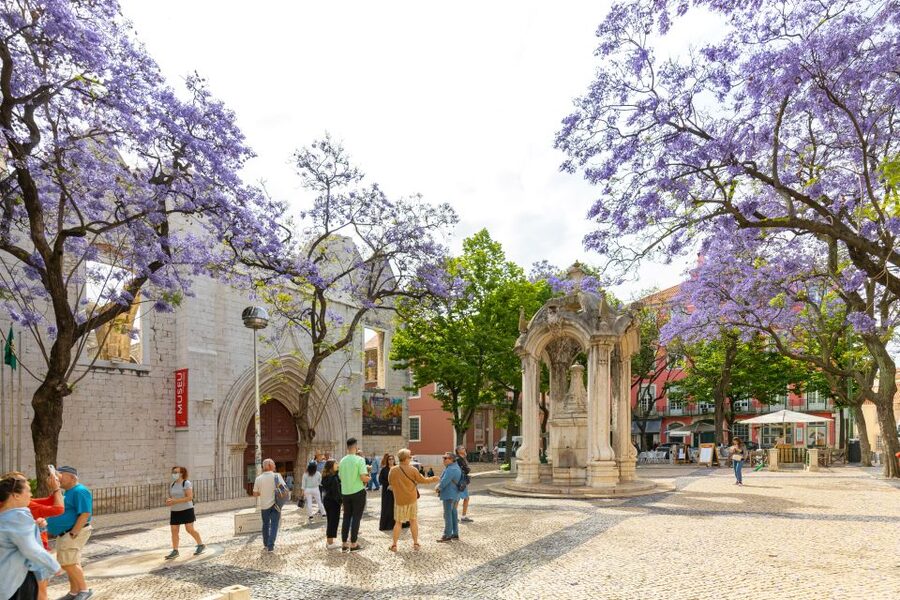
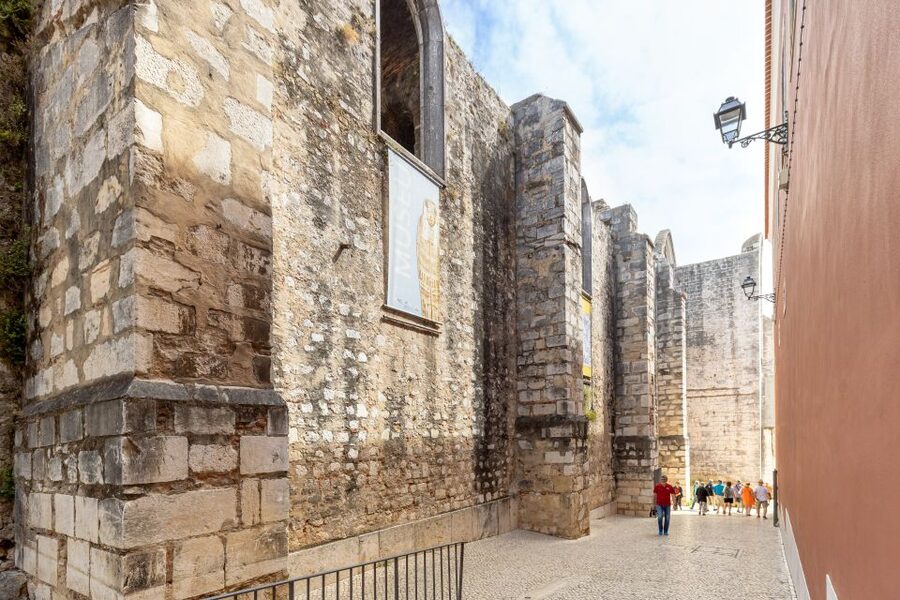
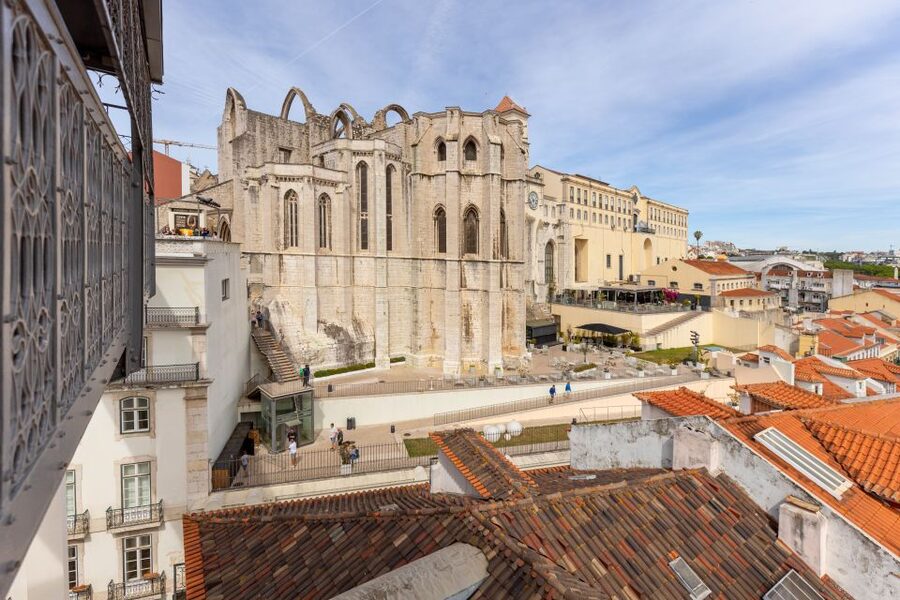
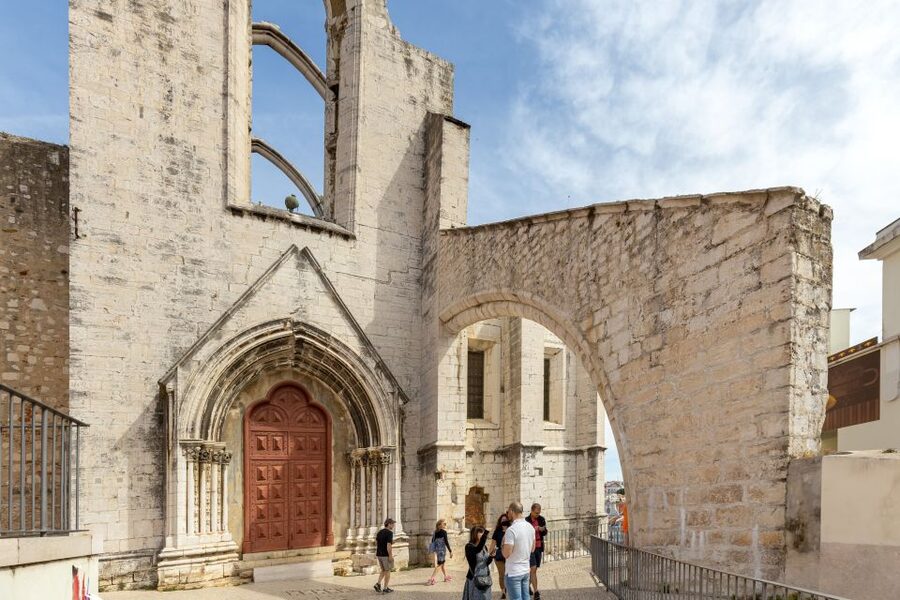
Heading downhill, you reach the Carmo convent and church, among Lisbon’s most memorable Gothic remains. The earthquake damaged the complex, leaving its roofless structure open to the sky.
The site also carries modern political weight. The Carnation Revolution began here in 1974, ending nearly five decades of dictatorship in Portugal.
That pairing makes Carmo one of the strongest parts of the route. You get medieval architecture, earthquake history, and living political memory in one place. The guide can show how Lisbon’s past is not sealed behind glass. It still shapes the streets and the way people talk about the city.
The revolution story is especially valuable for anyone who knows little about Portugal’s 20th-century politics. Several guides, including Paulo, have been praised for making this period personal and clear. Paulo grew up in Lisbon and experienced the revolution as a child, giving him a viewpoint that goes beyond dates and slogans.
You should not expect a long, specialist political lecture. The strength here is the short, human explanation within a wider city tour. If Carmo interests you greatly, plan a separate return visit so you can spend more time with the ruins and nearby attractions.
Santa Justa and the Baixa grid
The Santa Justa elevator appears as you continue toward Baixa. Its Gothic Revival ironwork makes it one of Lisbon’s most recognizable structures, and its upper platform is known for city views.
This part of the walk shows the difference between older Lisbon and the planned lower city. Baixa was rebuilt after the 1755 earthquake with straighter streets and a more orderly layout, a sharp contrast to Alfama’s narrow lanes.
The elevator itself can attract long lines, especially at busy times. This tour takes you to the monument, but the supplied details do not promise a ride on it. If using Santa Justa is high on your list, ask the guide about returning later and check current access conditions.
That distinction is important. You receive a city overview, not entry to every sight along the route. At $29, the value comes from the guide, route, tram ride, and included snack rather than from bundled admissions.
Baixa, a short break, and a taste of Lisbon
In Baixa, the tour pauses briefly. This is a sensible point for a rest because the first section includes hills and downhill walking, and the next section leads into older neighborhoods.
Coffee and cake are included. In practice, the treat is described in the tour experience as a bica, Lisbon’s short espresso, with a pastel de nata. The pastry stop gives you a small but useful look at a daily Portuguese habit rather than another formal sightseeing stop.
I like this detail because it keeps the tour grounded. A cup of coffee and a custard tart do not turn the outing into a food tour, but they add a welcome local ritual and a chance to chat with the guide and group.
Dietary needs may require a quick conversation before or during the stop. One guide arranged a vegan spinach snack for a vegetarian participant, which shows a willingness to adapt, but you should not assume every alternative is guaranteed in advance.
The tram ride to Portas do Sol
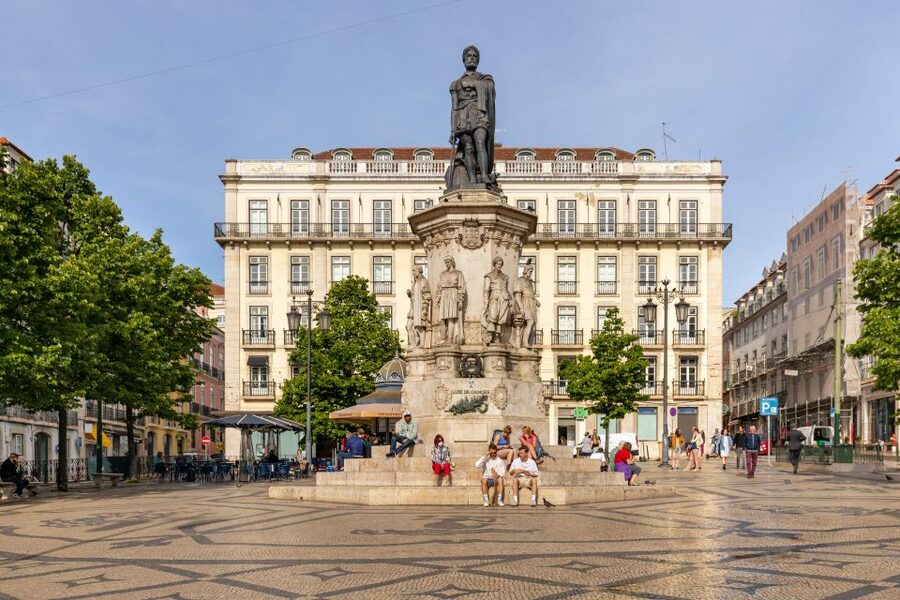
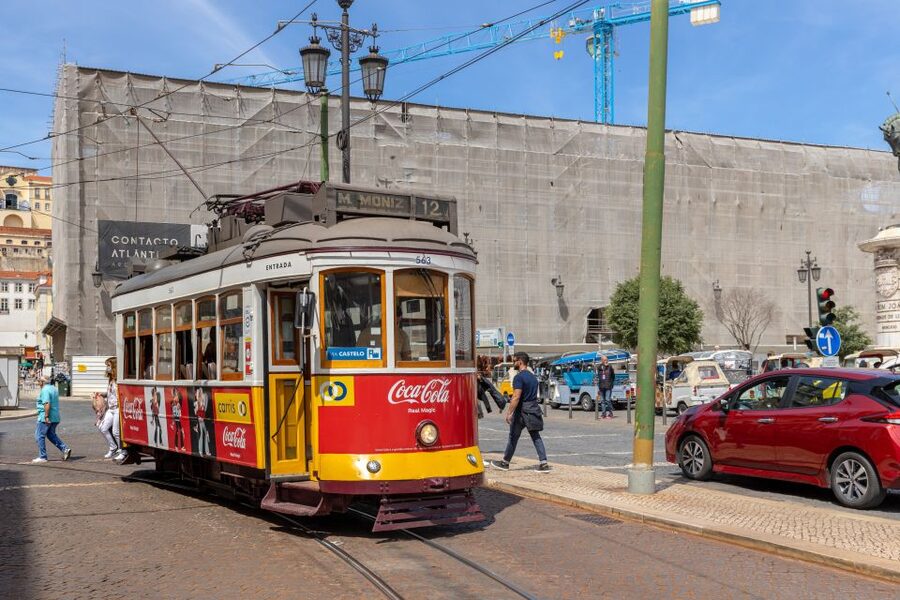
The tram ride is the tour’s most distinctly Lisbon moment. You ride toward the castle area and Portas do Sol, entering the old quarters by public transport instead of simply walking past a parked tram.
The ride is short, but it changes the rhythm of the tour. You get off your feet, see how the city’s hills affect everyday movement, and experience one of Lisbon’s famous transport traditions in use.
There is also a practical warning. Trams can be crowded, delayed, or temporarily out of service. One guide had to alter the route during pouring rain when the tram broke down, yet still kept the day moving. Another guide may make a different adjustment, so consider the tram a valuable part of the plan, not an absolute guarantee.
The route information describes the tram going up from the castle area to Portas do Sol. Your exact meeting point and sequence can vary by booking option, so check the details supplied with your selected departure.
Portas do Sol and the eastern old quarters
At Portas do Sol, the view shifts toward Alfama, the Tagus, and several major landmarks. You can see the Monastery of São Vicente de Fora and the National Pantheon from this part of the city.
Portas do Sol is a strong place to pause because it gives you a sense of Alfama’s position on the hillside. The district drops toward the river in layers, with streets and buildings packed into the slope.
This stop also explains why Lisbon can feel like several cities joined together. You have just seen Bairro Alto and Baixa, and now the architecture, street pattern, and pace begin to change again.
Bring water, even though the tour includes a coffee stop. The combination of sun, slopes, and walking can be tiring, especially in warm weather.
Alfama, fado, festivals, and narrow lanes
Alfama is one of Lisbon’s oldest and most traditional neighborhoods. Its narrow streets run through a dense hillside quarter toward the Tagus, and the district is closely tied to fado houses and the city’s popular saint festivals.
The walking here is the heart of the tour. Alfama is not best understood from a bus window. You need to move slowly through its lanes, notice the changing views, and hear how local customs fit into the neighborhood.
The fado connection adds cultural depth, but this is not a fado performance. You learn about the district’s musical identity and its festivals, particularly celebrations linked to St. Anthony.
Expect uneven pavement, inclines, and steps. One useful point from the experience is that guides tend to stop often and keep a relaxed pace, making the route manageable for people who are not especially fit. Still, manageable does not mean flat. Anyone with mobility concerns should contact the provider before booking and confirm the route for the chosen option.
The small-group setting helps here. Guides such as Beatrice, Ricardo, Anna, and João have been praised for adjusting their pace, answering questions, and keeping the group together. A private option gives you more room to shape the conversation, but the $29 price refers to the standard per-person experience, not necessarily a private booking.
Lisbon Cathedral and a useful finish
The tour ends at Lisbon Cathedral, built in 1150, just three years after the city was taken back from the Moors. The building has changed over time, so its appearance combines several architectural styles.
Ending here makes sense. The cathedral brings together Lisbon’s medieval Christian past, the city’s earlier Muslim period, and the layers of rebuilding that appear throughout the tour.
It is also a practical finish. By the end, you have crossed through several central districts and can decide which ones deserve a longer return visit. Alfama, Carmo, Baixa, and Bairro Alto all offer more than a single pass can cover.
The tour does not include hotel pickup or drop-off, and the meeting point varies with the option booked. Confirm that detail before setting out, especially if you are staying outside the central neighborhoods.
The guides make the biggest difference
The route is strong, but the guide determines how much you take from it. The most praised guides include Paulo, Ricardo, Beatrice, Anna, João, Lucia, Helena, and several others who bring different strengths.
Paulo is a gifted storyteller, with personal memories of Lisbon and the 1974 revolution. Ricardo is especially good for travelers who want a wide sweep from ancient times to present-day Lisbon, along with food suggestions and patient answers.
Beatrice combines humor, history, and careful attention to the group. Anna has shown she can adapt when weather and transport disrupt the plan. João is a good fit if you want a relaxed pace and clear explanations about Lisbon and Portugal.
The guide language options are Portuguese, Spanish, Italian, German, French, and English. Private and small-group formats are available, which can make it easier to ask questions and hear the commentary.
The overall rating is 4.8 from 10,902 reviews, a very strong result for a walking tour. The repeated strengths are clear: guides explain the city well, tell stories with humor, answer questions, and offer useful advice for the rest of your stay.
Is $29 good value?
At $29 per person, this is good value if you want a broad introduction rather than a deep visit to one museum or monument.
You receive three hours with a live guide, a walking route through several important districts, a tram ride, coffee, and cake. Paying separately for a tram and snack would not be the main saving, but they make the package feel complete and add variety to the morning or afternoon.
The bigger value is time. Lisbon’s hills and scattered viewpoints can make independent sightseeing inefficient on a first visit. A guide links the stops and explains why Bairro Alto, Baixa, Carmo, and Alfama feel so different.
The price is less compelling if you dislike group schedules, want to spend a long time inside each church, or already know central Lisbon well. In that case, a self-guided walk may give you more freedom.
Free cancellation up to 24 hours before the start and the option to reserve now and pay later also make it easier to fit into a changing itinerary. Still, confirm your meeting point and allow extra time in case the walk runs over.
Who should book this walking tour?
I would recommend it most strongly to first-time visitors, solo travelers, couples, and anyone who wants history explained without signing up for a full-day excursion.
It also suits people who want a social experience. One solo participant found it a good way to meet others, while small groups of three to eight people have allowed for easy conversation and clear audio.
Families and older visitors may appreciate the frequent stops, but the route is not flat. If you need a fully step-free experience, this is not the safest choice based on the hills, old lanes, and stairs involved.
It is also a good match for visitors with limited time. You will not see every major Lisbon sight, but you will cover enough ground to choose what deserves a second look.
Should you book it?
Book this tour if you want Lisbon’s main central districts tied together by stories, views, and a real tram ride. The strongest reason to go is the human explanation, especially if you get a guide such as Paulo, Ricardo, Beatrice, Anna, or João.
Skip it if you prefer to wander alone, need guaranteed tram service, or want long interior visits at each monument. For most first visits, though, $29 buys a well-paced orientation, a taste of local café culture, and a helpful sense of how Lisbon fits together.
FAQ
How long does the Lisbon walking tour last?
The tour lasts three hours. It can sometimes run a little longer, so leave a time buffer before your next fixed booking.
What is included in the price?
The $29 price includes a live guide, the walking tour, a tram trip, coffee, and cake. Hotel pickup and drop-off are not included.
Which languages are available?
The tour is available in Portuguese, Spanish, Italian, German, French, and English.
Does the tour include a tram ride?
Yes. The route includes a tram ride toward Portas do Sol from the castle area. Tram service can be affected by delays, weather, or breakdowns, so the guide may need to adjust the route.
Is this a private tour?
Private and small-group options are available. The meeting point may vary depending on the option you select.
Can I cancel for a full refund?
Yes. You can cancel up to 24 hours in advance for a full refund. You can also reserve now and pay later.
Recently reviewed around Lisbon
- Portinho da Arrábida: Coasteering Boat Tour★ 4.9 · 78 reviews
- Setúbal: Dolphin-Watching Boat Tour★ 4.8 · 213 reviews
- From Lisbon: Private Óbidos and Nazaré Tour★ 5.0 · 152 reviews
- No Diet Club – Unique food tour in Lisbon with many Tastings★ 4.8 · 44 reviews
- Queluz National Palace & Gardens Ticket★ 4.6 · 447 reviews
- Melides: Horse Riding on the Beach with Wine Tasting★ 4.3 · 117 reviews
- Melides: Horseback Riding on Melides Beach★ 4.7 · 111 reviews
- Lisbon: Street Art Tuk Tuk Tour★ 4.9 · 372 reviews
Historical Tours, compared.

Historical Sites, Wine Experience, Lunch & Cruise
Read our review →
Live Fado Show with Port Wine in Historic Center
Read our review →


Explore Lisbon by Tuk Tuk: History and Viewpoints
Read our review →Browse the lists this tour appears in