
Reviewed · COOKING CLASSES
Porto: Pastel de Nata Cooking Class with Grandma’s Recipe
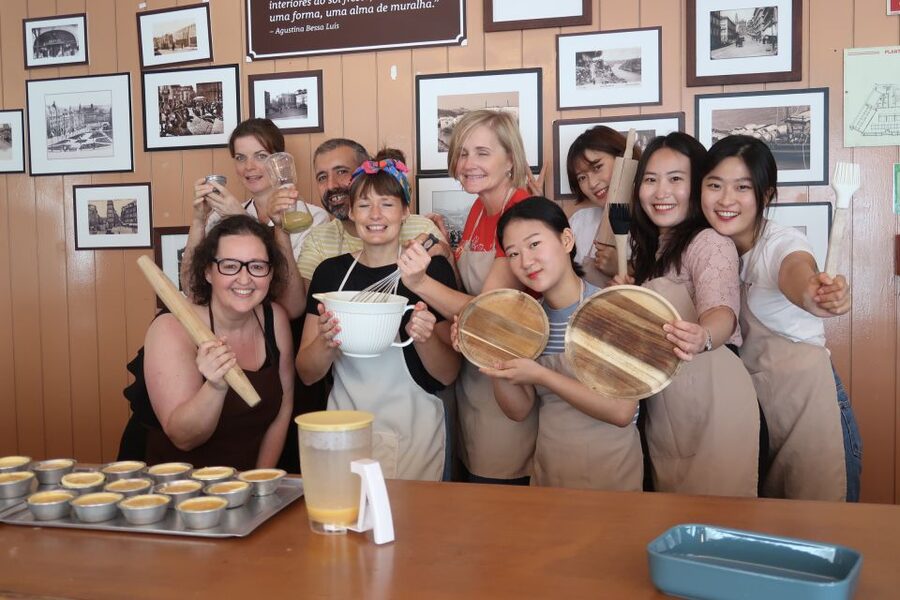
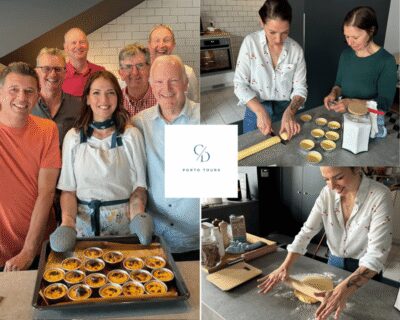
The best part of this Porto cooking class is that you do not simply watch someone shape a tart. Joana welcomes you into her home, divides the work among the group, and guides you through the pastry and custard from scratch using her grandmother’s recipe. The reward is a tray of warm pastéis de nata, crisp on the outside and creamy in the center.
I like the class’s friendly, home-kitchen feel and the fact that everyone gets a turn. I also like that you leave with a recipe and practical skills, not just a sweet snack. The one drawback is its location outside central Porto. It is easy to reach, but you should allow extra time and possibly an Uber or Bolt fare.
In This Review
- Key points at a glance
- Why pastel de nata makes a good Porto class
- Arriving at Joana’s home outside central Porto
- A warm welcome before the baking starts
- Making the dough from scratch
- Preparing the creamy custard
- Baking and tasting the fresh tarts
- What Joana does especially well
- Who will enjoy this class most
- Timing, cost, and useful planning tips
- Should you book Joana’s pastel de nata class?
- FAQ
- How long does the pastel de nata cooking class last?
- How much does the experience cost?
- Where does the class take place?
- How can I reach the host’s home by public transport?
- What is included in the price?
- Is the class taught in English?
- Is the class suitable for wheelchair users?
Key points at a glance
- A real family recipe: Joana teaches from a recipe that belonged to her grandmother.
- Pastry made from scratch: You work on both the dough and the custard, rather than arriving after the hardest steps are finished.
- Small-group cooking: Groups are limited to 10, with rotating tasks so everyone can take part.
- A relaxed home setting: The class takes place in Joana’s bright, neatly prepared apartment kitchen.
- Warm pastries at the table: Coffee, tea, orange juice, and the fresh tarts finish the two-hour session.
- Simple transport planning: The home is about 10 minutes by car from Porto city center, with direct bus and metro options.
Why pastel de nata makes a good Porto class
Pastel de nata is one of Portugal’s most useful food souvenirs. You can eat one in a café in a few minutes, but learning how the layers and custard come together gives you a better sense of why a good tart works.
The pastry needs to bake into thin, flaky layers. The custard must be smooth and creamy without becoming heavy. That sounds simple when you are eating one beside a cup of coffee, but the class shows you the small choices that matter: handling the dough, preparing the custard, and giving the tarts enough care before they go into the oven.
I like this format because it connects food with a person. Joana begins by talking about herself and her family, then moves into the recipe. That personal introduction gives the class a clear sense of place. You are not in a large demonstration kitchen with a chef performing at the front. You are in a local home, learning a pastry tied to family memory.
The class is conducted in English, which makes the instructions easy to follow for English-speaking participants. The tone is relaxed, and the cooking is designed for people with different levels of experience. Several participants with strong baking backgrounds found enough detail to keep them interested, while complete beginners were able to follow along.
More cooking classes in Portugal:
- Lisbon: Pastel de Nata Baking Class
★ 4.9 · 2,106 reviews - Porto: Pastel de Nata Cooking Class with Port Wine – Sé
★ 4.8 · 888 reviews - Lisbon: Traditional Portuguese Cooking Class
★ 4.9 · 592 reviews
Arriving at Joana’s home outside central Porto
The cooking class is held in the Porto area, not in the historic center itself. From central Porto, the home is about 10 minutes away by car, depending on traffic. That short distance can still affect your plans, so do not schedule the class too tightly against a museum visit, train departure, or restaurant booking.
Bolt or Uber is the simplest option. The provided guidance notes that this can be especially fast and affordable for groups larger than two, since you can share the fare. If you drive, free street parking is available.
Public transport takes longer but is practical. From Bolhão, bus 800 or 801 offers a direct trip of about 20 minutes and stops across from the house. Bus tickets can be bought on board with coins, so keep change handy.
From Trindade Station, take the Orange Metro Line directly to Fânzeres. The metro ride takes about 30 minutes, followed by a walk of roughly 700 meters, or about 10 minutes. At the house, ring the bell marked 2 Andar. Joana waits inside to welcome you.
This is not a major hardship, but it is the main practical weakness of the experience. If you are staying in central Porto, the class requires a little planning. The tradeoff is the chance to visit a real residential area and cook in a home rather than in a tourist-facing venue downtown.
A warm welcome before the baking starts
The class begins with an introduction to Joana and her family. This opening matters because it changes the mood from a standard lesson into a shared meal in someone’s home.
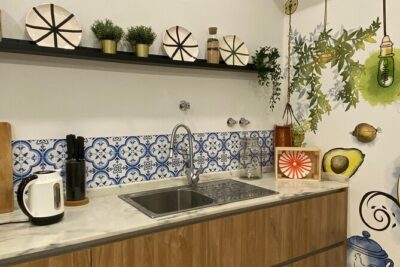
The kitchen is described as cozy, clean, and filled with natural light. The setup is prepared before you arrive, with ingredients and cooking utensils provided. The setting has the personal touches of a home, including music in the background and a carefully arranged table for the final tasting.
You will meet a group of up to 10 people. That is small enough for Joana to help individuals, though it is large enough that you will not personally handle every step at the same time. The class uses a rotating system, and larger groups may work in two teams. This keeps everyone involved while allowing the recipe to move along at a sensible pace.
If you arrive alone, this format can work particularly well. The shared tasks give you an easy way to talk with other people, and the final table setting turns the class into a social meal. If you are visiting with a partner or family, you can also expect to share the kitchen with people from different countries.
Making the dough from scratch
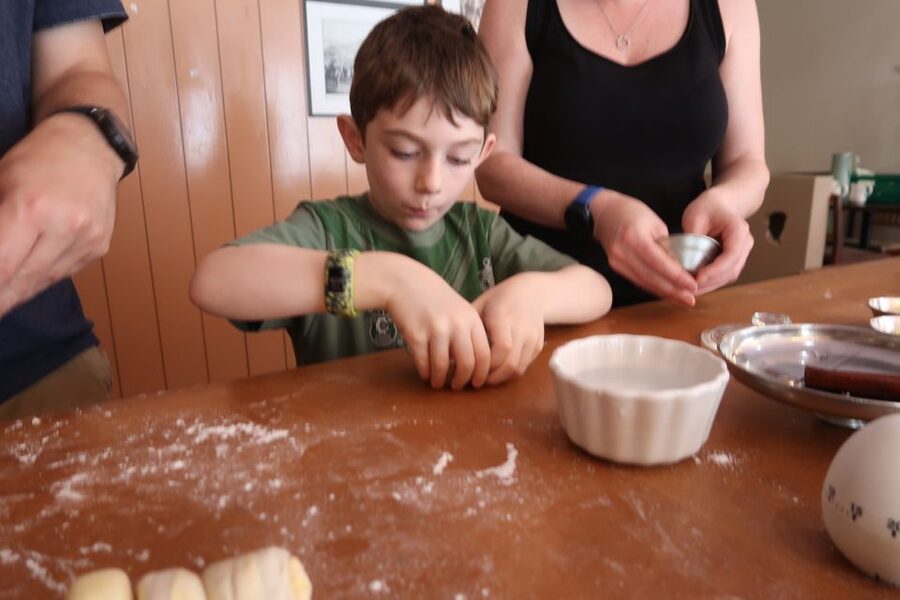
The strongest practical feature of this class is that the pastry dough is part of the lesson. Some cooking classes prepare the pastry in advance and focus only on the custard or assembly. Here, you work through the dough as well as the filling.
Joana explains each stage and demonstrates the techniques before asking participants to take over. You will take turns with the work, which means you can watch closely when someone else is handling a step and then participate when your turn comes.
This approach gives you a better chance of repeating the recipe at home. You may not become a Portuguese pastry expert in two hours, but you will understand the process rather than simply copying a finished shape. The class also leaves you with the family recipe, so the experience continues after you return home.
There is one small limitation. With as many as 10 people and both pastry and custard to prepare, you may not personally perform every part of every stage. One participant noted that covering the full process means there is not enough time for each person to do everything. That is a fair point, but the rotating method is a sensible compromise between participation and keeping the class within two hours.
More Portugal trips worth a second look
- Porto: Pastel de Nata Pastry-Making Workshop
★ 4.9 · 1,542 reviews - Matosinhos: Surfing Lesson with Equipment
★ 4.8 · 704 reviews - Albufeira: Surf Lesson
★ 4.7 · 699 reviews - Porto: Small Group Surf Lesson with Transportation
★ 4.9 · 594 reviews
Preparing the creamy custard
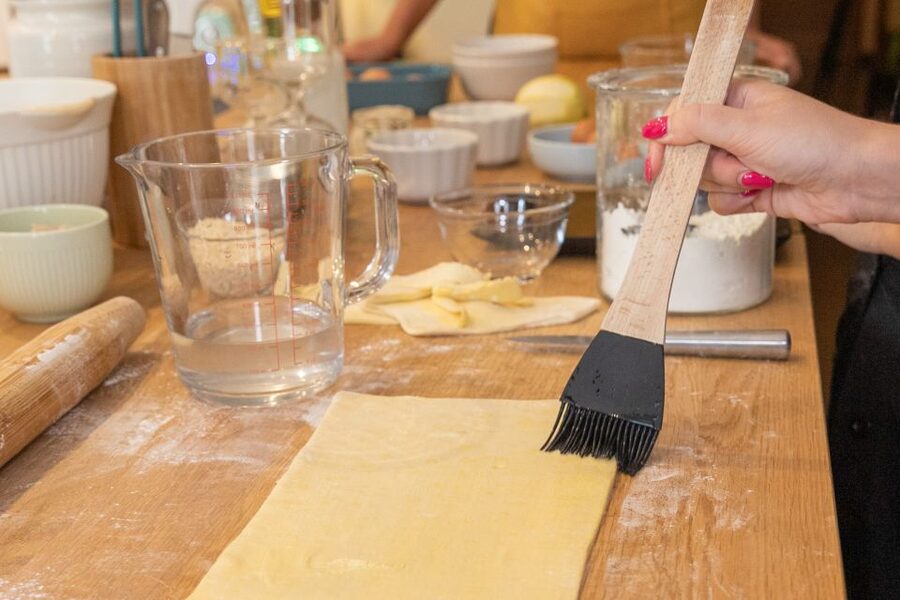
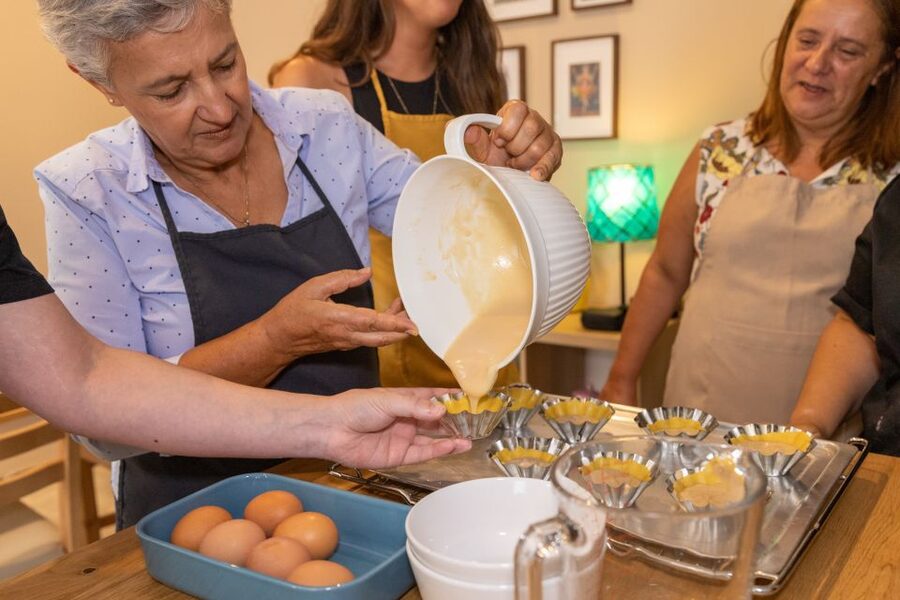
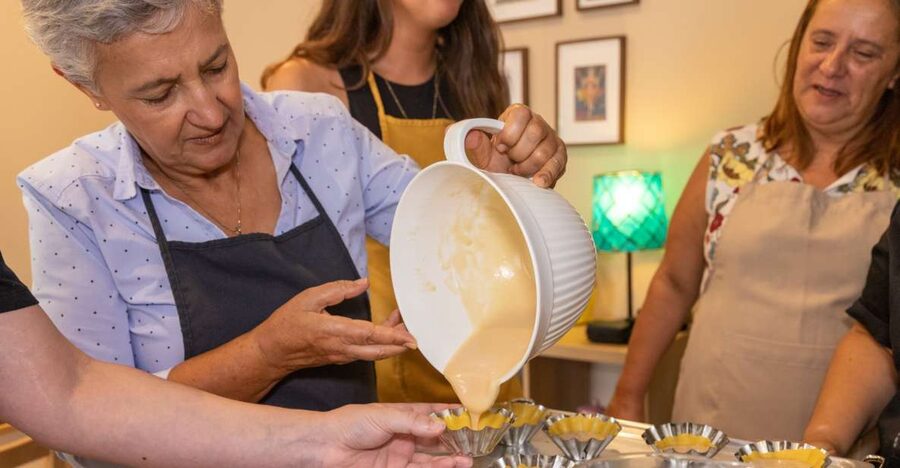
The custard is the other half of the lesson. Joana takes the group through the filling carefully, explaining how the mixture reaches the smooth texture needed for a pastel de nata.
This is where the grandmother’s recipe gives the class its strongest personal identity. You are not just learning a generic Portuguese tart. You are learning Joana’s family version, along with stories and small facts about the pastry and Portuguese food culture.
The class works well for mixed ability levels because Joana is patient and explains the process in clear English. Beginners can follow the sequence without needing prior baking skills. Experienced bakers can pay closer attention to the pastry method and the balance of the filling.
The practical value is high for the price. At $33 per person, you receive ingredients, equipment, instruction, drinks, and the pastries you make. A café visit would cost far less, of course, but it would not teach you how to reproduce the dish or give you two hours of contact with a local host. Compared with a formal cooking school, the price is also modest.
Baking and tasting the fresh tarts
After the pastry and custard are ready, the tarts go into the oven. The final stage is especially satisfying because you can see the result of everyone’s work. The class is built around eating the pastries fresh, while they are still warm.
A good pastel de nata has contrast: crisp, flaky pastry and a soft custard center. The fresh batch lets you notice that contrast more clearly than you might with a pastry that has been sitting in a display case.
The tasting takes place around a prepared table. Coffee, tea, and orange juice are included, and the relaxed meal gives you time to talk with Joana and the rest of the group. This closing is not rushed. It is a chance to ask follow-up questions, compare results, and trade Porto suggestions.
The social finish is one of the experience’s most praised features. The cooking itself brings people together, but the table is where the class feels most complete. You arrive as separate visitors and leave with a shared activity, a recipe, and perhaps a few new contacts.
What Joana does especially well
Joana’s teaching style is central to the experience. She explains the steps clearly, checks that everyone understands, and makes room for beginners without slowing the class to a crawl.
Her patience is useful when the group has mixed experience. A confident baker can work independently for a moment, while someone new to pastry can receive extra help. That balance is not easy in a home kitchen, especially with 10 people, but the rotating system helps.
I also value the personal recommendations that Joana sometimes provides after class. Participants have received suggestions for food and places to visit in Porto. These tips are not the formal product, so you should not book solely for them, but they can be a welcome bonus when you are still planning your time in the city.
The home itself adds to the mood. The apartment is described as beautiful, comfortable, and thoughtfully arranged. Music from a record player, a clean cooking area, and a nicely laid table make the setting feel cared for without turning it into a staged restaurant.
Who will enjoy this class most
I would choose this experience if you want more than a quick food stop in Porto. It suits you especially well if you enjoy cooking, meeting people, or learning about a place through a family tradition.
It is also a good rainy-day plan. The two-hour indoor format gives you a useful break from Porto’s weather and produces something you can eat right away. You do not need to be a baker, and you do not need to arrive with special equipment.
Solo visitors can fit in comfortably because the group activity creates natural conversation. Couples and families can share the work, though children’s participation should be checked directly when booking since no specific age policy is provided.
The class is less suitable if you want a private lesson or a highly technical pastry workshop. A group of 10 means shared turns, not constant individual instruction. It is also not suitable for wheelchair users, according to the activity information.
Timing, cost, and useful planning tips
The class lasts two hours, with starting times based on availability. I would allow extra time around it for transport, finding the entrance, and returning to central Porto.
At $33 per person, the experience offers strong value for anyone who would otherwise pay for a pastry tasting and a separate cultural activity. You get the food, the lesson, the recipe, and the social setting in one visit. The value is weaker only if you are counting every tart as a bargain snack, since cafés will always be cheaper.
Plan your transport before the day of the class. Bolt or Uber is easiest, especially for three or more people. Bus 800 or 801 from Bolhão is direct, but you need coins for the ticket. The metro from Trindade is straightforward, though it combines a 30-minute ride with a 10-minute walk.
Wear something comfortable for kitchen work and arrive ready to take turns. The experience supplies ingredients and utensils, so you do not need to bring baking equipment. Non-alcoholic drinks are included, with coffee, tea, and orange juice served at the end.
The cancellation terms are traveler-friendly: you can cancel up to 24 hours ahead for a full refund. You can also reserve now and pay later, which helps if your Porto schedule is still shifting.
Should you book Joana’s pastel de nata class?
Yes, if you want a personal, practical food experience and do not mind leaving central Porto for a local home. The class earns its price through the from-scratch pastry work, the family recipe, and Joana’s warm instruction.
I would book it early in a short Porto stay, especially if you enjoy food experiences or need a dependable indoor activity. Just build in transport time and understand that a group of up to 10 means shared participation rather than a private tutorial.
If your priority is staying within the city center or buying the cheapest possible pastel de nata, visit a bakery instead. If you want to learn how the pastry is made, meet people around a table, and take home a recipe with a personal story behind it, this is a very good choice.
FAQ
How long does the pastel de nata cooking class last?
The class lasts two hours.
How much does the experience cost?
The listed price is $33 per person.
Where does the class take place?
The class takes place in Joana’s home in the Porto area, about 10 minutes by car from Porto city center.
How can I reach the host’s home by public transport?
From Bolhão, take bus 800 or 801. It is a direct ride of about 20 minutes, and the bus stops across from the house. From Trindade Station, take the Orange Metro Line to Fânzeres, then walk about 700 meters, or 10 minutes.
What is included in the price?
Ingredients, cooking utensils, guided instruction, non-alcoholic drinks, and the pastries are included.
Is the class taught in English?
Yes. The host or greeter speaks English, and the activity is offered in English.
Is the class suitable for wheelchair users?
No. The activity is not suitable for wheelchair users.
Recently reviewed around Portugal
- Bridges Cruise with World of Discoveries or Sunset Option★ 4.0 · 219 reviews
- Porto Card Walker (1, 2, 3 or 4 Days)★ 3.4 · 135 reviews
- Porto: 6 Bridges Yacht Cruise with Local Wine & Snacks★ 5.0 · 399 reviews
- Porto: 5D Flight over de City for all family.★ 4.0 · 281 reviews
- Porto:Aveiro, Cruise, Costa Nova & Capelha da Pedra Full Day★ 4.5 · 434 reviews
- Porto Private E-Bike Tour: Douro River, Parks & Beaches★ 4.7 · 104 reviews
- Porto: 3-Hour Walking City Tour & Lello Bookstore Visit★ 4.7 · 99 reviews
- Porto: 2-Hour City Highlights Guided Segway Tour★ 4.8 · 181 reviews
Cooking Classes, compared.
Pastel de Nata Cooking Class with Port Wine – Sé
Read our review →
Lisbon Portuguese Cooking Class with 3-Course Dinner
Read our review →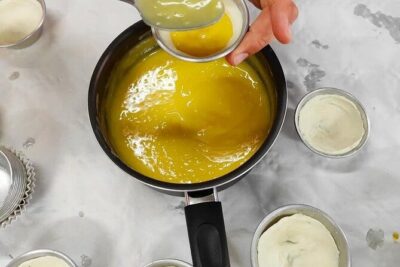
Pastel de Nata Cooking Class with Porto Wine (Sé do Porto)
Read our review →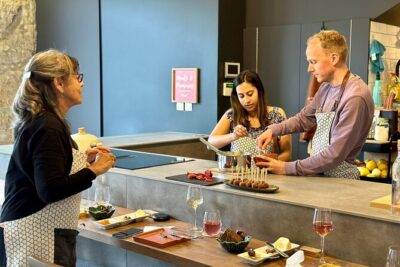
Browse the lists this tour appears in