
Reviewed · SURF LESSONS
Porto: Small Group Surf Lesson with Transportation
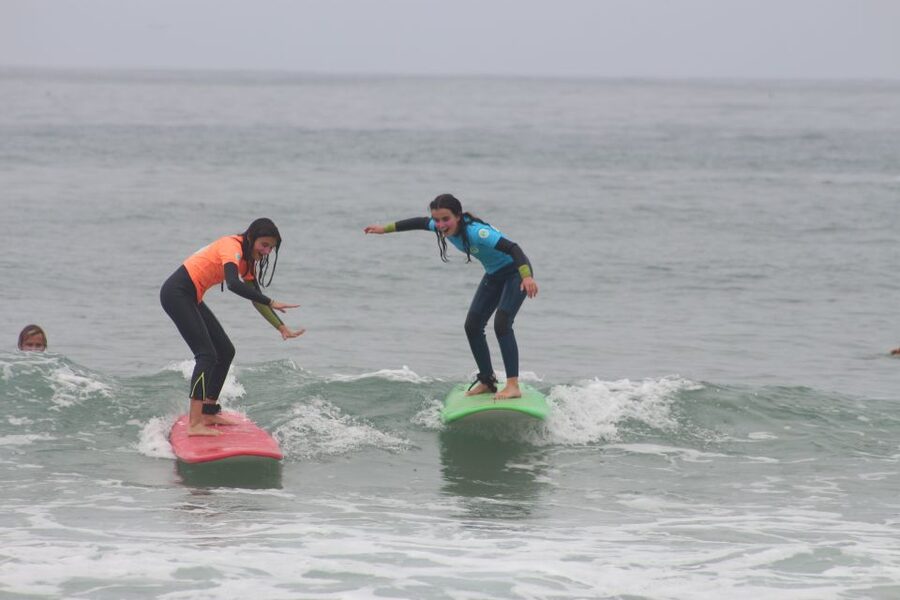
Porto’s best surf lesson is not tied to one beach. The instructor checks the day’s wind and waves, then drives your small group to the coast where beginners have the best chance of getting upright. That weather-led approach, plus patient coaching from instructors such as Igor and Bernardo, gives this outing a practical edge.
I like the small groups of no more than seven, since the instructor can watch you in the water instead of sending you out on your own. I also like the simple all-in price: transport from central Porto, board, wetsuit, and insurance are covered. The main drawback is that this is an ocean activity, not a guaranteed sunshine trip. It runs rain or shine, and rough weather can change the schedule or make the lesson less comfortable.
In This Review
- Key points before you book
- From Aliados to the Portuguese coast
- The beach selection makes a real difference
- What you learn before entering the water
- Your first waves in the Atlantic
- Why a maximum of seven people matters
- The instructors and teaching style
- What the $58 price really covers
- Weather, timing, and practical limits
- Who should book this Porto surf lesson?
- Should you book it?
- FAQ
- Where does the surf lesson meet in Porto?
- How long does the experience last?
- What is included in the price?
- How many people are in the group?
- Which languages are spoken by the instructors?
- What should I bring?
- Can children join the lesson?
Key points before you book
- Beach choice follows the weather: You are driven to the coast with the best available surf conditions, rather than being locked into one beach.
- Beginner-friendly instruction: You learn paddling, standing, and wave timing on the sand before entering the water.
- Small group limit: A maximum of seven people allows for more individual help, especially when you are nervous.
- Everything important is included: Transport, surfboard, wetsuit, and insurance are part of the $58 price.
- Central Porto pickup: Meet the van with boards on top in front of Café Aliança near Aliados.
- Expect real Atlantic weather: Rain, wind, fog, cold water, and small waves are all possible, but instructors work with the conditions.
From Aliados to the Portuguese coast
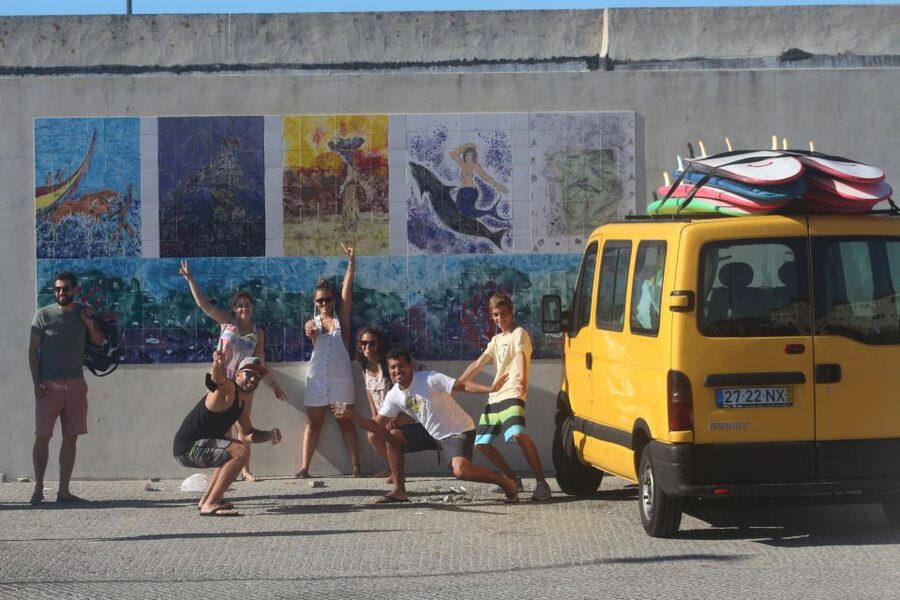
The meeting point is in front of Café Aliança, near the Aliados bus stop in central Porto. Look for the van with surfboards on its roof. This is a useful arrangement if you are staying in the city and do not want to work out local bus connections or carry a board to the beach.
The drive is part of the 3.5-hour schedule, along with the introduction, changing time, warm-up, and water session. That means you should not read the duration as three and a half full hours of surfing. The exact amount of time in the ocean depends on the drive, the beach selected, and the conditions.
The transport also lets the instructor make a sensible call about the day’s surf. A beach that works well in one wind direction may be poor in another. The school may choose a quieter stretch of coast with smaller, easier waves, or a beach with more useful breaks for improving surfers. You are not promised a particular beach, but that flexibility is one of the strongest features of the outing.
Keep your arrival simple. One person reported that participants put on their neoprene suits beside the road, so wear swimwear underneath and avoid complicated clothing. Bring a towel, sunscreen, and water. You will be handling a board, walking on sand, and getting wet, so this is not the time for a bulky day bag.
More Porto trips worth a second look
- Porto: Pastel de Nata Pastry-Making Workshop
★ 4.9 · 1,542 reviews - Porto: Pastel de Nata Cooking Class with Port Wine – Sé
★ 4.8 · 888 reviews - Matosinhos: Surfing Lesson with Equipment
★ 4.8 · 704 reviews
The beach selection makes a real difference
Once the van reaches the coast, the instructor checks the conditions again. The chosen beach may be golden and nearly empty, which can make the lesson feel calmer than a crowded city beach. A quiet beach also gives you room to listen, watch the instructor, and focus on your own board rather than worrying about other surfers.
The setting is part of the appeal. You get time outside Porto, with the Atlantic in front of you and the sound of the water replacing the city’s traffic. Several people have returned for a second or third lesson, partly because different beach locations can make each session feel fresh.
Still, beach selection is not the same as a promise of perfect waves. On one reported outing, the waves were very small, but the instructor helped everyone catch a few. On another, heavy rain and strong wind did not stop the lesson, though they clearly changed the mood and comfort level. If you want a guaranteed postcard afternoon, this is not that sort of activity.
The school’s strength is its ability to work with nature rather than pretend it can control it. The schedule may shift to find better conditions. That can be inconvenient if you have a tightly packed day, but it is the right tradeoff for a surf lesson.
What you learn before entering the water
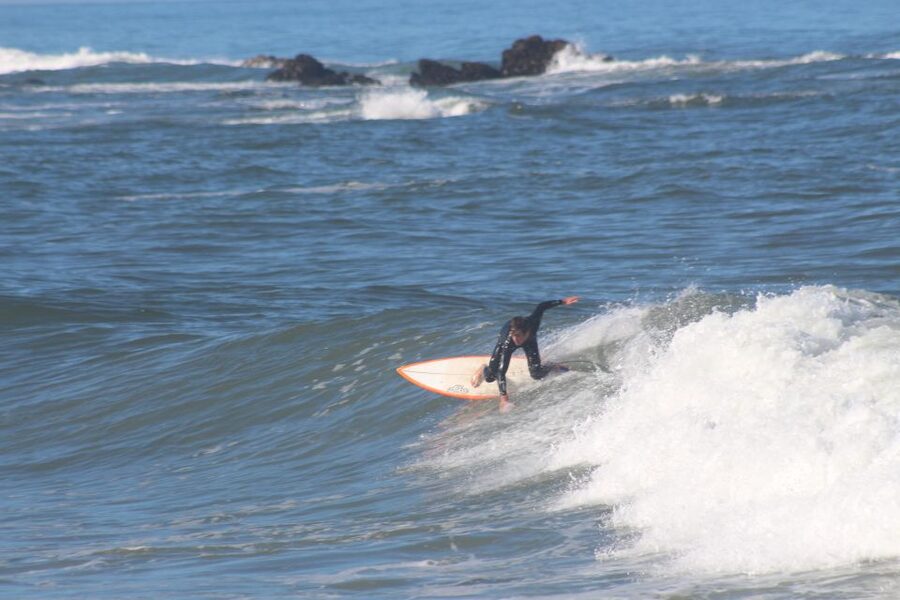
At the beach, you receive a short introduction to surfing. The instructor covers the basic position on the board, paddling, and the movement needed to stand up. You practice the sequence on the sand before trying it in the water.
This dry-land explanation matters. Surfing looks simple from the beach, but several actions must happen in the right order. You need to paddle strongly enough to match the wave, keep your balance as the board accelerates, and move your feet into position without freezing. A clear demonstration takes away some of the confusion.
The lesson is designed for different skill levels. Beginners get the basic steps, while people with some prior practice can work on timing and technique. Instructor Bernardo is specifically praised for adjusting the lesson to each person’s level, and Igor is known for patient explanations and useful encouragement.
The school uses a hands-on teaching style. The instructor stays involved in the water, helps you choose a manageable wave, and gives short tips between attempts. That is especially useful when you are nervous. One participant who felt very anxious before starting said the instructor helped build confidence on the board.
Do not expect a long classroom session. The point is to learn enough on land to start trying quickly. You will spend much of the lesson making attempts, falling, resetting the board, and trying again.
Your first waves in the Atlantic
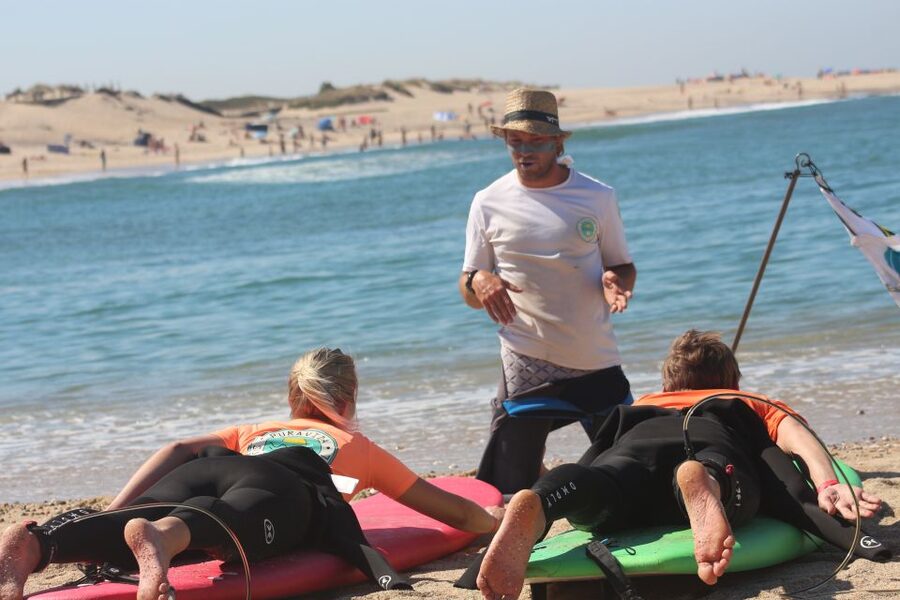
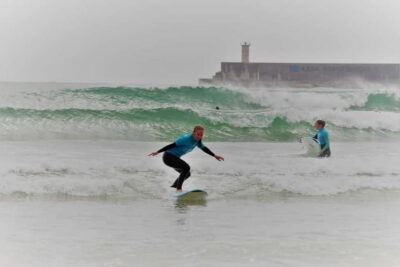
After the warm-up and instruction, you carry the board into the water. You paddle toward the area where the waves break, with the instructor helping you judge when to turn and paddle back toward shore.
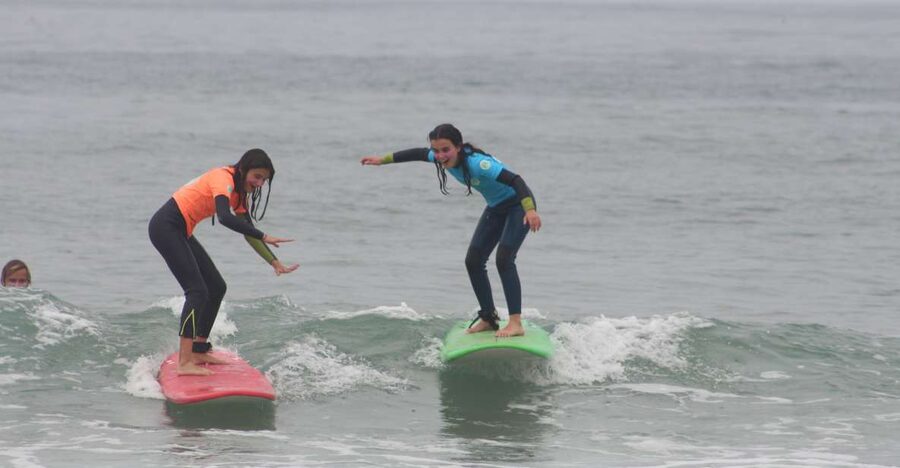
For a first lesson, success is measured in small steps. You may first lie correctly on the board, then catch a wave while staying down, then rise briefly before splashing back into the water. The instructors focus on getting people to catch waves independently, not simply pushing every board from behind.
That distinction is valuable. A quick assisted ride can feel exciting, but learning when to paddle and how to stand gives you something you can use again. One particularly encouraging detail is that almost everyone in one beginner group managed to stand up, at least briefly, even in foggy weather.
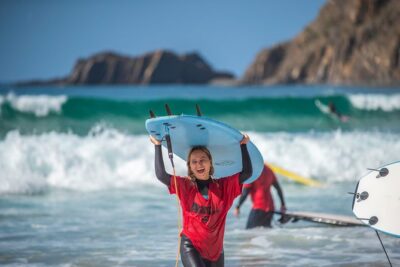
The Atlantic can be cold, but the wetsuit is included. Some people found the initial entry chilly, then felt comfortable once they were moving. Wind and rain can make the changing area and walk to the water less pleasant, so a dry towel and warm clothing for after the lesson are important.
The water session can also be tiring. Paddling, standing, falling, and carrying the board use more energy than you might expect. That is part of the fun, but do not plan a demanding evening immediately afterward if you are new to the sport.
A different kind of day out, same corner of Portugal:
- The Unvanquished Tour in Porto City Center
★ 5.0 · 26,497 reviews - From Porto: Douro Valley w/ Boat Tour, Wine Tasting & Lunch
★ 4.7 · 19,061 reviews - Complete Douro Valley Wine Tour with Lunch, Wine Tastings and River Cruise
★ 5.0 · 12,920 reviews - Porto: Six Bridges Cruise
★ 4.2 · 11,680 reviews
Why a maximum of seven people matters
Small-group wording can mean many things, but this group is limited to seven participants. That is a useful size for an introductory lesson. The instructor can keep track of each person, offer corrections, and call out a suitable wave without letting the group spread too far apart.
The size also helps with confidence. Beginners often feel awkward when they fall repeatedly in front of strangers. A small group makes the session feel less like a public performance and more like a shared activity. You will still have to wait for waves and for other people to finish a turn, but the waiting should be more manageable than in a large class.
The individual attention depends on the group that day. A group of four can feel almost personal, while a full group of seven will naturally involve more rotation. The instructors have been praised for keeping their attention on everyone, but no surf school can give seven people constant one-to-one coaching.
The mix of abilities can also vary. That is not necessarily a problem. Beginners receive basic help, while intermediate participants can get tips on improving their technique. If you already surf regularly, ask yourself if a short introductory class is enough for your goals. For a first lesson or an occasional holiday attempt, the format makes good sense.
The instructors and teaching style
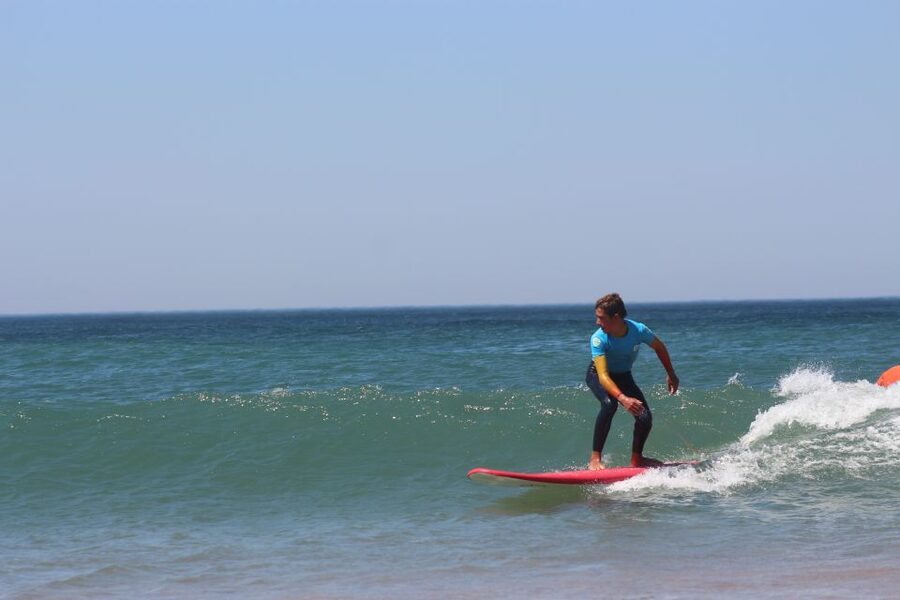
The most repeated strength of this activity is the instructors’ patience. Igor is described as motivational and attentive, with a talent for helping beginners catch their first waves. Bernardo is praised for clear explanations, warmth, and careful coaching in the water.
Katerina, also referred to as Kata, has been described as friendly and patient. Jorge has received praise for welcoming nervous beginners and giving individual help. The instructor roster may vary, but the teaching style appears consistent: explain the basics, demonstrate the movement, watch you try, then offer a small correction.
That last part is important. Surfing instruction works best when you receive one useful tip at a time. Too much advice can leave you thinking about your feet, arms, balance, and the wave all at once. A calm instructor helps you focus on the next attempt.
Lessons are offered in English, Portuguese, and Spanish. That gives you a reasonable chance of following the instruction even if you do not speak Portuguese. You should still pay close attention to safety directions, especially when entering and leaving the water.
What the $58 price really covers
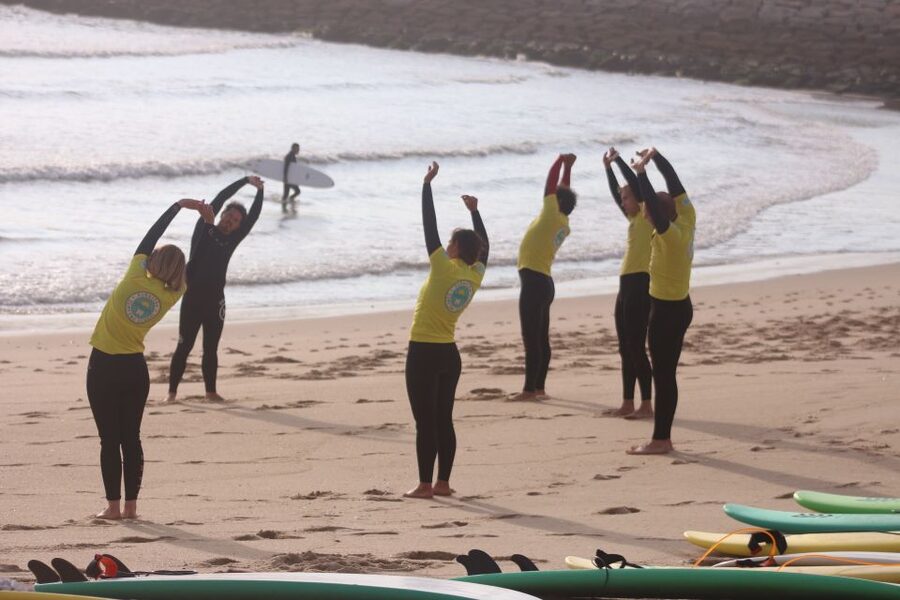
At $58 per person, the price is fair for a short surf outing because it includes the pieces that can quickly add up elsewhere:
- Pickup transportation from central Porto
- Surfboard rental
- Wetsuit rental
- Insurance
- Basic instruction
- A small group limited to seven participants
You are paying for more than access to a board. The transport saves time and removes the problem of finding a suitable beach. The beach choice is made around conditions, and the instructor remains involved while you practice.
The value is strongest for first-timers. Renting a board and wetsuit independently would not give you the same safety briefing, beach assessment, or help with catching waves. An intermediate surfer may find the lesson less essential, but could still appreciate the transport and changing beach locations.
The price also protects you from some common beginner mistakes. You do not have to guess which board size to use, where to enter the water, or how to read the first waves. Those decisions are handled by the school.
Weather, timing, and practical limits
This activity runs rain or shine. That policy is worth taking seriously. Porto’s coast can be cloudy, windy, foggy, or wet, and the experience may feel very different from the sunny beach afternoon shown in promotional photos.
The school can change the schedule to seek better conditions. That flexibility is good for the surfing itself, but it means you should avoid booking it immediately before an important train, flight, or timed attraction. Leave room for possible changes.
You should bring:
- Swimwear to wear under the wetsuit
- A towel
- Sunscreen
- Water
The activity is not suitable for children under six. The supplied information does not give a maximum age or a detailed accessibility policy, so ask the operator directly if you have mobility concerns or need special arrangements.
The lesson takes place outdoors and in the ocean. If you are uncomfortable with cold water, wind, or getting knocked off a board, consider that before booking. You do not need to be an athlete, but you should be ready for physical effort and repeated attempts.
Who should book this Porto surf lesson?
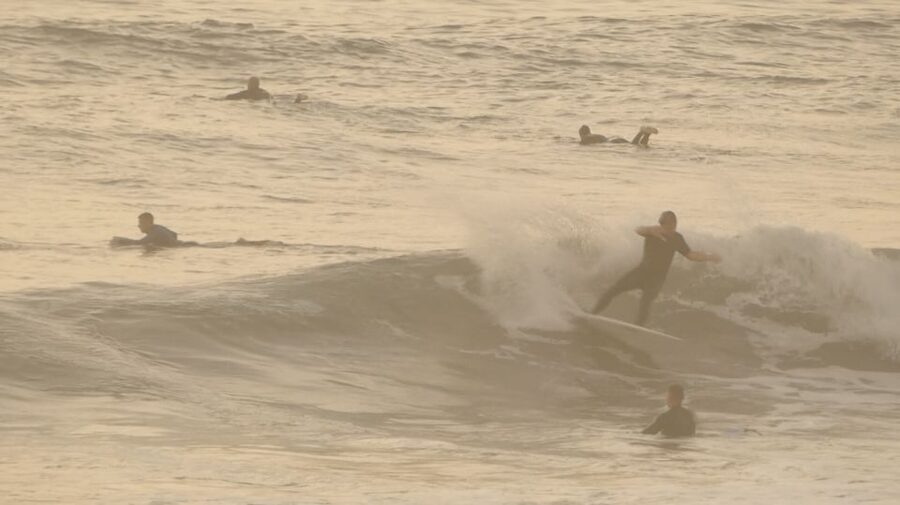
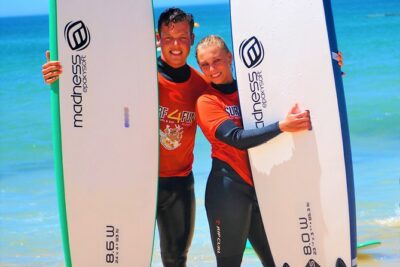
I would choose this for a first-time surfer who wants a simple introduction without renting gear or arranging a beach transfer. It also suits couples, friends, and solo visitors who like active outings but do not want a large class.
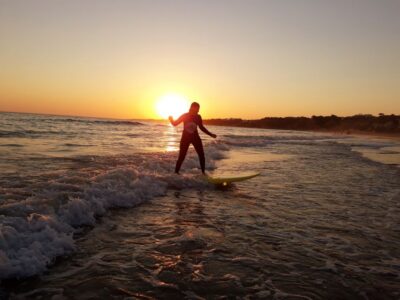
It works well as a break from Porto’s churches, tiled streets, and food stops. You spend part of the day on the coast, and the change of setting is as useful as the lesson. The beach may be quiet, and even a short ride can become one of the most memorable parts of a city visit.
Families should check the age rules carefully. Children under six cannot join, while an eight-year-old has taken part successfully with a supportive coach. That does not guarantee the same result for every child, so consider the child’s comfort in the water and ability to follow instructions.
I would be less likely to book this if I had only a few hours in Porto and could not handle a possible schedule change. I would also choose a more advanced surf program if I already surf well and want technical coaching rather than a beginner-focused session.
Should you book it?
Book this lesson if you want a low-hassle first taste of surfing with gear, transport, insurance, and close instruction included. The changing beach location is a real advantage, and the small group gives beginners a fair chance to catch a wave rather than simply watch others.
Go in with realistic expectations. You may get sunshine and clean waves, or you may get fog, wind, rain, or small surf. The instructors can improve your odds, not control the Atlantic. For $58, this is a strong-value choice for active visitors who are happy to trade certainty for a genuine coastal experience.
FAQ
Where does the surf lesson meet in Porto?
Meet in front of Café Aliança near the Aliados bus stop. A van with surfboards on top will pick you up.
How long does the experience last?
The activity lasts 3.5 hours. This total includes transportation, instruction, and time surfing.
What is included in the price?
Transportation, wetsuit rental, board rental, and insurance are included.
How many people are in the group?
The group is limited to seven participants.
Which languages are spoken by the instructors?
Instruction is available in English, Portuguese, and Spanish.
What should I bring?
Bring swimwear, a towel, sunscreen, and water.
Can children join the lesson?
Children under six are not permitted to take part.
Recently reviewed around Porto
- Bridges Cruise with World of Discoveries or Sunset Option★ 4.0 · 219 reviews
- Porto Card Walker (1, 2, 3 or 4 Days)★ 3.4 · 135 reviews
- Porto: 6 Bridges Yacht Cruise with Local Wine & Snacks★ 5.0 · 399 reviews
- Porto:Aveiro, Cruise, Costa Nova & Capelha da Pedra Full Day★ 4.5 · 434 reviews
- Porto: 5D Flight over de City for all family.★ 4.0 · 281 reviews
- Porto Private E-Bike Tour: Douro River, Parks & Beaches★ 4.7 · 104 reviews
- Porto: 3-Hour Walking City Tour & Lello Bookstore Visit★ 4.7 · 99 reviews
- Port Wine class with 3 or 5 Port tasting and pairings★ 4.9 · 441 reviews
Surf Lessons, compared.
Beginner Surf Lesson at the Beautiful Algarvian West Coast
Read our review →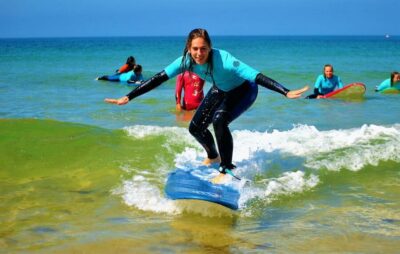
Browse the lists this tour appears in