
Reviewed · WORKSHOPS
Porto: Pastel de Nata Pastry-Making Workshop
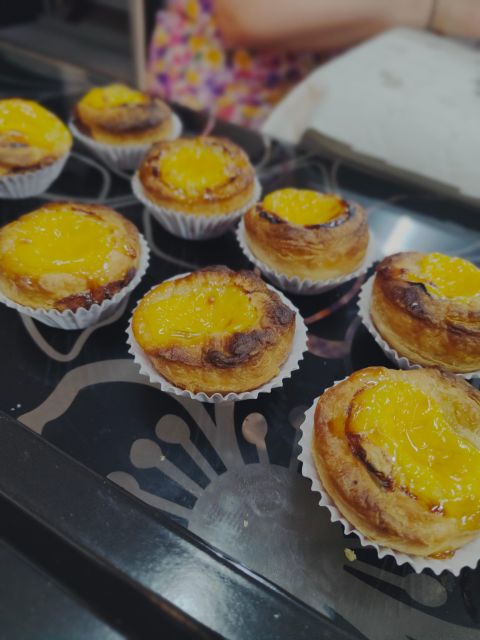
Porto’s famous custard tart becomes much more memorable when you make it yourself. In this 90-minute workshop, you roll pastry, prepare the egg custard, and watch the little tarts bake while sipping Port, wine, or a mimosa.
I like the friendly, social setup, and I like that the class includes practical tips you can use at home. Hosts such as Maria, Sara, Patricia, and Ana have been praised for bringing shy participants into the action, including solo visitors.
The main thing to know is that the dough is prepared before class because it needs about three hours to rest. You still shape and roll it yourself, but you are not making the pastry from the first stir.
In This Review
- Key points at a glance
- Why this Porto pastry class works so well
- Arriving at Boiler Studio near the Cathedral
- The first steps: pastry, custard, and a little context
- Sharing the work in a group of up to nine
- Rolling the dough and filling the tart shells
- Port wine, conversation, and the oven timer
- Eating the warm tarts and packing extras
- What $41 buys you
- Who should book, and who should skip it
- Booking advice for a smoother afternoon
- Should you book this Porto pastel de nata workshop?
- FAQ
- Where does the pastel de nata workshop take place?
- How long does the workshop last?
- What language is used during the class?
- What drink is included?
- How many pastries can I take home?
- Do I make the pastry dough from scratch?
- Will I make the custard?
- How large is the group?
- Are children allowed to attend?
- Can I cancel for a refund?
Key points at a glance
- A central Porto setting: Boiler Studio is on Rua Chã 77, directly in front of the Cathedral and close to São Bento Station and the Dom Luís I Bridge.
- Small groups: Sessions are capped at nine people, which keeps the class social but still manageable.
- Hands-on tart making: You roll the prepared dough, help with the custard, and take part in the baking process.
- A drink with the lesson: One glass of Port, wine, or a mimosa is included, with some sessions providing additional drinks.
- Useful take-home skills: You receive the recipe and practical advice for recreating the tarts at home.
- Pastries for later: You eat the fresh result in class and take at least two more pastel de nata with you.
Why this Porto pastry class works so well
Pastel de nata is one of Portugal’s most familiar foods, but it is easy to treat it as just another item in a bakery window. This class gives you a better feel for the work behind the crisp pastry and soft custard.
The setting helps. Boiler Studio sits on Rua Chã 77, a typical street directly opposite Porto Cathedral. You can easily pair the workshop with a visit to the Cathedral, São Bento Train Station, the Dom Luís I Bridge, or the Time Out Market.
I would plan this as a pleasant break from sightseeing rather than as a full cooking course. You are not spending half a day in a professional kitchen. Instead, you get a compact lesson, a drink, conversation, and something sweet to carry away.
That makes the class especially useful on a rainy afternoon. It is also a good choice early in your Porto stay, since the host shares local food suggestions and ideas for places to visit around town.
More Porto trips worth a second look
- Porto: Pastel de Nata Cooking Class with Port Wine – Sé
★ 4.8 · 888 reviews - Matosinhos: Surfing Lesson with Equipment
★ 4.8 · 704 reviews - Porto: Small Group Surf Lesson with Transportation
★ 4.9 · 594 reviews
Arriving at Boiler Studio near the Cathedral
The meeting point is Boiler Studio at Rua Chã 77, in the historic center of Porto. The address is close to major sights, but the surrounding streets can be steep and uneven, so give yourself enough time to arrive without rushing.
The location is one of the strongest practical features of the experience. You do not need a separate trip across the city for the class. You can visit the Cathedral before your start time, walk down toward São Bento afterward, or continue toward the bridge and riverfront.
The studio itself is described as bright and clean, with a pleasant layout and a small gift area. That gives the class a more polished feel than a quick demonstration in a crowded café, while still keeping the mood informal.
English is the teaching language. Hosts have included Maria, Sara, Patricia, Ana, Alice, and others, and the tone varies slightly by instructor. The consistent theme is friendly teaching with plenty of humor and encouragement.
The first steps: pastry, custard, and a little context
The class begins with an explanation of the pastel de nata process. You learn how the pastry and custard work together, along with some background on the Portuguese favorite.
The printed recipe is useful, especially if you take notes during the lesson. The hosts also share small tricks that matter more than a bare ingredient list. Several participants have found these extra instructions helpful when baking at home later.
You then work with pastry that has already been prepared. The reason is simple: the dough needs around three hours to be properly ready, and a 90-minute workshop cannot include that waiting period.
This is not a serious flaw, but it is important to set your expectations correctly. You will not make every element completely from scratch. You will roll the dough, shape it, and take part in the key preparation stages, while the host explains how to make the dough yourself at home.
The custard is prepared during the class. This gives you a clearer sense of the balance between pastry and filling. The process is explained step by step, so you do not need previous baking experience.
Sharing the work in a group of up to nine
The workshop is designed for a maximum of nine people. That is small enough for a lively conversation and large enough to bring together people from different countries.
The host shares the different stages among the participants. In practice, not everyone may perform every single task from start to finish. At some sessions, people are brought to the front of the table in stages to handle specific parts of the preparation.
If you want to take part in every step, ask about a private workshop before booking. The information provided also asks larger groups to request details, particularly for groups above eight or nine people.
This shared format is worth understanding. A person who wants an intensive pastry course may find the rotation a little limited. A person who enjoys meeting others while learning something new will probably find it just right.
The hosts are good at keeping the room involved. Maria is often described as lively and interactive, while Sara and Patricia are praised for making people feel at ease. Ana has also been noted for her humor and warm presentation.
Solo visitors fit naturally into the group. You are not assigned a silent workstation and left alone with a recipe. The conversation is part of the event, and the hosts make a point of including people who arrive by themselves.
A different kind of day out, same corner of Portugal:
- The Unvanquished Tour in Porto City Center
★ 5.0 · 26,497 reviews - From Porto: Douro Valley w/ Boat Tour, Wine Tasting & Lunch
★ 4.7 · 19,061 reviews - Complete Douro Valley Wine Tour with Lunch, Wine Tastings and River Cruise
★ 5.0 · 12,920 reviews - Porto: Six Bridges Cruise
★ 4.2 · 11,680 reviews
Rolling the dough and filling the tart shells
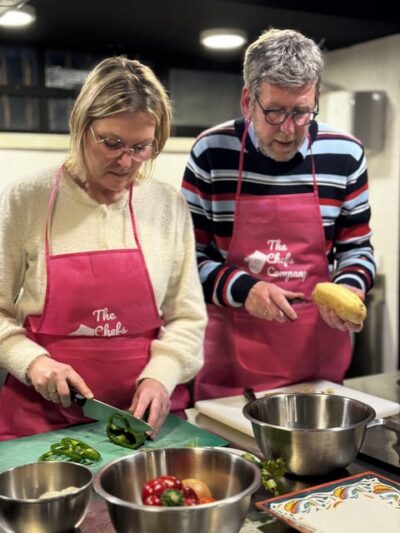
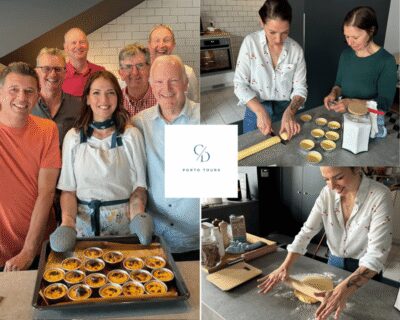
The hands-on portion centers on rolling the prepared pastry and shaping it for the tart molds. This is where the class becomes more than a food talk. You handle the dough and see how the small shells are formed.
You also help make the egg custard and add it to the pastry. The instructor explains each stage and answers questions as you work.
The pace is relaxed rather than rushed. You have time to listen, ask about ingredients, and learn how the pastry should look before it goes into the oven. The hosts also share advice that is not always obvious from a printed recipe.
The final result is not meant to train you as a professional baker. It is meant to give you enough understanding and confidence to try the recipe at home. That is a useful distinction, and the class delivers more value if you treat it as a practical introduction.
One helpful home-baking warning comes from the experience of people who tried the recipe later: if you are making a large batch, one set of baking dishes may not be enough to finish everything efficiently. That is a small but useful detail to keep in mind before planning a pastel de nata party.
Port wine, conversation, and the oven timer
While the pastries bake, you receive a drink. The stated inclusion is one glass of Port wine, regular wine, or a mimosa.
Some recent sessions have included two alcoholic drinks per person, but you should treat that as a possible extra rather than a guaranteed part of the basic booking. The drink is there to support the relaxed mood, not to turn the class into a tasting.
Port is the natural choice in Porto, and it pairs nicely with the sweet custard. One participant specifically enjoyed a Port tonic, so the exact drink options may vary with the session.
This pause is also when the social side of the class really takes over. You can compare your pastry shaping, ask the host for food recommendations, and talk with people from other countries.
The local advice is a worthwhile bonus. You can ask where to find good food in Porto, which gives the class a connection to the rest of your trip rather than making it a self-contained activity.
If you do not drink alcohol, check the available options when booking. The listed choices are wine, Port, or a mimosa, and the information does not specify a nonalcoholic alternative.
Eating the warm tarts and packing extras
Once the pastel de nata come out of the oven, you get to taste the results immediately. Fresh pastry and warm custard are the reward for the work, and this is also the best moment to notice how the texture changes straight from the oven.
You receive at least two pastries in a cardboard box to take with you. Some sessions have provided three per person, with one eaten in class and two packed for later.
Do not expect a large box of pastries. The point is to enjoy what you made and carry a small reminder into the rest of your Porto day. The box is convenient for taking the tarts back to your room or sharing them with someone who missed the class.
The take-home recipe adds lasting value. You can try the process again at home, and the extra tips from the instructor are likely to be more useful than a recipe card alone.
What $41 buys you
At $41 per person, this is not the cheapest way to eat pastel de nata in Porto. You can buy a single tart for very little money at a bakery.
The comparison changes when you include the instruction, the drink, the social setting, the recipe, and the pastries you take away. You are paying for an activity as well as food, and the 90-minute length makes it easy to fit into a short city break.
I consider it good value for people who enjoy food activities and want more than a quick tasting. It is less attractive if your main goal is simply to sample several of Porto’s best bakeries.
The price also makes sense for a couple, a group of friends, or a family with older children. Since the class is limited to nine people, you get a more personal setting than a large demonstration.
Free cancellation is available up to 24 hours before the activity for a full refund, and you can reserve now and pay later. Those terms are helpful when your Porto schedule is still changing.
Who should book, and who should skip it
This workshop suits you if you enjoy doing something with your hands, like meeting people during a trip, or want a rainy-day plan near the city center.
It is especially good for:
- Solo visitors who want an easy social activity
- Couples looking for a relaxed food experience
- Families with children over 10
- Friends who enjoy cooking together
- Home bakers who want a Portuguese recipe and practical tips
- Anyone staying near the Cathedral, São Bento, or the bridge
Children under 10 are not permitted. Younger children may also find the rotating group format less engaging, since the class requires listening, waiting, and taking part in stages.
You should also skip it if you expect a full pastry course where you make the dough from the beginning. The prepared dough is clearly explained, but it remains the main limitation of the format.
Booking advice for a smoother afternoon
Give yourself time to find Rua Chã 77. The central location is convenient, but Porto’s old streets can be confusing, particularly if you are coming from the river.
If you want to participate in every stage, ask about a private session before committing. The standard workshop shares tasks among the group, which keeps things moving but means your own hands-on time may vary.
For large groups, ask for arrangements in advance. The normal format is limited to nine people, and groups above eight should request more information.
I would also book the class earlier in your stay if local food advice matters to you. The host can help point you toward places to eat, and you may find those suggestions useful for the rest of your visit.
Should you book this Porto pastel de nata workshop?
Yes, if you want a friendly, central, hands-on activity rather than a formal baking course. The best parts are the small group, the warm teaching style of hosts such as Maria, Sara, and Patricia, the Port or wine, and the recipe you can use after returning home.
The $41 price is fair when you count the instruction, drink, tasting, and take-home pastries. Just remember that the dough is prepared in advance and that tasks are shared among the group.
For most food lovers, solo visitors, couples, and families with children over 10, this is an easy activity to recommend. It gives you a taste of Porto’s food culture, a pleasant break from sightseeing, and a pastry box for later.
FAQ
Where does the pastel de nata workshop take place?
It takes place at Boiler Studio, Rua Chã 77, in front of Porto Cathedral in central Porto.
How long does the workshop last?
The workshop lasts 1.5 hours, or 90 minutes.
What language is used during the class?
The instructor teaches in English.
What drink is included?
One glass of Port wine, regular wine, or a mimosa is included. Some sessions have provided two drinks, but the stated inclusion is one glass.
How many pastries can I take home?
You receive at least two pastel de nata in a cardboard pastry box. Some sessions have provided three pastries per person.
Do I make the pastry dough from scratch?
No. The dough is prepared in advance because it needs about three hours to be ready. You roll and shape the prepared dough, and the recipe is provided for home use.
Will I make the custard?
Yes. The class includes step-by-step instruction for making the egg custard and filling the pastry shells.
How large is the group?
The standard workshop has a maximum of nine people. Groups above eight should ask for more information.
Are children allowed to attend?
Children over 10 are welcome. Children under 10 are not permitted.
Can I cancel for a refund?
Yes. You can cancel up to 24 hours in advance for a full refund. You can also reserve now and pay later.
Recently reviewed around Porto
- Bridges Cruise with World of Discoveries or Sunset Option★ 4.0 · 219 reviews
- Porto Card Walker (1, 2, 3 or 4 Days)★ 3.4 · 135 reviews
- Porto: 6 Bridges Yacht Cruise with Local Wine & Snacks★ 5.0 · 399 reviews
- Porto: 5D Flight over de City for all family.★ 4.0 · 281 reviews
- Porto:Aveiro, Cruise, Costa Nova & Capelha da Pedra Full Day★ 4.5 · 434 reviews
- Porto Private E-Bike Tour: Douro River, Parks & Beaches★ 4.7 · 104 reviews
- Porto: 3-Hour Walking City Tour & Lello Bookstore Visit★ 4.7 · 99 reviews
- Port Wine class with 3 or 5 Port tasting and pairings★ 4.9 · 441 reviews
Workshops, compared.
Pastel de Nata Cooking Class with Grandma’s Recipe
Read our review →
Pastel de Nata Cooking Class with Port Wine – Sé
Read our review →

Browse the lists this tour appears in