
Reviewed · WORKSHOPS
Lisbon: Azulejos’ Design Create Your Own Tile Workshop
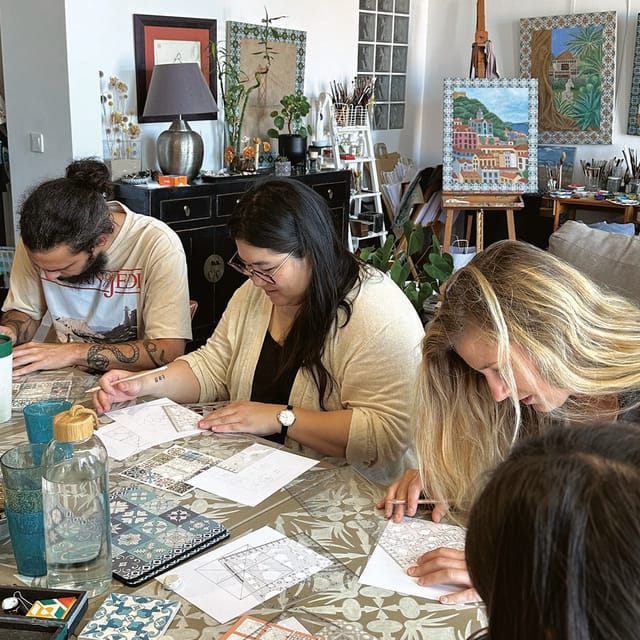
The clever part of this Lisbon workshop is that you do not need to know how to draw. The Formettes method helps you build a pattern with simple shapes, so you can create something personal without staring at a blank sheet in panic. You sketch in pencil, trace with a fine black marker, add watercolor, and leave with a ceramic tile made from your own design.
I like two things right away: the friendly guidance from Agathe, a French painter who teaches in French, English, and Portuguese, and the fact that the tile is ready before you leave. The setting also matters. The class takes place in an artist’s home studio rather than a large production space, giving the two-and-a-half-hour session a warm, relaxed feel.
The main consideration is that this is a design and transfer workshop, not a traditional ceramics class. You do not shape clay or fire a tile in a kiln. Your artwork is digitally adjusted and heat-pressed onto the ceramic, which makes same-day collection possible but gives the process a different character from hand-painted, kiln-fired azulejo work.
In This Review
- Key Points Before You Book
- Why Azulejos Matter in Lisbon
- Entering the Studio at Bell Number 2
- The Short Introduction to Azulejos
- Using the Formettes Tool Without Drawing Experience
- Three Clear Stages: Pencil, Marker, and Watercolor
- What Happens After You Finish Drawing
- Is $64 a Fair Price?
- Who Will Enjoy This Most?
- Language, Timing, and Practical Details
- The Strength of the Teaching
- Should You Book the Lisbon Tile Workshop?
- FAQ
- How long does the azulejo workshop last?
- How much does the workshop cost?
- Where is the meeting point?
- Do I need drawing experience?
- What languages does the instructor speak?
- What will I make during the workshop?
- Can I take my tile home immediately?
- Are materials included?
- Are food and drinks included?
- Can children join the workshop?
- Can I book a private session?
- Can I cancel my booking?
Key Points Before You Book
- You leave with a finished 10cm by 10cm tile, not just a paper design.
- The Formettes tool removes the need for drawing experience, making the class suitable for beginners.
- Agathe offers patient, practical help while still allowing you to choose your own pattern and colors.
- The workshop takes place in a welcoming artist’s home studio, with tea, coffee, and cookies included.
- Small or private groups are available, and solo participants can join a comfortable creative session.
- An extra tile costs €10, according to the workshop information shared by a participant.
Why Azulejos Matter in Lisbon
Look around Lisbon and you will see azulejos on churches, railway stations, apartment facades, fountains, and ordinary residential buildings. These painted or patterned ceramic tiles are not just souvenirs. They help define the city’s visual character, from formal blue-and-white panels to colorful geometric designs.
This workshop gives you a small, practical way to connect with that tradition. You are not simply buying a tile from a shop. You are making a pattern, choosing colors, and carrying home an object tied to your own time in Lisbon.
That personal element is the real appeal. A souvenir-shop tile may be more elaborate, but it will not show your hand in the same way. Here, even a simple design can remind you of the afternoon or evening you spent creating it.
The class also keeps the cultural introduction at the right scale. You receive a short presentation about azulejos and the method, then move quickly into making. If you want a long lecture on Portuguese ceramic art, this will feel brief. If you want context followed by hands-on work, the balance is sensible.
More Lisbon trips worth a second look
- Lisbon: Pastel de Nata Baking Class
★ 4.9 · 2,106 reviews - Lisbon: Traditional Portuguese Cooking Class
★ 4.9 · 592 reviews - Lisbon: 2-Hour Pastel de Nata Cooking Class
★ 4.8 · 461 reviews
Entering the Studio at Bell Number 2
The meeting point is Bell N° 2 in the Lisbon District. The exact setting is described as an artist’s home and studio, with a comfortable, welcoming atmosphere rather than a formal classroom. That difference shapes the experience from the first few minutes.
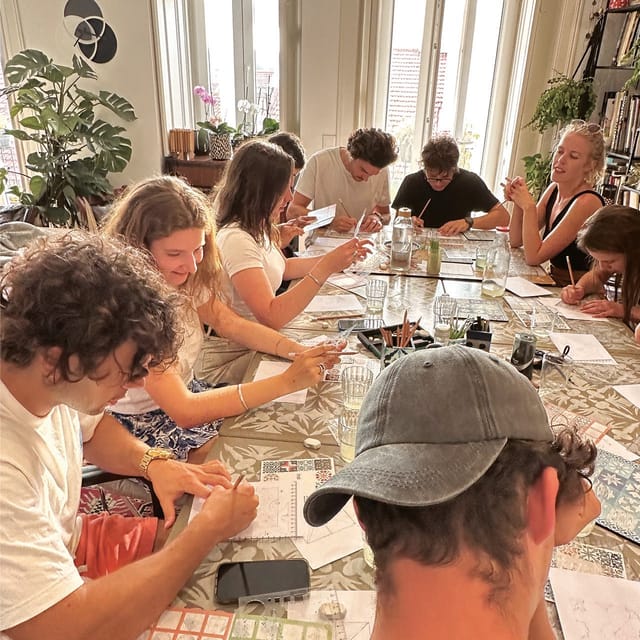
You should expect a personal workshop, not a large sightseeing activity. Small groups and private bookings are available, and several class sizes described by participants were particularly intimate, including groups of three, four, and six people. A smaller group gives Agathe more time to look at your idea, suggest changes, and help you when the drawing becomes tricky.
The home-studio setting is also useful for solo visitors. You do not need to arrive with a friend or partner to make the activity work. The structure gives you something to focus on, while the small group creates an easy chance to meet people from different countries.
Tea, coffee, and cookies are included. These are modest touches, but they fit the slower pace of the class. You are sitting, drawing, and painting for a couple of hours, so a drink and a small snack make the session feel less like a rushed commercial appointment.
The Short Introduction to Azulejos
The workshop begins with a short presentation about azulejos and the creation method. This is not intended to cover every period or style of Portuguese tile work. Instead, it gives you enough background to understand the object you are about to make.
That introduction is especially useful if you have been seeing tiles all over Lisbon without knowing how to read them. You begin to notice that patterns can be repeated, mirrored, framed, or arranged as part of a larger panel. The workshop then lets you borrow that idea on a much smaller scale.
Agathe’s role is important here. The class is designed for people with mixed artistic ability, and the teaching is described as clear, patient, and beginner-friendly. You get instruction without being pushed toward one correct design.
The best approach is to treat the introduction as a starting point, not a test. You do not need to copy a famous Lisbon tile. You can create something traditional-looking, graphic, playful, or entirely personal.
Using the Formettes Tool Without Drawing Experience
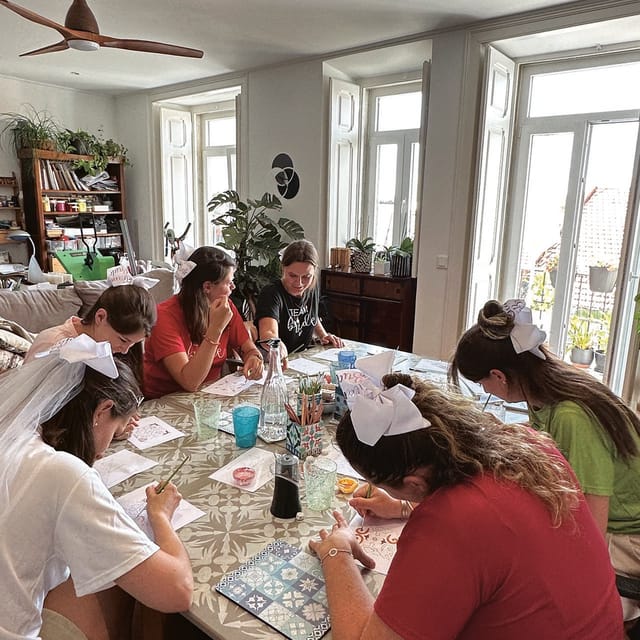
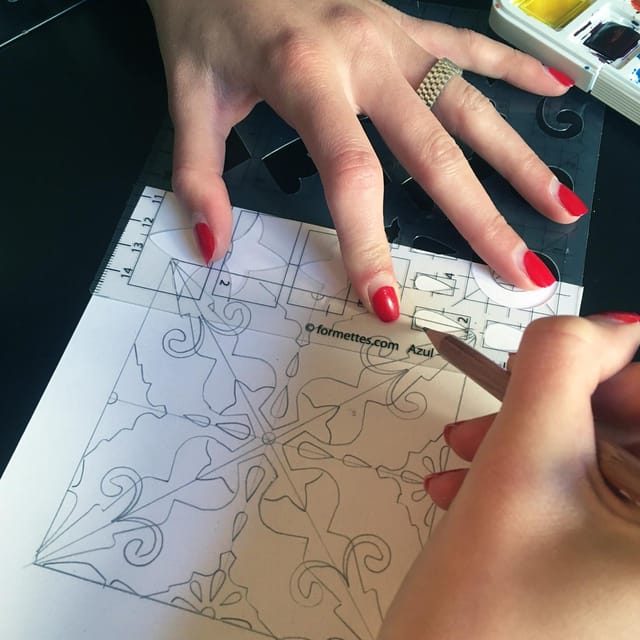
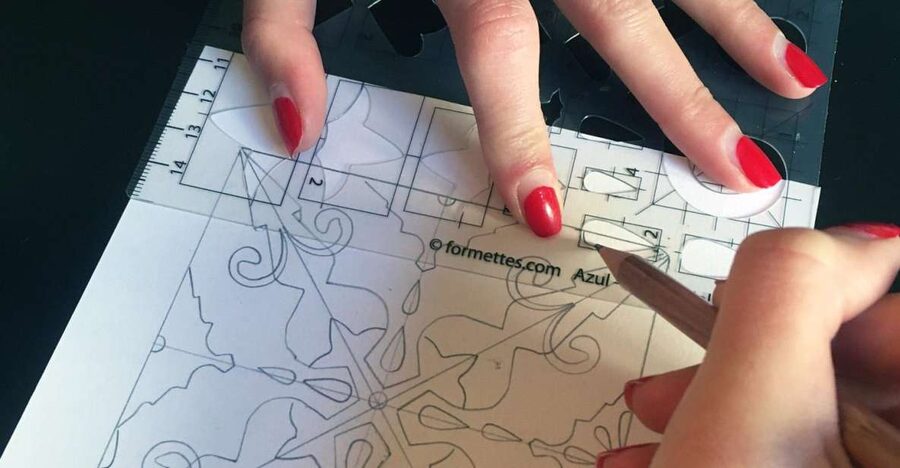
The Formettes method is the heart of the workshop. It provides a structure for creating a pattern, helping you arrange shapes without requiring formal drawing skills. This is a useful distinction because many people like the idea of an art class but worry that their finished work will look childish or uneven.
The method gives you a route into the design. You can work from forms and repeat them, then adjust the arrangement until the pattern feels balanced. The tool does not take away your choices. You still decide what to draw, how much detail to use, and which colors will define the final tile.
You receive drawing materials and guidance from the instructor. People with strong artistic confidence can take the idea in their own direction, while beginners can rely more heavily on the suggested forms and examples.
I would not arrive expecting to produce a museum-quality panel in one sitting. The finished tile is small, and the class has a fixed length. But that is also the point. You get a manageable creative project rather than an intimidating assignment.
A different kind of day out, same corner of Portugal:
- Lisbon City Center Tour – The Unmissable Lisbon
★ 5.0 · 22,234 reviews - Lisbon: Sintra, Pena, Regaleira, Cabo da Roca & Cascais
★ 4.7 · 19,656 reviews - Sintra: Pena Palace and Park Entrance Ticket
★ 4.2 · 17,410 reviews - Lisbon: Jerónimos Monastery Entrance Ticket
★ 4.1 · 14,164 reviews
Three Clear Stages: Pencil, Marker, and Watercolor
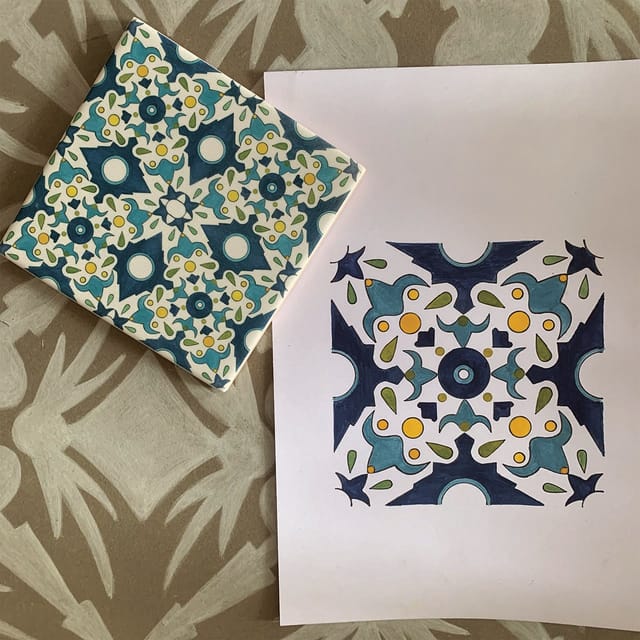
The first stage uses pencil. This is where you work out the design and make changes. Pencil is forgiving, so you can test shapes and adjust spacing before committing to the final lines.
The second stage is tracing with a fine black marker. Once the pattern is in place, you cover the pencil lines with the marker. Then the pencil is erased, leaving a cleaner drawing ready for color.
This step rewards patience. Small mistakes can affect the final pattern, especially when shapes repeat across the tile. The instructor is available to help, and the workshop is not designed to rush you through the process.
The third stage is watercolor. You choose the colors and fill the pattern by hand. Watercolor gives the design a softer, more artistic quality than a solid marker or printed image would provide. It also means your finished design can retain small variations in tone.
You should think about color before you begin painting. A simple pattern with two or three colors may look more balanced than one packed with every shade available. Agathe can offer advice, but you keep control of the final look.
What Happens After You Finish Drawing
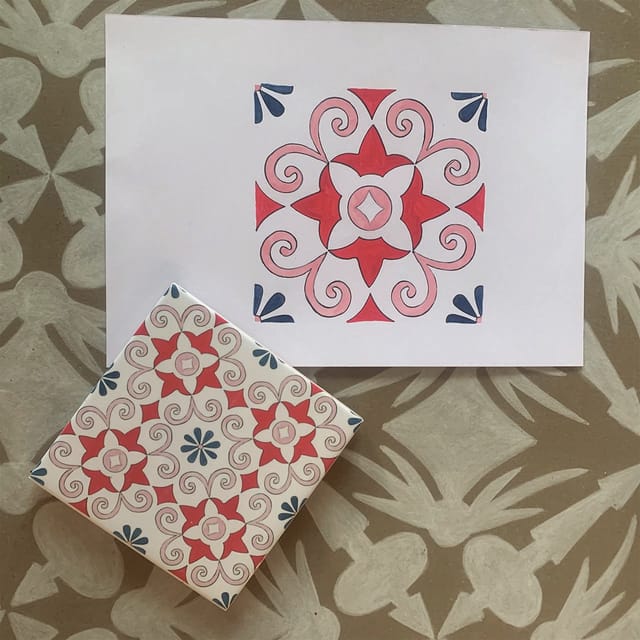
Your original artwork is not immediately the ceramic tile itself. After the creative portion, each drawing is worked on in Photoshop. The design may be slightly corrected if needed, then multiplied so the pattern can be transferred onto the tile.
This digital step is worth understanding before you book. It helps turn a hand-drawn watercolor image into a clean, repeatable ceramic design. It also gives the instructor a chance to make small adjustments that improve the finished result.
The image is transferred with a thermal press onto a 10cm by 10cm ceramic tile. This process explains the same-day pickup. You do not wait for a kiln firing or return to Lisbon later in the week.
The advantage is clear: you can take your souvenir with you immediately. The tradeoff is that the workshop is not a traditional pottery course. If your dream is to work with wet clay, carve a tile, glaze it, and learn about kiln temperatures, this activity will not provide that.
If your goal is to design a Lisbon-inspired keepsake in one session, the transfer process is practical and efficient. It produces a finished object while the experience is still fresh.
Is $64 a Fair Price?
At $64 per person, the workshop is not the cheapest way to spend two and a half hours in Lisbon. You can visit tile shops and buy a ready-made piece for less. The price makes more sense when you count the instruction, drawing and painting supplies, drinks, cookies, the studio setting, and the finished tile.
You are paying for an activity as well as an object. The value comes from the time spent making something and the help you receive along the way. For couples, friends, or family members, the class can become a shared memory rather than a quick purchase.
The included tile is 10cm by 10cm, so it is easy to pack compared with a larger ceramic panel. It also avoids the uncertainty of waiting for an item to be shipped. If you like your design and want another tile, an additional tile is available for €10 according to the workshop details.
That extra option could be useful for a pair of matching tiles or a second version in different colors. Still, remember that the advertised price includes one tile, not a collection of personalized objects.
Who Will Enjoy This Most?
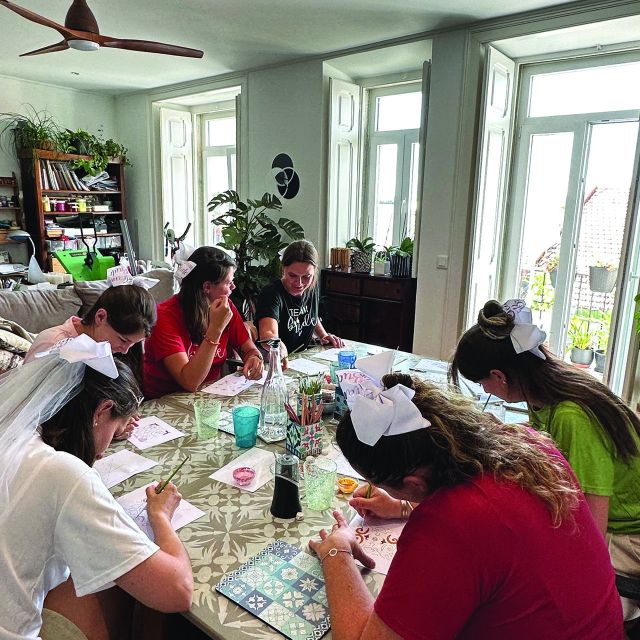
This class is a strong fit for creative beginners. You can join with no drawing prerequisites, and the Formettes method gives you a clear route from idea to finished design.
It also suits people who want a quieter break from Lisbon’s streets and viewpoints. The activity is seated, focused, and relaxed. You spend the session making rather than moving from one sight to another.
Solo visitors should feel comfortable booking. The small-group format gives you a shared task and a natural way to meet others without requiring a social event built around conversation.
Families can also consider it, but the stated minimum age is 10. The supplied information says children under 10 are not suitable for the activity. Older children and teenagers can take part with adults, and the guided process can help participants with very different levels of artistic confidence.
This is less suitable if you dislike crafts, want a fast activity, or expect a traditional pottery lesson. It is also not the best choice if you need a large souvenir. The included tile is compact and decorative.
Language, Timing, and Practical Details
The session lasts 2.5 hours, and starting times vary, so check availability before choosing your day. That length is long enough to explain the method, develop the drawing, paint it, and complete the transfer process without turning the class into a full-day commitment.
Instruction is available in French, English, and Portuguese. That range makes the workshop accessible to many visitors, and it also reflects the instructor’s French background.
The meeting point is Bell N° 2. Keep the meeting instructions handy, particularly if you are navigating Lisbon after dark or arriving directly from another activity. The supplied information does not give a full transport description, so confirm the exact location details when booking.
Free cancellation is available up to 24 hours in advance for a full refund. You can also reserve now and pay later, which is useful if your Lisbon plans are still shifting.
The workshop is offered for private or small groups. If you want the most individual attention, a private booking may be worth considering. If you prefer a little social energy, a small shared group should provide that without the feel of a crowded class.
The Strength of the Teaching
The most consistently praised part of this experience is the instruction. Agathe is described as warm, patient, encouraging, and willing to help without taking over the design.
That balance is important. A teacher who gives no help can leave beginners frustrated. A teacher who redraws everything for you can make the result feel borrowed. Here, the aim is to guide your choices while letting you keep ownership of the pattern.
The process is also forgiving for people who do not consider themselves artistic. The tools, examples, and Photoshop adjustments help the finished piece look more polished than your first sketch might suggest.
You should still expect to make decisions. The instructor can advise on spacing, colors, and design details, but you are not simply following a paint-by-numbers sheet. The creative freedom is part of the appeal.
Should You Book the Lisbon Tile Workshop?
Book it if you want a personal souvenir, enjoy making things, or need a calm activity that connects with Lisbon’s tile culture. The same-day finished tile is a major advantage, especially for a short visit when you cannot wait for firing or delivery.
I would recommend it most strongly to couples, friends, solo visitors, and families with children aged 10 or older. The $64 price is reasonable when you value the full experience, not just the ceramic object.
Skip it if you want hands-on clay work, a formal art course, or a major historical lecture. This is a guided design workshop using watercolor, digital preparation, and heat transfer.
For most visitors who want to make something attractive without needing artistic training, it is a smart Lisbon choice. You leave with a small tile, a better sense of how patterns work, and a souvenir that carries more meaning than something picked up in a generic shop.
FAQ
How long does the azulejo workshop last?
The workshop lasts 2.5 hours.
How much does the workshop cost?
The listed price is $64 per person.
Where is the meeting point?
The meeting point is Bell N° 2 in the Lisbon District.
Do I need drawing experience?
No. The Formettes method has no drawing prerequisites and is designed to help beginners create a pattern.
What languages does the instructor speak?
Instruction is available in French, English, and Portuguese.
What will I make during the workshop?
You will design and paint a pattern that is transferred onto a 10cm by 10cm ceramic tile.
Can I take my tile home immediately?
Yes. The design is transferred to the ceramic tile with a thermal press, allowing you to leave with it after the workshop.
Are materials included?
Yes. Drawing and painting materials are included, along with the instructor’s guidance.
Are food and drinks included?
Tea, coffee, and cookies are included.
Can children join the workshop?
Children under 10 are not suitable for the activity. Participants aged 10 and older may be considered, subject to the booking arrangements.
Can I book a private session?
Yes. Private or small-group options are available.
Can I cancel my booking?
You can cancel up to 24 hours in advance for a full refund. Reserve-now, pay-later booking is also available.
Recently reviewed around Lisbon
- Portinho da Arrábida: Coasteering Boat Tour★ 4.9 · 78 reviews
- Setúbal: Dolphin-Watching Boat Tour★ 4.8 · 213 reviews
- From Lisbon: Private Óbidos and Nazaré Tour★ 5.0 · 152 reviews
- No Diet Club – Unique food tour in Lisbon with many Tastings★ 4.8 · 44 reviews
- Queluz National Palace & Gardens Ticket★ 4.6 · 447 reviews
- Melides: Horse Riding on the Beach with Wine Tasting★ 4.3 · 117 reviews
- Melides: Horseback Riding on Melides Beach★ 4.7 · 111 reviews
- Lisbon: Street Art Tuk Tuk Tour★ 4.9 · 372 reviews
Workshops, compared.

Pastel de Nata Cooking Class with Grandma’s Recipe
Read our review →

Pastel de Nata Cooking Class with Port Wine – Sé
Read our review →



Browse the lists this tour appears in