
Reviewed · COOKING CLASSES
Private Traditional Portuguese Cooking Class in Lisbon with Paula
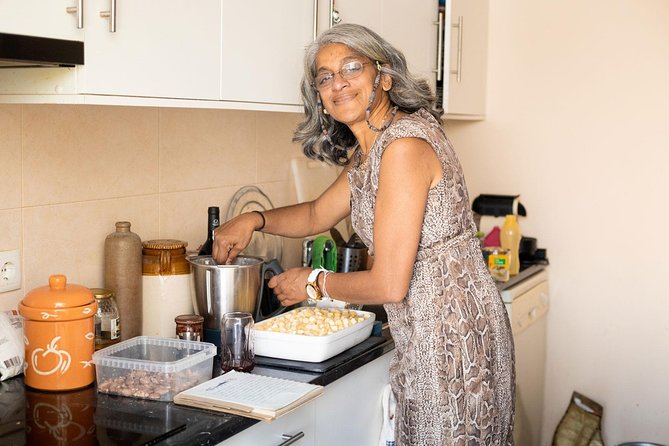
The best part of this experience starts before the cooking: you cross the Tagus to Almada, meet Paula in Cacilhas, and walk through town to her home. There, a welcome drink, family stories, Portuguese recipes, and Goan flavors turn lunch or dinner into a personal cultural visit.
I like the private format, which gives Paula room to adjust the menu and explain small kitchen tricks. I also like the mix of Portuguese and Goan cooking, especially the chance to prepare cod fritters, Goan bojas, bacalhau à brás, or a curry.
This is not a polished cooking school. Paula teaches in her home kitchen, which is small and shared with a family and a cat. If you need a spotless studio and constant hands-on cooking, consider that carefully before booking.
In This Review
- Key points to know before you book
- Crossing the Tagus for a meal with Paula
- What happens when you arrive at the apartment
- Making pataniscas and Goan bojas
- Choosing between bacalhau à brás and Goan curry
- Saving room for pastel de nata
- Dining in a real home, with real limitations
- How much cooking will you actually do?
- The value of $84 for three and a half hours
- Who will enjoy this experience most?
- Timing, transport, and small practical details
- Should you book Paula’s Lisbon cooking experience?
- FAQ
- Where does the experience begin?
- How do I reach the meeting point from Lisbon?
- How long does the cooking experience last?
- What dishes might I prepare?
- Can vegetarian participants be accommodated?
- Is this a professional cooking-school class?
Key points to know before you book
- Cross the river to Cacilhas: The experience begins with a roughly seven-minute ferry ride from central Lisbon, followed by a ten-minute walk to Paula’s apartment.
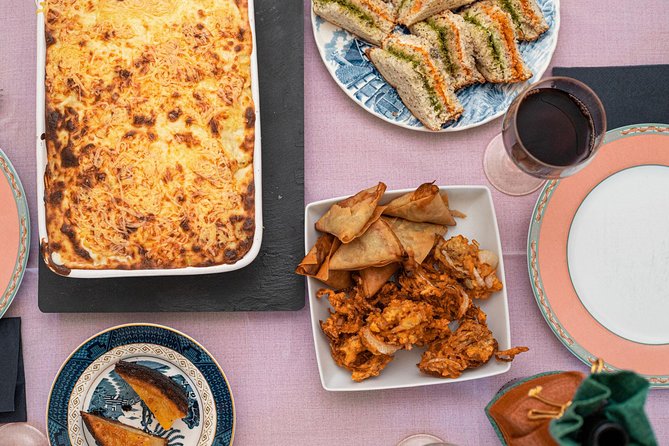
- Cook two food traditions: You may prepare Portuguese dishes, Goan recipes, or a combination of both.
- Expect a personal host: Paula cooks, teaches, tells stories, and adapts the menu when you contact her in advance.
- Pastel de nata may be possible: Several participants learned to make the famous custard tart and received help finding tins for home baking.
- This is a home visit, not a culinary school: The kitchen may feel cluttered, and the level of hands-on work can vary.
- Good for small private groups: Larger parties may use a cooking studio across the street, available by request.
Crossing the Tagus for a meal with Paula
For many people, the ferry ride is part of the pleasure. From Lisbon, you cross to Cacilhas in about seven minutes, leaving the city center behind for a short stretch of river and a different view of the capital.
Paula meets you at the Cacilhas ferry stop at Largo Alfredo Dinis. From there, you walk about ten minutes through the center of town to her apartment. The walk is short, but you should allow a little extra time for meeting up and finding the ferry. One participant arrived late after missing a boat and was relieved that Paula handled the delay calmly.
The route gives the experience a useful sense of place. You are not simply dropped into a cooking venue built for tourists. You begin in Lisbon’s neighboring city, walk through an everyday town, and then enter the home of the person who will prepare your meal with you.
The activity ends back at the meeting point in Cacilhas. That matters when planning the rest of your day. You can continue exploring Almada or return to Lisbon by ferry, but you should not schedule a tight appointment immediately afterward.
More Cooking Classes in Lisbon
- Lisbon: Pastel de Nata Baking Class
★ 4.9 · 2,106 reviews - Lisbon: Traditional Portuguese Cooking Class
★ 4.9 · 592 reviews - Lisbon: 2-Hour Pastel de Nata Cooking Class
★ 4.8 · 461 reviews
What happens when you arrive at the apartment
Paula begins with a welcome drink, usually Portuguese wine, along with appetizers. Some meals have also included homemade lemonade, which gives the opening a relaxed, family-table feel.
The tone is social rather than formal. Paula shares stories about her family, her life, Portugal, and her background from Mozambique. She also talks about Lisbon and the local area, so the meal can serve as an easy introduction to the city’s customs and food.
You should message Paula through WhatsApp before the appointment if you have questions about the menu or meeting place. This is especially useful if you are vegetarian, have food restrictions, or want to ask about making pastel de nata. Vegetarian dishes can be arranged without much trouble.
The private booking helps here. You are with only your own group, so you can ask questions freely and spend more time on dishes that interest you. A couple may receive a more intimate lesson, while a family can make the session feel like a shared project.
Making pataniscas and Goan bojas
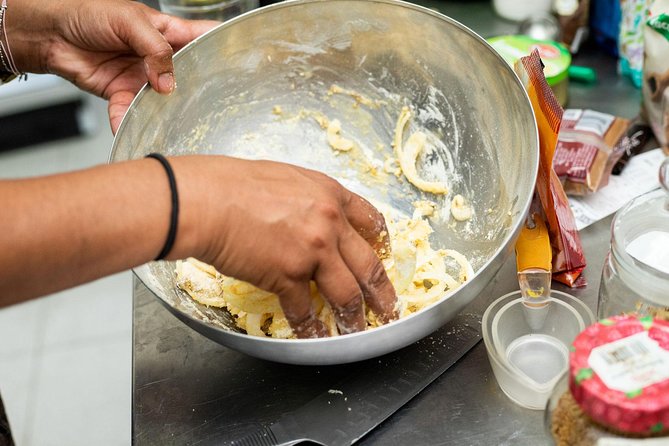
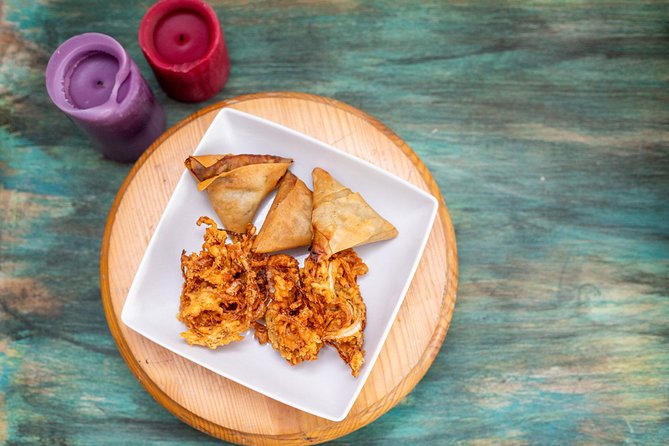
The cooking usually begins with two appetizers prepared side by side. One is pataniscas de bacalhau, a classic Portuguese cod fritter. The other is a Goan boja, a gram flour fritter made with onion and cumin seeds.
These dishes make a good introduction because they show two sides of Paula’s cooking. Cod is closely linked with Portuguese food, while the chickpea-flour fritter brings Indian and Goan influence to the table. You get more than a single national menu, and you can compare how different ingredients become crisp, savory snacks.
The level of participation can vary. Some people have enjoyed plenty of hands-on work, from chopping and mixing to filling pastries. Others found themselves mostly watching Paula cook, measuring an occasional ingredient, or stirring a pan.
That difference is important. If you are an experienced cook hoping to learn exact technique, tell Paula in advance that you want active instruction. Ask what you will prepare yourself and which parts she will handle. The experience is designed as home cooking with a local, not as a professional lesson with an individual workstation for every participant.
Choosing between bacalhau à brás and Goan curry
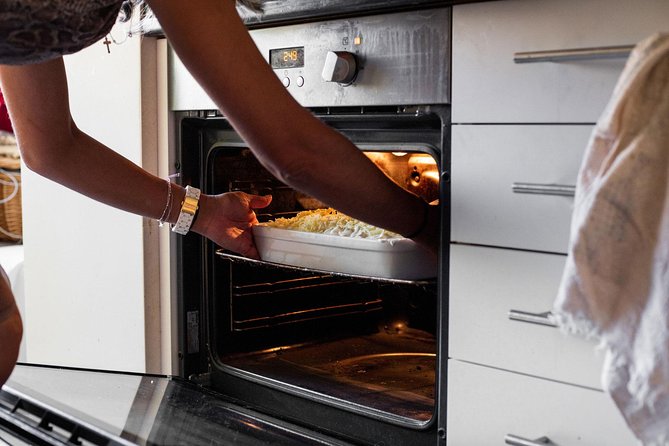
For the main course, you can generally choose between a Portuguese dish and a Goan dish. Bacalhau à brás is one of the traditional Portuguese options: salted cod combined with shredded potatoes and egg.
It is a useful dish to learn because the ingredients are simple but the method matters. The appeal comes from how the cod, potatoes, and egg come together in one pan. Paula focuses on small practical tips, such as preparation methods and ways to make kitchen work easier.
The other choice is a Goan curry. The exact curry can depend on the menu and your conversation with Paula, so contact her if this is the dish you want. Her Goan recipes provide a clear contrast to bacalhau à brás and make the class especially appealing if you want more than the usual Lisbon food lesson.
Paula may prepare two or three Portuguese and Portuguese-Goan dishes in total. The menu is not fixed in the way it would be at a restaurant cooking school. That flexibility is a strength for people who want a personal meal, though it also means you should not assume every listed dish will appear at every session.
A different kind of day out, same corner of Portugal:
- Lisbon City Center Tour – The Unmissable Lisbon
★ 5.0 · 22,234 reviews - Lisbon: Sintra, Pena, Regaleira, Cabo da Roca & Cascais
★ 4.7 · 19,656 reviews - Sintra: Pena Palace and Park Entrance Ticket
★ 4.2 · 17,410 reviews - Lisbon: Jerónimos Monastery Entrance Ticket
★ 4.1 · 14,164 reviews
Saving room for pastel de nata
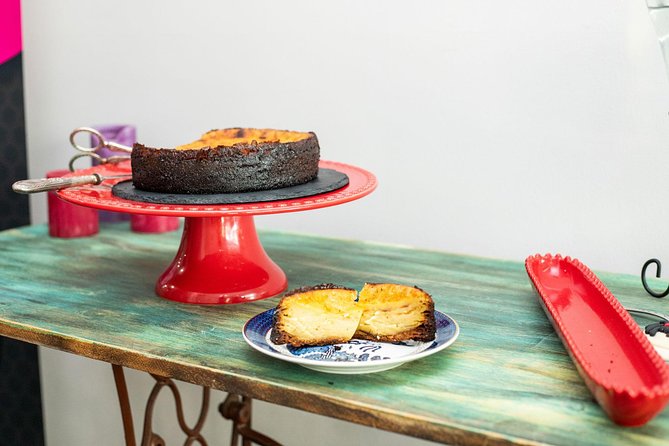
Dessert and coffee or tea finish the meal. Pastel de nata, Lisbon’s famous custard tart, has been part of some sessions, and it is worth asking Paula about it before you arrive if the pastry is your main goal.
The pastry lesson can add real value. Participants have learned how to make the tarts, received recipes, and even received advice on where to find the tins needed to bake them at home. One parent booked the experience for a daughter who mainly wanted a pastel de nata class and ended up with a full meal, market time, and help shopping for special tart plates afterward.
You should understand the distinction, though. This is not advertised as a pastel de nata workshop alone. The central experience is a complete Portuguese and Goan meal, with the tart included when the menu and timing allow.
Coffee or tea at the end gives you time to ask final questions. Paula has also offered to help participants later if they have trouble recreating the recipes. That kind of follow-up is unusual for a short paid activity and makes the recipe handout more useful.
Dining in a real home, with real limitations
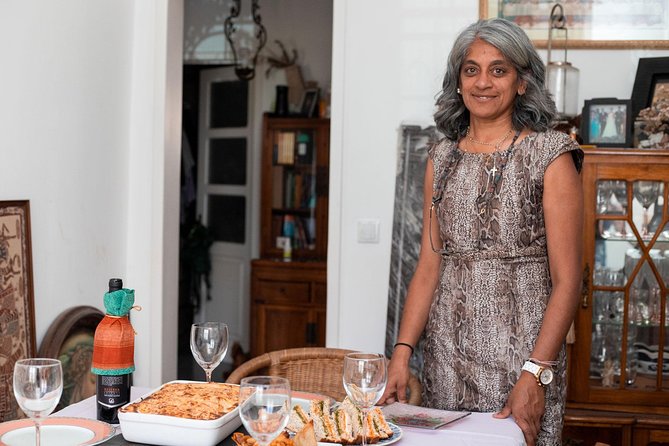
You may eat at Paula’s dining table or at a table in her cooking studio across the street. The studio can be requested for larger groups, but the main setting is her apartment and home kitchen.
The home setting is the reason many people choose this experience. You can see how a local cooks in her own space, hear personal stories, and share a meal without the staged feel of a restaurant demonstration. Paula’s warmth and ease are central to the experience, and the strongest feedback focuses on her hospitality, humor, and willingness to personalize the evening.
There is a practical tradeoff. Paula shares the home with a family, and the apartment can be cluttered. She also has a cat. One critical account described the kitchen as very small and untidy, with participants standing near the cat litter tray. That is not a minor detail if cleanliness, space, or animal contact matters to you.
The cooking environment also affects the lesson. You will not have the broad counters, rows of burners, or presentation-ready equipment found in a culinary school. For me, that is part of the home-visit character, but you should book this for connection and local food, not for a polished professional setup.
How much cooking will you actually do?
The answer depends partly on your group and partly on how clearly you communicate with Paula. The best version of the experience is quite active: you chop, mix, shape, stir, fill pastries, and learn small techniques while Paula guides the process.
Participants have learned simple useful tricks, including onion-cutting methods, pastry filling, and ways to organize preparation. Even confident home cooks have picked up new ideas. Paula is comfortable moving around the kitchen and can explain the steps while managing the meal.
But one person found the cooking too passive and felt that Paula prepared most of the three-course meal while the group watched. The food was also described as bland in that account, although the wider experience has been praised for authentic and delicious cooking. That mixed point deserves a fair reading: a home cook may season differently from you, and a private lesson may not always follow a strict teaching plan.
Before booking, send Paula a message with three clear questions:
- Which dishes will we prepare?
- How much of the cooking will we do ourselves?
- Can the menu be adjusted for vegetarian needs or food restrictions?
Those questions help set expectations and give Paula a chance to tailor the session.
The value of $84 for three and a half hours
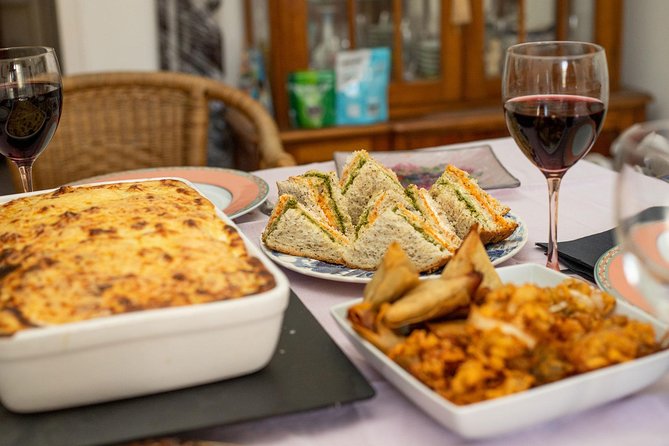
At $84 per person, this is not the cheapest way to eat in Lisbon. You are paying for food, instruction, drinks, dessert, a private setting, and roughly three and a half hours of Paula’s time.
The value is strongest if you want a small-group cultural visit rather than a basic recipe demonstration. A restaurant meal may cost less, but it will not include the ferry crossing, home visit, cooking guidance, stories, or recipes to take with you. A formal cooking school may offer better equipment and more structured instruction, but it may lack the personal connection.
The private format can make the price easier to justify for couples, families, or friends who want the host’s full attention. Group discounts may also be available, so ask about the total cost if you are booking for several people.
I would not choose this activity solely to save money on lunch or dinner. Choose it if you value a personal introduction to Portuguese and Goan food and expect the host relationship to be part of the experience. The food itself is only one piece of what you are buying.
The activity has a 4.9 rating from 50 reviews, with 96 percent recommending it. That points to a very strong overall experience, while the one detailed criticism gives you the main caution: the kitchen is home-sized, the cooking may be unevenly hands-on, and food preferences should be discussed early.
Who will enjoy this experience most?
This suits you if you enjoy cooking, conversation, and ordinary local settings. It is particularly good for:
- Couples wanting a relaxed private activity
- Families with older children who can take part in food preparation
- Food lovers interested in both Portuguese and Goan cooking
- Home cooks who want recipes and practical kitchen tips
- Visitors who like meeting local people away from the main Lisbon sights
- Vegetarians who want a menu discussed in advance
It may not suit you if you want a professional chef’s studio, spotless modern equipment, or a highly structured class where every participant cooks every component. It is also less suitable if you are uncomfortable around cats or do not want to enter a family home.
The experience is offered in English and Portuguese. English-speaking participants have found communication easy, and you can use WhatsApp to settle menu questions before the day.
Timing, transport, and small practical details
The total duration is about three hours and 30 minutes, not counting any extra time you choose to spend getting to or from the ferry. Start at the Cacilhas ferry stop, not at a Lisbon restaurant or hotel.
Public transportation is nearby, and the ferry ride is straightforward, but give yourself a buffer. Missing a boat may not ruin the appointment, yet arriving late creates pressure for you and the host. Wear comfortable shoes for the ten-minute walk through Cacilhas, and avoid planning a rushed museum visit or dinner directly afterward.
Service animals are allowed. If you have questions about allergies, ingredients, or the cat, ask Paula directly before booking.
Cancellation is free up to 24 hours before the local start time. Inside that window, you will not receive a refund, and last-minute changes are not accepted. Since the activity takes place in a private home, early communication matters.
Should you book Paula’s Lisbon cooking experience?
Book it if you want a personal home meal with cooking, not a staged culinary class. The ferry trip, walk through Cacilhas, flexible menu, Portuguese and Goan recipes, and time at Paula’s table create an experience with a strong human side.
I would especially recommend it to anyone who wants to learn beyond pastel de nata. You may make cod fritters, gram flour fritters, bacalhau à brás, curry, or pastries, then sit down with wine, dessert, and coffee. Ask about the exact menu and hands-on role beforehand.
Skip it if you need a spotless kitchen, guaranteed full participation, or restaurant-level consistency. For everyone else, the $84 price can be fair compensation for a private afternoon or evening that combines food, ferry views, local life, and time with Paula.
FAQ
Where does the experience begin?
It begins at Dá Cacilhas, Largo Alfredo Dinis, 2800-252 Almada, Portugal. Paula meets you at the Cacilhas ferry stop.
How do I reach the meeting point from Lisbon?
You take a ferry from downtown Lisbon to Cacilhas. The crossing takes about seven minutes, followed by a walk of roughly ten minutes through the center of town to Paula’s apartment.
How long does the cooking experience last?
The activity lasts approximately three hours and 30 minutes.
What dishes might I prepare?
Possible dishes include pataniscas de bacalhau, Goan bojas, bacalhau à brás, a Goan curry, and possibly pastel de nata. The menu can vary, so contact Paula through WhatsApp before the activity if you have a preference.
Can vegetarian participants be accommodated?
Yes. Vegetarian options can be arranged easily. You should communicate your needs to Paula before the experience.
Is this a professional cooking-school class?
No. This is a private cooking and cultural experience in Paula’s home kitchen. Larger groups may use a cooking studio across the street by request, but the main experience takes place in her home.
More Workshops in Lisbon
- Pastel de Nata Pastry Class: Bake and Enjoy Your Own Treats
★ 5.0 · 485 reviews - Lisbon Portuguese Cooking Class with 3-Course Dinner
★ 5.0 · 445 reviews - Lisbon: Azulejos’ Design Create Your Own Tile Workshop
★ 4.9 · 420 reviews - Lisbon: Surfing Lesson on Costa de Caparica Beach
★ 5.0 · 322 reviews
Recently reviewed around Lisbon
- Lisbon: Catamaran Luxury Sunset and Wine Tour★ 5.0 · 119 reviews
- Lisbon’s authentic Food and Wine tour with a Winemaker★ 5.0 · 67 reviews
- Morning Sailing Tour in Tagus River from Lisbon★ 5.0 · 68 reviews
- Lisbon: Belem Walking Tour with Jeronimos Monastery Tks Included★ 5.0 · 115 reviews
- PRIVATE Unforgettable Full Day Tour to Sintra from Lisbon★ 5.0 · 236 reviews
- Discover Lisbon’s Alfama: Secrets of the Old Town★ 5.0 · 104 reviews
- Sesimbra Wild Beach Tour from Lisbon★ 5.0 · 57 reviews
- Private Jeep Tour from Lisbon – Arrábida, Sesimbra & Beach Picnic★ 5.0 · 48 reviews
Cooking Classes, compared.
Pastel de Nata Cooking Class with Grandma’s Recipe
Read our review →
Pastel de Nata Cooking Class with Port Wine – Sé
Read our review →
Lisbon Portuguese Cooking Class with 3-Course Dinner
Read our review →
Pastel de Nata Cooking Class with Porto Wine (Sé do Porto)
Read our review →Browse the lists this tour appears in