
Reviewed · WORKSHOPS
Pastel de Nata Workshop in Lisbon
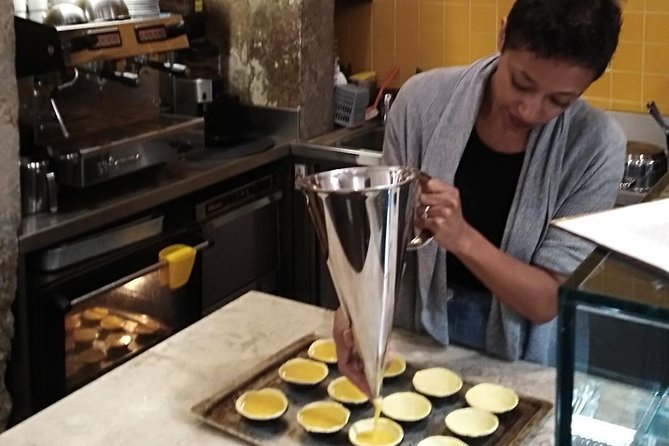
Lisbon’s famous custard tart looks simple until you make one. At Casa dos Ovos Moles, you work through the pastry from scratch, including the layered dough, then fill and bake the tarts before eating them with port wine or ginja. Filipa leads the small class with hands-on guidance and plenty of practical tips.
I like the six-person maximum, since you are not left watching from the back of a crowded room. I also like the written recipe, which gives this two-hour activity a life beyond Lisbon. The main caution is timing: several people needed closer to three hours, and one found the instruction style more intense than relaxing.
In This Review
- Key points to know before booking
- What happens inside Casa dos Ovos Moles
- The dough is the real lesson
- Custard, filling, and the moment the tarts come out
- Filipa’s teaching style and the small-group advantage
- How long should you allow?
- Is $72.41 a fair price?
- Who will enjoy this most?
- The authentic Lisbon food connection
- Should you book the pastel de nata workshop?
- FAQ
- Where does the pastel de nata workshop take place?
- Where does the activity end?
- How long does the class last?
- What do you make during the workshop?
- Is a drink included?
- Is a recipe provided?
- What language is the workshop offered in?
- How many people can join the class?
- Are there different class times?
- Can you cancel for a full refund?
Key points to know before booking
- Make the pastry from scratch: You do not simply add custard to pre-made shells. The dough and full process are part of the lesson.
- Small group, real participation: The class accepts no more than six people, allowing each person a turn at the work.
- Led by Filipa: Her teaching combines pastry technique, Portuguese food background, humor, and practical correction.
- Finish with a local drink: Your baked tarts are served with either port wine or ginja liqueur.
- Located in Chiado: The meeting point is Casa dos Ovos Moles at Calçada do Sacramento 25.
- Plan extra time: The advertised length is about two hours, but the class can run longer.
What happens inside Casa dos Ovos Moles
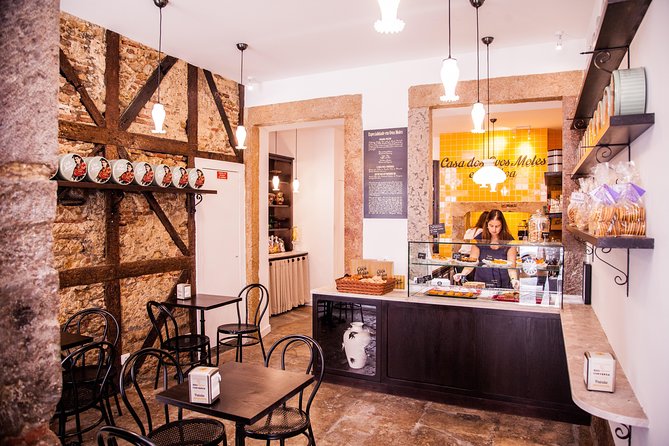
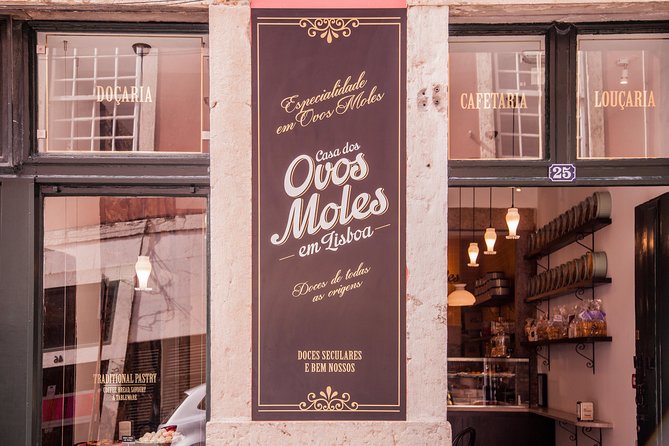
The workshop takes place at Casa dos Ovos Moles, a pastry shop specializing in conventual sweets. This style of Portuguese baking grew inside convents in the 16th century, and the shop connects pastel de nata with that older tradition rather than presenting it as just a modern café snack.
You meet at Calçada do Sacramento 25, in Lisbon’s central Chiado area. The address is near public transportation, which makes it practical to reach from other parts of the city. The activity ends at the same place, so you do not need to arrange a second pickup point or find your way across town after baking.
The setting matters here. You are learning in a pastry shop associated with Portuguese sweets, not in a generic cooking studio. The shop also sells other conventual specialties, including ovos moles de Aveiro, pão de ló de Ovar, and pudim Abade de Priscos. You may find it worth allowing a few minutes before or after class to notice the wider range of traditional desserts.
The class is offered in English, and the instruction is aimed at a mixed range of cooking abilities. You do not need to arrive as an experienced baker. The important thing is being willing to handle dough, follow directions, and take part.
More Lisbon trips worth a second look
- Lisbon: Pastel de Nata Baking Class
★ 4.9 · 2,106 reviews - Lisbon: Traditional Portuguese Cooking Class
★ 4.9 · 592 reviews - Pastel de Nata Pastry Class: Bake and Enjoy Your Own Treats
★ 5.0 · 485 reviews
The dough is the real lesson
Many pastel de nata tastings are over in five minutes. You bite into a flaky shell, admire the blistered top, and move on to the next café. This workshop explains why that shell works.
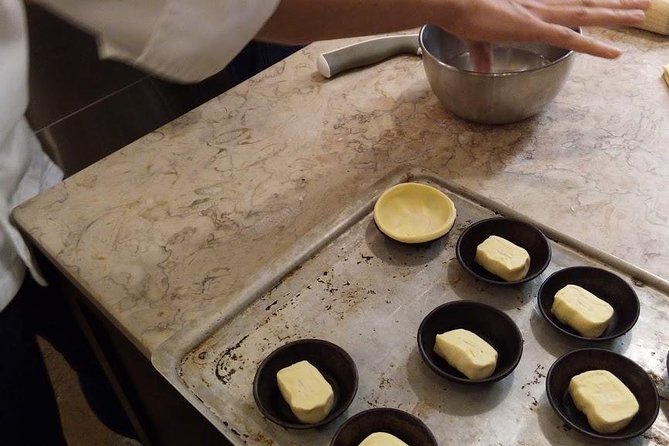
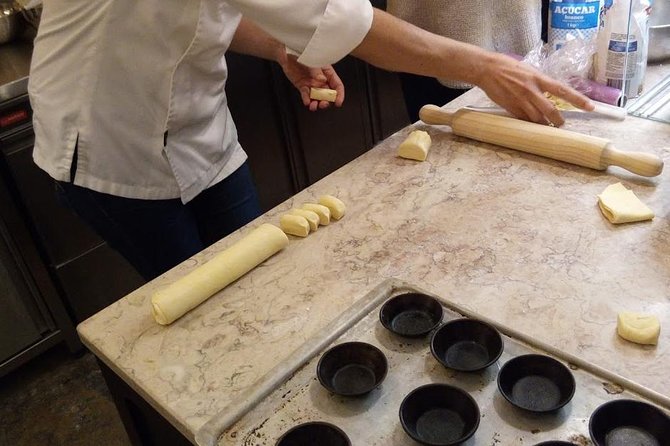
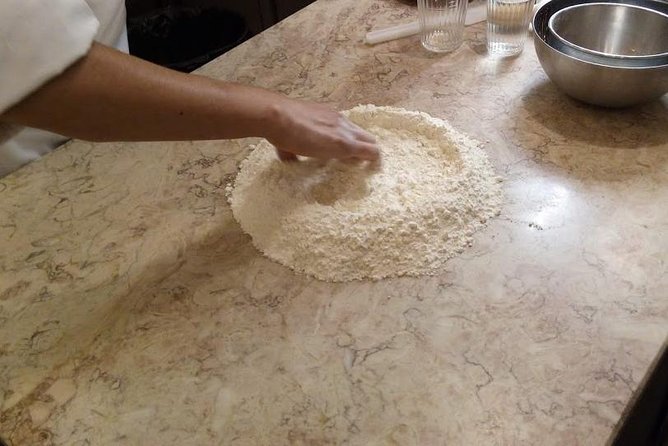
The dough is made by hand as part of the process. That gives you a better sense of the pastry’s technique, especially the care needed to create a thin, layered shell that can hold the custard. The recipe is not reduced to a quick demonstration. You take part in the steps and learn how the pastry comes together.
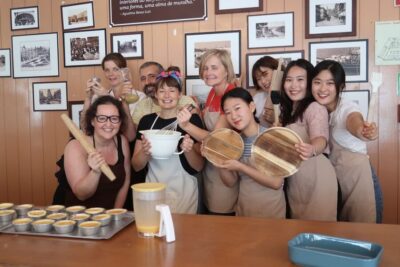
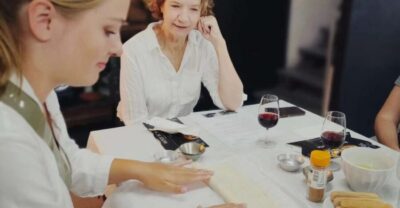
Filipa explains and demonstrates each stage, then gives the group a chance to work. With only six people, you should have a clearer view and more direct help than in a large class. Several parts of the process are shared among the group, but the small format means you are not simply standing aside while one person does everything.
This is also where the class can feel more like a lesson than a casual food stop. Pastry has precise techniques, and Filipa may correct your handling or point out mistakes. Most people found her patient, funny, and encouraging, but one person felt the correction was too intense and compared the atmosphere to a cooking competition.
That difference comes down to what you want. If you like learning exact methods and appreciate a teacher who pays attention to details, the instruction should suit you. If you want a loose, purely social activity with little correction, the hands-on format may feel more demanding than expected.
Custard, filling, and the moment the tarts come out
The workshop covers the full pastel de nata process, not only the shell. You prepare the pastry and work through the recipe before the final tasting. The supplied recipe gives you a useful record of the method, though you should expect the technique to require practice at home.
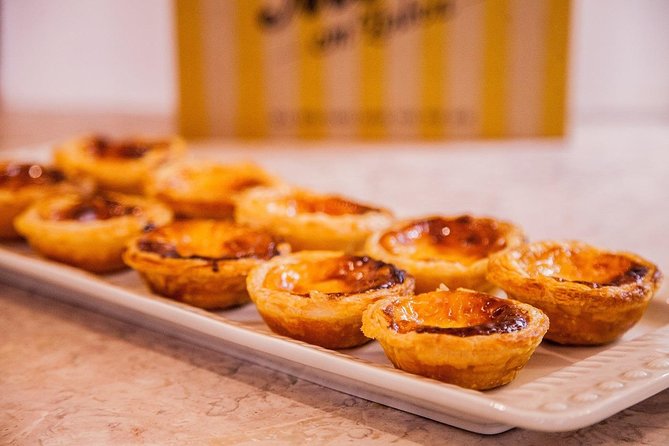
The finished tarts are the payoff. You eat the pastries you prepared, rather than receiving a separate sample made earlier by the shop. That makes the tasting more revealing. You get to see how your work turned out and understand how much care goes into a tart that can look effortless behind a bakery counter.
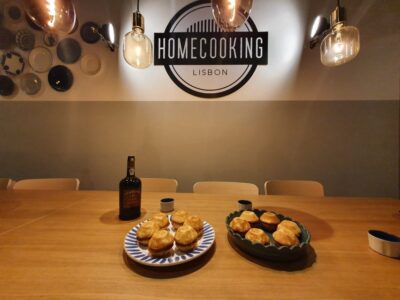
The experience includes port wine or ginja liqueur with dessert. Ginja is a Portuguese sour cherry liqueur, and its sweet, fruity character gives the tasting a distinctly local touch. If you prefer port, you can choose that instead. The drink turns the final few minutes into a small Portuguese food ritual rather than a simple baking class.
The pastries are served fresh at the end. That is one of the strongest reasons to book a workshop instead of only visiting another pastry shop. You still get the classic Lisbon treat, but you also understand the work behind it.
Filipa’s teaching style and the small-group advantage
The host is identified in the experience details and participant comments as Filipa. Her role is more than showing a recipe. She explains the steps, answers questions, shares pastry tips, and adds some background about Portuguese baking.
Her English is described as clear, and she has been praised for being engaging, funny, patient, and passionate about the craft. That warmth seems especially useful for families and people who are not regular bakers. One family with teenagers found that everyone could take part, while solo visitors, couples, and friends also fit the format well.
The six-person limit is important enough to shape the whole experience. In a larger class, your turn might be brief and you might miss small details. Here, each person gets a more personal part of the process and can ask for help without waiting behind a crowd.
The tradeoff is that a small class can feel more exposed. If you make a mistake, the teacher is likely to notice and correct it. That is useful if you want to improve, but less appealing if you prefer to work quietly without much attention.
A different kind of day out, same corner of Portugal:
- Lisbon City Center Tour – The Unmissable Lisbon
★ 5.0 · 22,234 reviews - Lisbon: Sintra, Pena, Regaleira, Cabo da Roca & Cascais
★ 4.7 · 19,656 reviews - Sintra: Pena Palace and Park Entrance Ticket
★ 4.2 · 17,410 reviews - Lisbon: Jerónimos Monastery Entrance Ticket
★ 4.1 · 14,164 reviews
How long should you allow?
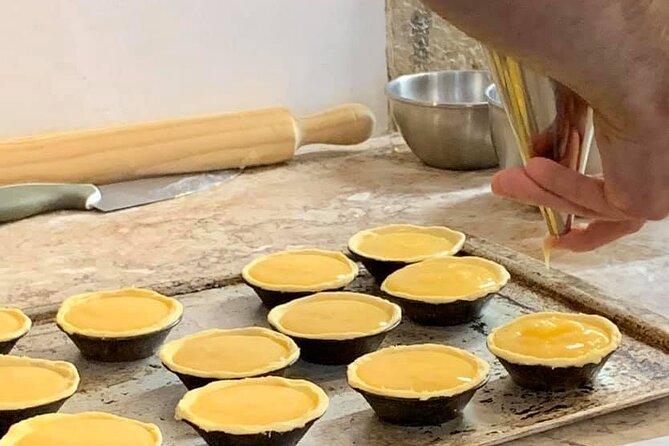
The stated duration is approximately two hours, with a choice of two class times. That makes it easy to fit into a day of sightseeing, especially if you choose a session that leaves the rest of the afternoon or evening open.
I would still keep at least three hours free. The process is hands-on, and the final tasting takes time. One person specifically advised allowing three hours rather than two. The difference may matter if you have a timed museum entry, a dinner reservation, or a train to catch.
Because the activity begins and ends at the pastry shop, the logistics are simple. You do not need to manage a moving itinerary. Just allow time to reach the Chiado meeting point at Calçada do Sacramento 25 and leave some breathing room afterward.
The class is available by mobile ticket and is offered in English. Confirmation is provided at booking. These details make it a straightforward addition to a Lisbon schedule, but the flexible cancellation rules still require attention: you receive a full refund if you cancel at least 24 hours before the start time. Changes or cancellations inside that window are not accepted for a refund.
Is $72.41 a fair price?
At $72.41 per person, this costs more than buying a few pastel de nata at a bakery. That comparison misses the point, though. You are paying for instruction, ingredients, a small class, the finished dessert, a drink, and a recipe you can try again at home.
The value is strongest if you enjoy food activities and want to learn a skill. The written recipe adds something lasting, although baking the tarts successfully at home may take more than one attempt. You are also buying access to a pastry shop and a teacher who can explain small details that are hard to pick up from a recipe alone.
The value is weaker if you mainly want to taste Portugal’s best custard tart. Lisbon has many places to buy one for far less money. This workshop makes sense when the making matters as much as the eating.
The high satisfaction level, with a 4.8 rating from 72 published ratings and recommendation from 96 percent of participants, supports the price for the right audience. Still, I would not book it solely because of the score. The key question is simple: do you want a short cooking lesson with active participation, or do you want an inexpensive pastry stop?
Who will enjoy this most?
I would recommend the workshop to couples, families with older children or teenagers, solo visitors who like meeting a small group, and anyone who plans a trip around local food. You do not need professional kitchen skills, and the format gives beginners a clear way to participate.
It is also a good choice for people who have already tasted pastel de nata and want to understand the difference between a crisp shell, custard filling, and fresh-from-the-oven pastry. You leave with more context for the dessert and a recipe that lets you keep the experience going at home.
The class may not suit you if you dislike structured instruction or feel uncomfortable being corrected. It may also be a poor fit on a tightly packed sightseeing day because the actual session can last longer than the stated two hours.
Keep in mind that the activity requires good weather under its operating policy, even though the workshop takes place indoors. If the provider cancels because of weather or because too few people have booked, you are offered another date or experience, or a full refund.
The authentic Lisbon food connection
Pastel de nata is now sold around the world, but making it in Lisbon gives the pastry a clearer setting. At Casa dos Ovos Moles, the tart is placed alongside other conventual sweets, linking it to an old Portuguese baking tradition.
That context is handled lightly rather than as a formal history lecture. You get food background while working, which is the right balance for a short class. The experience remains practical, but you gain a better idea of why egg-based sweets became such an important part of Portuguese pastry.
The final glass of port or ginja adds another local note. It is not a full food tour, and you should not expect a broad tasting menu. Instead, you get one dessert prepared by your group and one traditional drink to match it.
I like this narrow focus. You spend the time learning one famous Portuguese specialty properly instead of rushing through several unrelated samples.
Should you book the pastel de nata workshop?
Book it if you want to do more than photograph a custard tart. The small group, hands-on dough work, English instruction, fresh tasting, local drink, and take-home recipe make this a useful two-hour-plus activity in central Lisbon.
I would choose an earlier class time if you have evening plans, and I would leave three hours open. Bring curiosity, not perfectionism. Filipa’s close instruction is part of the value, but the class may feel intense if you want a completely relaxed demonstration.
If your budget is tight or your only goal is to eat a pastel de nata, spend your money at a bakery instead. If you want a practical food memory that you can repeat at home, this workshop is a strong pick.
FAQ
Where does the pastel de nata workshop take place?
The workshop takes place at Casa dos Ovos Moles, located at Calçada do Sacramento 25, 1200-393 Lisbon, Portugal.
Where does the activity end?
The workshop ends back at the meeting point, Casa dos Ovos Moles.
How long does the class last?
The listed duration is approximately two hours, but you should allow up to three hours because the hands-on process may take longer.
What do you make during the workshop?
You make pastel de nata, including the pastry dough and the rest of the process from scratch.
Is a drink included?
Yes. The dessert tasting includes a choice of port wine or ginja liqueur.
Is a recipe provided?
Yes. You receive a written recipe to use at home.
What language is the workshop offered in?
The workshop is offered in English.
How many people can join the class?
The experience has a maximum of six participants.
Are there different class times?
Yes. You can choose from two class times.
Can you cancel for a full refund?
Yes. You can cancel at least 24 hours before the start time for a full refund. Cancellations or changes made less than 24 hours before the start time are not accepted for a refund.
Recently reviewed around Lisbon
- Lisbon: Catamaran Luxury Sunset and Wine Tour★ 5.0 · 119 reviews
- Morning Sailing Tour in Tagus River from Lisbon★ 5.0 · 68 reviews
- Lisbon’s authentic Food and Wine tour with a Winemaker★ 5.0 · 67 reviews
- Lisbon: Belem Walking Tour with Jeronimos Monastery Tks Included★ 5.0 · 115 reviews
- PRIVATE Unforgettable Full Day Tour to Sintra from Lisbon★ 5.0 · 236 reviews
- Discover Lisbon’s Alfama: Secrets of the Old Town★ 5.0 · 104 reviews
- Sesimbra Wild Beach Tour from Lisbon★ 5.0 · 57 reviews
- Private Jeep Tour from Lisbon – Arrábida, Sesimbra & Beach Picnic★ 5.0 · 48 reviews
Workshops, compared.
Pastel de Nata Cooking Class with Grandma’s Recipe
Read our review →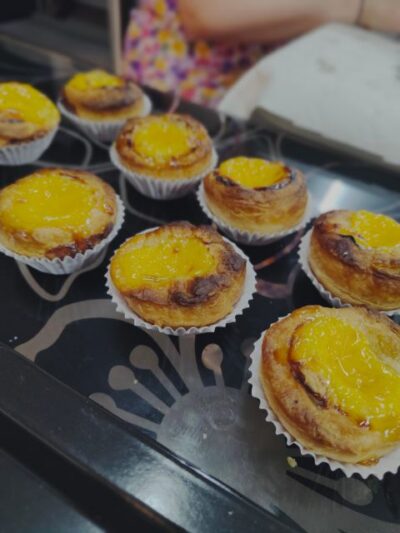
Pastel de Nata Cooking Class with Port Wine – Sé
Read our review →

Browse the lists this tour appears in