
Reviewed · WORKSHOPS
Ribeira Grande, Azores: Group Surf Lessons
The best part of this São Miguel surf lesson is its clear path from sand to sea. You learn ocean safety, warm up, handle the board, practice the take-off on land, then try catching white-water waves at one of three beaches. Constantino and Pedro are especially praised for hands-on coaching, while João and Johan also receive warm marks for patient instruction.
I like the small groups of no more than six and the fact that the school chooses the beach according to the day’s conditions. That gives beginners a better chance of finding manageable waves. The main drawback is that you do not know the beach until the day before, and the lesson is physical enough to leave you sore or bruised.
In This Review
- Key points at a glance
- Why this is a good first surf lesson in São Miguel
- Your first 20 minutes: safety, warm-up, and ocean basics
- Practicing the take-off on dry sand
- Entering the water and catching white-water waves
- The three beaches and the changing meeting point
- What the group size means for your lesson
- How demanding are two hours on an Azorean beach?
- Who will get the most from Watergliders
- Price, extras, and practical value
- Should you book this surf lesson?
- FAQ
- How long is the group surf lesson?
- How much does the lesson cost?
- What equipment is included?
- Do I need previous surfing experience?
- Do I need to know how to swim?
- Which beach will the lesson use?
- When will I learn the meeting point?
- Is transport included?
- Can children join the lesson?
Key points at a glance
- Three possible beginner beaches: Praia das Milícias, Praia de Monte Verde, or Areal de Santa Bárbara.
- A true first lesson: Learn safety, equipment, paddling, wave timing, and the stand-up movement from scratch.
- Small-group coaching: Six participants or fewer means useful individual tips during the group session.
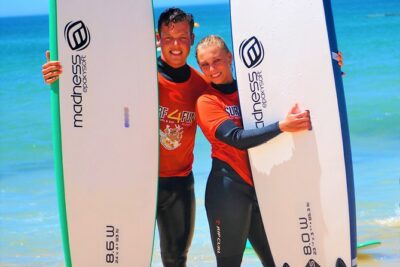
- All core gear included: You receive a surfboard, wetsuit, leash, and insurance.
- English and Portuguese instruction: Guides such as Constantino, Pedro, João, and Johan lead sessions.
- A lively but demanding two hours: Many beginners manage a first ride, but you still need energy, mobility, and the ability to swim.
Why this is a good first surf lesson in São Miguel
Surfing can look simple from the beach. Lie on board, paddle, stand up, ride. In practice, the timing, balance, wave direction, and board control take some explaining. This class gives you the useful basics before sending you into the water.
The two-hour format is well judged for a first attempt. You have enough time to learn the movements and try several waves, but not so much time that the lesson becomes an all-day endurance test. The schedule begins with instruction on land, which matters because it lets you understand the take-off before the board starts moving beneath you.
I also like that the lesson is designed for people with no surf background. You do not need to arrive knowing surf terms or board technique. You do need to be able to swim, and you should be comfortable with a physical activity that involves paddling, pushing yourself up, kneeling, falling, and trying again.
The overall rating is 4.9 from 198 ratings, and the praise is unusually consistent on a few points: clear explanations, kind instructors, good safety guidance, and frequent encouragement. That does not guarantee perfect waves on your date, but it gives you a useful picture of the teaching style.
More Azores trips worth a second look
- Lisbon: Pastel de Nata Baking Class
★ 4.9 · 2,106 reviews - Porto: Pastel de Nata Cooking Class with Grandma’s Recipe
★ 5.0 · 1,565 reviews - Porto: Pastel de Nata Pastry-Making Workshop
★ 4.9 · 1,542 reviews
Your first 20 minutes: safety, warm-up, and ocean basics
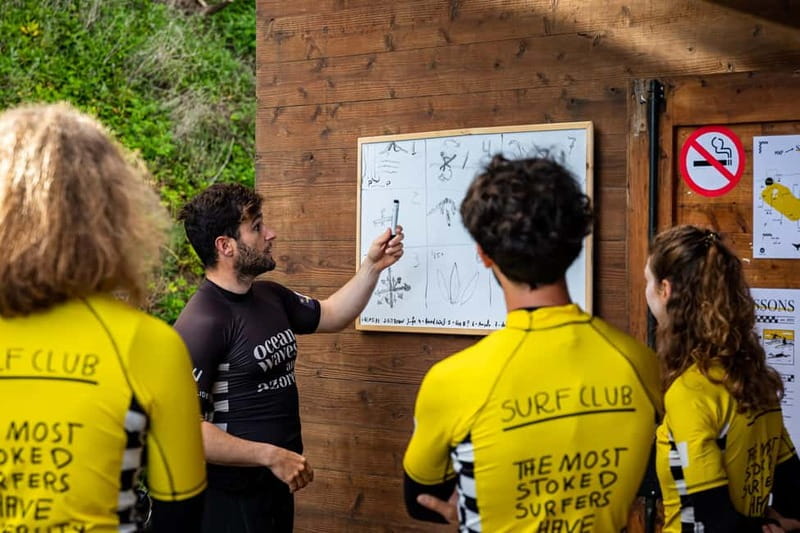
The lesson starts with an explanation of how to behave in the sea. You learn basic safety rules and gain a working sense of the marine conditions around you. For a beginner, this is more important than a quick attempt to stand. Knowing how to enter the water, manage the board, and respond calmly makes the rest of the session safer and more enjoyable.
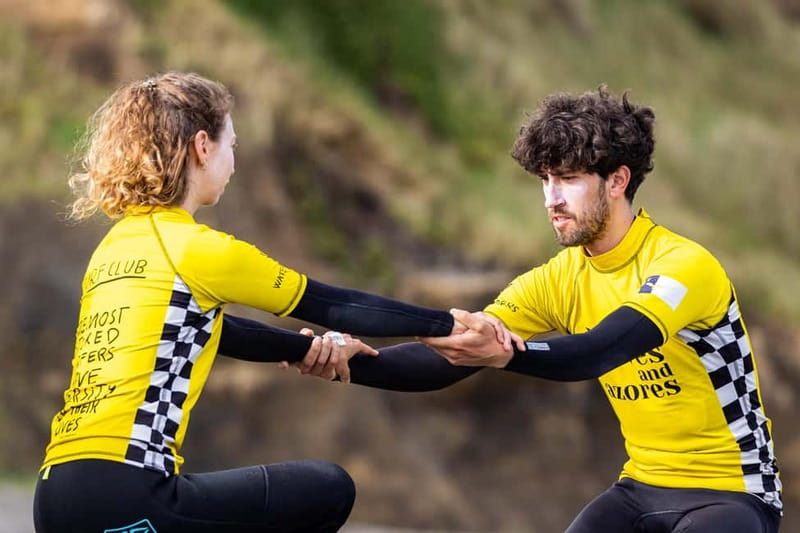
A dynamic warm-up follows. Expect exercises aimed at loosening the body, improving flexibility, and reducing the chance of injury. This is not filler. Surfing asks a lot from your shoulders, hips, knees, stomach, and lower back, even during a short beginner session.
The instructors then introduce the equipment. Your package includes a board, wetsuit, leash, and insurance, so you do not need to arrange the basic gear yourself. The board and leash are not just accessories to collect at the beach. You need to understand how to carry the board, how the leash connects you to it, and how to keep the board under control in the water.
Several people who had never surfed before were able to stand on the board during their first two hours. That is an encouraging possibility, not a promise. Your result will depend on your balance, timing, fitness, comfort in the water, and the waves available that day.
Practicing the take-off on dry sand
The take-off is the key movement in beginner surfing. You paddle, place your hands, push your upper body up, bring your feet underneath you, and rise into a stable stance. It sounds neat on paper. On a moving board, it is easy to rush the movement or place your feet too far apart.
Watergliders teaches this sequence on the sand first. This gives you a chance to repeat the motion without wave pressure. Listen closely here, since a small correction to your hand position or foot placement can make the water attempt much easier.
The sand practice also helps remove some of the nerves that come with a first lesson. You can ask questions, see a demonstration, and rehearse the movement until it feels less foreign. Instructors are reported to give plenty of tips during the session, rather than delivering one explanation and leaving you to work it out alone.
The teaching style appears encouraging without treating every participant as identical. One person may stand quickly, while another needs help with balance, paddling, or timing. Pedro was praised for helping a participant in her 50s find a different route toward success, rather than focusing only on the perfect stand-up ride.
That matters in a group setting. You should expect shared instruction, but the group limit of six leaves room for individual help. The experience is not private coaching, yet it is much more personal than a large beach class.
Entering the water and catching white-water waves
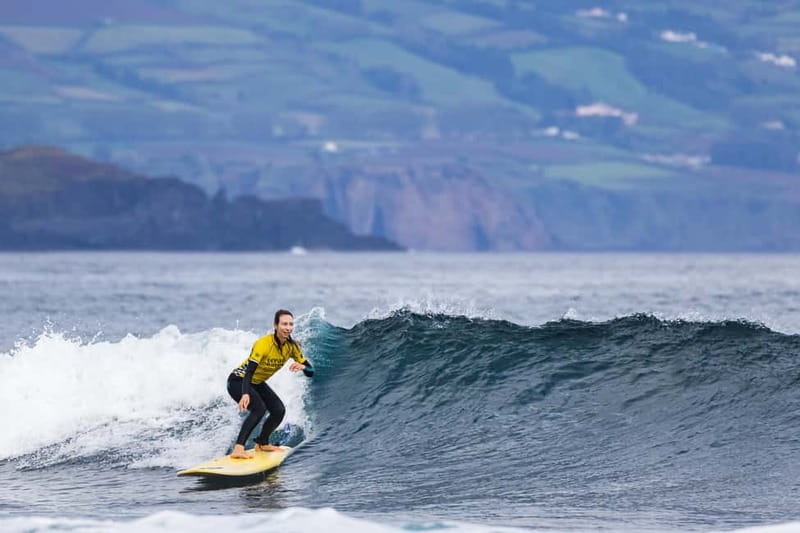
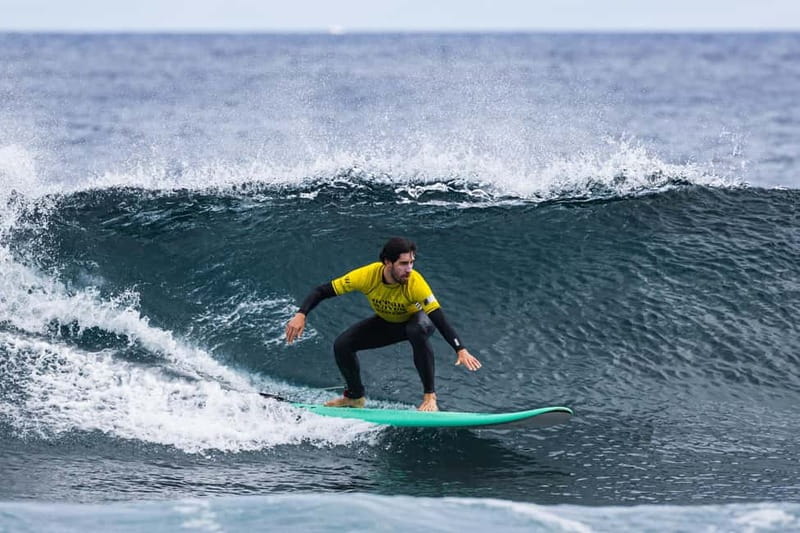
After the dry-land practice, you learn how to enter the water and manage the board. The first target is usually the white water, the broken part of the wave. This is the sensible place for beginners to learn wave timing and board stability.
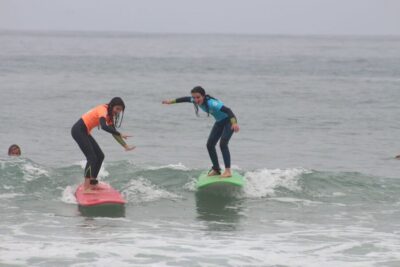
Your early attempts may involve lying on the board, paddling, and letting the broken wave push you toward shore. You will work on keeping the board straight, paddling at the right moment, and responding to the instructor’s signal. Once those pieces begin to connect, you practice the take-off while the board is moving.
Do not judge the lesson only by how many times you stand. Surfing involves reading the wave, staying calm after a fall, turning the board back toward shore, and trying again. A good instructor helps you notice what went wrong and offers a small adjustment for the next attempt.
The strongest praise for this experience centers on active coaching. Constantino is repeatedly singled out for staying involved, giving practical corrections, and encouraging beginners through the process. That kind of attention is particularly useful when you are tired and your technique begins to unravel.
Several participants managed to ride a few waves within the two-hour class. Some groups even had everyone standing by the end. You might achieve the same, but the useful goal is to leave with a safe foundation and a clear idea of what to practice next.
A different kind of day out, same corner of Portugal:
- From Ponta Delgada: Whale and Dolphin Watching Trip
★ 4.7 · 4,109 reviews - Azores Whale Watching & Islet Boat Tour
★ 4.6 · 2,146 reviews - São Miguel West: Full-Day Van Tour with Lunch
★ 4.9 · 1,948 reviews - São Miguel West Full Day Tour with Setes Cidades Including Lunch
★ 5.0 · 1,391 reviews
The three beaches and the changing meeting point
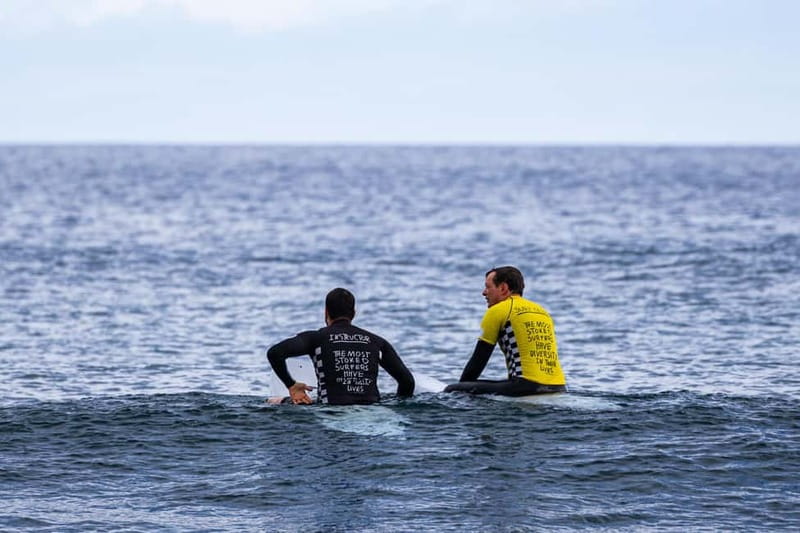
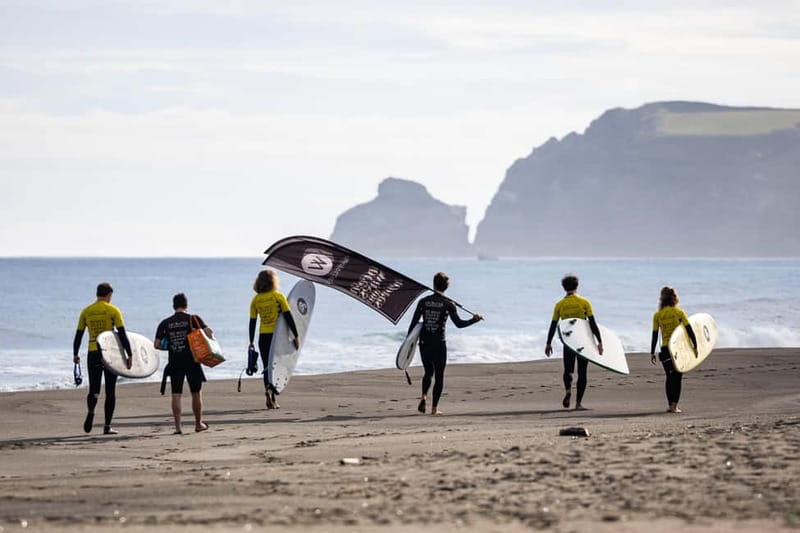
The class may take place at Praia das Milícias, Praia de Monte Verde, or Areal de Santa Bárbara. The instructors select the beach according to the most favorable conditions for that day’s beginner lesson.
This flexible plan is a real advantage in the Azores. You are not locked into one stretch of coast if the waves or weather are better elsewhere. The trade-off is that you cannot plan your entire day around one beach with complete certainty.
You receive the exact meeting point the day before by WhatsApp, SMS, email, or phone call. The meeting point may also be the Watergliders school or store in the north of the island, or Milícias Beach in the south. Check your phone and keep your schedule flexible after the message arrives.
The changing location also affects transport. Pick-up and drop-off are not included, but they can be arranged for 15 euros per person. If you have a rental car, the final location matters because the beach may be different from the one you first expected. If you are staying far from the selected beach, the transfer option may make the extra cost worthwhile.
The sea views are part of the appeal. From the water, you see São Miguel from a different angle, with the shoreline behind you and the open Atlantic around you. The setting adds something special to a lesson that could otherwise take place at any ordinary surf beach.
What the group size means for your lesson
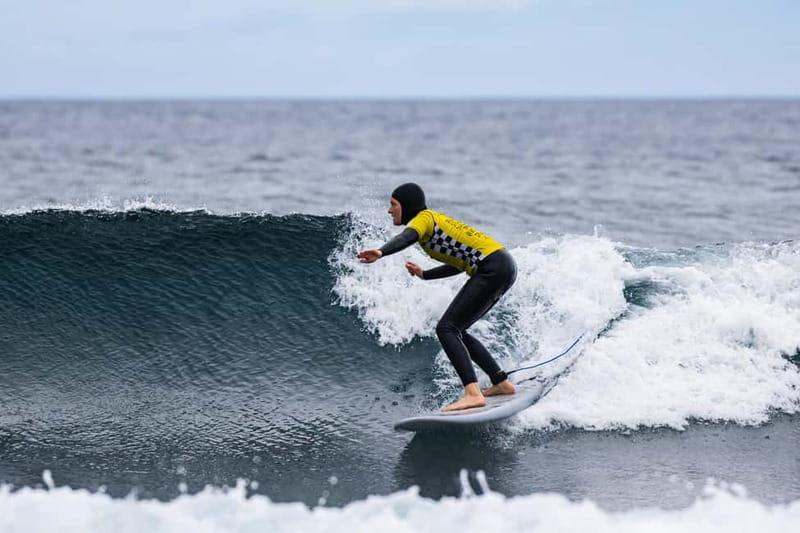
The group is limited to six participants. That is a useful number for a beginner class because it allows the instructor to watch several people without losing sight of the whole group.
You still share the opening safety talk, warm-up, equipment explanation, and land practice. In the water, you can expect a mix of group guidance and individual corrections. The best feedback about the class repeatedly points to clear explanations, patience, and one-to-one tips alongside the shared instruction.
Skill levels can vary. One person may have tried a board before, while another may be learning how to lie on it. The instructors adjust their teaching to different abilities, so you do not need to arrive at the same level as the rest of the group.
The group format also affects the mood. The sessions are described as relaxed, cheerful, and supportive, with instructors congratulating progress. That can make a difference when you fall repeatedly in front of strangers. No one should expect a silent technical clinic, but the atmosphere appears friendly and focused on helping people improve.
For a private lesson, you would normally pay more. At $53 per person, this class offers a reasonable way to try surfing without buying equipment or committing to several days of instruction. The value is strongest if you want a first taste and hope to stand on a few waves. It is less suited to someone seeking advanced technique or private coaching.
How demanding are two hours on an Azorean beach?
Surfing is hard work, even when the waves are small. You paddle, lift your upper body, push through your legs, carry the board, and repeat the same movements many times. Bring water and do not arrive already exhausted from a long day of hiking.
Some people report aching muscles and bruises after the lesson. A wetsuit gives warmth and may also provide some padding around the knees. Sunscreen is important, even when the air feels cool or the sky is cloudy. Use biodegradable sunscreen, as requested for the activity.
Pack beachwear, a towel, water, and a change of clothes. You will be much happier having dry clothes ready after the lesson. Alcohol and drugs are not allowed, and the instructors need you alert and able to follow safety instructions.
The activity is not suitable for children under 13, pregnant women, people with back problems, wheelchair users, or people over 60. The stated age limit should guide your booking. One exceptional report involved a nine-year-old after prior discussion with the school, but that should not be treated as the normal policy.
Who will get the most from Watergliders
I would choose this lesson if you are visiting São Miguel and want an active experience tied closely to the island’s Atlantic setting. It works especially well for first-time surfers, couples, friends, and families with teenagers aged 13 or older.
You should be ready to swim and to spend two hours on a board in the sea. If you are nervous, the instructors’ step-by-step method and safety focus should help, but surfing still requires you to accept falling and getting back on the board.
The class is also a good match for people who like practical instruction. You are not simply handed a board and pointed toward the waves. You learn what the equipment does, how to enter the water, how to paddle, and how to catch the white water.
I would hesitate to book it if you have serious back problems, limited mobility, are pregnant, or are uncomfortable in the water. It is also not the right choice if you want a leisurely beach outing. The two hours can be tiring, and the physical effort continues even when the mood is light.
Price, extras, and practical value
The listed price is $53 per person. That includes the board, wetsuit, leash, licensed instructor, and insurance. For a first lesson, this is a fair package because the equipment is essential and would be inconvenient to rent separately.
The optional transfer costs 15 euros per person for pick-up and drop-off. A regional gastronomic experience after the lesson costs about 20 euros. Neither is required, so you can keep the basic outing close to the advertised price if you arrange your own transport and meal.
The booking terms are flexible. You can reserve now and pay later, and cancellation is free up to 24 hours before the activity for a full refund. Starting times depend on availability, and the beach decision comes the day before, so do not book a tightly packed schedule immediately afterward.
The practical question is not simply, Can I afford $53? It is, Will I use the instruction and gear enough to make the outing worthwhile? If you want to try surfing once and learn the basics in a small group, the answer is likely yes.
Should you book this surf lesson?
Book it if you want a friendly, well-structured first step into surfing on São Miguel. The strongest reasons are the six-person limit, the instructors’ active coaching, the choice of beach based on conditions, and the fact that board, wetsuit, leash, and insurance are included.
Go in with sensible expectations. You may stand and ride several waves, as many beginners do, but the sea does not follow a script. You may spend much of the class learning balance, paddling, and how to recover after a fall.
For the best experience, keep the day flexible, check your messages the day before, bring water and dry clothes, use biodegradable sunscreen, and save some energy for the lesson. If that sounds like your kind of afternoon, Watergliders Azores Surf Club offers a good-value introduction to the Atlantic.
FAQ
How long is the group surf lesson?
The lesson lasts two hours, including safety guidance, warm-up exercises, equipment instruction, land practice, and time in the water.
How much does the lesson cost?
The price is $53 per person.
What equipment is included?
The activity includes a surfboard, wetsuit, leash, and insurance.
Do I need previous surfing experience?
No. The class is designed for beginners and first-time surfers.
Do I need to know how to swim?
Yes. The activity requires you to be able to swim.
Which beach will the lesson use?
The lesson may take place at Praia das Milícias, Praia de Monte Verde, or Areal de Santa Bárbara. The beach is chosen according to the best conditions for beginners.
When will I learn the meeting point?
You will be informed one day before the lesson. The school may contact you by WhatsApp, SMS, email, or phone call.
Is transport included?
No. Pick-up and drop-off are optional and cost 15 euros per person.
Can children join the lesson?
The class is not suitable for children under 13.
Recently reviewed around Azores
- São Miguel: Whales & Volcano Full-Day Tour with Lunch★ 4.5 · 95 reviews
- Ponta Delgada: Sete Cidades Volcano Lakes Shore Excursion★ 4.7 · 198 reviews
- Ponta Delgada: Pineapple wine tasting and pineapple tour★ 4.8 · 127 reviews
- Ponta Delgada: Historical Walking Tour★ 4.4 · 41 reviews
- Ponta Delgada: Greenhouse Hot Tube with Pineapple Tour★ 4.4 · 76 reviews
- Pico Island: Whale Watching Experience from Lajes★ 4.9 · 492 reviews
- Pico island: Climb Mount Pico, highest mountain in Portugal★ 5.0 · 65 reviews
- Ponta Delgada: São Miguel Buggy Tour Around Sete Cidades★ 5.0 · 210 reviews
Workshops, compared.


Pastel de Nata Cooking Class with Grandma’s Recipe
Read our review →

Pastel de Nata Cooking Class with Port Wine – Sé
Read our review →

Browse the lists this tour appears in