
Reviewed · PENA PALACE & SINTRA TOURS
Sintra: Hispanic Moorish Tile Workshop
The most appealing part of this Sintra workshop is that you do not just paint a souvenir. You learn the Aresta technique, an Islamic-influenced method that uses raised clay lines to contain colored glaze, then make one tile from fresh clay and paint another. It turns the tiled streets and palaces of Sintra into something you understand with your hands.
I like the small group of no more than eight, which gives Aldina time to help with patterns and brushwork. I also like the practical souvenir: your painted tile is fired after class and can be collected later or sent on, though current postal limits mean U.S. visitors cannot use regular international shipping.
The main drawback is timing. The workshop runs from 3 to 5 pm, so you need to plan your Sintra sightseeing around it. Your finished piece is also not ready that day, and shipping costs extra.
In This Review
- Key points to know before booking
- Why this tile class adds meaning to Sintra
- From fresh clay to a patterned tile
- Painting with colored glazes
- What Aldina adds to the afternoon
- A useful 3 pm plan in Sintra
- Collecting or sending your fired tile
- Is $58 a fair price?
- Who will enjoy this workshop most?
- Small details that make the experience worthwhile
- Should you book the Sintra tile workshop?
- FAQ
- How long does the Hispano-Moorish tile workshop last?
- What do I make during the workshop?
- Is the workshop taught in English?
- Is the workshop suitable for young children?
- Can I take my painted tile home the same day?
- Can the studio ship my finished tile?
Key points to know before booking
- Make two different tiles: Press fresh clay into a mold, then decorate a separate tile with colored glazes.
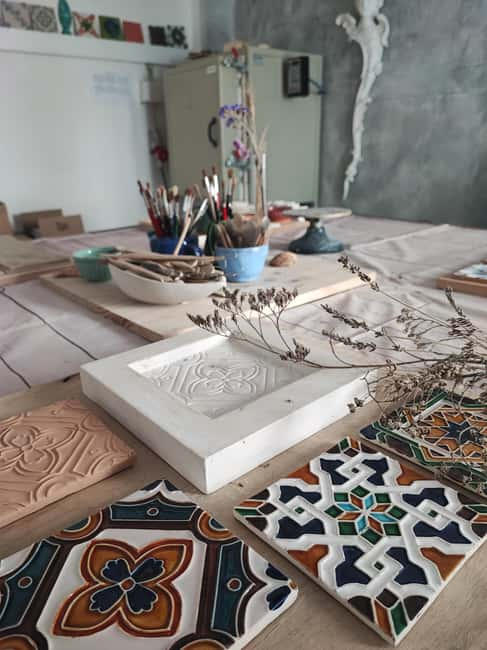
- Learn the Aresta method: Raised lines guide the glaze and reflect Hispano-Moorish ceramic traditions brought from Spain in the 15th century.
- Aldina leads the class: Expect clear instruction, patient help, and an English-language workshop.
- Keep the group small: With a maximum of eight people, this feels more like a studio lesson than a mass-market craft stop.
- Plan for the finished piece later: Firing takes time. Pickup is available in the studio, while delivery or shipping costs extra.
- Allow two hours in Sintra: The class begins at 3 pm and ends at 5 pm, with no food, drinks, or transport included.
Why this tile class adds meaning to Sintra
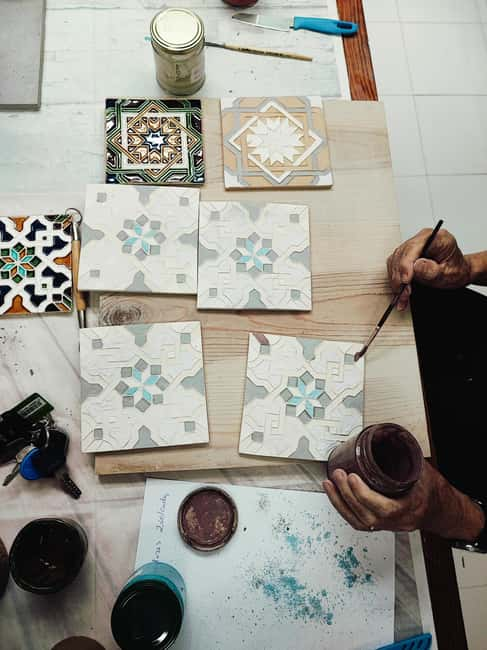
Sintra is full of painted ceramic surfaces, from decorative walls to patterned details in historic buildings. A workshop like this gives you a useful way to read those designs. Instead of seeing only pretty colors, you begin to notice geometric borders, repeated motifs, raised outlines, and the way glaze sits inside a pattern.
The class focuses on Hispano-Moorish tiles, a style linked to Islamic artistic influence and brought from Spain in the 15th century. The name can sound rather technical, but the activity itself is easy to follow. You work with clay, molds, and glaze under guidance, and you leave with a clearer sense of how an old decorative technique works.
I especially like the balance between explanation and making. This is not a lecture about tile history, and it is not simply an open table with paints. You receive some cultural context, then put the method into practice.
The setting is Estudio Lazuli, a creative studio in Sintra. One useful detail is its location near the train station, making the workshop practical for a day trip from Lisbon. You can spend the morning or early afternoon exploring Sintra, then walk to the studio for the 3 pm start.
More Sintra trips worth a second look
- Lisbon: Pastel de Nata Baking Class
★ 4.9 · 2,106 reviews - Porto: Pastel de Nata Cooking Class with Grandma’s Recipe
★ 5.0 · 1,565 reviews - Porto: Pastel de Nata Pastry-Making Workshop
★ 4.9 · 1,542 reviews
From fresh clay to a patterned tile
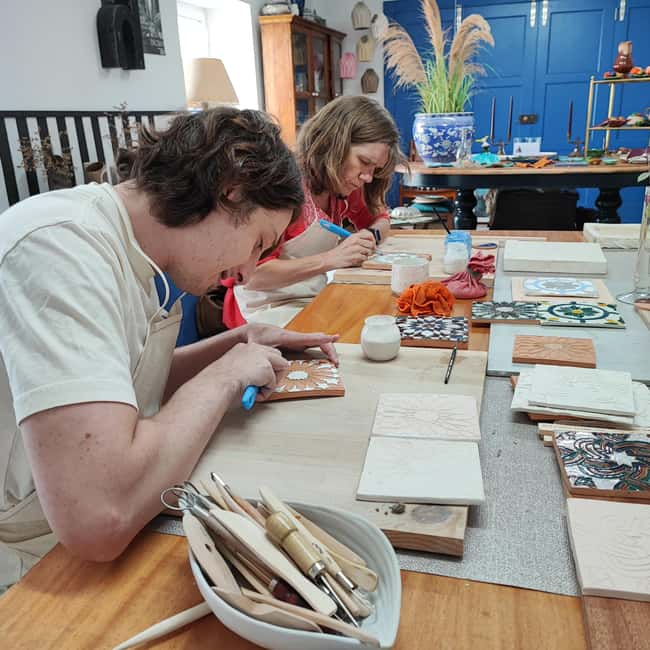
The first hands-on stage uses fresh clay and a mold. You shape the material and press it into a chosen form, creating a tile with a design selected from the studio’s range of motifs.
This part gives you a feel for the physical work behind decorative ceramics. The clay is still soft and forgiving, but it needs care. Press too lightly and the design may not form clearly. Press too hard and you may distort the surface. The tutor guides you through the process, so you do not need previous pottery experience.
The mold selection matters. You can choose from several patterns, allowing you to make something that suits your taste rather than receiving a fixed design. The available motifs include the intricate geometric forms associated with Moorish decoration, so you can choose something orderly and symmetrical or look for a design with a more flowing feel.
Do not expect this part to produce a ready-to-take-home tile. The clay piece needs to be finished and fired, and the experience includes the crafting process rather than promising that every piece will be immediately available afterward. The separate painted tile is the main keepsake covered by the class.
Painting with colored glazes
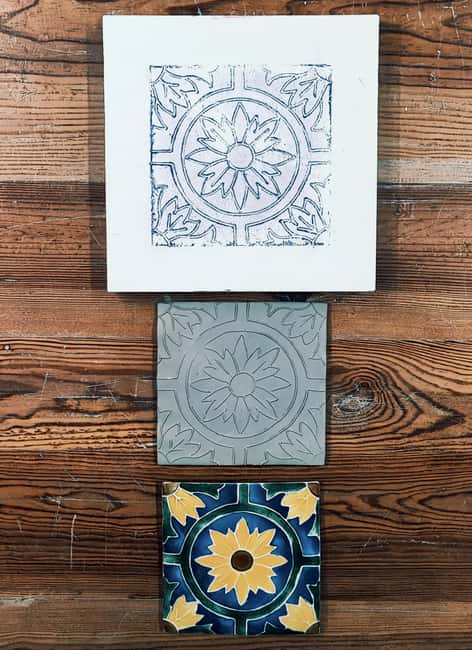
The second stage is more relaxed. You paint a prepared tile with colored glazes, choosing from the studio’s selection of designs and colors.
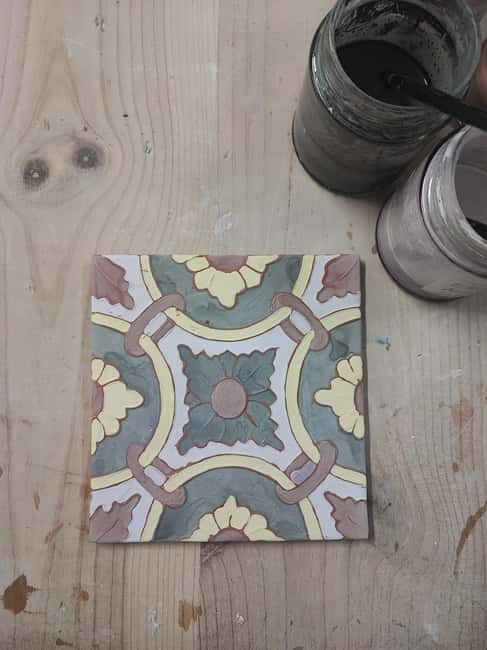
This is where you can slow down and make the piece your own. The Aresta method uses raised lines to separate areas of glaze. Those lines help keep neighboring colors from running together during firing. They also create the slightly raised pattern that gives the finished tile its distinctive surface.
You do not need to be an artist to enjoy this. The patterns give you a guide, and the tutor explains how to apply the glazes. Still, your brushwork matters. Color can look different before and after firing, and careful application helps keep the design clean.
I would treat this as a calm, focused activity rather than a race to finish. Two hours sounds generous, but part of the pleasure is choosing your motif and working carefully. The studio’s small size should make it easier to ask questions when you are unsure about a color or edge.
One practical point: the standard package includes one painted tile, along with the clay-and-mold activity. A few class experiences have involved painting more than one piece, but you should book this activity expecting one painted tile unless the studio confirms something different.
What Aldina adds to the afternoon
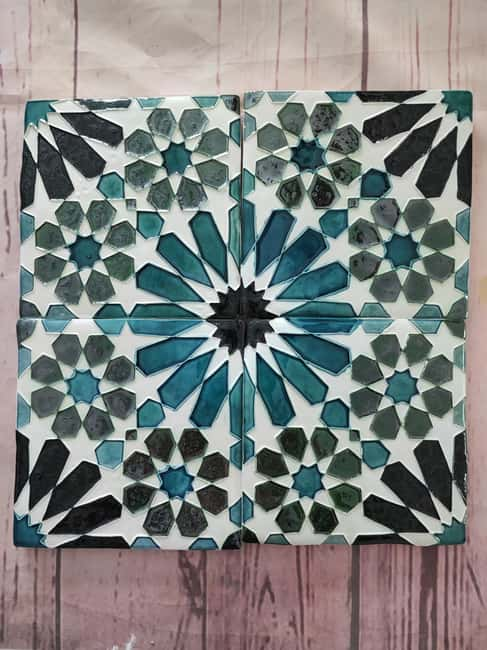
The instructor is an important part of this experience. Aldina is described as warm, patient, and clear in her teaching, with a good grasp of Portuguese tile traditions. She explains how the tiles are made, gives background on the style, and answers questions while you work.
That matters in a small craft class. A poor instructor can turn tile painting into a rushed coloring exercise. A good one helps you understand why the mold is shaped a certain way, how the glaze should be placed, and what will happen in the kiln later.
The class is taught in English. The group limit is eight, so you should have a better chance of receiving personal help than you would in a large workshop. If you want a quiet creative break, that small scale is a strong reason to choose this class.
The studio also offers other creative workshops, including pottery, Tiffany glass, and jewelry. You do not need to book another activity, but the range is useful if you are building a longer creative visit to Sintra.
A different kind of day out, same corner of Portugal:
- Sintra: Pena Palace and Park Entrance Ticket
★ 4.2 · 17,410 reviews - Lisbon: Sintra, Pena Palace, Cabo da Roca, & Cascais Tour
★ 4.9 · 3,509 reviews - Quinta da Regaleira Skip-the-Ticket-Line Entry & Audioguide
★ 4.2 · 3,316 reviews - Sintra: Castle of the Moors Skip-the-Line Ticket
★ 4.6 · 2,893 reviews
A useful 3 pm plan in Sintra
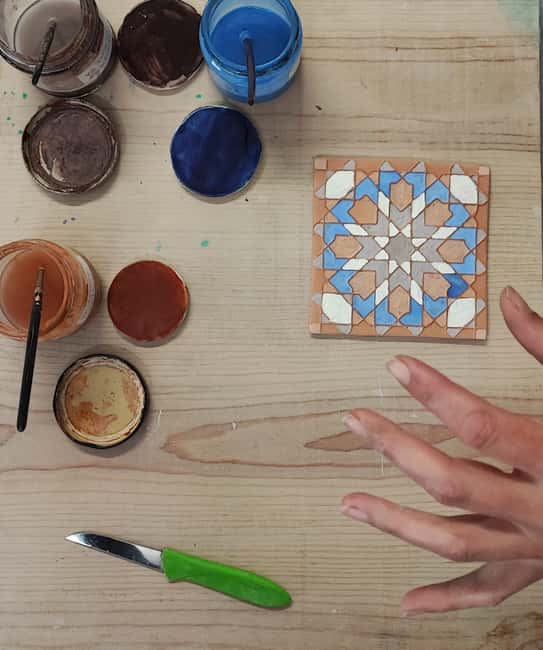
The workshop begins at 3 pm and ends at 5 pm. That fixed schedule makes it easy to plan, but it also means you should avoid squeezing in a distant attraction immediately beforehand.
A practical day might begin with the train from Lisbon, followed by sightseeing in Sintra and lunch before class. Leave enough time to reach the studio without rushing. One participant described the studio as a short walk from the train station, which makes it a sensible choice for a Lisbon to Sintra day trip.
The workshop itself does not include transportation, food, or drinks. You need to arrange the train or other transport separately and eat before or after class. Since the activity ends at 5 pm, you can still have dinner in Sintra or return to Lisbon afterward.
Sintra’s attractions can take longer than expected, especially if you are visiting palaces or waiting for local transport. I would not book a 3 pm class on a day when you plan to visit several far-flung sights with tight entry times. The studio experience works best when you give it its own space.
Collecting or sending your fired tile
Your painted tile remains at the studio for firing. It is normally ready for pickup within two to three days, so this workshop is easiest if you are staying in the area long enough to return.
You can also ask the studio to ship it to your home address, but shipping is not included in the $58 price. A separate fee is charged at the studio. One past arrangement to the United States cost 28 euros for two tiles, but treat that only as a useful example, not a fixed current rate.
The United States has an important limitation at present. Portugal’s postal services have temporarily restricted shipments to the U.S. because of changed American rules on low-value imported goods. Regular mail delivery to the United States is therefore unavailable right now.
If you are from the U.S., you have three practical choices: arrange courier delivery to your hotel for an extra fee, ask the studio to store the tile until international shipping resumes, or collect it yourself within the two to three day period. Confirm the current delivery options before booking if taking the tile home is central to your plans.
For other destinations, shipping may be possible, but the charge remains separate. If you are moving on quickly, hotel delivery may be more useful than trying to collect the piece in person.
Is $58 a fair price?
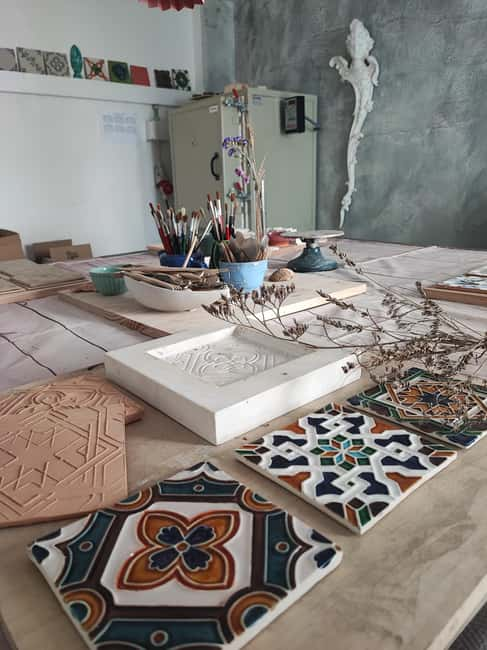
At $58 per person, the workshop is not the cheapest way to spend two hours in Sintra. But the price includes instruction, all materials and equipment, the clay-and-mold activity, one painted tile, and firing service.
The value comes from the combination of learning and making. You are not paying only for a craft object. You are paying for a guided introduction to a traditional technique, access to a selection of molds and motifs, studio time, and the chance to create a personal souvenir.
I think the price works best for people who genuinely want a hands-on cultural activity. If you only want a tile to take home, buying one from a shop will probably be simpler and cheaper. If you want to understand the process and make your own design, the workshop offers more lasting value.
Remember to add possible shipping or courier costs. For U.S. participants, the delivery problem may also create an extra step. The class price is clear, but the total cost of getting the finished piece home depends on your destination and plans.
Who will enjoy this workshop most?
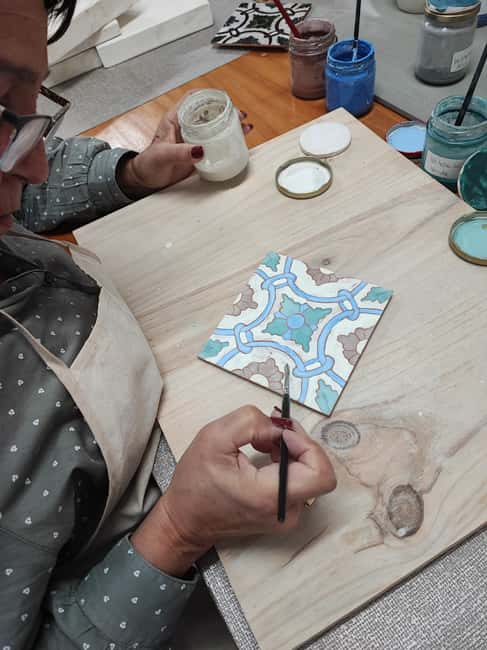
This is a good fit for adults, couples, families with older children, and anyone who likes crafts but does not want a full-day course. The activity is family-friendly for children aged seven and over, though younger children are not accepted.
You will probably enjoy it most if you like geometric decoration, ceramics, local art, or quiet creative work. It also suits people who have spent the day looking at Portuguese tiles and want to understand how those patterns are made.
The class is not ideal if your Sintra schedule is already packed. It occupies a fixed afternoon slot, and the finished tile is not available immediately. It may also disappoint anyone expecting a broad pottery lesson, since the focus is specifically on Hispano-Moorish tile crafting and painting.
The studio is wheelchair accessible, which makes this a more practical option for many visitors. Still, it is wise to confirm any personal access needs when booking, since the provided information does not describe every feature of the space.
Small details that make the experience worthwhile
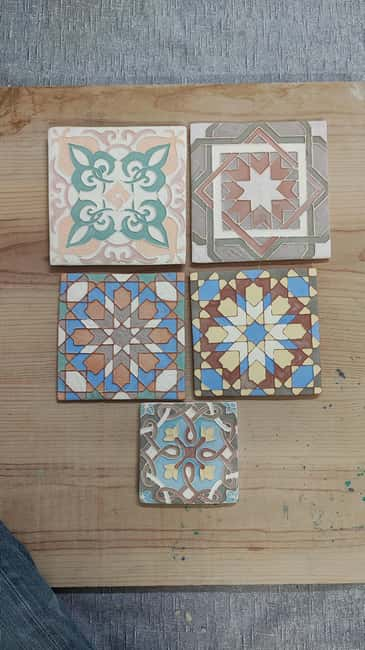
Aldina’s teaching style appears to be one of the strongest reasons to book. You receive help without losing control of your design, and the atmosphere is described as relaxed rather than pressured.
The clean, carefully arranged studio adds to the appeal. You are working in a real creative setting, not simply passing through a staged demonstration. Finished pottery and small handmade items may also be available for purchase, but there is no need to buy anything beyond the workshop.
I also like that the activity leaves you with a new way to see Lisbon and Sintra. After working with motifs and glaze, the ceramic decoration around town becomes easier to notice. The class gives you a modest piece of local craft, but its bigger benefit is teaching you how to look.
The firing delay is part of the charm, provided you plan for it. You leave with the anticipation of seeing how the colors change after the kiln. If you are departing Sintra that evening, arrange delivery or storage before you leave.
Should you book the Sintra tile workshop?
Book it if you want a compact, hands-on cultural experience that fits neatly into a Sintra afternoon. The small group, English instruction, broad motif selection, and patient guidance from Aldina make it suitable for beginners. The $58 fee is reasonable when you value the teaching, materials, and firing service together.
Skip it if you want a finished souvenir immediately, dislike fixed schedules, or have no time to return for pickup or arrange delivery. U.S. participants should pay special attention to the current shipping restriction.
For most visitors with an open 3 to 5 pm slot, I would choose this over another passive souvenir stop. You make something, learn why Portuguese tilework looks the way it does, and come away with a more personal connection to Sintra’s decorative arts.
FAQ
How long does the Hispano-Moorish tile workshop last?
The workshop lasts two hours, from 3 pm to 5 pm.
What do I make during the workshop?
You craft a tile from fresh clay using a mold, then paint another tile with colored glazes. The activity includes one painted tile.
Is the workshop taught in English?
Yes. The instructor teaches the workshop in English.
Is the workshop suitable for young children?
Children under seven are not permitted. The activity is suitable for children aged seven and over.
Can I take my painted tile home the same day?
No. The painted tile stays at the studio for firing and is usually ready for pickup within two to three days.
Can the studio ship my finished tile?
The studio can arrange shipping or delivery for an additional fee, but shipping is not included. At present, regular postal shipment to the United States is temporarily unavailable. U.S. participants can ask about hotel courier delivery, studio storage, or collecting the tile in person.
Recently reviewed around Sintra
- Sintra: Private Tour with Guided Pena Palace Experience★ 4.9 · 99 reviews
- Sintra: Walking Tour with Palace, Castle, and Old Town Visit★ 4.9 · 66 reviews
- Sintra Guided Tour for Small Groups: Pena, Regaleira & Roca★ 4.8 · 48 reviews
- Sintra Tour With Tuktuk★ 4.9 · 102 reviews
- Sintra: Pena Palace and Park Entry Ticket with Tuk Tuk Ride★ 3.5 · 43 reviews
- Sintra: Self-Drive Trip to All Monuments and Coast★ 4.8 · 48 reviews
- Sintra: The Romantic Village – Private Half-Day Guided Tour★ 4.9 · 84 reviews
- Sintra/Lisbon: Sintra & Quinta da Regaleira Tour with Ticket★ 4.4 · 51 reviews
Pena Palace & Sintra Tours, compared.

Sintra, Pena, Regaleira, Cabo da Roca & Cascais
Read our review →
Pena Palace, Sintra, Cabo da Roca, & Cascais Daytrip
Read our review →
Sintra and Cascais Small-Group Day Trip from Lisbon
Read our review →
Sintra, Pena, Cabo da Roca, Cascais Tour with Pickup
Read our review →
Small Group Tour to Sintra, Pena Palace, Cabo Roca and Cascais
Read our review →
Sintra, Pena Palace, Cabo da Roca, & Cascais Tour
Read our review →
Sintra Cascais & Pena Palace Small Group Tour
Read our review →Browse the lists this tour appears in