
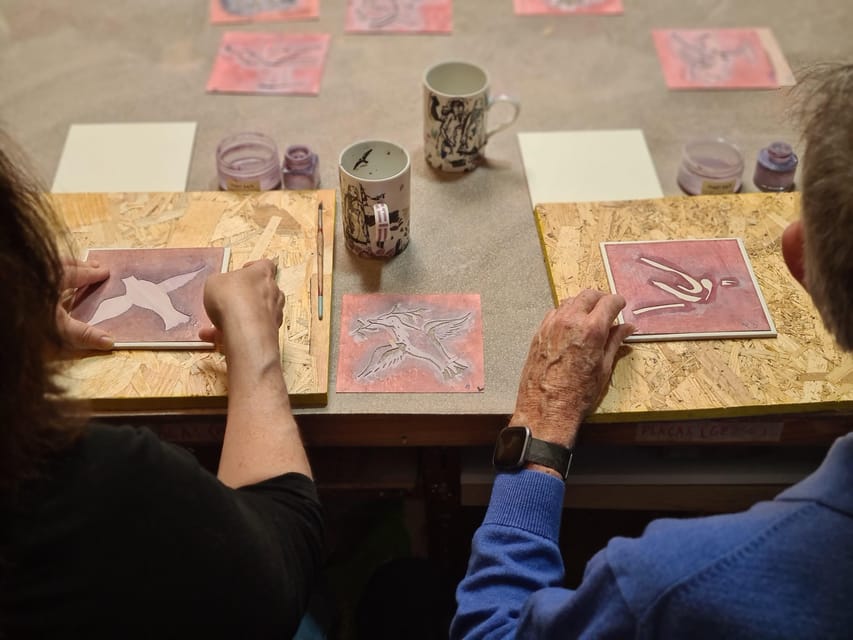
Reviewed · WINE TASTINGS & PORT CELLARS
Porto: Tile Painting Workshop with Tea and Port Wine
Portugal’s painted tiles are not just pretty wall decoration. They help tell the story of the country, from the facades of houses to churches, stations, and heritage buildings. This two-hour Porto workshop gives you a hands-on way to understand that tradition, then sends you home with two tiles you actually painted yourself.
I like two things here: the mix of clear cultural background and creative work, and the fact that you paint two tiles rather than one. Your pieces are fired after class and packaged for collection the next day, which makes this a useful souvenir rather than another small item stuffed into your luggage.
The main consideration is timing. You must return about 24 hours later, usually around 11:00 or 12:30, to collect the tiles. The studio is near Campanhã station, but parking is not especially easy, so plan to arrive by public transport or taxi.
In This Review
- Key points to know before booking
- Why Porto tiles make a good hands-on souvenir
- Entering the studio near Campanhã station
- The opening lesson: tiles, buildings, and Portuguese design
- Learning how traditional tile painting works
- Painting two tiles with traditional motifs
- The kiln firing and next-day collection
- What the $53 price means
- Who will enjoy this workshop most
- Booking details that affect your plans
- Is the Porto tile workshop worth booking?
- FAQ
- How long does the tile painting workshop last?
- How many tiles do I paint?
- Are painting materials included?
- Are the tiles fired after the workshop?
- When can I collect the finished tiles?
- Is packaging included for taking the tiles home?
- Is tea included?
- Where is the meeting point?
- Which languages are available?
- Can I cancel the booking?
Key points to know before booking
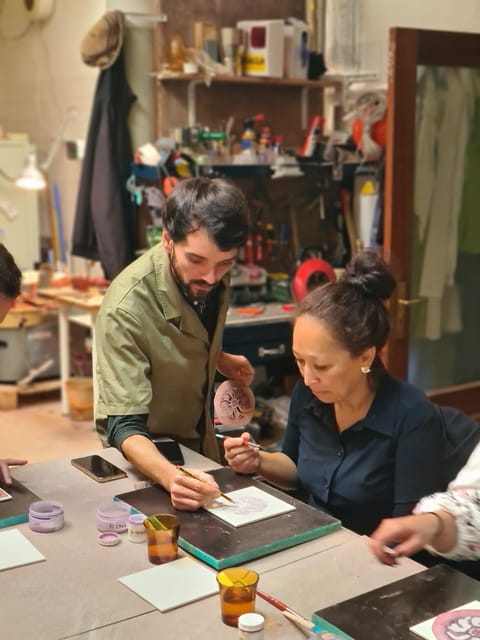
- Paint two tiles per person: You get more creative time and a pair of matching or contrasting souvenirs.
- Learn before you paint: The workshop explains Portuguese tile history, decorative motifs, and basic production methods.
- Local guidance matters: David has been praised for his warm teaching style, while the experience is provided by Francisco Pessegueiro.
- Collection is the next morning: Your tiles need kiln firing, then are packaged for safe transport.
- Good for families: An eight-year-old, a teenager, and adults all took part successfully in one family group.
- Campanhã location: The studio is close to the train station and TIC bus terminal, but the area is not ideal for parking.
Why Porto tiles make a good hands-on souvenir
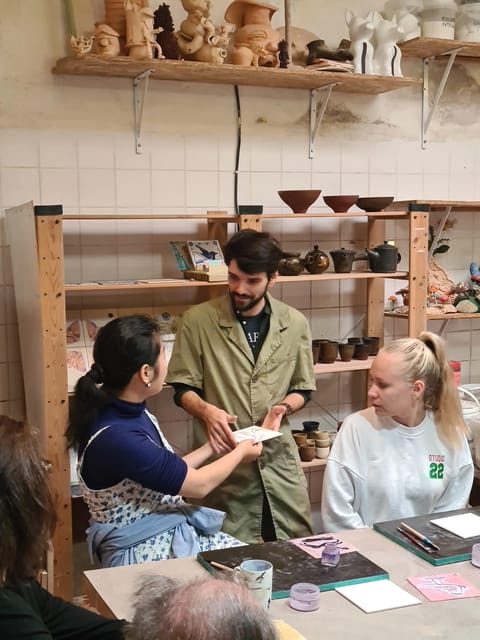
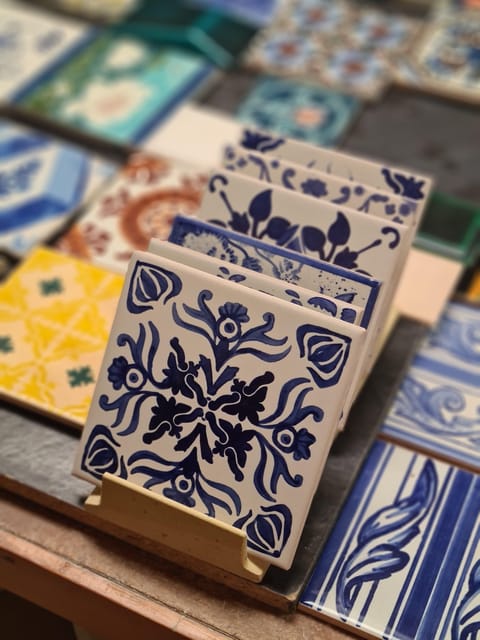
You will see Portuguese tiles all over Porto, but simply taking photographs can leave you with only a surface-level sense of what you are looking at. Painting your own gives you a better feel for the repeated patterns, strong outlines, and careful color choices that make traditional tile work so distinctive.
The workshop begins with an introduction to the place of tiles in Portuguese art and daily life. You learn how tiles appear on monuments and houses across the country, and why they matter as part of Portugal’s visual identity. That context helps you look at Porto differently later in the day. A tiled facade becomes more than a colorful background for a photo.
I especially like that the activity connects the finished object with the city. You are not making a generic pottery souvenir. You are working with motifs inspired by Portuguese designs, then taking home tiles made during your stay in Porto.
The approach is accessible even if you have no art experience. You receive materials and instruction, and stencils are available to help with shapes and traditional patterns. You still do the painting yourself, so the result can be neat, playful, or slightly imperfect in the best handmade sense.
More Wine Tastings in Porto
- From Porto: Douro Valley w/ Boat Tour, Wine Tasting & Lunch
★ 4.7 · 19,061 reviews - Porto: Live Fado Show with Glass of Port Wine
★ 4.8 · 6,498 reviews - Porto: Cálem Cellar Tour, Interactive Museum & Wine Tasting
★ 4.5 · 4,113 reviews
Entering the studio near Campanhã station
The workshop takes place at a store and studio near Porto’s Campanhã train station and the new TIC, or Terminal Intermodal de Campanhã. A school and a taxi rank sit beside the station, which gives you useful landmarks when finding the meeting point.
This location is practical if you are arriving by train or bus. It is less convenient if you are driving. One participant specifically found the area unfriendly for parking, so I would not build a tight schedule around searching for a space nearby.
The station setting also makes this activity easy to combine with other plans. You could schedule it around a train connection, a bus arrival, or a stay in another part of Porto. Just allow enough time to reach the studio and remember that the finished tiles are not available immediately.
The group can be small, which matters for a craft class. You have a better chance of asking questions, getting help with a design, and receiving feedback while the paint is still on your brush. The available teaching languages are English, Japanese, and French. If you need the French or Japanese session, say so when you book rather than assuming it will be arranged automatically.
The opening lesson: tiles, buildings, and Portuguese design
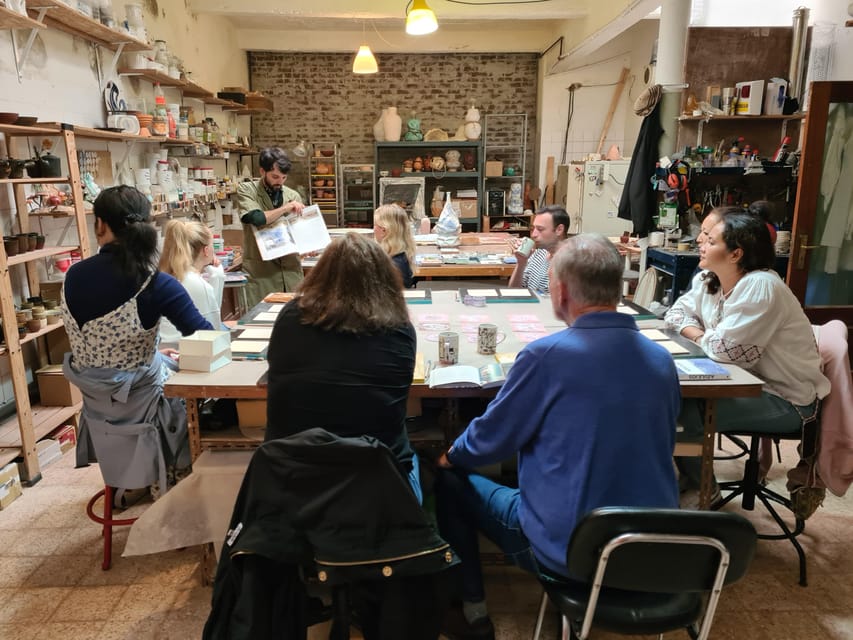
The first part of the class introduces tile history and the role of tiles in Portuguese culture. You may look through inspiration books and see examples of tiles and sculptures used for decoration and on heritage buildings.
This section gives the painting activity a useful frame. You are not simply copying a pattern because it looks attractive. You learn that the designs connect to a broader tradition found in homes, public buildings, monuments, and religious sites.
There is tea and biscuits during this opening period. Another session included a self-planted herbal infusion, so the refreshment may have a personal studio touch rather than feeling like a formal café service. The experience title also refers to Port wine, but the included details specifically confirm tea and biscuits, not a guaranteed Port wine serving. If that drink is important to you, check the current arrangements before booking.
The history portion may feel a little long if you are eager to start painting. One family enjoyed the activity but would have preferred less tea and background time and more time with the tiles. That is a fair point, especially for children or anyone with a strong urge to get started.
I would treat the introduction as part of the value, not as filler, but keep your expectations realistic. This is a cultural workshop with an art activity, not two uninterrupted hours at a workbench.
Learning how traditional tile painting works
After the introduction, the instructor explains the techniques used to produce traditional Portuguese tiles. You learn how to approach the surface, work with motifs, and plan the design before painting.
The class supplies all materials. Stencils are available, but they are guides rather than shortcuts that complete the work for you. The instructor and assistant can answer questions and offer creative advice, while leaving you responsible for the final design.
That balance is important. A beginner can use a traditional outline as a starting point, while someone more comfortable with art can adapt the pattern or create something more personal. You might choose two related designs, make a pair with different colors, or use one tile to practice and the second to refine your idea.
The teaching style appears to be friendly and hands-on. David has been singled out for being personable and able to explain the process clearly. Another family found that the instructor answered every question and offered useful creative suggestions. The provider is Francisco Pessegueiro, and the small-group format gives the local teaching element room to come through.
You should wear comfortable clothes and shoes. Painting is not a formal occasion, and you will be sitting or working at the studio for much of the session. The supplied information does not specify the clothing protection provided, so practical clothes are the sensible choice.
More Porto trips worth a second look
- Complete Douro Valley Wine Tour with Lunch, Wine Tastings and River Cruise
★ 5.0 · 12,920 reviews - Douro Valley: Wine Tour with Lunch, Tastings & River Cruise
★ 4.6 · 6,081 reviews - Douro Valley: Historical Sites, Wine Experience, Lunch & Cruise
★ 5.0 · 5,133 reviews - Authentic Small Group Douro Wine Tour with Lunch & River Cruise
★ 5.0 · 4,775 reviews
Painting two tiles with traditional motifs
The creative part is the heart of the experience. Each person paints two tiles inspired by traditional Portuguese motifs, with help available when you need it.
Two tiles offer a real advantage over the usual one-piece workshop. You can make a matching set, compare two ideas, or use the first tile to gain confidence before tackling the second. For families, it also gives each person enough material to make the activity feel substantial.
Do not expect a factory-perfect result. The point is to make something by hand while learning how the patterns and techniques work. The supplied stencils can help with structure, but you still choose the colors and apply the paint. That makes the finished pieces personal, even when you begin with a traditional design.
The activity suits a wide range of ages. An eight-year-old and a teenager took part in the same family session as two adults, and the group found it worked well for everyone. Younger children may need help with planning and brush control, but the presence of an instructor and assistant makes this more manageable than an entirely self-guided craft class.
I would also recommend this for anyone who does not think of themselves as artistic. The instruction reduces the pressure, and the historical context gives you a clear starting point. You are not expected to arrive with a finished design in mind.
The kiln firing and next-day collection
Your tiles do not go straight into your bag after painting. The studio fires them in a kiln, then packages them properly for collection about 24 hours later.
That extra wait is both a benefit and a planning issue. Firing gives the tiles a finished, durable surface, and the packaging helps protect them while you carry them home. On the other hand, you need to remain in Porto long enough to collect them.
The usual collection window is the next morning, around 11:00 or 12:30. Confirm the exact time at the workshop, since your wider plans may depend on it. If you are leaving Porto early the following day, taking a train, or moving to another city, this activity may not fit your schedule.
The delayed collection does make the souvenir more meaningful. You leave the class knowing your work is being completed rather than receiving an unfinished object. Several people particularly valued taking home something they had made themselves, and that is the strongest reason to accept the extra pickup.
What the $53 price means
At $53 per person, this is not the cheapest casual activity in Porto. The value depends on what you want from your afternoon.
The price includes all painting materials, instruction, tea and biscuits, firing of both tiles, and proper packaging. You are also paying for a local introduction to Portuguese tile culture and access to a small studio setting. Since two tiles are included, the cost is easier to justify than it would be for a single quick craft project.
I see the best value in the combination of learning and making. If you only want an inexpensive souvenir, Porto has plenty of shops and markets. If you want an activity that gives you a better understanding of the city and produces something personal, the workshop offers more.
The experience is also a good rainy-day choice. The indoor setting gives you a break from sightseeing, and the creative task changes the pace of a city trip. Families may find the price worthwhile because adults and children can take part in the same activity instead of splitting up.
You should not book it solely for the included refreshments. Tea and biscuits are a pleasant touch, but the real value comes from the instruction, the two tiles, and the firing service.
Who will enjoy this workshop most
I would recommend this class to:
- Families looking for an activity that works across different ages
- Couples who want matching or complementary Porto souvenirs
- Visitors interested in design, architecture, crafts, or local culture
- People who prefer making a keepsake instead of buying one
- Anyone with enough time in Porto for next-day collection
- Small groups seeking a relaxed indoor activity
It may be less suitable if you want a fast, unstructured painting session. The class includes history and explanation before the creative work, and one family would have liked more painting time. It may also be inconvenient if your departure is the next morning or if you are traveling by car and need easy parking.
The language choice is another practical point. English, Japanese, and French are available, but you must state French or Japanese when booking. The information does not confirm other languages, so do not assume the class can be delivered in a language not listed.
Booking details that affect your plans
The workshop lasts two hours, with starting times available according to the date you select. Check the schedule before arranging trains, museums, or meals around it.
You can cancel up to 24 hours in advance for a full refund, and the reserve-now, pay-later option lets you hold a place without paying immediately. The class needs at least two participants. If that minimum is not reached by the day before, the activity may be canceled.
That minimum matters if you are booking alone or on a quiet travel date. Keep an eye on your booking status and avoid making an inflexible plan around the class until it is confirmed.
Transportation is not included. From Campanhã station, the location is designed to be reached independently, and a taxi rank is nearby. Parking is the weak point, so public transport or a taxi is the safer choice if you are unfamiliar with the area.
Is the Porto tile workshop worth booking?
Book it if you want a personal souvenir, enjoy learning the story behind local art, and can return the next day to collect your finished work. The strongest features are the two tiles per person, the patient guidance, and the chance to see traditional motifs as a working craft rather than just a decorative feature on a building.
Skip it if your Porto schedule is too short for the pickup, if you dislike structured introductions, or if you want a class devoted almost entirely to painting. For most families, couples, and craft-curious visitors with a spare morning, the $53 price is fair because it covers both the activity and the kiln-fired keepsakes.
FAQ
How long does the tile painting workshop last?
The workshop lasts two hours.
How many tiles do I paint?
Each participant paints two tiles inspired by traditional Portuguese motifs.
Are painting materials included?
Yes. All materials needed for the tile painting are included.
Are the tiles fired after the workshop?
Yes. The studio fires the painted tiles in a kiln after the class.
When can I collect the finished tiles?
The tiles are ready about 24 hours after the workshop. Collection is usually the next morning around 11:00 or 12:30.
Is packaging included for taking the tiles home?
Yes. The finished tiles are packaged properly for collection and transport.
Is tea included?
Yes. Tea and biscuits are included. The experience title refers to Port wine, but the supplied inclusion details specifically confirm tea and biscuits, so ask the provider about Port wine if it matters to you.
Where is the meeting point?
The studio is near Campanhã train station and the TIC Terminal Intermodal de Campanhã. A school and a taxi rank are beside the station.
Which languages are available?
The instructors can conduct the activity in English, Japanese, or French. You must request French or Japanese when booking.
Can I cancel the booking?
You can cancel up to 24 hours before the activity for a full refund. You can also reserve now and pay later, subject to the booking terms.
More Workshops in Porto
- Porto: Pastel de Nata Pastry-Making Workshop
★ 4.9 · 1,542 reviews - Porto: Pastel de Nata Cooking Class with Port Wine – Sé
★ 4.8 · 888 reviews - Matosinhos: Surfing Lesson with Equipment
★ 4.8 · 704 reviews - Porto: Small Group Surf Lesson with Transportation
★ 4.9 · 594 reviews
Recently reviewed around Porto
- Douro Valley Prime Tour: Wine Tastings, Boat & Lunch from Porto★ 5.0 · 572 reviews
- Port Wine Tour | 3 Cellars | 7 Tastings | 12 Participants Maximum★ 5.0 · 443 reviews
- PORTO city Walking Tour★ 5.0 · 132 reviews
- Private Vinho Verde Region Wine Tour from Porto Including Lunch★ 5.0 · 39 reviews
- Visit to Cockburn’s Cellars★ 5.0 · 526 reviews
- Wine Tasting with Tapas Walking Tour in Porto★ 4.5 · 544 reviews
- Porto to Lisbon with stop Aveiro-Fátima-Coimbra-Tomar-Nazaré-Óbidos★ 5.0 · 67 reviews
- 3 Hour Tuk tuk Tour in Porto★ 4.5 · 60 reviews
Wine Tastings & Port Cellars, compared.

Douro Valley w/ Boat Tour, Wine Tasting & Lunch
Read our review →

Live Fado Show with Port Wine in Historic Center
Read our review →
Cálem Cellar Tour, Interactive Museum & Wine Tasting
Read our review →
Douro Valley Small-Group Tour with Wine Tasting, Lunch and Boat
Read our review →
Douro Valley Tour: 2 Vineyard Visits, River Cruise, Winery Lunch
Read our review →

Browse the lists this tour appears in