
Reviewed · WINE TASTINGS & PORT CELLARS
Port Wine class with 3 or 5 Port tasting and pairings
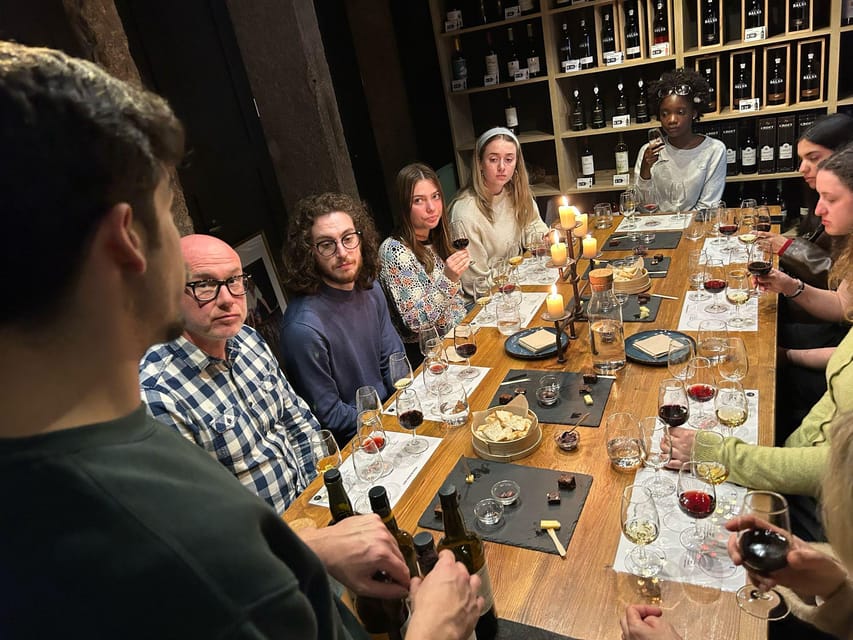
Port wine can seem sweet, heavy, and a little mysterious until someone explains the styles side by side. This small-group class in central Porto makes that lesson easy, with a short talk, three or five pours, and Portuguese snacks at the same table.
I like the intimate group size, capped at 10 people, and the fact that you can compare white, tawny, ruby, and LBV Port in one sitting. I also like the hosts’ easy humor. Rui, João, and Ruan are often praised for turning a wine lesson into a social hour, sometimes with music at the end.
The main consideration is location. This is held in a shop room, not in a traditional Port cellar across the river in Vila Nova de Gaia. If you want barrels, old stone cellars, and a full production tour, this is not that experience.
In This Review
- Key points to know before booking
- A Port lesson across from the Palácio da Bolsa
- The opening lesson: how Port came to be
- Three pours or five: choosing the better value
- White Port gives the class a useful start
- Tawny, Ruby Reserve, and LBV show the main contrasts
- The pairings make the wine easier to understand
- The guide can shape the whole experience
- What this class does not include
- Timing, group size, and practical planning
- Who should book this Port tasting?
- Should you book the three or five Port class?
- FAQ
- Where does the Port wine class take place?
- Is the tasting held in a traditional Port cellar?
- How many Port wines can I taste?
- What food is served with the Port?
- How long does the experience last?
- How large is the group?
- What language is the class offered in?
- Can I cancel for a refund?
Key points to know before booking
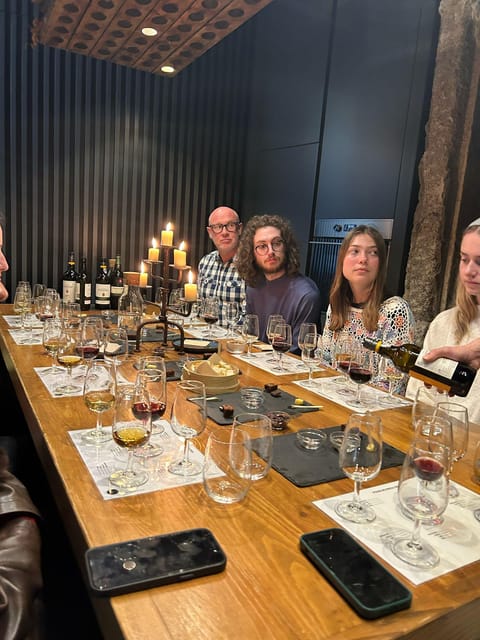
- Five Port styles in the longer option: The five-pour tasting includes two white Ports, a tawny, a Ruby Reserve, and a Late Bottled Vintage Port.
- Food pairings are part of the lesson: Expect olives, fruit, chocolate, cheese, and brownie matched with the wines.
- Right in Porto’s historic center: The meeting point is opposite the Palácio da Bolsa, so you can fit this into a walking day.
- Small groups make the class personal: The maximum is 10 participants, and some sessions are much smaller.
- The hosts add plenty of personality: Rui, João, Ruan, Pedro, and other guides are described as warm, funny, and clear in their explanations.
- Choose five pours if you can: The three-Port option takes about 45 minutes, while the full tasting usually lasts about 1 hour and 15 minutes.
A Port lesson across from the Palácio da Bolsa
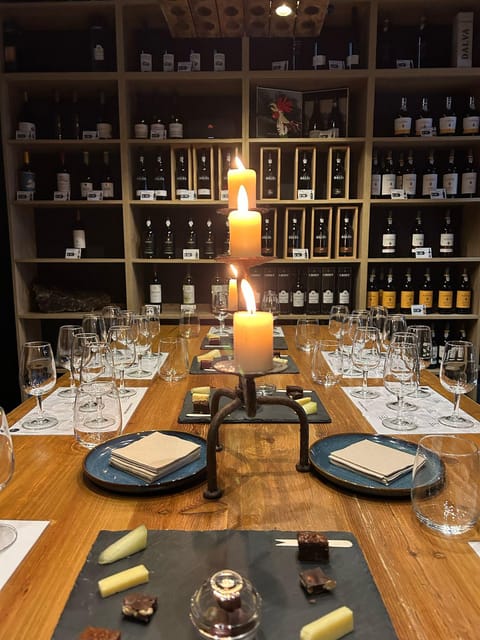
The first practical detail is finding the door. The class takes place in a room inside the same building as the tourist office, in a shop opposite the Palácio da Bolsa. You are not heading to a cellar, and the storefront may not look exactly like a wine shop, so check in at the tourist office as instructed.
That central address is useful. You can pair the class with a visit to the Palácio da Bolsa, a walk through Ribeira, or time along the Douro. You do not need to set aside half a day for transport to Vila Nova de Gaia.
Inside, expect an intimate setting rather than a grand tasting hall. Tables and long benches are arranged for a small group. One person found chairs would have been more comfortable, so seating may be worth noting if you prefer back support. The room is air-conditioned, which is a welcome break on a sunny Porto afternoon.
The compact setting helps the host keep the conversation moving. You can ask questions without trying to catch a guide’s voice across a large room. Solo visitors also have a fair chance of meeting people, since the group often includes couples and independent travelers from several countries.
More Food Tours in Porto
- From Porto: Douro Valley w/ Boat Tour, Wine Tasting & Lunch
★ 4.7 · 19,061 reviews - Porto: Cálem Cellar Tour, Interactive Museum & Wine Tasting
★ 4.5 · 4,113 reviews - Douro Valley Small-Group Tour with Wine Tasting, Lunch and Boat
★ 5.0 · 3,642 reviews
The opening lesson: how Port came to be
The class begins with the story of Port wine, including how and why it was created. You will hear about its development over time and the way Port became linked with Porto and the Douro Valley.
This introduction matters because Port is not simply one sweet red wine. The name covers several styles with different colors, flavors, aging methods, and serving uses. A clear explanation gives you a framework for the tasting instead of leaving you to judge each glass as merely sweet or sweeter.
Hosts such as Rui and João are praised for explaining production in plain language. You can expect discussion of where the grapes are grown, how the wines are made, and why the finished styles differ. The presentation is designed for beginners, but it also gives people with some wine experience useful points of comparison.
I like that the guide does not treat the tasting as a silent exercise in sniffing and nodding. Questions are encouraged, and the length can stretch toward the upper time limit if the group is curious. That flexibility is helpful if you want more than a quick sample before heading back into the city.
The talk also reaches beyond the bottle. Guides have shared useful context about Porto, Gaia, and the Douro Valley, so the class can help you understand the wine culture you see elsewhere during your Portugal trip.
Three pours or five: choosing the better value
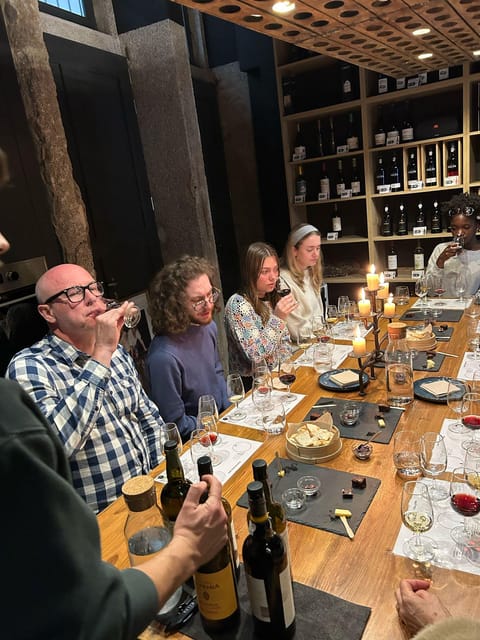
You can select either three or five Port samples. The three-pour version lasts about 45 minutes, while the five-pour session takes roughly 1 hour and 15 minutes. The exact timing depends on the group’s questions.
At about $23 per person, the experience offers good value if you want an introduction rather than a full-day wine outing. You receive instruction, several pours, snack pairings, and a small-group setting. The price also makes sense for a short activity that fits neatly between sightseeing stops.
The five-Port option is the better buy for most people who have the time. The larger flight shows more of Port’s range and gives you a stronger sense of how the styles relate to one another. One couple who selected three wished afterward that they had chosen five.
The three-Port choice still makes sense if you have a packed schedule, do not usually drink much, or want a short introduction before dinner. It is also a sensible option for people who are unsure how they will respond to Port’s sweetness and alcohol.
The five-pour selection includes:
- Two white Ports
- One tawny Port
- One Ruby Reserve Port
- One LBV, or Late Bottled Vintage, Port
The supplied details do not identify the exact brands or vintages in advance. That is worth knowing if you are seeking a particular producer. The strength here is comparison across styles, not a branded collector’s tasting.
White Port gives the class a useful start
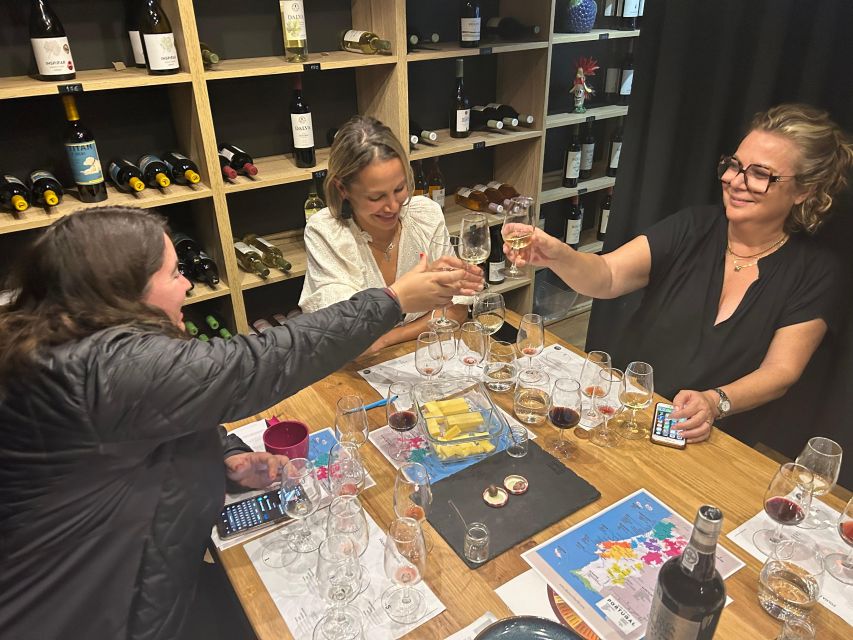
White Port is one of the most helpful styles to begin with because it challenges the idea that all Port is dark and dessert-like. You taste two white Ports, which lets you compare them before moving into the darker styles.
The pairings help you pay attention. Instead of tasting in isolation, you can notice how the wine works with salty olives, fruit, cheese, chocolate, or brownie. The snack selection is simple but broad enough to show how Port can fit different moments, from an aperitif to dessert.
The food is not a separate meal, so arrive with realistic expectations. It is there to support the tasting rather than replace lunch or dinner. Several pours plus the snacks make the session feel generous, but you should still plan another meal afterward.
The host explains each pairing as it arrives. That makes this more useful than a standard bar tasting, where you may receive a glass without much context. I find the food element especially helpful for beginners, since a familiar bite gives you a clear way to judge the wine’s balance.
More Wine Tastings in Porto
- Porto: Live Fado Show with Glass of Port Wine
★ 4.8 · 6,498 reviews - Douro Valley Tour: 2 Vineyard Visits, River Cruise, Winery Lunch
★ 5.0 · 3,542 reviews - Porto: Cálem Cellar Tour, Fado Show & Wine Tasting
★ 4.4 · 3,530 reviews - Porto: Cockburn’s Port Lodge Tour and Tasting
★ 4.8 · 3,360 reviews
Tawny, Ruby Reserve, and LBV show the main contrasts
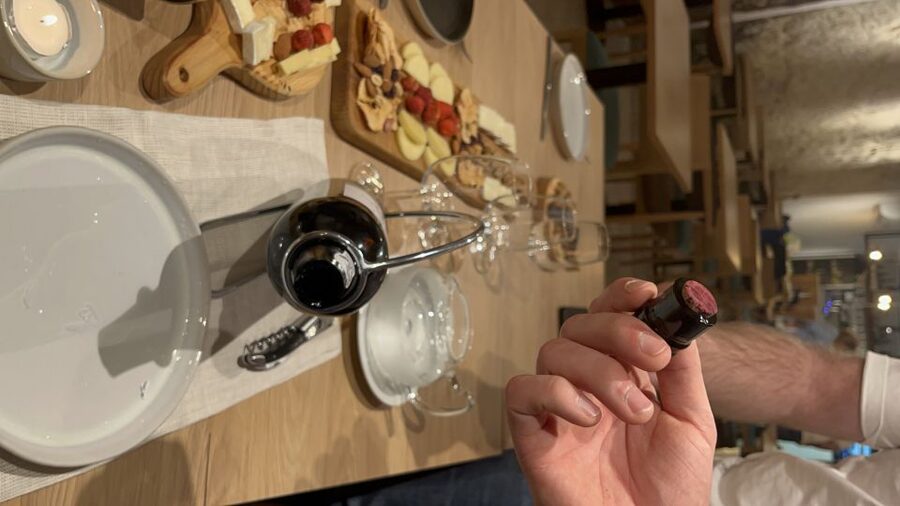
The tawny Port offers a different direction from the white samples. The point is not just color. The tasting lets you notice how aging changes the wine’s character and how it sits alongside the food.
Ruby Reserve brings a fuller, fruit-focused style into the lineup. The contrast with tawny helps you identify the basic differences more easily than reading a description on a menu. For a first-time Port drinker, this side-by-side method is the heart of the class.
The final sample in the five-Port flight is LBV, or Late Bottled Vintage Port. Including it gives the tasting a more serious finish and adds another style to your reference points. You may not leave able to identify every Port on a restaurant list, but you will have a much better idea of what you prefer.
The host does not rush these comparisons. Several sessions have lasted longer than the minimum because people asked questions. That is a good sign for anyone who wants a lesson rather than a quick set of samples.
Port portions are described as generous, and one tasting included a top-up of a favorite drink. That is not a guaranteed part of every session, so consider it a pleasant extra rather than something to book around. You should pace yourself, especially with five fortified wines in one sitting.
The pairings make the wine easier to understand
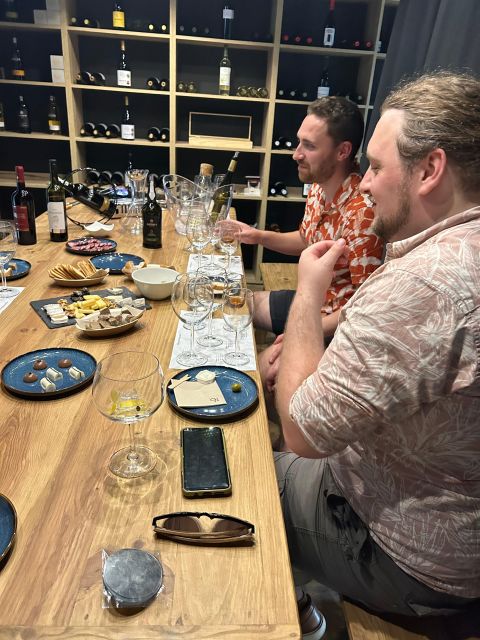
The table includes olives, fruit, chocolate, cheese, and brownie. These are familiar foods, but they serve a clear purpose. Salt, sweetness, fruit, and creamy textures can change the way you perceive a fortified wine.
The pairings are also a practical bridge to future meals. You may leave with ideas for serving Port at home or ordering it after dinner. The class is not only about identifying styles; it helps you understand when each kind might work best.
A few details make the food feel more than decoration. The host explains why a particular bite is placed beside a pour, and the portions are generally considered generous. The snacks are presented as part of the tasting, not tossed into a bowl as an afterthought.
If you have dietary restrictions, the supplied details do not explain substitutions. Ask the provider before booking if that matters to you. The listed foods include dairy, chocolate, and baked goods, so do not assume every item will suit your needs.
The guide can shape the whole experience
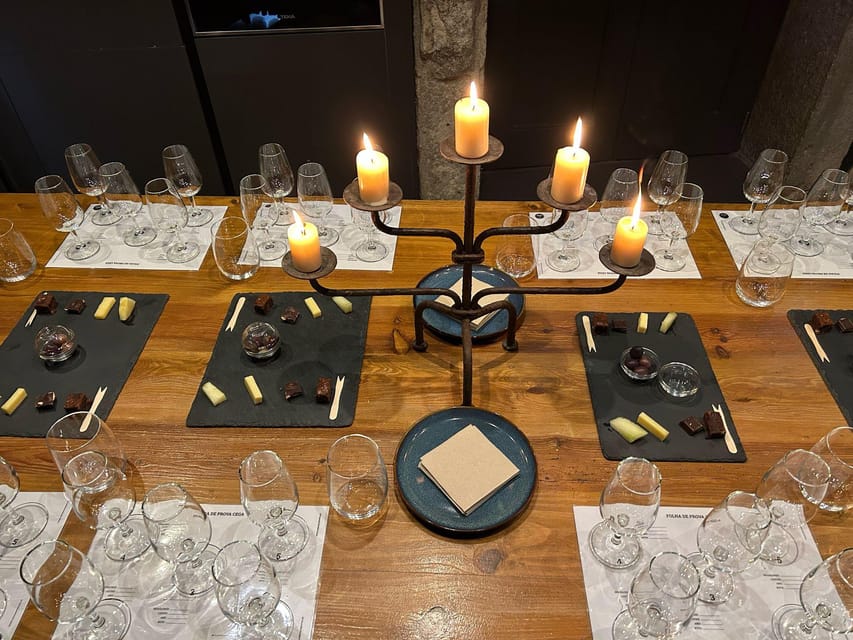
The wine matters, but the host makes the difference. Rui is repeatedly described as entertaining, warm, and clear. João is praised for his friendly presentation and command of Port. Ruan is known for mixing jokes with detailed explanations, and other guides, including Pedro, have also received strong praise.
The tone is informal. You are likely to learn through conversation rather than a stiff lecture. That works well for a group made up of couples, solo visitors, and people with very different levels of wine experience.
One host was described as having more jobs than a Swiss Army knife, a playful way of saying that he kept the group engaged and handled many parts of the session with energy. Another guide ended the class with guitar and singing, including flamenco and fado. That musical finish appears to be a host-specific surprise, not a standard promise of the booking.
The social side is another plus. A solo participant was paired with another independent visitor before the tasting and later joined the group for drinks. You cannot count on making new friends, of course, but the small table gives you a natural chance to talk.
The humor may not suit someone who wants a strictly formal sommelier class. For most people, though, the relaxed approach makes the information easier to remember.
What this class does not include
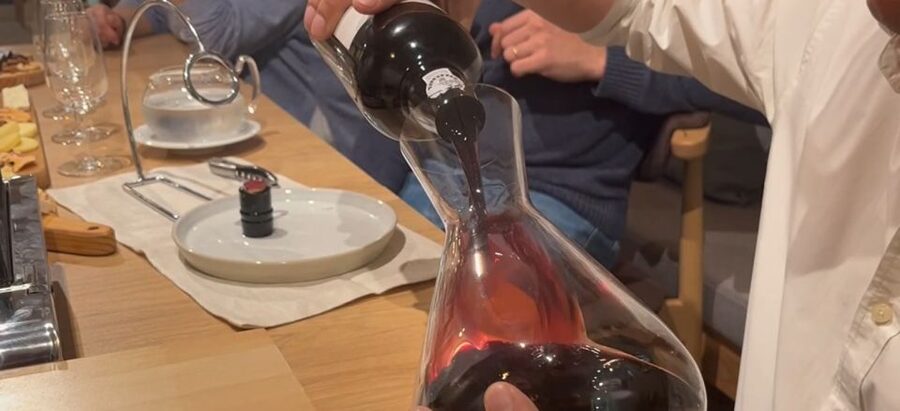
This is a Port education and tasting session in central Porto. It is not a vineyard visit, a Douro Valley excursion, or a cellar tour.
You will not be taken through the wine-growing country, and you will not see the full process from grape to bottle on location. If your main goal is to visit producers, walk among the vines, or explore historic cellars in Gaia, choose a longer wine tour instead.
The tradeoff is convenience. You can learn the main Port categories without leaving the city center, and you can do it in about an hour. That is ideal for a first visit when your schedule already includes major sights.
I would use this class as a starting point. Afterward, you will be better prepared to choose a cellar visit or a Douro Valley day trip. You may also know which styles to order when you sit down for dinner.
Timing, group size, and practical planning
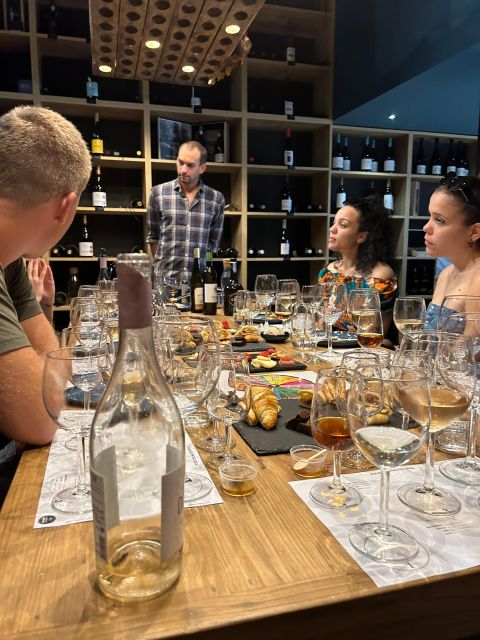
The maximum group size is 10 people. A full group still feels fairly personal, while a session with only two or four participants can feel almost private. Larger parties should expect to share the table with other people.
The experience is offered in English, with an English-speaking host or greeter. It is wheelchair accessible according to the supplied activity details. Starting times vary, so check availability for your date.
Plan to arrive at the shop in front of the Palácio da Bolsa and follow the check-in instructions at the tourist office. The address is central, but the exact room is inside the same building, which can cause confusion if you are looking only for a traditional wine-store entrance.
The class lasts from about 45 minutes to 90 minutes, depending on your chosen flight and the number of questions. I would allow a little space around the scheduled end if you have a timed restaurant booking.
Free cancellation is available up to 24 hours before the start for a full refund. You can also reserve now and pay later, which is useful when you are still arranging your Porto schedule.
Who should book this Port tasting?
I would recommend it most strongly to:
- First-time Port drinkers who want a clear introduction
- Couples looking for a short activity near Porto’s main sights
- Solo visitors who enjoy small social groups
- Wine fans who want to compare several Port styles in one sitting
- People without time for a Douro Valley or Gaia cellar tour
- Anyone who likes food pairings and informal instruction
It may be less suitable if you want a formal wine course, a cellar setting, a vineyard visit, or a full meal. It is also worth choosing three pours instead of five if you drink lightly or have a busy day of tastings planned.
Should you book the three or five Port class?
I would choose the five-Port option if your schedule allows. The two white Ports, tawny, Ruby Reserve, and LBV create a much more useful picture of Port, and the extra time is modest.
Choose three if you want the basic lesson in under an hour or are cautious about the strength of fortified wine. Either version gives you the central Porto location, food pairings, and a friendly English-language host.
This class is a smart, low-cost way to get oriented before exploring more of Portugal’s wine country. Book it if you want clear explanations, several styles, and a social setting. Skip it only if the cellar itself is the main reason you came.
FAQ
Where does the Port wine class take place?
It takes place in a shop room in Porto city center, opposite the Palácio da Bolsa. Check in at the tourist office because the tasting room is in the same building.
Is the tasting held in a traditional Port cellar?
No. The experience takes place inside a shop room, not in a cellar.
How many Port wines can I taste?
You can choose a three-Port or five-Port option. The five-Port selection includes two white Ports, one tawny, one Ruby Reserve, and one LBV Port.
What food is served with the Port?
The tasting includes pairings with olives, fruit, chocolate, cheese, and brownie.
How long does the experience last?
The three-Port option takes about 45 minutes. The five-Port option takes about 1 hour and 15 minutes, with the exact time depending partly on questions from the group.
How large is the group?
The maximum group size is 10 participants. Some sessions may be smaller.
What language is the class offered in?
The class is offered in English and has an English-speaking host or greeter.
Can I cancel for a refund?
Yes. You can cancel up to 24 hours in advance for a full refund. Reserve now and pay later is also available.
More Workshops in Porto
- Porto: Pastel de Nata Pastry-Making Workshop
★ 4.9 · 1,542 reviews - Porto: Pastel de Nata Cooking Class with Port Wine – Sé
★ 4.8 · 888 reviews - Matosinhos: Surfing Lesson with Equipment
★ 4.8 · 704 reviews - Porto: Small Group Surf Lesson with Transportation
★ 4.9 · 594 reviews
More Wine Tours in Porto
- Complete Douro Valley Wine Tour with Lunch, Wine Tastings and River Cruise
★ 5.0 · 12,920 reviews - Douro Valley: Wine Tour with Lunch, Tastings & River Cruise
★ 4.6 · 6,081 reviews - Douro Valley: Historical Sites, Wine Experience, Lunch & Cruise
★ 5.0 · 5,133 reviews - Authentic Small Group Douro Wine Tour with Lunch & River Cruise
★ 5.0 · 4,775 reviews
Recently reviewed around Porto
- Bridges Cruise with World of Discoveries or Sunset Option★ 4.0 · 219 reviews
- Porto Card Walker (1, 2, 3 or 4 Days)★ 3.4 · 135 reviews
- Porto: 6 Bridges Yacht Cruise with Local Wine & Snacks★ 5.0 · 399 reviews
- Porto: 5D Flight over de City for all family.★ 4.0 · 281 reviews
- Porto:Aveiro, Cruise, Costa Nova & Capelha da Pedra Full Day★ 4.5 · 434 reviews
- Porto Private E-Bike Tour: Douro River, Parks & Beaches★ 4.7 · 104 reviews
- Porto: 3-Hour Walking City Tour & Lello Bookstore Visit★ 4.7 · 99 reviews
- Porto: Guided 3-Hour Best of Tour by Segway★ 4.9 · 479 reviews
Wine Tastings & Port Cellars, compared.

Douro Valley w/ Boat Tour, Wine Tasting & Lunch
Read our review →
Live Fado Show with Port Wine in Historic Center
Read our review →
Cálem Cellar Tour, Interactive Museum & Wine Tasting
Read our review →
Douro Valley Small-Group Tour with Wine Tasting, Lunch and Boat
Read our review →
Douro Valley Tour: 2 Vineyard Visits, River Cruise, Winery Lunch
Read our review →
Browse the lists this tour appears in