Reviewed · TICKETS
Mafra: National Palace of Mafra Entry Ticket
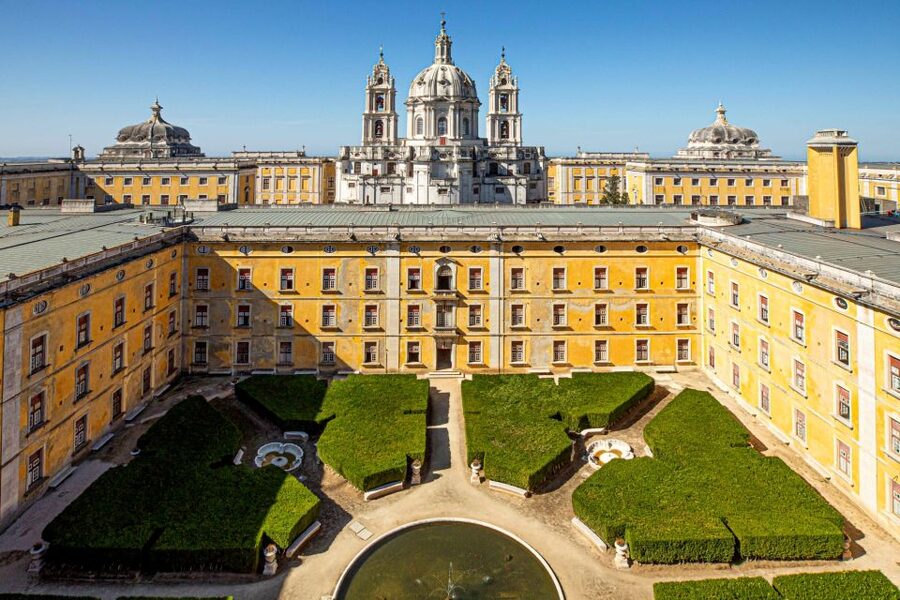
Mafra National Palace is the kind of place that makes royal spending look wonderfully unreasonable. Built in the 18th century, this huge Neoclassical and Baroque complex joins a palace, convent, basilica, library, hospital, and music collection under one roof. I like the chance to see six historic organs in the basilica, and I like that the ticket lets you explore the royal and religious sides of Mafra in one visit.
The $17 price is fair if all major areas are open, especially for the palace rooms, convent, collections, and library. The main caution is simple: restoration work can close important sections, including the basilica or library, and there is no guide or audio guide included to explain what you are seeing.
In This Review
- Key points to know before visiting
- Why Mafra Palace is worth your time
- Entering through the basilica side
- The royal palace and the cost of grandeur
- The basilica and its six historic organs
- Portugal’s largest library
- Sculpture, painting, and the palace collections
- The convent and the 18th-century hospital
- How long to spend and how to plan the day
- Who will enjoy this visit most
- Is the $17 ticket good value?
- Should you book Mafra National Palace?
- FAQ
- How much does entry to Mafra National Palace cost?
- How long is the ticket valid?
- How long does a typical visit take?
- What does the ticket include?
- Where do I present the ticket?
- Is Mafra National Palace open every day?
- When is the palace closed?
- Is the ticket refundable?
Key points to know before visiting
- Portugal’s largest library holds more than 36,000 book volumes.
- Six historic organs fill the basilica with an unusual musical story, even when no performance is taking place.
- One ticket covers three major areas: the royal palace, convent, and basilica.
- The complex became a UNESCO World Heritage Site in 2019, recognizing its architectural and cultural importance.
- Plan for one to two hours, with the most time needed for the palace rooms and library.
- Check closures before booking, since restoration work has affected the basilica and library.
Why Mafra Palace is worth your time
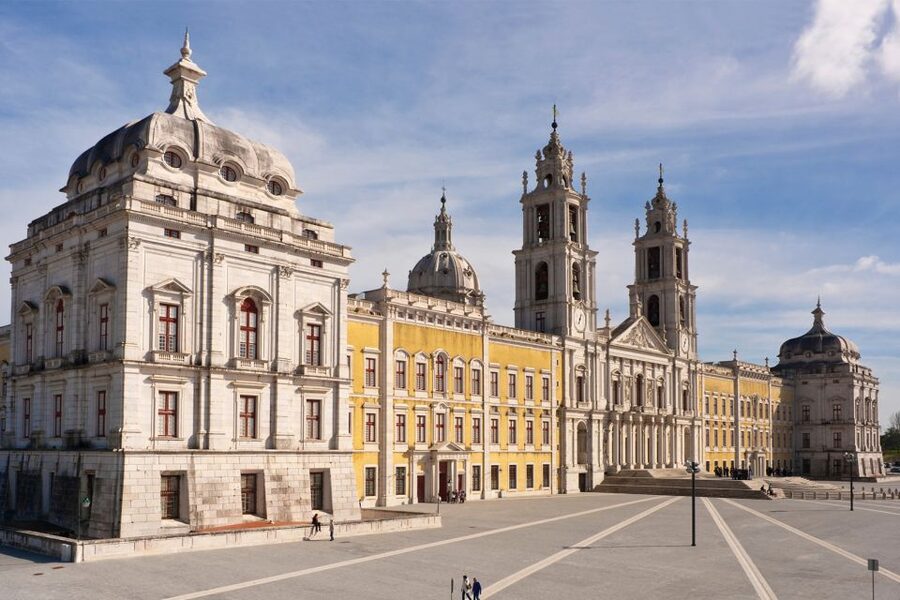
Mafra is more than an ornate royal residence. It was built as a statement of power, faith, and wealth, and the scale is hard to miss once you begin moving through the complex. Kings and members of the royal family came here for religious feasts and hunting in the nearby game reserve, while the convent housed religious communities and supported the palace’s daily life.
I find the mix especially useful for understanding 18th-century Portugal. You are not just walking through polished royal rooms. You are also seeing the religious institution, working spaces, art collections, music rooms, and medical facilities tied to the palace.
The setting in the Lisbon District makes Mafra a practical choice for a day out from the capital, though the ticket itself covers only admission. You need to arrange your own transport and allow enough time to visit during opening hours. Since the visit is self-guided, you can move at your own pace instead of following a fixed group schedule.
More Lisbon trips worth a second look
- Sintra: Pena Palace and Park Entrance Ticket
★ 4.2 · 17,410 reviews - Lisbon: Jerónimos Monastery Entrance Ticket
★ 4.1 · 14,164 reviews - Lisbon: Oceanário de Lisboa Entrance Ticket
★ 4.6 · 9,943 reviews
Entering through the basilica side
The entrance is to the left of the basilica’s main entrance. Present your QR code there, and keep it ready on your phone. This is a small detail, but large historic buildings often have several doors, and arriving at the wrong one can cost you a few minutes.
The ticket is valid for one day, not for a timed tour. The published opening hours are 9:30 AM to 5:30 PM every day except Tuesday, with last entry at 4:30 PM. The palace also closes on January 1, Easter Sunday, May 1, Ascension Thursday, and December 25.
I would arrive well before the final entry time. One to two hours is the usual visit length, but a late arrival can force you to rush through the palace and leave little time for the basilica or library. If you care about the art and architecture, an earlier start gives you room to pause.
The royal palace and the cost of grandeur
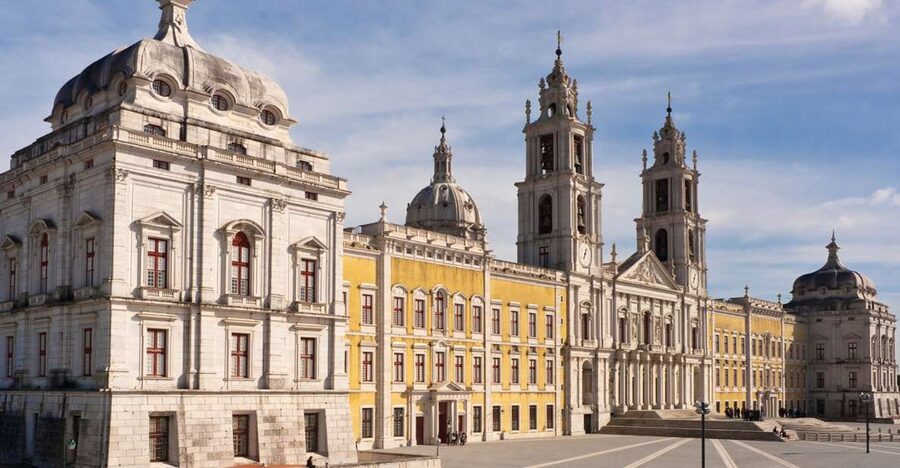
The royal palace is the obvious centerpiece, with grand architecture shaped by both Baroque decoration and Neoclassical order. The building dates from the 18th century, when royal patronage could turn religious promises into enormous construction projects.
As you move through the palace, pay attention to the contrast between ceremony and daily use. The royal rooms connect the building to court life and formal events, while the surrounding convent areas show the less glamorous systems needed to support such a place.
At $17 per person, admission is not a bargain-basement ticket, but it can represent good value if you see the main sections. You are paying for access to a large historic complex rather than a single gallery or one decorated room. The value drops if major areas are closed or if you prefer a guided explanation with your ticket.
This is also a place where a little preparation helps. Without an audio guide or included guide, you may understand the broad story but miss smaller details about the rooms, collections, and royal use. Read a short introduction before arriving, or bring your own guidebook if you want more context.
The basilica and its six historic organs
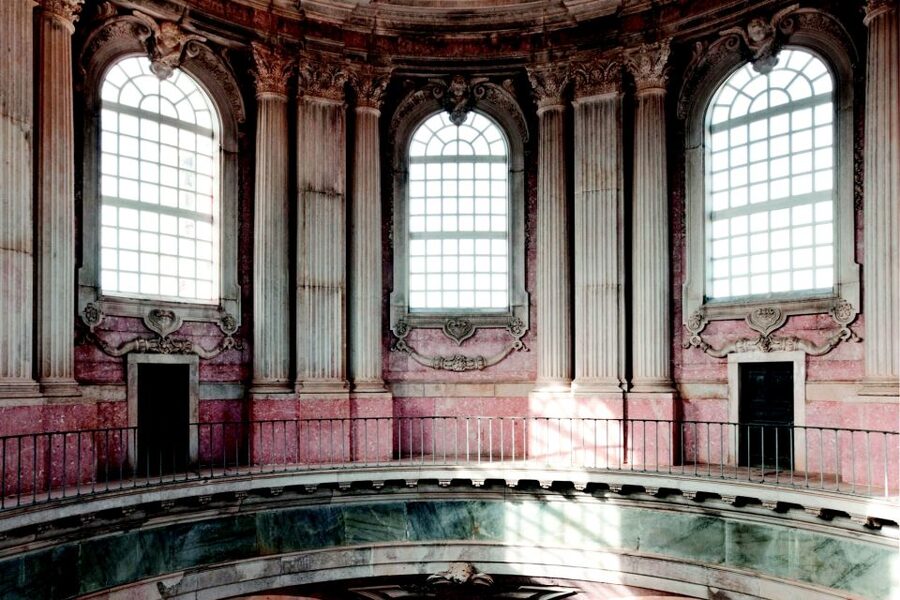
The basilica gives Mafra much of its visual and musical force. Its most unusual feature is the set of six historical organs. Seeing six organs together is rare, and it helps you understand that the basilica was designed for grand religious ceremonies, not just quiet private worship.
The organs are worth seeking out even if you are not an organ enthusiast. They make the basilica feel like a complete performance space, with architecture, sculpture, painting, and music planned as one experience. The two carillons add another musical layer to the palace complex.
The ticket includes access to the basilica, but this is one area where you should check current conditions before visiting. Restoration work has sometimes closed the basilica to the public. If the basilica is unavailable, a major reason for choosing Mafra is temporarily missing, and the $17 cost becomes harder to justify.
A different kind of day out, same corner of Portugal:
- Lisbon City Center Tour – The Unmissable Lisbon
★ 5.0 · 22,234 reviews - Lisbon: Sintra, Pena, Regaleira, Cabo da Roca & Cascais
★ 4.7 · 19,656 reviews - Lisbon: History, Stories and Lifestyle Walking Tour
★ 4.8 · 10,902 reviews - Lisbon: Sunset Boat Party Cruise with DJ and Open Bar
★ 4.5 · 10,378 reviews
Portugal’s largest library
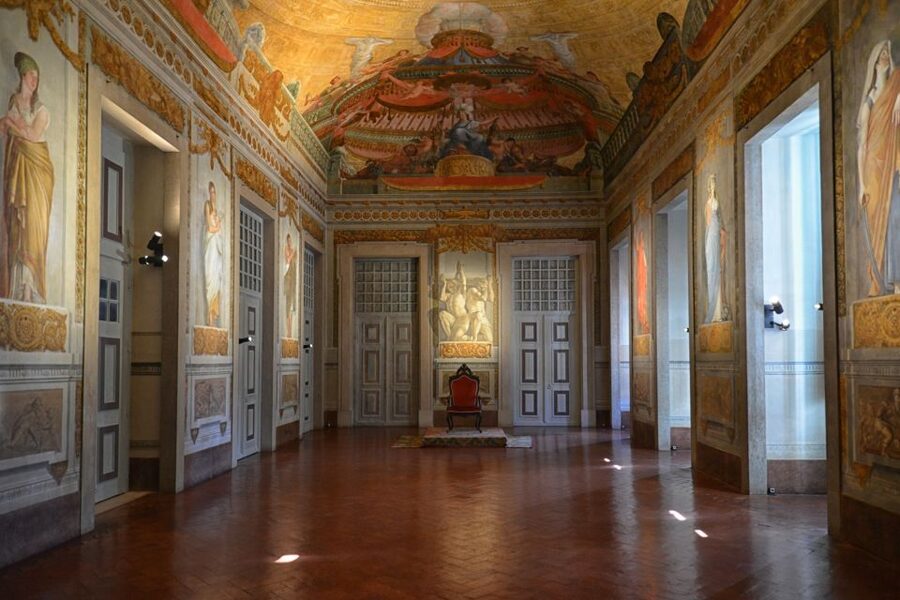
The library is the other major highlight. With more than 36,000 different volumes, it is described as Portugal’s largest library, and it gives the complex a strong scholarly side. This is not simply a decorative room added to impress royal guests. It points to the role of the convent and palace as places connected to study, religion, and the preservation of books.
For many people, the library will be the most memorable room after the basilica. The scale of the collection changes how you see Mafra. The complex was not only a place for royal ceremonies and religious feasts. It also supported reading, learning, and the work of religious scholars.
There is an important catch. The library has been closed at times for renovation, and the closure may not always be obvious when you first plan your visit. Check the current status before paying, especially if the library is your main reason for coming. A recent closure left some people feeling that the visit was much less complete than expected.
Sculpture, painting, and the palace collections
Mafra holds an important collection of Italian sculptures, along with Italian and Portuguese paintings. These works add detail and human scale to a building that can otherwise feel almost too large to take in.
The Italian sculpture is particularly useful for reading the palace’s artistic ambitions. The royal commission reached beyond Portugal, bringing in major works and styles connected to the wider European art world. The Portuguese paintings, meanwhile, keep the complex tied to local artistic traditions.
You will get more from these collections if you resist the urge to hurry past them. Look at how the art works with the building rather than treating each piece as an isolated object. In a palace of this size, paintings and sculptures help mark the purpose of each space, from worship to ceremony to private use.
Because the visit is not led by a guide, the amount of information available at each point matters. If labels are brief, your own reading beforehand becomes more useful. This is a place for curious independent visitors, not for people who need a carefully narrated route.
The convent and the 18th-century hospital
The convent adds a different mood to the visit. It shows the religious foundation behind the palace and helps explain why Mafra is more than a royal residence. The complex was built around both court life and religious practice, so the convent is essential to the full picture.
The 18th-century hospital is another unusual feature. It connects the grand public face of Mafra with the practical care required by the people who lived and worked there. A hospital inside a palace and convent complex may not sound as glamorous as marble rooms or organs, but it tells you more about daily life.
Access can be limited. Some areas, including the infirmary, have not always been directly open during the visit. If you see only the main palace route, you may understand the ceremonial side better than the working side. That is a shame, since the hospital and convent help turn Mafra from a royal showpiece into a functioning institution.
How long to spend and how to plan the day
The average visit takes one to two hours. I would use that as a minimum rather than a strict schedule, especially if the library and basilica are open and you want to examine the art.
A brisk visit might look like this:
- Start with the palace rooms and major architectural spaces.
- Continue through the convent areas and look for access to the hospital or infirmary.
- Visit the basilica and locate the six organs and two carillons.
- Finish with the library and its collection of more than 36,000 volumes.
The order may vary depending on the route in use. The key is not to spend all your time on the first grand rooms and then discover that you have only a few minutes left for the basilica and library.
The one-day validity gives you flexibility, but it does not mean you can return whenever you like if a section is closed. It simply means the admission is usable during the published opening day. Since Tuesday is the regular weekly closure, avoid building your schedule around Mafra then.
Who will enjoy this visit most
I would recommend Mafra to you if you enjoy architecture, royal history, religious buildings, libraries, or European art. It also suits independent visitors who like to set their own pace and decide how long to spend in each room.
Families with older children may find the scale, organs, palace rooms, and book collection easier to appreciate than a small museum with dense text panels. The visit is also manageable in length, since most people can see the main areas within two hours.
I would be more cautious if you want a fully explained tour. No guide or audio guide is included, so you need to supply your own background information. I would also wait or confirm conditions if the basilica or library is central to your plans.
The experience can feel less rewarding when access is restricted. A closure of the library, basilica, or infirmary removes some of the most distinctive parts of Mafra. That is not a minor inconvenience when those features are a large part of what you are paying to see.
Is the $17 ticket good value?
The answer depends on what is open. At full access, $17 is reasonable for a complex containing a royal palace, convent, basilica, library, art collections, organs, carillons, and hospital. You are getting a broad look at Portuguese royal and religious life rather than a short visit to one room.
At partial access, the calculation changes. Several recent booking experiences have raised concerns about the library or basilica being closed for works, along with limits on direct access to the infirmary. Without an audio guide, a reduced route can feel expensive because you are also missing the interpretation that would help fill in the gaps.
I suggest checking the official opening information close to your visit, particularly if you are traveling from Lisbon and have only one chance to see Mafra. If all the main sections are open, book with confidence. If the library or basilica is closed, consider how much the remaining palace route matters to you before committing to a non-refundable ticket.
Should you book Mafra National Palace?
Book it if you want an independent, flexible visit to one of Portugal’s major historic complexes and the main rooms, basilica, and library are open. The six organs and 36,000-volume library give Mafra an identity beyond standard royal palace sightseeing.
Hold off or check carefully if you need a guide, expect every room to be accessible, or are visiting mainly for the library and basilica. The ticket offers solid value at full access, but restoration closures can change the experience. Confirm the current route, avoid Tuesday, arrive before the 4:30 PM last entry, and allow at least two hours if you want to see the complex without racing.
FAQ
How much does entry to Mafra National Palace cost?
The listed price is $17 per person.
How long is the ticket valid?
The ticket is valid for one day.
How long does a typical visit take?
The average visit takes one to two hours.
What does the ticket include?
It includes entry to the royal palace, convent, and basilica.
Where do I present the ticket?
Present your QR code at the entrance to the left of the basilica’s main entrance.
Is Mafra National Palace open every day?
It is open from 9:30 AM to 5:30 PM every day except Tuesday. Last entry is at 4:30 PM.
When is the palace closed?
It is closed on Tuesdays, January 1, Easter Sunday, May 1, Ascension Thursday, and December 25.
Is the ticket refundable?
No. This activity has a non-refundable cancellation policy.
Recently reviewed around Lisbon
- Portinho da Arrábida: Coasteering Boat Tour★ 4.9 · 78 reviews
- Setúbal: Dolphin-Watching Boat Tour★ 4.8 · 213 reviews
- From Lisbon: Private Óbidos and Nazaré Tour★ 5.0 · 152 reviews
- No Diet Club – Unique food tour in Lisbon with many Tastings★ 4.8 · 44 reviews
- Queluz National Palace & Gardens Ticket★ 4.6 · 447 reviews
- Melides: Horse Riding on the Beach with Wine Tasting★ 4.3 · 117 reviews
- Melides: Horseback Riding on Melides Beach★ 4.7 · 111 reviews
- Lisbon: Street Art Tuk Tuk Tour★ 4.9 · 372 reviews
Tickets, compared.


Quinta da Regaleira Skip-the-Ticket-Line Entry & Audioguide
Read our review →
Luz Stadium Tour & SL Benfica Museum Ticket w/Scarf
Read our review →