
Reviewed · CITY TOURS
Lisbon Walking Tour – The Perfect Introduction to the City
Lisbon’s story comes into sharp focus on foot, especially when you connect the grand Praça do Comércio with the ruins of Carmo Church, the 1755 earthquake, and the Carnation Revolution. This 2.5-hour route through Baixa and Chiado gives you useful orientation before you tackle the city’s hills on your own.
I like the passionate guiding, with Tiago, José, Natalia, Walter, and others praised for lively storytelling and practical advice. I also like the route’s value: you see a large slice of central Lisbon for a $1.25 booking price, then decide what to pay your guide. The main caution is that guide quality can vary, and two people found one guide’s fast speech hard to follow.
In This Review
- Key points to know before you book
- Why this free-style walk works well on a first morning
- Meeting under the arch at Praça do Comércio
- Baixa’s planned streets and the earthquake story
- Rossio, Jewish memory, and the Church of São Domingos
- Avenida da Liberdade and Casa do Alentejo
- Largo do Carmo and the Carnation Revolution
- Rossio Station and Igreja de São Roque
- Ending in Chiado and Bairro Alto
- What the guides add to the experience
- The real cost: a low booking price with a social expectation
- Practical advice for making the walk easier
- Who should book this Lisbon walking tour?
- Should you book it?
- FAQ
- How long does the Lisbon walking tour last?
- Where does the tour start?
- Where does the tour end?
- What language is the tour offered in?
- Is the tour free?
- Can I cancel for a full refund?
Key points to know before you book
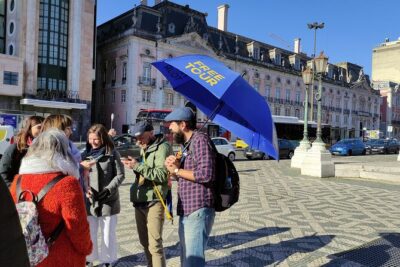
- Look for the orange umbrella: Meet between the arch and the statue at Praça do Comércio.
- Follow Lisbon’s central spine: The walk links Baixa, Rossio, Avenida da Liberdade, Carmo, Chiado, and Bairro Alto.
- Expect history with local advice: Guides often add restaurant, viewpoint, and public transport suggestions.
- Allow for a tip: The booking price is very low, but the guide works from gratuities and one guide requested a minimum of €10 per person.
- Wear comfortable shoes: The route covers plenty of ground, with Lisbon’s uneven streets and slopes.
- Prepare for weather: The tour can run in rain, so bring a poncho or umbrella if the forecast looks poor.
Why this free-style walk works well on a first morning
This is not a museum tour with long indoor stops. It is a moving introduction to central Lisbon, using squares, churches, streets, memorials, and viewpoints as the classroom. You get the broad outline of the city, then return later to the places that catch your eye.
The route lasts about two hours and 30 minutes and has a maximum of 20 people. That is small enough for a guide to manage, though the actual feel may depend on the day and the guide assigned. One guide handled a surprisingly large group well, while another guest found the pace too quick.
The strongest guides appear to bring real affection for Lisbon. Tiago is repeatedly praised for animated stories, restaurant recommendations, shortcuts, and a carefully prepared list of places to eat and see. José is noted for warmth and clear explanations. Natalia receives praise for making Portuguese history easy to follow and for suggesting inexpensive places. Walter is described as funny, polite, and good with families, including a group with strollers.
I would book this near the start of your stay. You will learn how the central districts fit together, hear ideas for food and viewpoints, and gain a better sense of which streets deserve a second look.
More City Tours in Lisbon
- Lisbon City Center Tour – The Unmissable Lisbon
★ 5.0 · 22,234 reviews - Lisbon: Daytime/Sunset/Night City Sailboat Tour with Drink
★ 4.9 · 3,114 reviews - Lisbon: City Highlights and Viewpoints E-Bike Tour
★ 4.9 · 1,556 reviews
Meeting under the arch at Praça do Comércio
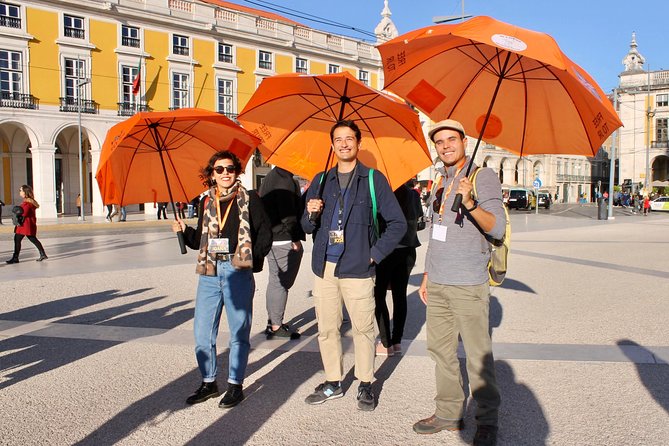
The starting point is Praça do Comércio, Lisbon’s enormous waterfront square. Find the guide with an orange umbrella between the large arch and the statue of Dom José I in the center. This detail matters, since a wide open square can make a meeting point less obvious than expected.
The statue provides the first historical anchor. From here, the guide introduces the downtown area and explains how Lisbon’s central districts relate to one another. You are in Baixa, the part of the city rebuilt in an orderly grid after the disaster of 1755.
The square itself deserves a few minutes before the group moves on. Its scale, pale buildings, and open view toward the Tagus make it one of the best places to understand Lisbon’s grand public face. The stop is short, so arrive ready to listen rather than expecting time for a full photo session.
Baixa’s planned streets and the earthquake story
From Praça do Comércio, the route passes the Municipal Square, home to Lisbon’s city hall, and continues toward Rua Augusta. This is the city’s main pedestrian thoroughfare and one of the best places to watch daily Lisbon unfold.
The central subject here is the Great Lisbon Earthquake of 1755. The disaster destroyed much of the old city, and the rebuilding of Baixa produced the straight streets and regular blocks you see today. A good guide makes this more than a date to memorize. You begin to understand why this district feels different from the older, hillier neighborhoods.
At the Santa Justa Elevator, you pause beside one of Lisbon’s most famous landmarks. The iron lift connects the lower streets with the higher Carmo area and is instantly recognizable in photographs. The listed stop is brief and does not include a ride, so you should not expect admission to the elevator or time to queue for it.
That is both a strength and a limitation. You get the story and the view of the structure without using a large part of your morning in line. If riding the elevator matters to you, return separately.
Rossio, Jewish memory, and the Church of São Domingos
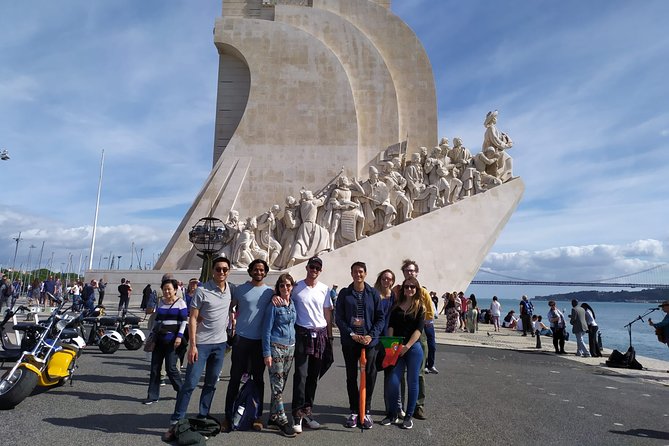
The walk continues to Praça Dom Pedro IV, commonly known as Rossio. The square is described as Lisbon’s oldest, and its wave-pattern pavement, central monument, and surrounding buildings make it one of the city’s key meeting places.
The route then turns toward the Memorial to the Victims of the 1506 Jewish Massacre. This is an important stop because it adds a difficult chapter to the city’s story. The memorial honors the thousands of Jewish victims killed during the massacre, giving the tour a more serious edge than a simple parade of attractive streets.
Nearby, Igreja de São Domingos offers another strong historical lesson. The church is striking, and its interior carries visible traces of damage and fire. Guides often use places like this to explain how Lisbon’s past is not only found in grand monuments. It is also present in buildings that survived disaster, violence, and change.
The short stop at São Domingos may leave you wanting more time inside. That is normal on a walking overview. You are being introduced to many places, not given a full church visit.
More Walking Tours in Lisbon
- Lisbon: History, Stories and Lifestyle Walking Tour
★ 4.8 · 10,902 reviews - Best of Lisbon Small-Group Guided Walking Tour
★ 5.0 · 4,869 reviews - Lisbon: Food and Wine Small Group Walking Tour
★ 4.9 · 4,082 reviews - Best of Lisbon Walking Tour: Rossio, Chiado & Alfama
★ 4.9 · 2,700 reviews
Avenida da Liberdade and Casa do Alentejo
Avenida da Liberdade brings a change of mood. It is Lisbon’s most polished avenue, with broad space, decorative paving, and a more formal urban character than the tighter streets of Baixa. The listed stop is only about five minutes, so the guide’s main task is to place the avenue within the city rather than explore every detail.
Casa do Alentejo is a more intimate highlight. This charming house gives you a glimpse of Portuguese regional culture inside the capital. The building is known for its appealing interior, and the stop helps break up the long sequence of squares and streets with a place that feels more enclosed and decorative.
You may find this part of the route especially useful if you want to mark places for a later return. The walk moves quickly enough that you should keep your eyes open and note anything you want to revisit.
Largo do Carmo and the Carnation Revolution
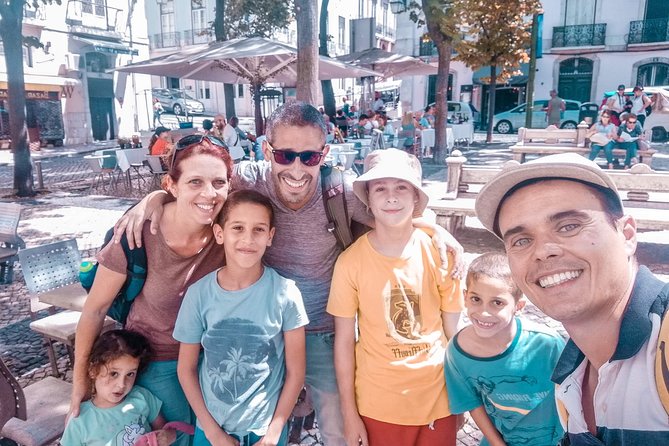
Largo do Carmo is one of the tour’s most meaningful stops. This is where the Carnation Revolution took place, the 1974 movement that ended decades of dictatorship in Portugal. The square is also home to the ruins of Carmo Church, linking modern political change with the older earthquake story.
The ruined arches are among Lisbon’s most memorable sights. They give the earthquake a physical presence: instead of hearing only about destruction, you see what remained standing in the open sky. The guide’s explanation is particularly valuable here, since the same location carries both medieval religious history and twentieth-century political history.
Several people praise the guides for making these subjects easy to remember. Tiago is singled out for animated stories about the earthquake, the church, and the revolution. That style can make a major difference. Lisbon has many monuments, but without context they can blur together after a few hours.
Rossio Station and Igreja de São Roque
The route passes Estação do Rossio, the old central station of Lisbon. Its ornate exterior makes it an enjoyable quick stop, even if the tour does not pause for a train journey. This is a useful reminder that Lisbon’s public buildings often turn ordinary transport into part of the city’s visual character.
Igreja de São Roque provides a contrast with Carmo Church. It is one of the few churches in Lisbon to survive the 1755 earthquake, making it a natural place to compare survival and destruction. The stop is listed at about ten minutes, so expect an introduction rather than an exhaustive look at every chapel and artwork.
This portion of the route is also a test of attention. There are many names, dates, and transitions in a short period. If your guide speaks quickly, stay near the front and ask for a slower explanation when needed. One guest specifically found a fast pace and accent difficult to understand, while others found the guides clear and engaging.
Ending in Chiado and Bairro Alto
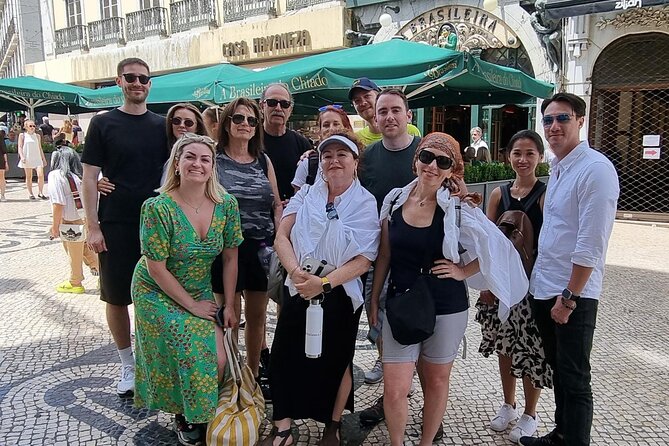
The final stretch reaches Praça Luís de Camões, where the tour ends. The square is one of Lisbon’s best-known urban spaces and a practical finish because it places you between Chiado and Bairro Alto.
Bairro Alto is the famous nightlife district, though during a daytime walking tour you see it mainly as a neighborhood with a different rhythm and identity. The route gives you enough orientation to return after dark if that is part of your plan.
The end point is useful for the rest of your day. You can remain in Chiado, continue exploring Bairro Alto, or use the guide’s recommendations for food and viewpoints. Several guides are praised for practical suggestions, especially inexpensive restaurants and places worth returning to. This is where the tour’s value goes beyond the walk itself.
What the guides add to the experience
The route is fixed, but the personality of the guide shapes the day. Tiago receives the strongest repeated praise for storytelling, humor, passion, shortcuts, food advice, and knowledge that goes beyond a standard sightseeing script. José is often described as pleasant, entertaining, and deeply interested in history. Natalia is praised for charm and useful low-cost dining suggestions.
Walter receives especially positive attention from families. One group with children and strollers found the route manageable, and another described him as polite and funny. That does not mean every departure will feel identical, but it gives families a useful reason to consider the tour.
The main weakness is consistency in speaking speed. Two separate comments raise the same concern: a guide spoke too fast, and slowing down did not fully solve the problem. If you have hearing difficulties, are not fully comfortable with spoken English, or prefer a slower academic style, this is worth considering.
The tour is offered in English. Service animals are allowed, and most people can participate, but you should still expect an urban walk through central Lisbon rather than a seated activity.
The real cost: a low booking price with a social expectation
The listed price is $1.25 per person, which makes the tour unusually inexpensive. But this is a pay-what-you-think-is-fair format, not a fully paid tour where the booking price covers the guide’s normal fee.
That distinction matters. The guide explains the system at the beginning, and one guide reportedly asked for a minimum of €10 per person. Another guest felt this made the opening uncomfortable and preferred the clear cost of a fixed-price tour. The company response explained that guides depend on tips and that some people had previously left nothing.
My advice is simple: treat the $1.25 as a reservation charge, not the complete cost of the experience. Decide in advance what you think the walk is worth, then tip in line with the quality and length of the service. If you dislike uncertainty or direct discussion about gratuities, choose a fixed-price tour instead.
At the same time, the value can be excellent. You receive a long introduction to central Lisbon, a route through major landmarks, historical context, and often useful local suggestions for far less than a conventional sightseeing tour.
Practical advice for making the walk easier
Wear comfortable shoes. The distance is not described as extreme, and one person found the walking fair, but Lisbon’s central streets can still be tiring because of pavement, slopes, and the amount of time spent standing.
Arrive early at Praça do Comércio and look for the orange umbrella between the arch and the statue. The guide may be easy to spot once you know what to seek, but a large square is no place to arrive at the last second.
Bring rain protection. The walk can continue in wet weather, and one participant found the experience worked well despite heavy rain. A compact umbrella or rain poncho will keep you focused on the city instead of your clothes.
The maximum group size is 20 people. Stay close enough to hear, especially during explanations at busy squares. If you want restaurant or transport advice, ask before the final goodbye. Guides have often been praised for those practical tips, and they are among the most useful parts of the experience.
Free cancellation is available up to 24 hours before the start time for a full refund. Changes or cancellations inside that period are not accepted, and a departure may be changed or refunded if the minimum number of participants is not reached.
Who should book this Lisbon walking tour?
I would choose this for a first visit, especially if you want to spend a few days in Lisbon and prefer to get oriented before visiting individual sights. It suits curious walkers who enjoy stories about politics, religion, disaster, and city planning as much as photographs.
It also works for budget-minded visitors, families able to manage a city walk, and anyone who wants restaurant or viewpoint suggestions from a local guide. The end at Camões Square leaves you well placed to keep exploring.
I would be more cautious if you need a slow, highly structured presentation, guaranteed guide consistency, or a fixed final price. The route covers a lot in a short time, and the pay-what-you-want system may not suit everyone.
Should you book it?
Yes, if you understand what you are buying. This is an inexpensive, energetic orientation walk rather than a private tour or a detailed visit inside every monument. Book it for your first day or two, wear good shoes, bring rain protection, and budget a fair tip.
The best reason to go is the combination of place and story: the earthquake at Carmo, the revolution in Largo do Carmo, the Jewish memorial, São Roque’s survival, and the streets linking them all. If you get a guide such as Tiago, José, Natalia, or Walter, expect a particularly personal introduction. Just stay near the guide, speak up if the pace is too fast, and decide beforehand if a gratuity-based tour fits your travel style.
FAQ
How long does the Lisbon walking tour last?
The tour lasts approximately two hours and 30 minutes.
Where does the tour start?
It starts at Praça do Comércio in Lisbon. Look for the guide with an orange umbrella between the large arch and the statue in the middle of the square.
Where does the tour end?
The tour ends around Praça Luís de Camões, also called Largo Luís de Camões, between Chiado and Bairro Alto.
What language is the tour offered in?
The tour is offered in English.
Is the tour free?
The booking price is listed as $1.25 per person, and you pay the guide whatever you think the tour is worth at the end. One guide requested a minimum of €10 per person, so plan for a gratuity rather than treating the booking price as the full cost.
Can I cancel for a full refund?
Yes. You can cancel at least 24 hours before the experience start time for a full refund. Cancellations and changes made less than 24 hours before the start time are not accepted.
Recently reviewed around Lisbon
- Lisbon: Catamaran Luxury Sunset and Wine Tour★ 5.0 · 119 reviews
- Lisbon’s authentic Food and Wine tour with a Winemaker★ 5.0 · 67 reviews
- Morning Sailing Tour in Tagus River from Lisbon★ 5.0 · 68 reviews
- Lisbon: Belem Walking Tour with Jeronimos Monastery Tks Included★ 5.0 · 115 reviews
- PRIVATE Unforgettable Full Day Tour to Sintra from Lisbon★ 5.0 · 236 reviews
- Discover Lisbon’s Alfama: Secrets of the Old Town★ 5.0 · 104 reviews
- Sesimbra Wild Beach Tour from Lisbon★ 5.0 · 57 reviews
- Private Jeep Tour from Lisbon – Arrábida, Sesimbra & Beach Picnic★ 5.0 · 48 reviews
City Tours, compared.
Lisbon City Center Tour – The Unmissable Lisbon
Read our review →
Daytime/Sunset/Night City Sailboat Tour with Drink
Read our review →
City Highlights 3-Hour Guided Electric Bike Tour
Read our review →

Browse the lists this tour appears in