Reviewed · LISBON TOURS
Lisbon: Pastel de Nata Masterclass at a Real Bakery
Lisbon’s famous custard tart gets the full kitchen treatment here. You don’t simply watch a chef shape pastry. You work inside a real bakery, learn the tricky puff pastry method from scratch, make the custard, and bake at least three pastéis de nata yourself.
I like the small maximum of 12 people, which keeps the class social without turning it into a crowd. I also like the finish: warm tarts, a drink made by the baristas, and a recipe sent by email so you can try the method at home. The main consideration is that some hands-on work may happen in pairs or larger groups, and clear English can vary by instructor.
In This Review
- Key points at a glance
- Why making pastel de nata is harder than eating one
- Meeting the chefs at Nat’elier in Baixa-Chiado
- The two-hour kitchen plan
- What you actually take part in
- Warm tarts and a barista-made drink
- Is $74 a fair price?
- Who should book this bakery class?
- Practical details before you reserve
- Should you book the Nat’elier masterclass?
- FAQ
- Where does the pastel de nata class meet?
- How long does the experience last?
- How many pastéis de nata will I make?
- Do I need previous baking experience?
- Which languages are available?
- What is included in the price?
- Can children join the class?
Key points at a glance

- Bake inside a working pastry kitchen: Nat’elier offers Portugal’s only pastel de nata class held inside a real bakery.
- Make the pastry from zero: You’ll learn how to laminate and shape puff pastry using the technique needed for these custard tarts.
- Work with named pastry chefs: Classes may be led by co-founder João Batalha or in-house chefs such as Silvia Sousa and Adriano Cardoso.
- Finish with three warm tarts: Your class includes three pastéis de nata and one barista-crafted hot or cold drink.
- A friendly two-hour group activity: With up to 12 participants, the pace is social, practical, and suitable for beginners.
- Best for adults and children age eight and up: Younger children can attend through a private class, and mobility limitations may make this activity unsuitable.
Why making pastel de nata is harder than eating one
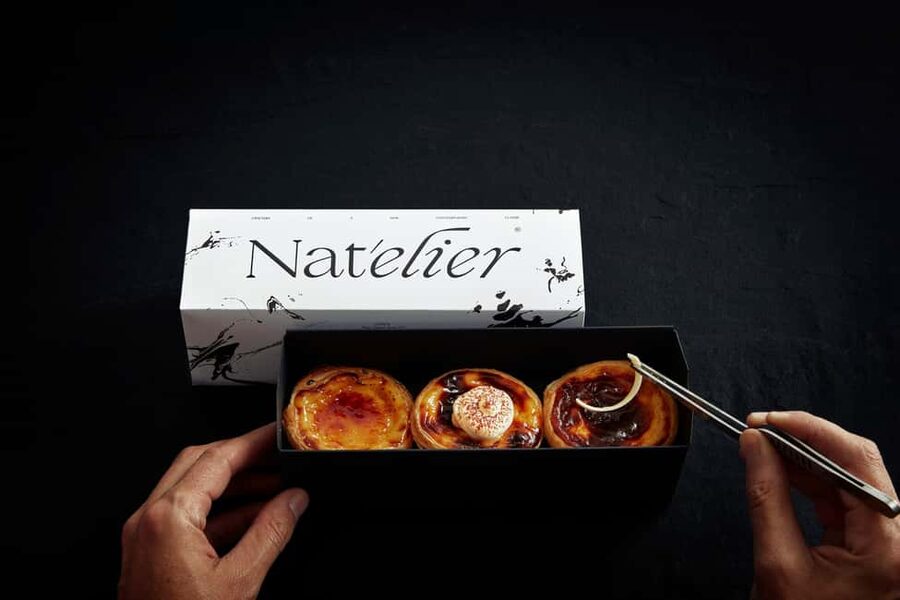
A pastel de nata looks simple: crisp pastry, a spoonful of custard, and a darkly spotted top. The pastry is the real lesson. It is not ordinary pie dough, and the shaping technique affects the layers, the cup-like form, and the final crunch.
This class begins with the story of the Portuguese custard tart, then moves quickly into the working kitchen. You gear up with an apron and hair net before handling ingredients and equipment. That change matters. You are not sitting at a demonstration counter with a sample in front of you. You are taking part in the production.
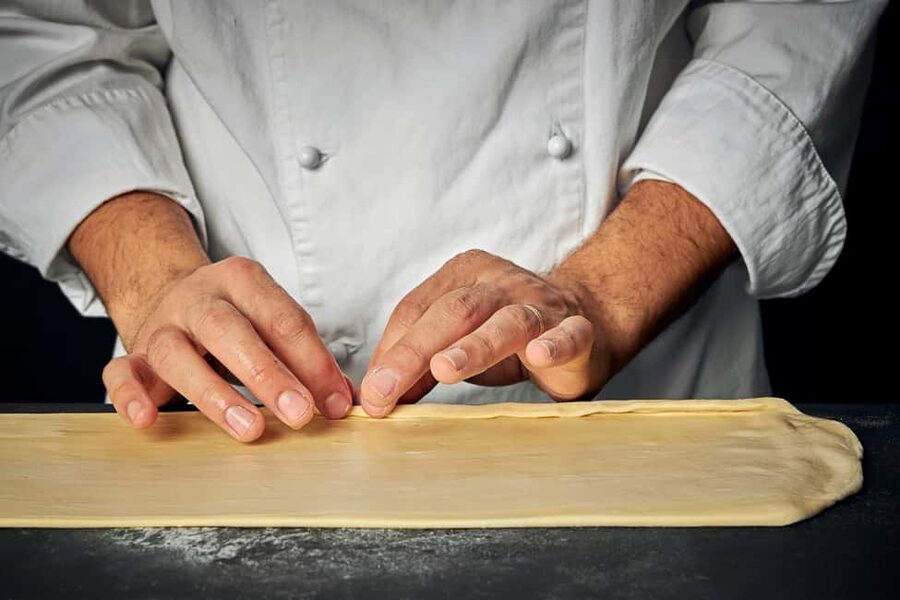
The class teaches puff pastry from scratch, including lamination. In plain terms, that means working fat and dough into layers that expand in the oven. The method can sound intimidating if you rarely bake, but the class is designed for people with no previous experience. The chefs guide each stage and explain why the dough is handled in a particular way.
I especially like that the lesson does not stop at a prepared pastry shell and ready-made filling. You make both the dough and the custard. That gives you a better chance of repeating the recipe at home, even if your first batch requires some practice.
Other Lisbon days travellers weigh against this one:
- Lisbon City Center Tour – The Unmissable Lisbon
★ 5.0 · 22,234 reviews - Lisbon: Sintra, Pena, Regaleira, Cabo da Roca & Cascais
★ 4.7 · 19,656 reviews - Sintra: Pena Palace and Park Entrance Ticket
★ 4.2 · 17,410 reviews
Meeting the chefs at Nat’elier in Baixa-Chiado
You meet at Nat’elier pastry store, just outside Baixa-Chiado Metro station on Lisbon’s blue line. This is a practical meeting point in the center of the city, and the activity begins and ends there, so you do not need to arrange transport between separate locations.
The class may be hosted by João Batalha, the award-winning chef and Nat’elier co-founder, or by another in-house pastry chef. Silvia Sousa and Adriano Cardoso are named as regular instructors. Other classes have been led by chefs including Miguel, Manuel, Valeria, Juan, and a Brazilian chef working with Silvia.
That range of instructors means your exact teaching style can vary. João’s class may feel like a session with the owner and founder, while another chef may bring a more relaxed or playful approach. The strongest feedback points to patient, friendly instruction and a fun tone. One useful detail for solo visitors is that the class naturally creates conversation, since you work beside people who are also learning the same technique.
The main language options are English and Portuguese. French and Spanish classes may be possible, but you need to send a message before booking. If you are relying on detailed English explanations, it is sensible to confirm the language before paying.
The two-hour kitchen plan
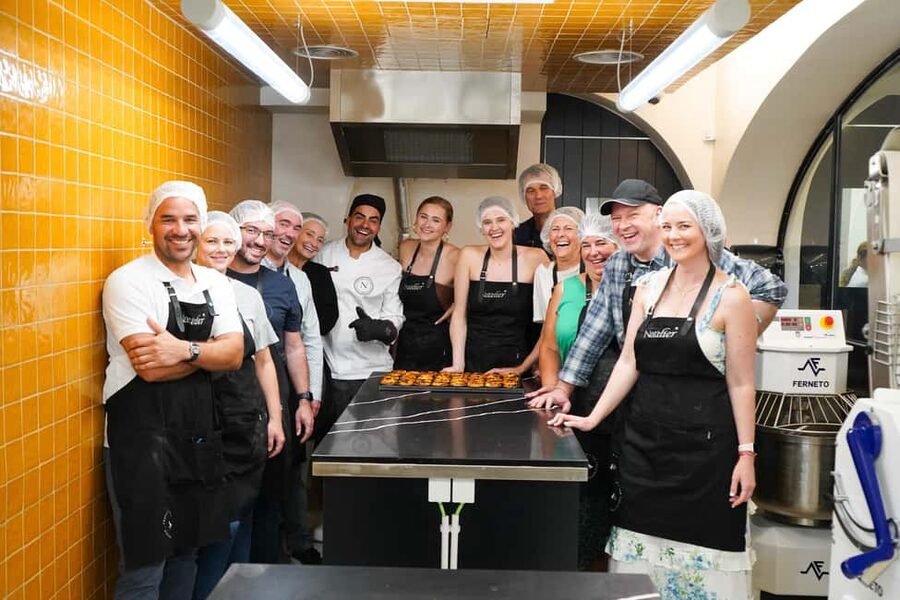
The opening introduction covers the background of pastel de nata. This is brief but useful because it gives the recipe some context before you begin measuring, rolling, and shaping.
After the introduction, you put on the provided apron and hair net and enter the professional kitchen. The instructors explain the equipment and ingredients, then lead you through the pastry. Each person makes at least three tarts by hand, though some stages may be shared.
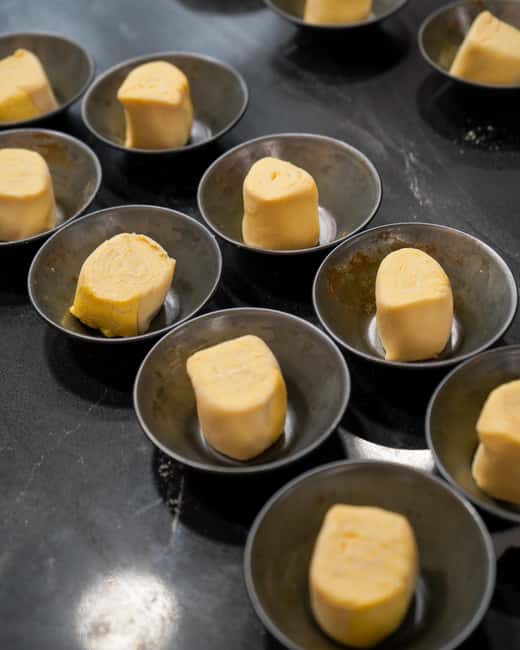
The dough work is the most technical part. You learn how to laminate the pastry, spread it using a specific pastel de nata technique, and form the dough into the small tart shapes. The result should be a thin, layered shell rather than a thick pastry cup.
After the shells are prepared, the class turns to the filling. You help make the custard and then portion it into the pastry. The custard is baked in a professional oven, which is important because the intense heat helps create the browned spots that define a good pastel de nata.
The class works as a team, so not every person handles every single batch of filling alone. One person who attended alone found the social side a plus, while another preferred smaller groups because some filling work was done in groups of six to eight. That is the fair trade-off: a shared kitchen keeps the class lively and helps the two-hour schedule work, but it may limit individual control at certain moments.
What you actually take part in
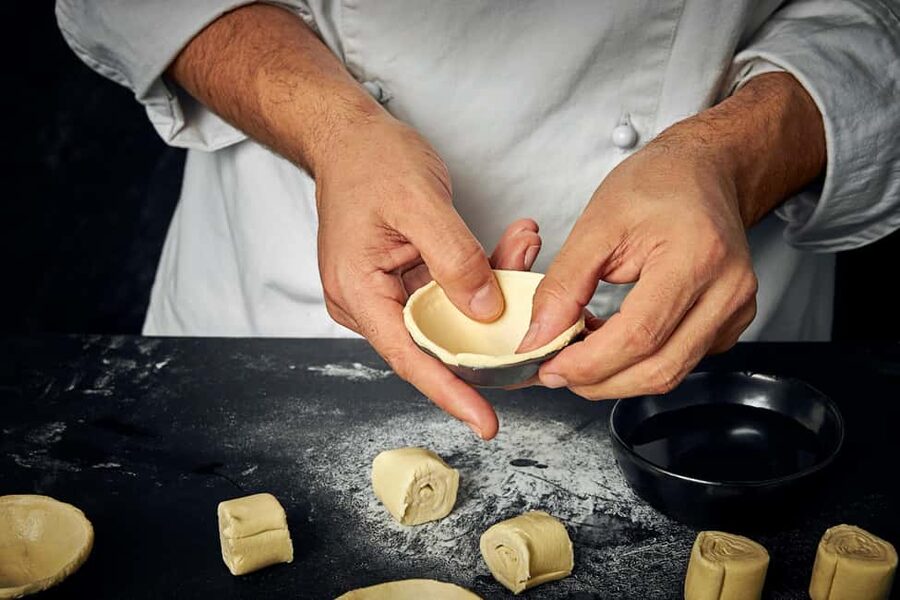
Your most personal part of the class is shaping the pastry and filling your tarts. You are not just decorating finished pastries. You handle the dough, use the technique shown by the chef, add the custard, and watch your own work go into the oven.
The staff supply all ingredients and baking equipment. Aprons, hair nets, and water are also included, so you only need to arrive ready to work. The activity is hands-on without asking you to bring specialist tools or ingredients.
The group size is capped at 12. That is small enough for a chef to correct your technique and answer questions, though the shared steps mean the class is not the same as a private lesson. If you want more personal attention, private classes are available by arrangement.
The approach suits nervous beginners. Several instructors are praised for patience, clear explanations, and a willingness to help people who rarely cook. I would still expect a little flour on your hands and some uneven pastry shapes. That is part of the point. You are learning a professional method, not buying a perfectly uniform box from the bakery counter.
A different kind of day out, same corner of Portugal:
- Lisbon: Jerónimos Monastery Entrance Ticket
★ 4.1 · 14,164 reviews - Lisbon: History, Stories and Lifestyle Walking Tour
★ 4.8 · 10,902 reviews - Lisbon: Sunset Boat Party Cruise with DJ and Open Bar
★ 4.5 · 10,378 reviews - Lisbon: Pena Palace, Sintra, Cabo da Roca, & Cascais Daytrip
★ 4.7 · 9,981 reviews
Warm tarts and a barista-made drink
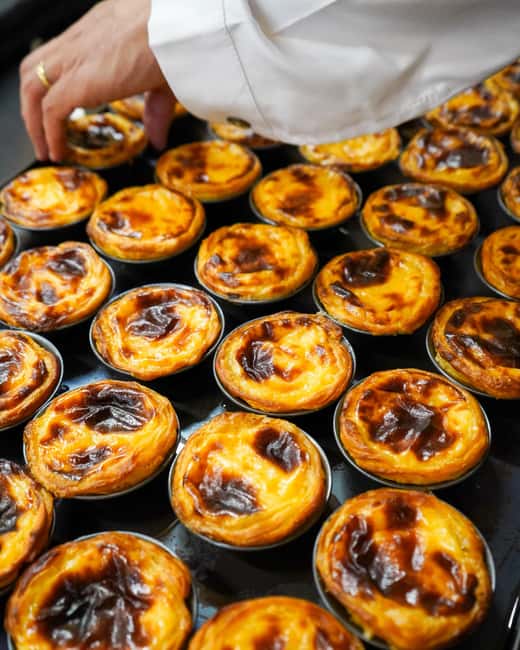
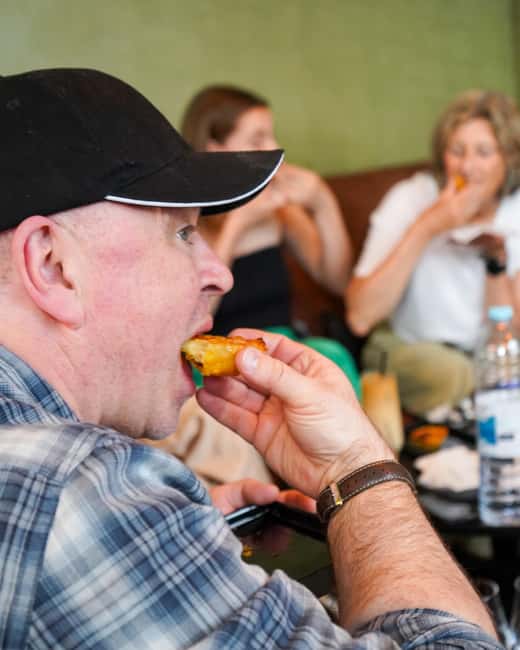
Once the pastries come out, you taste three of your own pastéis de nata. The included drink can be hot or cold and is made by the bakery’s baristas. Alcohol, milkshakes, and hot chocolate are not included, and any extra food or drink costs more.
This tasting is more than a snack at the end. You can compare the crisp pastry, the creamy center, and the browned surface while the result is still warm. It also gives you a clear reward after the dough work, which can be the most demanding part of the session.
The coffee pairing makes sense in Lisbon, where a pastel de nata is often enjoyed with an espresso. You can choose a different included hot or cold drink if coffee is not your preference. Water is available throughout the class.
The pastries may also be difficult to save. Three tarts sound like a small edible souvenir, but warm custard pastry has a short life in a hungry group. You also receive a certificate of participation, and the recipe is sent by email so the lasting souvenir is the method rather than just the paper certificate.
Is $74 a fair price?
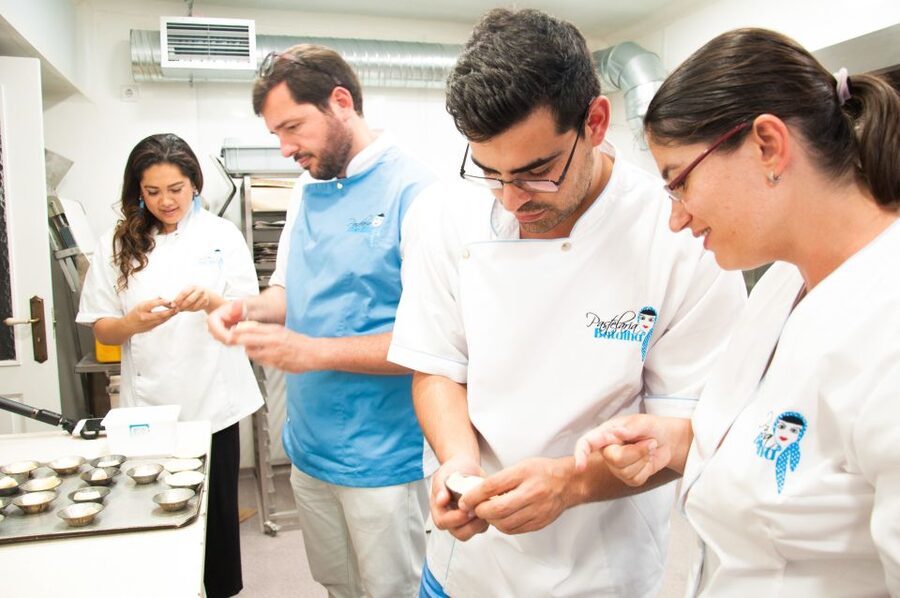
At $74 per person, this is not the cheapest way to eat pastel de nata in Lisbon. If you only want to sample a tart, a bakery visit costs far less. The price makes more sense if you want a structured activity, chef guidance, and access to a professional kitchen.
The package includes two hours of instruction, ingredients, equipment, protective clothing, three tarts, a barista-crafted drink, water, and the certificate. You are also paying for the work behind the class: kitchen space, a professional pastry chef, preparation, and cleanup.
I see this as a good value for a hands-on food experience, especially if you enjoy cooking or want an activity that does not rely on sightseeing weather. It is less compelling for someone who dislikes group classes or wants to eat without learning the process.
The value improves for a family, couple, or solo visitor who wants a shared activity. Families with children age eight and up can join, and the playful format gives younger bakers a clear task. Children under eight are not suited to the standard group class, but a private experience can be arranged for younger children.
Who should book this bakery class?
I would recommend it to you if you want to understand a Portuguese food rather than simply photograph it. The class gives you a practical skill, a taste of local baking culture, and a social setting in the middle of Lisbon.
It is also a good pick for solo visitors. The group setup makes it easy to meet people without committing to a full-day excursion. Couples and families get a shared project, and first-time bakers can take part without bringing special skills.
This is less suitable if you have mobility impairments. The activity takes place in a professional kitchen, and the provided information specifically notes that it is not suitable for people with mobility limitations.
Language deserves a quick check. English and Portuguese are standard options, while French and Spanish require a message before booking. If you need every instruction translated slowly, ask about the class language in advance.
The group format may also affect your choice. Most of the strongest feedback focuses on friendly chefs, good pacing, and a relaxed atmosphere. One attendee found the English communication less complete because the class had mostly non-English speakers, and another wanted smaller working groups. Those are not reasons to reject the experience, but they are useful expectations to set.
Practical details before you reserve
The class lasts two hours, with starting times shown according to availability. Plan to arrive at Nat’elier pastry store and tell the staff you are attending the Pastel de Nata Masterclass.
The meeting point is outside Baixa-Chiado Metro station on the blue line. The activity finishes at the same place, which makes it easy to connect with the rest of your Lisbon day.
You can cancel up to 24 hours in advance for a full refund. A reserve-now, pay-later option is also available, useful if your schedule is still changing.
The standard experience is for adults and children age eight and older. Private classes can be arranged, including for younger children. Ask about language needs or private arrangements before booking rather than assuming they can be handled on the day.
Should you book the Nat’elier masterclass?
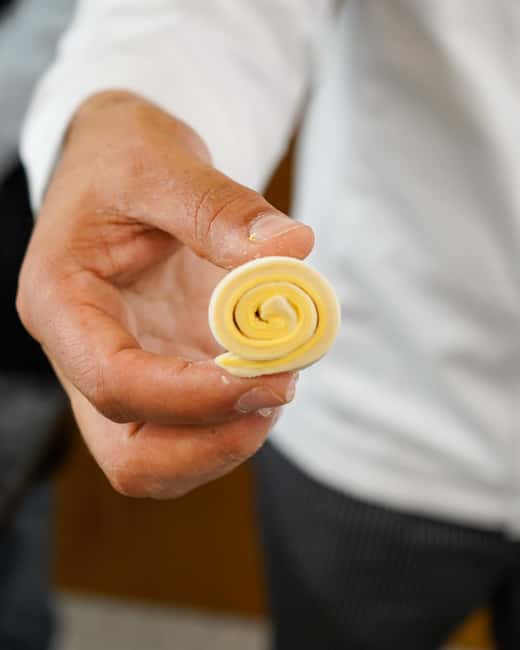
Book it if you want a hands-on Lisbon food experience and like the idea of eating something you made yourself. The real bakery setting, puff pastry lesson, warm tasting, and recipe email give it more substance than a short demonstration.
You should think twice if your main aim is cheap pastry, a private lesson, or a fully individual workstation. Some steps are shared, and the instructor and language mix can vary.
For most beginners, couples, families with older children, and solo visitors, I think the $74 price is reasonable for two hours of instruction and food. You leave with three handmade tarts, a certificate, and a technique you can try again at home. Just remember the most practical tip: confirm your class language if it matters, and arrive ready to get your hands into the dough.
FAQ
Where does the pastel de nata class meet?
The class meets at Nat’elier pastry store, located outside Baixa-Chiado Metro station on Lisbon’s blue line. The activity also ends at this location.
How long does the experience last?
The masterclass lasts two hours. Available starting times depend on the date you select.
How many pastéis de nata will I make?
Each participant gets to make at least three pastéis de nata by hand. The class includes three pastéis de nata for tasting.
Do I need previous baking experience?
No. Previous cooking or baking experience is not required.
Which languages are available?
The standard class languages are English and Portuguese. French and Spanish classes may be arranged if you contact the provider before booking.
What is included in the price?
The experience includes ingredients, baking equipment, an apron, a hair net, water, three pastéis de nata, one barista-crafted hot or cold beverage, and a certificate of participation.
Can children join the class?
Adults and children age eight and older are welcome in the standard class. If you have younger children, you should ask about arranging a private experience.
Recently reviewed around Lisbon
- Portinho da Arrábida: Coasteering Boat Tour★ 4.9 · 78 reviews
- Setúbal: Dolphin-Watching Boat Tour★ 4.8 · 213 reviews
- From Lisbon: Private Óbidos and Nazaré Tour★ 5.0 · 152 reviews
- No Diet Club – Unique food tour in Lisbon with many Tastings★ 4.8 · 44 reviews
- Queluz National Palace & Gardens Ticket★ 4.6 · 447 reviews
- Melides: Horse Riding on the Beach with Wine Tasting★ 4.3 · 117 reviews
- Melides: Horseback Riding on Melides Beach★ 4.7 · 111 reviews
- Lisbon: Street Art Tuk Tuk Tour★ 4.9 · 372 reviews
Lisbon Tours, compared.

Lisbon City Center Tour – The Unmissable Lisbon
Read our review →
Sintra, Pena, Regaleira, Cabo da Roca & Cascais
Read our review →


Sunset Boat Party Cruise with DJ and Open Bar
Read our review →
Pena Palace, Sintra, Cabo da Roca, & Cascais Daytrip
Read our review →