Reviewed · LISBON TOURS
Lisbon Old town Tour
Lisbon’s old town makes the most sense on foot, and this tour takes you from the grand riverfront to the steep, tangled lanes of Alfama. I like the clear progression: power and earthquakes first, then churches, local streets, Fado, and a final view over the rooftops.
I also like the small-group limit of 15 and the guides’ personal approach. José is often praised for his humor, careful pacing, and ability to keep people in the shade, while Hugo, Pedro, and Joseph are also named as engaging guides. The main drawback is the terrain: Alfama has steep sections, stairs, and uneven streets, so this is not a gentle stroll.
In This Review
- Key points to know before booking
- From Praça do Comércio into Lisbon’s old center
- Manueline detail at Conceição Velha
- Casa dos Bicos and the memory of 1755
- Lisbon Cathedral, the oldest church on the route
- Alfama’s maze and the heart of the neighborhood
- Largo do Chafariz de Dentro and the sound of Lisbon
- Portas do Sol rewards the uphill work
- What the small group changes
- Price, pace, and practical value
- Who will get the most from this walk
- When to schedule the tour
- Should you book the Lisbon Old Town Tour?
- FAQ
- How long does the Lisbon Old Town Tour last?
- Where does the tour begin?
- Where does the tour end?
- What time does the tour start?
- Is the tour offered in English?
- How large is the tour group?
- Is the walk physically demanding?
- What happens if the weather is bad?
- Can I cancel for a full refund?
Key points to know before booking
- The route covers Lisbon’s story in a compact way, beginning at Praça do Comércio and ending above Alfama at Portas do Sol.
- You visit the city’s oldest church, Lisbon Cathedral, along with Manueline architecture and buildings shaped by the 1755 earthquake.
- The small group is limited to 15 people, with some departures reported as intimate as four.
- The final viewpoint is a major payoff, offering a broad look across Alfama and Lisbon’s old town.
- A professional art historian leads the walk, so the focus is on architecture, history, and the cultures that shaped Lisbon.
- Expect hills, stairs, and weather exposure, with a moderate fitness level required.
From Praça do Comércio into Lisbon’s old center
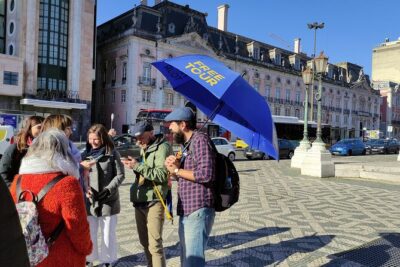
The meeting point is at Cervejaria Antártida on the western side of Praça do Comércio, also called Terreiro do Paço. The tour starts at 10:00 a.m., a useful time for seeing the square before the day’s heat becomes too strong.
Praça do Comércio is a fitting opening scene. This broad riverside square has long been tied to Lisbon’s political and commercial life. The name Terreiro do Paço means Palace Square, a reminder that the site once held the royal palace before the earthquake of 1755 changed the city.
You have about 20 minutes here. That is enough time for your guide to explain why the square matters and to help you read Lisbon’s grand proportions. The open space also gives your group room to gather before moving into the tighter streets behind it.
I like starting here because it provides a sharp contrast. You begin in a formal square built for power, then head toward the older, more irregular quarters where Lisbon’s daily life is easier to sense. If you arrive early, use the time to locate the meeting point and settle in. The starting address is on the square, and the route ends elsewhere, so do not expect to return to your starting spot.
Other Lisbon days travellers weigh against this one:
- Lisbon City Center Tour – The Unmissable Lisbon
★ 5.0 · 22,234 reviews - Lisbon: Sintra, Pena, Regaleira, Cabo da Roca & Cascais
★ 4.7 · 19,656 reviews - Sintra: Pena Palace and Park Entrance Ticket
★ 4.2 · 17,410 reviews
Manueline detail at Conceição Velha
The next stop is Igreja de Nossa Senhora da Conceição Velha, where the guide spends about five minutes pointing out Manueline architecture. Five minutes may sound brief, but this is a walking tour rather than a long church visit. The value comes from learning what to look for in the facade and understanding how the style fits into Lisbon’s story.
Manueline design is associated with Portugal’s maritime age and often uses elaborate stone details. Your guide can help you notice those details instead of walking past them as decoration. This is one reason the art historian’s role matters: the tour is not only about checking off buildings, but about giving you a visual vocabulary for the city.
Do not expect a long interior visit here. The stop is short and focused. If you prefer extended time inside every church, you may find the pace brisk. If you want a well-shaped introduction to the old town, the quick stops keep the walk moving.
Casa dos Bicos and the memory of 1755
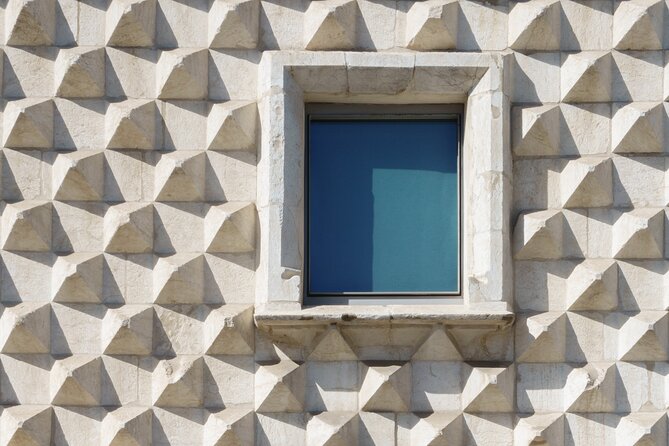
Casa dos Bicos is another short stop, with around five minutes devoted to the building and its place in Lisbon’s past. Its most memorable feature is the diamond-pointed facade, which makes it easy to recognize among the surrounding streets.
The house is presented as a survivor of the 1755 earthquake. That detail helps connect the route’s buildings to one of Lisbon’s defining events. The earthquake, followed by fire and flooding, destroyed much of the city and shaped the rebuilding of the central districts.
I like the way this stop adds a layer of tension to the architecture. You are not simply looking at an unusual facade. You are looking at a building that carries evidence of what Lisbon lost and what remained. The nearby Lisboa museum connection also makes the site useful for understanding how the city preserves its past.
Again, the time is limited. You will hear the key points outside rather than settle in for a museum visit. If the building catches your interest, make a note to return independently when your schedule allows.
Lisbon Cathedral, the oldest church on the route
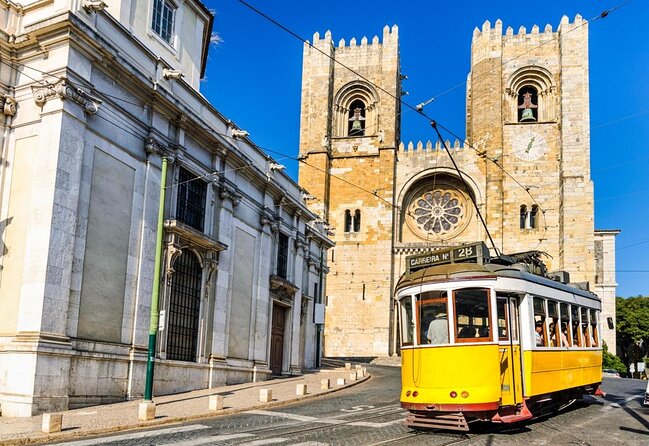
The walk then reaches Lisbon Cathedral, described as the oldest church in Lisbon. You have roughly 10 minutes here, which gives the guide room to explain the cathedral’s role and its place in the old city.
This is one of the route’s strongest historical stops. The cathedral sits near the transition into Alfama, where the streets begin to climb and twist. Its age helps explain why this part of Lisbon feels different from the more orderly central avenues.
Ten minutes is enough for an introduction, not a full architectural study. You should listen closely while the guide points out the features that matter, then decide if you want to return for more time. The tour’s strength is its sequence of connected explanations. The cathedral is not treated as an isolated church, but as a doorway into the older neighborhood.
The stop also marks a physical change in the walk. From here onward, you should expect more incline, tighter streets, and a less predictable route underfoot. Wear shoes that feel secure, and do not plan this as a polished promenade.
A different kind of day out, same corner of Portugal:
- Lisbon: Jerónimos Monastery Entrance Ticket
★ 4.1 · 14,164 reviews - Lisbon: History, Stories and Lifestyle Walking Tour
★ 4.8 · 10,902 reviews - Lisbon: Sunset Boat Party Cruise with DJ and Open Bar
★ 4.5 · 10,378 reviews - Lisbon: Pena Palace, Sintra, Cabo da Roca, & Cascais Daytrip
★ 4.7 · 9,981 reviews
Alfama’s maze and the heart of the neighborhood
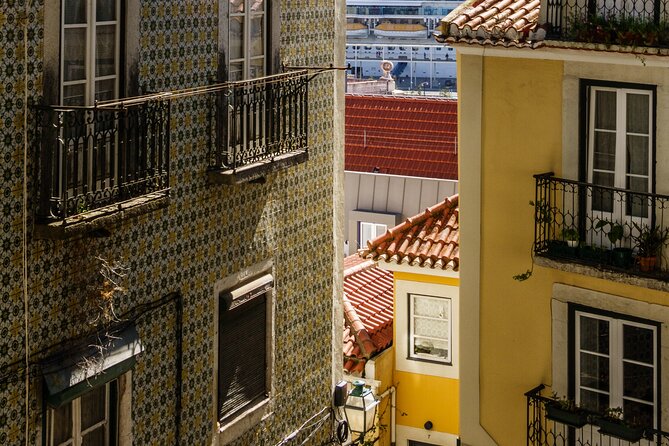
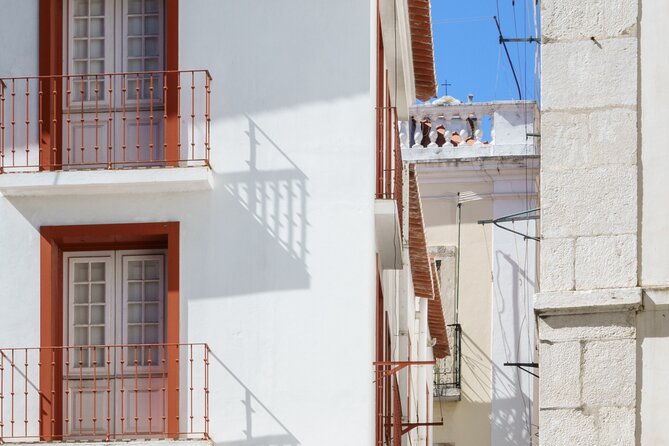
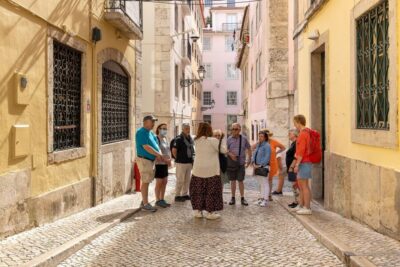
The group moves into Alfama, one of Lisbon’s oldest neighborhoods. This is the portion of the tour where the city’s shape becomes the subject. Narrow, maze-like streets replace the broad spaces of Praça do Comércio, and the route may include steep sections and stairs.
I like having a guide in Alfama because the lanes can be confusing even when the neighborhood is not crowded. More important, a guide can explain how the street pattern and buildings reflect the district’s long past. The walk is not simply about getting from one viewpoint to another. It is about seeing how a neighborhood developed over time.
The tour visits Igreja de São Miguel, called the heart of Alfama, for about five minutes. The short stop gives you another chance to look at the local religious architecture and understand the church’s place in the community.
This is also where the tour feels most local in character. You pass through streets that are part of everyday Alfama rather than staying only at formal monuments. The tradeoff is comfort. Narrow lanes can mean less room for the group, and the hills can make conversation and movement more demanding. The guide’s pacing matters here, and José is specifically praised for keeping the group moving at a comfortable speed.
Largo do Chafariz de Dentro and the sound of Lisbon
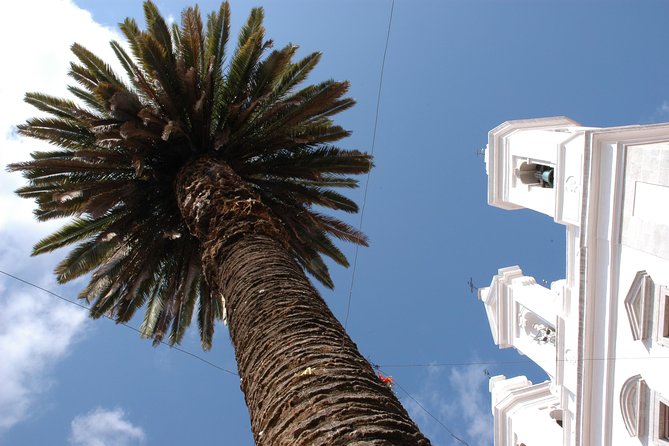
Largo do Chafariz de Dentro is described as Alfama’s meeting point. The tour spends around five minutes here, using the square to explain how the neighborhood gathers and connects.
The stop also introduces the sound of Lisbon, a clear reference to Fado. Fado is not just background music for a postcard image of the city. It is closely tied to Alfama’s identity, and the tour uses the neighborhood itself to explain that connection.
You should not book this walk expecting a full Fado performance. The supplied details promise context about the soundtrack of Lisbon, not a concert or restaurant visit. That distinction matters. The tour gives you a better sense of where Fado belongs in the city, which can help you choose a later evening experience with more purpose.
This part of the walk is especially useful if you are new to Lisbon. You begin to see how architecture, neighborhood life, and music overlap. Alfama is not presented as a museum district. It is a lived-in quarter with a strong cultural identity.
Portas do Sol rewards the uphill work
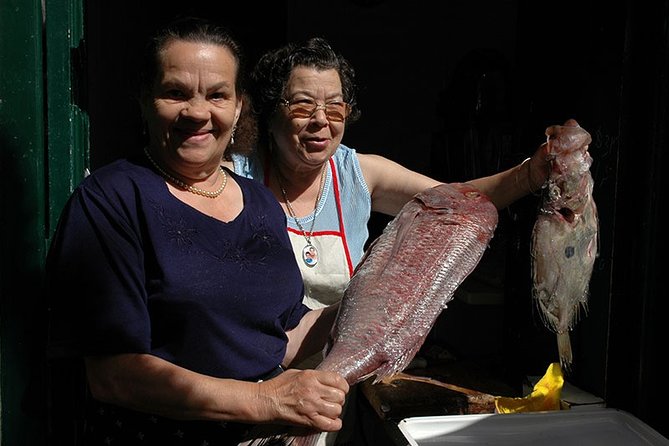
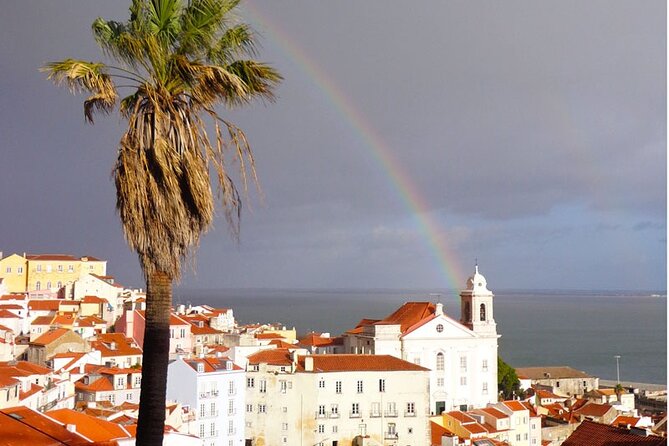
The final stop is Miradouro das Portas do Sol, where you spend about 10 minutes taking in the view over Alfama and the old town. This is the natural finish to a route that has steadily climbed away from the river.
The viewpoint gives the walk a visual payoff. After working through tight lanes and steep passages, you can step back and understand the neighborhood as a whole. The contrast between the red roofs, layered buildings, and river-facing setting helps tie together the places you have just visited.
I would not underestimate how much this ending adds to the tour. A viewpoint alone is easy to visit, but reaching it after learning the story of Alfama makes the view more meaningful. You can identify the district below rather than seeing only a mass of rooftops.
The tour ends at Largo Portas do Sol, not back at Praça do Comércio. That is convenient if you plan to continue exploring Alfama, but you need to account for the different finishing point when planning lunch, transport, or your next activity.
What the small group changes
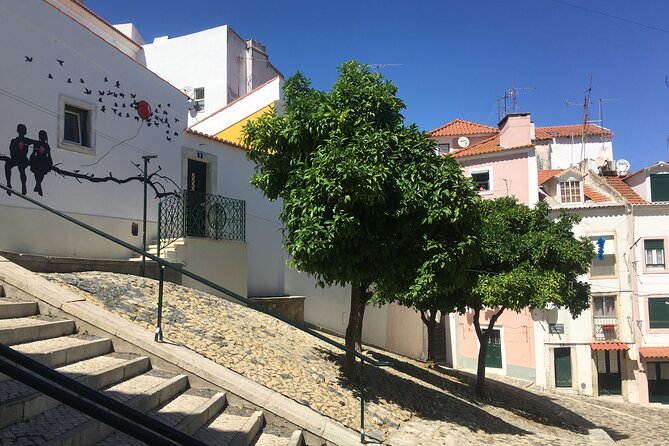
The maximum group size is 15. That is a sensible limit for Alfama, where lanes and stairways can quickly swallow a large group. A smaller party also makes it easier to hear explanations and ask questions at short stops.
Some tour groups are much smaller than the advertised maximum. One reported group had only four people, though you should not count on that size every day. The important point is that the experience is designed to stay relatively personal rather than becoming a flag-following procession.
The guides named in the experience feedback include José, Hugo, Pedro, and Joseph. José receives especially strong praise for being funny, personable, and attentive to the group’s comfort. He is also noted for offering recommendations and helping people get oriented on their first day in Lisbon.
Your guide may be someone else, so treat those names as examples rather than a guarantee. The consistent feature is the professional art historian guide and an English-language format. The walk appears to balance instruction with conversation, rather than delivering a long lecture at every corner.
Price, pace, and practical value
At $29.96 per person, this is priced as an affordable guided introduction rather than a full-day sightseeing package. The walk lasts about two to three hours and includes a professional art historian guide. The churches and public sites on the route have no separate admission charge listed, so most of what you are paying for is the guide’s interpretation, route planning, and local orientation.
That can be good value on a first visit. Lisbon’s old center rewards wandering, but without context you may miss why one facade matters, how the earthquake changed the city, or why Alfama’s music traditions are so closely tied to its streets.
I would judge the price by how you use the rest of your day. If this tour helps you understand where to return, which churches deserve more time, and how Alfama connects to the central city, it can pay off well beyond the two-hour walk.
The pace is moderate, but the ground is not. A moderate fitness level is required, and one account specifically describes the route as steep in parts. The tour operates in all weather, so dress for the conditions. Lisbon sun can make the hills harder, while rain can make smooth paving more troublesome. José is praised for seeking shade during hot weather, but you should still bring sensible clothing and footwear.
Service animals are allowed, and the route is near public transportation. Children must be accompanied by an adult. These details make the tour workable for many people, but the hills remain the main practical test.
Who will get the most from this walk
I would recommend this tour to a first-time Lisbon visitor who wants an orderly introduction before wandering alone. The route gives you a strong sense of how the grand central city leads into Alfama, and the ending at Portas do Sol helps you get your bearings.
It also suits anyone who enjoys architecture and city history more than shopping or food stops. The Manueline church, Casa dos Bicos, cathedral, and São Miguel provide plenty to discuss, while the earthquake and Fado references give the walk a wider frame.
Families can consider it if children are comfortable walking uphill and listening for several hours. The family-friendly tone associated with José may help, but the route still includes the physical demands of old Alfama.
You may want to skip it if you have trouble with stairs, steep streets, or uneven surfaces. You may also prefer a different format if you want a slow church tour, a Fado performance, or time to enter every building. This walk favors movement and connections between sites.
When to schedule the tour
The 10:00 a.m. start makes this a useful first or second morning activity. Several days of walking in Lisbon can leave you with a jumble of squares, lanes, churches, and viewpoints. This route gives those pieces a clear order.
Booking is often done about 19 days ahead, so it is sensible to reserve before your trip if your schedule is tight. Confirmation is issued within 48 hours, subject to availability. You can cancel for a full refund up to 24 hours before the local start time, which gives you some flexibility if plans change.
I would place this tour near the beginning of a Lisbon stay, especially if you want neighborhood recommendations from your guide. It also works near the end if you prefer to use the walk as a final look at the old center before leaving town.
Should you book the Lisbon Old Town Tour?
Book it if you want a compact, well-explained walk from Lisbon’s center into Alfama, with a small group and a strong historical focus. The best parts are the route’s logic, the personal scale, the connection between the 1755 earthquake and surviving buildings, and the final view from Portas do Sol.
Go in prepared for hills, stairs, weather, and short stops rather than long visits inside monuments. If you can handle the terrain, the $29.96 price is fair for a two to three hour orientation led by an art historian. I would choose it early in a Lisbon visit, wear good shoes, and leave the rest of the day open for exploring Alfama at your own pace.
FAQ
How long does the Lisbon Old Town Tour last?
The tour lasts approximately two to three hours.
Where does the tour begin?
It begins at Cervejaria Antártida Lisboa, on the western side of Praça do Comércio, at Rua C 20-23, 1100-038 Lisbon.
Where does the tour end?
The walk ends at Largo Portas do Sol in Alfama.
What time does the tour start?
The scheduled start time is 10:00 a.m.
Is the tour offered in English?
Yes. The tour is offered in English and includes a professional art historian guide.
How large is the tour group?
The group has a maximum of 15 people.
Is the walk physically demanding?
A moderate level of physical fitness is recommended. The route includes steep sections and the hills and stairs of Alfama.
What happens if the weather is bad?
The tour operates in all weather conditions, so you should dress appropriately.
Can I cancel for a full refund?
Yes. You can cancel at least 24 hours before the local start time for a full refund. Cancellations or changes made less than 24 hours before the start are not accepted for a refund.
Recently reviewed around Lisbon
- Lisbon: Catamaran Luxury Sunset and Wine Tour★ 5.0 · 119 reviews
- Lisbon’s authentic Food and Wine tour with a Winemaker★ 5.0 · 67 reviews
- Morning Sailing Tour in Tagus River from Lisbon★ 5.0 · 68 reviews
- Lisbon: Belem Walking Tour with Jeronimos Monastery Tks Included★ 5.0 · 115 reviews
- PRIVATE Unforgettable Full Day Tour to Sintra from Lisbon★ 5.0 · 236 reviews
- Discover Lisbon’s Alfama: Secrets of the Old Town★ 5.0 · 104 reviews
- Sesimbra Wild Beach Tour from Lisbon★ 5.0 · 57 reviews
- Private Jeep Tour from Lisbon – Arrábida, Sesimbra & Beach Picnic★ 5.0 · 48 reviews
Lisbon Tours, compared.
Lisbon City Center Tour – The Unmissable Lisbon
Read our review →
Sintra, Pena, Regaleira, Cabo da Roca & Cascais
Read our review →

Sunset Boat Party Cruise with DJ and Open Bar
Read our review →
Pena Palace, Sintra, Cabo da Roca, & Cascais Daytrip
Read our review →