Reviewed · TICKETS
Lisbon: Entry Tickets to Mosteiro de São Vicente de Foram
São Vicente de Fora hides some of Lisbon’s finest interior details behind a relatively quiet church entrance. The baroque tile collection is the star, with vast panels still fixed in their original places, but the royal tombs, marble sacristy, and 360-degree view give you plenty of reasons to stay.
I like the freedom of a self-guided visit, and I like the price: $9 buys access to the monastery, its exhibitions, and all areas on the normal visitor route. The main thing to consider is that no guided tour or audio guide is included, so you need to read the panels and use the map to make sense of what you see.
In This Review
- Key points to know before you go
- Why São Vicente de Fora deserves your time
- Starting inside the Church of São Vicente de Fora
- The tile collection is the main event
- La Fontaine’s 38 fables in glazed tile
- The Bragança Royal Pantheon
- Marble, water, and the working medieval cistern
- The panoramic view over Lisbon and the river
- How the self-guided format works
- Is $9 good value in Lisbon?
- Who should book this visit?
- Should you book São Vicente de Fora?
- FAQ
- Where does the visit start?
- Where does the activity end?
- How long is the ticket valid?
- Is a guided tour included?
- Which languages are available?
- What is not allowed inside?
Key points to know before you go
- Original tilework: See one of the world’s largest collections of glazed tiles still in place, with an especially strong display of Portuguese baroque decoration.
- Royal Pantheon: Visit the burial place of the Bragança royal family and learn how the monastery remained linked to Portugal’s ruling dynasties.
- 360-degree viewpoint: Climb or make your way to a panoramic viewing area with broad views over Lisbon and the river.
- La Fontaine exhibition: Find 38 fables by Jean de La Fontaine shown in glazed-tile panels, a clever meeting of literature and Portuguese decorative art.
- Quiet, self-guided format: You can explore at your own pace, but you will not have a live guide or audio commentary to explain every room.
- Useful low-cost ticket: At $9 per person, the admission works well for a flexible Lisbon sightseeing day, especially if you enjoy historic buildings more than packaged tours.
Why São Vicente de Fora deserves your time

Lisbon has no shortage of churches, viewpoints, and tiled facades. São Vicente de Fora brings all three together in one visit, with a strong royal connection added to the mix.
The monastery was founded by D. Afonso Henriques in the 12th century, then rebuilt by D. Filipe I, known in Spain as Philip II, during the 16th century. The result is one of Portugal’s best examples of Mannerist architecture. Later kings from the Bragança Dynasty continued to use and reshape the site.
That long connection to Portugal’s monarchy gives the building more weight than a quick church stop. You are not simply looking at decorative walls. You are moving through a place tied to different ruling families, religious life, royal burials, and the changing style of Portuguese architecture.
The visit is also a good choice if you want a break from Lisbon’s busiest sights. The monument is described as not crowded, which matters here. Tile panels reward patience. In a packed room, it is hard to step back, compare scenes, or spot small details. A calmer visit lets you look properly.
More Lisbon trips worth a second look
- Sintra: Pena Palace and Park Entrance Ticket
★ 4.2 · 17,410 reviews - Lisbon: Jerónimos Monastery Entrance Ticket
★ 4.1 · 14,164 reviews - Lisbon: Oceanário de Lisboa Entrance Ticket
★ 4.6 · 9,943 reviews
Starting inside the Church of São Vicente de Fora
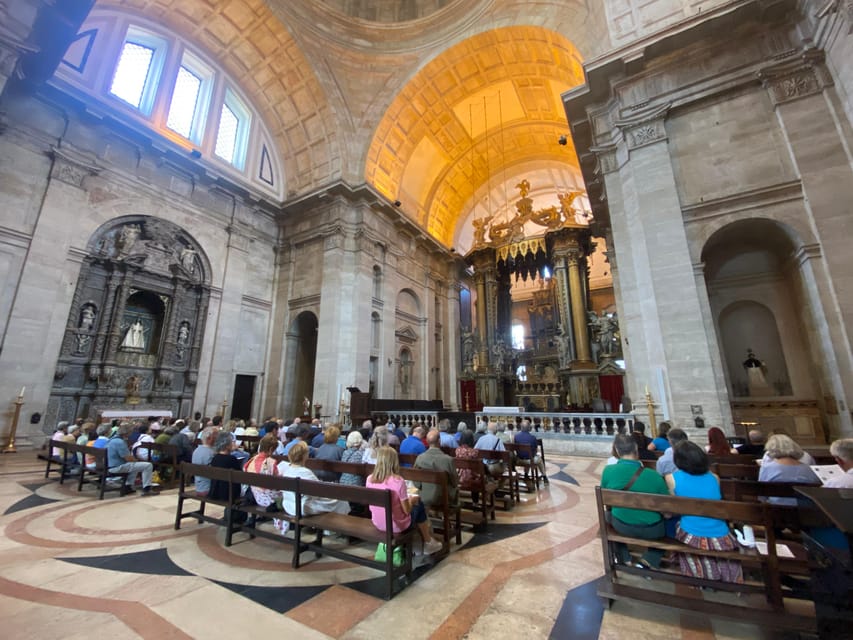
Your visit begins at the ticket office inside the Church of São Vicente de Fora. That starting point is practical, but it also puts you directly in the setting rather than at a separate modern reception building.
You receive a flyer with a map and a short description of the monastery. Informative panels are placed along the route, and access includes the exhibitions and areas open to ordinary visitors. The route ends back at the same meeting point, so you do not need to arrange separate transport or find a different exit across Lisbon.
This is a self-guided experience. I see that as a benefit if you prefer to set your own pace. You can pause for a long look at a tile panel, move quickly through a room that interests you less, or return your attention to a favorite section.
The tradeoff is clear. A guide would help connect the rooms and explain the symbolism, royal family, and architectural changes in greater detail. Here, the panels and flyer provide the basic framework, but you will need to supply some of the curiosity yourself.
Hosts or greeters are available in English, Spanish, French, Portuguese, and Italian. That does not mean the visit includes a guided tour in one of those languages. The ticket is for independent access, so treat the language support as help at the entry point rather than a promise of live commentary throughout.
The tile collection is the main event
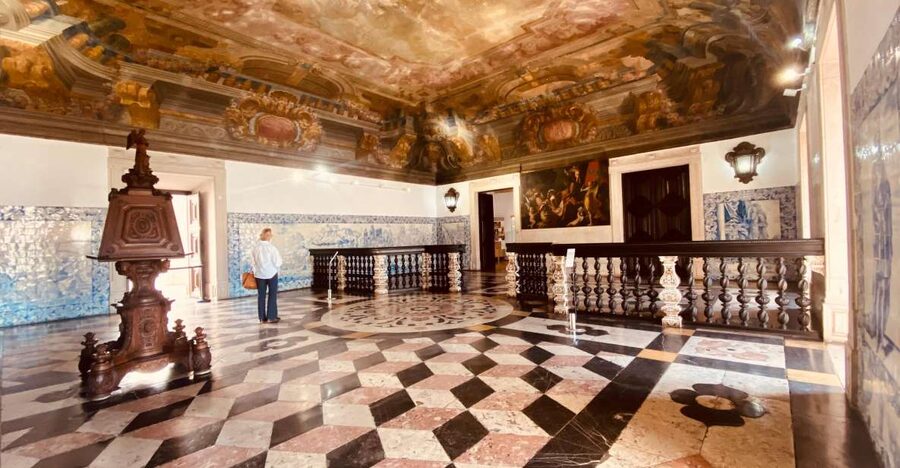
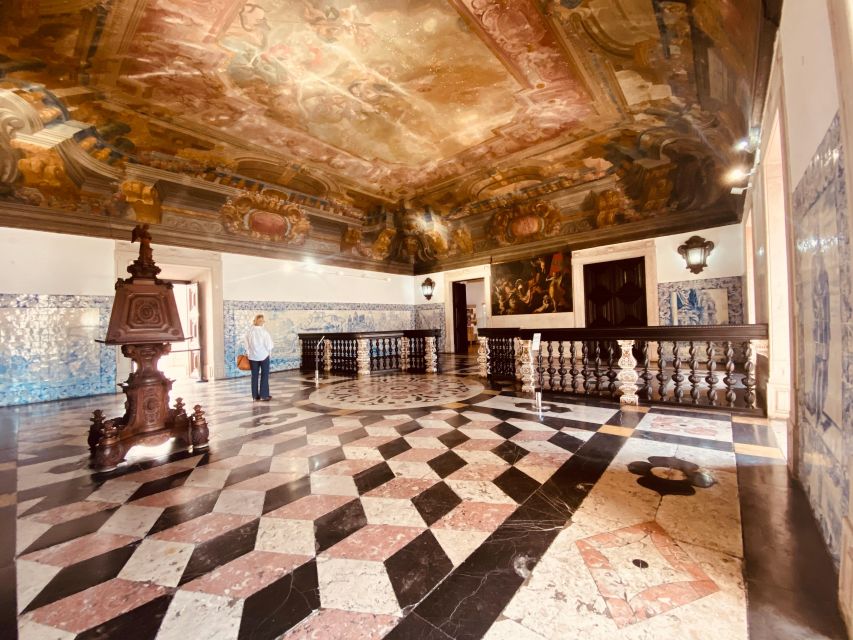
The monastery’s greatest visual strength is its glazed tilework. It is promoted as the second monument in the world with the most tiles still in their original place, and the collection is presented as the largest collection of baroque glazed tiles in Portugal that remains in situ.
The phrase in situ matters. These are not loose tiles arranged in a museum case. They remain part of the rooms and walls they were made to decorate. You see the tilework in relation to doorways, stairways, ceilings, stonework, and the scale of the monastery itself.
That setting helps you understand why Portuguese tiles are more than a surface decoration. They can guide the eye through a room, tell a story, frame an architectural feature, and turn a passageway into an art display.
Give yourself time to look at the panels from different distances. From across a room, the repeated patterns and large scenes shape the whole space. Up close, you can study figures, borders, colors, and small changes in the design. The lack of a live guide means no one will set that pace for you, so take the lead.
If you have already seen Lisbon’s famous tile facades, this visit adds another layer. Outdoor tiles are exposed to light, weather, and the broad scale of the street. Inside São Vicente de Fora, the panels are part of a controlled sequence of rooms, and their placement becomes easier to study.
La Fontaine’s 38 fables in glazed tile
One of the most unusual parts of the visit is the exhibition of 38 fables by Jean de La Fontaine. The stories are represented in glazed-tile panels, giving you a chance to connect familiar moral tales with Portuguese decorative art.
This section is especially useful if you are visiting with children or with someone who does not usually spend much time in historic churches. Stories offer an easy way into the art. Instead of looking only at patterns and religious decoration, you can search the panels for scenes and characters linked to La Fontaine’s writing.
The exhibit also breaks up the visit nicely. São Vicente de Fora can feel grand and formal, with royal tombs and ceremonial rooms. The fables add a more narrative and approachable stop, while still showing the technical skill of tile painting and arrangement.
A short note of practical advice: read the explanatory material as you go. Since no audio guide is supplied, the panels and the printed map do much of the interpretive work. If you rush past them, you may see beautiful surfaces without understanding the stories or purpose behind them.
A different kind of day out, same corner of Portugal:
- Lisbon City Center Tour – The Unmissable Lisbon
★ 5.0 · 22,234 reviews - Lisbon: Sintra, Pena, Regaleira, Cabo da Roca & Cascais
★ 4.7 · 19,656 reviews - Lisbon: History, Stories and Lifestyle Walking Tour
★ 4.8 · 10,902 reviews - Lisbon: Sunset Boat Party Cruise with DJ and Open Bar
★ 4.5 · 10,378 reviews
The Bragança Royal Pantheon
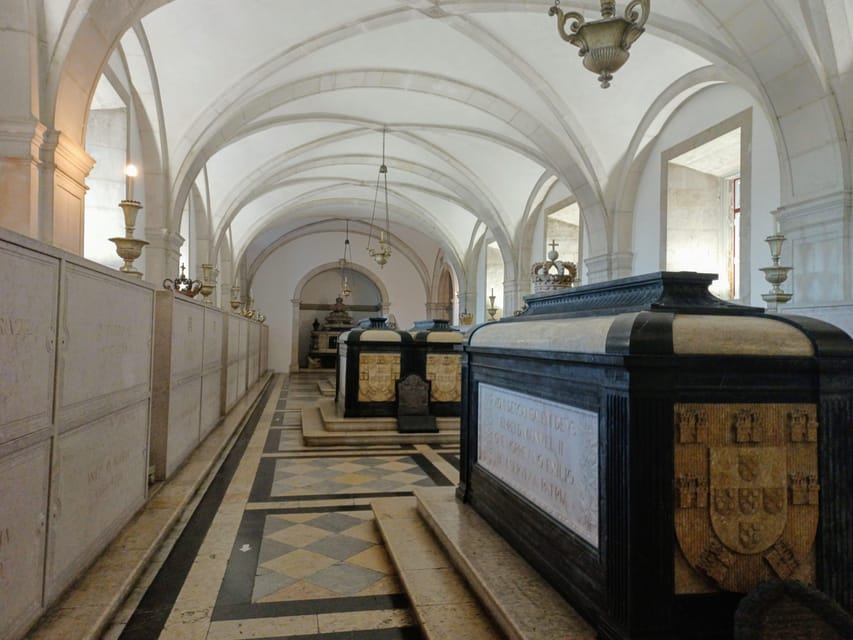
The Royal Pantheon of the Bragança Dynasty is another major reason to enter. The last Portuguese royal family is entombed here, making the space a direct link to the country’s more recent monarchy.
A royal burial room can feel very different from a church interior. Here, the focus shifts from decoration and worship to dynastic memory. Tombs and monuments turn the monastery into a record of who held power and how royal families wished to be remembered.
This is not a separate excursion from the rest of the monument. It forms part of the normal visit, so you can place it within the broader story of São Vicente de Fora. The monastery began under one ruling period, was rebuilt under another, and was later used by the Bragança family. The pantheon makes that succession tangible.
You may find this section more solemn than the tile galleries. It rewards a slower pace and a little quiet. If you are mainly interested in colorful decoration, do not skip it. The contrast helps you understand the building’s role as both a religious site and a royal one.
Marble, water, and the working medieval cistern
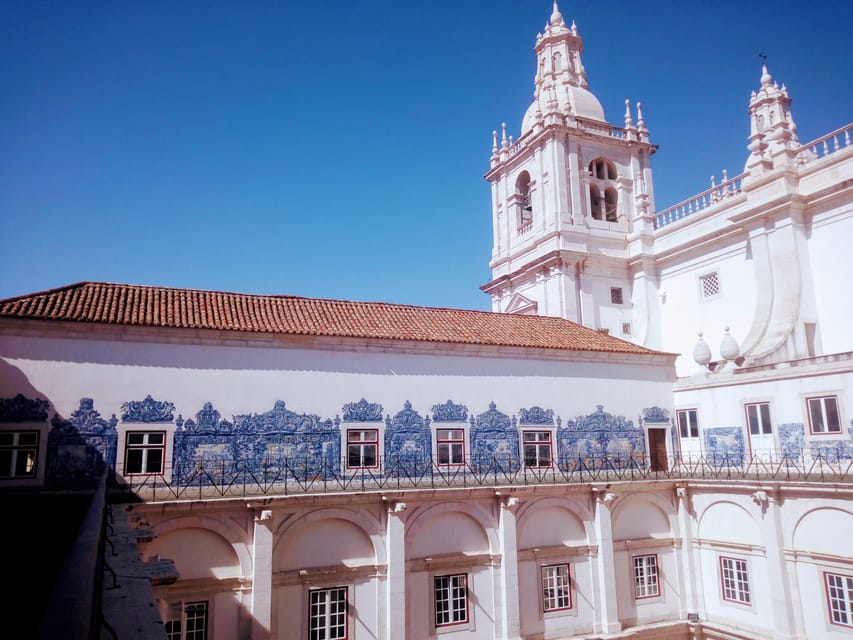
Two smaller details give the monastery extra character. The sacristy is fully decorated with inlaid marbles, while a medieval cistern still works.
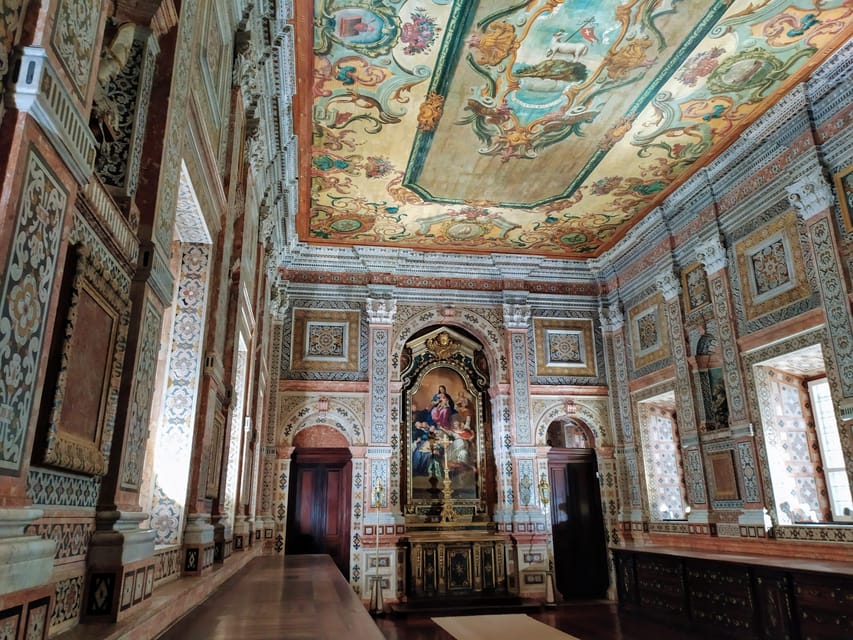
The sacristy’s marble treatment offers a strong contrast to the painted tiles. Instead of repeated glazed images, you get the weight, polish, and pattern of stone in a room designed for religious use. It is worth comparing the two materials side by side: tile brings color and narrative, while inlaid marble creates a more controlled and formal effect.
The medieval cistern is easy to overlook if you focus only on the grand rooms. Its continued function connects the building to practical daily needs rather than royal ceremony. Historic sites can sometimes feel like frozen displays. A working water system reminds you that the monastery was also a functioning place with basic infrastructure.
These details are part of what makes the $9 ticket worthwhile. You are not paying only for one church interior or one viewpoint. You are getting a sequence of different experiences within the same complex.
The panoramic view over Lisbon and the river
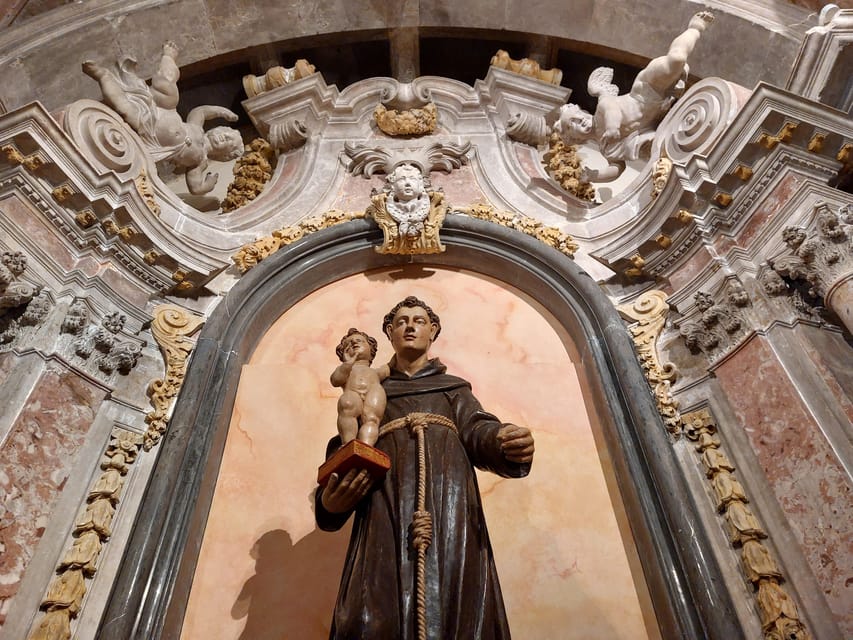
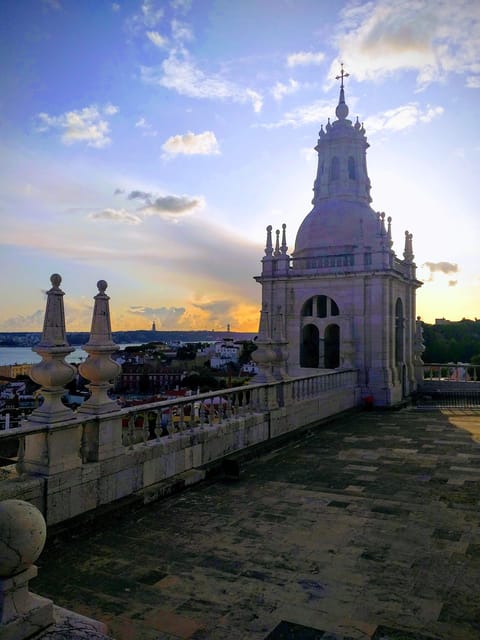
The viewpoint is the visit’s best change of pace. After moving through enclosed rooms, tile-lined passages, royal tombs, and marble decoration, you reach a broad view over Lisbon and the river.
The view is described as panoramic and 360 degrees, so you can look beyond a single framed scene. This helps you understand where São Vicente de Fora sits within the city and how the monastery relates to Lisbon’s hills, rooftops, and waterfront.
I would save enough time for this part rather than treating it as a quick final glance. A viewpoint is most useful when you pause to orient yourself. Look across the city, then back toward the monastery, and you get a better sense of how the monument has shaped the area around it.
Weather will affect how much you enjoy the view. On a clear day, it can be one of the strongest parts of the visit. On a gray day, the interior tilework and exhibitions carry more of the experience. Either way, the viewpoint adds variety and helps keep the visit from becoming a string of similar rooms.
How the self-guided format works
The ticket is valid for one day, with starting times shown when you check availability. The information provided does not set a fixed visit length, so you can plan it as a flexible stop rather than a tightly timed tour.
You enter at the ticket office inside the church, follow the visitor route, and finish back at the starting point. The flyer includes a map and brief description, while explanatory signs add more detail in the rooms.
You do not receive an audio guide. You also do not receive a guided tour, and the ticket does not include areas outside the normal circuit. That is important if you prefer a full behind-the-scenes visit or detailed architectural commentary. This product is designed for straightforward admission and independent exploration.
Basic facilities include a bathroom. Smoking, food, drinks, alcohol, drugs, luggage, and large bags are not allowed. Pack light, especially if you are combining the monastery with several other stops in Lisbon.
The host or greeter language options are English, Spanish, French, Portuguese, and Italian. Again, the available information identifies these languages for the host or greeter, not for a full guided presentation.
Is $9 good value in Lisbon?
At $9 per person, I consider this a strong-value admission for anyone who enjoys history, decorative art, churches, or city views. The price gives you access to the monastery, the church-related spaces on the route, all exhibitions, the Royal Pantheon, the tile displays, the cistern, the sacristy, and the viewpoint.
The value comes from the range. Some Lisbon admissions charge mainly for one famous room or one monument facade. Here, you get architectural history, royal burials, literary scenes, decorative art, and a city panorama in one place.
The price is less compelling if you want a guide to explain every stop. A separate guided experience might suit you better, but that is not included here. You should also be ready to read the panels and spend time interpreting what you see.
Flexible cancellation up to 24 hours before the visit adds practical value, especially if your Lisbon plans depend on weather or changing sightseeing days. You can also reserve now and pay later, which keeps the booking flexible.
Who should book this visit?
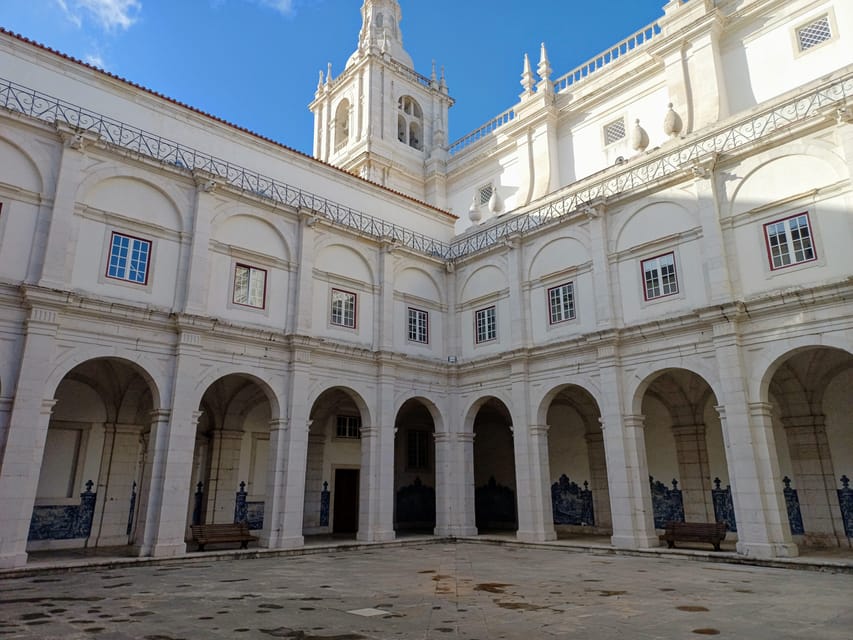
I would recommend São Vicente de Fora to you if you enjoy seeing how a building works as a whole. The appeal is not one isolated masterpiece. It is the way tiles, royal history, religious rooms, exhibitions, water systems, and city views fit together.
It suits:
- Art lovers who want to see Portuguese tilework in its original setting
- History-minded visitors interested in royal dynasties and the Bragança family
- Families who may enjoy the La Fontaine fables
- Independent sightseers who prefer a map and panels to a fixed group tour
- Anyone looking for a quieter cultural stop with a panoramic view
- Budget-conscious visitors who want several points of interest for $9
I would hesitate only if you need a fully narrated experience, access to areas outside the normal route, or an audio guide. The monument gives you plenty to see, but it expects you to take responsibility for the pace and interpretation.
Should you book São Vicente de Fora?
Yes, if tilework and historic interiors are high on your Lisbon list. The 38 La Fontaine panels, the Bragança Royal Pantheon, the marble sacristy, and the 360-degree view make this more than a quick church visit.
Book it as a flexible one-day stop and allow yourself time to read, look closely, and pause at the viewpoint. At $9, it is an easy recommendation for independent explorers. Just remember that the experience is self-guided, so bring your attention and curiosity, not a large bag or the expectation of a live tour.
FAQ
Where does the visit start?
The visit starts at the ticket office inside the Church of São Vicente de Fora.
Where does the activity end?
The visit ends back at the meeting point inside the church.
How long is the ticket valid?
The ticket is valid for one day. You should check availability for the available starting times.
Is a guided tour included?
No. The ticket does not include a guided tour or an audio guide. You receive a flyer with a map and brief description, along with informative panels throughout the visit.
Which languages are available?
Host or greeter support is available in English, Spanish, French, Portuguese, and Italian.
What is not allowed inside?
Smoking, food, drinks, alcohol, drugs, luggage, and large bags are not allowed.
Recently reviewed around Lisbon
- Portinho da Arrábida: Coasteering Boat Tour★ 4.9 · 78 reviews
- Setúbal: Dolphin-Watching Boat Tour★ 4.8 · 213 reviews
- From Lisbon: Private Óbidos and Nazaré Tour★ 5.0 · 152 reviews
- No Diet Club – Unique food tour in Lisbon with many Tastings★ 4.8 · 44 reviews
- Queluz National Palace & Gardens Ticket★ 4.6 · 447 reviews
- Melides: Horse Riding on the Beach with Wine Tasting★ 4.3 · 117 reviews
- Melides: Horseback Riding on Melides Beach★ 4.7 · 111 reviews
- Lisbon: Street Art Tuk Tuk Tour★ 4.9 · 372 reviews
Tickets, compared.


Quinta da Regaleira Skip-the-Ticket-Line Entry & Audioguide
Read our review →
Luz Stadium Tour & SL Benfica Museum Ticket w/Scarf
Read our review →