
Reviewed · HISTORICAL TOURS
Lisbon city tour on history, culture and current topics
Lisbon’s best introduction may be a walk that links its grand squares, steep lanes, old ruins and riverfront in one well-paced route. This German-language tour starts at Rossio and crosses Baixa, Chiado, Bairro Alto and Alfama before ending at Praça do Comércio.
I like the small maximum of 12 people, which gives guides such as Sara, Melina and Pedro room to answer questions. I also like the mix of famous sights and useful local advice, including restaurant suggestions and a taste of a Portuguese pastry or liqueur. The main consideration is the route itself: Lisbon is hilly, and this is not a good choice if walking uphill, downhill, or over uneven streets is difficult.
In This Review
- Key points to know before booking
- Starting at Rossio, Lisbon’s natural meeting place
- Baixa and the Santa Justa Elevator
- Carmo ruins and the poets of Chiado
- Bairro Alto before the nightlife begins
- The tasting and the practical side of the tour
- Rua Augusta and the route back toward the river
- Alfama’s winding lanes and Santa Luzia
- Ending at Praça do Comércio
- What the $45.86 price buys you
- Who should book this Lisbon walking tour?
- Should you book it?
- FAQ
- How long does the Lisbon city tour last?
- Where does the tour begin?
- Where does the tour end?
- Which Lisbon districts are included?
- Is the tour conducted in English?
- How large is the group?
- Is food or drink included?
- Is the tour suitable for people with walking difficulties?
Key points to know before booking
- Four central districts in one route: See Baixa, Chiado, Bairro Alto and Alfama in about three and a half hours.
- German-speaking guides: Sara, Melina and Pedro are specifically named guides associated with the experience.
- Two strong viewpoints: Pause at São Pedro de Alcântara and Santa Luzia for different views across Lisbon.
- A small local tasting: Your included sample is a Portuguese pastry or liqueur, with pastéis de nata and ginjinha mentioned as examples.
- Rossio to the Tejo: The walk begins at the north fountain of Rossio Square and ends beside the river at Praça do Comércio.
- Good first-day choice: The route gives you a useful city outline and practical food and sightseeing advice for the rest of your stay.
Starting at Rossio, Lisbon’s natural meeting place
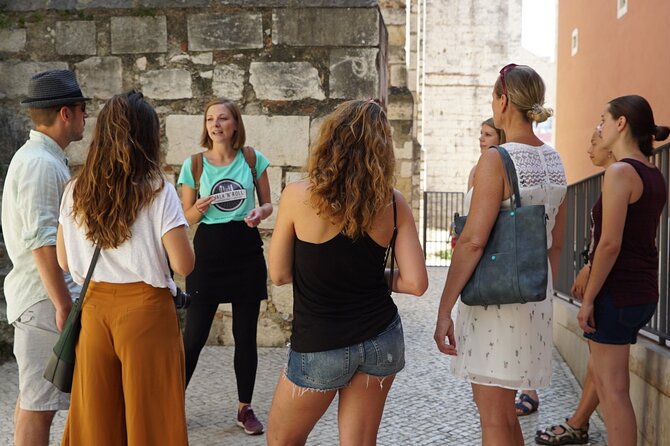
The tour begins at the north fountain in Praça Dom Pedro IV, better known as Rossio Square. Look for the fountain between the statue of the king and the National Theatre. This is a central, easy-to-find start near public transportation, and it puts you right in the middle of Lisbon’s historic core.
Rossio is more than a place to gather. Its broad paving, fountains and grand buildings give you an early lesson in Lisbon’s mix of scale and movement. From here, the route moves into Baixa, the lower town rebuilt after the 1755 earthquake.
That opening matters because it gives you a simple way to understand Lisbon’s shape. The lower town is more ordered and open, while the upper districts become steeper, narrower and more irregular. A guide can connect those changes in the streets to Portugal’s past, rather than leaving you with a string of disconnected monuments.
More City Tours in Lisbon
- Lisbon City Center Tour – The Unmissable Lisbon
★ 5.0 · 22,234 reviews - Lisbon: Daytime/Sunset/Night City Sailboat Tour with Drink
★ 4.9 · 3,114 reviews - Lisbon: City Highlights and Viewpoints E-Bike Tour
★ 4.9 · 1,556 reviews
Baixa and the Santa Justa Elevator
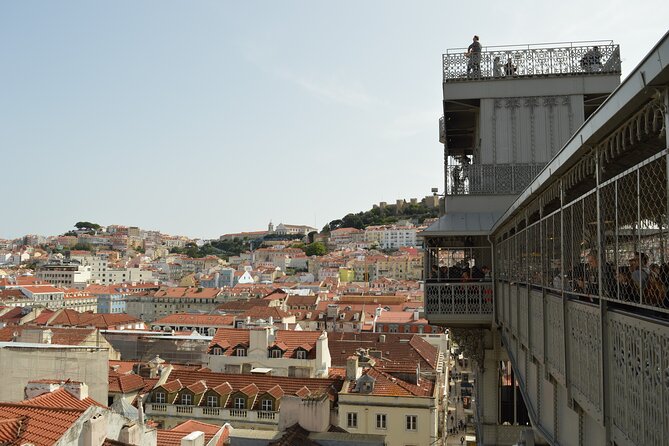
Baixa is the most formal part of the walk. You pass through the city center on foot, then approach the Santa Justa Elevator from below. This is a smart way to see it. From street level, you can appreciate its height and ironwork without spending time in a queue to ride it.
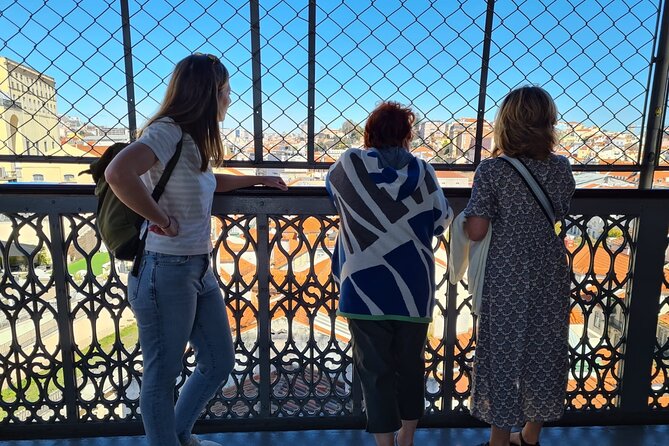
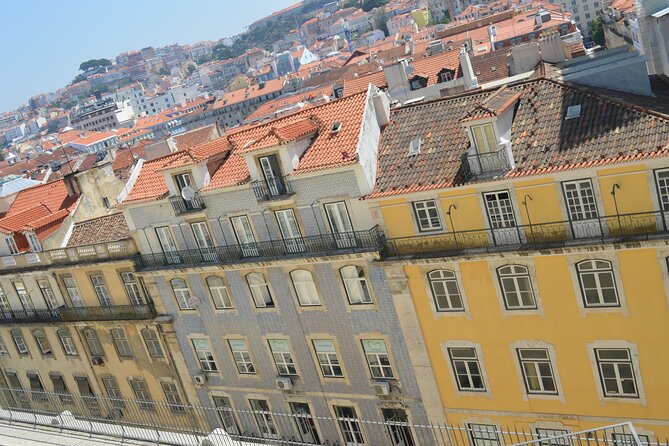
The route then reaches the observation platform, where you get a view over the lower town and toward Lisbon Castle. That combination is one of the strongest parts of the outing. You first see how the elevator fits into the street, then gain the wider view that explains why Lisbon is a city of different levels.
The supplied schedule allows about 15 minutes here. That is enough for a look and some photographs, but it is not an extended visit to the elevator. The attraction is admired from outside and from the viewing area, rather than treated as a separate ride.
Carmo ruins and the poets of Chiado
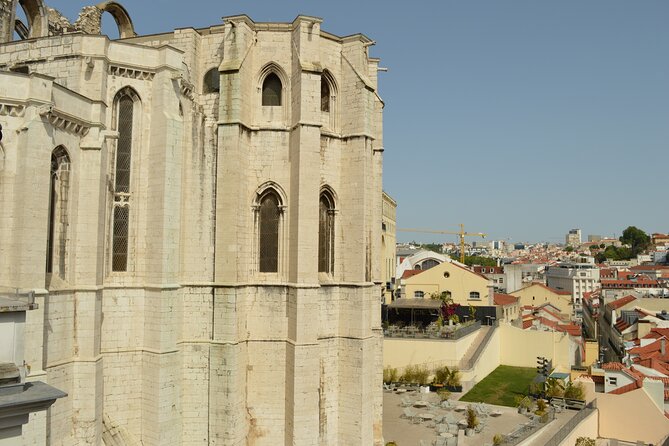
From the elevator, the walk continues to the Carmo Monastery ruins. You see the remains from outside, including the open roofline that gives the site its unusual character. The stop is brief, but it brings the city’s past into view without adding an entry ticket or a long indoor visit.
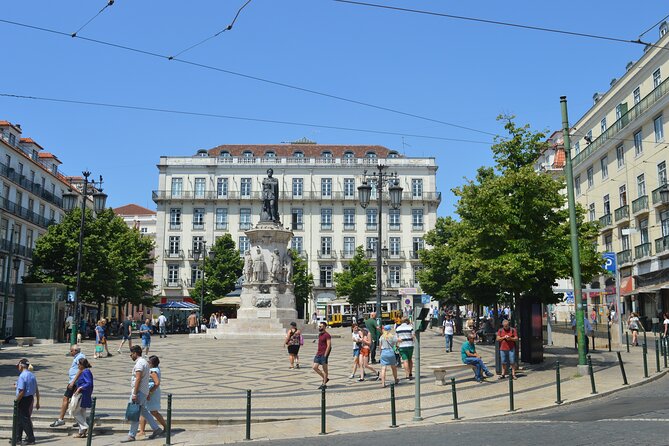
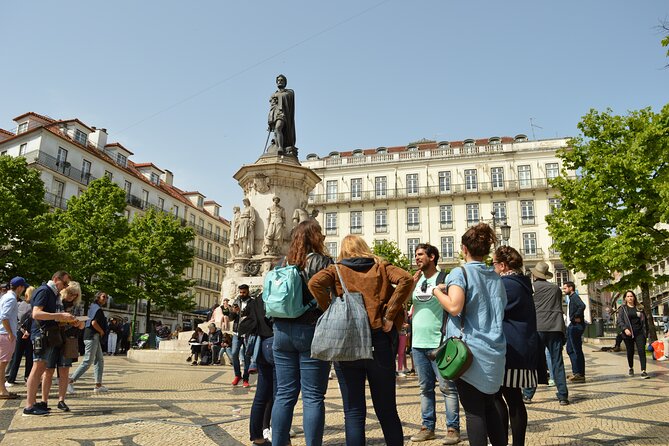
Next comes Chiado, known here as Lisbon’s poets’ quarter. The route allows about 20 minutes in the district, followed by time at Praça Luís de Camões, its largest square. This portion gives the tour a change of mood. Baixa feels broad and planned, while Chiado has a more literary and cultural identity.
The guide’s role is particularly useful in these districts. The stated focus includes Portuguese history, culture and current topics, so you are not limited to dates and architectural labels. Sara, Melina and Pedro are praised for explaining Lisbon in an engaging way, answering questions, and connecting the city to everyday life.
You should also expect information rather than a silent photo walk. The tour is conducted in German, and the guide’s language ability will matter most if you want detailed explanations or hope to ask follow-up questions. If you do not understand German, this is not the right booking.
Bairro Alto before the nightlife begins
The route climbs through Bairro Alto after Chiado. During the day, this residential district is relatively quiet. In the evening, it becomes a bar and nightlife area. Seeing it before the nighttime crowds gives you a different view of the neighborhood and helps explain how Lisbon’s streets serve different purposes at different hours.
This climb is one of the physical tests of the walk. The itinerary includes uphill and downhill sections, and one rating describes enjoying the route despite wind and rain. That suggests the outing continues in ordinary city conditions, but you should still wear firm shoes and check the forecast. The tour requires moderate to good fitness and is not suitable for people with walking difficulties.
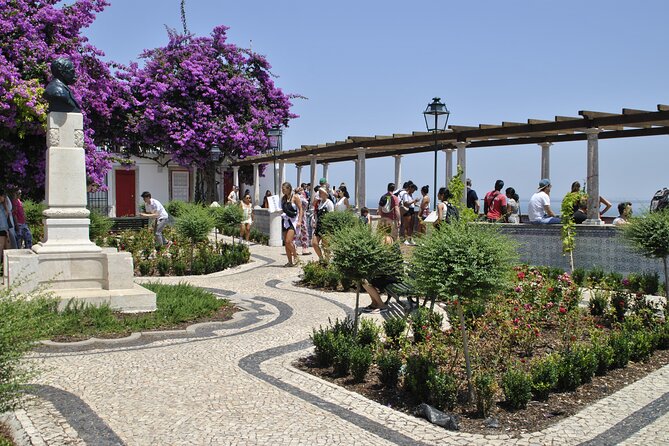
The reward is Miradouro de São Pedro de Alcântara, where the group stops for about 40 minutes. This is the longest pause on the route. It gives you time to rest, take in the view, and enjoy the included tasting.
More Historical Tours in Lisbon
- Lisbon: History, Stories and Lifestyle Walking Tour
★ 4.8 · 10,902 reviews - Lisbon: Live Fado Show with Port Wine in Historic Center
★ 4.7 · 4,166 reviews - Lisbon: Fado Show with Wine in a Historic Venue
★ 4.8 · 1,294 reviews - Explore Lisbon by Tuk Tuk: History and Viewpoints
★ 5.0 · 840 reviews
The tasting and the practical side of the tour
The included snack is a local pastry or liqueur. Pastéis de nata and ginjinha are specifically associated with the experience, so you might receive one of those, though the description does not promise a particular choice every time.
This small taste works well because it breaks up a long walking route. It also gives the guide a natural chance to explain a bit about Portuguese food and drink. Do not book this expecting a full meal. It is a sample, not a lunch, and the tour does not include private transportation.
The practical advice may be just as useful as the tasting. The guides provide a recommendation sheet, and several named guides are praised for restaurant suggestions that people later used during their stay. That is real value on a first visit, especially if you want help choosing where to eat after the tour rather than relying only on the busiest streets.
Rua Augusta and the route back toward the river
After the viewpoint, the walk returns through Rua Augusta, Lisbon’s main shopping street. The stop is brief, around 10 minutes, and is described as a taste rather than a shopping session. That is the right expectation. You see the city’s central commercial axis, but you will not have time for a serious browse.
Rua Augusta also brings the route back down toward the river. The change from elevated Bairro Alto to the broad lower-town streets makes the city’s topography clear. You have seen Lisbon from above, then move through the central grid toward its oldest quarter and waterfront.
Because the walk includes many neighborhoods, no single stop receives a long museum-style treatment. That is both its strength and its limit. You gain a broad first look at central Lisbon, but you should plan separate visits if you want to enter the Carmo ruins, spend time inside other monuments, or explore shops in detail.
Alfama’s winding lanes and Santa Luzia
The tour then enters Alfama, Lisbon’s oldest district. Here the straight lines of Baixa give way to winding streets and a more tangled urban pattern. The scheduled 30 minutes let you explore the quarter on foot and hear about its place in the city.
Alfama is where comfortable shoes become essential. The lanes can feel more demanding than the lower town, and the route is designed for walking rather than for a vehicle that can spare you the climb. The description makes clear that you will visit viewpoints and narrow streets, not simply pass through on a bus.
The walk pauses at Miradouro de Santa Luzia, described as Lisbon’s most beautiful viewpoint. The stop lasts about 10 minutes. Its position in Alfama gives the tour another visual contrast with São Pedro de Alcântara. One viewpoint looks across the central city from the upper west side; the other helps you appreciate Alfama and the river-facing part of Lisbon.
A guide is helpful here because the district can otherwise become a maze of attractive corners with little sense of how they fit together. The tour’s emphasis on culture and current topics also gives you a chance to ask about how older neighborhoods function today.
Ending at Praça do Comércio
The final stop is Praça do Comércio, also called Terreiro do Paço, directly beside the Tejo River. The square’s scale and the triumphal arch make it a fitting finish after the tighter streets of Alfama.
This is a useful end point for the rest of your day. You are near the riverfront and close to the lower-town center, rather than being left on a hill far from the main transport routes. The tour does not include a ride back to your hotel, so check your onward plans before booking, but the ending is central and easy to use as a base for further exploring.
The full walk lasts about three hours and 30 minutes. The stop times add up to a route with frequent explanations and pauses, not a race from one photo stop to the next. Still, the total distance and hills mean you should not treat this as a light stroll.
What the $45.86 price buys you
At $45.86 per person, this tour is priced above a tip-based walking tour, but it offers a more defined service. You get a German-speaking guide, a capped group of 12, one tasting, and a recommendation sheet. The small group is important: it is easier to hear on narrow streets, ask questions, and stay connected to the guide.
The value is strongest if this is your first time in Lisbon and you want a clear orientation before exploring alone. The route covers four major districts and several viewpoints without charging separate admission for the listed stops. It also gives you restaurant tips you can use later.
The value is weaker if you already know central Lisbon or prefer to move at your own pace. The walk does not include private transport, and the main sights are viewed from outside rather than entered. You are paying for interpretation, organization and local guidance, not for admission tickets.
Who should book this Lisbon walking tour?
I would choose this for a first or second day in Lisbon, especially if you want to understand how Baixa, Chiado, Bairro Alto and Alfama connect. It suits people who enjoy history but also want talk about food, daily life and present-day Portugal.
It is also a good fit for German-speaking couples, families with older children, and small groups who prefer a personal guide over a large city walk. The named guides, Sara, Melina and Pedro, are repeatedly associated with a warm, humorous approach and useful answers to questions.
I would think twice if you have limited mobility, dislike hills, or want an indoor sightseeing tour. The route is on foot, includes climbs, and requires moderate to good fitness. Bad weather can also affect the experience. If the operator cancels because conditions are poor, you are offered another date or a full refund.
Free cancellation is available up to 24 hours before the start time. Inside that window, the amount paid is not refunded, and changes are not accepted.
Should you book it?
Book this tour if you want a compact, well-organized introduction to Lisbon with a German-speaking guide, a small group, strong viewpoints and practical food advice. The best reasons are the four-district route, the 40-minute pause at São Pedro de Alcântara, and the chance to finish by the Tejo after seeing both the planned lower town and the old lanes of Alfama.
Skip it if you need accessible streets, private transport, or long visits inside monuments. For most reasonably fit visitors starting a Lisbon stay, though, $45.86 buys a useful first map of the city, plus enough local guidance to make the following days easier and more rewarding.
FAQ
How long does the Lisbon city tour last?
The tour lasts approximately three hours and 30 minutes.
Where does the tour begin?
It begins at the north fountain of Rossio, or Praça Dom Pedro IV, between the King’s statue and the National Theatre.
Where does the tour end?
The tour ends at Praça do Comércio, also called Terreiro do Paço, beside the Tejo River.
Which Lisbon districts are included?
The route covers Baixa, Chiado, Bairro Alto and Alfama.
Is the tour conducted in English?
No. The included walking tour is conducted in German.
How large is the group?
The group has a maximum of 12 participants.
Is food or drink included?
One tasting is included. It may be a local pastry or liqueur, with pastéis de nata and ginjinha mentioned as examples.
Is the tour suitable for people with walking difficulties?
No. The route requires moderate to good fitness, includes uphill and downhill walking, and is not suitable for people with walking difficulties.
Recently reviewed around Lisbon
- Lisbon: Catamaran Luxury Sunset and Wine Tour★ 5.0 · 119 reviews
- Lisbon’s authentic Food and Wine tour with a Winemaker★ 5.0 · 67 reviews
- Morning Sailing Tour in Tagus River from Lisbon★ 5.0 · 68 reviews
- Lisbon: Belem Walking Tour with Jeronimos Monastery Tks Included★ 5.0 · 115 reviews
- PRIVATE Unforgettable Full Day Tour to Sintra from Lisbon★ 5.0 · 236 reviews
- Discover Lisbon’s Alfama: Secrets of the Old Town★ 5.0 · 104 reviews
- Sesimbra Wild Beach Tour from Lisbon★ 5.0 · 57 reviews
- Private Jeep Tour from Lisbon – Arrábida, Sesimbra & Beach Picnic★ 5.0 · 48 reviews
Historical Tours, compared.

Historical Sites, Wine Experience, Lunch & Cruise
Read our review →
Live Fado Show with Port Wine in Historic Center
Read our review →

Browse the lists this tour appears in