
Reviewed · COIMBRA & CENTRAL PORTUGAL TOURS
Tomar: Convent of Christ and Templar Castle Tour Ticket
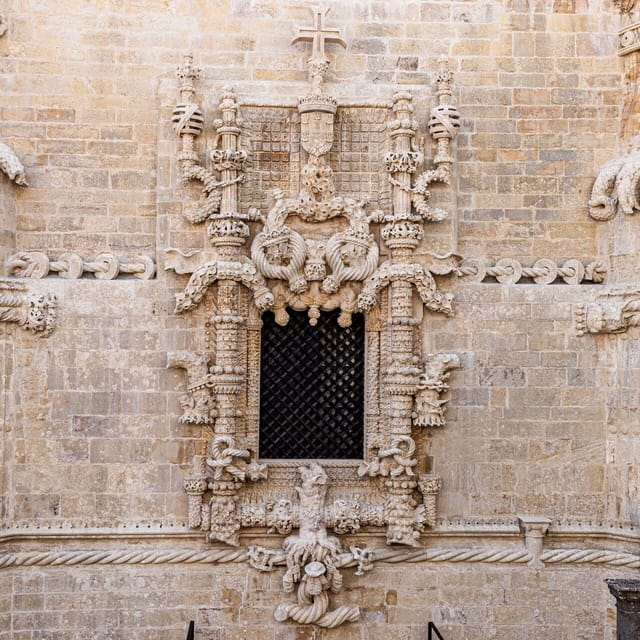
Tomar’s Convent of Christ is the kind of monument that keeps changing character as you walk. One moment you’re in a medieval fortress founded in 1160, and the next you’re facing a richly carved Manueline window or standing inside the unusual round Charola, built in the spirit of Jerusalem’s Holy Sepulchre.
I like the way this visit brings together seven centuries of Portuguese architecture in one compact complex. I also like the five cloisters, which let you compare Gothic, Renaissance, and Mannerist design without crossing half of Portugal. The main consideration is simple: despite the word tour, this $17 experience may be an entry ticket rather than a guided visit, so check exactly what your booking includes.
In This Review
- Key Points
- Why Tomar’s Convent of Christ Deserves Your Time
- Entering the Templar Castle Founded in 1160
- The Round Charola and Its Jerusalem Connection
- The Renaissance Convent and Its Five Cloisters
- The Manueline Nave and High Choir
- The Chapter Window and Portugal’s Maritime Age
- The Pegões Aqueduct and a Different Kind of Monument
- Is the $17 Ticket Good Value?
- Timing, Access, and What to Bring
- Who Will Enjoy This Visit Most?
- Should You Book the Convent of Christ Ticket?
- FAQ
- Where does the activity begin?
- Where does the activity end?
- How long is the ticket valid?
- How early should I arrive?
- Is a guide included?
- Are Mark and Anna guides for this experience?
- Is the Convent of Christ wheelchair accessible?
- Can I take photographs inside?
- What should I bring?
Key Points
- The Charola is unusually round: This Templar prayer space was inspired by Jerusalem’s Holy Sepulchre.
- Five cloisters show changing styles: You’ll see the convent develop from Gothic forms to Renaissance and Mannerist design.
- The Manueline Chapter Window tells a maritime story: Its carved details reflect Portugal’s age of overseas expansion.
- The Pegões Aqueduct adds an engineering highlight: This long water system was built during the period of Spanish King Filipe.
- Guided visits may be available: Guides Mark and Anna have been praised for making complicated history clear and interesting.
- The ticket is good for one day: Meet at the main entrance, arrive 15 minutes early, and wear shoes suited to uneven historic floors.
Why Tomar’s Convent of Christ Deserves Your Time
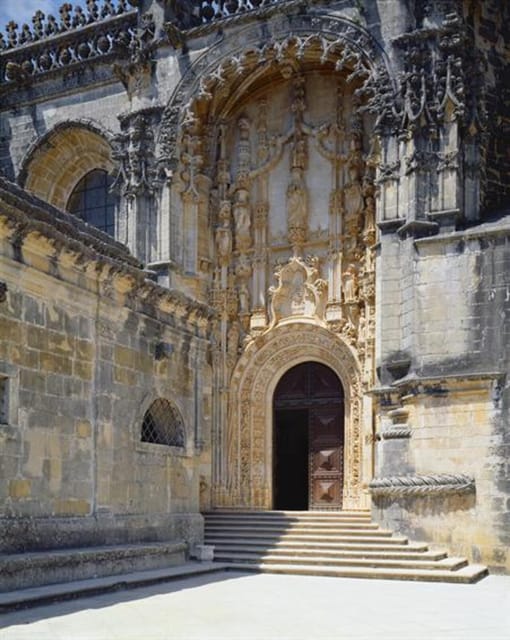
The Convent of Christ is not simply a church with an old castle attached. It is a large historical complex where military power, religious devotion, royal ambition, and Portuguese art all meet.
The Templars founded the castle in 1160, giving the site its first strong identity. Later, the Order of Christ took over, and the complex grew into a convent with grand religious spaces and a succession of courtyards. That change from fortified outpost to elaborate religious house is what makes the visit so satisfying.
I’d allow enough time to look up, slow down, and compare details. The main draw is not one single room. It is the way the site reveals different periods as you move from the castle walls to the convent interiors and then to the aqueduct.
The Convent of Christ entered the UNESCO World Heritage List in 1983. That designation matters here because the site is unusually complete. You are not seeing one isolated monument. You are walking through a connected record of Portuguese building styles, from the medieval Templar foundation through the Renaissance convent.
More Coimbra & Central Portugal trips worth a second look
- Portugal dos Pequenitos entry ticket
★ 4.2 · 167 reviews - Batalha Monastery Entrance Ticket
★ 4.3 · 140 reviews - Coimbra Private Walking Tour with U.C. Tickets Early Access
★ 4.5 · 68 reviews
Entering the Templar Castle Founded in 1160
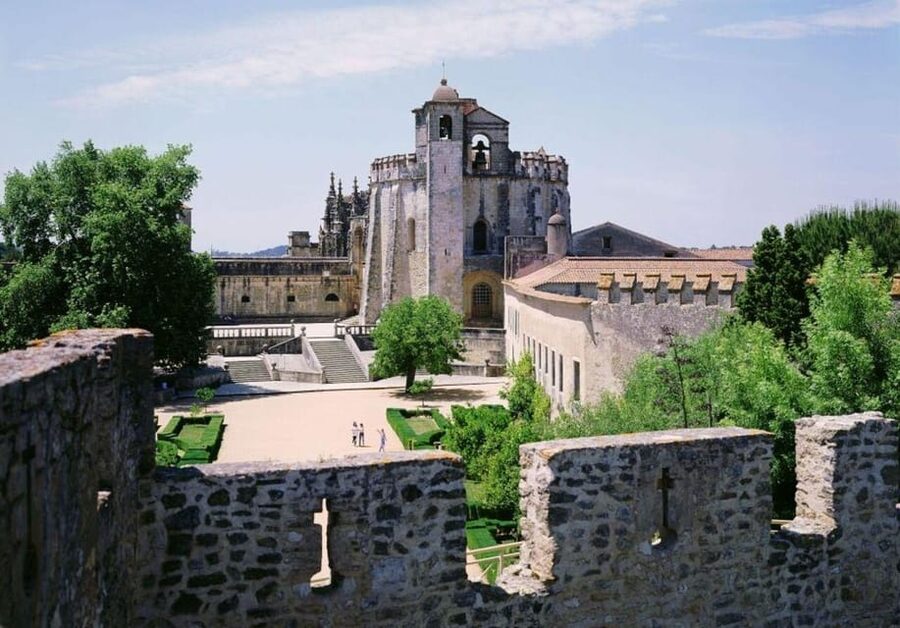
Start at the main entrance of the Convent of Christ. The castle gives you the clearest sense of the site’s original purpose: this was a place built for defense as well as worship.
As you walk through the medieval fortifications, pay attention to the relationship between the walls and the religious buildings. The castle was not an ornamental prelude. It formed the protective shell around an important religious and military center.
I find this opening especially useful if you know little about the Templars. The stonework and defensive layout explain why this location mattered before the later convent additions transformed the complex.
The castle section can also help younger visitors connect with the site. Towers, walls, and a fortified setting are easier to picture than an abstract discussion of medieval orders. You can see the practical side of the story before moving into the more decorative convent.
There is no need to rush through this part. The visit works best when you notice the contrast between the sturdy medieval defenses and the elaborate carving found later inside. That contrast is one of the main themes of the whole complex.
The Round Charola and Its Jerusalem Connection
The Charola is the visual and historical heart of the visit. This rare round-shaped temple was inspired by the Church of the Holy Sepulchre in Jerusalem, linking the Portuguese site to the wider religious world known to the Templars.
Its circular form immediately sets it apart from a standard rectangular church. The shape makes the space feel purposeful and unusual, even before you know the story behind it. This is one place where a guide can add real value, since the architecture carries meaning that is not always obvious at first glance.
If your visit includes Mark or Anna as a guide, listen closely during the explanation of the Charola. Mark has been praised for putting the history together clearly and covering the main highlights without dragging the visit out. Anna has been noted for explaining complicated ideas in an engaging way.
If you have only the entry ticket, you can still appreciate the room, but you may want to read the available information carefully. The Charola rewards a little context. Without it, you might simply register an attractive circular church and miss why that shape mattered.
Photography is allowed, but flash photography is not. That rule protects the interior and also helps keep the atmosphere calm. Take a moment before reaching for your camera. The room deserves more than a quick photograph taken on the way through.
The Renaissance Convent and Its Five Cloisters
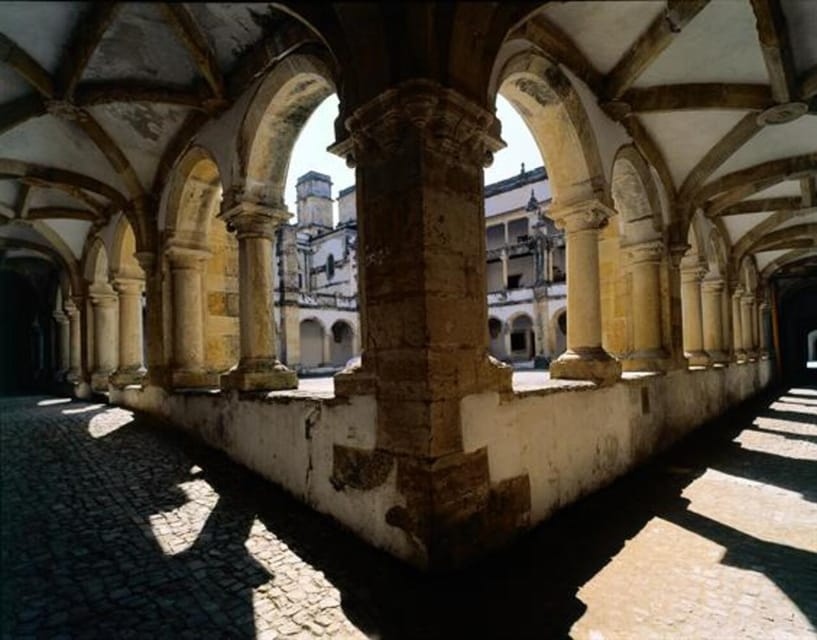
After the castle and Charola, the site shifts into the more formal world of the Renaissance Convent of the Order of Christ. Here, the scale and decoration change noticeably.
The convent has five distinct cloisters. Their variety is one of the best reasons to choose this experience instead of making a quick church visit. You can see architectural ideas change from one courtyard to the next, moving from Gothic forms toward Renaissance and Mannerist design.
A cloister is easy to skim past, especially when several appear in one complex. Don’t. Pause in each one and compare the columns, arches, proportions, and decoration. The five courtyards give you a practical lesson in how taste changed over time.
This part also gives you breathing room after the denser castle interiors. The courtyards help you understand the size of the convent and make the layout easier to follow. You are not merely moving between rooms. You are seeing how a religious community was organized around open spaces.
The five cloisters are particularly useful for visitors interested in architecture. You do not need specialist training to enjoy them. Look for the overall mood of each courtyard first, then notice the smaller details. Gothic design tends to feel different from the later Renaissance and Mannerist work, and the sequence makes that difference easier to grasp.
A different kind of day out, same corner of Portugal:
- From Lisbon: Fatima, Batalha, Nazare, Obidos – Small Group
★ 4.8 · 2,031 reviews - Coimbra: Live Fado Show with Glass of Port Wine
★ 4.7 · 998 reviews - University of Coimbra guided tours without queue
★ 5.0 · 518 reviews - Guided tour of the University and city of Coimbra.
★ 5.0 · 377 reviews
The Manueline Nave and High Choir
The Manueline nave brings a distinctly Portuguese note to the visit. Manueline design is known for elaborate decoration, and here it helps show how religious architecture reflected Portugal’s growing confidence during the age of maritime expansion.
The nave is a place to look at the connection between structure and ornament. The building still has to function as a church, but the carved detail adds a strong sense of royal and national ambition.
Continue to the High Choir, another important interior feature. These spaces are best appreciated slowly, since the height and decoration can be difficult to take in from one quick glance.
I recommend looking for the way the convent’s religious purpose overlaps with Portugal’s wider story. The buildings are not neutral containers. Their design reflects the power and wealth available to the Order of Christ and the Portuguese crown.
This is also a section where a guide can help you separate the many names, dates, and styles. Mark’s strength, according to the information available about his visits, is connecting the details into a clear story. Anna is described as good at making complicated ideas interesting, which could be useful in a room full of unfamiliar terms.
The Chapter Window and Portugal’s Maritime Age
The Chapter Window is one of the most memorable pieces of carving in the complex. Its intricate details are tied to Portugal’s maritime expansion, making it more than an attractive architectural feature.
Take time to study it from different distances. From across the space, you get the full shape and sense of scale. Closer up, the carved elements become easier to examine. The window rewards patience, particularly if you enjoy the small details that often disappear in a broad overview.
The Chapter Window also gives you a clear reminder that the Convent of Christ was connected to major political and economic changes. Portugal’s overseas expansion shaped the country’s art and architecture, and this window gives that story a visible form.
If you are visiting with a camera, this is an obvious place to stop. Again, flash is not allowed. A hat and sunscreen are useful for the outdoor sections, but inside, your main tool is time. Give yourself a few quiet minutes rather than trying to record every detail.
The Pegões Aqueduct and a Different Kind of Monument
The Pegões Aqueduct provides a strong closing point because it changes the subject from decoration and worship to practical engineering.
Built during the period of Spanish King Filipe, the aqueduct supplied water to the convent. Its scale makes clear that a religious complex of this size required major infrastructure. The aqueduct is not just a scenic extra. It helps you understand how the convent operated.
The structure also offers a welcome change after the interior rooms and cloisters. You finish with a large outdoor work that emphasizes planning, construction, and daily needs. That balance gives the visit a broader reach.
The aqueduct portion is one reason to wear comfortable shoes and bring sun protection. The activity information specifically recommends comfortable footwear, a hat, and sunscreen. You should take that advice seriously, particularly if you plan to spend time outdoors before or after the main interiors.
The visit ends back at the meeting point, at the main entrance of the Convent of Christ. From there, you are well placed to continue exploring Tomar on your own.
Is the $17 Ticket Good Value?
At $17 per person, this is a fair price for access to a UNESCO-listed complex containing a castle, the Charola, a Renaissance convent, five cloisters, major church spaces, and the Pegões Aqueduct.
The value is strongest if you enjoy exploring at your own pace. You can spend longer in the Charola, linger in the cloisters, or focus on the Manueline carving instead of following a fixed script.
The price is less straightforward if you expect a fully guided tour. One review described the experience as essentially an entry ticket rather than a guided tour, and the wording can make that distinction easy to miss. Check the exact option before paying, especially if a guide is important to you.
Some guided visits connected with this experience have included Mark and Anna. Mark is praised for covering the key points and leaving you at the convent, while Anna is praised for making complicated subjects clear and interesting. Those comments suggest that a guide can improve the historical side of the visit, but you should not assume guiding is included unless your selected option says so.
Meals, drinks, and personal expenses are not included. Since the ticket is valid for one day rather than a timed multi-stop excursion, you can treat it as one part of a day in Tomar rather than a complete package.
Timing, Access, and What to Bring
The ticket is valid for one day, with starting times shown when you check availability. Arrive 15 minutes early for check-in at the main entrance.
The activity is wheelchair accessible. Still, the site is a large historic complex with medieval and old convent buildings, so anyone with particular mobility needs should confirm the practical details when booking.
Bring comfortable shoes. You will be walking through castle areas, cloisters, religious interiors, and outdoor sections, and historic stone surfaces are rarely as forgiving as a modern museum floor.
A hat and sunscreen make sense for the aqueduct and other exterior areas. Photography is allowed without flash. Alcohol, drugs, explosive substances, and bare feet are not permitted.
The activity is non-refundable, so check the date and time carefully before booking. The lack of included meals or drinks is easy to manage, but you should plan those separately if you want to make a full day of Tomar.
Who Will Enjoy This Visit Most?
I recommend the Convent of Christ for anyone interested in medieval Portugal, the Templars, religious architecture, or the country’s Manueline style.
It is also a strong choice if you like places with several layers rather than one famous object. The castle appeals to people who enjoy fortifications. The Charola suits visitors drawn to unusual sacred architecture. The cloisters and Chapter Window provide plenty for anyone interested in design and carving.
Families may appreciate the mixture of walls, towers, courtyards, and open spaces. The site offers visual variety, although younger children may not want a long explanation of every architectural period.
History specialists may prefer a guided option, provided the selected booking includes one. Independent visitors can get good value from the ticket, but should expect to supply some of their own context.
I would not choose this as a quick stop if you have only a few minutes in Tomar. The complex covers too many periods and features to appreciate in a hurried walk-through.
Should You Book the Convent of Christ Ticket?
Book it if you want access to one of Portugal’s most important historic complexes and you are happy to explore at your own pace. The combination of Templar defenses, the round Charola, five cloisters, Manueline carving, and the Pegões Aqueduct gives you plenty for the $17 price.
Choose carefully if your priority is a guided explanation. Mark and Anna have led visits that made the history easier to follow, but the experience can function as an entry ticket rather than a guaranteed guided tour. Confirm that detail before booking.
For most visitors to Tomar, I think this is a worthwhile purchase. Arrive early, wear sensible shoes, protect yourself from the sun, and give the Charola and Chapter Window more than a passing glance. That is where the visit moves from a collection of old buildings to a clear story about Portugal’s medieval orders, religious life, architecture, and maritime age.
FAQ
Where does the activity begin?
The visit begins at the main entrance of the Convent of Christ in Tomar.
Where does the activity end?
The activity ends back at the meeting point.
How long is the ticket valid?
The ticket is valid for one day. Starting times depend on availability.
How early should I arrive?
Arrive 15 minutes early for check-in.
Is a guide included?
The experience information confirms entry to the Convent of Christ, but one review describes it as an entry ticket rather than a guided tour. Check the exact booking option to confirm whether guiding is included.
Are Mark and Anna guides for this experience?
Mark and Anna have led visits connected with the experience. Mark is described as a strong storyteller, while Anna is described as good at explaining complicated subjects clearly.
Is the Convent of Christ wheelchair accessible?
Yes, the activity is listed as wheelchair accessible.
Can I take photographs inside?
Yes, photography is allowed, but flash photography is not permitted.
What should I bring?
Bring comfortable shoes, a hat, and sunscreen. These are especially useful for the outdoor parts of the complex.
Recently reviewed around Coimbra & Central Portugal
- Nazaré – Jeep Safari★ 5.0 · 76 reviews
- Soft Canyoning, river Ceira, Góis, Serra da Lousa, Coimbra★ 5.0 · 48 reviews
- Time travel at the Convent of Christ Tomar★ 5.0 · 56 reviews
- Schist Villages at Lousa Mountain★ 5.0 · 127 reviews
- Lousa Mountain Private Tour★ 5.0 · 88 reviews
- Convent of Christ Tour “Portugal in the Map” – Visit Tomar with a local guide!★ 5.0 · 105 reviews
- Schist Villages of Lousã Mountain, half-day from Coimbra★ 5.0 · 42 reviews
- Conimbriga and The Roman Tour★ 5.0 · 132 reviews
Coimbra & Central Portugal Tours, compared.

Fatima, Batalha, Nazare, Obidos – Small Group
Read our review →
University of Coimbra guided tours without queue
Read our review →
Guided tour of the University and city of Coimbra.
Read our review →

Medieval Tales & Secrets Spots Guided Walking Tour
Read our review →
Browse the lists this tour appears in