
Reviewed · COIMBRA & CENTRAL PORTUGAL TOURS
Schist Villages at Lousa Mountain
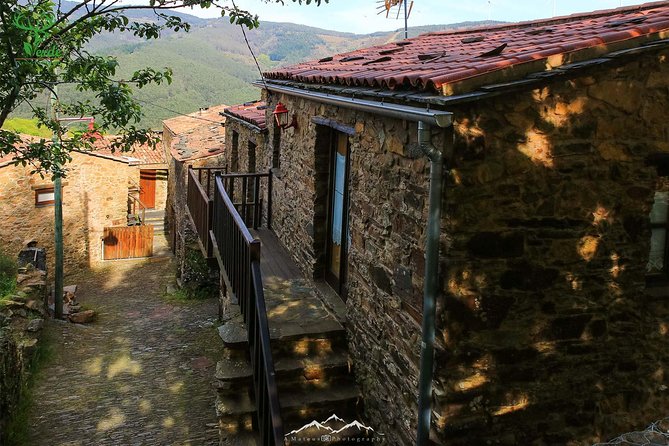
High above Coimbra, the roads turn steep and rough, and the familiar Portugal of tiled churches and busy squares gives way to stone villages tucked into the forest. This private excursion takes you through the schist settlements of Lousã Mountain, where slate houses, springs, chestnut trees, and quiet footpaths tell a less polished story of rural Portugal.
I like two things right away: you do not have to drive the mountain roads yourself, and the private format lets you adjust the pace. Guide Alfredo is praised for his local knowledge, easy conversation, wildlife spotting, and care behind the wheel. The main consideration is physical: expect uneven paths, steps, steep slopes, and some unpaved roads. A four-hour outing can feel active rather than restful.
In This Review
- Key points to know before booking
- Why these villages feel different from Coimbra
- Cerdeira, the quiet artistic beginning
- Candal, the most accessible village
- Talasnal, the best-known postcard view
- Casal Novo, a village that nearly disappears
- Gondramaz, restoration with a place to pause
- Cadaval Cimeiro and Cadaval Fundeiro, walking through loss
- The full-day extension: Aigra Velha and Aigra Nova
- Pena, stone, water, and a dramatic slope
- What the private format adds
- Is $102.80 a fair price?
- Who will enjoy this most
- Should you book the Lousã Mountain Schist Villages tour?
- FAQ
- Where does the tour start?
- Does the tour return to Coimbra?
- Is hotel pickup available?
- How long does the tour last?
- Which villages are included on the half-day route?
- Which villages are only on the full-day tour?
- Is the tour private?
- Is food included?
- Is the tour suitable in bad weather?
- What is the cancellation policy?
Key points to know before booking
- Private touring with Alfredo: Your group travels alone, with a maximum of 10 people and room to adjust the schedule.
- A chain of distinct villages: Cerdeira, Candal, Talasnal, Casal Novo, and Gondramaz are the main half-day sights, with three more villages added on the full-day option.
- Mountain driving is part of the experience: You will use narrow, steep, and sometimes unpaved roads that are better handled by a local driver.
- Short hikes are included: The walks are not long expeditions, but steps and uneven ground require steady footing.
- A strong nature element: Alfredo carries binoculars and may point out deer, plants, trees, and unusual flowers.
- Good value for a private outing: At $102.80 per person, the price makes the most sense when shared by a small group and compared with the time, driving, and guiding involved.
Why these villages feel different from Coimbra
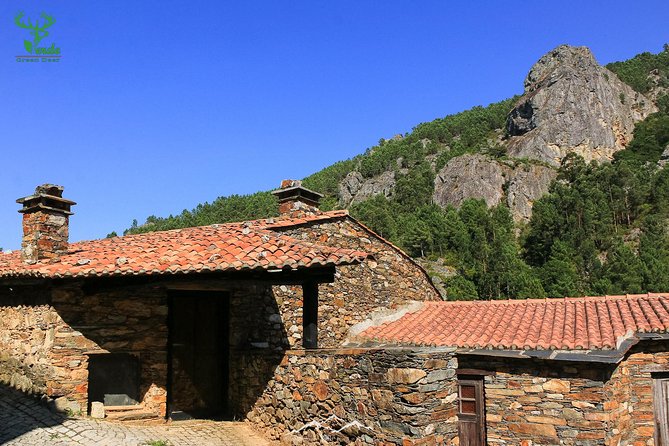
The Schist Villages, or Aldeias do Xisto, are built largely from dark slate-like stone called schist. The material came from the mountain itself, so walls, lanes, retaining terraces, and houses fit closely into the slopes.
That setting is the point. You are not simply walking through a preserved village center. You are moving between settlements scattered across wooded hills, sometimes along roads that seem too narrow for a car. The villages have different characters. Some are carefully restored and active. Others are quiet, partly abandoned, or still showing the marks of fire and rural decline.
I value this contrast. It gives you a clearer sense of how mountain communities change over time. A restored house in Talasnal tells one story. The burned villages of Cadaval Cimeiro and Cadaval Fundeiro tell another. The tour connects those places without pretending they are all the same.
Alfredo adds context about the buildings, local people, wildlife, agriculture, and attempts to bring old structures back into use. Several parts of the experience become more meaningful when you understand why a village was rebuilt, why another lost its population, or how water and mountain access shaped daily life.
Other Coimbra & Central Portugal days travellers weigh against this one:
- From Lisbon: Fatima, Batalha, Nazare, Obidos – Small Group
★ 4.8 · 2,031 reviews - Coimbra: Live Fado Show with Glass of Port Wine
★ 4.7 · 998 reviews - University of Coimbra guided tours without queue
★ 5.0 · 518 reviews
Cerdeira, the quiet artistic beginning
Cerdeira makes a strong opening stop. A small bridge at the entrance leads toward a few houses partly screened by leaves. The approach has a storybook feel, but the village is more interesting than merely pretty.
A slate path points toward a spring hidden among thick vegetation. Watercourses cut down the steep slopes around the settlement, creating the sheltered setting that gives Cerdeira its calm mood. You get about 30 minutes here, enough to walk around, study the stonework, and take photographs without rushing.
Cerdeira has also been given new life through art and creative projects. At certain times of year, events combine art and botany, so the village feels less like a frozen historic display and more like a place still searching for a future.
The limitation is simple: this is a compact stop. If you expect a large village with shops and many buildings to explore, Cerdeira may be over quickly. Its appeal is atmosphere, forest, and the meeting of old stonework with newer creative energy.
Candal, the most accessible village
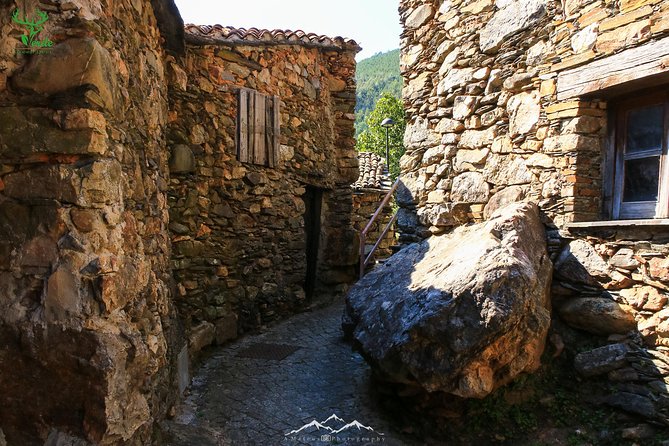
Candal is generally the easiest village to reach, thanks to the national road. That access has made it one of the best-known and most visited mountain settlements.
You may find a little more activity here than at the quieter stops. The village is accustomed to weekend visitors and people coming for fresh air and company. The 30-minute visit gives you time to walk through the lanes and notice how the village functions as a living place rather than only a photo stop.
This is also a useful point in the tour for getting a feel for the difference between accessibility and isolation. Candal is easier to reach, but that means it can feel less remote. If your ideal mountain village is completely silent and far from the road, Candal will not provide that same sense of separation.
Still, its easy access has helped protect it from disappearing. You can see why a village connected to the road has a better chance of welcoming residents, holidaymakers, and small businesses.
Talasnal, the best-known postcard view
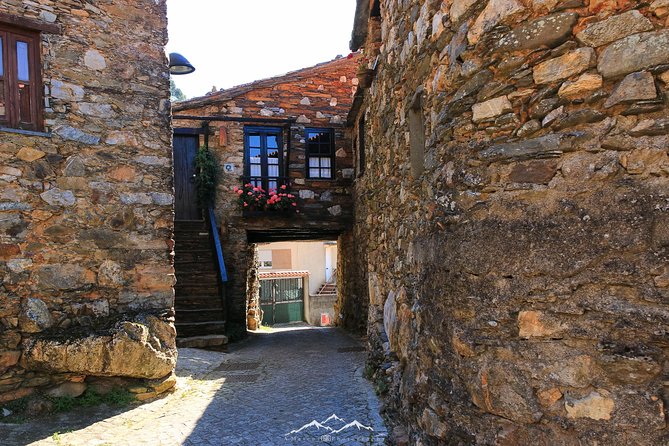
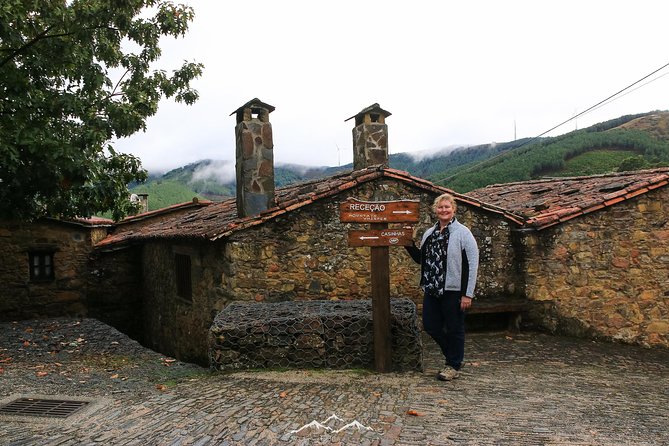
Aldeia do Talasnal is one of the most recognizable villages on Lousã Mountain. Its restored houses and carefully handled details have helped give the settlement much of its appeal.
Here, I would slow down and look above eye level. The stone walls, rooflines, lanes, and small architectural touches work together because the restoration has respected the village’s old form. Talasnal is the kind of place where you can spend less time ticking off sights and more time noticing how houses fit into the slope.
The description of Talasnal also hints at its food culture. Local dishes and mountain products are part of the village experience, and full-day outings may include a meal arranged separately. One dish that appears in the tour experience is chanfana, a regional goat stew, served with local wine. Food is not included in the listed price, so treat lunch as an optional extra, not part of the basic booking.
The village can involve steps and inclines. Wear shoes with a firm sole, especially if rain has made the stone slippery. You should also allow time for the vehicle to reach the village by mountain roads. The distance from Coimbra is not the whole story. The final approach is what makes the outing feel remote.
A different kind of day out, same corner of Portugal:
- Guided tour of the University and city of Coimbra.
★ 5.0 · 377 reviews - Coimbra: Mondego River Kayaking Tour
★ 4.7 · 324 reviews - Nazaré: 4×4 Buggy Tour with Guide
★ 4.8 · 283 reviews - Óbidos: Medieval Tales & Secrets Spots Guided Walking Tour
★ 4.9 · 171 reviews
Casal Novo, a village that nearly disappears
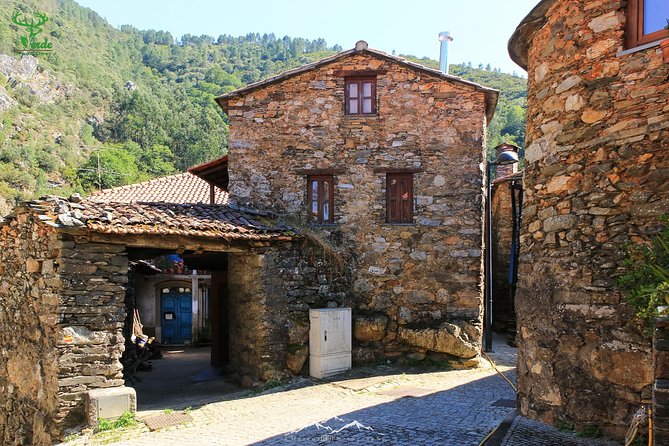
Casal Novo is easy to miss. The unpaved road passes through woodland, and the village lies in a fold on a steep, north-facing hillside. Trees hide much of its outline.
That makes it a useful reminder that the mountain is not a collection of neatly presented viewpoints. Some settlements reveal themselves slowly. You may see only a roof, wall, or line of stone before understanding that a village is there.
This stop is less about a grand central square and more about reading the terrain. Alfredo’s role matters here because a local guide can point out what you might otherwise drive past. If you prefer constant activity and a long list of attractions, Casal Novo may feel understated. If you like abandoned or quiet places with a strong sense of setting, it adds depth to the day.
Gondramaz, restoration with a place to pause
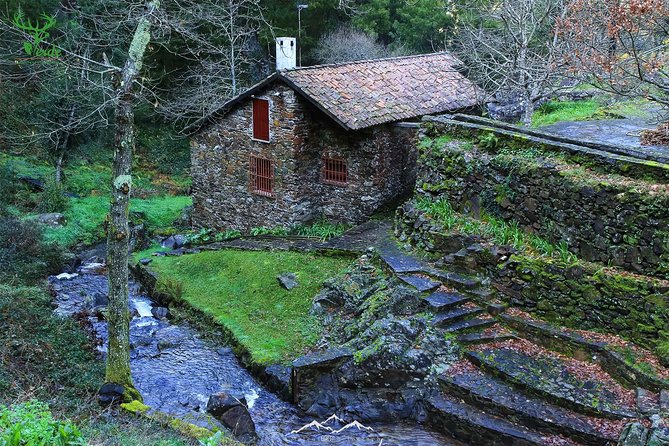
Gondramaz is a fully restored schist village of roughly 50 houses. It also has a tourist resort and a place to stop for coffee, making it one of the more comfortable breaks on the route.
The restoration gives the village a tidy, finished look. That is helpful if you want to see what a successful renewal project can accomplish. At the same time, it can feel more polished than the partly abandoned settlements elsewhere on the mountain.
I like the coffee stop because it breaks up the walking and driving. A short pause gives you time to absorb the village instead of racing from one photo point to another. It is also a chance to talk with Alfredo about the area, local life, and the choices behind the restoration work.
Cadaval Cimeiro and Cadaval Fundeiro, walking through loss
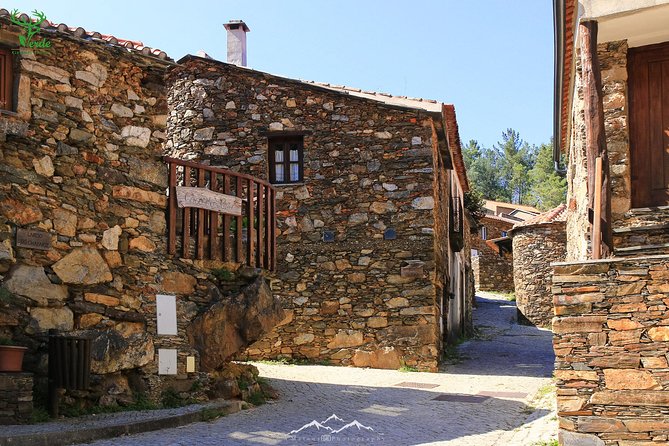
The two Cadaval villages are abandoned schist settlements that burned twice during the 1980s. The tour includes a hike between them.
This is one of the most valuable parts of the experience because it shows the harder side of rural preservation. A restored village can make the past look attractive and complete. The Cadaval walk shows what happens when fire, isolation, and population loss leave buildings behind.
The hike is listed as about 30 minutes, but do not read that as a flat stroll. Across the full route, you should be ready for uneven ground, inclines, and steps. The walk is short enough for many people who are reasonably mobile, but it is not ideal if you have difficulty walking on rough mountain paths.
Bring water and wear shoes suited to dirt and stone. The tour operates in all weather, though poor weather can lead to cancellation and a choice of another date or a full refund. A wet day may make the paths less comfortable, even when the tour goes ahead.
The full-day extension: Aigra Velha and Aigra Nova
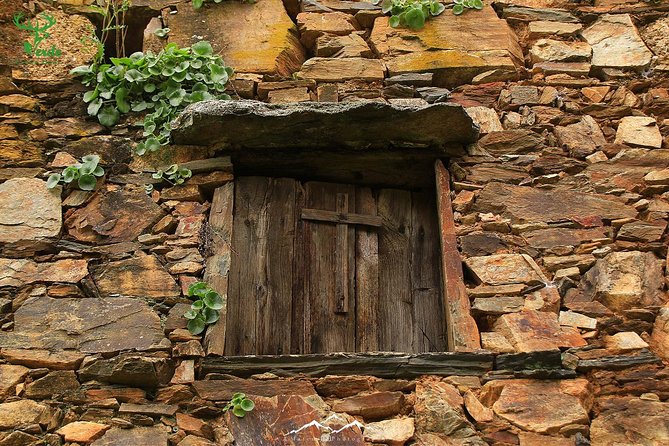
The full-day option adds three more villages, beginning with Aigra Velha. At 770 meters, it is the highest schist village on Lousã Mountain. It is close to the mountain summits but remains fairly easy to reach by vehicle.
Aigra Velha is small, with wide views and a simple relationship to the surrounding land. The setting matters more than a long list of buildings. You see pasture, mountain space, and a settlement shaped by natural cycles rather than urban planning.
Aigra Nova has three small streets and low schist buildings. It is still a living village, with gardens, livestock, donkeys, springs, and agricultural activity. This makes it a useful counterpoint to the abandoned Cadaval settlements. The full-day route is not only about old buildings. It also shows how some mountain communities continue to work and adapt.
If you have a full day available, these additions give the tour a stronger sense of range. You see restored places, abandoned places, and villages where ordinary rural life continues. The tradeoff is time. Expect a longer day in the vehicle, more walking, and less time for other Coimbra plans.
Pena, stone, water, and a dramatic slope
Pena is the final full-day village described on this route. Its houses combine schist and quartzite, and a centuries-old chestnut tree marks the entrance.
The village developed along a promontory, so the houses appear to cling to the slope. That unusual position gives Pena a more dramatic look than some of the lower, more enclosed settlements. Clear stream water runs alongside the village, while the Penedos de Góis offer more demanding outdoor possibilities for people seeking adventure.
You do not need to be an experienced hiker to appreciate Pena, but you should be comfortable with steps and uneven surfaces. The tour schedule allows about 30 minutes at each listed stop, so this is an introduction to the village and setting rather than a long mountain trek.
What the private format adds
The private setup is one of the strongest reasons to choose this excursion. Your group travels alone, with no more than 10 people per booking. You can ask Alfredo to adjust the pace, spend more time at a favorite village, or keep moving if a stop does not hold your interest.
That flexibility is especially useful for mixed groups. One person may want photographs of flowers and stone walls. Another may care more about village history or wildlife. The guide carries binoculars and has been praised for spotting animals, including a large deer in the forest, as well as explaining trees, plants, and flowers.
You also avoid the stress of driving. The mountain roads can be steep, narrow, and unpaved, with limited protection at some points. Even if you have a rental car, a local driver can let you watch the scenery instead of concentrating on every bend.
Hotel pickup is available from many central hotels in Coimbra, as well as locations in Lousã, Miranda do Corvo, Condeixa-a-Nova, and Penela when parking allows. Pickup from other locations may cost an additional 10 to 20 euros. Otherwise, the stated meeting point is Largo da Portagem in Coimbra, and the tour returns there.
Is $102.80 a fair price?
At $102.80 per person, the price is not a bargain if you are only looking for a quick scenic drive. It becomes better value when you consider that this is a private tour with transport, a driver-guide, activities, binoculars, one souvenir photo, and the chance to shape the day around your group.
Food and drinks are extra. That matters because lunch can become part of the pleasure of a full-day outing, but you will pay separately on site. Optional meals are not included in the advertised price.
For two people, the cost buys a comfortable way to reach places that are awkward to connect by public transport. For a larger group, the per-person value improves. A half-day option also makes sense if you want mountain scenery without giving up an entire day in Coimbra.
The tour is offered in English, though the guide may be multilingual. The high rating, with 98 percent of customers recommending the experience and a 4.9 rating from 127 reviews, suggests very strong satisfaction. Still, one poor report raised a serious concern about driving. That appears to be an exception among the supplied feedback, but safe driving is important on these roads, and you should speak up if you feel uncomfortable.
Who will enjoy this most
You should consider this tour if you like:
- Quiet mountain settings more than major city sights
- Short walks with uneven ground and steps
- Architecture shaped by local stone
- Rural communities at different stages of renewal
- Wildlife, trees, plants, and mountain scenery
- Small-group or private guiding
- Flexible days rather than fixed group schedules
It is less suitable if you want a completely flat outing, dislike winding roads, or need every stop to have shops and formal visitor facilities. The villages are not theme-park attractions. Their charm comes from scale, silence, natural setting, and the signs of real life or abandonment.
Dress for changing mountain weather. The tour runs in all weather, but a cancellation caused by poor weather comes with a choice of a new date or a full refund. You can cancel for a full refund up to 24 hours before the start time. Inside that window, refunds and changes are not accepted.
Should you book the Lousã Mountain Schist Villages tour?
I would book it if you have at least half a day in Coimbra and want to see a side of central Portugal that is easy to miss without a car. The half-day trip is the practical choice for a tight schedule, while the full-day route gives you a fuller picture of restored, abandoned, and still-working mountain villages.
Choose it for the scenery, the unusual building traditions, and Alfredo’s personal approach to the region. Just bring suitable shoes, accept that the roads and paths are part of the adventure, and budget separately for food. If those conditions suit you, this is a strong, distinctive outing rather than just another countryside drive.
FAQ
Where does the tour start?
The standard meeting point is Largo da Portagem, 3000-337 Coimbra, Portugal.
Does the tour return to Coimbra?
Yes. The activity ends back at the meeting point in Coimbra.
Is hotel pickup available?
Pickup is available from most hotels in central Coimbra, Lousã, Miranda do Corvo, Condeixa-a-Nova, and Penela when parking is available. Pickup from other locations may cost an additional 10 to 20 euros.
How long does the tour last?
You can choose a half-day or full-day option. The listed tour duration is approximately four hours, while the full-day option includes additional villages.
Which villages are included on the half-day route?
The core route includes Cerdeira, Candal, Talasnal, Casal Novo, Gondramaz, and a hike between Cadaval Cimeiro and Cadaval Fundeiro. The exact schedule can vary because the tour is private.
Which villages are only on the full-day tour?
Aigra Velha, Aigra Nova, and Pena are marked as full-day-only stops.
Is the tour private?
Yes. Only your group participates, with a maximum of 10 people per booking.
Is food included?
Food and drinks are not included unless specifically stated. Optional meals are paid separately on site.
Is the tour suitable in bad weather?
The tour operates in all weather conditions, so you should dress appropriately. If poor weather causes cancellation, you will be offered another date or a full refund.
What is the cancellation policy?
You can cancel at least 24 hours before the start time for a full refund. Cancellations and changes made within 24 hours are not accepted and are not refunded.
Recently reviewed around Coimbra & Central Portugal
- Nazaré – Jeep Safari★ 5.0 · 76 reviews
- Soft Canyoning, river Ceira, Góis, Serra da Lousa, Coimbra★ 5.0 · 48 reviews
- Time travel at the Convent of Christ Tomar★ 5.0 · 56 reviews
- Lousa Mountain Private Tour★ 5.0 · 88 reviews
- Convent of Christ Tour “Portugal in the Map” – Visit Tomar with a local guide!★ 5.0 · 105 reviews
- Schist Villages of Lousã Mountain, half-day from Coimbra★ 5.0 · 42 reviews
- Conimbriga and The Roman Tour★ 5.0 · 132 reviews
- Discovering the charms and places of Coimbra★ 5.0 · 78 reviews
Coimbra & Central Portugal Tours, compared.

Fatima, Batalha, Nazare, Obidos – Small Group
Read our review →

University of Coimbra guided tours without queue
Read our review →
Guided tour of the University and city of Coimbra.
Read our review →

Medieval Tales & Secrets Spots Guided Walking Tour
Read our review →
Browse the lists this tour appears in