
Reviewed · CYCLING TOURS
South Lisbon: 3-Hour Christ the King Electric Bike Tour
The big idea here is simple: cross the Tagus by ferry, then let an electric bike carry you uphill to Christ the King. You see Lisbon from the river, from the south bank, and from the streets between them. It is a smart way to add Almada to a Lisbon visit without arranging transport yourself.
I like the mix of ordinary and memorable moments: the orange cacilheiro ferry, the old Cais do Ginjal warehouses, and coffee in the gardens of Casa da Cerca. I also like the small group limit of 11, since guides such as Bruno and Mathias can keep the ride personal. The main drawback is that the tour moves through several sights in only three hours, so it suits curious explorers more than anyone wanting a slow, detailed visit at each stop.
In This Review
- Key points to know before you book
- Starting among Lisbon’s old streets
- Praça da Figueira, Rua dos Douradores, and Santa Justa
- Praça do Comércio and the rebuilt waterfront
- Crossing the Tagus on a cacilheiro
- Cais do Ginjal and the climb through Almada
- Casa da Cerca and a pause in the gardens
- Christ the King and the view across Lisbon
- Almada’s narrow streets and the Medieval Museum
- What the guides add to the ride
- Is $41 a fair price?
- Who should choose this experience?
- Should you book the Christ the King e-bike tour?
- FAQ
- Where does the tour start?
- How long does the tour last?
- Does the tour cross the Tagus by ferry?
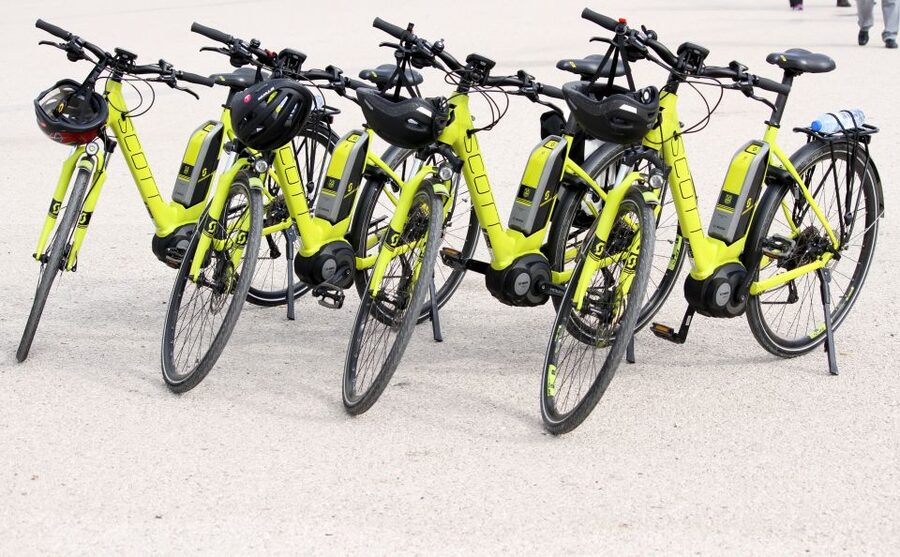
- Is an electric bike and helmet provided?
- Is the climb to Christ the King difficult?
- Is the Medieval Museum included?
- Is coffee at Casa da Cerca included?
- What languages are available?
- Who cannot take this tour?
Key points to know before you book
- The ferry is part of the sightseeing: You cross the Tagus on Lisbon’s working cacilheiro boats, not a private sightseeing cruise.
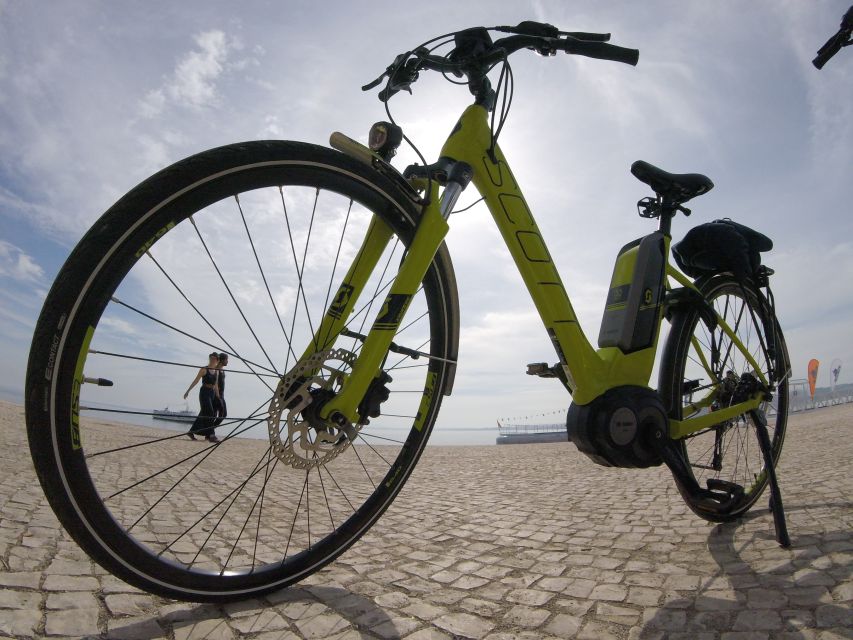
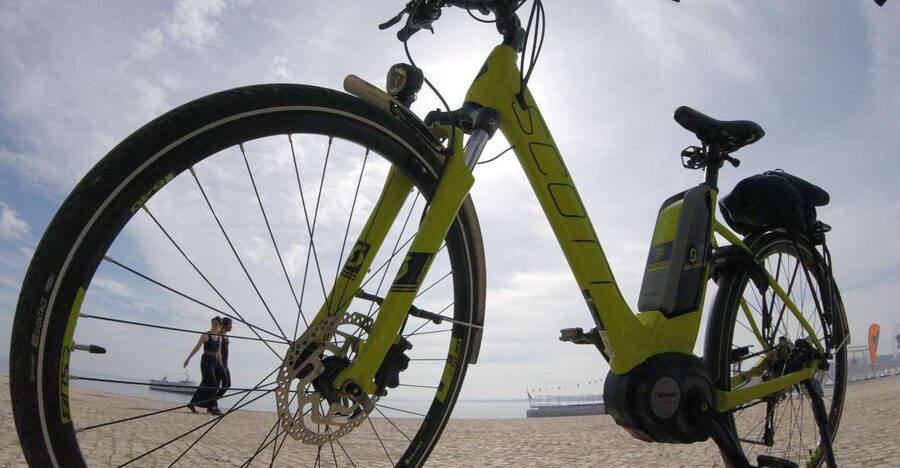
- The e-bike matters: Christ the King sits above Almada, and the motor takes much of the effort out of the climb.
- You see two sides of Lisbon: The route links central Lisbon’s squares and waterfront with Almada’s narrow streets and former industrial riverfront.
- The best view comes near the end of the climb: From the Sanctuary of Christ the King, Lisbon and the 25 de Abril Bridge spread out across the river.
- The tour has a cultural stop beyond the postcard sights: The Medieval Museum of Almada focuses on Islamic life in Portugal during the Middle Ages.
- Allow for a flexible guiding style: The route is structured, but the commentary may feel more spontaneous than scripted.
Starting among Lisbon’s old streets
The tour begins at Largo da Severa 7A, a pedestrian spot near Praça Martim Moniz. If you arrive by taxi, Uber, metro, or bus, use Praça Martim Moniz as your destination, then walk about two minutes to the meeting point.
This location puts you in one of Lisbon’s most mixed and lively areas before the ride even starts. Praça Martim Moniz has long been linked with Lisbon’s working neighborhoods, and today it is known for its many communities, food stalls, and international feel. The tour gives you a quick look at this part of town rather than treating Lisbon as only a collection of grand monuments.
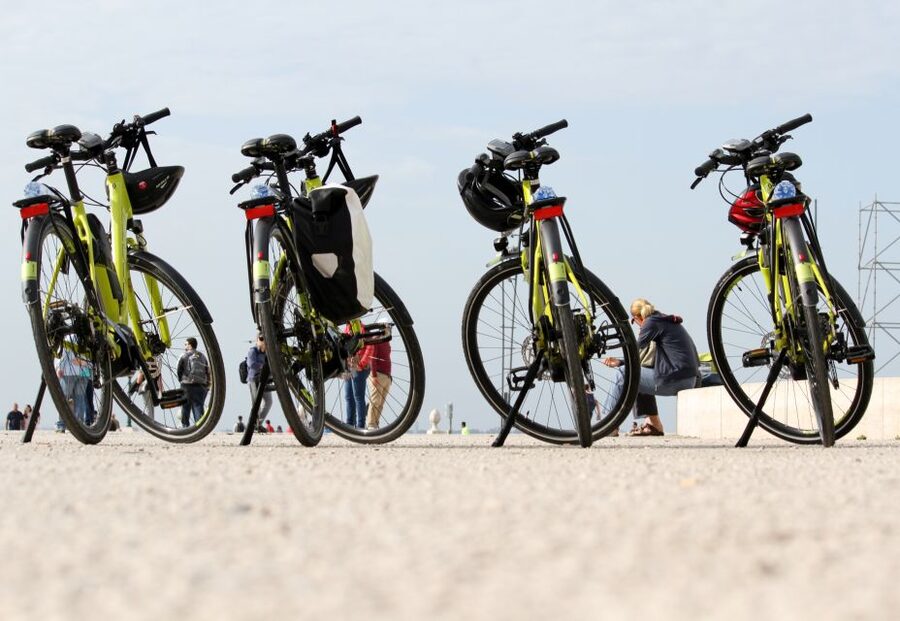
You begin with a safety briefing and an explanation of the e-bikes. That matters. The bike is not a scooter, and you still pedal, steer, and watch the road. The electric assistance is especially useful later, when the route climbs through Almada toward Christ the King.
The minimum height is 145 centimeters, or about 4 feet 8 inches. Comfortable shoes, comfortable clothing, and biodegradable sunscreen are sensible choices. The tour is not suitable for people with mobility impairments, and the cycling format means you should feel reasonably at ease on a bicycle.
More Bike Tours in Lisbon
- Lisbon: Hills, Alfama, and Mouraria Tour by Electric Bike
★ 4.8 · 3,438 reviews - Lisbon E-Bike Tour Commerce Square, Mouraria and Alfama
★ 4.5 · 1,688 reviews - Lisbon: 7 Hills Half-Day Electric Bike Tour
★ 4.9 · 1,592 reviews
Praça da Figueira, Rua dos Douradores, and Santa Justa
The first section takes you through central Lisbon toward Praça da Figueira. This broad commercial square helps explain Lisbon’s long connection with trade and markets. It is not just a place to stop for a photograph. Your guide uses it to show how the city worked as a place of buying, selling, and movement.
From there, you continue along Rua dos Douradores. The street has a literary connection to Fernando Pessoa, one of Portugal’s best-known writers. The route passes the place associated with the inspiration for his book Livro do Desassossego, giving you a small but memorable link between Lisbon’s streets and its writing.
You also pass the Santa Justa Elevator. Its ironwork structure is one of central Lisbon’s most recognizable sights, but a bike tour gives you a useful advantage: you see it as part of the city’s street network rather than waiting in line to ride it. The elevator connects lower Baixa with the higher Carmo area, and its metal design is a striking contrast to the pale stone buildings around it.
The pace here is sightseeing by bicycle, not a full walking tour of each square. You should expect brief explanations while moving and short pauses at selected points. If you want long stops inside individual monuments, this is not the right format.
Praça do Comércio and the rebuilt waterfront
The route continues to Praça do Comércio, Lisbon’s grand river-facing square. Its open space and arcaded buildings make it one of the clearest places to understand Lisbon’s relationship with the Tagus.
From the square, you ride along Ribeira das Naus. This waterfront stretch was once a major shipyard area. Portuguese ships were built here before sailing toward other parts of the world, so the route connects today’s public promenade with the city’s seafaring past.
The recent changes at Ribeira das Naus also show how Lisbon has reshaped its riverfront for public use. You get a quick look at the meeting point between old industry, national history, and modern city life. The waterfront section is one of the easiest parts of the ride, and it prepares you for the main change of scene at Cais do Sodré.
Crossing the Tagus on a cacilheiro
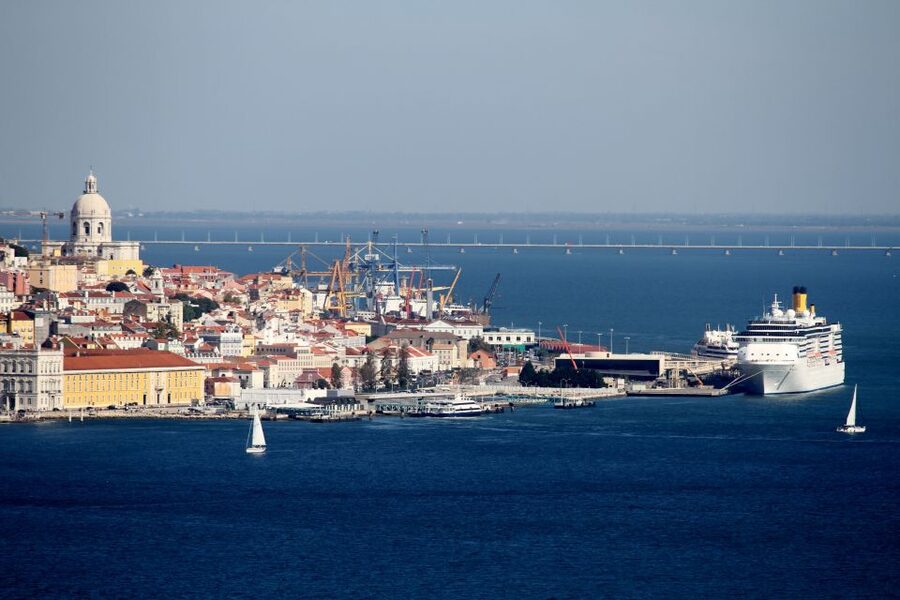
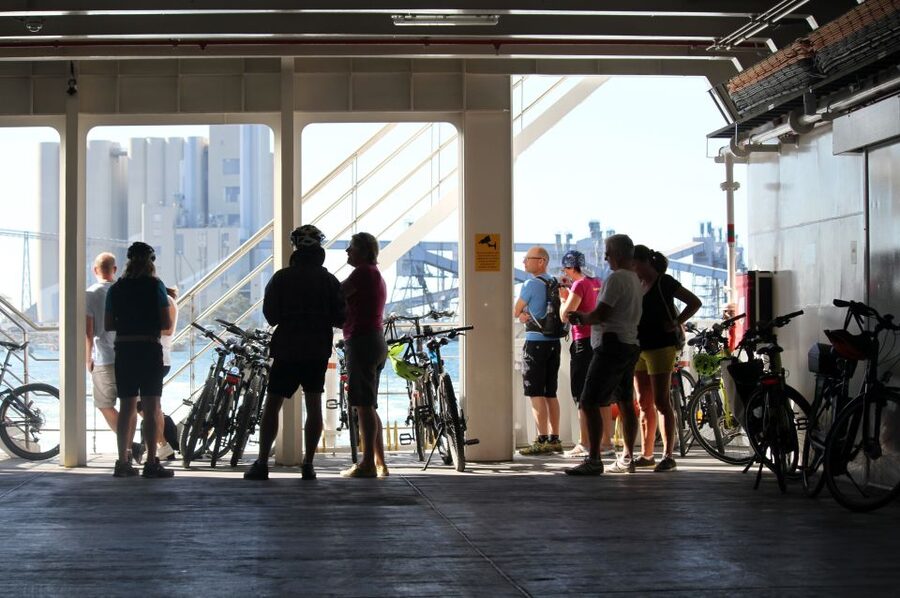
At Cais do Sodré, you board an orange cacilheiro for the trip across the Tagus. This is one of the strongest parts of the experience because the boat is useful public transport as well as a sightseeing moment.
From the water, Lisbon’s hills and waterfront open up in a way that is hard to grasp from street level. You also get a clear sense of the distance between the capital and Almada, even though the two places sit directly opposite each other.
The ferry crossing breaks up the cycling and gives you time to rest. You receive a boat ticket as part of the tour, and the return crossing is also part of the route. Since this is a working ferry service, the experience is more practical than polished. That is part of its appeal. You are crossing the river as people do, not taking a staged cruise designed only for sightseeing.
More E-Bike Tours in Lisbon
- Lisbon: City Highlights and Viewpoints E-Bike Tour
★ 4.9 · 1,556 reviews - Lisbon: 3-Hour Tour by E-Bike
★ 4.8 · 1,150 reviews - 3-Hour Lisbon 7 Hills Electric Bike Tour
★ 5.0 · 818 reviews - Lisbon: Electric Bike Tour by the River to Belém
★ 4.8 · 431 reviews
Cais do Ginjal and the climb through Almada
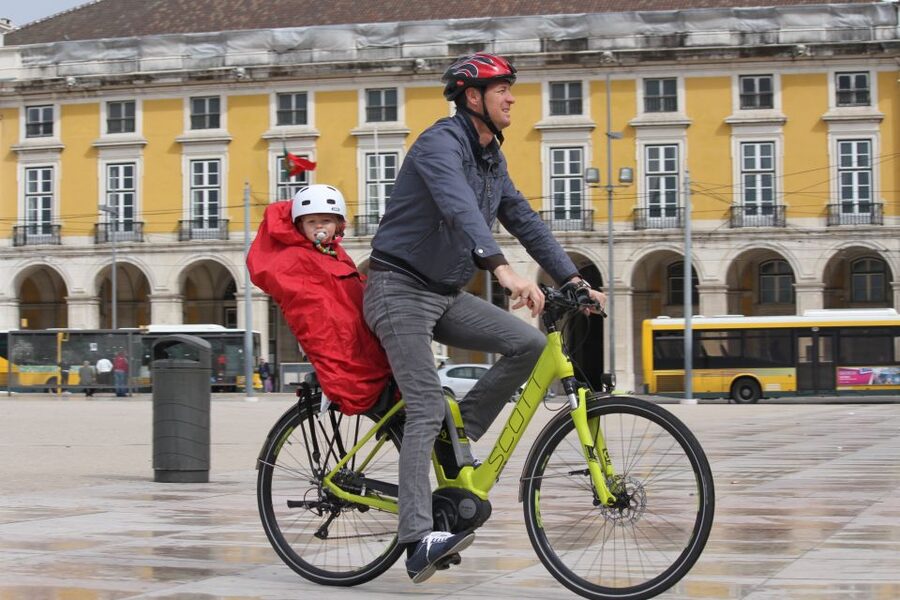
On the south bank, the ride moves through Cais do Ginjal. This former warehouse area once supplied bait and ice to cod-fishing boats working the North Seas. Its old riverfront buildings offer a different view of the Lisbon area, one shaped by fishing, storage, and labor rather than grand squares.
This is where the south-bank character becomes clearer. Almada is not simply a viewpoint across from Lisbon. It has its own streets, neighborhoods, and past, and the route gives you a compact introduction.
Then comes the climb. The Boca do Vento lift helps you gain height, bringing you closer to Christ the King. Depending on the route and timing, you may also cycle up using the e-bike. This is the point where electric assistance earns its keep. You still pedal, but the motor reduces the strain and makes the hill manageable for people who would not choose a standard bicycle tour.
The lift is worth noticing in its own right. It links the lower riverfront with the upper part of Almada and saves effort on a steep section. Even with the lift, you should expect some riding on uneven or sloping streets. The tour is not a flat waterfront spin.
Casa da Cerca and a pause in the gardens
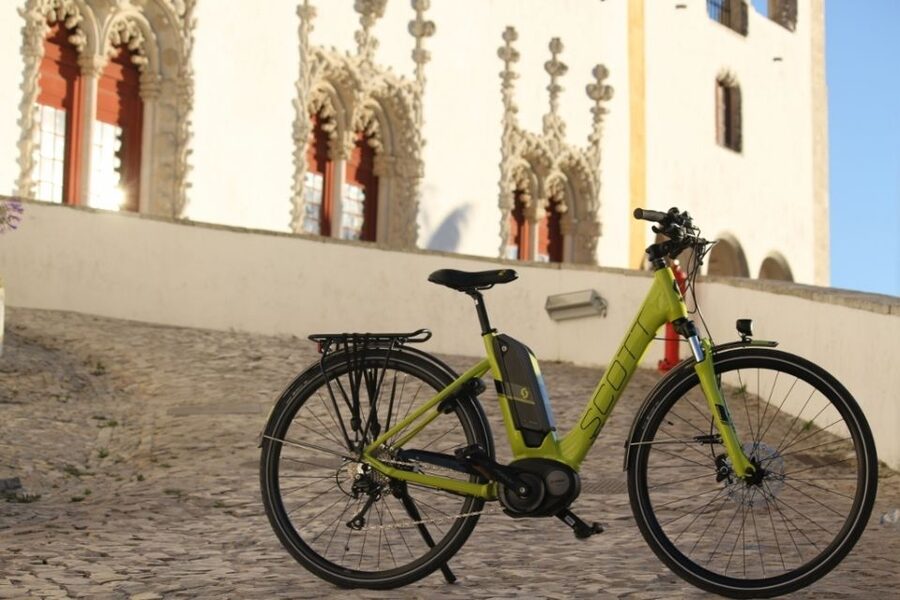
The route includes a coffee stop at Casa da Cerca. The coffee is not included, so bring a little money if you want one. The gardens provide a quiet pause after the ferry and climb, and they give you time to take in the view without balancing on a bike or keeping pace with the group.
I like this stop because it adds breathing room to a tour packed with sights. A short break can make the difference between enjoying the uphill section and feeling rushed by it. The gardens also offer a calmer setting before the tour reaches its highest point.
Do not expect a long café visit. The whole activity lasts three hours, and that time includes riding, ferry crossings, sightseeing, and the museum. Think of Casa da Cerca as a brief rest rather than an unhurried meal break.
Christ the King and the view across Lisbon
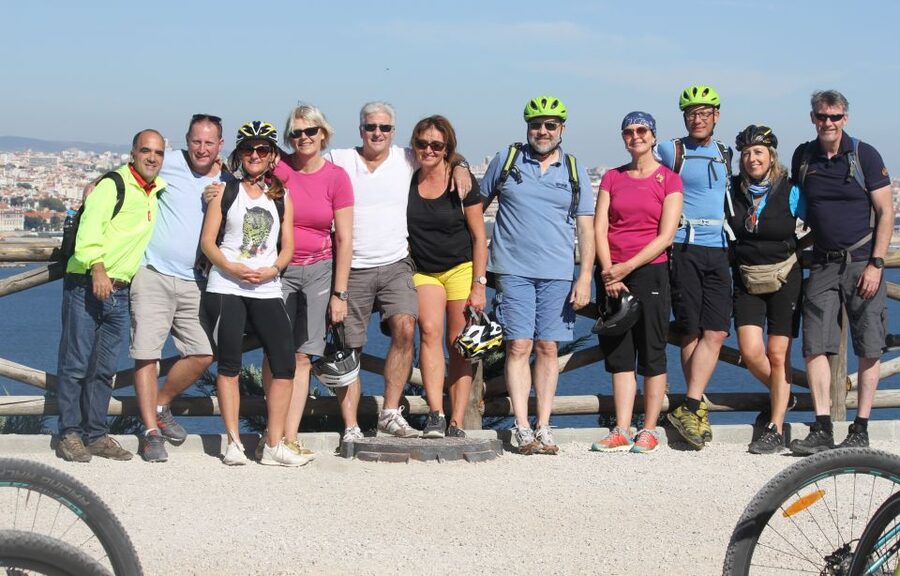
The tour then climbs to the Sanctuary of Christ the King. The statue’s outstretched arms echo the better-known monument in Rio de Janeiro, but here the important feature for you is the view.
From the sanctuary, Lisbon lies across the Tagus, with the 25 de Abril Bridge linking the two sides. This is the clearest payoff of the uphill section. You see the river as a broad dividing line and Lisbon as a layered city of hills, rooftops, and waterfront districts.
The viewpoint also helps you understand the route you have just taken. From the south bank, you can look back toward Praça do Comércio, Cais do Sodré, and the central city. The ferry crossing suddenly makes sense as part of a larger picture.
The information provided for the tour does not specify how long you spend at the sanctuary or whether entry to the upper viewing area is included. If reaching the highest viewing point matters to you, ask about that detail before booking. The tour does promise the sanctuary and its city view, but the exact access included should be clear at the start.
Almada’s narrow streets and the Medieval Museum
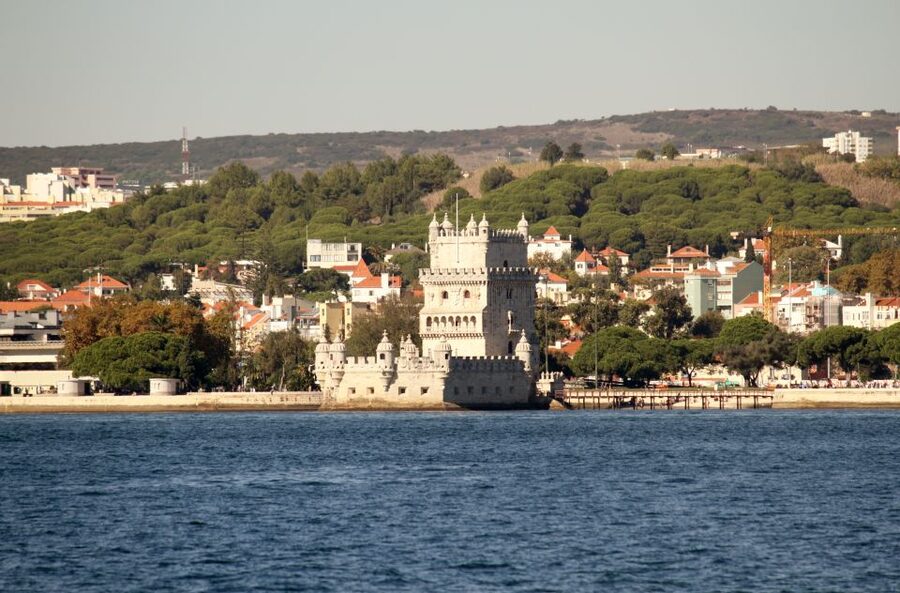
After Christ the King, the bike route heads downhill toward the river and passes through Almada’s narrower streets. The downhill direction is welcome after the climb, though you still need to control your speed and pay attention to the road.
The Medieval Museum adds a cultural stop that many quick Lisbon tours skip. It focuses on Islamic life in Portugal during the Middle Ages and displays related relics. This is useful context because Lisbon and the surrounding region were shaped by centuries of contact among different cultures, faiths, and political powers.
The museum visit is likely to be brief because of the three-hour schedule. You should see it as a focused introduction rather than a full museum afternoon. The tour information says an admission ticket is included, but one booking comment raised a question about whether the museum entry was covered. I would confirm this point when booking, especially because the ticket is listed among the inclusions.
What the guides add to the ride
The guide can make or break a short city tour, since the route covers a lot of ground quickly. Bruno has been praised for pointing out many interesting details, while Mathias has been singled out for a friendly and capable approach. The strongest feedback centers on the guides’ storytelling and care in sharing Lisbon’s history and fado culture.
The guiding style may not feel rigidly scripted. That can be a plus if you like surprises, local context, and the chance for the route to respond to the moment. It can be less satisfying if you want a precise timetable and a long explanation at every stop.
Tours are offered in English, Spanish, French, and German. The group limit is 11 participants, small enough to make questions practical and to keep the ride from feeling like a large cycling procession.
Is $41 a fair price?
At $41 per person, the price is reasonable if you want several separate elements in one outing. The fee covers the guide, e-bike, helmet, water, ferry ticket, museum ticket as stated, and liability and personal accident insurance.
You would otherwise need to organize transport across the river, find a way up to Christ the King, rent a suitable bike, and work out how to connect the south-bank sights. The e-bike is the main value here. A regular bike could make the climb uncomfortable, while taxis or public transport would remove much of the ride’s character.
The value is less convincing if your main goal is a long visit at Christ the King or the museum. Three hours has to cover both sides of the river, several central Lisbon sights, two ferry crossings, a coffee pause, and the climb. You are paying for range and variety, not depth at one monument.
The tour offers free cancellation up to 24 hours before departure and a reserve-now, pay-later option. Starting times vary, so check availability for your date. Transfers to the meeting point and coffee at Casa da Cerca are not included.
Who should choose this experience?
I would choose this tour if you have already seen Lisbon’s major central sights and want a fresh angle. The south bank often gets less attention than Baixa, Alfama, and Belém, yet it gives you some of the best views back toward the capital.
It also suits you if you like active sightseeing but do not want a punishing ride. The e-bike handles much of the uphill work, while the ferry and lift keep the route varied.
I would be cautious about booking it if you have mobility limitations, are below 145 centimeters, or dislike riding in a city setting. I would also choose a slower walking tour if you want detailed museum time, long café stops, or a carefully timed script.
Should you book the Christ the King e-bike tour?
Book it if you want a three-hour sampler of Lisbon and Almada rather than a single attraction. The ferry crossing, Cais do Ginjal, Boca do Vento lift, Casa da Cerca, Christ the King, and Medieval Museum create a varied route with real local texture.
The best reason to go is the combination of transport and viewpoint. You cross the Tagus like a local, use an e-bike to reach a hilltop monument, and return with a better sense of how Lisbon and Almada face each other. Just confirm the museum admission detail, bring comfortable clothes and sunscreen, and expect a lively, flexible tour rather than a slow, highly formal one.
FAQ
Where does the tour start?
It starts at Largo Severa 7A in Lisbon, a pedestrian area near Praça Martim Moniz. From Praça Martim Moniz, the meeting point is about a two-minute walk.
How long does the tour last?
The activity lasts three hours. Starting times vary, so you need to check availability for your date.
Does the tour cross the Tagus by ferry?
Yes. You cross the river by orange cacilheiro ferry from Cais do Sodré, and the boat ticket is included.
Is an electric bike and helmet provided?
Yes. The tour includes an electric bike and helmet, along with a guide and one bottle of mineral water.
Is the climb to Christ the King difficult?
The route climbs through Almada, but the electric bike is intended to reduce the effort. You can also use the Boca do Vento lift as part of the route.
Is the Medieval Museum included?
The tour details list a ticket to the Medieval Museum of Almada as included. One booking comment raised a concern about this, so confirm the admission arrangement before booking.
Is coffee at Casa da Cerca included?
No. Coffee at Casa da Cerca is not included in the tour price.
What languages are available?
The tour is offered in English, German, French, and Spanish.
Who cannot take this tour?
The tour is not suitable for people with mobility impairments or anyone under 145 centimeters, or 4 feet 8 inches.
More 3-Hour Experiences in Lisbon
- 3-Hour Guided Street Art Walking Tour of Lisbon
★ 5.0 · 278 reviews - Lisbon: 3-Hour The Slave Trade – An Historical Walking Tour
★ 4.9 · 179 reviews - 3 Hours Private Lisbon Food Tuk Tour
★ 5.0 · 145 reviews - Lisbon: 3-Hour Segway Sailor Tour to Belém
★ 4.9 · 140 reviews
More E-Bikes in Lisbon
- From Lisbon: Sintra to Cascais Full-Day Guided E-Bike Tour
★ 4.9 · 375 reviews - Sintra & Cascais de E-Bike Tour
★ 5.0 · 211 reviews - Belém E-Bike Guided Tour Explore Lisbon by the river
★ 5.0 · 198 reviews - Sintra-Cascais Natural Park by E-Bike: 8- hour Tour from Lisbon
★ 5.0 · 178 reviews
Recently reviewed around Lisbon
- Lisbon: Catamaran Luxury Sunset and Wine Tour★ 5.0 · 119 reviews
- Lisbon’s authentic Food and Wine tour with a Winemaker★ 5.0 · 67 reviews
- Morning Sailing Tour in Tagus River from Lisbon★ 5.0 · 68 reviews
- Lisbon: Belem Walking Tour with Jeronimos Monastery Tks Included★ 5.0 · 115 reviews
- PRIVATE Unforgettable Full Day Tour to Sintra from Lisbon★ 5.0 · 236 reviews
- Discover Lisbon’s Alfama: Secrets of the Old Town★ 5.0 · 104 reviews
- Sesimbra Wild Beach Tour from Lisbon★ 5.0 · 57 reviews
- Private Jeep Tour from Lisbon – Arrábida, Sesimbra & Beach Picnic★ 5.0 · 48 reviews
Cycling Tours, compared.
Hills, Alfama, and Mouraria Tour by Electric Bike
Read our review →
City Highlights 3-Hour Guided Electric Bike Tour
Read our review →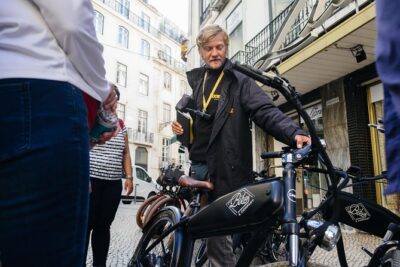
Lisbon E-Bike Tour Commerce Square, Mouraria and Alfama
Read our review →


Quad Biking – Sete Cidades from North Coast (Half Day)
Read our review →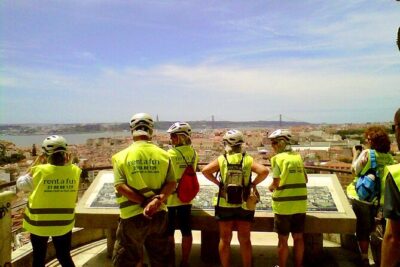
Browse the lists this tour appears in