

Reviewed · HISTORICAL TOURS
Lisbon: 3-Hour The Slave Trade – An Historical Walking Tour
Lisbon’s grand squares and Age of Discovery monuments look different once you understand the human suffering behind Portugal’s wealth. This three-hour walk connects the city center to Portugal’s role in the Atlantic slave trade, a subject many standard sightseeing tours leave untouched. I like the small group of up to six and the chance to ask questions throughout. I also like that guide Rui Fernandes brings both academic training and personal connection to the subject.
The main thing to consider is the tour’s serious subject matter. This is not a light introduction to Lisbon, and the amount of information can be substantial. The walk is usually described as three hours, though some outings run closer to three and a half hours, so leave room in your schedule.
In This Review
- Key points at a glance
- Why Lisbon’s prettiest sights need a second look
- Starting at Largo do Chafariz de Dentro
- Walking through Alfama’s streets and buildings
- From the Age of Discovery to the Atlantic slave trade
- Understanding Brazil, Africa, and abolition
- A guide who welcomes difficult questions
- The coffee break and the walking pace
- What the $35 price buys you
- Who will get the most from this walk
- Should you book the Lisbon Slave Trade Historical Walking Tour?
- FAQ
- Where does the tour meet?
- How long does the walking tour last?
- What language is the tour conducted in?
- Who leads the experience?
- How many people can join the tour?
- What topics does the tour cover?
- Is a break included?
- What should I bring, and are pets allowed?
Key points at a glance
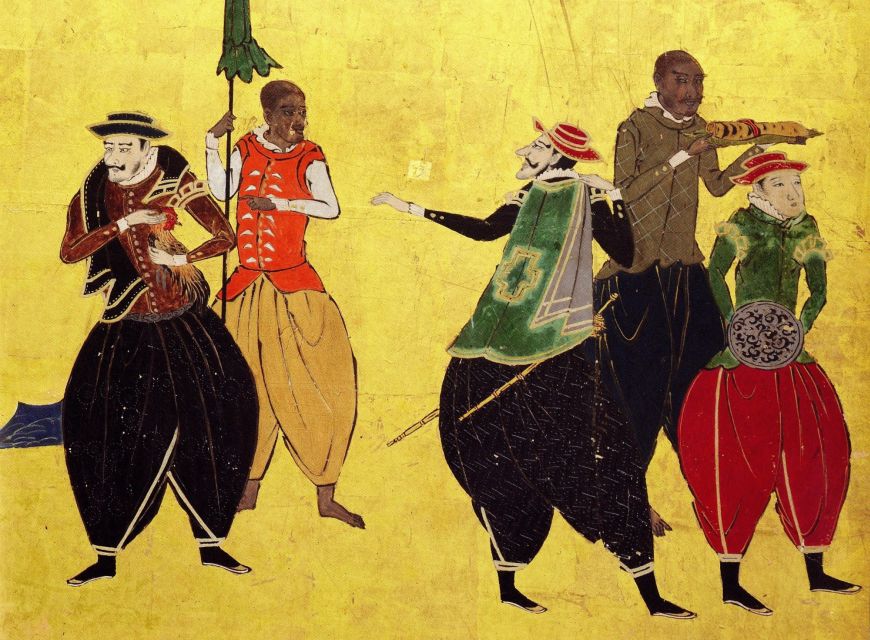
- Begin in Alfama: Meet at Largo do Chafariz de Dentro, in Lisbon’s oldest district, and start with the roots of slavery in the Iberian Peninsula.
- Connect famous places to difficult history: Streets, churches, public squares, monuments, and grand buildings become evidence of how slavery shaped Lisbon.
- Learn from Rui Fernandes: Rui is an African guide with a background in history, political science, and economics, and he welcomes questions.
- Go beyond the Atlantic crossing: The walk covers Brazil, Portuguese colonies in Africa, abolition, African nationalist movements, and the lives of enslaved people in Lisbon.
- Enjoy a practical pause: One coffee and one WC break are included, with the café stop often paired with a pastel de nata.
- Expect a relaxed walk: The route is described as mostly flat or with only mild inclines, but comfortable shoes still matter on Lisbon’s cobbled streets.
Why Lisbon’s prettiest sights need a second look

I like this tour because it changes the way you read Lisbon. The city’s beauty is not ignored, but it is placed beside the economic and political forces that helped build it. Portugal’s seafaring expansion is often presented as a story of ships, navigation, trade, and royal ambition. This walk asks you to also consider the people who were captured, sold, transported, and forced to work.
In the first half of the 15th century, Portugal began the process that became the Atlantic slave trade. Over roughly four centuries, between 12 and 14 million Africans were sold into slavery and carried across the Atlantic to the Americas. The walk explains Portugal’s early role in that system and shows how Lisbon benefited from it.
That framing is useful for anyone who has already visited Belém, admired Manueline architecture, or toured monuments linked to the Age of Discovery. You may have seen the symbols of maritime power without hearing much about the forced labor and human trafficking that supported Portugal’s expansion. This experience helps fill that gap.
More Historical Tours in Lisbon
- Lisbon: History, Stories and Lifestyle Walking Tour
★ 4.8 · 10,902 reviews - Lisbon: Live Fado Show with Port Wine in Historic Center
★ 4.7 · 4,166 reviews - Lisbon: Fado Show with Wine in a Historic Venue
★ 4.8 · 1,294 reviews
Starting at Largo do Chafariz de Dentro
The meeting point is Largo do Chafariz de Dentro, a square in Alfama. This is a practical starting place because Alfama is tied to some of Lisbon’s earliest layers, and the tour can begin with the origins of slavery in the Iberian Peninsula before moving into Portugal’s Atlantic activity.
You meet your licensed local guide there. Rui Fernandes leads the experience in English and has a background in history, political science, and economics. His role is more than pointing out buildings. He explains how law, religion, economics, politics, and social life interacted.
The opening section gives you the basic framework needed for the rest of the walk. Instead of treating the Atlantic slave trade as an isolated chapter, Rui connects it to earlier forms of slavery and to the wider development of Portugal. That makes the later stops easier to understand.
Alfama also gives the walk an immediate sense of place. You are not sitting in a classroom hearing a timeline detached from Lisbon. You are standing in one of the city’s old districts, then moving through streets and buildings that have their own connection to the subject.
Walking through Alfama’s streets and buildings
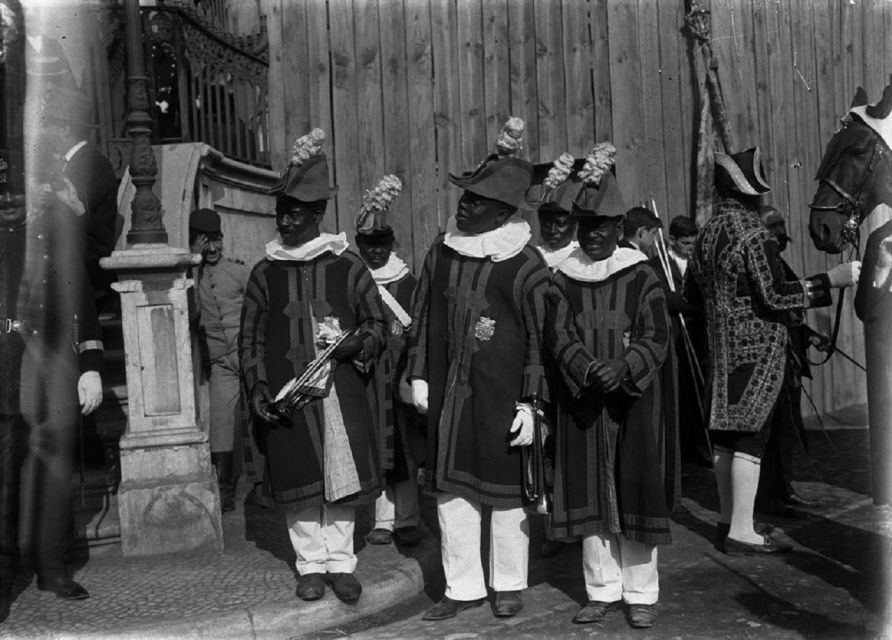
The route uses both back streets and main avenues. This mix matters. The narrower streets can suggest the daily scale of historic Lisbon, while major squares and grand buildings help explain the public power and wealth tied to overseas trade.
You may stop at places where the connection is visible through a street name, a building’s former use, architectural details, or the role a site played in the city. The exact order can vary, but the purpose remains the same: to make Lisbon itself part of the lesson.
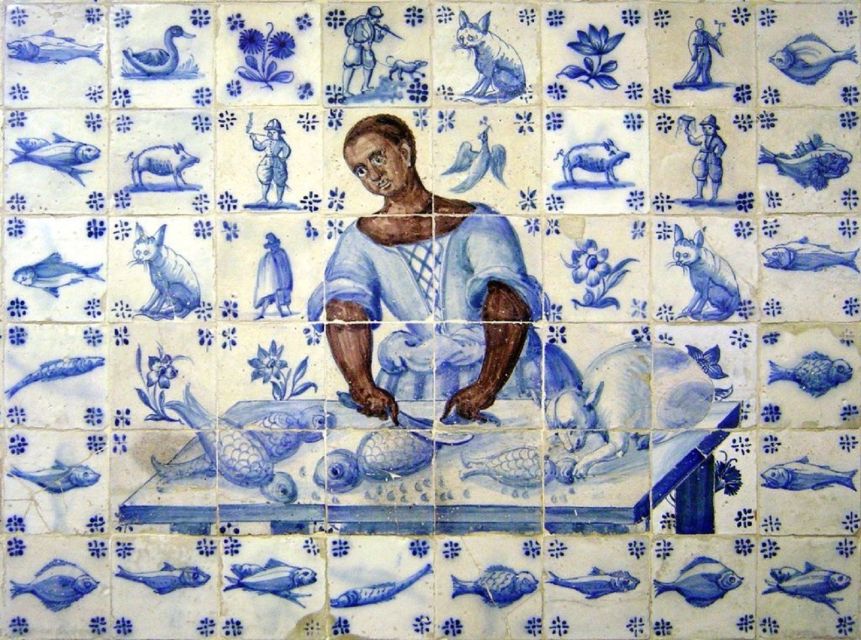
One especially useful part of the experience is the attention to everyday life. The tour does not focus only on royal decisions or commercial networks. It also addresses what life was like for an enslaved person living in historic Lisbon. That shift from institutions to individual experience keeps the subject from becoming a string of dates and names.
Rui has also used relevant pictures to help explain points that are difficult to picture from the street alone. This is helpful when a building has changed, when its earlier function is not obvious, or when a historical scene needs visual context.
The cobbled streets are a real part of the experience, not just a backdrop. The pace is generally relaxed, and the route has been described as mostly flat or limited to mild inclines. Still, Lisbon’s paving can be uneven, so wear shoes that you can comfortably use for three hours.
From the Age of Discovery to the Atlantic slave trade
Portugal’s Age of Discovery is often taught through navigation and exploration. Here, you examine its financial and human consequences. The walk explains the birth of the Atlantic slave trade and Portugal’s part in creating a system that later expanded across the Atlantic world.
I appreciate that the subject is placed in a wider setting. You learn about the economic importance of Brazil, the role of Portuguese colonies in Africa, and the political choices that allowed the trade to continue. The tour also addresses abolition in Portugal, so the story does not stop at the beginning of the trade.
The discussion is not limited to Portugal’s actions in isolation. Slavery is considered as an institution shaped by political, religious, and economic interests. That helps you see why the trade lasted so long and why its effects did not disappear when abolition began.
The subject can be difficult, particularly when the discussion moves from broad numbers to the treatment of individuals. Rui’s approach is described as patient, clear, and sensitive. He gives the group time to ask questions and works to include everyone in the conversation. That is important on a tour where people may arrive with different family histories, levels of prior knowledge, and emotional responses.
More Walking Tours in Lisbon
- Best of Lisbon Small-Group Guided Walking Tour
★ 5.0 · 4,869 reviews - Lisbon: Food and Wine Small Group Walking Tour
★ 4.9 · 4,082 reviews - Best of Lisbon Walking Tour: Rossio, Chiado & Alfama
★ 4.9 · 2,700 reviews - Age of Discoveries Walking Tour in Belém
★ 5.0 · 1,513 reviews
Understanding Brazil, Africa, and abolition
Brazil receives special attention because it was central to Portugal’s colonial economy. The tour explains why Brazil mattered and how its links with Portugal helped shape Lisbon’s prosperity. This gives you a stronger sense of the Atlantic network rather than presenting Lisbon as a self-contained European capital.
The section on Portuguese colonies in Africa adds another necessary layer. Portugal’s involvement did not end with the early Atlantic trade. The walk traces later colonial relationships and the struggle for liberation by African nationalists.
That wider time span is one of the tour’s strongest features. You are not given a neat beginning and ending. Instead, you see how systems of slavery, colonial rule, racism, and economic dependence affected different periods. The guide also connects the historical discussion to present-day Portugal, helping you consider how the past continues to shape public memory and society.
I would not choose this tour if you want only a quick overview of Lisbon’s main sights. I would choose it if you want to understand what those sights represent and how Portugal’s history reaches across Africa, Brazil, the Americas, and modern Europe.
A guide who welcomes difficult questions
Rui Fernandes is the main reason this experience feels more like a serious historical conversation than a standard city walk. His training in history, political science, and economics suits a topic that cannot be explained through architecture alone.
He is described as clear and evenly paced, with enough patience to handle frequent questions. He also makes an effort to remember people’s names, which can make a small group feel more connected. You can ask about the historical material, modern Portugal, public transport, food, shops, and places to visit elsewhere in the city.
Rui’s African background adds another perspective, and he has connected parts of the subject to his own family history. That does not replace historical evidence, but it can give the discussion a personal dimension. The best approach is to listen carefully, ask respectful questions, and allow the guide to handle the subject with the seriousness it deserves.
The small size is particularly valuable here. The advertised information contains two different group limits, one says eight and another says a maximum of six. Recent outings have been described as groups of six, so you should expect a very small format, though the exact limit may depend on the booking arrangement. Either way, this is not a large crowd trailing behind a guide.
The coffee break and the walking pace
The tour includes one coffee break and one WC break. The pause gives you time to rest, absorb the material, and ask questions in a less hurried setting. It may include a café stop with a pastel de nata, a welcome local touch during a serious afternoon.
The break also makes the three-hour format more manageable. A walk of this length can feel demanding if it is one uninterrupted lecture on cobblestones. Here, the pause helps divide the experience into sections.
Several details suggest a comfortable pace rather than a race between landmarks. The guide adjusts for the group, looks for shade on hot days, and leaves room for discussion. That means the tour may run closer to three and a half hours. Plan around that possibility, especially if you have a museum reservation or dinner booking immediately afterward.
Bring water and wear comfortable shoes. Water is not specifically listed as included, and Lisbon’s warm weather can make a long walking tour more tiring. Pets are not allowed.
What the $35 price buys you
At $35 per person, this is reasonably priced for a three-hour small-group tour led by a specialist guide. The value is not mainly in the number of monuments you pass. It comes from the interpretation, the chance to ask questions, and the way the stops are connected into one argument about Lisbon’s past.
A general city walk may show you more sights in less time, but it will rarely spend this much attention on Portugal’s role in slavery, the lives of enslaved Africans in Lisbon, Brazil, African colonies, abolition, and liberation movements. A museum can provide objects and text, but this walk places the subject directly in the streets.
The price includes the live guide and local taxes and fees. Hotel pickup and drop-off are not included, so you must make your own way to Largo do Chafariz de Dentro. The meeting point is in Alfama, and you should allow extra time to reach it if you are unfamiliar with Lisbon.
The booking terms also reduce some financial risk. You can cancel up to 24 hours before the start for a full refund, and you can reserve now and pay later. Check the available starting times before fixing the rest of your day.
Who will get the most from this walk
I recommend this experience for people who want historical context, not just photographs. It is especially useful if you are interested in Portugal’s Age of Discovery, African and Brazilian history, colonialism, political economy, or the way difficult subjects are remembered in public spaces.
It also suits anyone who has already seen Lisbon’s major monuments and wants to understand them differently. The walk can add meaning to a wider itinerary that includes Alfama, the city center, and sites connected to Portugal’s maritime past.
Families with older children may find the small group and question-friendly format useful, though the subject requires maturity. The relaxed pace and limited inclines make it workable for many ages, but the three-hour length and cobbles still call for sensible footwear.
You may want to skip it if you prefer a cheerful, fast-moving introduction to Lisbon or if you find extended discussion of slavery and colonial violence uncomfortable. The tour is meant to educate, not soften the past.
Should you book the Lisbon Slave Trade Historical Walking Tour?
Book it if you want a more honest understanding of Lisbon. The walk gives you the city’s familiar streets and monuments, then adds the history that is often left out of postcard versions of Portugal.
I particularly value the combination of a very small group, a guide who welcomes questions, and a route that links public places to human stories. Rui Fernandes brings clear delivery, strong subject knowledge, and a personal connection to the material. At $35, the tour offers good value for a serious three-hour experience.
Set aside at least three hours, and possibly three and a half. Meet at Largo do Chafariz de Dentro, wear comfortable shoes, and arrive ready to listen. If you want a lighter sightseeing tour, choose something else. If you want Lisbon to make more sense, this is a worthwhile addition.
FAQ
Where does the tour meet?
Meet your guide at Largo do Chafariz de Dentro, a square in Alfama.
How long does the walking tour last?
The stated duration is three hours. Some outings may last closer to three and a half hours, so keep extra time available.
What language is the tour conducted in?
The live tour is conducted in English.
Who leads the experience?
The tour is led by Rui Fernandes, an African guide with a background in history, political science, and economics. A licensed local guide conducts the experience.
How many people can join the tour?
The information gives two limits, eight participants in one place and a maximum of six in another. You should expect a small group, with recent outings described as having six people.
What topics does the tour cover?
It covers slavery in the Iberian Peninsula, the birth of the Atlantic slave trade, the Age of Discovery, the daily life of enslaved people in Lisbon, Brazil’s importance, abolition in Portugal, Portuguese colonies in Africa, and African nationalist liberation movements.
Is a break included?
Yes. The experience includes one coffee break and one WC break. The café stop may include a pastel de nata.
What should I bring, and are pets allowed?
Bring comfortable shoes for the three-hour walk on Lisbon’s streets. Pets are not allowed. Hotel pickup and drop-off are not included.
More 3-Hour Experiences in Lisbon
- Lisbon: 3-Hour Tour by E-Bike
★ 4.8 · 1,150 reviews - 3-Hour Lisbon 7 Hills Electric Bike Tour
★ 5.0 · 818 reviews - Lisbon: 3-Hour Segway Sailor Tour to Belém
★ 4.9 · 140 reviews - Lisbon: 3 Hour Private Segway Streets of Hills
★ 4.9 · 113 reviews
Recently reviewed around Lisbon
- Portinho da Arrábida: Coasteering Boat Tour★ 4.9 · 78 reviews
- Setúbal: Dolphin-Watching Boat Tour★ 4.8 · 213 reviews
- From Lisbon: Private Óbidos and Nazaré Tour★ 5.0 · 152 reviews
- No Diet Club – Unique food tour in Lisbon with many Tastings★ 4.8 · 44 reviews
- Queluz National Palace & Gardens Ticket★ 4.6 · 447 reviews
- Melides: Horse Riding on the Beach with Wine Tasting★ 4.3 · 117 reviews
- Melides: Horseback Riding on Melides Beach★ 4.7 · 111 reviews
- Lisbon: Street Art Tuk Tuk Tour★ 4.9 · 372 reviews
Historical Tours, compared.

Historical Sites, Wine Experience, Lunch & Cruise
Read our review →
Live Fado Show with Port Wine in Historic Center
Read our review →

Browse the lists this tour appears in