

Reviewed · HISTORICAL TOURS
Queer Lisbon – A Treasure Hunt in LGBT History
Lisbon’s queer story is far bigger than a few bars in Bairro Alto. On this three-and-a-half-hour walk, Alex connects old scandals, drag, lesbian spaces, HIV activism, constitutional rights, and today’s nightlife. You move through central Lisbon, stopping often for short, lively talks rather than sitting through one long lecture.
I like two things right away: the tour treats queer history as part of Lisbon’s main story, not as a side note, and the group is capped at 15 people. I also like the finish at Late Birds Hotel, where you can relax, take part in a quiz, and leave with Alex’s long guide to LGBTQ Lisbon.
The main caution is simple: this is a serious walking tour. You cover a lot of ground, and the full experience can last close to four hours once questions and the final stop are included. Wear good shoes, and do not book it if you want a gentle, mostly seated morning.
In This Review
- Key points to know before you book
- Lisbon’s queer story starts in Príncipe Real
- From HIV services to the clubs that shaped nightlife
- Lesbian bars, drag, bears, and the many faces of nightlife
- Dictatorship, law, and Portugal’s long road to protection
- Scandal, literature, and the queer lives hidden in old Lisbon
- Inside São Roque: four centuries of difficult stories
- Fernando Pessoa and a finish at Late Birds Hotel
- What the walking pace feels like
- Is $60.34 a fair price?
- Who should book this Lisbon walk?
- Should you book Queer Lisbon?
- FAQ
- Where does the Queer Lisbon tour start?
- What time does the tour begin?
- Where does the tour finish?
- How long does the experience last?
- What language is the tour offered in?
- How many people can join the group?
- Is transportation included?
- What ages can book the experience?
- Can I cancel for a full refund?
Key points to know before you book
- Twenty-four stops cover centuries of queer Lisbon: Expect stories from the 16th century to present-day Pride and nightlife.
- Alex is the guide to watch: His warm, personal style combines research, humor, and room for your questions.
- The route is social and active: You walk between Príncipe Real, Bairro Alto, Chiado, and the Late Birds Hotel area.
- The final stop is part of the experience: The tour ends with a pub quiz, prizes, and time in the hotel lounge, garden, or pool area.
- The €15 guide PDF adds practical value: Alex’s long list includes LGBTQ places, free activities, and ideas for continuing your visit.
- Small groups make a difference: With no more than 15 people, it is easier to hear the guide and meet others.
Lisbon’s queer story starts in Príncipe Real
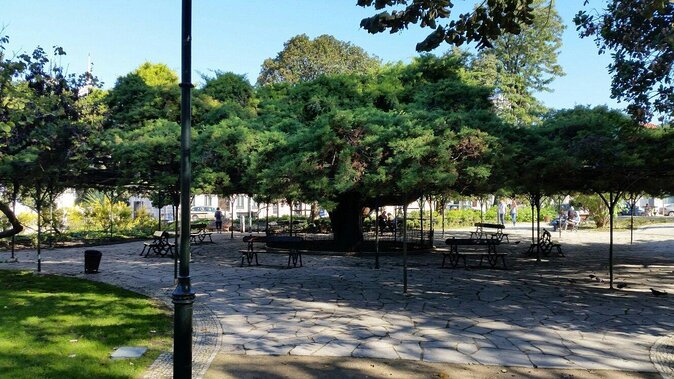
Meet Alex at the Príncipe Real playground at 10 a.m. The opening in Jardim do Príncipe Real is a sensible choice. This leafy square gives the group room to introduce themselves before the stories begin, and it places you in one of Lisbon’s best-known queer areas.
The first few stops set the tone. At the monument to victims of homophobia, the mood turns sober. This is not a tour that skips the painful parts, but Alex uses the stop to show both the damage caused by prejudice and the progress that has helped shape Lisbon’s current LGBTQ scene.
Nearby, Príncipe Real square provides the setting for a look at Lisbon Pride. You learn why the city’s Pride celebration has its own character and how the square connects with EuroPride 2025. This early section helps you understand that the tour is not just about past personalities and scandals. It also asks how public space, protest, memory, and celebration work together.
You spend about six minutes at most of the listed stops. That means the guide needs to make each story clear and focused. It also means you will not enter most places. The value comes from the explanation of what happened there, what the site represents, and how it fits into Lisbon’s wider story.
More Historical Tours in Lisbon
- Lisbon: History, Stories and Lifestyle Walking Tour
★ 4.8 · 10,902 reviews - Lisbon: Live Fado Show with Port Wine in Historic Center
★ 4.7 · 4,166 reviews - Lisbon: Fado Show with Wine in a Historic Venue
★ 4.8 · 1,294 reviews
From HIV services to the clubs that shaped nightlife
The route then moves into modern community life. At GAT Checkpoint LX, Alex discusses Portugal’s response to HIV and AIDS and points out useful health-service information for queer men and women. This stop gives the tour practical weight. You are not only hearing about nightlife and famous characters, but also about the institutions that help people live safely today.
Construction Lisbon Club brings the focus back to nightlife. This long-running queer venue, along with nearby lesbian spaces, helps explain how people found community after dark. You hear about changing nightlife patterns and the role that particular clubs can play in a city’s social life.
The Botanical Garden of Lisbon adds one of the more unexpected historical turns. Alex tells stories about cruising in parks during the 1950s, police attempts to enforce public morality, and the ways men tried to avoid arrest. The stop at Trumps then shifts to one of Lisbon’s largest queer nightclubs, open since 1980 and known for two floors with different moods.
These stops are useful if you plan to go out during your visit. Alex points out places you may want to return to later, rather than leaving you with history that has no connection to your evening plans. Still, nightlife venues change. Treat the tour as a starting point for deciding where to go, not as a guarantee that every place will feel exactly the same on the night you visit.
Lesbian bars, drag, bears, and the many faces of nightlife
At Rua de Gustavo de Matos Sequeira, you hear about O Gato Verde, Lisbon’s first lesbian bar. The story gives needed balance to a route that could otherwise lean too heavily toward gay male nightlife.
The next stops cover drag and queer performance. Praça das Flores marks the location of Lisbon’s first drag bar, with a story shaped by the optimism that followed the 1974 revolution and the later limits placed on that freedom. Alex also explains the rise and fall of Lisbon’s first drag queen.
Bar 106 is a short stop with a social touch: you can leave a message for friends. Shelter Bar and Bar TR3S then look at bear culture from two angles. You hear about where the bears gather, Bear Pride, beach clubs, parties, a sauna, and sports sponsorship.
Finally Club is included for its long-running drag shows. Alex explains that different shows take place at different times, which is a useful detail if you plan to return. This part of the route works best for people curious about how a city’s queer scene splits into distinct communities and styles. You see that Lisbon is not one single nightlife group, but a collection of scenes with overlapping histories.
Dictatorship, law, and Portugal’s long road to protection
The tour becomes more political at the Constitutional Court. Here Alex explains the legal challenges that helped move Portugal away from values shaped by dictatorship and toward constitutional protection for LGBTQ rights.
At Rua Luz Soriano, the subject is the first homosexual manifesto and the early attempts to organize and speak publicly. The story includes suppression, persistence, and eventual success. This stop may be less immediately colorful than the nightclub stories, but it gives the whole morning its political backbone.
The route shows why legal change matters to daily life. A bar, a drag show, or a Pride parade can signal social freedom, but laws determine who receives protection and how a society responds to discrimination. You get both parts of the story here: the people who pushed for change and the institutions that resisted or eventually recognized it.
If you are new to Portuguese history, this section is especially helpful. You do not need to arrive with a detailed understanding of the dictatorship or constitutional law. Alex explains the context as you walk, and the group format leaves room for questions.
More history-led days around Lisbon:
- Explore Lisbon by Tuk Tuk: History and Viewpoints
★ 5.0 · 840 reviews - Lisbon: Daytime or Sunset Boat Cruise with History and Wine
★ 4.9 · 819 reviews - Private Tuk Tuk Tour Through Lisbon’s Historical Streets
★ 5.0 · 734 reviews - Lisbon Sunset Sailing with Portuguese Wine and History
★ 5.0 · 668 reviews
Scandal, literature, and the queer lives hidden in old Lisbon

The stretch around Rua do Trombeta turns to older scandals and private spaces. Alex tells the story of the Two Fernandes, linking 19th-century love nests, public scandal, later luxury apartments, and modern saunas. It is a good example of the tour’s style: one address becomes a doorway into changing ideas about privacy, sex, class, and respectability.
Purex adds a different tone. This is a dance floor for everyone run by women, with a memorable aside about vagina jewelry. The stop at Maria Caxuxa introduces a woman who challenged convention in the 1940s and brushed off intrusive journalists. These stories keep the tour from presenting queer history only through famous male figures.
At Travessa da Espera, the story centers on the Marquis of Valada, who was reportedly found naked in the arms of a common soldier. The tale also involves disgraced politicians, political blackmail, and survival. It is dramatic, but Alex uses it to show how class and power affected the consequences of same-sex relationships.
Teatro da Trindade brings in Josephine Baker, the bisexual jazz star who performed in Lisbon while avoiding secret police and spying during wartime. This was one of the most memorable stops for a number of reasons: Baker is a well-known international figure, yet the Lisbon setting reveals a less familiar part of her life.
At Rua da Misericórdia, you hear about women in love with women, queer fiction, censorship, and the compromises made by censors. This is a valuable reminder that written work can preserve lives and relationships that official records tried to erase.
Inside São Roque: four centuries of difficult stories
The longest stop is at Igreja de São Roque, where you spend about 15 minutes considering queer stories linked to the Portuguese Inquisition. The subjects include sex in church, lesbian nuns, a supposed demonic penis, and a trans love story from the 16th, 17th, and 18th centuries.
This is the point where the tour’s title, a treasure hunt in LGBT history, makes the most sense. The stories are not all easy to sort into modern labels, and Alex does not need to force them into neat categories. Instead, the church provides a window into how desire, gender, sin, punishment, and personal determination appeared in older records.
You should expect a mix of humor, shock, and sadness here. The stories are memorable because they survived attempts to control or silence them. They also require some care. People looking only for light entertainment may find this section more serious than expected, while anyone interested in how historians recover queer lives will find it rewarding.
The church stop also breaks up the walk. Since it is longer than most other stops, you get time to absorb the material rather than racing through another address.
Fernando Pessoa and a finish at Late Birds Hotel
Near Hospital St. Louis, Alex turns to Fernando Pessoa and the line I love you because I love you. Pessoa is one of Portugal’s great writers, and the tour looks at how his writing is now being read through a gay lens and reclaimed as part of queer literary history.
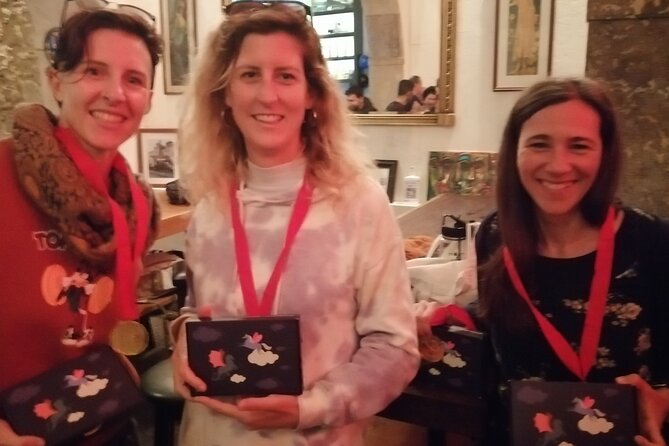
The final stop is Late Birds Hotel on Travessa André Valente. The tour ends in the lounge, bar, garden, or pool area of Lisbon’s largest gay hotel. If the weather is good, bring a swimming costume, since the pool area is part of the setting.
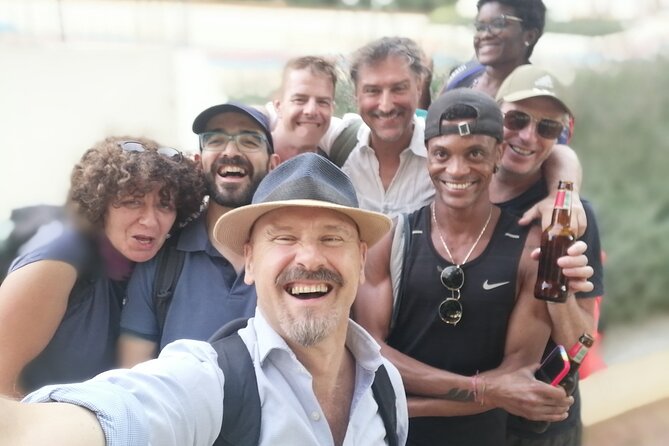
A pub quiz and prizes give the ending a light, social feel. This is more than a convenient place to stop. It gives you time to talk with people from the group, ask Alex follow-up questions, and decide which bars, clubs, or cultural sites you want to visit later.
You also receive Alex’s long guide to LGBTQ Lisbon as a PDF. It is normally priced at €15, so it adds meaningful value to a €60.34 tour. The guide includes insider recommendations, lesser-known places, and free activities. I would save it on your phone before setting out for the rest of your Lisbon stay.
What the walking pace feels like
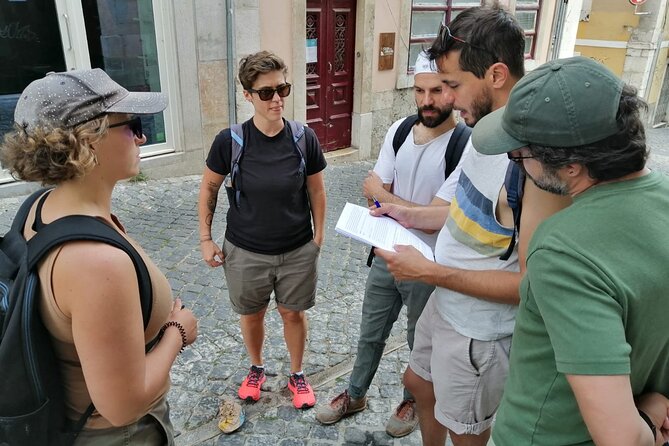
The route takes about three and a half hours, though one account of the experience describes it lasting closer to four hours. That difference is not surprising. Questions, rests, photos, and the final quiz can extend the morning.
The tour covers many addresses, and you should expect regular walking through central Lisbon. Lisbon is hilly, so moderate physical fitness is required. The guide does make space for rests, and the stops are short, but this is not a hop-on, hop-off experience.
A small group of up to 15 people is a good fit for the subject. You can hear the stories, ask about the points that interest you, and meet people who may also want to explore the city’s LGBTQ scene. Service animals are allowed, and the meeting point is near public transportation.
The tour is offered in English and is open to people aged 16 and older. The legal drinking age is 18, so younger participants can join the historical walk but cannot take part in alcohol-related activities.
Weather deserves some thought. The walk goes ahead in poor weather if the group chooses to continue, and Alex has provided umbrellas in wet conditions. Still, comfortable shoes and a weatherproof layer will make the morning much better.
Is $60.34 a fair price?
At $60.34 per person, this is not the cheapest way to see Lisbon. It is also not a standard city walk. You are paying for a tightly focused subject, Alex’s research and storytelling, a small group, the final hotel gathering, and a guide PDF normally valued at €15.
The value is strongest if you would otherwise spend time trying to find queer sites and stories yourself. The route connects places that may look unrelated on a normal sightseeing walk: a church, a court, a nightclub, a former bar, a hospital, and a hotel. Alex supplies the links between them.
The price is less convincing if you want entrance tickets, private transport, or a conventional tour of famous monuments. There is no private transportation, and admission is free at the listed stops. You are mainly buying interpretation, access to a local LGBTQ map of Lisbon, and a social experience.
I see it as a good first or second day activity for someone who wants to understand the city beyond its postcard views. After the tour, you will have a better sense of where to return at night and which historical subjects deserve more reading.
Who should book this Lisbon walk?
I would choose it if you are queer, traveling with queer friends, part of an LGBTQ couple, or an ally who wants to understand Lisbon through the lives of people often left out of standard city tours.
It also suits anyone interested in Portugal’s political and cultural history. The route covers dictatorship, constitutional law, the Inquisition, censorship, literature, nightlife, public health, and Pride. The queer focus gives those subjects a clear human center.
This is especially useful for visitors who want a social start to their stay. Alex is welcoming and encourages questions, while the final stop makes it easy to continue chatting instead of scattering as soon as the walk ends.
I would skip it if you dislike walking, want a quiet private tour, or prefer grand architecture over personal stories. You also need to be comfortable with frank discussions of sex, policing, HIV, gender, and discrimination.
Cancellation is free up to 24 hours before the 10 a.m. start time. If the minimum group size is not met and the experience is canceled, you are offered another date or experience, or a full refund.
Should you book Queer Lisbon?
Yes, if you want a focused, human account of Lisbon that links old scandals to modern rights and nightlife. The strongest reason to book is Alex himself: he brings together serious research, humor, personal warmth, and a clear interest in your questions.
The best practical choice is to schedule it early in your visit. Use the PDF and Alex’s bar and club suggestions to plan later evenings, and keep the afternoon open in case the walking and final quiz run long.
Book it for the stories, not for monument entry or transport. If that sounds like your kind of Lisbon, the price is fair, the format is friendly, and the experience gives you a side of the city that a general sightseeing tour is unlikely to show.
FAQ
Where does the Queer Lisbon tour start?
The tour starts at the Príncipe Real Playground, Praça do Príncipe Real, 1250-184 Lisboa, Portugal.
What time does the tour begin?
The start time is 10 a.m.
Where does the tour finish?
It finishes at Late Birds Hotel, at Tv. André Valente 25, 1200-236 Lisboa, Portugal.
How long does the experience last?
The stated duration is approximately three hours and 30 minutes. Questions, rests, and the final pub quiz may make the experience closer to four hours.
What language is the tour offered in?
The tour is offered in English.
How many people can join the group?
The maximum group size is 15 people.
Is transportation included?
No. Private transportation is not included. You walk between the stops.
What ages can book the experience?
People aged 16 and older can book. The legal drinking age is 18.
Can I cancel for a full refund?
Yes. You can cancel at least 24 hours before the experience start time for a full refund. Changes or cancellations made less than 24 hours before the start are not accepted for a refund.
Recently reviewed around Lisbon
- Lisbon: Catamaran Luxury Sunset and Wine Tour★ 5.0 · 119 reviews
- Lisbon’s authentic Food and Wine tour with a Winemaker★ 5.0 · 67 reviews
- Morning Sailing Tour in Tagus River from Lisbon★ 5.0 · 68 reviews
- PRIVATE Unforgettable Full Day Tour to Sintra from Lisbon★ 5.0 · 236 reviews
- Lisbon: Belem Walking Tour with Jeronimos Monastery Tks Included★ 5.0 · 115 reviews
- Discover Lisbon’s Alfama: Secrets of the Old Town★ 5.0 · 104 reviews
- Sesimbra Wild Beach Tour from Lisbon★ 5.0 · 57 reviews
- Private Jeep Tour from Lisbon – Arrábida, Sesimbra & Beach Picnic★ 5.0 · 48 reviews
Historical Tours, compared.

Historical Sites, Wine Experience, Lunch & Cruise
Read our review →
Live Fado Show with Port Wine in Historic Center
Read our review →

Browse the lists this tour appears in