

Reviewed · WALKING TOURS
Private Tour: Best of Lisbon Walking Tour
Lisbon’s story unfolds best on foot, and this private tour links the city’s grand squares with its steep lanes, old churches, tiled streets, and lookout points. You move from Rossio to Alfama, with a guide explaining the earthquake, royal power, World War II, and the Carnation Revolution along the way. It is an orientation tour with real historical weight, not just a quick parade of photo stops.
I like the small private format, which lets your guide adjust the pace, answer questions, and offer easier routes when hills or stairs become tiring. I also like the food stops: a pastel de nata, tapas, and a glass of wine give the walk a pleasant local flavor without turning it into a full food tour.
The main consideration is physical effort. Lisbon is hilly, and the route covers a lot in roughly three hours. One party found the hills challenging, and the Santa Justa Elevator is viewed from the historic center rather than presented as a guaranteed ride. Ask about route options at the start.
In This Review
- Key points to know
- Why this private walk works so well on a first day
- Rossio reveals Lisbon’s public heart
- Independence and wartime stories around Restauradores
- Carmo, the elevator, and the city’s artistic side
- Baixa explains how Lisbon was rebuilt
- A panoramic pause at Chão do Loureiro
- Alfama brings the oldest streets into focus
- Royal power and the river at Praça do Comércio
- What the $96.79 price buys you
- Who will get the most from this walk
- FAQ
- How long is the Best of Lisbon Walking Tour?
- Where does the tour start?
- Where does the tour end?
- Is hotel pickup included?
- What food and drink are included?
- Is this a private tour?
- Is the tour suitable for people with limited fitness?
- Should you book it?
Key points to know
- A strong first-day introduction: The route connects Rossio, Chiado, Baixa, Alfama, and Praça do Comércio in one clear sweep.
- Private means flexible: Guides such as Natalia, João, Ricardo, and Inês have adjusted pacing, route choices, and stops to suit individual groups.
- Three local tastes included: You receive a pastel de nata, tapas, and one glass of wine.
- Big events shape the walk: Expect stories about the 1755 earthquake, the 1974 Carnation Revolution, the Jewish massacre, royalty, and World War II.
- Views come with hills: Miradouro Chão do Loureiro and Santa Justa offer fine city outlooks, but comfortable shoes matter.
- Best used early in your stay: The route helps you decide where to spend more time during the rest of your Lisbon visit.
Why this private walk works so well on a first day
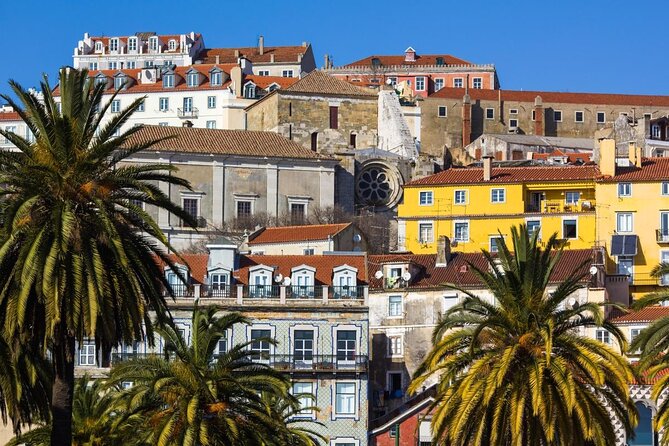
I would place this tour near the beginning of a Lisbon visit. It gives you a mental map of the central city before you tackle museums, trams, viewpoints, or day trips. In three hours, you pass through the main historic districts rather than spending the whole morning inside one monument.
The route begins at Praça Dom Pedro IV, usually called Rossio, and ends at Praça do Comércio. That direction makes sense: you start in the city’s central meeting place, move through older and more artistic quarters, then finish beside the Tagus River.
A private guide changes the feel of the outing. You are not waiting for a large group to gather or listening only to a fixed script. Guides have made practical adjustments for people who needed to sit, avoid harder stairs, or move at a gentler pace. Ricardo, José, André, Catarina, Miguel, Margarita, and others have been praised for clear explanations, friendly conversation, and useful advice for the rest of a short Lisbon stay.
You should still think of this as an active walk. Lisbon’s hills are part of the experience, not a small footnote. The route can be adapted in places, but it cannot turn the city flat.
More Walking Tours in Lisbon
- Lisbon: History, Stories and Lifestyle Walking Tour
★ 4.8 · 10,902 reviews - Best of Lisbon Small-Group Guided Walking Tour
★ 5.0 · 4,869 reviews - Lisbon: Food and Wine Small Group Walking Tour
★ 4.9 · 4,082 reviews
Rossio reveals Lisbon’s public heart
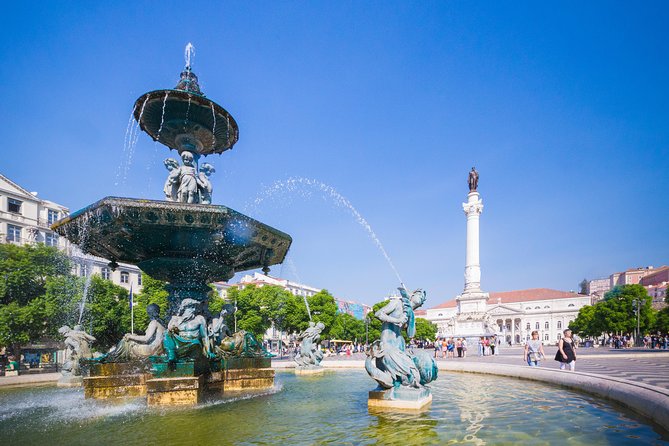
The first stop, Praça Dom Pedro IV, puts you in the middle of central Lisbon. The square is better known as Rossio, and its formal name honors King Pedro IV. With about 15 minutes here, your guide can explain why this has long been an important civic space and point out the setting that ties together the surrounding streets.
This is a useful opening because Lisbon can feel confusing at ground level. Rossio gives you a fixed reference point. From here, you can better understand the relationship between the old center, the train station, Baixa, and the route toward the river.
Nearby Largo de São Domingos brings a darker chapter. The church here has suffered repeated damage over the centuries, and the guide explains Lisbon’s massacre. The stop is short, but it adds a necessary note of honesty to the tour. Lisbon is not only tiled façades and sunny viewpoints. Its past includes religious conflict and violence.
You will not enter each stop as a museum visit. Most admission fees are not required because the experience is built around public squares, streets, façades, views, and outdoor explanation. That keeps the walk moving, though visitors who want extended time inside monuments will need separate plans.
Independence and wartime stories around Restauradores
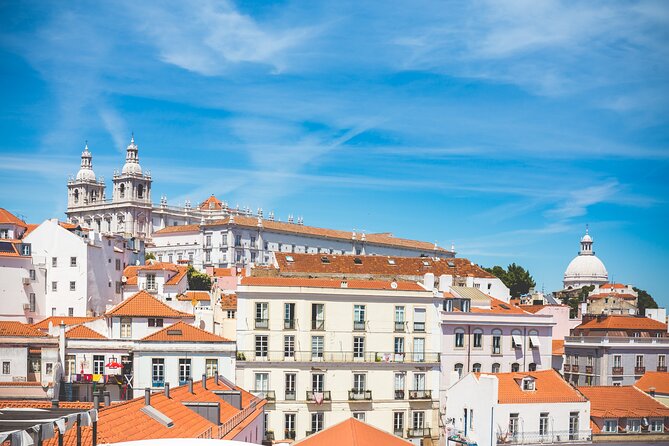
Praça dos Restauradores is marked by an obelisk that celebrates Portugal’s independence. Your guide explains the meaning of the monument and the event it recalls, giving you a little political context while you stand in a busy central square.
This is one of the tour’s strengths: the monuments are not treated as isolated decorations. The guide connects a column, a church, a station, or a statue to the larger story of Portugal. If you are new to the country, those links help make the city easier to read.
The nearby Rossio Railway Station receives about 10 minutes. Its ornate façade is one of central Lisbon’s familiar sights, but the stop also carries a World War II connection. The guide explains why the station became a mark for Lisbon during the war.
That kind of detail is easy to miss if you are walking alone. You may photograph the architecture, then move on without knowing why the building matters. A private guide gives you the short historical key before the route continues.
Carmo, the elevator, and the city’s artistic side
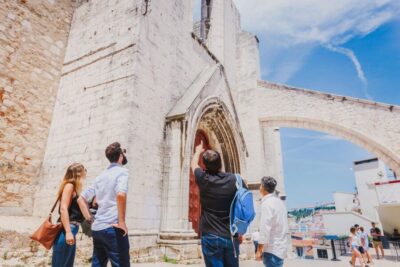
Largo do Carmo is one of the most meaningful stops on the walk. Its story reaches back to the 14th-century Carmo Convent and forward to the Carnation Revolution of 1974. Your guide explains how this place became linked to important moments in Lisbon’s past.
The square also gives the tour a change of mood. After the central avenues and formal monuments, you reach a more intimate historic setting. The open convent ruins and surrounding space make it easier to picture how a single place can carry several layers of memory.
The route then brings you to the Elevador de Santa Justa, one of the best-known structures in the historic center. You have around 10 minutes to hear about the elevator and admire the view. The experience does not promise a ride, and that matters. Queues can be long, so your guide may focus on the structure and nearby outlook instead.
I would not book this tour mainly for an elevator ride. Book it for the view, the history, and the explanation of how Lisbon’s vertical streets fit together. João has been singled out for his command of the city’s elevators, which can be helpful in planning how to get around later.
Chiado follows as the bohemian and artistic neighborhood. The route gives you a feel for a part of Lisbon associated with cafés, culture, and creative life. The stop is brief, so you should not expect an exhaustive neighborhood tour. You will get an introduction and a clearer sense of where Chiado sits in relation to Baixa and Rossio.
More Lisbon walks with a guide:
- Best of Lisbon Walking Tour: Rossio, Chiado & Alfama
★ 4.9 · 2,700 reviews - Age of Discoveries Walking Tour in Belém
★ 5.0 · 1,513 reviews - Sintra & Cascais Day Tour with Pena Palace Entry and Gardens Walk
★ 5.0 · 962 reviews - Lisbon Roots – Small group Food & Culture Walking Tour w/tastings
★ 5.0 · 910 reviews
Baixa explains how Lisbon was rebuilt
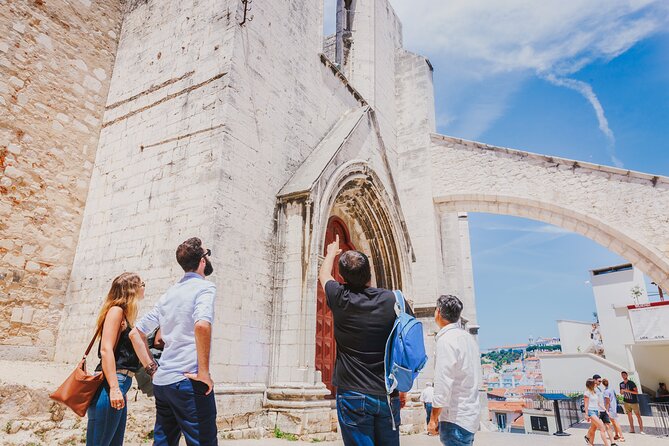
Baixa is the city center rebuilt after the great earthquake of the 18th century. The district follows new urban rules, with an orderly street plan and construction methods designed to reduce damage from future disasters.
I find this section especially useful because it turns Lisbon’s layout into a story rather than a maze. The broad streets and regular blocks make more sense once you understand that Baixa was planned as a response to catastrophe. Your guide can point out how different this area feels from Alfama, where narrow lanes follow the older hillside.
The stop itself is listed as only five minutes, but the subject reaches through much of the walk. The earthquake helps explain the city’s architecture, the royal statue later in the route, and the shape of Praça do Comércio.
You also receive a food break during the walk. The included pastel de nata is a welcome pause, especially if you have been climbing. Tapas and a glass of wine add a little more time to sit, taste, and ask questions. One review specifically praised the custard tarts, while another noted the quality of the pastry, tapas, and green wine.
This is not a meal replacement. The included portions are best treated as a snack and cultural pause, not lunch. Since other food and drinks are not included, plan another meal if you are booking the tour around midday.
A panoramic pause at Chão do Loureiro
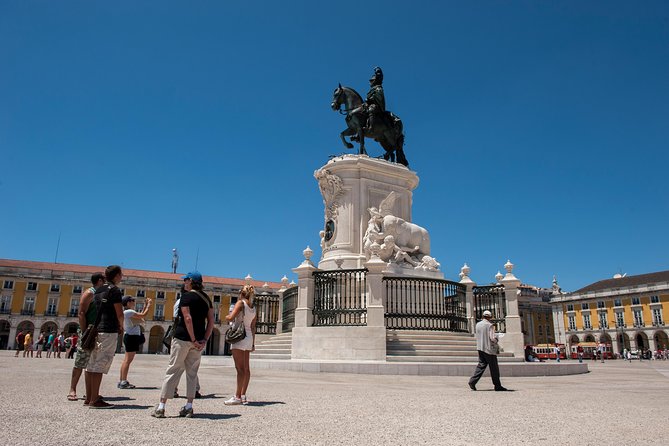
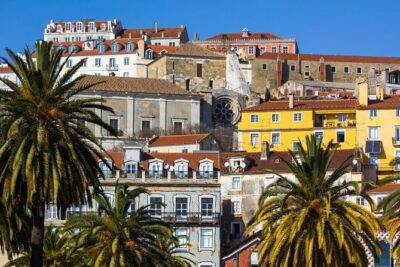
Miradouro Chão do Loureiro provides a panoramic view and a chance to see Lisbon from above. You have about 10 minutes here, enough for photographs and a short explanation of the city’s hills, rooftops, and river-facing layout.
A viewpoint is more valuable after you have walked through several districts. You can begin to pick out where you have been and where you are heading. If this is your first time in Lisbon, that visual overview can save time later when you are trying to work out which neighborhoods connect on foot.
Do not underestimate the practical value of asking your guide about shortcuts. Several guides have used less demanding routes or quieter ways through the city. Those alternatives do not remove every climb, but they can help you avoid needless stairs and crowded stretches.
Alfama brings the oldest streets into focus

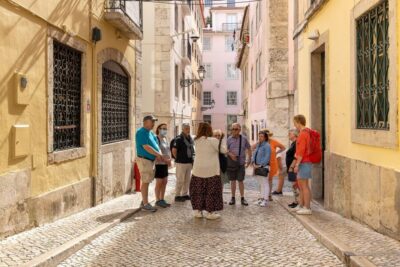
The 30-minute Alfama section is the longest stop, and it should be. This is where Lisbon’s character changes most sharply. Narrow streets and alleys wind through the oldest neighborhood, creating the feeling of moving through several centuries at once.
Alfama is not best understood from a coach window. Walking lets you notice the tight lanes, sudden turns, small openings, and changes in elevation. Your guide can explain how the neighborhood fits into the wider history of Lisbon while helping you navigate streets that are not always obvious on a map.
This portion can also be the most physically demanding. The route may involve hills, uneven pavement, and stairs. If anyone in your group has trouble standing or walking for long periods, say so early. Anna was praised for finding places for a tired participant to sit while still keeping him close enough to hear. That is the sort of practical care worth expecting from a private experience, but it is still wise to be clear about your needs before starting.
The tour does not promise secret local corners far from the center. One participant wanted more places known only to locals, while the route stayed focused on the main central districts. If your main goal is everyday neighborhood life outside the historic core, you may need a separate Alfama or residential-district walk.
Royal power and the river at Praça do Comércio

The statue of King José I is the final historical bridge before the riverfront. José I ruled during the earthquake, and the guide explains his place in the city’s recovery and rebuilding.
This stop prepares you for Praça do Comércio, also known as Terreiro do Paço. The square was connected to the residence of José I and now forms one of Lisbon’s grandest open spaces. Its position by the Tagus helps explain why it became a point linking Lisbon with the wider world.
Ending here gives the walk a satisfying shape. You begin among central streets and finish beside the river, with the city’s royal, commercial, architectural, and political stories gathered into one place. From here, you can continue exploring on your own or use your guide’s suggestions to plan the next part of your visit.
Several guides have offered practical ideas for a 48-hour stay, shortcuts through the city, and places to visit beyond the main route. That advice can be worth as much as the formal sightseeing, especially if Lisbon is only one stop on a short Portugal trip.
What the $96.79 price buys you
At $96.79 per person, this is not the cheapest way to walk around Lisbon. The value depends heavily on your group size. Since the experience is private, a couple or family may find the cost reasonable when compared with booking separate private advice, tastings, and orientation.
You are paying for a private English-speaking guide, about three hours of their time, a tailored pace, a pastel de nata, tapas, and one glass of wine. You are also paying for the ability to ask questions that a large group might not have time to address.
The price makes less sense if you mainly want transportation, monument admission, or a full meal. This is an outdoor city introduction, not a ticketed attraction tour. The biggest return comes from learning how Lisbon fits together and using that information for the rest of your stay.
Hotel pickup is offered only when your hotel is a short walk from the original meeting point. If it is outside that area, you meet at Praça Dom Pedro IV, 41, in Rossio. The tour ends at Praça do Comércio, 574, so you finish in a different part of the center.
Who will get the most from this walk
I would recommend it most strongly to first-time visitors, families, couples, and small groups who want a clear introduction without joining a large party. It is also useful if you have only 48 hours and need help deciding where to focus.
The tour suits people who enjoy history explained in plain language, short food stops, and a flexible conversation with a guide. Guides such as José, Inês, Ricardo, André, Catarina, and Margarita have been praised for mixing history with current city advice, humor, architecture, politics, and geography.
You should think twice if steep streets are a serious concern, if you want long indoor visits, or if your priority is a highly local neighborhood experience away from the main center. The guide can often adjust the route, but the tour still covers a lot of ground.
Confirmation arrives within 48 hours of booking, subject to availability. The activity is offered in English, is near public transportation, and calls for moderate physical fitness. Free cancellation is available up to 24 hours before the start time. Changes or cancellations inside that window are not accepted for a refund.
FAQ
How long is the Best of Lisbon Walking Tour?
The tour lasts approximately three hours. One reported experience ran closer to four hours, but the stated duration is about three hours.
Where does the tour start?
The regular meeting point is Praça Dom Pedro IV 41 in Rossio, Lisbon.
Where does the tour end?
The walk ends at Praça do Comércio 574, also called Terreiro do Paço.
Is hotel pickup included?
Hotel pickup is included only for hotels within a short walk of the original meeting point. If your hotel is outside that limit, you must meet at Praça Dom Pedro IV.
What food and drink are included?
The experience includes one pastel de nata pastry, tapas, and one glass of wine. Other food and drinks are not included unless specifically stated.
Is this a private tour?
Yes. Only your group participates, with a private guide.
Is the tour suitable for people with limited fitness?
A moderate level of physical fitness is recommended because Lisbon has hills and stairs. The route can sometimes be adjusted, and guides have helped participants find easier paths or places to sit, but the walk remains active.
Should you book it?
Book this tour if you want to understand Lisbon quickly and prefer a private guide who can shape the pace around your group. Its best qualities are the broad route, the strong historical thread, the included snacks, and the practical advice you can use for the rest of your stay.
I would book it for the first or second day, wear comfortable shoes, and tell the guide about any mobility concerns before setting out. If you want a relaxed introduction to Rossio, Baixa, Chiado, Alfama, and the riverfront in one half-day, the $96.79 price can be fair value. If you want a deep food tour, a full monument tour, or a ride on the Santa Justa Elevator, choose a different experience or add those plans separately.
Recently reviewed around Lisbon
- Lisbon: Catamaran Luxury Sunset and Wine Tour★ 5.0 · 119 reviews
- Lisbon’s authentic Food and Wine tour with a Winemaker★ 5.0 · 67 reviews
- Morning Sailing Tour in Tagus River from Lisbon★ 5.0 · 68 reviews
- Lisbon: Belem Walking Tour with Jeronimos Monastery Tks Included★ 5.0 · 115 reviews
- PRIVATE Unforgettable Full Day Tour to Sintra from Lisbon★ 5.0 · 236 reviews
- Discover Lisbon’s Alfama: Secrets of the Old Town★ 5.0 · 104 reviews
- Sesimbra Wild Beach Tour from Lisbon★ 5.0 · 57 reviews
- Private Jeep Tour from Lisbon – Arrábida, Sesimbra & Beach Picnic★ 5.0 · 48 reviews
Walking Tours, compared.
Best of Lisbon Small-Group Guided Walking Tour
Read our review →

Porto Walking Tour, Lello Bookshop, River Cruise and Cable Car
Read our review →
Best of Lisbon Walking Tour: Rossio, Chiado & Alfama
Read our review →
Experience Porto’s Charm: 3-Hour Guided Walking Tour
Read our review →
Enjoy a Guided Levada Walk in the Rabaçal Valley
Read our review →Browse the lists this tour appears in