
Reviewed · CRUISES & BOAT TOURS
Portinho da Arrábida: Coasteering Boat Tour
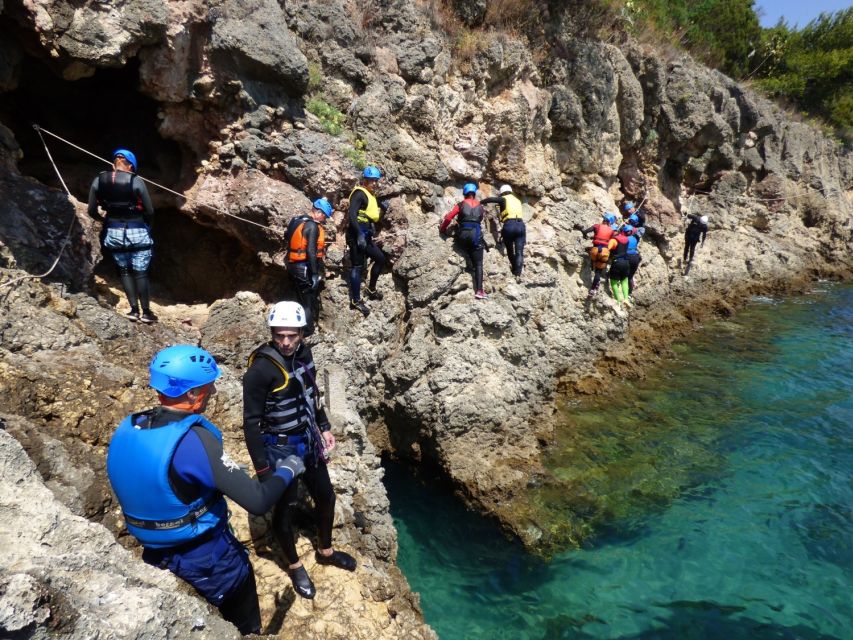
At Portinho da Arrábida, coasteering means working your way along a rugged 800-meter stretch of coast by climbing, swimming, rappelling, and jumping from cliffs. The route passes sea caves and the unusual Gruta de Sta. Margarida, where a 17th-century sanctuary sits inside the rock. I like the mix of activities, and I like that every obstacle has an alternative. The one catch is simple: this is a real physical adventure, not a gentle boat ride.
I also like the careful coaching from guides such as Rui, Marco, Cam, David, and Anibal, depending on the day. Past outings have included patient instruction, strong safety briefings, and helpful encouragement during the jumps. Bring shoes you can wear in the water, plus a towel and spare sneakers. The meeting point is at the beach in a forested part of the park, so it may feel informal at first.
In This Review
- Key points
- What the Arrábida coasteering route is really like
- Starting at Portinho da Arrábida Beach
- Learning the ropes before the harder sections
- Climbing the cliffs and crossing the 50-meter handrail
- Rappelling down the rock face
- Entering Gruta de Sta. Margarida
- Swimming through Arrábida’s clear water
- Cliff jumps from 1 to 10 meters
- Why the boat support matters
- Is $82 a fair price?
- Who should book this Arrábida adventure?
- Booking details and practical preparation
- Should you book the Portinho da Arrábida coasteering tour?
- FAQ
- Where does the coasteering tour meet?
- How long does the activity last?
- How long is the coasteering route?
- What languages are available?
- What equipment is included?
- Are meals included?
- Do I have to do the cliff jumps?
- How high are the cliff jumps?
- What should I bring?
Key points
- 800-meter coastal route: Move through cliffs, coves, caves, and water sections rather than staying in one activity area.
- Optional cliff jumps: Choose from jumps ranging from 1 to 10 meters, or use another route if you prefer.
- Gruta de Sta. Margarida: Enter a sea cave with a 17th-century sanctuary inside.
- Full safety kit included: You receive a 5.5 mm wetsuit, life jacket, gloves, helmet, harness, and activity insurance.
- Boat support: A support boat stays part of the operation while you work along the coast.
- Four hours of active fun: The price is $82 per person, with Spanish, English, and Portuguese instruction.
What the Arrábida coasteering route is really like
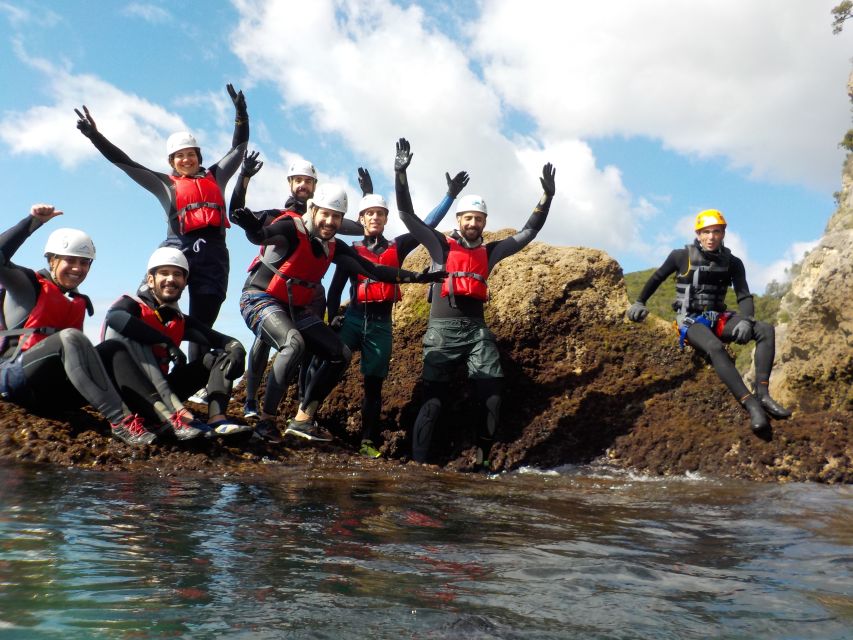
Coasteering is less about sightseeing from a boat and more about solving a series of small coastal challenges. You follow the shoreline on foot, in the water, and along the rock, using ropes and fixed lines where needed.
The Portinho da Arrábida section is especially suited to this format. Cliffs rise above small coves, and the rock has been shaped into narrow passages and sea caves. You are not simply looking at the coast. You are moving through it.
The route covers about 800 meters and takes roughly four hours. That distance sounds short, but it is packed with stops, safety instructions, climbing, swimming, and waiting for each person to complete an obstacle. The time is not spent racing from one point to another.
You should expect a steady physical effort rather than a long hike. Swimming ability matters because some connections take place in the sea, but you are supplied with a life jacket and a wetsuit. The guide team controls the pace and explains each section before you begin.
More Boat Tours in Lisbon
- Lisbon: Sunset Boat Party Cruise with DJ and Open Bar
★ 4.5 · 10,378 reviews - Lisbon: Daytime/Sunset/Night City Sailboat Tour with Drink
★ 4.9 · 3,114 reviews - Lisbon: Sunset Cruise with Welcome Drink and Snacks
★ 4.4 · 3,021 reviews
Starting at Portinho da Arrábida Beach
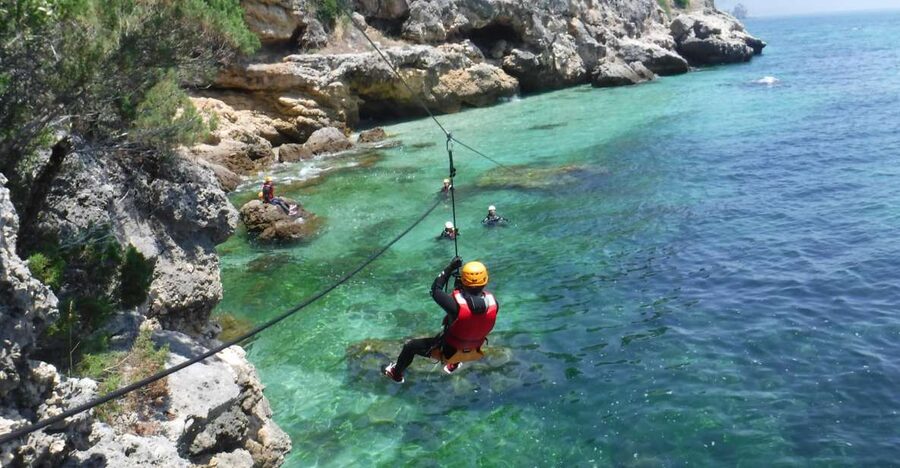
The meeting point is Portinho Arrábida Beach in Arrábida Natural Park. The setting is part of the appeal, but do not expect a polished city-tour meeting area. One participant described the forest meeting point as a little sketchy at first, while also calling it authentic.
That is useful advice. Arrive prepared, with your water shoes, towel, and spare footwear already easy to reach. You are heading into a natural coastal setting, not a changing room designed for convenience.
The activity team provides the main safety equipment:
- 5.5 mm wetsuit
- Life jacket
- Gloves
- Helmet
- Climbing harness
- Activity insurance
- Professional instruction
- Boat support
The wetsuit is more than a comfort item. Even when the air feels warm, four hours around the Atlantic water can become tiring. The thicker suit helps keep the experience manageable during swims and water landings.
Tie back long hair before the briefing. It can get in the way of helmets, harnesses, ropes, and swimming. Carry a spare hair elastic if you need one.
Learning the ropes before the harder sections
The guides begin by showing you how to use the equipment and approach the obstacles. That instruction matters because the route combines several skills rather than repeating one simple activity.
A guide may explain how to move along a fixed handrail, how to lower yourself on a rope, or how to enter the water safely from a rock ledge. The strongest part of this format is the close coaching. Rui is often praised for making the group feel secure, while Marco has been noted for patience and encouragement.
You do not need to arrive as an expert climber. The equipment and supervision are there to help you handle the route. Still, you should be comfortable with physical activity, wet rocks, confined spaces, and the idea of being above the water.
The guides also make it clear that the obstacles are optional. If a jump feels wrong, you can take an alternative. If a climbing section is not for you, the group can continue by another route when available. This is important because the tour can suit a mixed group, including people with different levels of nerve and experience.
That flexibility does not make the activity easy. It simply gives you control over how far you push yourself.
Climbing the cliffs and crossing the 50-meter handrail
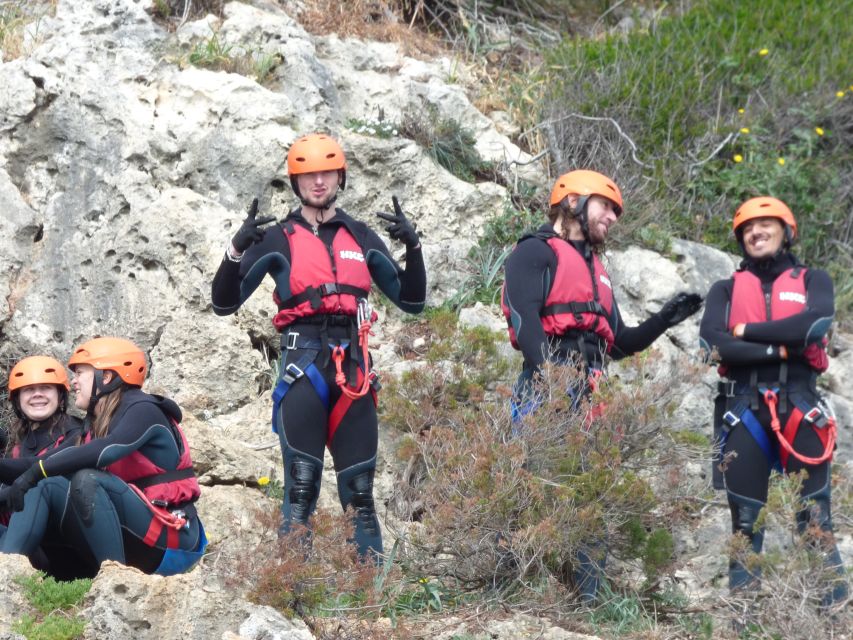
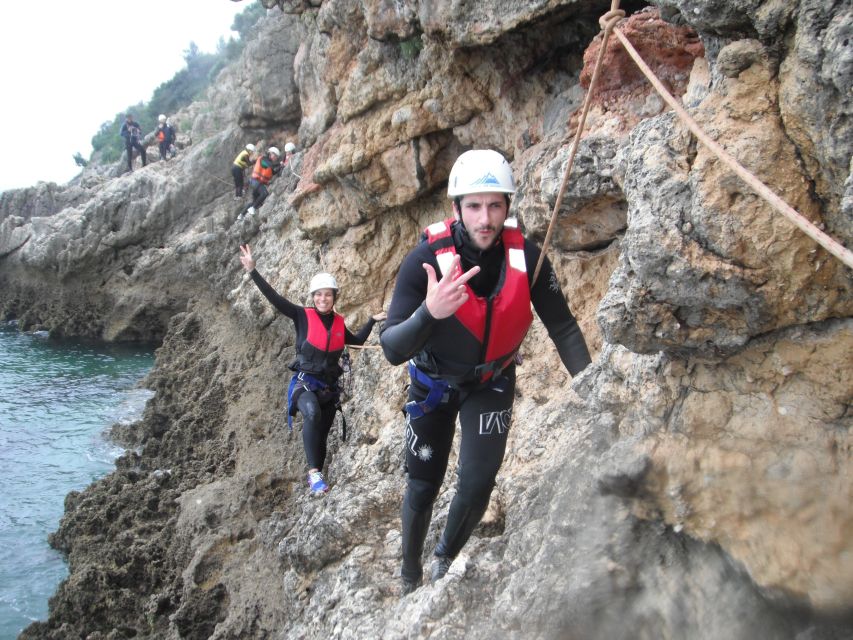
One of the more distinctive sections uses a handrail climbing technique along a route of about 50 meters. You move with the help of a fixed safety line, using your hands and feet to work across the rock.
This is different from climbing in a gym. The rock is irregular, the sea is beside you, and the route is part of the coast itself. You will need to listen closely to the guide and place your feet with care.
The handrail section adds a good sense of progress. You are not just being lowered from one platform to another. You are actively crossing the cliff, with the water and coves below you.
It can also be tiring. Gloves are included, which helps with the rope and rough surfaces. If your hands or legs tire quickly, tell the guide early. A good coasteering guide can adjust the pace and offer clear instructions before fatigue becomes a problem.
A different kind of day out, same corner of Portugal:
- Lisbon City Center Tour – The Unmissable Lisbon
★ 5.0 · 22,234 reviews - Lisbon: Sintra, Pena, Regaleira, Cabo da Roca & Cascais
★ 4.7 · 19,656 reviews - Sintra: Pena Palace and Park Entrance Ticket
★ 4.2 · 17,410 reviews - Lisbon: Jerónimos Monastery Entrance Ticket
★ 4.1 · 14,164 reviews
Rappelling down the rock face
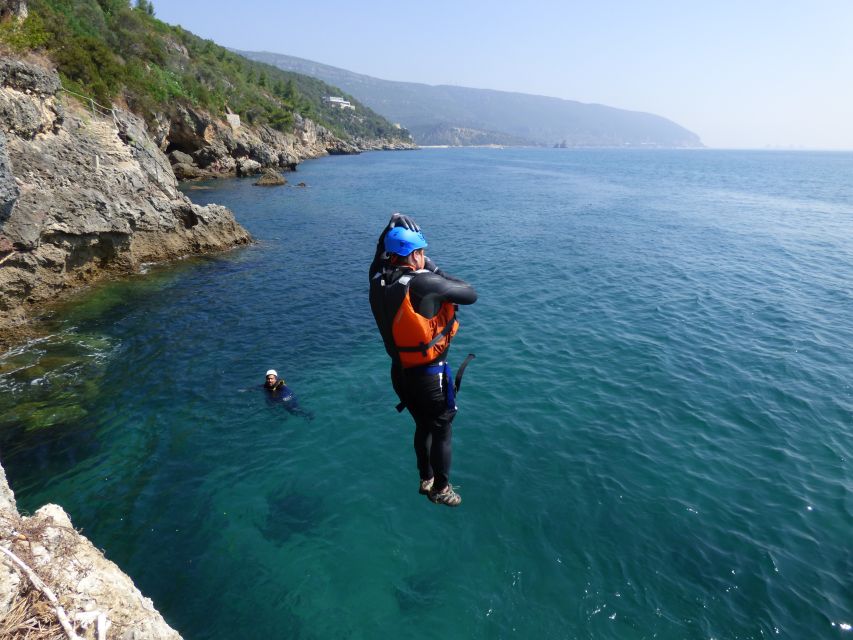
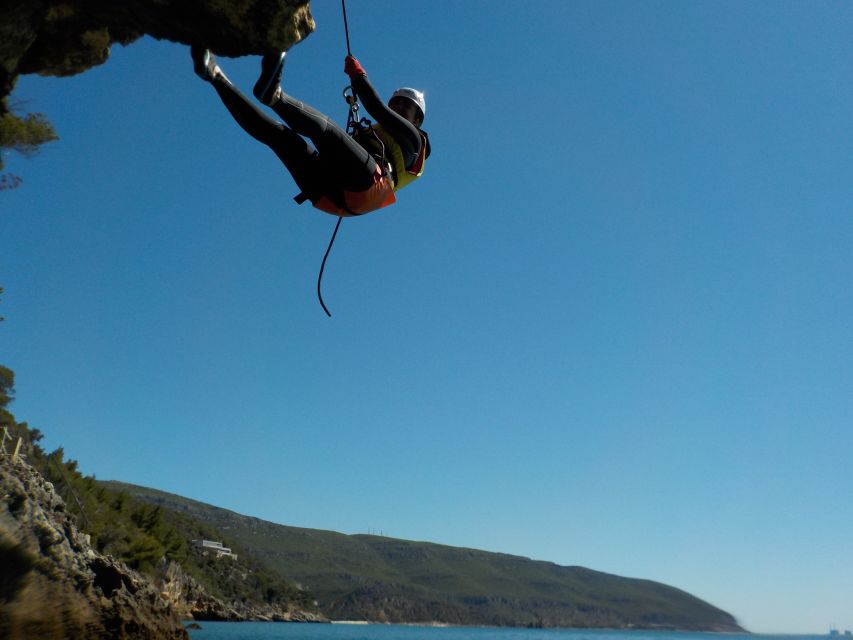
Rappelling brings a different kind of challenge. You lean back into the harness and lower yourself down a cliff under the guide’s direction.
For many people, the first few seconds are the hardest. Your instincts tell you to stay upright and close to the rock, while the technique requires you to trust the harness and rope. The guide controls the safety system and talks you through the movement.
This is one place where the quality of instruction matters more than raw fitness. You will want calm, direct coaching, especially if this is your first time using a climbing harness. Marco and Cam have been praised for combining safety with a sense of fun, which is the right balance for this sort of activity.
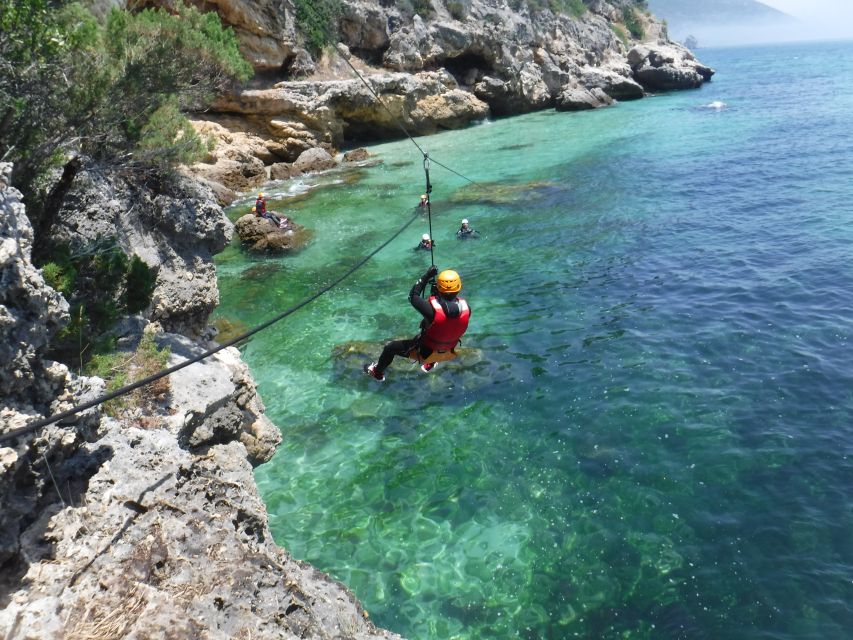
A zip line is also part of the planned route. You slide along a steel cable and finish in the water. Conditions can affect which obstacles are available. On one outing, the zip line was not set up, and the guides replaced it with a rappelling exercise. That is worth knowing before you book: the route is built around outdoor conditions, so one element may change.
Entering Gruta de Sta. Margarida
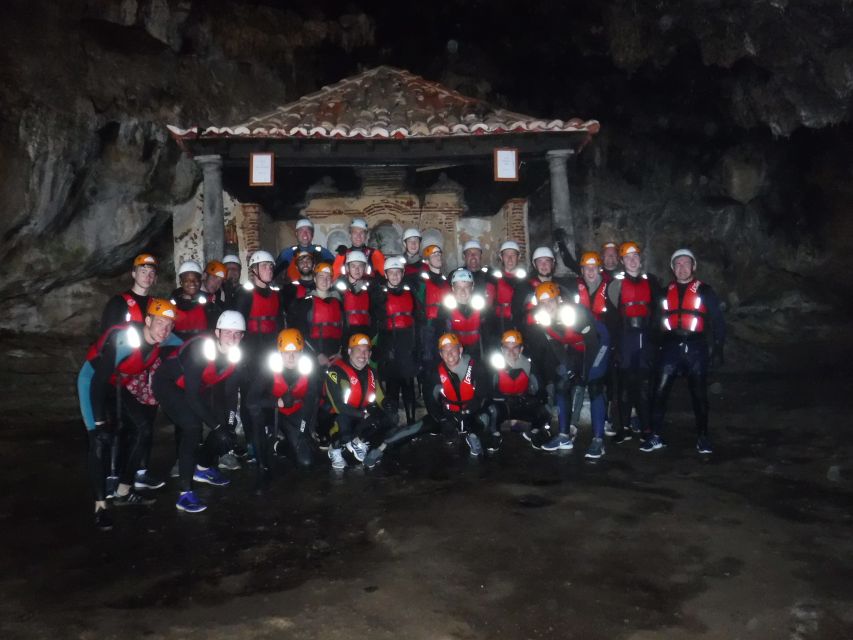
The cave section gives the tour more character than a standard ropes course. Gruta de Sta. Margarida is an emblematic sea cave with a 17th-century sanctuary inside.
You enter a confined natural space rather than walking through a large, illuminated attraction. The cave is part of the coast’s geology and local story, and seeing a sanctuary in that setting makes the stop memorable.
Confined spaces are not for everyone. If you dislike caves or tight passages, tell the guide before entering. The route includes alternatives, and no single obstacle is compulsory.
There is also a chance of seeing bats inside the caves, although wildlife sightings are not guaranteed. Bottlenose dolphins may appear in the wider coastal area as well. Treat those possibilities as lucky extras, not promises.
The cave is one reason I would choose this activity over a basic cliff-jumping session. You get adrenaline, but you also get a closer look at a place shaped by nature and used by people over many years.
Swimming through Arrábida’s clear water
Swimming connects several parts of the route. You may move through a short water section after a rock obstacle, leave the shore by boat-supported transfer, or land in the sea after a zip line.
Arrábida is known for clear water, and the setting gives these swims their appeal. You are surrounded by cliffs, coves, and rock formations rather than an ordinary swimming pool or beach lane.
The life jacket provides support, and the wetsuit helps with temperature. Even so, you should be honest about your swimming comfort before booking. The route includes aquatic sections, and you need to be willing to enter the sea.
The water can also make every movement slower. Wet rocks require care, and you should follow instructions instead of rushing to keep up with the group. This is an adventure where patience is part of safety.
Cliff jumps from 1 to 10 meters
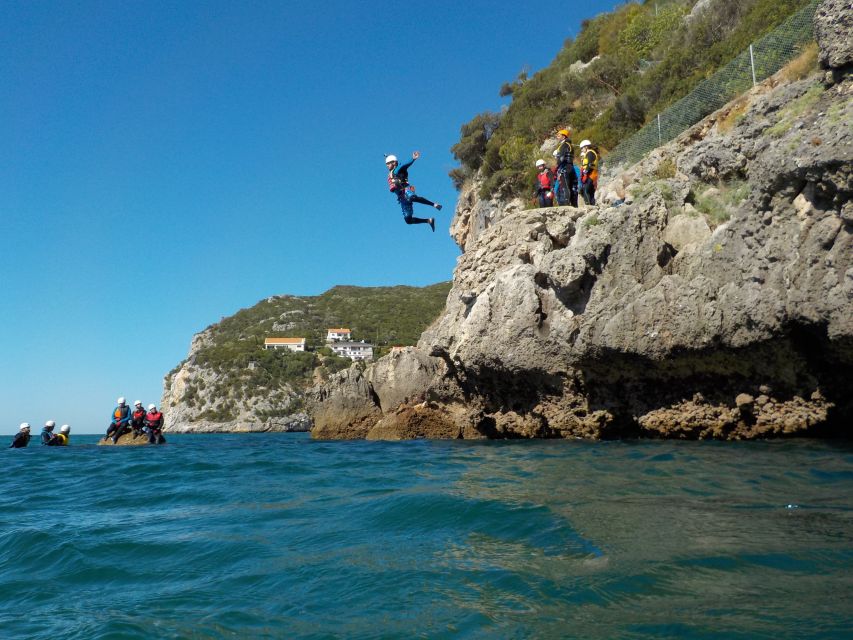
The jumps are the emotional high point for many people. Heights range from about 1 meter to 10 meters, giving you a choice between a small splash and a serious test of nerve.
The key word is choice. You are not required to take the highest jump, or any jump at all. A guide can coach you through the decision, and the group can use another option if you decide to skip it.
This is where Rui’s coaching has earned particular praise. Good instruction can turn fear into a controlled challenge, but it should never pressure you into doing something you do not want to do.
Before jumping, listen to the guide’s instructions about body position and landing. Do not copy another person’s jump without being briefed. The height range is wide, and the proper entry matters.
If you are seeking a strong adrenaline hit, the 10-meter option is the moment you will remember. If you prefer a lighter experience, the lower jumps still give you the thrill of leaving the rock and hitting the water.
Why the boat support matters
The boat is not simply a sightseeing extra. It supports the coastal operation and gives the team another way to manage the route.
A boat driver named Luig has been singled out for making the experience run well, while the guides handle the land and water obstacles. The boat support can help the group connect sections of coast and adds another viewpoint on the cliffs.
You should not book this expecting a full boat tour with a long narrated cruise. The main activity remains coasteering. The boat is there to support the route and the safety plan.
That mix gives the experience more variety than a fixed climbing site. You may walk, climb, rappel, swim, enter a cave, and use the boat during one four-hour session.
Is $82 a fair price?
At $82 per person, this is not the cheapest way to spend a morning by the sea. The value comes from the amount of equipment, supervision, and activity packed into four hours.
You receive a wetsuit, life jacket, gloves, helmet, harness, insurance, professional instruction, and boat support. Paying separately for climbing gear, a guided cave route, water access, and boat logistics would quickly add up.
The route also gives you several different experiences instead of one main event. A standard cliff-jump outing might be cheaper, but it would not necessarily include rappelling, a handrail crossing, a cave with a sanctuary, a zip line, and guided swimming sections.
The price makes the most sense if you want an active half-day and plan to use the full range of activities. It is less suitable if you mainly want to admire Portinho da Arrábida from a boat or spend a quiet morning on the beach.
Meals are not included, so plan to eat before or after the four-hour session. Bring your own towel and spare shoes as well.
Who should book this Arrábida adventure?
I would point this tour toward active visitors who want a challenge and do not mind getting wet. It suits people curious about several adventure skills, including first-timers who value patient instruction.
It is also a good choice for groups with mixed confidence levels because the obstacles are not compulsory. One person can take a higher jump while another chooses an easier route, as long as everyone follows the guide’s plan.
You should think twice if you dislike heights, caves, swimming, or rough outdoor conditions. You should also be ready for a physical four-hour session, not a short photo stop.
The tour is offered in English, Portuguese, and Spanish. That helps if you want safety instructions in a language you understand well. Ask questions before attempting any obstacle, especially if you are unsure about the rope system or a water entry.
The overall rating is 4.9 from 78 reviews, and the pattern of praise is clear: guides are repeatedly valued for safety, patience, humor, and encouragement. Those qualities matter here more than fancy equipment or a polished meeting area.
Booking details and practical preparation
The activity lasts about four hours, with starting times based on availability. It begins at Portinho Arrábida Beach in Arrábida Natural Park.
You can cancel up to 24 hours ahead for a full refund, and reserve now while paying later. That flexibility is useful when your Lisbon-area plans depend on weather or changing day trips.
Wear shoes designed to be used in the water. Do not arrive in footwear you want to keep dry or pristine. Bring a beach towel, an extra pair of sneakers, and a spare hair elastic if you have long hair.
The activity does not include meals. Make your own food arrangements around the start time, but keep the practical focus on being ready to move, swim, and climb.
Should you book the Portinho da Arrábida coasteering tour?
Book it if you want an active, varied coastal outing with real choices about how far you push yourself. The combination of cliff jumps, rappelling, climbing, sea caves, swimming, and boat support gives the four hours a strong sense of value.
The best reason to choose it is not one single obstacle. It is the sequence. You keep changing from rock to rope, from cave to water, and from a small challenge to a larger one.
Skip it if you want a relaxed beach day or a simple boat cruise. You will get wet, work hard, and face heights and confined spaces.
For the right person, this is one of the more memorable ways to experience Arrábida’s coast. Bring the right shoes, accept the outdoor setting, listen to the guides, and choose your own level of adventure.
FAQ
Where does the coasteering tour meet?
The meeting point is Portinho Arrábida Beach in Arrábida Natural Park, in Portugal’s Lisbon District.
How long does the activity last?
The experience lasts around four hours.
How long is the coasteering route?
The route covers about 800 meters along the coast.
What languages are available?
Live instruction is available in English, Portuguese, and Spanish.
What equipment is included?
The tour includes a 5.5 mm wetsuit, life jacket, gloves, helmet, climbing safety harness, activity insurance, and professional instruction. Boat support is also included.
Are meals included?
No. Meals are not included in the activity price.
Do I have to do the cliff jumps?
No. The jumps and other obstacles are optional. There is an alternative for each obstacle so you can continue along the route without taking part in a specific challenge.
How high are the cliff jumps?
The jumps range from about 1 meter to 10 meters.
What should I bring?
Wear shoes suitable for use in the water. Bring a beach towel, an extra pair of sneakers, and spare hair elastics if you have long hair.
Recently reviewed around Lisbon
- Setúbal: Dolphin-Watching Boat Tour★ 4.8 · 213 reviews
- From Lisbon: Private Óbidos and Nazaré Tour★ 5.0 · 152 reviews
- No Diet Club – Unique food tour in Lisbon with many Tastings★ 4.8 · 44 reviews
- Queluz National Palace & Gardens Ticket★ 4.6 · 447 reviews
- Melides: Horse Riding on the Beach with Wine Tasting★ 4.3 · 117 reviews
- Melides: Horseback Riding on Melides Beach★ 4.7 · 111 reviews
- Lisbon: Street Art Tuk Tuk Tour★ 4.9 · 372 reviews
- Mafra: National Palace of Mafra Entry Ticket★ 4.5 · 190 reviews
Cruises & Boat Tours, compared.

Douro Valley w/ Boat Tour, Wine Tasting & Lunch
Read our review →
Complete Douro Valley Wine Tour with Lunch, Wine Tastings and River Cruise
Read our review →

Sunset Boat Party Cruise with DJ and Open Bar
Read our review →
Benagil Caves Speed Boat Tour with Sunset Option
Read our review →
Benagil Caves & Dolphin Watching Speed Boat Tour
Read our review →
Wine Tour with Lunch, Tastings & River Cruise
Read our review →Browse the lists this tour appears in