
Reviewed · EVORA & ALENTEJO TOURS
Marble Tour in Vila Viçosa
Vila Viçosa’s marble is not just a polished souvenir in a shop window. This tour follows it from the ground to the finished object, showing quarrying, handwork, and industrial production in one compact visit. I like the clear three-part story, and I like that guides such as João and Juaquina explain the work with energy and practical detail. The main catch is that you must drive your own vehicle between stops.
This is a small-group outing, capped at 10 people, and it runs for about two to three hours. At $30.25 per person, I see good value if you want to understand the industry that gives this part of Alentejo its character, but less value if you only want a quick photo stop or a general sightseeing tour.
In This Review
- Key points at a glance
- Why Vila Viçosa marble makes a strong subject
- Starting at Avenida Duques de Bragança
- At the Nucleus of the Marble Quarries
- The Manual Workshop and the Human Skill Behind the Stone
- Industrial Processing at the Marble Mill
- What the $30.25 price gives you
- Who will enjoy this tour most
- Tips for getting more from the two to three hours
- Is the Marble Tour in Vila Viçosa worth booking?
- FAQ
- Where does the Marble Tour in Vila Viçosa begin?
- Where does the activity end?
- How long does the tour last?
- Is the tour offered in English?
- Do I need my own transportation?
- What should I wear?
- How many people can join the tour?
- Can I cancel for a full refund?
Key points at a glance
- Three stages of marble production: See quarry extraction, manual workshop work, and mechanized industrial processing.
- Local guides with personality: João and Juaquina are among the guides associated with the tour, and the experience is offered in English.
- A real quarry setting: Learn about cutting methods, machinery, hazards, and the economic and artistic uses of marble.
- Small group size: A maximum of 10 people allows for a more personal visit and easier questions.
- Bring your own transportation: You need your own vehicle to move from the meeting point to the quarry and workshops.
- Practical footwear matters: Closed shoes are mandatory, and a moderate level of physical fitness is recommended.
Why Vila Viçosa marble makes a strong subject
The appeal here is the material itself. Marble can look finished and quiet in a building or sculpture, but its journey begins with noisy machinery, careful cutting, heavy stone, and real workplace hazards. This tour gives you that full chain in a short period.
Vila Viçosa, in Portugal’s Évora District, is closely tied to marble production. The tour does not treat marble as a decorative detail only. It explains the geology, extraction methods, machinery, manual skills, and commercial uses that connect the quarry to the final product.
I like that balance. You are not simply shown a block of stone and told that marble is important. You are shown the stages that make it useful, attractive, and valuable. The guides also connect the subject to personal stories from the people who work with the material, which adds a human side to what could otherwise be a technical visit.
The tour is especially useful if you are already exploring Alentejo and want an activity that feels rooted in the area. It is not a standard city walking tour, and it does not try to compete with churches, castles, or wine tastings. Instead, it explains a working trade that many visitors would otherwise pass without understanding.
Other Portugal days travellers weigh against this one:
- The Unvanquished Tour in Porto City Center
★ 5.0 · 26,497 reviews - Lisbon City Center Tour – The Unmissable Lisbon
★ 5.0 · 22,234 reviews - Lisbon: Sintra, Pena, Regaleira, Cabo da Roca & Cascais
★ 4.7 · 19,656 reviews
Starting at Avenida Duques de Bragança
You meet at Rota do Mármore AE, at Avenida Duques de Bragança 4, 7160-209 Vila Viçosa. The activity ends back at this meeting point, but the route between locations requires your own vehicle.
That transportation detail is important. This is not a tour with hotel pickup, hotel drop-off, or private transport included. You should arrive ready to follow the guide in your own car. If you are building a day around the visit, allow enough time to get to the meeting point and move between the sites without rushing.
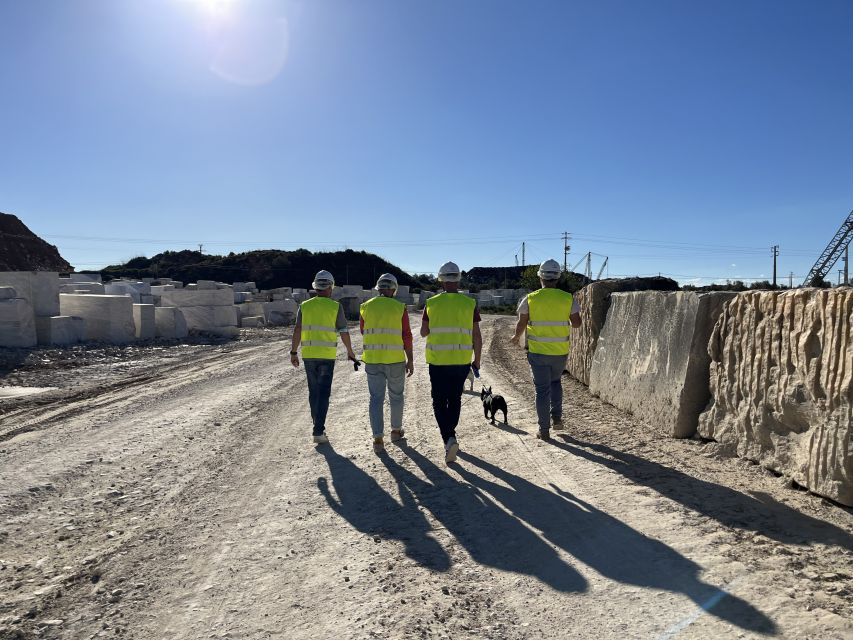
The small maximum group of 10 is a practical advantage. A marble quarry and working workshop are easier to understand when you can hear the guide and ask questions without competing with a large crowd. A small group also suits the personal nature of the visit, especially when the guide discusses individual craft skills and workplace risks.
The tour is offered in English. Previous English-language visits have included clear explanations of the whole process, from underground extraction to the finished piece. João and Juaquina are names associated with the guiding team, and the strongest praise has focused on guides who combine technical information with warmth and enthusiasm.
At the Nucleus of the Marble Quarries
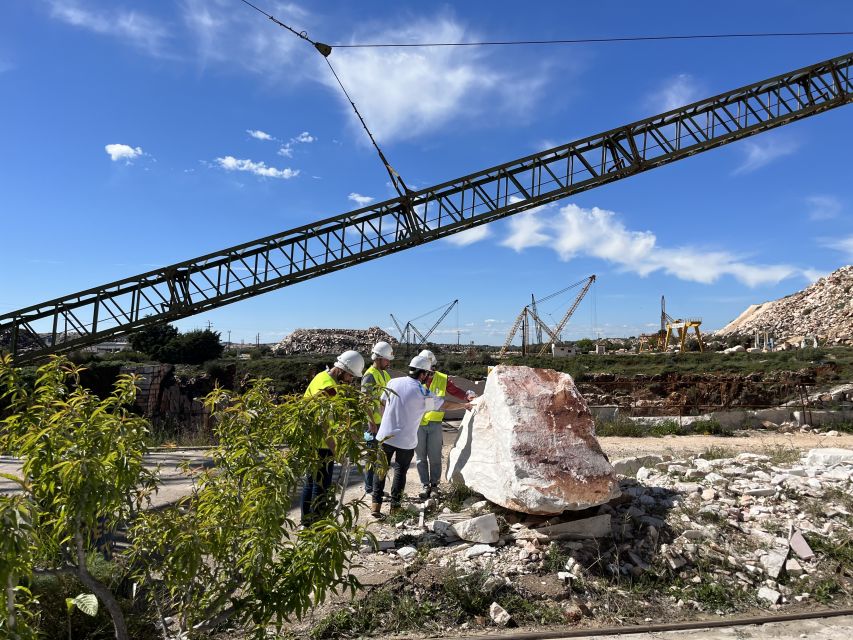
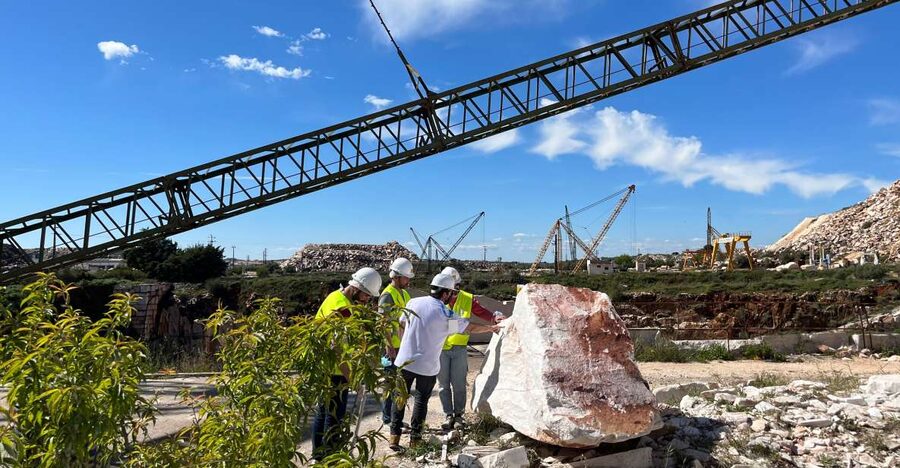
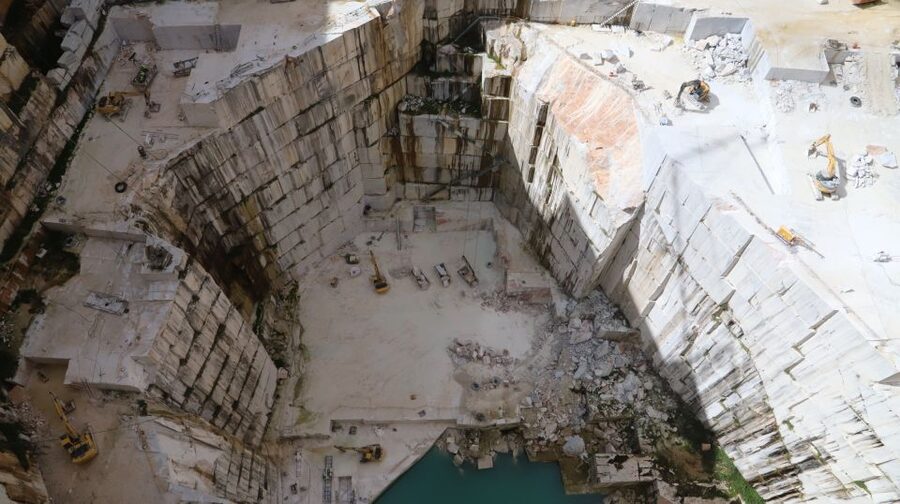
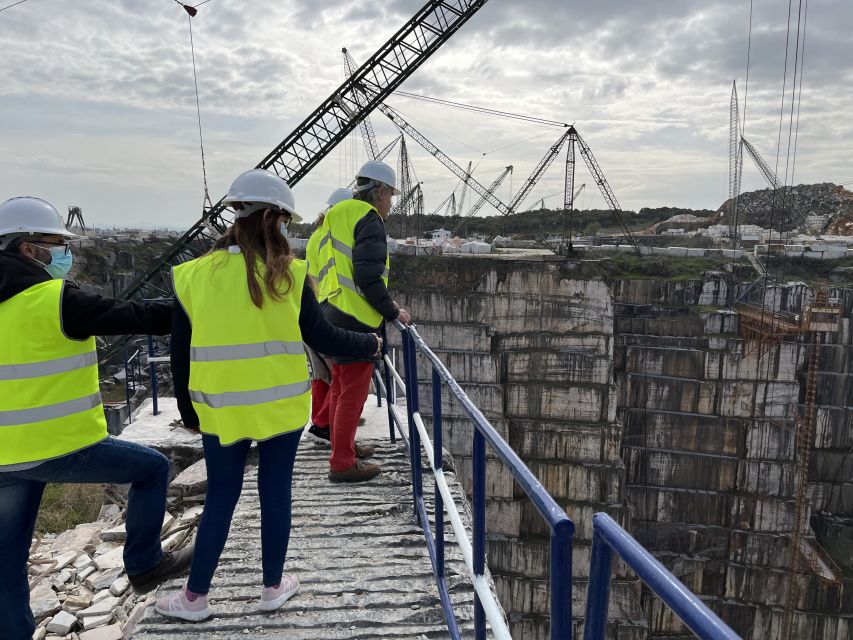
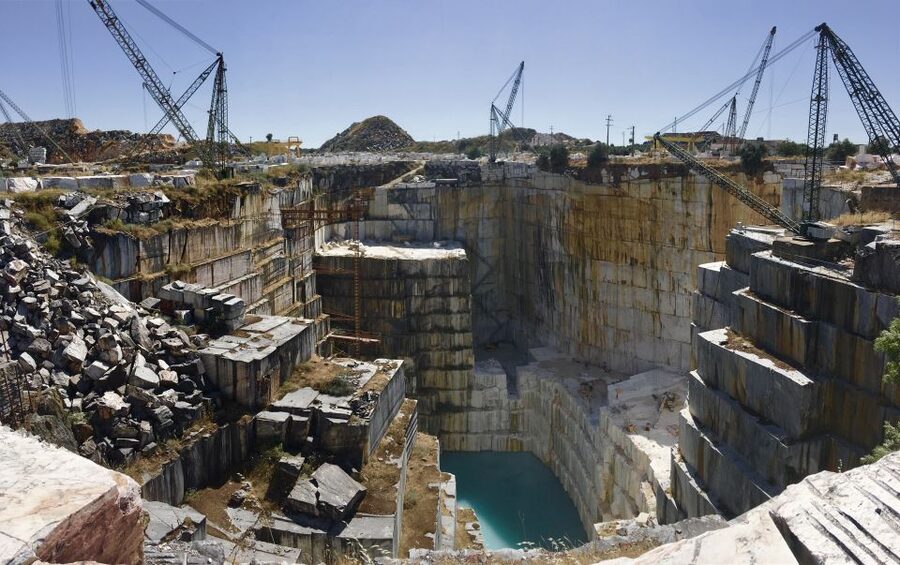
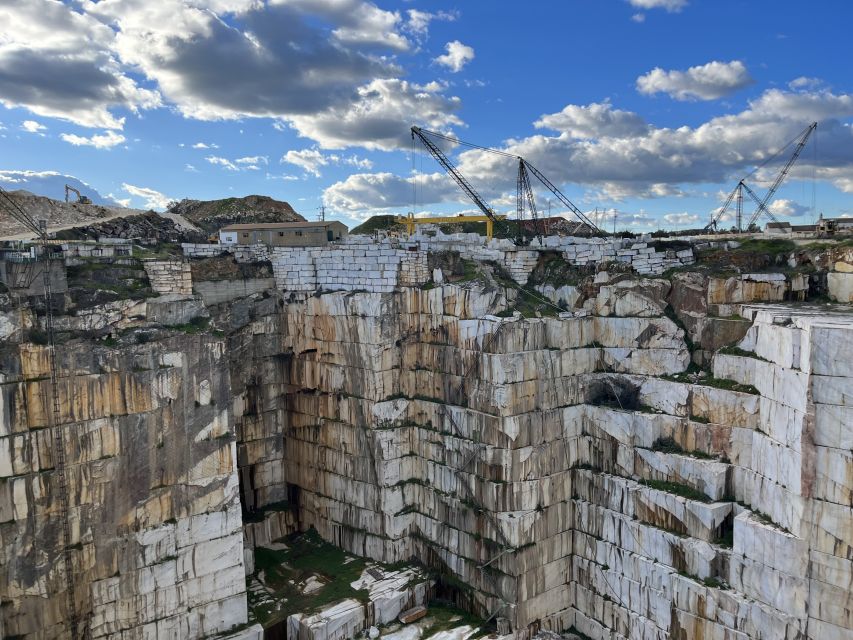
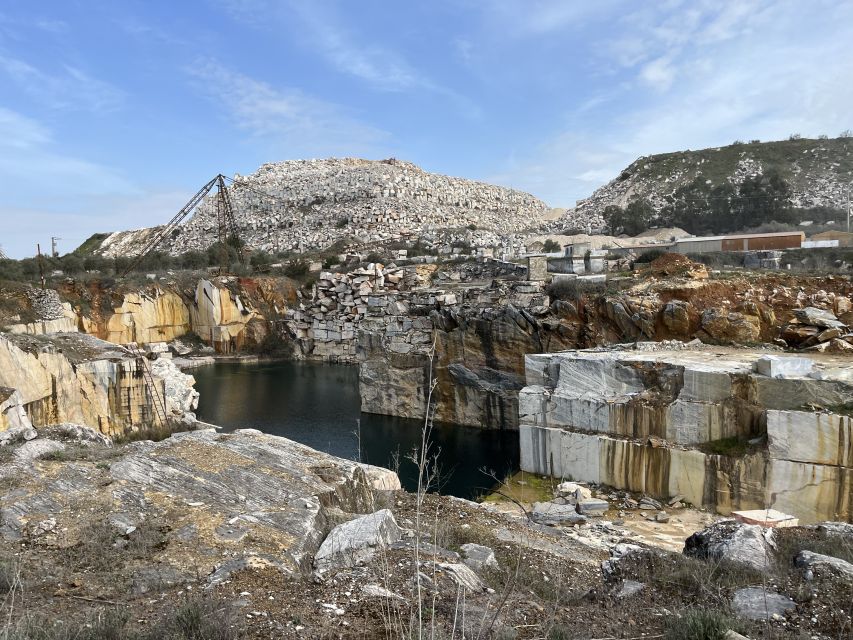
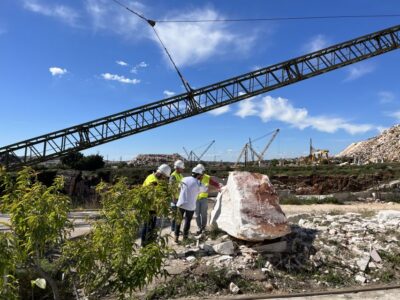
The first major part of the visit takes you to the Nucleus of the Marble Quarries of the region. This is where the subject becomes physical. You see the stone in its original setting and learn how it is removed, cut, and prepared for transport.
The guide explains the different stones found in the area, the processes used to extract marble, and the machinery involved. You also hear about the hazards. That last point matters because quarry work is not a simple matter of splitting stone from the earth. It involves heavy equipment, controlled cutting, and careful procedures.
You may find this part more technical than a typical sightseeing stop, but that is also its strength. The details help you understand why marble costs what it does and why extraction requires both machinery and trained workers. The quarry is not presented as a scenic backdrop alone. It is a place of production, with safety concerns and economic importance.
The tour also covers the artistic side of marble. The same stone that begins as a rough block can become a building element, decorative object, sculpture, or other finished product. Seeing the material at the quarry makes the final pieces in later stops easier to appreciate.
Because you need to drive between sites, the quarry visit is not arranged as one continuous walk from the meeting point. Bring comfortable clothing and closed shoes. A moderate level of physical fitness is advised, so this may not suit anyone who needs a fully accessible, low-effort activity.
The Manual Workshop and the Human Skill Behind the Stone
The second stop is a workshop where marble is transformed by hand. Here the focus shifts from extraction to craft. The guide explains manual techniques, the machinery used, the dangers involved, and the stages that lead to the final work.
This is the part I find most likely to surprise you. A polished marble object can look simple, but its finish depends on decisions made by a skilled craftsperson. The workshop helps you see the difference between a raw block and a piece that has been shaped, smoothed, and prepared for its purpose.
The personal stories of the master craftspeople receive special attention. That detail gives the visit more depth without turning it into a formal museum presentation. You get a sense of the people behind the work, the experience required, and the risks that come with handling stone and equipment.
Guides such as Juaquina have been praised for explaining the geology and the craft with clear enthusiasm. That combination is useful. Geology tells you why the stone looks and behaves as it does, while the workshop shows how human hands and tools turn those qualities into something finished.
You should expect an active working environment rather than a polished showroom. The emphasis is on process, machinery, and the people who know how to use them. If you enjoy seeing how objects are made, this stop may be the most rewarding part of the tour. If you prefer quiet galleries and finished art, the industrial setting may feel less familiar.
A different kind of day out, same corner of Portugal:
- From Porto: Douro Valley w/ Boat Tour, Wine Tasting & Lunch
★ 4.7 · 19,061 reviews - Sintra: Pena Palace and Park Entrance Ticket
★ 4.2 · 17,410 reviews - Lisbon: Jerónimos Monastery Entrance Ticket
★ 4.1 · 14,164 reviews - Complete Douro Valley Wine Tour with Lunch, Wine Tastings and River Cruise
★ 5.0 · 12,920 reviews
Industrial Processing at the Marble Mill
The final stop moves from manual work to mechanized industrial processing. At a marble milling or industrial workshop, you see the machines used to cut and process the stone on a larger scale.
The guide places the equipment in its operational context. You learn how the various machines fit into the production process, what hazards exist, and what kinds of final products can result. This gives you a useful comparison with the smaller workshop.
The contrast between handwork and industrial production is central to the tour. Manual techniques depend on individual control and craft experience. Industrial processing depends on machinery, sequence, scale, and careful operation. Seeing both helps you understand that marble production is not one single trade. It includes quarry workers, machine operators, finishers, designers, and craftspeople.
This stop also explains the commercial side of the stone. Marble has artistic uses, but it is also an industry. Its value comes from the material itself, the cost of extraction, the labor required to shape it, and the machinery needed to prepare it for sale or construction.
For some people, industrial equipment will be the highlight. For others, it may be the least personal section. I would treat it as an essential part of the story because it shows how the raw material becomes a usable product at a larger scale. Without this stop, the tour would explain beauty and craft but miss the modern production side.
What the $30.25 price gives you
At $30.25 per person, the tour is priced as a focused guided experience rather than a full-day excursion. The visit lasts about two to three hours and includes a professional local guide. Food, drinks, hotel transfers, and private transportation are not included.
The value depends on your interests. If you are curious about geology, craft, manufacturing, or regional industry, the price is reasonable for a small-group explanation across three settings. You are paying for access to a subject that is difficult to understand from a casual visit and for the guide’s ability to connect the stages.
The maximum group size of 10 also helps justify the cost. You are not joining a large coach group with a scripted talk. The format allows questions and makes it easier to follow explanations about machinery and technique.
Still, you should count the cost of your own transportation. Since you must drive from the meeting point to the quarry and workshops, the advertised price is not the total cost of your outing. The tour also does not include a meal or drinks, though the duration is short enough that this is not a major concern.
Group discounts are available, which may improve the value for families or friends booking together. Confirmation is received at booking, and free cancellation is available up to 24 hours before the start time for a full refund.
Who will enjoy this tour most
I would recommend this experience to anyone who likes practical, place-specific activities. It suits you if you want to see how a local industry works rather than spend another few hours moving between monuments.
It is also a good fit for people interested in:
- Geology and natural stone
- Traditional craft and manual skills
- Industrial machinery
- Sculpture, decoration, and design
- Alentejo’s working economy
- Small-group guided visits
Families with older children may find the machinery and quarry process engaging, though the moderate fitness requirement and mandatory closed footwear should be taken seriously. The experience may also suit photographers interested in stone, equipment, and textures, but photography rules are not specified, so ask the guide before taking pictures.
You should think twice if you do not have a car or do not want to drive between locations. The activity does not provide private transportation, and that is the clearest practical limitation. You should also avoid treating this as a relaxed indoor museum visit. It involves quarry and workshop environments, and the tour places attention on hazards and working conditions.
Tips for getting more from the two to three hours
Wear closed shoes from the start. This is mandatory, not just a suggestion, and it is sensible for quarry and workshop settings.
Arrive at the stated meeting point in Vila Viçosa with your vehicle ready. The guide will explain the sequence, but you should not assume that all parts of the visit are within easy walking distance.
Keep your questions focused on the stone and the work. Ask how the extraction process differs from manual shaping, how the machines affect the final product, or which uses are most common. The tour covers both economic and artistic aspects, so you have room to approach it from either direction.
Allow for the possibility that the exact flow can depend on operating conditions and weather. The experience requires good weather and may be canceled if conditions are poor. In that case, you are offered another date or a full refund. If the minimum number of participants is not reached, the provider offers another date or experience, or a full refund.
The tour is normally booked around 16 days in advance, so I would not leave it until the last minute if it is an important part of your Vila Viçosa plans.
Is the Marble Tour in Vila Viçosa worth booking?
Book it if you want a close look at the full marble process, from quarry extraction to hand finishing and industrial milling. The small group, English-language guiding, and mix of technical and personal detail make it more useful than a quick stop at a marble shop.
The strongest reasons to go are the complete production story and the guides’ enthusiasm. João and Juaquina are associated with the kind of friendly, clear presentation that makes a technical subject easy to follow. At $30.25, I consider it good value for anyone genuinely interested in how places work.
Skip it if you lack your own vehicle, need a fully low-effort activity, or want a conventional sightseeing tour. For the right visitor, though, this is a grounded and memorable way to see a less obvious side of Vila Viçosa and the Évora District.
FAQ
Where does the Marble Tour in Vila Viçosa begin?
The tour begins at Rota do Mármore AE, Avenida Duques de Bragança 4, 7160-209 Vila Viçosa, Portugal.
Where does the activity end?
The activity ends back at the meeting point in Vila Viçosa.
How long does the tour last?
The experience lasts approximately two to three hours. The listed itinerary specifies two hours for the main visit.
Is the tour offered in English?
Yes. The tour is offered in English.
Do I need my own transportation?
Yes. You need your own vehicle to travel between the meeting point and the quarry and workshop locations. Private transportation is not included.
What should I wear?
Closed footwear is mandatory. A moderate level of physical fitness is also recommended.
How many people can join the tour?
The activity has a maximum of 10 participants.
Can I cancel for a full refund?
Yes. You can cancel at least 24 hours before the local start time for a full refund. Cancellations or changes made less than 24 hours before the start time are not refunded or accepted.
Recently reviewed around Portugal
- Bridges Cruise with World of Discoveries or Sunset Option★ 4.0 · 219 reviews
- Porto Card Walker (1, 2, 3 or 4 Days)★ 3.4 · 135 reviews
- Porto: 6 Bridges Yacht Cruise with Local Wine & Snacks★ 5.0 · 399 reviews
- Porto: 5D Flight over de City for all family.★ 4.0 · 281 reviews
- Porto:Aveiro, Cruise, Costa Nova & Capelha da Pedra Full Day★ 4.5 · 434 reviews
- Porto Private E-Bike Tour: Douro River, Parks & Beaches★ 4.7 · 104 reviews
- Porto: 3-Hour Walking City Tour & Lello Bookstore Visit★ 4.7 · 99 reviews
- Porto: 2-Hour City Highlights Guided Segway Tour★ 4.8 · 181 reviews
Evora & Alentejo Tours, compared.

Private tour with entrance tickets to main monuments
Read our review →Browse the lists this tour appears in