
Reviewed · EVORA & ALENTEJO TOURS
Marble Tour in Vila Viçosa
Vila Viçosa is a town built around marble. You see it in the streets, buildings, workshops, and grand architectural details, but the real surprise comes outside town, where huge quarries cut into the earth. I like the close look at working quarries and the clear explanation of how raw stone becomes tiles, worktops, and art. The main catch is that you need your own private vehicle to move between stops.
I also like the local angle. Guides such as João explain both the geology and the human cost of the industry, including its risks and importance to village life. Wear closed shoes, bring water, and expect dust at the factory. At $29 for two hours, this is a strong-value stop for anyone curious about how a familiar material is made.
In This Review
- Key points to know before you go
- Why Vila Viçosa is Portugal’s marble capital
- Seeing marble taken from the ground
- Inside the factory, where rough blocks become useful
- Artisan workshops and marble made by hand
- What makes the guides important
- Price, timing, and the practical tradeoffs
- Who will enjoy this unusual Alentejo stop
- Is the Marble Tour in Vila Viçosa worth booking?
- FAQ
- Where does the Marble Tour in Vila Viçosa start?
- How long does the tour last?
- What languages are available?
- Do I need my own transportation?
- What should I wear and bring?
- Is the tour suitable for wheelchair users?
- What is included in the $29 price?
Key points to know before you go
- Three striking quarry visits: See enormous cuts in the ground, heavy machinery, and marble extraction at close range.
- From stone to finished product: Watch marble being cut, washed, polished, shaped, and prepared for sale.
- A local guide makes the difference: João is especially good at explaining geology, machinery, and the wider marble trade in clear English.
- Vila Viçosa’s identity is tied to marble: The industry matters here for jobs, family life, and the town’s social fabric, not only for income.
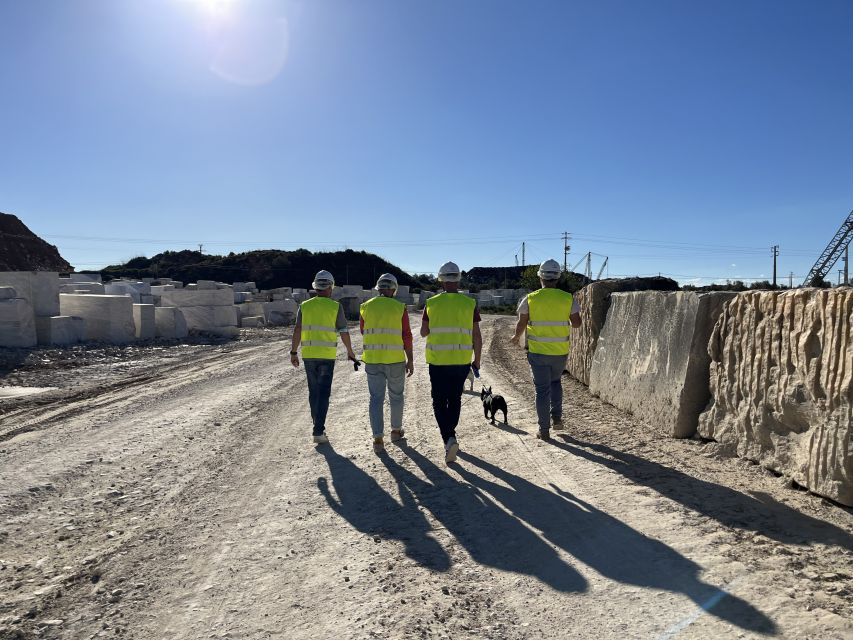
- Bring a car and closed shoes: Transportation between the center, quarries, factory, and workshops is not included.
- A little dust is part of the deal: A mask can be useful inside the workshop, especially if you are sensitive to dust.
Why Vila Viçosa is Portugal’s marble capital
Begin in central Vila Viçosa at the white building with three brick arches. Look for the Rota do Mármore AE and CECHAP logos. This is more than a meeting point. It is the starting place for understanding why this quiet Alentejo town has such an outsized role in the marble trade.
Marble has been valued in this part of Portugal since Roman times. The stone from the Alentejo has been used locally and shipped abroad, and Vila Viçosa remains closely linked to its extraction and sale. You will not need a long history lecture to see the connection. Marble appears throughout the town, from paving and decorative details to workshop pieces.
The first stop is the Marble Interpretive Center, where the guide sets out the basics of geology, geography, and local history. I like this beginning because it gives the rest of the visit a clear shape. Once you are looking at a quarry wall, you understand that the color and pattern of a finished slab begin with what lies below the soil.
This introduction also covers the industry’s role in the community. Marble provides economic support, but it also shapes family traditions, working lives, and the character of the town. That social context keeps the tour from becoming a simple machinery demonstration.
Other Portugal days travellers weigh against this one:
- The Unvanquished Tour in Porto City Center
★ 5.0 · 26,497 reviews - Lisbon City Center Tour – The Unmissable Lisbon
★ 5.0 · 22,234 reviews - Lisbon: Sintra, Pena, Regaleira, Cabo da Roca & Cascais
★ 4.7 · 19,656 reviews
Seeing marble taken from the ground
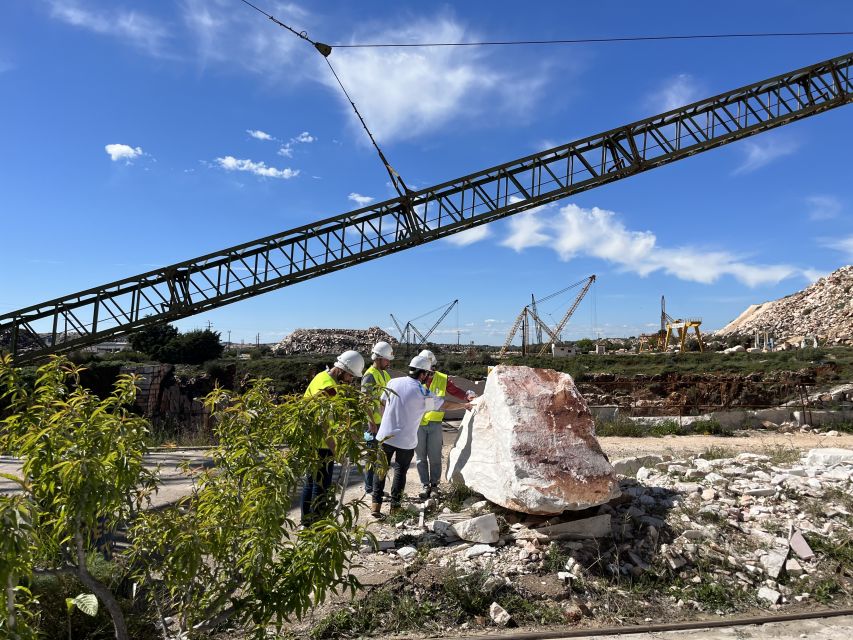
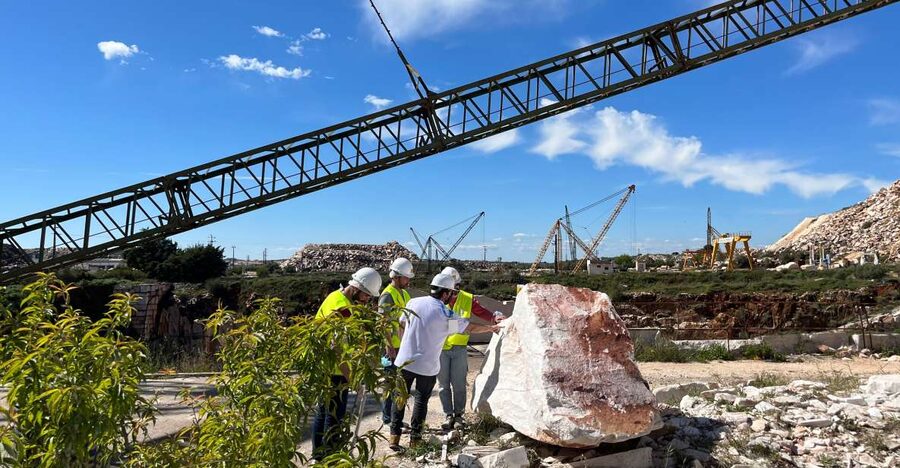
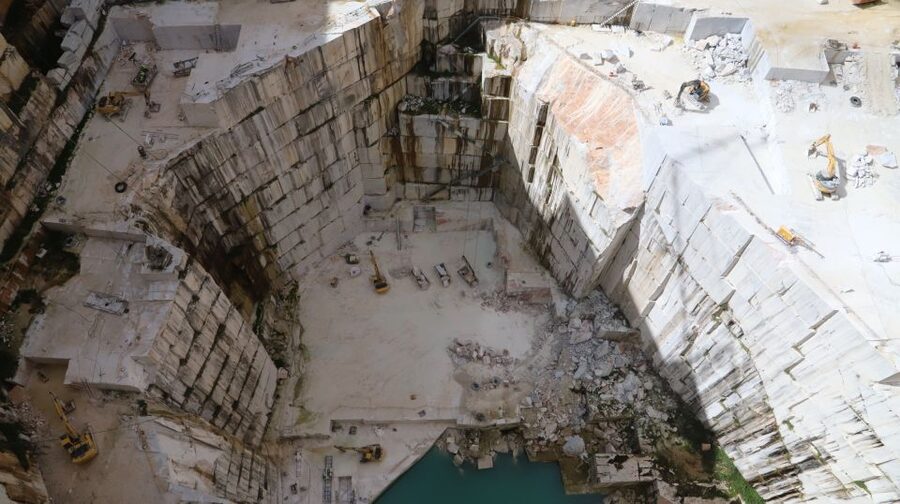
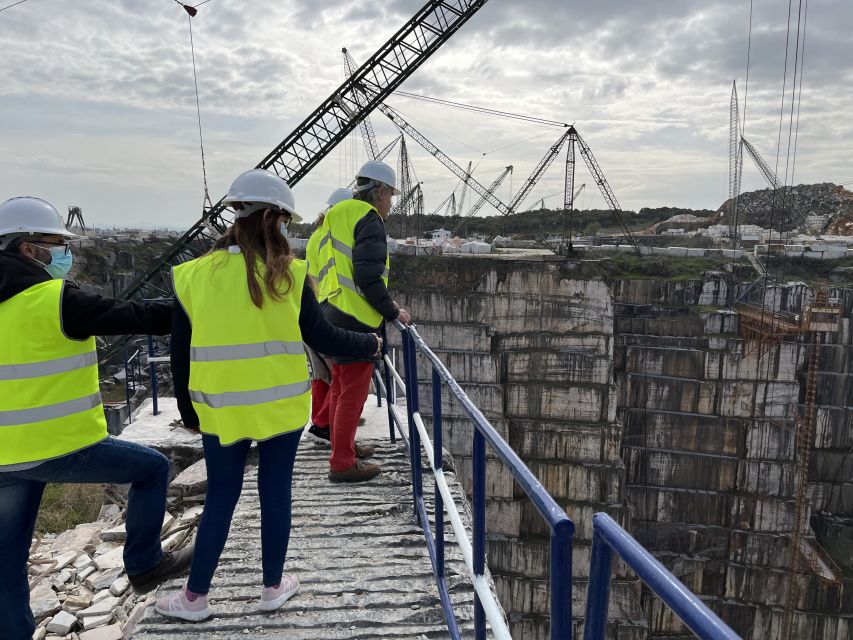
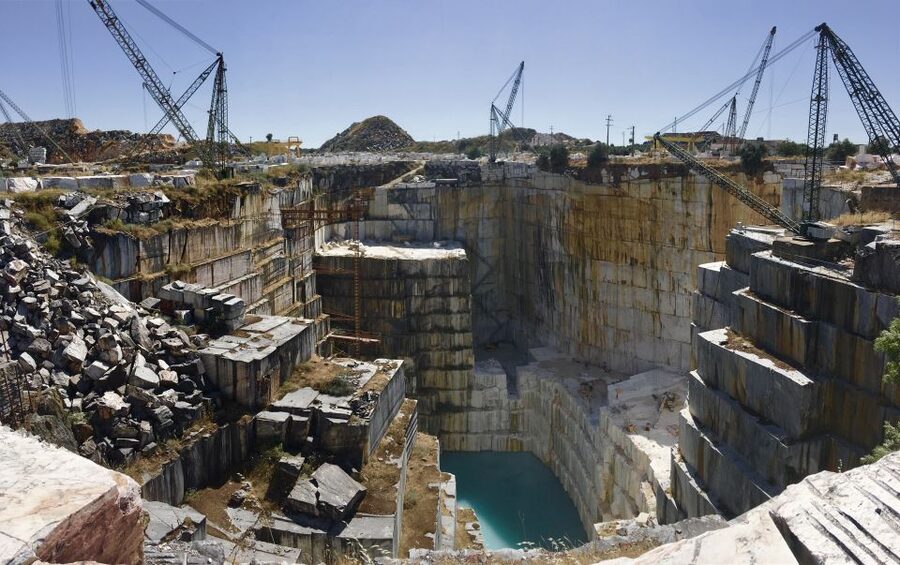
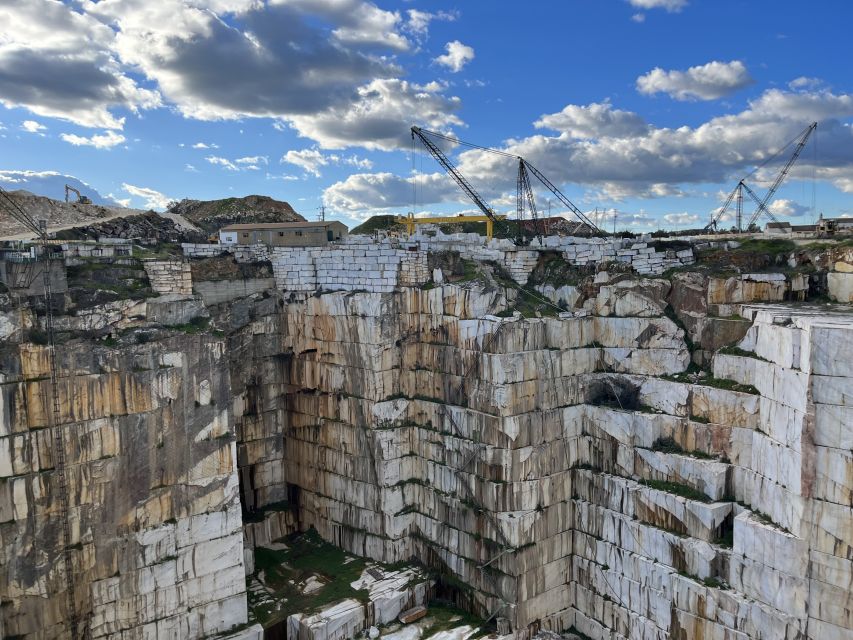
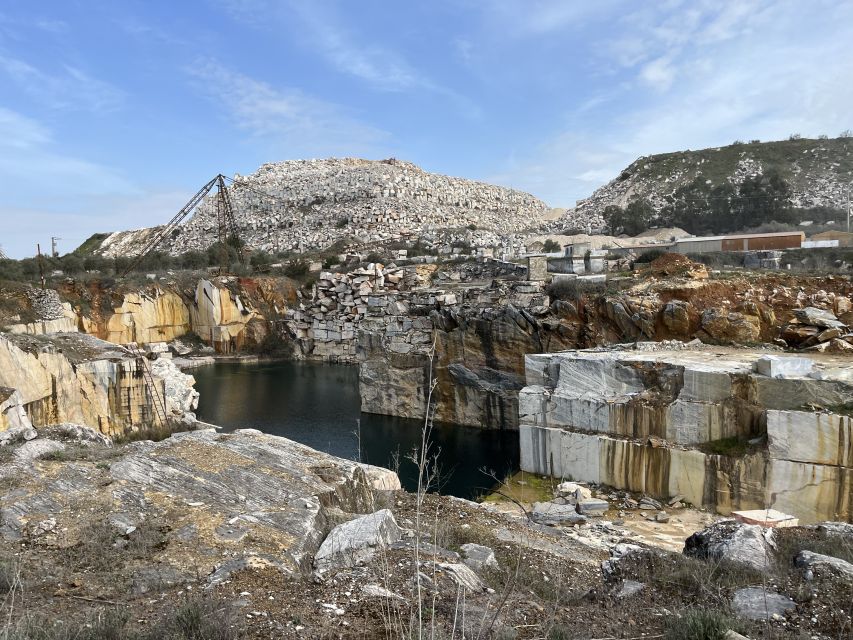
After the introduction, you travel by private vehicle to the quarry areas. The route matters. Vila Viçosa’s countryside changes as the quarries appear, with large openings that reveal how much stone has been removed over the centuries. The views can feel stark and almost otherworldly, especially when you see the scale of the cuts beside ordinary Alentejo roads.
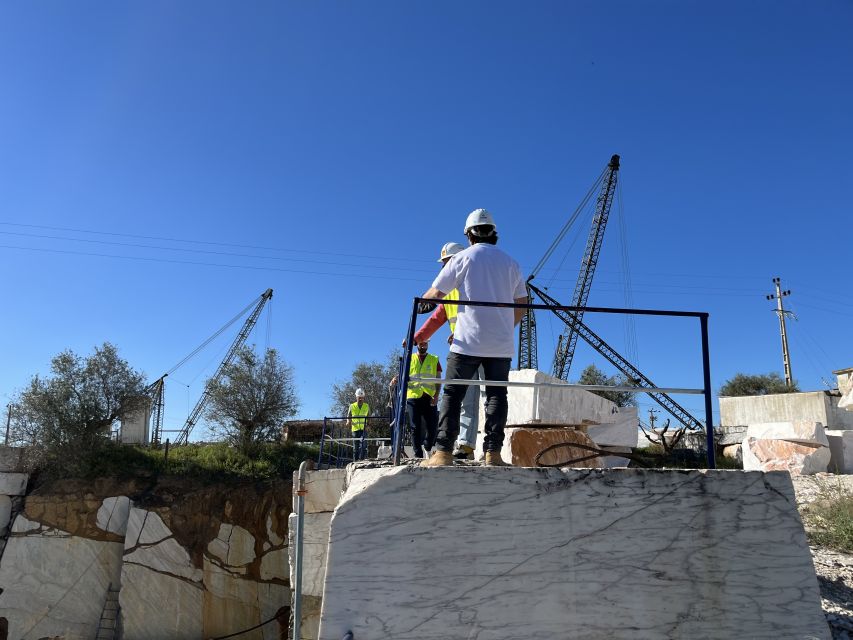
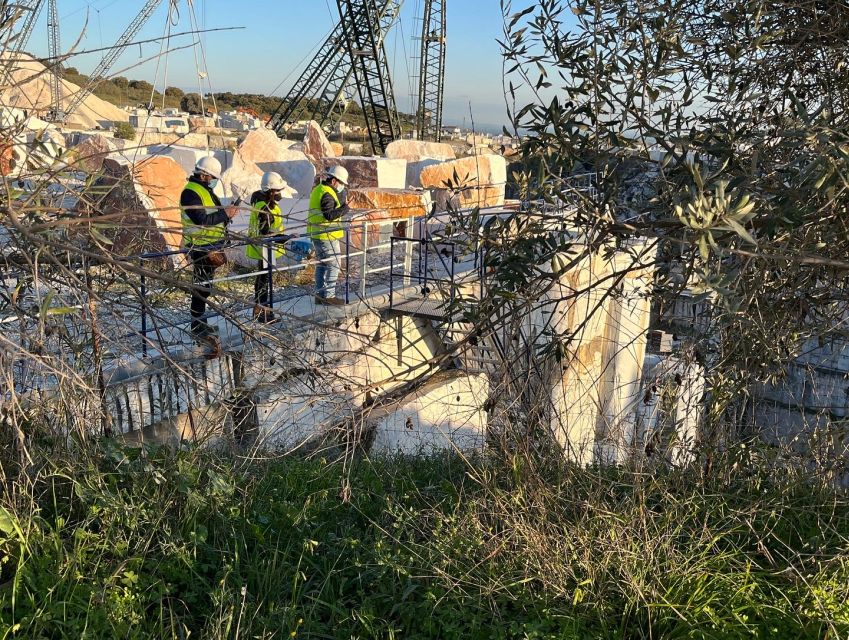
The tour can take you to several quarry sites, including three workings that increase in size and depth. The exact order may vary, but the point is to compare the different stages and methods of extraction. You may see huge blocks being separated from the rock, workers operating machinery, and the practical planning required to remove usable sections without wasting valuable stone.
Your guide explains how ground selection works and why the right section of marble must be chosen before extraction begins. Color, quality, structure, and the presence of cracks all matter. A block that looks impressive from the outside is not automatically suitable for a kitchen worktop or a polished floor tile.
This is also the part of the tour where safety deserves attention. Quarrying is heavy industrial work, not a staged attraction. Machinery, high walls, falling stone, and cutting equipment create real hazards. Safety equipment is included, and you should follow the guide’s instructions closely.
The scale is the main reward. A small piece of marble in a shop tells you almost nothing about the effort behind it. At the quarry, you can see the original mass of stone and the work needed to turn it into something precise enough for a building or sculpture.
Inside the factory, where rough blocks become useful
Marble is not ready for a customer immediately after extraction. The factory visit fills in the part of the story that many quarry tours skip. Here, rough blocks are cut down and prepared for practical use.
You may see stages such as cutting, washing, and polishing. Each stage changes the material. A large block becomes slabs, the surface is cleaned, and polishing brings out the pattern and color that were hidden in the rough stone.
This stop is useful if you are interested in architecture or home renovation. A worktop, wall panel, or floor tile may look simple once installed, but the finished surface depends on several careful processes. The factory makes that progression easy to follow.
The marble of the Alentejo comes in different colors and patterns. That variety is part of its appeal, but it also affects how the stone is sold and used. Some pieces are suited to large architectural surfaces, while smaller or more distinctive sections may be better for decorative work.
Expect some dust in the factory. One visitor specifically advised bringing a mask, and that is sensible if you have breathing sensitivities. The supplied safety equipment does not necessarily replace personal comfort items, so packing a light mask is a practical extra.
The factory is also where you gain a better sense of waste. Not every section extracted from the ground becomes a finished product. The tour introduces the effort to reduce waste, an important issue for an industry that removes such large amounts of rock.
Artisan workshops and marble made by hand
The final part moves from large-scale industry to smaller artisan workshops. This change in scale is one of the best features of the experience. At the quarry, marble is a giant geological resource. In the workshop, it becomes a material that can be shaped by hand.
You can watch artisans give marble decorative forms and see finished pieces up close. The work helps explain why marble is more than a construction product in Vila Viçosa. Its color, weight, polish, and ability to hold detail make it useful for art as well as buildings.
The contrast between industrial machinery and hand tools is especially helpful. A factory can produce uniform tiles and slabs, while an artisan can respond to the shape and character of an individual piece. You get a fuller picture of the trade by seeing both ends of the process.
The workshop visit may be the most appealing stop for anyone who enjoys crafts, interiors, sculpture, or Portuguese design. It is also a good reminder that the finished object carries the work of many people: quarry workers, machine operators, polishers, designers, and artisans.
A different kind of day out, same corner of Portugal:
- From Porto: Douro Valley w/ Boat Tour, Wine Tasting & Lunch
★ 4.7 · 19,061 reviews - Sintra: Pena Palace and Park Entrance Ticket
★ 4.2 · 17,410 reviews - Lisbon: Jerónimos Monastery Entrance Ticket
★ 4.1 · 14,164 reviews - Complete Douro Valley Wine Tour with Lunch, Wine Tastings and River Cruise
★ 5.0 · 12,920 reviews
What makes the guides important
The quality of this tour depends heavily on the guide. João is frequently named as an especially strong guide, and his background gives the visit a personal connection. His father worked in the quarry, so his explanations can link industrial facts with local experience.
He speaks very good English and can explain technical subjects without making them hard to follow. He also covers the wider marble industry around the world, which helps place Vila Viçosa in a larger commercial setting. Other guides may lead the visit in Portuguese, English, or Spanish, and the tour is designed to be guided rather than self-directed.
I would choose this experience over simply driving past the quarries because access and explanation change what you notice. On your own, you might see a giant excavation but miss the reasons for its shape, the machinery involved, or the difference between extraction and finishing.
The two-hour length keeps the visit focused. You get an introduction, quarry time, factory access, and artisan work without turning the subject into an all-day technical course. Still, do not expect long stops at every site. The schedule is divided into short sections, including roughly 30 minutes for the opening guided visit, 45 minutes for quarry and scenic viewing, 30 minutes for another guided visit, and 15 minutes for the final stop.
Price, timing, and the practical tradeoffs
At $29 per person, the tour offers good value if you want access to working industrial sites and a guide who can explain what you are seeing. The price includes a professional local guide and safety equipment, which are the two essentials for this kind of visit.
It does not include transportation, food, drinks, personal expenses, or hotel pickup and drop-off. The biggest practical point is the need for a private vehicle. You will drive between the starting point, quarry sites, factory, and workshops, so this is not a walking tour from central Vila Viçosa.
Wear comfortable clothes and sturdy, closed-toe shoes. Sandals and flip-flops are not allowed, which makes sense around machinery and uneven industrial ground. Bring water, especially in warm weather.
The tour is not suitable for wheelchair users or people with mobility impairments. The quarry and factory settings may involve uneven surfaces and industrial access areas, so check your own comfort level before booking. Baby strollers are also not allowed.
The activity offers free cancellation up to 24 hours before departure and a reserve-now, pay-later option. Starting times vary, so check availability for the date you want.
Who will enjoy this unusual Alentejo stop
I recommend this tour to you if you like seeing how things are made. It works particularly well for people interested in geology, architecture, sculpture, construction, design, mining, or local economies.
It is also a good choice if you have already seen Portugal’s palaces and churches and want a different side of the country. Vila Viçosa has plenty of cultural interest, but the marble tour takes you behind the finished surfaces and into the working world that supports them.
Families with older children may find the giant quarries and machinery memorable, though the industrial setting requires close attention to safety. It is less suitable for very young children, stroller users, or anyone who needs step-free access.
You do not need to be a stone expert. The guide begins with the basics and builds from there. The subject is concrete and visible, so even a short explanation quickly makes sense once you are looking at a quarry wall or a freshly polished slab.
Is the Marble Tour in Vila Viçosa worth booking?
Book it if you want a focused, local experience that goes beyond monuments and photo stops. The combination of quarry views, factory work, and handmade marble art gives you three different ways to understand Vila Viçosa’s identity.
I would especially recommend it if you have a car and are passing through the Alentejo. The $29 price is modest for two hours of guided access, and the guide adds value by explaining the geology, machinery, risks, and community impact.
Skip it if you need an entirely accessible activity, dislike industrial environments, or prefer a relaxed town walk with no driving between stops. For everyone else, bring water, closed shoes, and perhaps a mask for the dusty workshop. You will leave with a better understanding of how a block of Alentejo stone becomes part of a building, a home, or a work of art.
FAQ
Where does the Marble Tour in Vila Viçosa start?
It starts at Rota do Mármore AE in Vila Viçosa. Look for the white building with three brick arches and the Rota do Mármore AE and CECHAP logos.
How long does the tour last?
The tour lasts two hours. Starting times depend on availability for your chosen date.
What languages are available?
A live guide is available in Portuguese, English, and Spanish.
Do I need my own transportation?
Yes. You need a private vehicle to travel between the meeting point, quarries, factory, and artisan workshops. Transportation is not included.
What should I wear and bring?
Wear comfortable clothes and closed-toe, comfortable shoes. Bring water. Sandals and flip-flops are not allowed, and a mask may be useful in the dusty workshop.
Is the tour suitable for wheelchair users?
No. The activity is not suitable for wheelchair users or people with mobility impairments. Baby strollers are also not allowed.
What is included in the $29 price?
The price includes a professional local guide and safety equipment. Food, drinks, transportation, hotel pickup and drop-off, and personal expenses are not included.
Recently reviewed around Portugal
- Bridges Cruise with World of Discoveries or Sunset Option★ 4.0 · 219 reviews
- Porto Card Walker (1, 2, 3 or 4 Days)★ 3.4 · 135 reviews
- Porto: 6 Bridges Yacht Cruise with Local Wine & Snacks★ 5.0 · 399 reviews
- Porto: 5D Flight over de City for all family.★ 4.0 · 281 reviews
- Porto:Aveiro, Cruise, Costa Nova & Capelha da Pedra Full Day★ 4.5 · 434 reviews
- Porto Private E-Bike Tour: Douro River, Parks & Beaches★ 4.7 · 104 reviews
- Porto: 3-Hour Walking City Tour & Lello Bookstore Visit★ 4.7 · 99 reviews
- Porto: 2-Hour City Highlights Guided Segway Tour★ 4.8 · 181 reviews
Evora & Alentejo Tours, compared.

Private tour with entrance tickets to main monuments
Read our review →Browse the lists this tour appears in