
Reviewed · HORSES
Lisbon: Portuguese Riding School Trainig with Lusitano Horse
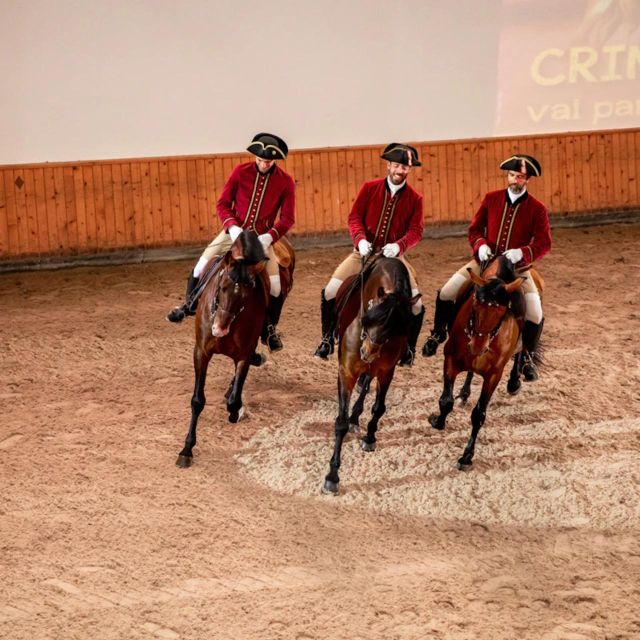
The best part of this Lisbon experience is the close look at the working life of a Lusitano horse, not just the polished show. You watch riders warm up, see handlers care for the horses, and then follow the training of demanding Equestrian Art movements in period costume.
I like the honest focus on the horses’ health and rhythm, and I like the old-court setting of the Nora Patio. At $17, this is an easy addition for anyone curious about Portuguese culture, though the ticket instructions can be confusing and the best viewing period is fairly short.
The activity runs from 10am to 1pm, but plan around 11am to 12:30pm for the most worthwhile stretch. Bring headphones, a charged smartphone, and internet access for the audio guide, and make sure you have the separate Book N Tour ticket rather than relying on a GetYourGuide voucher or QR code.
In This Review
- Key points to know before you go
- Why this horse experience feels different from a standard show
- Starting with the horses at Henrique Calado Riding Ring
- Meeting the handlers and seeing stable care
- The Nora Patio and the 18th-century court setting
- Understanding the Equestrian Art exercises
- How much time to allow, and when to arrive
- Price, access, and what the $17 covers
- Who will enjoy this, and who may want something else
- Should you book the Portuguese Riding School training?
- FAQ
- How long does the Portuguese Riding School training experience last?
- What will I see during the visit?
- Where does the activity take place?
- Is the audio guide included?
- Do I need to bring headphones?
- Is transport included?
- Can I take photographs?
- Is the activity wheelchair accessible?
- Can I cancel my booking?
Key points to know before you go
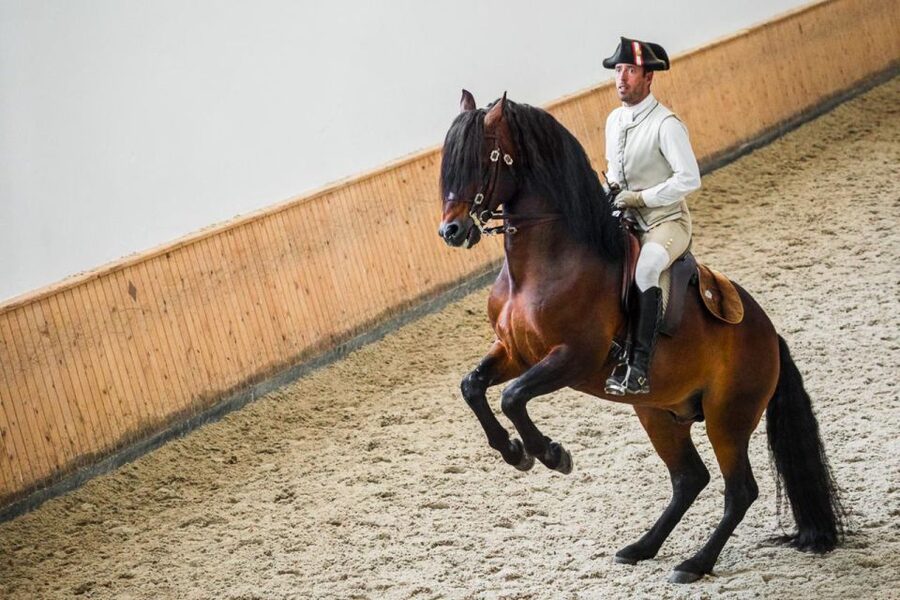
- See Lusitanos from the Alter Real Stud Farm during their daily training rather than only watching a finished performance.
- Watch stable care up close, including the handlers’ work and the horses’ physical needs.
- Catch riders in period costume as they rehearse complex Equestrian Art exercises and choreographies.
- Use the Nora Patio and Henrique Calado Riding Ring as two different settings for the morning program.
- Aim for 11am to 12:30pm, when the activity is at its most useful and focused.
- Bring your own headphones, since the audio guide is included but headphones are not.
Why this horse experience feels different from a standard show
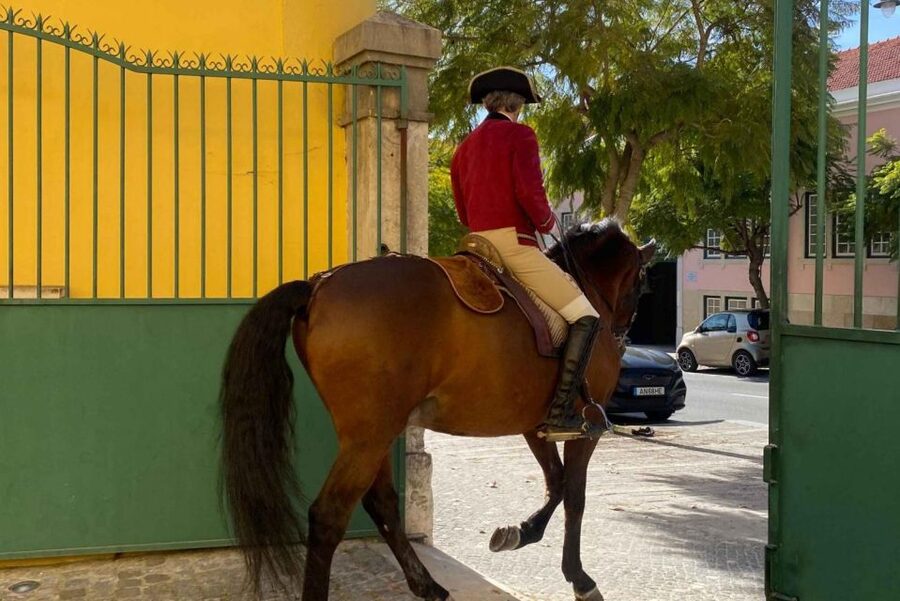
A formal horse show gives you the finished result. This morning visit lets you see the preparation behind it.
That difference matters. You can watch the riders work through warm-up and resourcefulness exercises before the more polished training begins. The point is not simply to make the horses perform attractive movements. It is to build strength, balance, responsiveness, and control while respecting each animal’s pace.
I like that the program pays attention to the rhythm and health of the horses. You are not being asked to admire tricks without context. The audio guide helps explain the horses, the stables, and the work that goes into preparing them for the Portuguese School of Equestrian Art’s gala show.
The riders wear period costume, and period music accompanies the later exercises. That gives the session a courtly feel, but the atmosphere does not replace the practical work. You still see a training ground, handlers, horses, and repeated exercises.
At $17 per person, the price is modest for a morning attraction in Lisbon. The value is strongest if you enjoy horses, traditional riding, or cultural performances and want to see what happens before the public show. If you only want a short, dramatic spectacle, this may feel slower than expected.
More Lisbon trips worth a second look
- From Lisbon: Horseback Riding on Comporta Beach
★ 4.7 · 167 reviews - Melides: Horse Riding on the Beach with Wine Tasting
★ 4.3 · 117 reviews - Melides: Horseback Riding on Melides Beach
★ 4.7 · 111 reviews
Starting with the horses at Henrique Calado Riding Ring
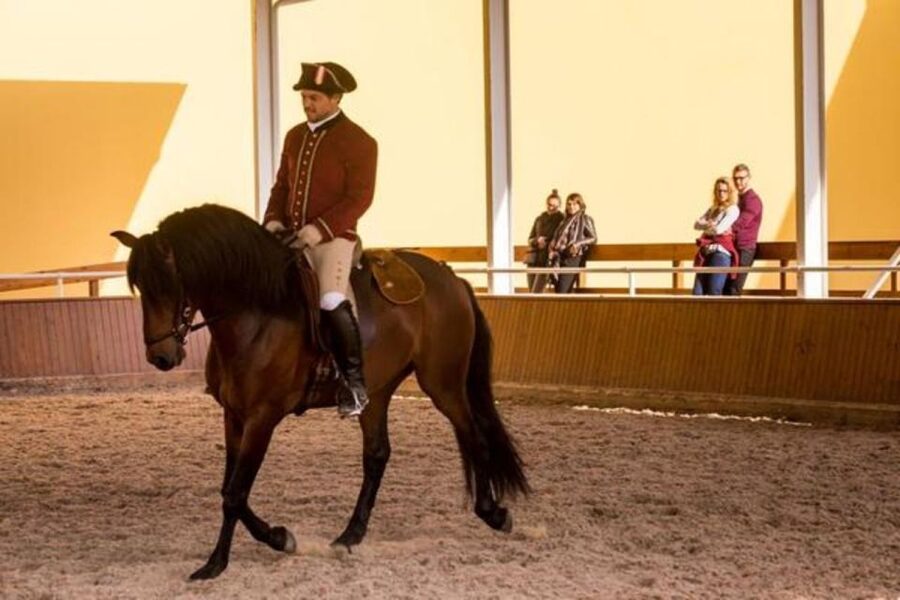
The Henrique Calado Riding Ring is one of the main working spaces for the morning. Here, you can watch riders warm up the horses and carry out exercises designed to prepare them for higher-level work.
The warm-up is important because it shows the discipline behind the presentation. Horses need time to settle into movement, respond to the rider, and work through exercises suited to their physical condition. You get a better sense of the process when you see this stage before the more complex choreography.
The riders’ period clothing adds visual appeal, but pay attention to their movements rather than treating the costumes as the whole point. The clothes connect the session to the Portuguese School of Equestrian Art and its court tradition. The horses remain the main attraction.
You may also see the riders practice resourcefulness exercises. These are part of the training needed for the refined movements associated with the school. The program does not promise a full gala show, so you should expect rehearsal and instruction rather than a complete theatrical production.
That distinction is useful when deciding how to spend your morning. The visit offers a behind-the-scenes look, with some repeated movements and preparation. In return, you see more of the working routine than you would during a short public performance.
Meeting the handlers and seeing stable care
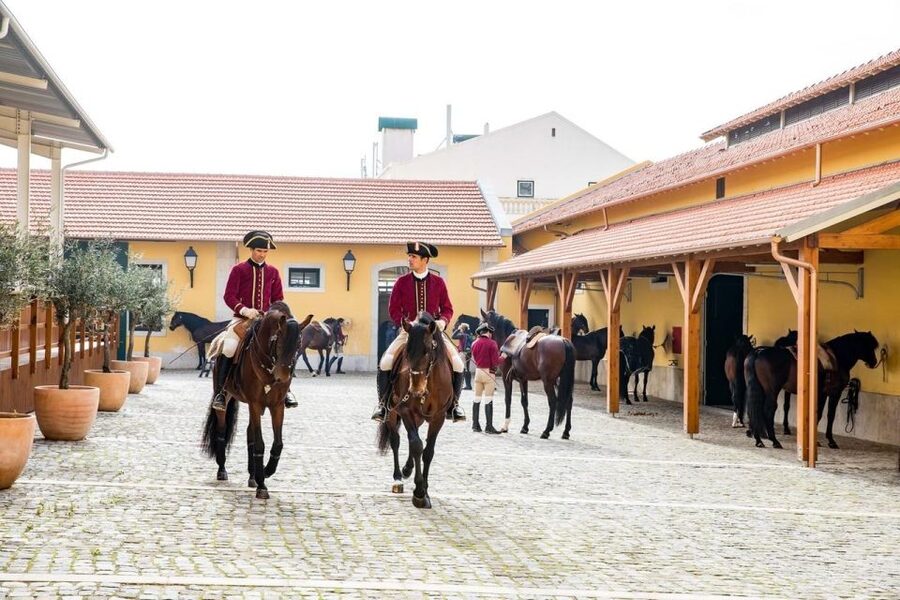
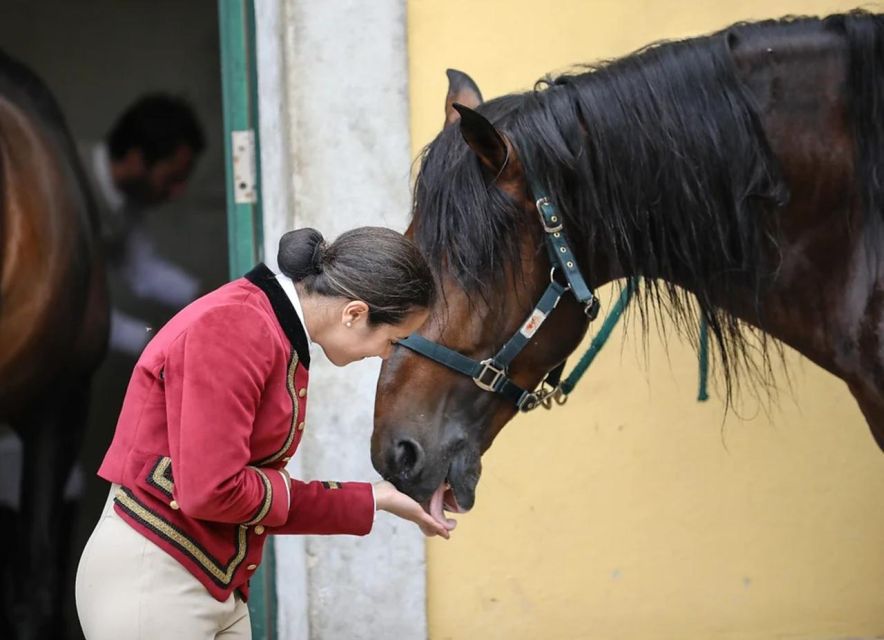
One of the strongest parts of the visit is the stable portion. You get a look at how handlers care for the horses at Henrique Calado Riding Ring, and the setting brings you closer to the daily routine.
The stable work helps explain why the horses can perform demanding exercises. Their health, strength, and physical needs have to be monitored before they are ready for training. You can watch the practical side of the school, including the care that takes place away from the music and costumes.
For many people, this will be the most personal part of the visit. A formal riding display can keep you focused on the rider. In the stable, your attention shifts to the horse and the people responsible for it.
A French-language review of the experience described the stable visit as lasting about an hour, followed by roughly an hour of riders training in costume. That gives you a useful idea of the balance, though the exact flow can vary. The same review also found that another 30 minutes in the stable area would have been welcome. I would keep that in mind if horse care is your main interest.
In practical terms, wear comfortable shoes. You may spend a good part of the morning standing or moving between the stable area and riding spaces, and this is not the place for formal footwear.
The Nora Patio and the 18th-century court setting
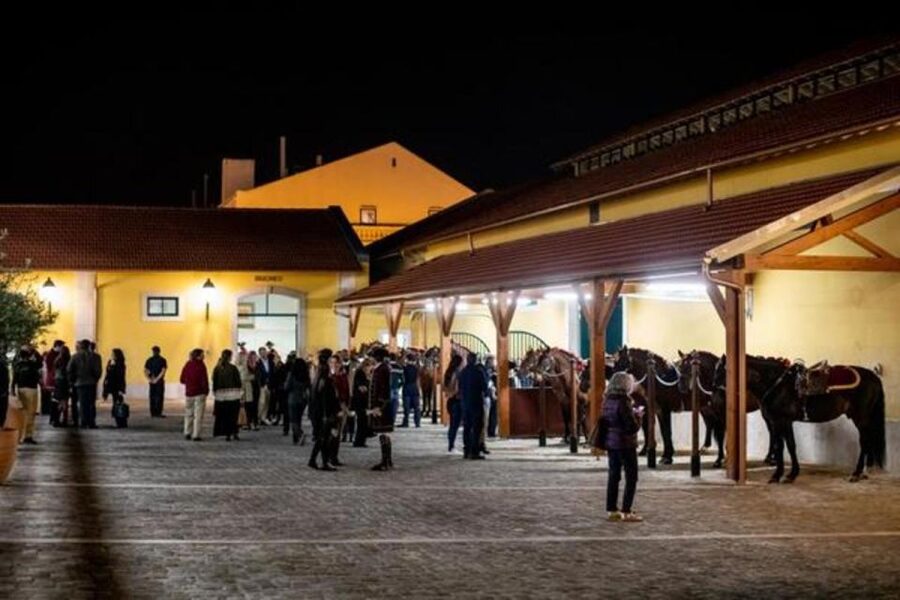
The Nora Patio provides a different mood from the riding ring. Its setting helps recreate the atmosphere of an 18th-century court, especially when the riders perform with period music.
This is where the activity feels most like a cultural presentation rather than a working lesson. The music and costumes give shape to the tradition of Portuguese Equestrian Art. You are not simply watching horses move through an arena. You are seeing a modern training session presented through an older court style.
The charm is restrained rather than flashy. The attraction comes from the combination of setting, music, costume, and controlled movement. If you like historic arts and traditional performance, this section gives the morning a clear sense of place.
Still, keep your expectations sensible. The information provided describes training and rehearsals, not a full-length gala. You might see sections of choreographies and complex exercises rather than an uninterrupted show with a grand finale.
The two settings work well together. The Henrique Calado Riding Ring shows the practical training side. The Nora Patio supplies the atmosphere. Together, they help you understand both the work and the presentation of the school.
A different kind of day out, same corner of Portugal:
- Lisbon City Center Tour – The Unmissable Lisbon
★ 5.0 · 22,234 reviews - Lisbon: Sintra, Pena, Regaleira, Cabo da Roca & Cascais
★ 4.7 · 19,656 reviews - Sintra: Pena Palace and Park Entrance Ticket
★ 4.2 · 17,410 reviews - Lisbon: Jerónimos Monastery Entrance Ticket
★ 4.1 · 14,164 reviews
Understanding the Equestrian Art exercises
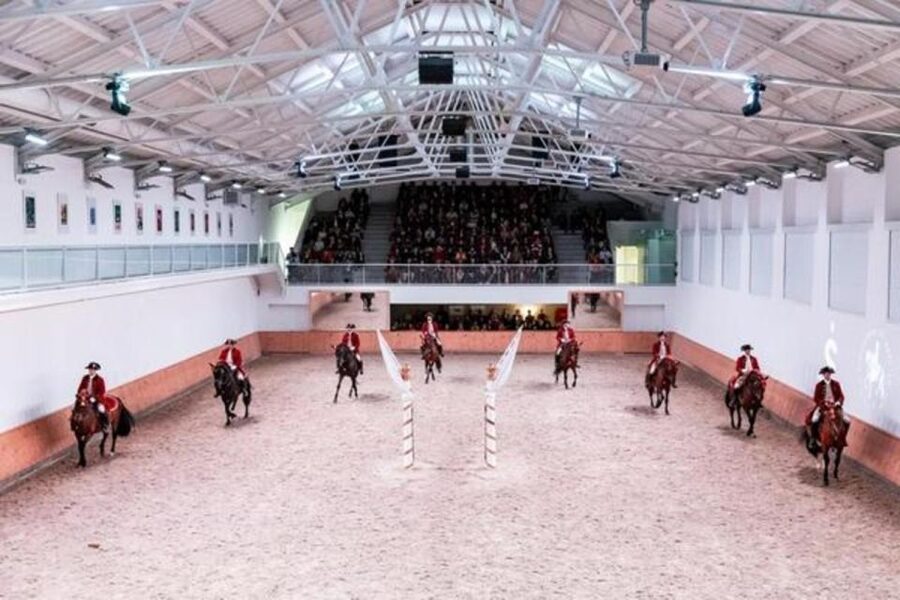
The later training session focuses on complex exercises and choreographies. These movements are part of the preparation for the school’s high-level gala show.
The value here comes from seeing repetition and control. A movement that looks simple from a distance can require careful timing between rider and horse. The program gives you a chance to notice the horse’s pace, the rider’s signals, and the quiet concentration needed to keep the work precise.
The audio guide is useful during this part because it explains the stables and introduces the different horses. It is available in English, Portuguese, and French. You should bring headphones, since they are not supplied, and have a charged smartphone with internet access ready.
The guide is also a practical advantage for independent visitors. There is an English- and Portuguese-speaking host or greeter, but the written information does not promise a personal guide leading the whole session. One Danish-language review found the guide element limited, while another assessment praised the audio guide for explaining the stables and horses clearly.
I would treat the audio guide as an important part of the visit, not an optional extra. Download or access the instructions sent after booking before you arrive. Check your spam folder if the message does not appear. This preparation can save time at the reception desk.
How much time to allow, and when to arrive
The activity takes place between 10am and 1pm. The most useful time to visit is given as 11am to 12:30pm, so aim for that window if your schedule allows.
That timing matters because the activity is not described as a single nonstop performance. It combines stable care, warm-up work, and training. Arriving at the wrong point could mean missing one of the sections that interests you most.
You should allow the full morning if you want the complete picture. The stable portion and the riding training show different sides of the school, and rushing through one can make the visit feel incomplete.
The experience is valid for one day, with starting times based on availability. Transport is not included, so you need to arrange your own way to the venue in the Lisbon District. Food and drinks are also not included.
There is skip-the-ticket-line access, but the ticket process deserves care. Book N Tour requires you to show its own Book N Tour ticket at the reception desk. The GetYourGuide paper, QR code, voucher, or ticket is specifically not accepted as the entry document. You also need to provide at least one working WhatsApp number or email so the operator can reach you.
This is the sort of small detail that can affect an otherwise simple morning. Save the correct ticket somewhere easy to open, and do not wait until the entrance to sort out which document is valid.
Price, access, and what the $17 covers
The $17 price includes entry to the Portuguese School of Equestrian Art, access to the daily training of Lusitano horses from the Alter Real Stud Farm, and the audio guide.
I consider that good value if you plan to stay for the stable visit and the training session. You are paying for more than a quick look at horses in an arena. The stable access and background information make the morning more substantial.
The value is less clear if you arrive only for a brief glimpse. The program’s best period is 11am to 12:30pm, and the activity relies on timing. It is not a flexible attraction where you can expect the same thing at every moment.
Wheelchair access is available. The activity is hosted or supported in English and Portuguese, while the audio guide adds French. Headphones, food, drinks, transport, and photography are not included.
Photography needs special care. Flash photography is not allowed, and the activity information says photography is not included. Do not assume you can freely photograph the training or stable areas. Smoking, alcohol, and drugs are also prohibited.
Free cancellation is available up to 24 hours in advance for a full refund. You can also reserve now and pay later, which helps if your Lisbon schedule is still shifting.
Who will enjoy this, and who may want something else
I would recommend this visit to anyone with a real interest in horses, especially people who want to understand care and training rather than watch only a finished show.
It also suits visitors who enjoy Portuguese traditions, historic costumes, music, and formal performance. Families may find the close look at the horses appealing, though the quieter training format may hold less interest for very young children.
This is a good choice for a morning in Lisbon because it offers a cultural experience that is separate from the city’s usual churches, viewpoints, and food stops. It gives you a look at a specialized Portuguese art form and the daily work that supports it.
You may want to skip it if you need a fast, highly theatrical attraction. The exercises can be measured and repetitive because they are part of training. You should also reconsider if you dislike handling digital tickets or downloading an audio guide. The ticket instructions require attention.
If your main goal is to spend as much time as possible with the horses, arrive during the recommended middle period and focus on the stable section. One assessment found that an extra 30 minutes there would have been useful, so horse lovers may leave wanting more.
Should you book the Portuguese Riding School training?
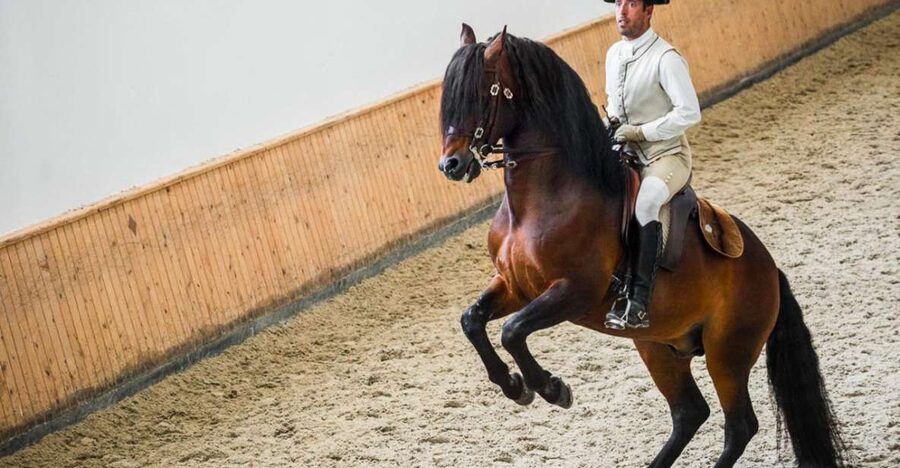
Book it if you want an affordable, close look at Lusitano horses and the work behind Portuguese Equestrian Art. The stable care, period-costume training, and Nora Patio setting give the morning more substance than a basic arena viewing.
I would not book it expecting a full gala performance. Think of this as training with atmosphere, not a complete evening show. Bring comfortable shoes and headphones, prepare your smartphone, and double-check that you have the Book N Tour ticket rather than the GetYourGuide QR code.
For $17, it is a sensible pick for horse lovers and culture-minded visitors who can spare the late-morning hours. The experience works best when you slow down, listen to the guide, and watch how the horses are prepared before the elegant movements begin.
FAQ
How long does the Portuguese Riding School training experience last?
The activity takes place from 10am to 1pm, with 11am to 12:30pm described as the best time to visit.
What will I see during the visit?
You will see Lusitano horses from the Alter Real Stud Farm, stable care by handlers, rider warm-ups, resourcefulness exercises, and rehearsals of complex Equestrian Art movements.
Where does the activity take place?
The experience takes place at the Portuguese School of Equestrian Art, including the Nora Patio and Henrique Calado Riding Ring in the Lisbon District.
Is the audio guide included?
Yes. An audio guide is included in English, Portuguese, and French.
Do I need to bring headphones?
Yes. Headphones are not included, so bring your own. You should also bring a charged smartphone and internet access.
Is transport included?
No. You need to arrange your own transport to the meeting point.
Can I take photographs?
Photography is not included, and flash photography is not allowed. Follow the staff instructions regarding photography at the venue.
Is the activity wheelchair accessible?
Yes, the activity is listed as wheelchair accessible.
Can I cancel my booking?
Yes. You can cancel up to 24 hours in advance for a full refund. Reserve now and pay later is also available.
Recently reviewed around Lisbon
- Portinho da Arrábida: Coasteering Boat Tour★ 4.9 · 78 reviews
- Setúbal: Dolphin-Watching Boat Tour★ 4.8 · 213 reviews
- From Lisbon: Private Óbidos and Nazaré Tour★ 5.0 · 152 reviews
- No Diet Club – Unique food tour in Lisbon with many Tastings★ 4.8 · 44 reviews
- Queluz National Palace & Gardens Ticket★ 4.6 · 447 reviews
- Melides: Horse Riding on the Beach with Wine Tasting★ 4.3 · 117 reviews
- Melides: Horseback Riding on Melides Beach★ 4.7 · 111 reviews
- Lisbon: Street Art Tuk Tuk Tour★ 4.9 · 372 reviews
Horses, compared.

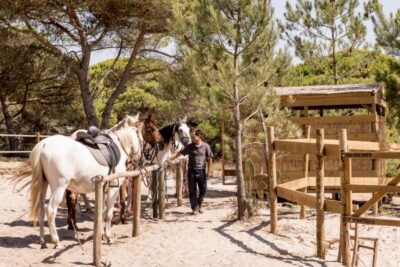
Melides: Horse Riding on the Beach with Wine Tasting
Read our review →


Comporta and Setúbal Trip with Horseback Riding
Read our review →Browse the lists this tour appears in