

Reviewed · WALKING TOURS
Lisbon Hidden Gems Walk: Traditions, Lunch and Ferry ride
Lisbon’s best moments often happen between the big sights, and this tour makes that its main event. You walk through Mouraria’s narrow lanes, hear the story of Fado and Maria Severa, eat pastel de nata in a tucked-away bakery, then cross the Tagus for seafood rice in Cacilhas. The mix of food and local history gives you a quick feel for the city.
I like the small-group format, capped at 14 people, and the way the tour covers ground a standard sightseeing route often skips. I also like the ferry ride, which turns lunch into a fine city view. The main drawback is the food policy: vegans, celiacs, and anyone needing kosher or halal food should not book this tour, and other dietary needs are not guaranteed.
In This Review
- Key things to know before booking
- Why this four-hour route works so well
- Martim Moniz and the first look at Mouraria
- Fado, Maria Severa, and Lisbon’s musical soul
- Coffee and pastel de nata away from the main crowds
- Rossio Square and the pattern beneath your feet
- Chiado, Carmo Convent, and a beer with a view
- The Tagus ferry to Cacilhas
- Seafood rice and green wine in Pontal de Cacilhas
- The pace, group size, and guide quality
- Who should book this Lisbon experience
- Should you book the Mouraria to Cacilhas route?
- FAQ
- Where does the tour start?
- Where does the tour finish?
- How long does the experience last?
- Is the tour offered in English?
- What food and drinks are included?
- Is the ferry ride included?
- Does the tour include a ride on the Santa Justa Lift?
- Are monument entrances included?
- Can vegans or people requiring kosher or halal food join?
- How many people can join the tour?
Key things to know before booking
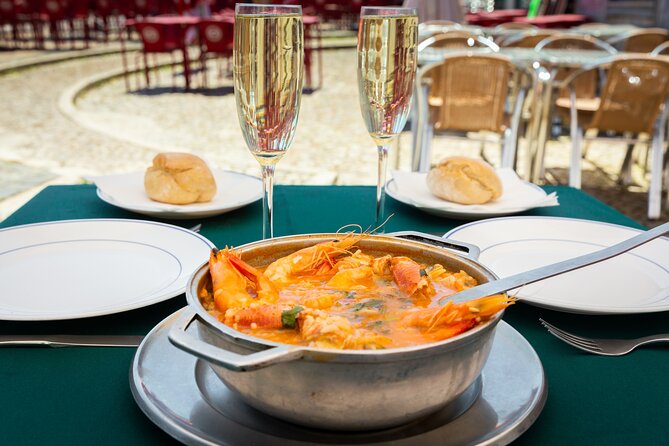
- Mouraria comes first: Start in multicultural Martim Moniz and walk through the former Moorish quarter.
- Food is part of the tour: Coffee, a traditional pastel de nata, beer, seafood rice, bread, and green wine are included.
- The Tagus crossing is practical and scenic: The ferry takes you to Cacilhas for lunch, then the tour finishes at Cais do Sodré.
- You get useful city advice: Guides such as Maria, Carlos, Filipe, Daniel, and Guilherme have helped visitors plan the rest of their Lisbon stay.
- Expect real walking: The pace is generally relaxed, but Lisbon’s lanes, slopes, and stairs call for sturdy shoes.
- The group stays fairly intimate: A maximum of 14 people allows questions and personal attention without the cost of a private tour.
Why this four-hour route works so well
This is not a monument-heavy tour. You do not go inside the Carmo Convent, ride the Santa Justa Lift, or spend long stretches waiting in ticket lines. Instead, you move through central Lisbon on foot, pause for small tastes, and use the ferry to connect the city center with Cacilhas.
I see this as a strong first-day activity. It gives you a map in your head, introduces several central neighborhoods, and leaves you with practical suggestions for food, Fado, and further sightseeing. Several guides, including Carlos, Maria, Filipe, Guilherme, and Daniel, have been praised for explaining the city clearly and offering useful recommendations.
The $48.39 price deserves a close look. You are paying for about four hours with a local English-speaking guide, coffee and pastry, beer, ferry transport, and a sit-down seafood lunch with green wine and bread. That is solid value if you want a guided introduction with meals built in. It is less appealing if you mainly want access to monuments or prefer choosing every dish yourself.
The pace is usually described as leisurely or well balanced, but this remains a walking tour. You should be comfortable on uneven Portuguese pavement and with some climbing. One guide, Daniel, was especially patient with people who found stairs and slopes difficult, but the tour is not presented as suitable for anyone who needs a fully step-free route.
More Walking Tours in Lisbon
- Lisbon: History, Stories and Lifestyle Walking Tour
★ 4.8 · 10,902 reviews - Best of Lisbon Small-Group Guided Walking Tour
★ 5.0 · 4,869 reviews - Lisbon: Food and Wine Small Group Walking Tour
★ 4.9 · 4,082 reviews
Martim Moniz and the first look at Mouraria
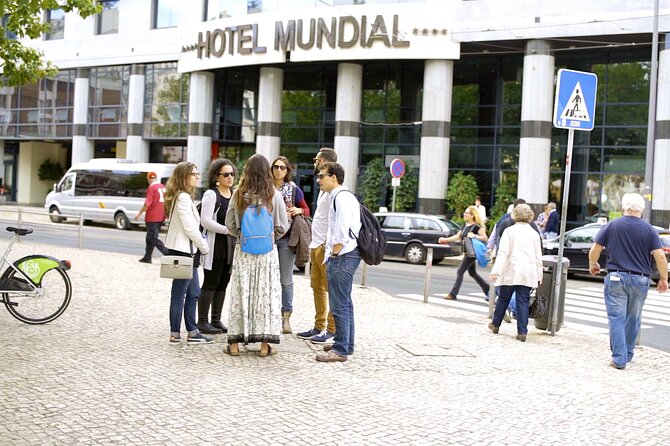
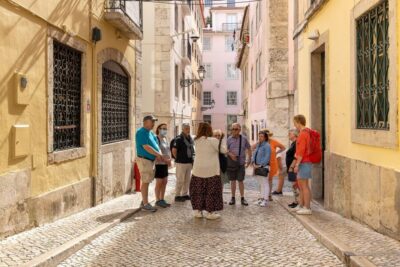
Meet at Praça Martim Moniz at 10 a.m. This square sits in one of Lisbon’s most multicultural areas, with food from many parts of the world, shops, music, and occasional weekend markets selling organic products.
The square is a useful starting point because it quickly moves you away from the postcard version of Lisbon. Instead of beginning with a grand church or palace, you start in a working city district where different communities have shaped daily life. Your guide explains how Mouraria developed and why it became the traditional residential quarter of Lisbon’s Moors.
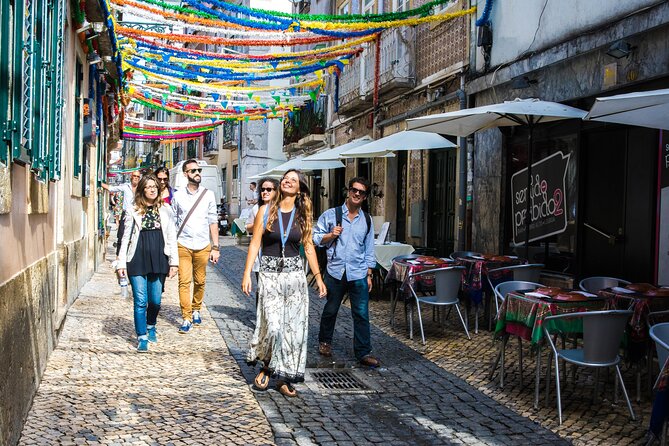
The opening walk lasts about 10 minutes in the square, followed by roughly 20 minutes through the Moorish Quarter. The lanes are narrow and atmospheric, with small churches, traditional shops, and plenty of everyday street life. Cars cannot follow you into many of these passages, which is one of the tour’s clear advantages.
This is also where you begin to understand Lisbon’s multicultural character. Portugal’s seafaring past brought contact with many parts of the world, and Mouraria reflects that long exchange. I would not expect a formal academic lecture, but you should expect a useful explanation of how neighborhoods, music, food, and migration connect.
Fado, Maria Severa, and Lisbon’s musical soul
Fado is one of the most important cultural threads in the walk. The guide introduces this Portuguese musical style and explains why it was placed on UNESCO’s Intangible Cultural Heritage list.
The story of Maria Severa gives the subject a human focus. She is an important figure in the early history of Fado, and Mouraria is closely tied to her story. The point is not simply to name a famous singer. It is to show how a neighborhood’s streets and taverns helped shape a musical tradition that later became one of Portugal’s best-known cultural exports.
You may pass small churches along the way, including one classified as a National Monument that was dedicated in 1241 and was once Lisbon’s largest church. The details supplied for the tour do not identify the church by name, so I would treat this as a passing historical stop rather than expect a full interior visit.
That distinction matters. The tour includes no guided entry inside monuments. You see the exteriors, hear the context, and keep moving. If your priority is detailed architecture or long visits inside churches, this will feel light. If you prefer a broader sense of place, the format keeps the morning moving.
Coffee and pastel de nata away from the main crowds
One of the nicest pauses comes at a traditional bakery that is described as being away from the busiest tourist routes. Here you have a pastel de nata with hot coffee while the guide continues the story of Lisbon and you interact with local people.
This stop adds more than a snack. A pastel de nata is easy to find all over Lisbon, but the setting changes the experience. You are not simply buying a pastry at a famous counter and leaving. You have time to sit, listen, and notice how a traditional bakery fits into neighborhood life.
The food is included, but the exact bakery is not named in the tour details. That is probably deliberate, since the route may depend on local operating hours. I would not book this expecting a pastry class or a long food tasting. Think of it as a well-timed coffee break that gives your feet a rest and your guide room to explain the city.
The dietary warning applies here as well. Vegetarian and gluten-free alternatives may be available at some stops, but they are not guaranteed. If you have a serious allergy, ask before booking and be prepared for the possibility that this food-focused tour will not work for you.
More Lisbon trips worth a second look
- Wine and Cheese Tasting Lunch in Portuguese Wine Bar
★ 5.0 · 447 reviews - Lisbon: Portuguese Wine and Cheese Tasting with Lunch
★ 4.7 · 353 reviews - From Lisbon: Arrábida Natural Park Kayak Tour with Lunch
★ 4.8 · 320 reviews - Lisbon Market and Food Tour with Cooking Class and Lunch
★ 5.0 · 117 reviews
Rossio Square and the pattern beneath your feet

From Mouraria, the route heads toward Rossio. Along the way, you pass the neo-Manueline façade of Rossio train station before reaching Praça Dom Pedro IV, usually called Rossio Square.
Rossio has served as one of Lisbon’s main squares since the Middle Ages. It has been a setting for public celebrations, revolts, bullfights, and executions, and today it remains a central meeting point. The stop itself is short, about five minutes, but it helps place modern Lisbon on top of centuries of public life.
Look down as well as up. The classic Portuguese cobblestone paving is part of the lesson here. Your guide explains its origin and history, turning what might seem like ordinary pavement into a small piece of national identity.
This is a good example of the tour’s style. You receive short bursts of history while walking between food and drink stops. You will not get a long, formal presentation in one place. Instead, the city itself becomes the classroom.
Chiado, Carmo Convent, and a beer with a view
The route also touches Chiado, a central district known for shopping, theaters, museums, and historic landmarks. The supplied schedule does not give a separate duration for the Chiado portion, so expect it to function as part of the walk rather than a lengthy stop.
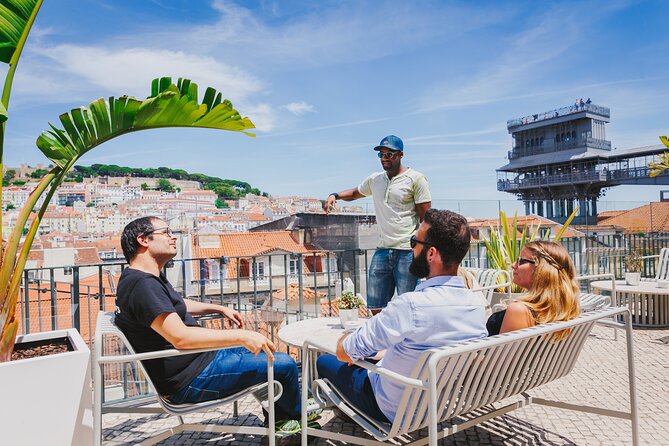
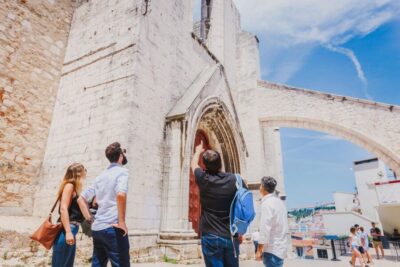
At Carmo Convent, you get one of the tour’s best viewpoints. From here, you can look across Lisbon toward São Jorge Castle and the Santa Justa Lift while drinking a Portuguese beer.
This is a smart pause. Lisbon’s hills can make a walking route tiring, and stopping for a drink gives you time to take in the view without rushing. The scene also helps connect the pieces of the morning: the old central streets below, the castle above, and the distinctive ironwork of the Santa Justa Lift nearby.
Do not confuse seeing the lift with riding it. A trip on the Santa Justa Lift is not included, and the tour does not provide a guided visit inside Carmo Convent. You are paying for the view, the explanation, and the drink, not monument admission.
The Tagus ferry to Cacilhas

After the central Lisbon walk, you head to the Tagus and board a ferry for the short trip to Cacilhas. The listed ferry portion takes about 15 minutes.
This is one of the strongest parts of the experience. Lisbon is often admired from its hills, but the ferry gives you a different angle. You see the city across the water and understand how closely Lisbon’s identity is tied to the Tagus, a river celebrated in Portuguese songs and poems.
The ferry also keeps the tour from feeling like a standard loop through downtown. You are not simply returning to the same square where you began. You are using ordinary public transport to reach lunch, which makes the outing feel connected to local routines.
The tour finishes at Cais do Sodré back in central Lisbon, but the ferry arrangement is worth checking with your guide on the day. The route description says you cross to Cacilhas for lunch and then return to the center. One person chose to remain in Cacilhas after lunch and make the return ferry independently, so there may be some flexibility, but you should not assume the group schedule can be changed.
Seafood rice and green wine in Pontal de Cacilhas
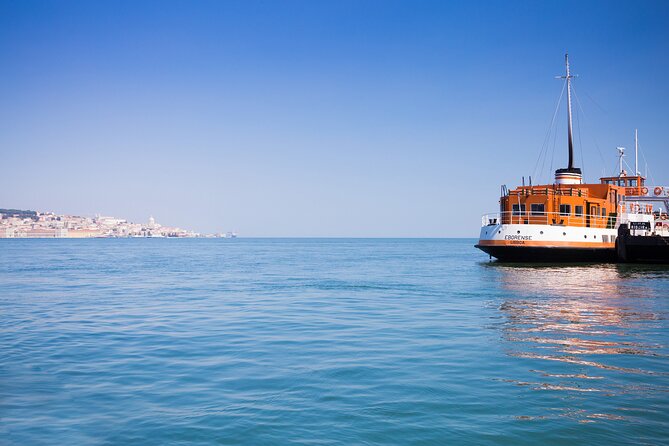
Cacilhas is a small riverside area known for seafood restaurants and views back toward Lisbon. At Pontal de Cacilhas, you sit down for the included meal: seafood rice, bread, and green wine.
For me, this is where the tour earns much of its price. A guided walk with a pastry and beer is pleasant, but adding a proper meal across the river makes the outing feel like a full half-day rather than a series of samples. You get to rest, eat, and see Lisbon from a new side.
The exact restaurant and serving style are not specified, so do not book based on a particular table or menu item beyond the stated seafood rice. The meal is designed around Portuguese food traditions, not custom ordering. The green wine is included, but alcohol-free substitutes are not clearly promised.
The food warning is unusually important here. The tour is not suitable for vegans, people with celiac disease, or anyone requiring kosher or halal meals. Pregnant participants, vegetarians, and people with gluten restrictions should ask detailed questions before reserving, since alternatives can be difficult at traditional venues.
If seafood is not your thing, this lunch may be the deciding factor against the tour. If you enjoy Portuguese seafood and want a meal with a river view, it is a strong reason to book.
The pace, group size, and guide quality
The maximum group size is 14. That is not a private tour, but it is small enough for a guide to answer questions and keep an eye on the group in narrow streets and busy transport areas.
Guide quality matters greatly on a route like this because the sights are not all major ticketed attractions. The personal explanation makes the difference. Guides named in the supplied material include Maria, Franco, Carlos, Filipe, Guilherme, Daniel, Natália, Chon, Martin, Leslie, Johnny, Filipa, Alex, and Philla.
I would not expect to select a particular guide unless the operator confirms it. Still, the repeated praise for guides’ warmth, clear English, historical explanations, and city recommendations is encouraging. Daniel was singled out for local insight and patience with stairs, while Filipe was noted for speaking several languages and keeping the pace relaxed. Carlos and Maria were also praised for making the history easy to follow.
The walking speed seems suited to people who want time for questions and food breaks. Wear comfortable shoes, since Lisbon’s pavement can be hard on feet and the route includes hills and stairs. Moderate physical fitness is required.
Who should book this Lisbon experience
I would recommend this tour to you if you are visiting Lisbon early in your stay and want orientation without a dry lecture. It works especially well for first-time visitors who want history, neighborhoods, food, and public transport in one morning.
It also suits people who prefer local districts to a checklist of major monuments. Mouraria, Rossio, Chiado, Carmo, and Cacilhas each offer a different view of the city, and the route keeps changing before any one stop becomes repetitive.
You should think twice if you need a strict diet, dislike seafood, want extensive monument interiors, or prefer a private itinerary. The tour is also a poor fit if you want a completely flat route or do not enjoy walking on cobblestones.
The experience is offered in English, begins at 10 a.m., and lasts about four hours. It starts at Praça Martim Moniz and ends at Cais do Sodré, near ferry, train, and metro connections. That ending is useful if you want to continue exploring central Lisbon, including the nearby Pink Street area.
Free cancellation is available up to 24 hours before the start time. If the minimum number of participants is not reached, the operator offers another date or experience, or a full refund.
Should you book the Mouraria to Cacilhas route?
Book it if you want Lisbon explained through its streets, food, music, and river rather than through monument admission alone. The strongest reasons are the personal guide commentary, the relaxed mix of stops, and the ferry ride to a seafood lunch across the Tagus.
Skip it if dietary restrictions make the included meals uncertain, or if your main goal is to tour the inside of Lisbon’s famous buildings. For most visitors who want an easy introduction with plenty of local context, $48.39 is a fair price for four hours of walking, tasting, sightseeing, and transport.
FAQ
Where does the tour start?
The tour starts at Praça Martim Moniz 2, 1100-341 Lisbon, Portugal, at 10 a.m.
Where does the tour finish?
The tour ends at Cais do Sodré in central Lisbon.
How long does the experience last?
The tour lasts approximately four hours.
Is the tour offered in English?
Yes. The experience is offered in English and includes a local guide.
What food and drinks are included?
You receive coffee and a pastry, beer, seafood rice, bread, and green wine with lunch.
Is the ferry ride included?
Yes. The ferry ride across the Tagus to Cacilhas is included.
Does the tour include a ride on the Santa Justa Lift?
No. A ride on the Santa Justa Lift is not included.
Are monument entrances included?
No. The tour does not include guided visits inside monuments.
Can vegans or people requiring kosher or halal food join?
No. Vegan, kosher, and halal options are not available. The experience is also not suitable for people with celiac disease.
How many people can join the tour?
The tour has a maximum of 14 participants.
Recently reviewed around Lisbon
- Lisbon: Catamaran Luxury Sunset and Wine Tour★ 5.0 · 119 reviews
- Lisbon’s authentic Food and Wine tour with a Winemaker★ 5.0 · 67 reviews
- Morning Sailing Tour in Tagus River from Lisbon★ 5.0 · 68 reviews
- Lisbon: Belem Walking Tour with Jeronimos Monastery Tks Included★ 5.0 · 115 reviews
- PRIVATE Unforgettable Full Day Tour to Sintra from Lisbon★ 5.0 · 236 reviews
- Discover Lisbon’s Alfama: Secrets of the Old Town★ 5.0 · 104 reviews
- Sesimbra Wild Beach Tour from Lisbon★ 5.0 · 57 reviews
- Private Jeep Tour from Lisbon – Arrábida, Sesimbra & Beach Picnic★ 5.0 · 48 reviews
Walking Tours, compared.
Best of Lisbon Small-Group Guided Walking Tour
Read our review →

Porto Walking Tour, Lello Bookshop, River Cruise and Cable Car
Read our review →
Best of Lisbon Walking Tour: Rossio, Chiado & Alfama
Read our review →
Experience Porto’s Charm: 3-Hour Guided Walking Tour
Read our review →
Enjoy a Guided Levada Walk in the Rabaçal Valley
Read our review →Browse the lists this tour appears in