
Reviewed · HISTORICAL TOURS
Lisbon Essential Walking Tour: History, Stories and Lifestyle
Lisbon’s story is written across its hills, churches, viewpoints, tram tracks, and narrow Alfama lanes. This three-hour walk gives you a useful first look at that whole picture, from Bairro Alto and the 1755 earthquake to the Carnation Revolution and the city’s Moorish-era roots. Guides including Ricardo, Beatrice, Paulo, Ana, and Sofia are praised for making the past easy to follow and adding personal tips about food and fado.
I especially like the coffee-and-pastry stop, which gives your feet a break while introducing you to a small part of Lisbon’s cafe culture. The included tram ride also saves you from walking every steep stretch and gives you a taste of one of the city’s most famous forms of transport.
The main thing to consider is the physical effort. This is a real hill walk, with steps, uneven streets, and plenty of time on your feet. The route can approach four miles, so comfortable shoes and water matter. The Santa Justa elevator is viewed from the route, but its admission is not included.
In This Review
- Key points to know before booking
- Why this walk works as a first look at Lisbon
- Bairro Alto and the city shaped by disaster
- São Pedro de Alcântara gives you the city at a glance
- San Roque hides one of the route’s best interiors
- Carmo links medieval architecture to modern Portugal
- Santa Justa is impressive, but admission costs extra
- Baixa brings a welcome coffee and pastry break
- Baixa and Praça da Figueira show planned Lisbon
- Tram 28 carries you toward Alfama
- Portas do Sol opens the door to Alfama
- Lisbon Cathedral gives the tour a fitting finish
- What the $30.25 price includes
- Who will enjoy this route most
- Small details that can make the day better
- Should you book the Lisbon Essential Walking Tour?
- FAQ
- How long does the Lisbon Essential Walking Tour last?
- How much does the tour cost?
- What language is the tour offered in?
- What sights are included on the route?
- Is the Santa Justa elevator admission included?
- Is food included?
- Is the tram ride included?
- How large is the group?
- Can I cancel the booking for a refund?
Key points to know before booking
- Covers several Lisbon districts in one morning or afternoon: You move from Bairro Alto to Baixa, then through Alfama to the cathedral.
- History connects the sights: The guide explains the 1755 earthquake, Jesuit art, the 1974 Carnation Revolution, fado, and Lisbon’s changing neighborhoods.
- San Roque is a major interior highlight: Its plain outside gives little warning of the gilded, tiled, and painted decoration inside.
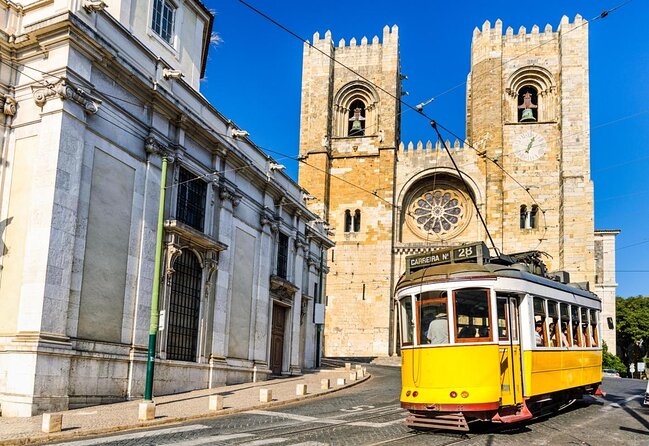
- Tram 28 is included: The ride adds a practical and distinctly Lisbon experience to the walking route.
- A maximum of 15 people keeps the group manageable: You should have a better chance of hearing the guide than on a large city tour.
- Best for a first day in Lisbon: You leave with a map in your head and useful suggestions for restaurants, fado, and later sightseeing.
Why this walk works as a first look at Lisbon
Lisbon can be confusing at first. The city is spread across steep hills, and its neighborhoods feel different from one another. Baixa has a more ordered, rebuilt form, Bairro Alto carries centuries of change and nightlife, and Alfama folds into a maze of lanes by the Tagus.
This tour helps you place those districts in relation to one another. You are not simply ticking off isolated monuments. You walk from one part of the city to the next while hearing why each area developed as it did.
That makes the experience especially useful on your first day. You can note places to return to, learn how the main neighborhoods connect, and ask your guide for ideas. Ricardo is often praised for his strong command of Lisbon’s past, while Beatrice receives particular credit for her humor, organization, and practical advice. Paulo is noted for making Portuguese history feel personal, and guides such as Ana, Sofia, Lucie, and Joao have also led highly regarded versions of the walk.
The rating is 4.8 from 316 reviews, with 95 percent recommending the experience. That is a strong record, though not a guarantee of the same guide or exact style on every departure. One less favorable experience reported unclear explanations, so the guide can make a real difference. Still, the overall pattern points to a tour built around clear storytelling rather than a rushed list of monuments.
More Historical Tours in Lisbon
- Lisbon: History, Stories and Lifestyle Walking Tour
★ 4.8 · 10,902 reviews - Lisbon: Live Fado Show with Port Wine in Historic Center
★ 4.7 · 4,166 reviews - Lisbon: Fado Show with Wine in a Historic Venue
★ 4.8 · 1,294 reviews
Bairro Alto and the city shaped by disaster
The walk begins in Bairro Alto, a neighborhood about five centuries old. This is a good starting point because Lisbon’s story is one of repeated change, and Bairro Alto lets the guide explain how the city grew and adapted.
The 1755 earthquake is central to that story. After the disaster, families from Baixa and other parts of Lisbon moved into Bairro Alto, helping renew and reshape the area. You get an early lesson in how natural disaster, migration, politics, and daily life changed the city’s character.
The stop lasts about 15 minutes and has no admission cost. That keeps the opening simple. You begin outdoors, so you can focus on the guide and the streets instead of rushing into a ticketed attraction.
Bairro Alto is also a practical reminder that Lisbon is not flat. You will be walking on slopes from the beginning. If your balance or stamina is limited, this is the point to judge how comfortable you feel before the route becomes more demanding.
São Pedro de Alcântara gives you the city at a glance
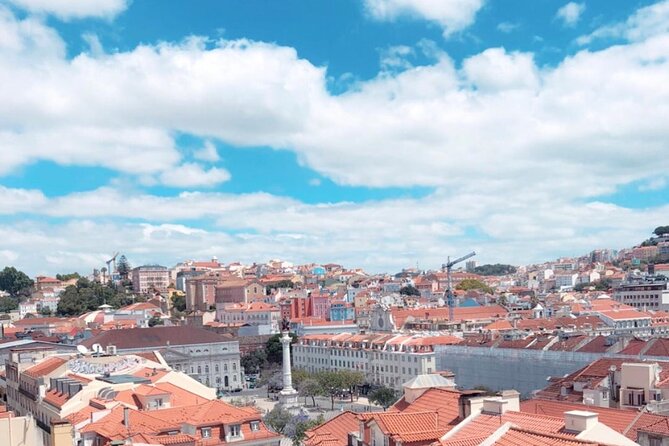
From Bairro Alto, the route passes through the garden at Miradouro de São Pedro de Alcântara. This viewpoint looks across Baixa toward the south bank of the Tagus River.
I like this stop because it gives you a visual key to Lisbon. After hearing about districts and urban change, you can look across the city and see how the hills, central streets, river, and opposite bank fit together.
The stop is about 15 minutes. Bring a camera, but do not expect a long rest. The walk continues soon after, and the viewpoint is one part of a moving route rather than a full sightseeing stop with time for a long stay.
San Roque hides one of the route’s best interiors
The Church and Museum of San Roque may be the most surprising sight on the walk. Its outside is austere, but the interior is filled with gilding, tiles, and paintings.
The church was built by the Jesuits and was among the first Jesuit churches in Portugal, as well as one of the earliest in the world. The guide places the building within Mannerist and Baroque art, giving you a reason to look closely instead of simply stepping inside and taking a quick photograph.
You have about 20 minutes here. That is enough time for an introduction and a look around, though art lovers may want to return independently if they prefer to study every chapel and detail.
This is a good example of the tour’s value. A plain facade can easily lead you to walk past. With a guide, you know why the church matters and what to notice once you enter.
More Walking Tours in Lisbon
- Best of Lisbon Small-Group Guided Walking Tour
★ 5.0 · 4,869 reviews - Lisbon: Food and Wine Small Group Walking Tour
★ 4.9 · 4,082 reviews - Best of Lisbon Walking Tour: Rossio, Chiado & Alfama
★ 4.9 · 2,700 reviews - Age of Discoveries Walking Tour in Belém
★ 5.0 · 1,513 reviews
Carmo links medieval architecture to modern Portugal
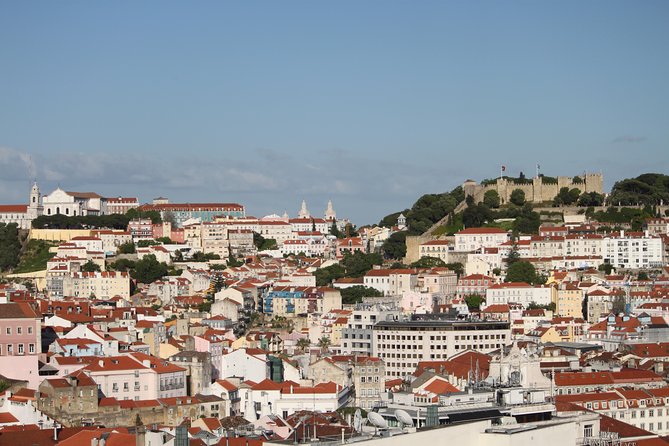
The route then heads downhill to the Carmo convent and church. These buildings offer a look at Lisbon’s Gothic architecture, but the site is also tied to one of Portugal’s most important modern political events.
The Carnation Revolution began here in 1974, ending nearly five decades of dictatorship. That gives the stop unusual range. You are looking at medieval religious architecture while hearing about a peaceful military uprising and the political change that followed.
The visit lasts about 20 minutes. It is one of the best stops for understanding that Lisbon’s story is not only about kings, explorers, earthquakes, and old churches. The city also carries the memory of recent political change.
The route’s historical approach is one of its strongest features. Guides such as Ricardo have been praised for explaining Lisbon through many periods, while Beatrice is credited with making the story accessible and adding humor. If you enjoy context more than a simple photo stop, Carmo should reward your time.
Santa Justa is impressive, but admission costs extra
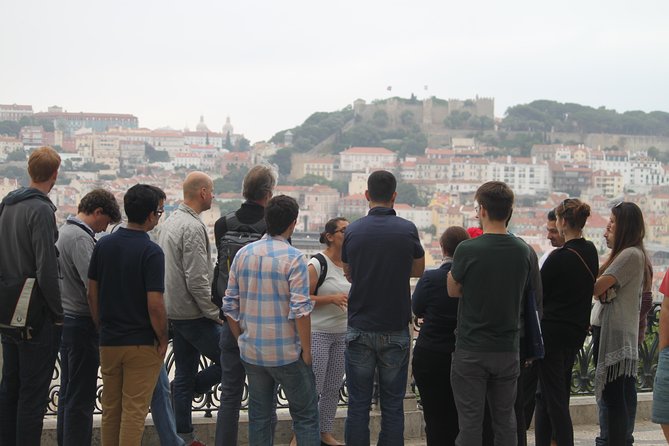
A little farther on, you reach the Santa Justa elevator. This Gothic Revival structure is one of central Lisbon’s most recognizable monuments and offers one of the city’s best viewpoints.
The tour does not include admission to the elevator. That distinction matters when you compare the $30.25 price with other Lisbon walking tours. You see the monument as part of the route, but you should not assume that the ticketed viewpoint is part of your package.
The planned stop lasts about 15 minutes. Depending on the guide’s timing and the conditions at the site, you may have enough time to look at the ironwork, take pictures, and hear how the elevator fits into Lisbon’s steep street network. A separate visit would require its own ticket and time.
Even without going up, Santa Justa is useful in the larger sequence. You have just come down from Bairro Alto, and the elevator makes more sense when you have felt the city’s hills under your own feet.
Baixa brings a welcome coffee and pastry break
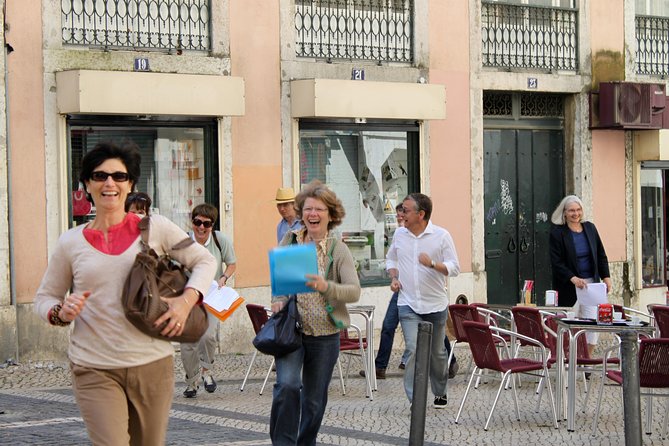
The tour pauses in Baixa for coffee and a pastry at a local cafe. This is a small feature, but it improves the pace of the walk.
By this point, you have crossed several districts and spent time on hills and stone streets. Fifteen minutes with a coffee and cake gives you a chance to sit, ask questions, and absorb what you have seen. It also adds a simple everyday experience rather than keeping the tour focused only on monuments.
Other food and drinks are not included, so budget separately if you want more than the provided break. The stop is not presented as a full meal, and you should eat beforehand if you need something substantial.
Several guides are praised for giving restaurant and fado suggestions during or after the walk. Ricardo, Beatrice, and Paulo are particularly associated with useful local recommendations. Ask questions here, when the group is stationary, rather than waiting until the final cathedral stop.
Baixa and Praça da Figueira show planned Lisbon
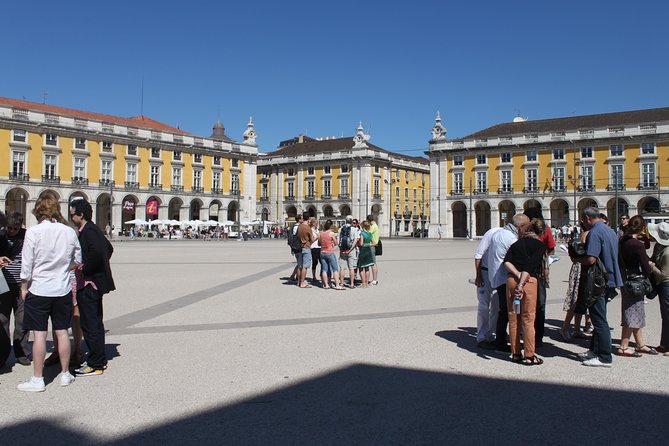
The route continues through Baixa, the central part of Lisbon rebuilt after the 1755 earthquake. The streets here offer a contrast to Bairro Alto and Alfama, with a more ordered shape and a clearer sense of urban planning.
At Praça da Figueira, you see more of the central city before taking the included tram ride. The listed timing gives about 15 minutes for this portion, including the short break before moving on.
This section is not about one grand interior. Its value lies in helping you understand how the rebuilt center works. You see where the main districts meet and how Lisbon shifts from broad central streets to steep lanes and hilltop viewpoints.
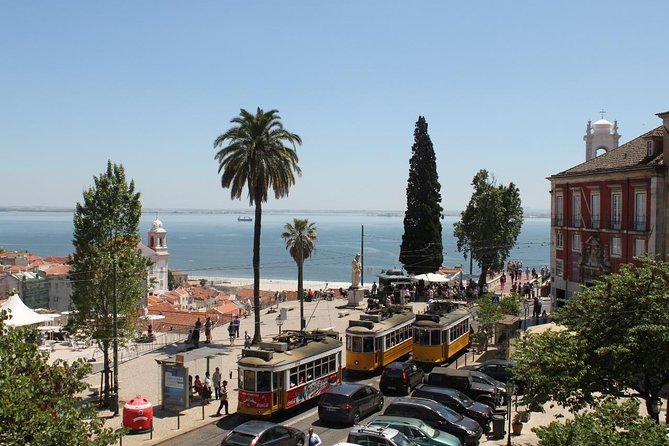
The tram ride is one of the tour’s most appealing practical touches. The route goes upward from the castle area toward Portas do Sol. Instead of treating public transport as a nuisance between sights, the experience makes it part of your introduction to Lisbon.
Tram 28 carries you toward Alfama
The tram trip gives you a short taste of the city’s famous electric streetcars. It also breaks up the walking, which is useful on a route with several hills.
The exact feel of the ride depends on the day, the group, and the service conditions, but it is included in the tour price. You are not left to work out the route yourself, and the guide helps connect the ride to the next part of the city.
This is also where expectations matter. The tram is one element of a walking tour, not a full transport tour of Lisbon. You should expect to continue on foot after reaching the Portas do Sol area.
Portas do Sol opens the door to Alfama
At Portas do Sol, the city spreads below you toward the river. From here, you can see the Monastery of São Vicente de Fora, the National Pantheon, and the Alfama district running through narrow streets toward the Tagus.
The viewpoint gives another helpful pause. São Pedro de Alcântara showed you Lisbon from one direction, while Portas do Sol introduces a different side of the city. The changing views help you understand why Lisbon is best explored slowly and on foot.
The stop leads into Alfama, one of Lisbon’s oldest and most traditional neighborhoods. The area is known for fado houses and festivals honoring popular saints, especially St. Anthony.
The guide’s role is important here. Alfama can feel like a maze, and a short walk through its lanes does not automatically explain the neighborhood. Guides have been praised for knowing the back streets, explaining the origins of fado, and showing how the district fits into Portuguese culture.
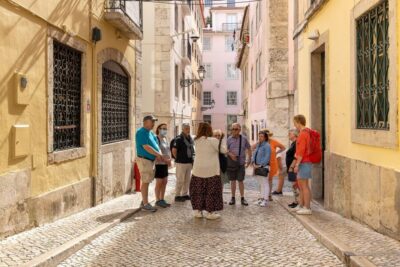
You should expect uneven pavement, slopes, and narrow passages. Keep your group in sight and wear shoes with a firm grip. This is the part of the tour where the route feels most like a neighborhood walk rather than a standard monument circuit.
Lisbon Cathedral gives the tour a fitting finish
The experience ends at Lisbon Cathedral, built in 1150, three years after the city was taken back from the Moors. The cathedral has changed over time, so its appearance reflects several architectural styles rather than one clean period.
Ending here works well. The tour has moved through Lisbon’s religious buildings, political landmarks, rebuilt central streets, and older residential lanes. The cathedral brings many of those threads together in one final stop.
The tour ends in Lisbon, but the point is not to finish every possible sight. You can continue exploring from the cathedral or use the rest of the day to revisit a church, viewpoint, cafe, or fado venue recommended by your guide.
What the $30.25 price includes
At $30.25 per person, this is a reasonable price for a three-hour guided introduction if you value context and orientation. The cost includes a professional guide, the tram trip, coffee and cake, and liability and personal accident insurance.
You are also paying for the route design. Reaching Bairro Alto, Baixa, Alfama, San Roque, Carmo, Santa Justa, and the cathedral on your own is possible, but you would need to research the history and plan the connections yourself.
The value is strongest if you are new to Lisbon or have limited time. You receive a city overview, a food break, public transport, and several major sights in one session.
The price does not include the Santa Justa elevator admission, extra food or drinks, or transport to and from the meeting point. Factor those costs into your plan. Since the tour is offered in multiple languages, select your preferred language when booking. English is offered.
Who will enjoy this route most
This tour suits first-time visitors who want a firm introduction before exploring on their own. It also works well for families with older children and teenagers, provided everyone can manage a long walk with hills and uneven streets.
The guide-led format helps if Lisbon’s neighborhoods feel hard to sort out. It is also a good choice for people who enjoy political and social history, not just buildings. The Carnation Revolution, the earthquake, Jesuit influence, fado, and the city’s older districts all receive attention.
You may prefer another format if you want a slow museum visit, a food-focused experience, or a tour with very little walking. The route moves at a steady pace and includes several short stops rather than long visits at one attraction.
The maximum group size is 15 people. That is small enough to keep the walk personal without making it a private tour. Service animals are allowed, and the activity is near public transportation. Most people can take part, but the physical demands deserve serious attention.
Small details that can make the day better
Wear comfortable shoes. This advice appears repeatedly for a reason: the tour covers hills, stone pavement, narrow lanes, and several hours on foot.
Bring water, even though coffee and cake are provided. The snack is a break, not a replacement for regular hydration or lunch.
Book it near the start of your stay if you can. You will get the most value from the route when you can use the guide’s suggestions for later meals, fado, and sightseeing.
Allow for the possibility that the meeting details may need checking. One booking problem involved an incorrect meeting place and information not reaching the guide, although the guide handled the situation. Confirmation is normally sent at booking, but reservations made within 18 hours of departure are confirmed as soon as possible, subject to availability.
Free cancellation is available until 24 hours before the start time. Cancellations or changes made less than 24 hours ahead are not accepted for a refund.
Should you book the Lisbon Essential Walking Tour?
I would book this tour for a first day in Lisbon, especially if you want history, neighborhood context, and practical orientation in one outing. The combination of San Roque’s ornate interior, Carmo’s political importance, the Baixa cafe break, Tram 28, and Alfama gives you more range than a basic central walking tour.
The strongest reason to choose it is the guide-led storytelling. Ricardo, Beatrice, Paulo, Ana, Sofia, Lucie, and Joao have all been associated with engaging versions of the route, though your guide will depend on the departure.
Skip it if you cannot comfortably manage a long, hilly walk or if you want extended time inside each monument. For most first-time visitors who arrive ready for roughly three hours on foot, $30.25 is a fair way to get your bearings and start Lisbon with a useful sense of place.
FAQ
How long does the Lisbon Essential Walking Tour last?
The tour lasts approximately three hours.
How much does the tour cost?
The listed price is $30.25 per person.
What language is the tour offered in?
English is offered, and multiple languages are available. Select your preferred language when booking.
What sights are included on the route?
The route includes Bairro Alto, São Pedro de Alcântara viewpoint, San Roque church and museum, Carmo church and convent, Santa Justa elevator, Baixa, Praça da Figueira, Alfama, Portas do Sol, and Lisbon Cathedral.
Is the Santa Justa elevator admission included?
No. The tour stops at the Santa Justa elevator, but admission is not included.
Is food included?
A coffee and pastry break is included. Other food and beverages are not included.
Is the tram ride included?
Yes. The tram trip is included in the tour price.
How large is the group?
The tour has a maximum of 15 participants.
Can I cancel the booking for a refund?
Yes. You can cancel for a full refund up to 24 hours before the experience begins. Cancellations and changes made less than 24 hours before the start time are not accepted.
Recently reviewed around Lisbon
- Lisbon: Catamaran Luxury Sunset and Wine Tour★ 5.0 · 119 reviews
- Lisbon’s authentic Food and Wine tour with a Winemaker★ 5.0 · 67 reviews
- Morning Sailing Tour in Tagus River from Lisbon★ 5.0 · 68 reviews
- Lisbon: Belem Walking Tour with Jeronimos Monastery Tks Included★ 5.0 · 115 reviews
- PRIVATE Unforgettable Full Day Tour to Sintra from Lisbon★ 5.0 · 236 reviews
- Discover Lisbon’s Alfama: Secrets of the Old Town★ 5.0 · 104 reviews
- Sesimbra Wild Beach Tour from Lisbon★ 5.0 · 57 reviews
- Private Jeep Tour from Lisbon – Arrábida, Sesimbra & Beach Picnic★ 5.0 · 48 reviews
Historical Tours, compared.

Historical Sites, Wine Experience, Lunch & Cruise
Read our review →
Live Fado Show with Port Wine in Historic Center
Read our review →

Browse the lists this tour appears in