
Reviewed · WALKING TOURS
Lisbon Downtown & Alfama with a guide Walking tour
Lisbon reveals itself best on foot, especially in Alfama’s steep lanes, where Moorish walls, tiled houses, churches, and river views appear around sudden corners. This tour links the old quarter with Baixa, Chiado, Bairro Alto, and several of the city’s key monuments, giving you a useful first look at Lisbon’s layers.
I like the very low $3 price and the small-group format, capped at 20 people. Guides such as Bruno, Marina, Miguel, Ines, and Daniel have been praised for clear history, friendly pacing, and practical tips. The catch is important: the details describe the experience as about two hours, but also call it a full-day tour and list a much longer route. Confirm the exact schedule before booking.
In This Review
- Key points to know before you go
- Start at Praça do Comércio and Lisbon’s riverfront
- Baixa, Chiado, and the city rebuilt from stone
- Alfama’s lanes, Fado, and the National Pantheon
- Viewpoints, old walls, and the Cathedral hill
- Small squares, old gateways, and everyday Lisbon
- What the guides add to the walk
- Price, duration, and what you actually receive
- Practical advice for hills, weather, and timing
- Who should book this Lisbon walk?
- Should you book it?
- FAQ
- How long does the tour last?
- Where does the tour begin?
- Where does the tour end?
- Is food or drink included?
- What languages are available?
- How large is the group?
- What should I bring?
Key points to know before you go
- Praça do Comércio sets the historical stage: Learn how Lisbon’s grand riverfront square changed after the 1755 earthquake.
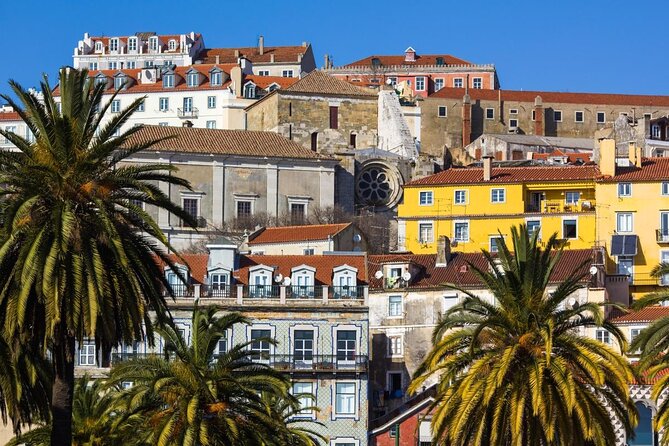
- Alfama is the heart of the walk: Expect medieval lanes, hills, stone steps, and views toward the Tagus.
- The route connects several neighborhoods: Baixa, Chiado, Bairro Alto, Alfama, and Rossio each show a different side of central Lisbon.
- The group is limited to 20 people: That is small enough for questions, though the experience may feel less personal at the maximum size.
- The Vox City app adds five self-guided walks: Audio commentary is available in English, French, Italian, Spanish, Chinese, and German.
- Wear proper shoes: This is a serious walking route, with hills and uneven streets. Bring water, sunscreen in summer, and a warm jacket in winter.
Start at Praça do Comércio and Lisbon’s riverfront
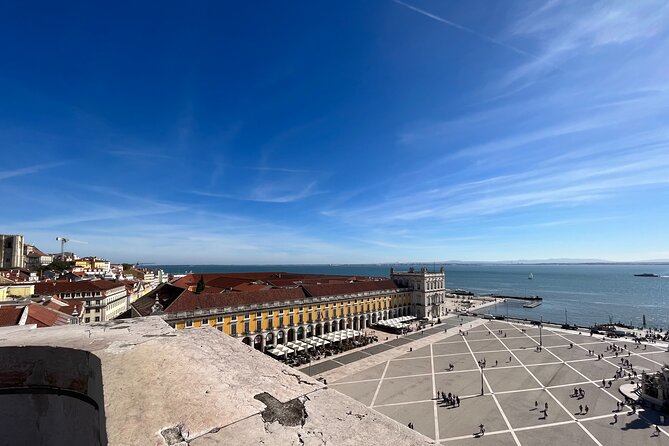
The meeting point is Rua dos Douradores, near the Baixa grid. Morning departures are listed at 9:45, with another start at 1:45. From there, the route reaches Praça do Comércio, also called Terreiro do Paço, one of Lisbon’s grandest urban spaces.
The square opens toward the Tagus on its southern side. Its wide shape and pale arcades make it feel formal and airy, a sharp contrast to Alfama’s cramped lanes later in the walk. Your guide explains that this was once the site of the Paço da Ribeira, the royal palace destroyed in the 1755 earthquake.
That disaster reshaped Lisbon. Under the Marquis of Pombal, Baixa was rebuilt with a regular street plan and earthquake-conscious construction. The story gives you more than a pretty square to photograph. It explains why central Lisbon looks so different from the older quarters on the hills.
The nearby Augusta Street Arch is another useful stop. Its carvings honor Portuguese leaders, builders, and explorers, and the arch forms a grand entrance from the square into Baixa. From ground level, you can look up at the sculpted figures and then follow the pedestrian street toward the city center.
I would pay close attention here because the opening explanation helps make sense of the rest of Lisbon. The route is not just a parade of monuments. It connects royal power, disaster, religion, trade, and everyday city life.
More Walking Tours in Lisbon
- Lisbon: History, Stories and Lifestyle Walking Tour
★ 4.8 · 10,902 reviews - Best of Lisbon Small-Group Guided Walking Tour
★ 5.0 · 4,869 reviews - Lisbon: Food and Wine Small Group Walking Tour
★ 4.9 · 4,082 reviews
Baixa, Chiado, and the city rebuilt from stone
As you leave the riverfront, the route moves through Baixa and toward Chiado. These districts are easier to walk than Alfama, with wider streets and a more orderly layout. That makes this portion a good introduction to Lisbon before the hills become more demanding.
One stop is a 16th-century building now used by the José Saramago Foundation. Built in 1521, it is a reminder that the rebuilt downtown is not the whole story. Lisbon’s streets contain older layers, and the foundation connects the city to Portugal’s only Nobel Prize-winning author.
The tour also brings together landmarks associated with literature, music, religion, and public life. That range is one of its strengths. You do not spend the whole walk hearing dates and names without context. Instead, you move between places that help explain how Lisbon developed.
The schedule may affect how much time you receive at each stop. If the walk truly lasts about two hours, expect brief exterior visits and guide commentary rather than extended museum time. If the operator is running the longer route described in the promotional material, the pace and stopping pattern may be different.
That uncertainty is worth resolving before you arrive. The published information includes a short duration but also calls the experience full-day. It lists enough neighborhoods and sights for a much longer outing. Ask the company which version applies to your selected departure.
Alfama’s lanes, Fado, and the National Pantheon
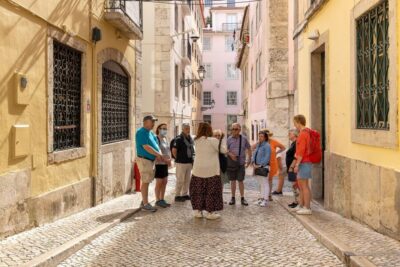
Alfama is the main reason to choose this walk. The neighborhood survived the 1755 earthquake in large part because it was built on dense bedrock, and its crooked streets still feel separate from the planned lower city.
You will walk through narrow alleys and residential streets where the route can turn sharply uphill or downhill. The old quarter is rewarding for photographs, but do not mistake a short distance on a map for an easy walk. Lisbon’s slopes make every block count.
The guide explains Alfama’s connection to Fado, the Portuguese music built around voice and guitar. The Fado Museum preserves that musical tradition and its cultural influence. The museum itself may be an exterior or passing stop depending on the schedule, so do not assume admission is included.
A guide may add music to the explanation. Marina, for example, used a phone to play Fado while discussing the tradition. That sort of small touch can make a subject easier to understand than a string of facts. It also helps you recognize the music later if you attend a Fado performance.
The National Pantheon is another major landmark in this part of Lisbon. Its building took more than 280 years to complete and now serves as the resting place of important Portuguese figures. The long construction period gives you a useful clue about Portugal’s changing architecture and politics.
The route may also pass the Monastery of São Vicente de Fora, which influenced later church building in Portugal. Religious orders used the monastery until their abolition in the early 19th century. It is a valuable stop for understanding how strongly churches and monasteries shaped Lisbon’s neighborhoods.
Viewpoints, old walls, and the Cathedral hill
Lisbon rewards you whenever the street opens into a viewpoint. One viewing point follows an old gate in the Cerca Moura, the Moorish city wall. From there, you can see several important landmarks and understand how the medieval city occupied the slope between São Jorge Castle and the cathedral.
Another viewpoint is associated with a church founded by the Knights of Malta in the 12th century. The exact amount of time at each viewpoint is not specified, but these places are essential to the walk because they let you pause and read the city from above.
The hills are also the main physical challenge. The experience calls for moderate fitness and a considerable amount of walking. Some feedback describes the route as a mix of riding and walking, while other details present it as a walking tour. Do not count on transport unless the operator confirms it for your departure.
Lisbon Cathedral, or Sé, sits below the castle and is the city’s most important Catholic building. King Afonso I commissioned it in 1150 on the site of a mosque from the period of Moorish rule. Repeated collapses and renovations left the cathedral with several architectural styles.
That makes the cathedral an especially good guided stop. On your own, you might simply photograph the heavy facade and move on. With context, you can see the building as a record of conquest, religious change, earthquakes, rebuilding, and royal ambition.
Nearby is the church built on the supposed birthplace of Saint Anthony of Lisbon. Saint Anthony is linked with marriage traditions, and one local custom involves single women tossing a coin toward his statue in hope of marrying within a year. It is a light, human detail in a route otherwise filled with grand monuments.
More Lisbon walks with a guide:
- Best of Lisbon Walking Tour: Rossio, Chiado & Alfama
★ 4.9 · 2,700 reviews - Age of Discoveries Walking Tour in Belém
★ 5.0 · 1,513 reviews - Sintra & Cascais Day Tour with Pena Palace Entry and Gardens Walk
★ 5.0 · 962 reviews - Lisbon Roots – Small group Food & Culture Walking Tour w/tastings
★ 5.0 · 910 reviews
Small squares, old gateways, and everyday Lisbon

The route includes a small plaza within about 500 meters of São Jorge Castle. You may not enter the castle, and admission is not listed as part of this experience, but the area gives you a sense of how the upper city connects to Alfama.
Another stop is known as the Door of the Sea. It was once a major entrance into fortified Lisbon from the beach and harbor. This is the kind of detail I value on a walking tour because it turns an ordinary street or gateway into evidence of the city’s earlier shape.
The Feira da Ladra flea market is held around Campo de Santa Clara on Tuesdays and Saturdays. If your departure falls on one of those days, you can see a long-running market used by both locals and tourists. The exact stalls change, so treat it as a lively slice of daily Lisbon rather than a fixed attraction.
The route also includes a family-owned grocery shop specializing in canned fish. Portugal’s preserved fish is part of the country’s food culture, and a stop like this adds an everyday commercial detail to the grand architecture. It may also help you choose a practical souvenir, though purchases are your responsibility.
These smaller points keep the walk from becoming a checklist of famous buildings. They show how people entered the old city, shopped, worshiped, traded, and moved through Lisbon.
What the guides add to the walk
The best part of a guided route like this is the explanation between landmarks. Bruno is praised for bringing Portuguese history into the narrow streets and adding small details along the way. Marina adjusted the pace for a slower walker and used music to explain Fado.
Other named guides connected with the experience include Miguel, Ines, Daniel, and Mihaela. The guide assigned to you can vary, so treat these names as examples rather than a promise. English, Spanish, and Portuguese are available year-round, and the audio commentary adds French, Italian, Chinese, and German through the Vox City app.
The small group has a maximum of 20 people. That is far better than a huge crowd when you want to ask about a church, a viewpoint, or a food custom. Still, 20 is not an intimate private walk, and you may need to stay near the guide in busy streets.
Several people praised guides for changing the pace, answering questions, and offering suggestions for food and later sightseeing. That is especially helpful if this is your first time in Lisbon. You can use the walk to learn where to return for Fado, which districts suit an evening stroll, and how the city’s neighborhoods fit together.
Price, duration, and what you actually receive
At $3, the price is strikingly low. Even a short guided introduction can be good value at that rate, particularly if you want orientation on your first day and plan to explore the sights inside on your own.
The package includes a professional guide, insurance required under Portuguese law, and five self-guided walks in the Vox City app. The app is useful after the guided portion, but you need your own mobile device. Food, drinks, gratuities, personal expenses, and hotel transport are not included.
The biggest concern is the timing information. The experience is described as approximately two hours, yet the route includes enough stops for a longer city tour and is also labeled full-day in the description. Some supplied comments refer to a full-day vehicle tour with Belém, a water museum, lunch, pastries, and other stops. Those details do not match this downtown and Alfama walking experience.
For that reason, do not book it expecting the vehicle-based day tour, included lunch, or a pastry tasting. Confirm exactly what your chosen product includes. The clearly stated meeting and ending points for this walk are Rua dos Douradores and Rossio Square.
Practical advice for hills, weather, and timing
Wear tennis shoes or other footwear with a firm sole. The route includes steep streets and old surfaces, and sandals or thin fashion shoes could make the walk less comfortable.
Bring water. In summer, add sunscreen. Winter can feel very cold, so take a jacket. Heavy rain does not automatically cancel the tour. Cancellation occurs only if official organisms issue warnings or alerts, so check the weather and contact the company at least 24 hours before departure to confirm that the activity will run.
The walk is near public transportation, but hotel pickup and drop-off are not included. Plan to reach Rua dos Douradores on your own and allow time to find the meeting point. The endpoint is Rossio Square, a central place from which you can continue sightseeing or take public transport.
Free cancellation is available up to 24 hours before the start time. Inside that window, the amount paid is not refunded, and changes are not accepted. The tour also requires a minimum number of participants, so a cancellation by the operator may lead to another date, another experience, or a full refund.
Who should book this Lisbon walk?
I would choose this experience if you want a cheap introduction to central Lisbon, enjoy walking, and prefer stories and local details to a fast list of photo stops. It suits first-time visitors who need a map in their head before exploring alone.
It is less suitable if hills are difficult for you, if you want long visits inside museums and churches, or if you need a firmly defined full-day schedule. The maximum group size is reasonable, but the experience will not provide the same flexibility as a private guide.
The named guides have a strong record for warmth, clear explanations, and adapting to the group. That human element matters here. Lisbon’s streets can look confusing at first, and a good guide helps you see why they were built that way.
Should you book it?
Book it for the $3 orientation, Alfama’s old lanes, the city viewpoints, and the chance to ask a local guide how Lisbon fits together. The route covers more than the postcard sights, including the Fado Museum, National Pantheon, cathedral area, flea market, old walls, and a traditional canned-fish shop.
Before paying, confirm the duration and exact itinerary. The supplied details conflict between a two-hour walk and a full-day outing, and other descriptions appear to refer to a different vehicle tour. If the operator confirms a genuine two-hour downtown and Alfama walk, it is an excellent low-cost starting point. If you need a full day with transport, lunch, Belém, or included tastings, choose a different product.
FAQ
How long does the tour last?
The experience is listed as approximately two hours. Some promotional details also call it a full-day tour, so you should confirm the exact duration with the company before departure.
Where does the tour begin?
The meeting point is Rua dos Douradores, 16, in Lisbon. The listed departure times are 9:45 and 13:45.
Where does the tour end?
The walking route ends at Rossio Square, Praça do Rossio, 1100-200 Lisbon.
Is food or drink included?
No. Food and drinks are not included unless specifically stated for your booking. Personal expenses and gratuities are also excluded.
What languages are available?
English, Spanish, and Portuguese are available year-round. The Vox City app offers audio commentary in English, French, Italian, Spanish, Chinese, and German.
How large is the group?
The maximum group size is 20 people. A child rate is available only when the child is accompanied by at least one paying adult.
What should I bring?
Wear tennis shoes or suitable walking footwear and bring water. Use sunscreen in summer and bring a jacket in winter. A mobile device is needed for the Vox City app.
Recently reviewed around Lisbon
- Lisbon: Catamaran Luxury Sunset and Wine Tour★ 5.0 · 119 reviews
- Lisbon’s authentic Food and Wine tour with a Winemaker★ 5.0 · 67 reviews
- Morning Sailing Tour in Tagus River from Lisbon★ 5.0 · 68 reviews
- Lisbon: Belem Walking Tour with Jeronimos Monastery Tks Included★ 5.0 · 115 reviews
- PRIVATE Unforgettable Full Day Tour to Sintra from Lisbon★ 5.0 · 236 reviews
- Discover Lisbon’s Alfama: Secrets of the Old Town★ 5.0 · 104 reviews
- Sesimbra Wild Beach Tour from Lisbon★ 5.0 · 57 reviews
- Private Jeep Tour from Lisbon – Arrábida, Sesimbra & Beach Picnic★ 5.0 · 48 reviews
Walking Tours, compared.
Best of Lisbon Small-Group Guided Walking Tour
Read our review →

Porto Walking Tour, Lello Bookshop, River Cruise and Cable Car
Read our review →
Best of Lisbon Walking Tour: Rossio, Chiado & Alfama
Read our review →
Experience Porto’s Charm: 3-Hour Guided Walking Tour
Read our review →
Enjoy a Guided Levada Walk in the Rabaçal Valley
Read our review →Browse the lists this tour appears in