
Reviewed · CITY TOURS
Lisbon City of Spies Tour
Lisbon’s role in World War II was far more complicated than its sunny streets suggest. On this walking tour, you follow the trail of spies, refugees, double agents, precious metals, and tungsten through the city center, from Praça do Comércio to Restauradores. The story of Garbo, one of the war’s most important double agents, is a major highlight.
I like two things right away: the route gives you a useful introduction to central Lisbon, and the small group, limited to 15 people, lets you hear the guide without wrestling with a crowd. Guides such as José and Filipa have also brought in politics, business, fashion, dictatorship, and daily life, so this is not just a parade of spy anecdotes.
The main consideration is time. The walk usually takes 2 to 3 hours, and one detailed account found the final half-hour tiring. You should also expect a history walk rather than a theatrical re-creation, with the appeal resting on the guide’s storytelling and command of the subject.
In This Review
- Key points to know before booking
- Why Lisbon became a spy capital
- Praça do Comércio, where power shaped the city
- Municipal Square and the birth of the Republic
- Gold, tungsten, and the business of war
- Praça da Figueira and the real James Bond
- Praça Dom Pedro IV, refugees, and changing fashion
- Lisbon’s famous spy hotels
- Praça dos Restauradores and Garbo, the double agent
- The guides make the difference
- Is the $30.17 price good value?
- Who should book this walk?
- Practical details before you go
- Should you book Lisbon City of Spies?
- FAQ
- How long does the Lisbon City of Spies Tour take?
- How much does the tour cost?
- What language is the tour offered in?
- Where does the tour start?
- Where does the tour finish?
- What locations are included?
- What historical subjects does the tour cover?
- How many people can join the tour?
- Can I cancel for a full refund?
Key points to know before booking
- Follow the real James Bond story: Praça da Figueira introduces one of the tour’s most memorable characters and the wartime world that inspired Ian Fleming’s famous spy.
- See Lisbon through WWII intrigue: Learn why neutral Lisbon became a meeting place for spies, refugees, businessmen, agents, and intelligence services.
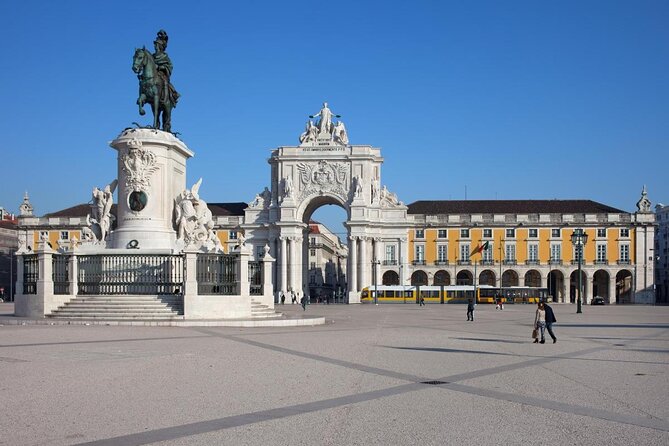
- Walk from power to espionage: The route runs from Praça do Comércio through the central squares to Restauradores.
- Get more than wartime stories: The guides also explain Portugal’s politics, culture, dictatorship, economics, and changing social life.
- Expect a small English-speaking group: The maximum is 15 people, with a professional art historian guide leading the walk.
- Plan for a 2 to 3 hour outing: The route is designed to be walkable, but comfortable shoes and sensible pacing will help.
Why Lisbon became a spy capital
Lisbon can seem an unlikely setting for a spy story. It is a relaxed Atlantic capital, full of tiled buildings, cafés, trams, and broad public squares. Yet during World War II, its position as a neutral European capital made it a useful place for people trying to pass through, trade, gather information, or disappear.
That tension is the heart of this tour. Portugal was not a battlefield in the usual sense, but the war still touched its politics, money, trade, refugees, and streets. Lisbon became a place where different interests crossed paths: Allied and Axis agents, displaced Jewish families, business figures, government officials, journalists, and people working under false identities.
I like that the tour does not treat espionage as a collection of isolated tricks. The story becomes more useful when you understand the setting around it. The guide explains the political and business forces that made Lisbon important, then connects those forces to real people and places.
The result is a walking lesson in how a city can become strategically important without firing a shot. You see grand civic spaces, but you also learn to read them as places where power, money, fear, and opportunity met.
More City Tours in Lisbon
- Lisbon City Center Tour – The Unmissable Lisbon
★ 5.0 · 22,234 reviews - Lisbon: Daytime/Sunset/Night City Sailboat Tour with Drink
★ 4.9 · 3,114 reviews - Lisbon: City Highlights and Viewpoints E-Bike Tour
★ 4.9 · 1,556 reviews
Praça do Comércio, where power shaped the city
The tour begins at Cervejaria Antártida, at the western side of the Palácio Real on Praça do Comércio. The meeting point is at Praça do Comércio, R. C 20-23, in the Baixa district.
This huge square is a fitting opening. Its formal layout and river-facing position make it one of Lisbon’s clearest symbols of government and authority. The first stop lasts about 20 minutes, and the focus is the square’s long role as a center of power.
I find this opening valuable because it gives you the political frame before the spy tales begin. The square is not merely a place to take photographs. It helps explain how Lisbon’s institutions, rulers, and commercial interests shaped the city that wartime agents entered.
You also get your first broad view of downtown Lisbon. If you have just arrived in the city, this is a useful place to begin orienting yourself. The guide can connect the square to the streets and plazas that follow, making the rest of the walk easier to understand.
Do not expect an indoor museum visit here. Admission to the stop is free because this is an outdoor walking route, and the value comes from the explanation at each location.
Municipal Square and the birth of the Republic
The next stop is Municipal Square, with about 10 minutes devoted to the beginning of the Portuguese Republic. It is a short pause, but it expands the story beyond World War II.
This matters because Lisbon’s wartime behavior makes more sense when you know something about the country’s political development. The tour uses the square to place the Republic, later dictatorship, and broader political change into the same story.
The guides do not simply point to a building and move on. Past accounts describe discussion of Portugal’s social and political life both during the war and afterward. That wider view is one reason I would recommend this walk even if you are more interested in Lisbon than in espionage.
The stop is brief, so do not expect a full political history of Portugal. Think of it as a clear piece of background that helps you understand the setting.
Gold, tungsten, and the business of war
One part of the route covers Jewish gold and the tungsten trade. This is where the tour’s economic side comes into focus.
Spy stories can become lightweight if they deal only in secret names and dramatic meetings. Gold and tungsten show the harder realities behind wartime neutrality. Trade, banking, raw materials, and private profit affected the course of the conflict, and Lisbon was involved in those networks.
The subject also ties the city to the fate of Jewish refugees and the practical struggle to move money and people across borders. The tour presents these issues as part of Lisbon’s wartime story rather than treating refugees as a side note.
I especially value this portion because it gives you something to think about after the walk. The city’s role was not only about agents passing messages. It also involved commerce, moral choices, and the pressure of international politics.
The supplied route does not give a separate stop time for this section, so the exact length may depend on the guide and group pace. It is best understood as a thread woven through the central part of the walk.
More Lisbon city days:
- Lisbon: Private City Tour by Eco Tuk Tuk
★ 4.9 · 1,215 reviews - Lisbon: Tagus River Sailboat City Cruise
★ 4.9 · 1,212 reviews - Lisbon: City Sightseeing Hop-On Hop-Off Bus Tour
★ 3.7 · 794 reviews - Lisbon: Private City Tour by Tuk-Tuk
★ 5.0 · 789 reviews
Praça da Figueira and the real James Bond
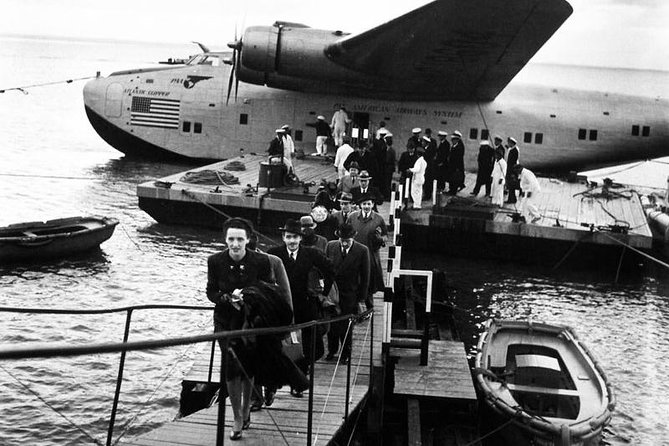
At Praça da Figueira, the tour turns to the real James Bond. The stop lasts around 10 minutes.
This is likely the most instantly appealing part for anyone drawn to classic espionage. The story links Lisbon’s wartime setting to the real-life figure whose exploits helped shape the image of the suave secret agent. The tour places that character in a real urban setting rather than leaving him as a name in a book.
The square also gives the guide a chance to explain how individual personalities fit into the larger war. You hear about people, motives, and relationships, not just military events. That human scale helps keep the walk lively.
I would not book this expecting a film-themed tour. James Bond is one important chapter, but the focus remains Lisbon during World War II and the political world around it. The appeal is discovering the real events behind the fiction.
Praça Dom Pedro IV, refugees, and changing fashion
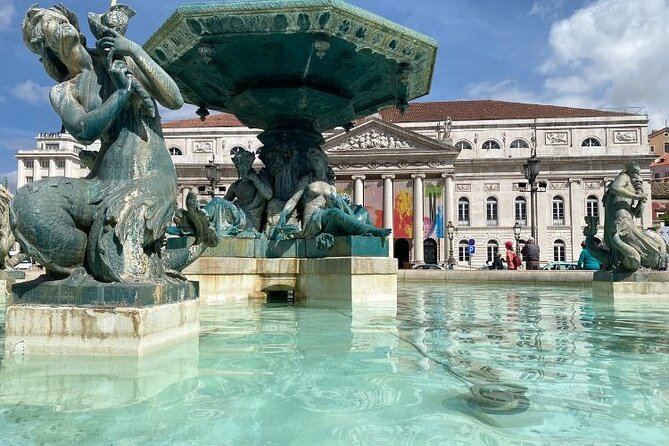
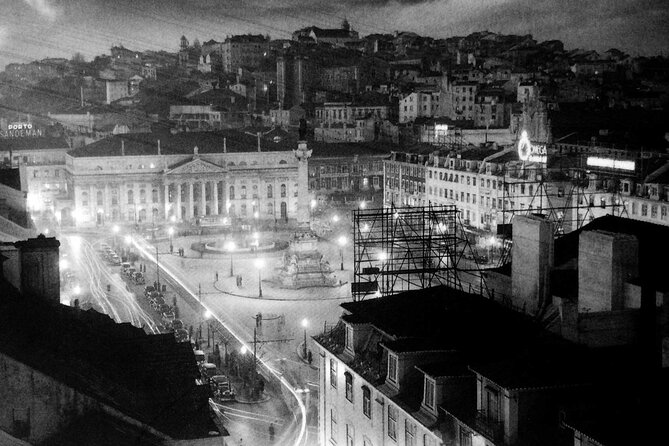
The route continues to Praça Dom Pedro IV, commonly known as Rossio Square, for roughly 15 minutes. Here, the themes shift toward refugees and European fashion trends.
This may sound like an odd pairing, but it gives you a better feel for wartime Lisbon. Rossio was part of the city’s public life, and the tour uses it to show how international arrivals and wartime pressures affected more than government offices or intelligence circles.
Refugees brought urgent personal stories and new cultural influences. At the same time, fashion offered a glimpse of how European trends continued to travel, even in a period shaped by restrictions, uncertainty, and displacement.
I like this stop because it keeps the tour from becoming too narrow. You learn that history is also visible in clothing, public behavior, social contacts, and the movement of ordinary people. One of the strongest features of the walk is this habit of connecting large events to everyday life.
The square is also an easy place to pause and absorb the story. If you are walking with older family members, the route has been described as manageable and well paced, though the full outing still lasts several hours.
Lisbon’s famous spy hotels
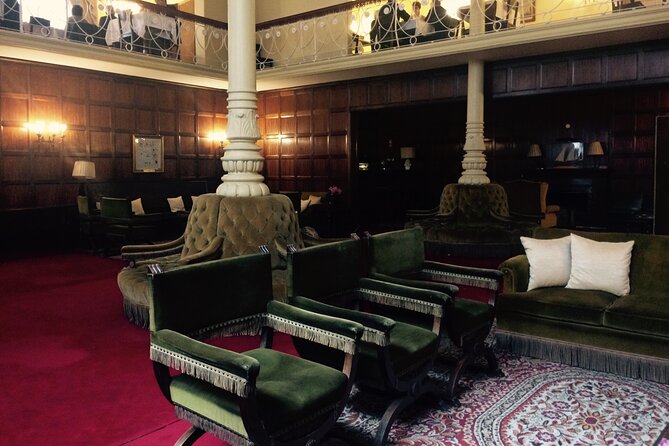
The tour then points out several of Lisbon’s best-known spy hotels. The route information does not name every hotel, so you should expect the guide to identify and explain them during the walk rather than receive a fixed hotel-by-hotel checklist in advance.
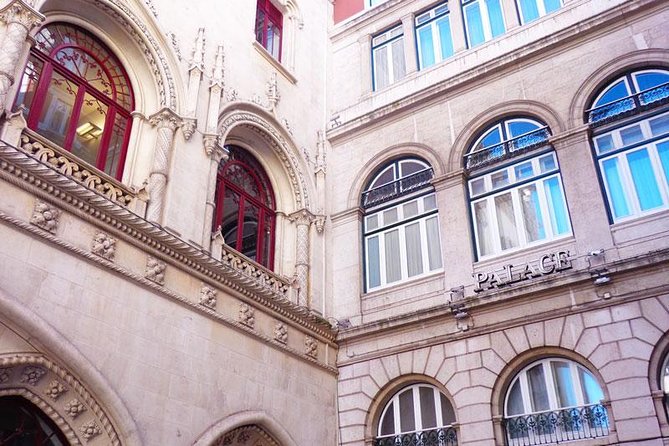
Hotels are a natural setting for espionage stories. They brought together people who had reasons to meet discreetly, pass through quickly, or watch one another. Their importance was not only architectural. It came from who stayed there, who worked there, and what kinds of encounters could take place under the cover of ordinary travel.
This part adds atmosphere without requiring a staged performance. You are looking at real city locations while hearing how they fit into the wartime network.
The practical limit is that the tour is outdoors. You should not assume that you will enter each hotel or see private rooms. The experience is about the locations and the stories connected with them.
Praça dos Restauradores and Garbo, the double agent
The walk ends at Praça dos Restauradores, after about 10 minutes at the final listed stop. Here, the main subject is Garbo, also known as Arabel, described as the most important WWII double agent.
Ending with Garbo gives the tour a strong final chapter. Double agents sit at the center of the moral confusion of espionage, and this story brings together deception, risk, intelligence, and the difficulty of knowing who is working for whom.
Restauradores is also a practical finish. From here, you remain in central Lisbon, close to public transportation and other parts of the city. The route starts at Praça do Comércio and ends at Restauradores, so you are not returned to the starting point.
I would save a little energy for this final section. One account found the last portion tiring after about two hours, even though the pace was generally easy. If you are planning dinner or another timed activity, allow some flexibility around the stated 2 to 3 hour duration.
The guides make the difference
The tour includes a professional art historian guide and is offered in English. The guide’s ability to explain connections clearly matters more here than a long list of sights.
José has been described as a strong storyteller who brings together wartime Lisbon and broader Portuguese history. Filipa has led the walk with a focus on political, social, and economic conditions, adding specific stories about spies and the places where they operated. Another account refers to a guide named Ze, so guide assignment can vary.
That variation is worth keeping in mind. The experience may feel different depending on who leads it, but the repeated strengths are clear: strong subject knowledge, clear English, an engaging presentation, and a willingness to answer questions about Lisbon and its culture.
I appreciate that the guides seem prepared to go beyond a script. Questions about international politics, business, daily life under dictatorship, and later Portuguese history can become part of the conversation. Still, the exact amount of extra discussion will depend on the guide, group, and available time.
The group size is capped at 15. That is small enough for a more personal walk, and it reduces the chance that you will lose the explanation in a large crowd.
Is the $30.17 price good value?
At $30.17 per person, this is not the cheapest way to walk through downtown Lisbon, but it offers more than a basic orientation stroll. You are paying for a specialist subject, a professional art historian guide, and roughly 2 to 3 hours of connected interpretation.
I see the strongest value in the combination of history and geography. You could read about Lisbon’s spies elsewhere, but walking from the old center of power to the squares, hotels, and final locations gives the information a physical shape.
It is also a fair choice if you want an introduction to downtown Lisbon with a clear theme. You will not receive a full survey of every major sight, but you will gain a strong sense of the central area while hearing stories that many standard city walks skip.
The price is less attractive if you want a fast, casual stroll or have little interest in World War II, politics, or historical storytelling. The tour asks you to listen closely for much of the time, and the subject matter is more serious than a standard sightseeing loop.
Who should book this walk?
I would choose this tour if you enjoy:
- World War II and intelligence history
- Real people behind famous spy stories
- Political and social context, not just famous monuments
- Walking tours led by a specialist
- Seeing central Lisbon through an unusual theme
- Asking questions and following a story across several locations
It suits couples, families, and mixed-age groups. A group ranging from 26 to 60 enjoyed the experience together, and even someone raised in Lisbon encountered unfamiliar stories. That suggests the walk can work well for both first-time visitors and people who already know the central streets.
It may be less suitable if you dislike long periods of standing and listening. The route is described as manageable for older age groups, but the total time can reach three hours. Rain is another factor. The tour can continue in poor weather, but you should dress for Lisbon’s changing conditions because much of the experience takes place outside.
You do not need to be a specialist in wartime history. The guides explain why Lisbon mattered and build the story from there. Still, the more you enjoy politics, international affairs, and moral questions, the more you are likely to get from it.
Practical details before you go
The tour uses a mobile ticket and is offered in English. Confirmation is sent within 48 hours of booking, subject to availability, so avoid making tightly linked plans until your place is confirmed.
The meeting point is Cervejaria Antártida Lisboa, at Ala Poente do Palácio Real, Praça do Comércio, R. C 20-23, 1100-038 Lisboa. The end point is Restauradores in central Lisbon.
Public transportation is nearby, and most people can take part. Service animals are allowed. The group maximum is 15 people.
Free cancellation is available if you cancel at least 24 hours before the start time. Cancellations or changes made within 24 hours are not accepted for a refund, and the cut-off follows local Lisbon time.
Wear comfortable shoes, bring water, and allow the full three hours even though the tour may finish sooner. If you have a fixed restaurant booking or evening performance, leave a generous gap.
Should you book Lisbon City of Spies?
I recommend it if you want to understand Lisbon’s WWII role through real places and human stories. The best parts are the real James Bond, the gold and tungsten trade, the refugee story, the spy hotels, and Garbo’s double-agent tale. Just as valuable is the wider explanation of Portugal’s politics, dictatorship, business, and daily life.
The main tradeoff is length. This is a serious walking conversation, not a quick photo stop. If you can give it 2 to 3 hours and enjoy a well-told historical story, the $30.17 cost is reasonable for a small group and a specialist guide. If your priority is only monuments, food, or a fast introduction to Lisbon, choose a shorter general city walk instead.
FAQ
How long does the Lisbon City of Spies Tour take?
The tour lasts approximately 2 to 3 hours.
How much does the tour cost?
The listed price is $30.17 per person.
What language is the tour offered in?
The tour is offered in English.
Where does the tour start?
It starts at Cervejaria Antártida Lisboa, Ala Poente do Palácio Real, Praça do Comércio, R. C 20-23, 1100-038 Lisboa, Portugal.
Where does the tour finish?
The tour finishes at Restauradores in Lisbon.
What locations are included?
The route includes Praça do Comércio, Municipal Square, Praça da Figueira, Praça Dom Pedro IV, several famous spy hotels, and Praça dos Restauradores.
What historical subjects does the tour cover?
It covers Lisbon’s WWII spy network, the real James Bond, Jewish gold, tungsten traffic, refugees, spy hotels, and Garbo, also known as Arabel. It also includes political, social, economic, and cultural context.
How many people can join the tour?
The maximum group size is 15 travelers.
Can I cancel for a full refund?
Yes. You can cancel for a full refund if you do so at least 24 hours before the experience starts. Changes or cancellations within 24 hours are not accepted for a refund.
Recently reviewed around Lisbon
- Lisbon: Catamaran Luxury Sunset and Wine Tour★ 5.0 · 119 reviews
- Lisbon’s authentic Food and Wine tour with a Winemaker★ 5.0 · 67 reviews
- Morning Sailing Tour in Tagus River from Lisbon★ 5.0 · 68 reviews
- Lisbon: Belem Walking Tour with Jeronimos Monastery Tks Included★ 5.0 · 115 reviews
- PRIVATE Unforgettable Full Day Tour to Sintra from Lisbon★ 5.0 · 236 reviews
- Discover Lisbon’s Alfama: Secrets of the Old Town★ 5.0 · 104 reviews
- Sesimbra Wild Beach Tour from Lisbon★ 5.0 · 57 reviews
- Private Jeep Tour from Lisbon – Arrábida, Sesimbra & Beach Picnic★ 5.0 · 48 reviews
City Tours, compared.
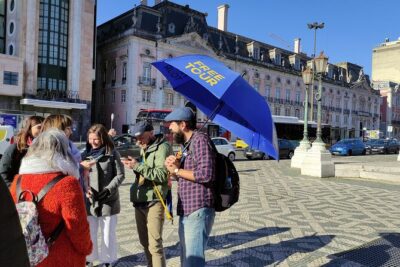
Lisbon City Center Tour – The Unmissable Lisbon
Read our review →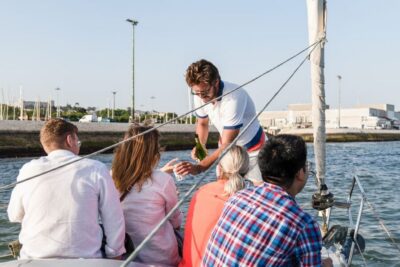
Daytime/Sunset/Night City Sailboat Tour with Drink
Read our review →
City Highlights 3-Hour Guided Electric Bike Tour
Read our review →

Browse the lists this tour appears in