

Reviewed · WALKING TOURS
Lisbon: Alfama and São Jorge Castle Quarters Walking Tour
Lisbon’s oldest quarter is best understood on foot, one crooked lane at a time. This 150-minute walk follows the old city walls around Alfama and São Jorge Castle, from the spiky Casa dos Bicos to the Portas do Sol viewpoint, with Roman ruins, fado customs, and Lisbon Cathedral along the way. The route tells the city’s story in layers, from Olisipo to the Moorish period and modern neighborhood life.
I like two things here. First, the cathedral entrance is included, so you do more than admire its weathered facade from the street. Second, the route uses small lanes, patios, stairways, and old squares rather than sticking to Lisbon’s broad tourist streets. Guides including Ricardo, Agatha, Helena, Elena, Lucy, and Fatima have been praised for clear storytelling and a friendly manner.
The main catch is simple: São Jorge Castle is not included inside the tour. You reach its walls and surrounding quarter, but you do not enter the castle grounds. The steep, uneven streets also make this a poor choice for anyone with limited mobility.
In This Review
- Key points at a glance
- Why Alfama makes such a good walking tour
- Meeting the guide at the House of Spikes
- Roman salt tanks and the city called Olisipo
- Alfama’s stairways, patios, and former Jewish Quarter
- Fado customs around Largo do Chafariz de Dentro
- Lisbon Cathedral and its changing styles
- The castle quarter without entering São Jorge Castle
- Portas do Sol and the best orientation stop
- What the guide adds to the experience
- Who should book this walk
- Practical value at $23
- My verdict on the Alfama walk
- FAQ
- How long does the Alfama and São Jorge Castle Quarters tour last?
- How much does the tour cost?
- Is São Jorge Castle included?
- Is Lisbon Cathedral included?
- Where does the tour meet?
- How will I identify the guide?
- Which languages are available?
- Is the tour suitable for people with mobility impairments?
Key points at a glance
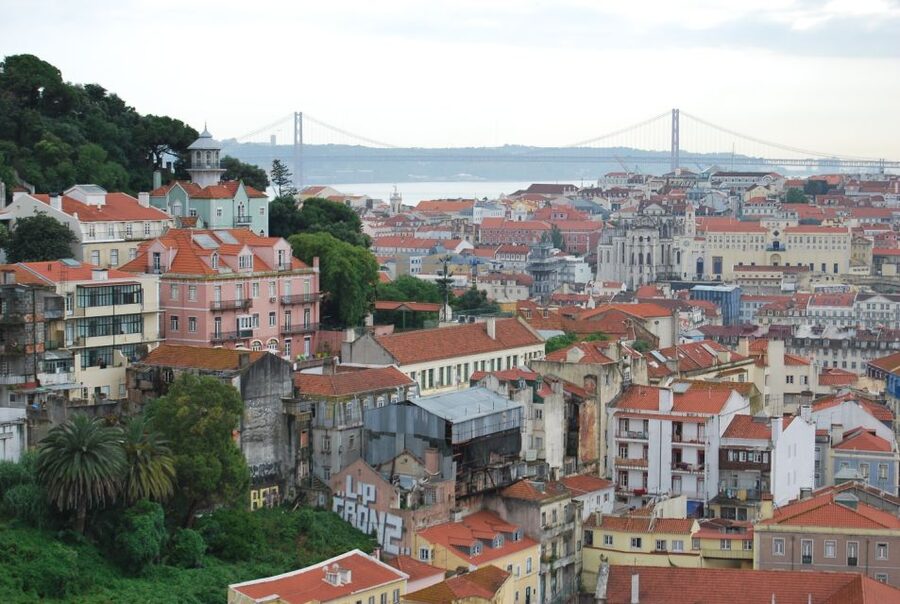
- Start at the Casa dos Bicos: Meet beside Lisbon’s famous House of the Spikes at Campo das Cebolas, near Terreiro do Paço metro station.
- Walk through old Alfama: Follow narrow lanes, hidden stairways, interior patios, and former Jewish Quarter streets.
- See Roman Olisipo: Learn about the old Roman salting tanks at the Cetária and the thermal waters that gave Alfama its name.
- Enter Lisbon Cathedral: The 12th-century cathedral is included, with Romanesque, Gothic, and later architectural changes to notice.
- Finish with city views: Portas do Sol offers a broad view over Alfama and the Tagus.
- Bring practical footwear: The walk lasts 150 minutes and includes steep, uneven streets, steps, and tight passageways.
Why Alfama makes such a good walking tour

Alfama is not a district you fully grasp from a map. Its streets twist around the hill below São Jorge Castle, often changing from a lane to a stairway with little warning. A guide helps you understand why the neighborhood looks this way and points out details you would probably pass without noticing.
This tour follows the path of Lisbon’s old defenses and the castle quarter rather than treating Alfama as a collection of pretty streets. That gives the walk a useful structure. You are not simply wandering until you reach a viewpoint. You are tracing how the city grew around water, walls, trade, religion, and music.
I especially like the way the route connects grand events with ordinary life. You hear about the Roman city of Olisipo, Muslim influence, the former Jewish Quarter, and the birth of fado. At the same time, you pass through residential corners where the focus is on how people have used these streets over time.
At $23 per person, the tour is priced sensibly for a guided walk of this length. You are paying for a live guide, a planned route, and entry to Lisbon Cathedral. That is better value than a basic orientation walk that only points out buildings from the pavement.
More Walking Tours in Lisbon
- Lisbon: History, Stories and Lifestyle Walking Tour
★ 4.8 · 10,902 reviews - Best of Lisbon Small-Group Guided Walking Tour
★ 5.0 · 4,869 reviews - Lisbon: Food and Wine Small Group Walking Tour
★ 4.9 · 4,082 reviews
Meeting the guide at the House of Spikes
The tour begins at Campo das Cebolas, beside Casa dos Bicos. Look for the building covered in diamond-shaped stone points. It was built around 1523 and survived the 1755 Lisbon earthquake, making it a fitting place to begin a tour about Lisbon’s long and often difficult past.
The guide carries a black bag with the Lisboa Autêntica logo. The closest metro stop is Terreiro do Paço, so the meeting point is reasonably easy to reach from central Lisbon. Transfers are not included, and you make your own way there.
The starting point also gives you an early chance to see how Lisbon mixes practical waterfront space with old stone buildings. Casa dos Bicos is unusual enough to recognize quickly, but do not expect the tour to include a long visit inside the building. Its role here is as a meeting point and an opening clue to the city’s layered past.
Guides are available in English, Spanish, Portuguese, German, and French. The named guides who have led this experience include Ricardo, Agatha, Helena, Elena, Lucy, Fatima, Beatrice, and Beatrix. Your guide will depend on the date and language selected.
Roman salt tanks and the city called Olisipo
One of the more unusual stops is the Cetária, where you can see traces of old Roman salting tanks. These remains offer a useful reminder that Lisbon’s story is not only about castles, viewpoints, and tiled facades. Food production and trade were part of the city’s early life too.
The guide places these remains in the setting of Roman Olisipo. That name takes you back to the period when Lisbon was part of the Roman world. You learn how the city’s location and access to the river supported work, movement, and settlement.
The tour also explains the thermal waters of Alfama. The Romans recognized the hot springs, while the Muslims later gave them the name Al-Hamma. That name is connected to the modern name Alfama, making the neighborhood itself a small piece of linguistic history.
This is the kind of detail that makes a walking tour worthwhile. You do not need a long lecture on Roman Portugal. You need one concrete feature, such as a salting tank or an old water source, that helps you picture what the area was used for. The guide supplies that link.
Alfama’s stairways, patios, and former Jewish Quarter

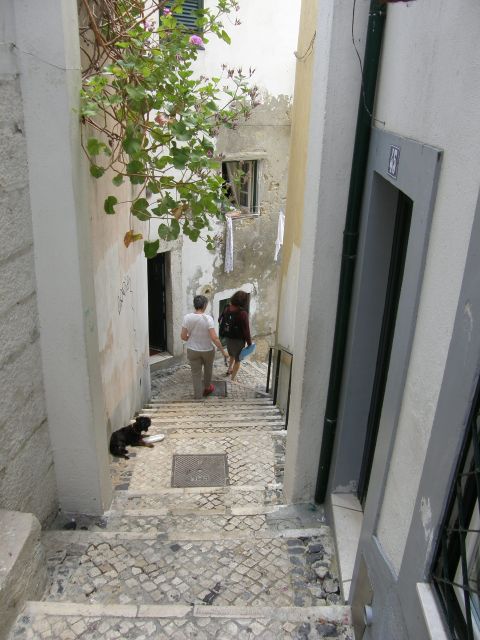
From the older Roman traces, the route moves into Alfama’s maze of lanes. You pass through narrow alleys, interior patios, secret stairways, and small squares. The route is designed to show the parts of the neighborhood that are easy to miss if you only follow the main road.
The tight layout has a practical origin. Alfama developed over centuries, and the hill below the castle shaped the way people moved through it. Instead of neat blocks, you get a web of passages that climb, turn, and open suddenly into a square or viewpoint.
The walk also reaches streets connected with what was once Lisbon’s Jewish Quarter. This adds another layer to the neighborhood’s story. You are not just seeing Moorish or medieval Lisbon as a single period. The route shows how different communities and customs have shaped the same small area.
I would listen closely during this part, since the value depends heavily on the guide’s explanation. The physical route is memorable on its own, but the historical links make it much more than a scenic stroll. Guides such as Helena and Elena have been praised for being flexible and adjusting the route slightly when needed, though the exact route can vary.
More Lisbon walks with a guide:
- Best of Lisbon Walking Tour: Rossio, Chiado & Alfama
★ 4.9 · 2,700 reviews - Age of Discoveries Walking Tour in Belém
★ 5.0 · 1,513 reviews - Sintra & Cascais Day Tour with Pena Palace Entry and Gardens Walk
★ 5.0 · 962 reviews - Lisbon Roots – Small group Food & Culture Walking Tour w/tastings
★ 5.0 · 910 reviews
Fado customs around Largo do Chafariz de Dentro
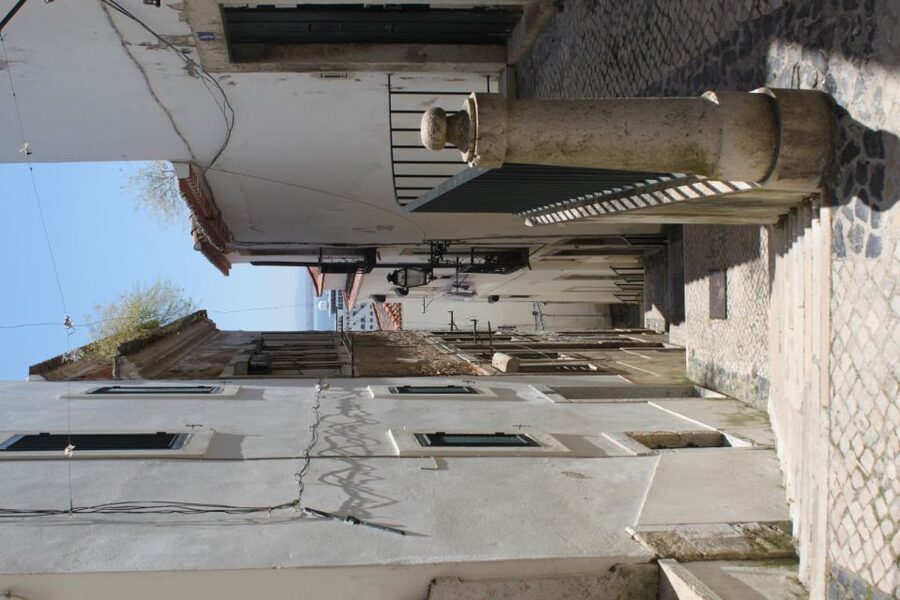
Fado is treated here as part of local life, not simply as an evening entertainment option. Around Largo do Chafariz de Dentro, the guide explains the birth of fado and one of Alfama’s oldest customs.
The square helps put the music in context. Fado is tied closely to Lisbon’s older neighborhoods, and Alfama is one of the places where that connection is most visible. You learn about the customs linked with the area as you walk through it, rather than hearing a detached explanation in a museum room.
This portion of the tour is useful if you plan to attend a fado performance later. The guide can point you toward places worth considering for the rest of your stay, and the broader advice at the end of the tour can help you decide how to spend your evenings.
Do not expect a fado concert to be included. This is a history and neighborhood walk, not a music performance. The benefit is orientation: you leave with a better sense of why fado belongs so strongly to Alfama and what to look for when you explore on your own.
Lisbon Cathedral and its changing styles
The walk includes a guided visit inside Lisbon Cathedral, or Sé de Lisboa. The building dates from the 12th century and has been changed over time, so you can see a mix of architectural styles rather than one perfectly unified design.
That mixture is one of the cathedral’s best teaching points. A single facade or interior can reflect several periods of construction, repair, and alteration. The guide helps you read those changes instead of treating the cathedral as just another old church.
The cathedral is also a welcome break from the outdoor route. After climbing and turning through Alfama’s lanes, stepping inside gives you a few quieter minutes to focus on the structure and its details. Entrance and guided explanation are included, which adds real value to the $23 price.
The visit is not the same as a full cathedral tour lasting several hours. It is one stop within a larger walk, so the time spent inside will be limited by the group and the route. Still, it is an important inclusion, especially when another major sight, São Jorge Castle, is not entered.
The castle quarter without entering São Jorge Castle
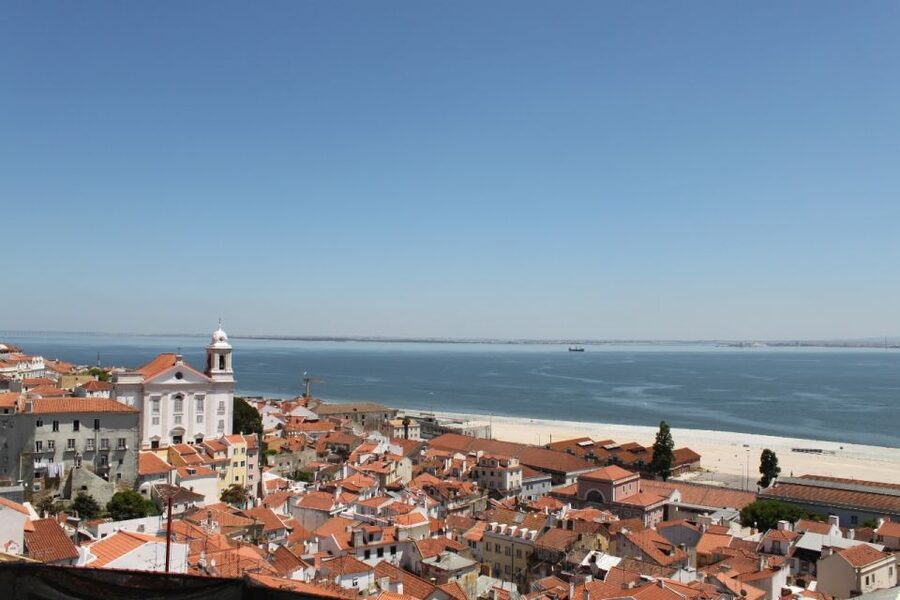
The tour explores the streets and walls around São Jorge Castle, but the castle ticket is not included. This distinction matters, since the experience title can give the impression that you will visit the castle interior.
You will learn about the Moorish castle and walk through the old quarters around it. You can see how the fortification shaped Alfama and how the city spread beneath the hill. But if you want to enter São Jorge Castle, you must arrange and pay for that separately.
I see this as a reasonable design choice for a short walking tour. Adding the castle interior would require a separate admission cost and more time, and it could turn a broad neighborhood walk into a single-site visit. Still, you should plan ahead if the castle is high on your Lisbon list.
The tour works well as an introduction before a later castle visit. You get the setting and the historical framework first, then return when you are ready to spend more time inside. Just do not book it expecting a castle ticket.
Portas do Sol and the best orientation stop
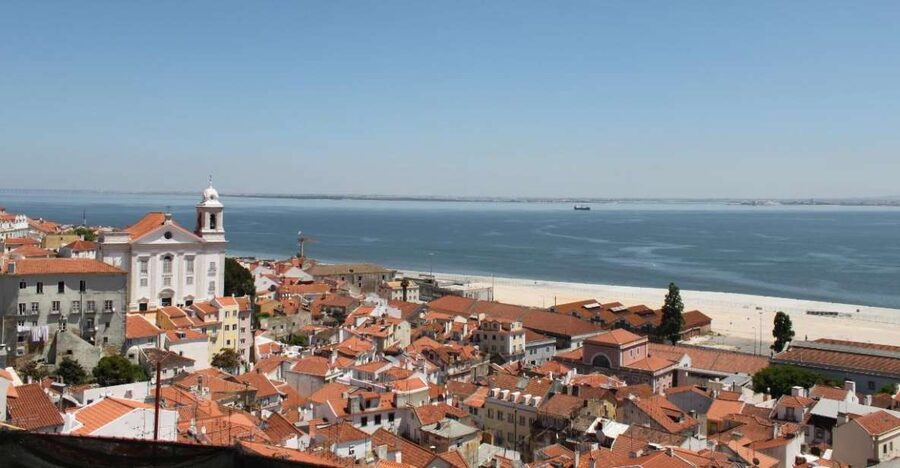
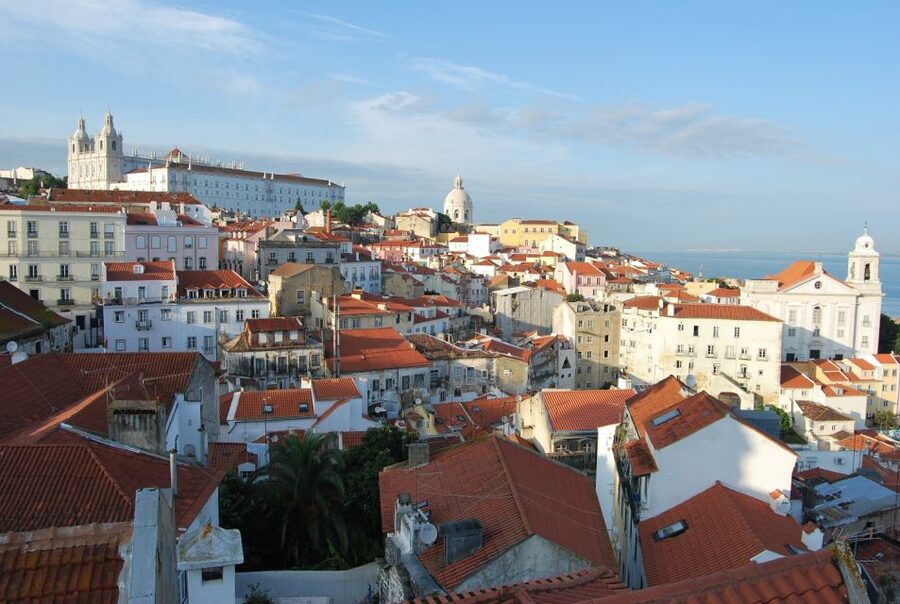
Portas do Sol is the scenic payoff. From this belvedere, you get wide views over Alfama and toward the Tagus. After the close lanes and enclosed patios, the open outlook gives you a clear sense of how the neighborhood sits on the hillside.
This is also one of the best points for getting your bearings. Alfama can feel confusing while you are walking through it, but the view helps connect the streets, churches, rooftops, and river. The guide can point out places to revisit during the rest of your stay.
The stop is more useful at the end of the route than at the beginning. First you experience the lanes at ground level. Then you look back over them from above and understand the shape of the quarter.
Bring water and wear shoes with a good grip. The information only specifies comfortable clothes, but the route’s steep and uneven character makes practical footwear important. Anyone who finds stairs or hills difficult should choose a flatter Lisbon activity instead.
What the guide adds to the experience
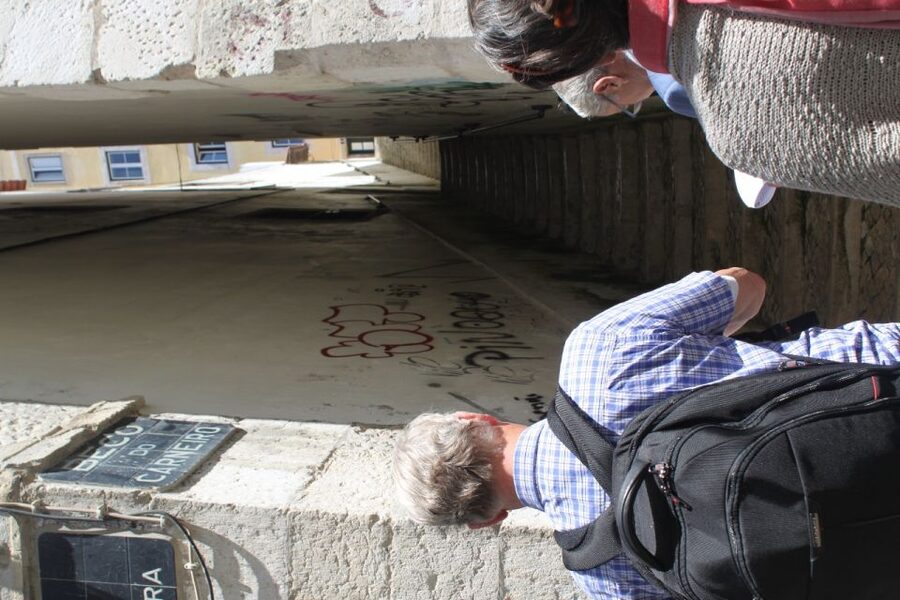
The guide is the heart of this tour. The route itself is attractive, but the strongest part is the explanation of why each place matters. Ricardo, described as a history teacher, has led the walk in an engaging way, while Agatha, Helena, Elena, Lucy, Fatima, and Beatrice have also been praised for warmth, clear explanations, and an ability to answer questions.
Several guides have made the experience feel personal when the group was small. One family of three had what felt like a private tour, and another small group was able to request a slight change in the route. You should not assume a private tour is guaranteed, but the group may be intimate rather than large.
The best guides balance dates and names with stories about food, customs, culture, and everyday life. That balance matters in Alfama. If every stop were presented as a list of centuries, the narrow streets would become tiring. A friendly guide who connects the past with modern Lisbon makes the climb easier to enjoy.
The tour also works well on your first day in the city. You get basic orientation, learn where the important quarters are, and receive suggestions for places to see later. I would book it early in a Lisbon stay if you want advice that can shape the rest of your visit.
Who should book this walk
I would recommend this tour to first-time Lisbon visitors who want a clear introduction to Alfama without spending a full day inside museums. It suits people who enjoy history, local customs, architecture, and unhurried walking through old neighborhoods.
It is also a good fit for families with older children. A 15-year-old enjoyed the route, and the changing scenery gives younger visitors more to look at than a long indoor talk. The steep streets remain the main issue, so judge your group’s comfort with hills and stairs honestly.
You should consider another option if your main goal is to enter São Jorge Castle. This tour only covers the surrounding castle quarter and walls. It is also not suitable for people with mobility impairments, and the 150-minute length means you will be on your feet for most of the experience.
The multilingual format is helpful for mixed-language groups. You can select English, Spanish, Portuguese, German, or French, subject to availability at your chosen time.
Practical value at $23
At $23, this is a strong-value orientation tour. You receive 150 minutes with a live guide, a planned route through one of Lisbon’s most confusing districts, entry to the cathedral, and a viewpoint that helps you understand the city’s shape.
The price does not cover transportation, the castle entrance, food, or a fado performance. Those exclusions are easy to manage as long as you know them before booking. The main cost you may need to add is the separate São Jorge Castle ticket if you want to go inside.
You can cancel up to 24 hours before the start for a full refund, and the reserve-now, pay-later option keeps your plans flexible. Those terms are useful if your Lisbon schedule is still changing.
My verdict on the Alfama walk
Book this tour if you want Alfama explained rather than simply photographed. You will see Roman traces, learn how Al-Hamma became Alfama, walk through former Jewish Quarter streets, enter Lisbon Cathedral, hear about fado, and finish with the view from Portas do Sol.
The main warning is the castle wording. You explore the São Jorge Castle quarters, but you do not enter the castle itself. Add a separate castle visit if that is important to you.
For $23, the cathedral inclusion and strong guiding make this a practical first-day choice. I would book it for the history, the small-lane route, and the chance to get useful Lisbon advice from guides such as Ricardo, Agatha, Helena, or Lucy. Skip it only if steep walking is a problem or if you want a castle-only visit.
FAQ
How long does the Alfama and São Jorge Castle Quarters tour last?
The tour lasts 150 minutes, or two and a half hours.
How much does the tour cost?
The listed price is $23 per person.
Is São Jorge Castle included?
No. The tour explores the castle quarters and reaches the castle walls, but entrance to São Jorge Castle is not included.
Is Lisbon Cathedral included?
Yes. The entrance and guided tour of Lisbon Cathedral are included in the activity.
Where does the tour meet?
Meet at Campo das Cebolas beside Casa dos Bicos, also called the House of the Spikes. The nearest metro station is Terreiro do Paço.
How will I identify the guide?
The guide will be holding a black bag with the Lisboa Autêntica logo.
Which languages are available?
The tour is offered in Spanish, Portuguese, German, English, and French.
Is the tour suitable for people with mobility impairments?
No. The activity is not suitable for people with mobility impairments because it takes place through Alfama’s steep and uneven streets, lanes, and stairways.
Recently reviewed around Lisbon
- Portinho da Arrábida: Coasteering Boat Tour★ 4.9 · 78 reviews
- Setúbal: Dolphin-Watching Boat Tour★ 4.8 · 213 reviews
- From Lisbon: Private Óbidos and Nazaré Tour★ 5.0 · 152 reviews
- No Diet Club – Unique food tour in Lisbon with many Tastings★ 4.8 · 44 reviews
- Queluz National Palace & Gardens Ticket★ 4.6 · 447 reviews
- Melides: Horse Riding on the Beach with Wine Tasting★ 4.3 · 117 reviews
- Melides: Horseback Riding on Melides Beach★ 4.7 · 111 reviews
- Lisbon: Street Art Tuk Tuk Tour★ 4.9 · 372 reviews
Walking Tours, compared.
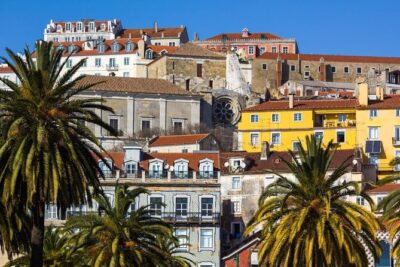
Best of Lisbon Small-Group Guided Walking Tour
Read our review →

Porto Walking Tour, Lello Bookshop, River Cruise and Cable Car
Read our review →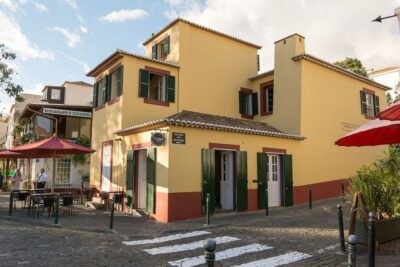
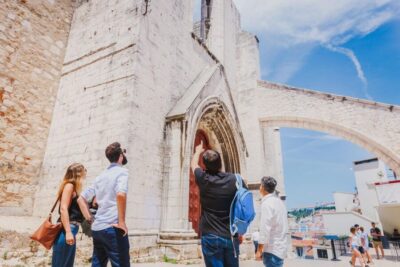
Best of Lisbon Walking Tour: Rossio, Chiado & Alfama
Read our review →
Experience Porto’s Charm: 3-Hour Guided Walking Tour
Read our review →
Enjoy a Guided Levada Walk in the Rabaçal Valley
Read our review →Browse the lists this tour appears in