
Reviewed · LISBON TOURS
Lisbon: 1-or 2-Day Hop-On Hop-Off Bus Tour
Lisbon’s hills can turn a short sightseeing plan into a sweaty workout, so this open-top bus tour gives you a useful way to cover ground before choosing where to linger. The Belém route handles the city’s major historic sights, while the Modern Lisbon line reaches Parque das Nações and the Oceanarium.
I like the ticket’s public tram and funicular access, which makes it more useful than a simple sightseeing loop, and I like the chance to ride both routes during a 48-hour period. The main drawback is timing: buses generally come every 30 minutes, but live arrival information can shift, and some audio jacks have not worked properly.
In This Review
- Key points to know before you board
- Why the Belém route should be your first ride
- Belém’s monuments and riverfront views
- What to expect on the Modern Lisbon line
- Making the most of the 24-hour or 48-hour ticket
- Audio commentary, drivers, and comfort
- Timing, stops, and the city’s difficult hills
- Is $25 a good value?
- Who should book this Lisbon bus tour?
- My advice for using it well
- Should you book it?
- FAQ
- How long are the two bus routes?
- How often do the buses run?
- How do I tell the two routes apart?
- Does the ticket include both bus routes?
- Are Lisbon’s public trams included?
- Is entry to the museums and monuments included?
- Is the Carris Museum free with the pass?
- Is an audio guide provided?
Key points to know before you board

- Two very different routes: The Belém line focuses on Lisbon’s old center, riverfront monuments, and the Age of Discoveries. The Modern Lisbon line heads east toward the Oceanarium and Parque das Nações.
- A practical hill solution: Included Carris trams, funiculars, and the Santa Justa lift can save your legs between bus rides, although you still need to check the exact transport terms when validating your ticket.
- Belém takes 1 hour 40 minutes: That is the full loop without getting off. The Modern Lisbon route also takes about 1 hour 40 minutes.
- Blue and pink signs prevent confusion: All buses are yellow, but the Belém route uses a blue sign and the Modern Lisbon route uses a pink sign.
- Audio commentary is included: It is available in several languages, though check your headset at once and change seats if the sound does not work.
- Best value comes from using the extras: The pass includes public trams and access to the Carris Museum, while admission to monuments and museums is separate.
Why the Belém route should be your first ride
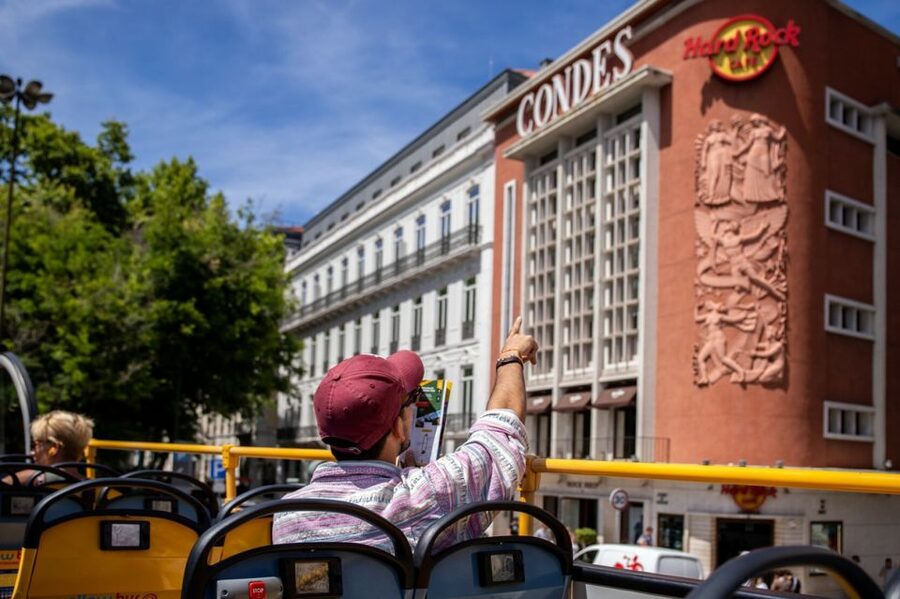
If you have only one day, I would begin with the Belém Lisbon line. It gives you the clearest introduction to Lisbon, linking the central squares with the riverfront monuments that define the city’s past.
The bus starts at Restauradores Square, a handy central point near Rossio. From here, the route passes Rossio Square, one of Lisbon’s grand meeting places, then heads up Avenida da Liberdade toward Praça do Marquês de Pombal.
That opening stretch helps you read the city. You see the formal central boulevards, the broad parkland of Parque Eduardo VII, and the commercial side of Lisbon around El Corte Inglés and Amoreiras. These stops are useful if you want shopping or a quick view over the upper part of the city, but they are not the strongest part of the route for a first-time sightseeing day.
The route becomes more rewarding around Estrela. The Basílica da Estrela and Jardim da Estrela offer a calmer break from the traffic, and the nearby Pilar 7 stop gives access to the experience around Lisbon’s famous suspension bridge. Check opening hours before planning a stop, since a bus ticket does not include admission to attractions.
More Lisbon trips worth a second look
- Around The Island – Two Days Tour From 9am To 5pm (Each Day)
★ 4.5 · 795 reviews - From Funchal: 2-Day Guided Tour of Madeira
★ 4.6 · 246 reviews
Belém’s monuments and riverfront views
The bus then reaches Belém, where the itinerary becomes much more focused. The Coach Museum is one of the most useful stops for museum fans, while the Jerónimos Monastery is the major historic highlight.
You can admire the monastery from outside or buy separate admission if you want to go in. The bus ticket does not cover museum or monument entry, so budget both time and money for the sights you choose. Queues and opening times can affect your plan, especially if you are trying to fit several attractions into one loop.
Belém Tower is the stop most people will be waiting for. The tower sits beside the Tagus and is one of Lisbon’s most recognizable monuments. The open upper deck gives you a good view as the bus approaches, but do not expect the vehicle to pause for photographs. The bus keeps moving, and the pace can feel fast when an important sight comes into view.
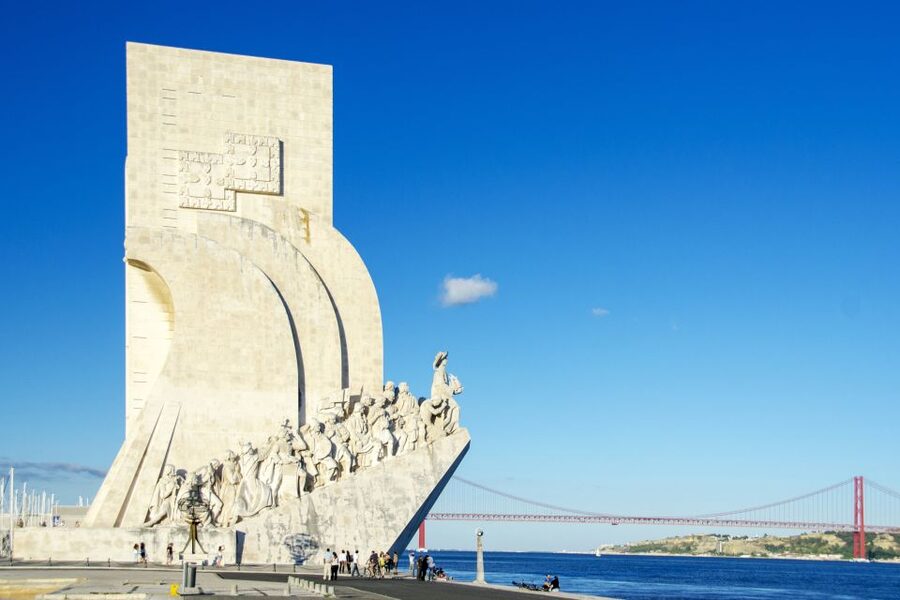
The Monument of the Discoveries is nearby, along with the riverfront area linked to Portugal’s seafaring past. MAAT, the Museum of Art, Architecture and Technology, provides a change of tone with modern architecture and contemporary exhibitions. The Docas Cruise Terminal rounds out the riverfront section with restaurants and waterside activity.
The entire Belém circuit takes about 1 hour and 40 minutes. The scheduled service from Restauradores generally runs from 9:00 in the morning until 5:30 in the afternoon, with buses listed every 30 minutes. That interval is reasonable when the route is running normally, but I would not build a tight schedule around a single expected departure.
What to expect on the Modern Lisbon line

The Modern Lisbon route has a different personality. It begins in the same central area, with stops at Restauradores, Rossio, and Avenida da Liberdade, but then moves toward Graça, the National Pantheon, and the Feira da Ladra area.
This section is helpful if you want to see more than the postcard center. The National Pantheon is a notable landmark, while Feira da Ladra is associated with Lisbon’s long-running flea market. The route also reaches the Cruise Terminal and the National Tile Museum, one of the best choices for understanding Portugal’s azulejo tradition.
The Tile Museum is a particularly good match for this bus pass because it is not right beside the main Belém sights. Getting there by public transport can take planning, while the pink route puts it directly on your sightseeing map. Admission is not included, but the stop makes the museum easier to add to your day.
Farther east, the bus passes Beato and Marvila before reaching Parque das Nações. This is Lisbon’s sleek, modern side, shaped by the Expo 98 redevelopment. The Oceanarium is the major draw, with more than 16,000 marine species. Its admission is separate, and you should allow proper visiting time rather than treating it as a quick hop-off stop.
The route also serves Vasco da Gama Shopping, FIL, and the Vasco da Gama Tower near the Myriad Hotel. These stops are useful for shopping, modern architecture, and the broad riverside setting, but the area offers less old Lisbon character than Belém or the central hills.
The Modern Lisbon loop also takes about 1 hour and 40 minutes. Service from Restauradores is listed from 9:15 in the morning until 5:15 in the afternoon, every 30 minutes. If the Oceanarium is your main goal, start early enough to allow for the ride, the visit, and the return journey.
Making the most of the 24-hour or 48-hour ticket
The 24-hour option works best as an overview. Ride the Belém route once without getting off, then choose one or two stops for a closer look. You can use the rest of the validity period for a second ride, a tram journey, or a funicular trip.
The 48-hour option is easier to use well. I would split it into two days rather than trying to force every sight into one long outing. Use the first day for the Belém route and central Lisbon, then take the Modern Lisbon line on the second day.
The clock begins after your first validation, so avoid activating the pass too early if you are not ready to use it. The ticket is sold as access to one or two bus lines, depending on the option selected, and the 48-hour version gives you the most breathing room.
You can also use the included Carris public trams during the ticket’s valid period. This matters in Lisbon, where the bus route does not reach every interesting street and where hills can make short distances surprisingly tiring. Funicular access is included in the broader public transport benefits described for the pass, and the Santa Justa lift has also been identified as part of the ticket’s transport access.
The Carris Museum is free with a valid ticket. It is a useful extra if you have time and an interest in Lisbon’s transport system. These additions are what make the pass more than a ride with recorded commentary.
A different kind of day out, same corner of Portugal:
- Lisbon City Center Tour – The Unmissable Lisbon
★ 5.0 · 22,234 reviews - Lisbon: Sintra, Pena, Regaleira, Cabo da Roca & Cascais
★ 4.7 · 19,656 reviews - Sintra: Pena Palace and Park Entrance Ticket
★ 4.2 · 17,410 reviews - Lisbon: Jerónimos Monastery Entrance Ticket
★ 4.1 · 14,164 reviews
Audio commentary, drivers, and comfort

The audio guide is available in English, Portuguese, Dutch, French, Spanish, Italian, German, Swedish, Japanese, Korean, Chinese, and Russian. The commentary provides background while you look at the buildings and monuments, and it is generally clear enough to help you understand what you are seeing.
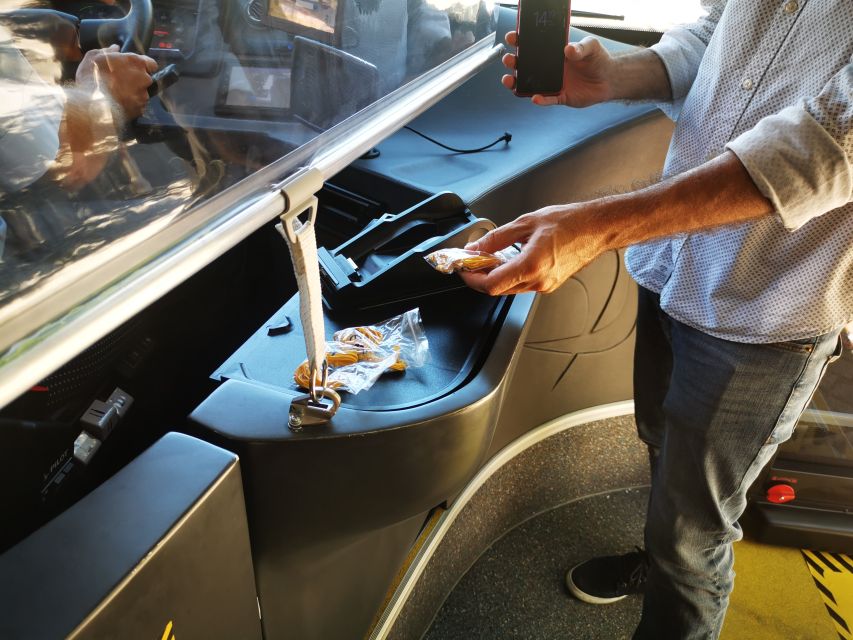
The main weakness is not the language choice but the equipment. Some seats have had audio units that did not work, and the fix is simple: test the headset as soon as you sit down and move to another seat if necessary. The commentary can also arrive slightly before or after the sight it describes, so keep your eyes up and do not rely on the recording alone.
This is primarily an audio tour, not a guaranteed live-guided sightseeing experience. Some departures may have a live guide, and names such as Hugo, Sergey, and Miguel have been associated with especially warm, entertaining service. You should book this expecting the included recording rather than a personal guide.
The buses are yellow, with blue signs for Belém and pink signs for Modern Lisbon. That distinction is important because the same color bus serves both routes. Look at the sign in the front window before boarding, and check the route map at the stop.
The open upper deck is the best place for views, but it leaves you exposed to sun and weather. In summer, early morning or late afternoon is more comfortable. After rain, seats may still be wet, so carry a tissue or small cloth. Food, drinks, and alcohol are not allowed on the vehicle.
Timing, stops, and the city’s difficult hills

Lisbon is not a flat city, and that changes how useful this tour feels. The bus can carry you between the center, Belém, and the eastern district without making you climb every slope on foot.
That does not mean the bus removes all walking. You still need to get from each stop to the monument or museum, and some areas are hilly. The advantage is that you can choose your walking carefully instead of spending your energy just reaching the next neighborhood.
The wait between buses is the main practical concern. The published schedule says every 30 minutes, but the live tracking system may show changing arrival times. If you have just finished a museum visit, you might wait longer than expected, particularly outside the busiest central stops.
I would avoid planning a timed museum entry immediately after hopping off. Give yourself a cushion, especially if you are using the Modern Lisbon line to reach the Oceanarium or the Tile Museum.
The starting point can also be confusing if you do not study the map first. Restauradores is the main terminal, but meeting points can vary by booking option. Confirm your departure point and identify the route sign before you board.
Is $25 a good value?
At about $25 per person, this is a fair price for a 24-hour sightseeing ticket and a strong price for a 48-hour option, provided you use the included transport. The bus alone may not be the cheapest way to move around Lisbon if you plan to visit only one neighborhood, but the pass earns its keep when you combine sightseeing rides with trams, funiculars, or the Santa Justa lift.
The value is also practical rather than purely financial. You get a city overview, a route map, audio information, and a way to reach far-apart districts without arranging several separate journeys.
Museum and monument admission is not included. If you visit Jerónimos Monastery, the Oceanarium, the Tile Museum, or other paid attractions, those costs come on top. Think of this as a transport and orientation pass, not an all-inclusive attraction ticket.
For a 48-hour visit, the pass is easier to justify. You can take both routes, return to a favorite section, and use the transit benefits between stops. For a single short visit focused only on central Lisbon, you may get less value unless you enjoy the full loop and want the historical commentary.
Who should book this Lisbon bus tour?
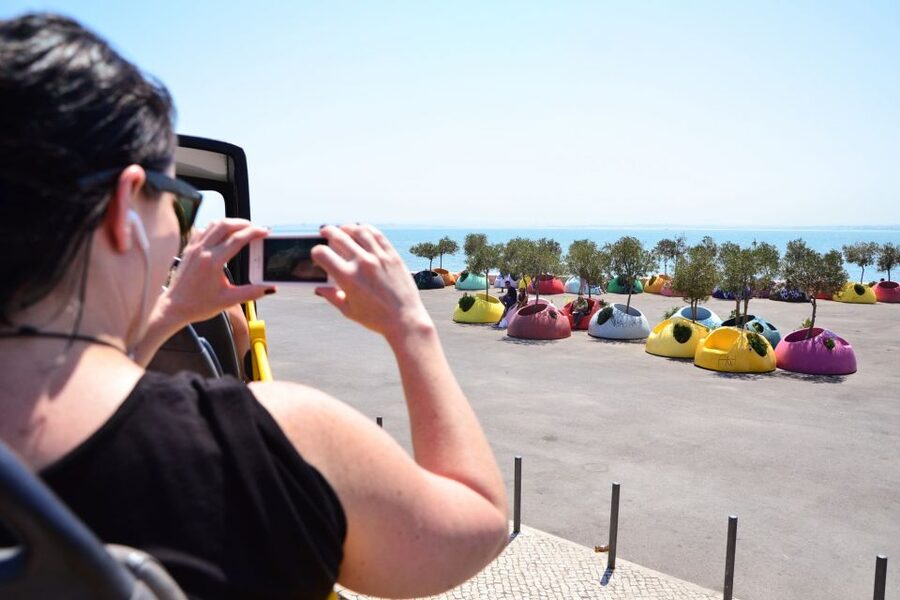
I would recommend it to first-time visitors who want a broad view before choosing where to spend their limited time. It is also a sensible option for anyone who finds Lisbon’s hills difficult, including people with mobility concerns, since the bus reduces some of the uphill walking.
Families may like the easy format. Children can see a lot without being asked to walk between every sight, and the multilingual audio gives the ride some structure. The upper deck is enjoyable in good weather, though you should plan for sun and keep expectations realistic about wind and wet seats.
The tour suits independent visitors who want freedom rather than a fixed walking group. You decide when to get off, how long to stay, and which museums deserve your time.
It is less suitable if you want a detailed personal explanation at every monument or a tightly managed schedule. The automated recording is useful, but it cannot answer questions or adjust the pace for photographs. It is also not ideal for someone who plans to spend the entire day inside museums.
My advice for using it well

Start with the Belém route, even if the Modern Lisbon line sounds more unusual. Belém gives you the strongest combination of central squares, river views, major monuments, and Lisbon’s maritime story.
Use the first full loop to understand the route. Then get off at only the places you genuinely want to visit. Trying to enter every museum and monument in one day will leave you watching the clock instead of enjoying Lisbon.
For the second day, take the Modern Lisbon line to the Tile Museum or Parque das Nações. The eastern route is a good counterpoint to the older city, but it is less rewarding if your main interest is historic architecture.
Keep the bus map with you, test the audio equipment, and check the live schedule without treating it as exact. If you are waiting at a less central stop, allow extra time. Most importantly, confirm the bus color sign: yellow buses serve both routes, blue means Belém, and pink means Modern Lisbon.
Should you book it?
Book this tour if you want an easy first look at a hilly, spread-out city and plan to use the included trams or funiculars. The 48-hour pass is the better choice for most people because it gives you time for both routes without rushing.
Choose the 24-hour ticket if you mainly want Belém and a quick city overview. Skip it if you prefer slow neighborhood walks and already know exactly which sights you want to visit. For most first visits, though, the combination of Belém, the central city, public transport, and Parque das Nações makes the $25 price reasonable.
FAQ
How long are the two bus routes?
The Belém Lisbon route takes about 1 hour and 40 minutes for a full loop. The Modern Lisbon route also takes about 1 hour and 40 minutes.
How often do the buses run?
Both routes are scheduled approximately every 30 minutes from the Restauradores terminal. Belém service is listed from 9:00am to 5:30pm, while Modern Lisbon service is listed from 9:15am to 5:15pm.
How do I tell the two routes apart?
All buses are yellow. The Belém Lisbon route has a blue sign in the front window, and the Modern Lisbon route has a pink sign.
Does the ticket include both bus routes?
That depends on the option selected. The available tickets provide access to one or two double-decker bus lines, with 24-hour or 48-hour validity after first validation.
Are Lisbon’s public trams included?
Yes. The ticket includes access to Carris Lisbon public trams during the ticket’s validity period. The included transport benefits also cover funiculars, according to the activity details.
Is entry to the museums and monuments included?
No. Admission to museums and monuments, including the Oceanarium, is not included in the bus ticket.
Is the Carris Museum free with the pass?
Yes. You can enter the Carris Museum free of charge by presenting a valid ticket.
Is an audio guide provided?
Yes. Audio commentary is included in multiple languages, including English, Portuguese, French, Spanish, German, Italian, Dutch, Swedish, Japanese, Korean, Chinese, and Russian.
Recently reviewed around Lisbon
- Portinho da Arrábida: Coasteering Boat Tour★ 4.9 · 78 reviews
- Setúbal: Dolphin-Watching Boat Tour★ 4.8 · 213 reviews
- From Lisbon: Private Óbidos and Nazaré Tour★ 5.0 · 152 reviews
- No Diet Club – Unique food tour in Lisbon with many Tastings★ 4.8 · 44 reviews
- Queluz National Palace & Gardens Ticket★ 4.6 · 447 reviews
- Melides: Horse Riding on the Beach with Wine Tasting★ 4.3 · 117 reviews
- Melides: Horseback Riding on Melides Beach★ 4.7 · 111 reviews
- Lisbon: Street Art Tuk Tuk Tour★ 4.9 · 372 reviews
Lisbon Tours, compared.

Lisbon City Center Tour – The Unmissable Lisbon
Read our review →
Sintra, Pena, Regaleira, Cabo da Roca & Cascais
Read our review →



Sunset Boat Party Cruise with DJ and Open Bar
Read our review →
Pena Palace, Sintra, Cabo da Roca, & Cascais Daytrip
Read our review →