
Reviewed · HISTORICAL TOURS
Jewish Sephardic history in Lisbon
Lisbon’s Jewish story is unusual because so little of the old Jewish quarter remains above ground. This four-hour walk helps you read the city as a historical map, beginning inside Shaare Tikva Synagogue, Portugal’s first purpose-built synagogue since the late 15th century, then tracing vanished communities through today’s streets.
I like the small group size, capped at eight, and I like that the synagogue entrance is included. Guides such as Paulo Levy bring personal feeling to the subject, especially his own rediscovery of Sephardic Jewish roots. The main drawback is physical: this is a long walk of roughly four miles, with hills, steps, and stretches where the Jewish connection is explained rather than visibly preserved.
In This Review
- Key points to know before booking
- Why Lisbon’s Jewish story requires a guide
- Starting inside Shaare Tikva Synagogue
- From Principe Real toward Chiado
- Bertrand bookstore and the Jewish literary connection
- Praça do Comércio and the turning points of Portugal
- Rossio Square and the old Inquisition center
- São Domingos and the Lisbon Massacre of 1506
- What Paulo Levy adds to the walk
- Walking distance, timing, and group size
- Is $84.10 a fair price?
- Who will enjoy this Jewish heritage walk?
- Should you book it?
- FAQ
- Where does the tour begin?
- Where does the tour end?
- How long does the experience last?
- Is the synagogue entrance included?
- Can I visit the synagogue interior on any day?
- How large is the group?
- What should I wear to the synagogue?
- What happens if I need to cancel?
Key points to know before booking
- Shaare Tikva is the tour’s strongest physical site: You enter Lisbon’s historic synagogue rather than viewing it only from outside.
- The Jewish past is often invisible: Earthquakes, fires, and centuries of Inquisition-era destruction erased many original buildings and symbols.
- Paulo Levy is a memorable guide when assigned: He combines Jewish heritage with Portuguese history and personal experience.
- Expect a serious walk: The route links Principe Real, Chiado, Baixa, Rossio, and São Domingos before ending somewhere in Lisbon’s Old Town.
- Tuesday and Thursday matter: The synagogue interior can only be visited on those days.
- The price covers the key admission: At $84.10 per person, the value rests mainly in the guide’s interpretation and the included synagogue visit.
Why Lisbon’s Jewish story requires a guide
You will not find a preserved Jewish quarter in Lisbon on the scale of Toledo, Prague, or some Italian cities. That is the central fact to understand before you book this experience.
Jewish communities appeared, disappeared, and reappeared in Portugal over many centuries. Their story includes migration after the Jewish exodus from Egypt, settlement in Portugal, forced conversion, persecution, exile, and later renewal. Much of that past was damaged or erased by the 1755 earthquake, tsunami, and fires, along with the long work of the Portuguese Inquisition.
That means this is not a tour of one intact medieval neighborhood. You walk through modern Lisbon while your guide points out where Jewish communities lived, worked, worshipped, and suffered. A doorway, square, church, bookstore, or street corner may look ordinary until you learn what happened there.
I find that approach valuable, but you need to enjoy history told through context. If you want a day filled with surviving synagogues, ancient walls, and visible Jewish monuments, this tour may feel thin after the synagogue visit. If you like connecting scattered clues, it offers a more thoughtful look at Lisbon.
More Historical Tours in Lisbon
- Lisbon: History, Stories and Lifestyle Walking Tour
★ 4.8 · 10,902 reviews - Lisbon: Live Fado Show with Port Wine in Historic Center
★ 4.7 · 4,166 reviews - Lisbon: Fado Show with Wine in a Historic Venue
★ 4.8 · 1,294 reviews
Starting inside Shaare Tikva Synagogue
The tour begins at R. Alexandre Herculano 59, at Shaare Tikva Synagogue. The building is important in its own right: it was the first synagogue built in Portugal after the late 15th century, when open Jewish religious life had been shattered by expulsion, forced conversion, and persecution.
You spend about 45 minutes inside, with admission included. A synagogue staff member explains the building, its membership, and its place in Lisbon’s modern Jewish community. This opening gives you a firm base for the rest of the walk, since you first encounter a living community before examining the traces of communities that came before it.
The security requirements are worth taking seriously. You must provide passport details for every participant when booking, including name, number, expiry date, and country. There is also a dress code: shoulders must be covered, and shorts and miniskirts are not allowed.
The synagogue interior is available only on Tuesdays and Thursdays. This is the single most important scheduling detail. Ask for a date that includes the interior visit if entering Shaare Tikva is your main reason for booking. On other days, the experience may still cover Jewish history from outside, but the central admission is not available.
From Principe Real toward Chiado
After the synagogue, you walk through Principe Real Park toward Chiado. This section takes about 30 minutes and has no separate admission fee.
The park and surrounding streets are not presented as a preserved Jewish site. Their value comes from the way your guide places them within Lisbon’s changing city and Jewish story. This is where the tour begins to shift from a building-based visit to a walking conversation about communities, Portuguese society, and the places where Jewish life once fitted into the city.
Expect city walking rather than a quiet heritage trail. Lisbon’s hills and uneven streets can make a four-hour route feel longer than the clock suggests. Wear shoes with a firm sole, bring water, and consider the weather before booking. The tour runs in rain, and an early sunset or an afternoon start can make the final sections feel hurried.
Bertrand bookstore and the Jewish literary connection
In Chiado, the route reaches Bertrand, founded by Pedro Faure in 1732. It is recognized as the world’s oldest operating bookstore, and the stop includes admission.
The attraction here is not simply shopping for books. Your guide explains a famous Jewish writer and points out a curiosity connected with the bookstore. This is one of the tour’s broader cultural moments, showing how the Jewish story can connect with Portuguese literature and public life.
I like this stop because it breaks up the sequence of persecution, conversion, and massacre with a look at intellectual and cultural influence. Still, the amount of time devoted to the bookstore can depend on the guide and group questions. You should expect interpretation, not a long independent browse.
Guides such as Paulo Levy are praised for adding Portuguese history alongside Jewish history. That wider lens is useful because Jewish life in Lisbon cannot be separated from the country’s politics, literature, religion, and overseas ambitions.
More history-led days around Lisbon:
- Explore Lisbon by Tuk Tuk: History and Viewpoints
★ 5.0 · 840 reviews - Lisbon: Daytime or Sunset Boat Cruise with History and Wine
★ 4.9 · 819 reviews - Private Tuk Tuk Tour Through Lisbon’s Historical Streets
★ 5.0 · 734 reviews - Lisbon Sunset Sailing with Portuguese Wine and History
★ 5.0 · 668 reviews
Praça do Comércio and the turning points of Portugal
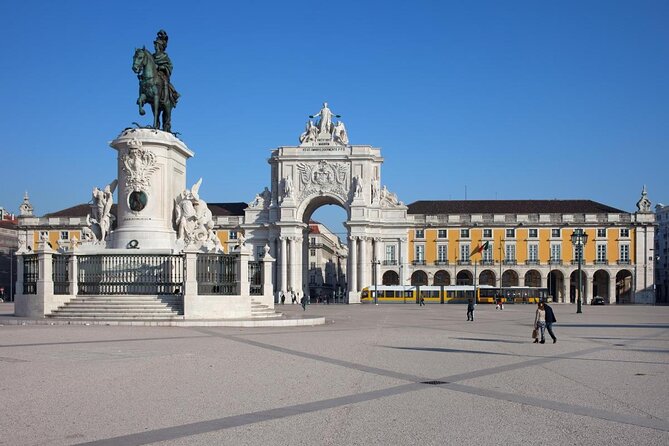
The walk continues downhill toward Baixa and Praça do Comércio, the broad square beside the Tagus. It was formerly called Terreiro do Paço and is commonly known today as Praça do Comércio.
You spend about 30 minutes here. There is no extra ticket, and the point is historical explanation rather than entry into a particular attraction. Your guide discusses events that changed Portugal and shows how those events affected Jewish communities.
This is another place where expectations matter. The square is large and visually impressive, but it is not an intact Jewish monument. You are learning to place Jewish experience within the wider story of Portugal, not visiting a building that still carries obvious Jewish decoration.
The setting also gives the tour a change of scale. Earlier stops focus on a synagogue, neighborhood streets, and a bookstore. Here, the discussion turns toward national history and the forces that shaped Lisbon itself.
Rossio Square and the old Inquisition center
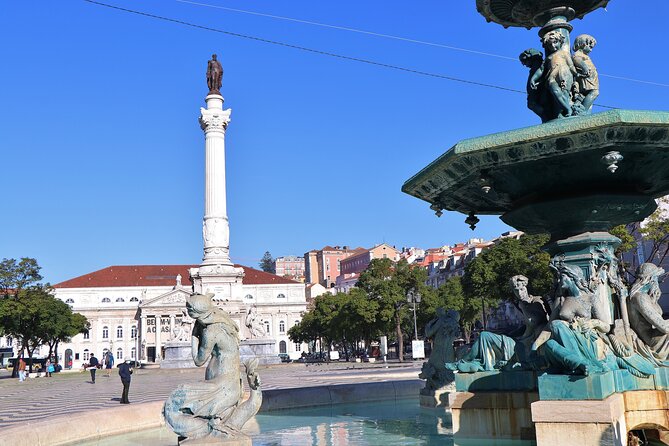
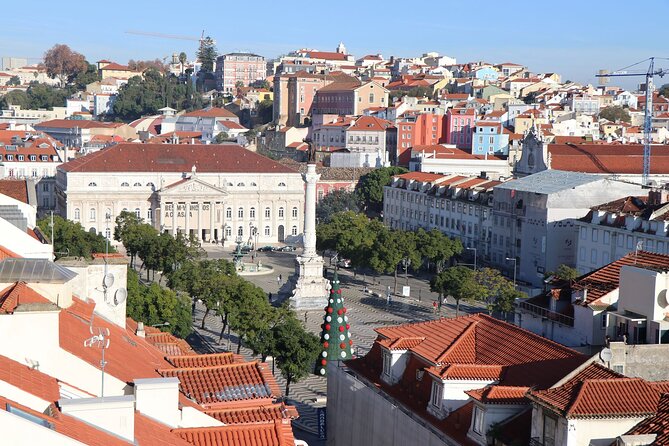
From Baixa, you walk to Praça Dom Pedro IV, usually called Rossio. The route spends about an hour in this area, including the column of Pedro IV and the National Theatre of D. Maria II.
At the center of Rossio is the column honoring Pedro IV, known as the Soldier King. Four female figures at its base represent Justice, Wisdom, Strength, and Moderation. Those details may seem separate from Jewish history, but they help explain how the square presents Portuguese power and ideals.
The National Theatre occupies the former site of the Estaus Palace. That palace served as the headquarters of the Portuguese Inquisition from the mid-15th century. The location gives the guide a powerful setting for explaining religious control, forced conversion, and the pressure placed on Jews who remained in Portugal.
You should allow time here for questions. The Rossio section is listed as one hour, making it the longest stop after the synagogue. It is also a place where the tour’s history becomes emotionally heavy. The guide’s role is important, and Paulo Levy is often singled out for his energy, personal connection, and ability to explain difficult events in clear English.
São Domingos and the Lisbon Massacre of 1506
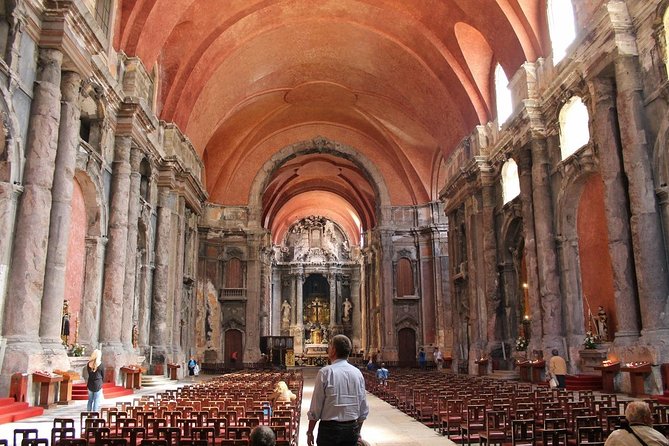
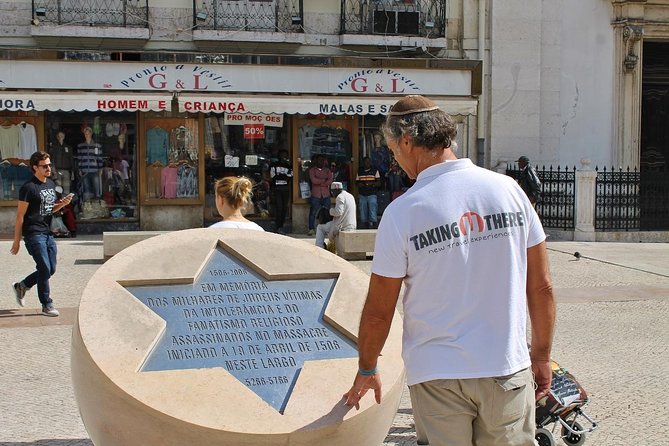
The final listed stop is Igreja de São Domingos. Here you learn about the Lisbon Massacre of April 19, 1506.
For the next three days, more than 3,000 New Christians were murdered in the streets before the King’s Royal Army stopped the violence. São Domingos Church was the epicenter. The term New Christians refers to Jews who had been forcibly converted, and this episode shows how conversion did not end suspicion or persecution.
The church is therefore more than another stop on a city walk. It is a place where Lisbon’s Jewish past becomes stark and human. Your guide explains what happened and why, rather than leaving you to guess at the meaning of the site.
This final section can be difficult after several hours of walking. It is also one of the reasons the tour is worthwhile for people who want more than a light introduction. The route does not avoid the painful parts of Sephardic history in Portugal.
What Paulo Levy adds to the walk
The guide can make or break this kind of experience. With few surviving Jewish buildings, the tour depends on someone who can connect locations, dates, people, and ideas without turning the walk into a dry lecture.
Paulo Levy is repeatedly praised for his passion for Jewish and Portuguese heritage. He speaks English well, answers questions patiently, and shares his own story of discovering his Jewish roots. That personal connection gives the tour a human voice, particularly when the physical evidence has disappeared.
He also brings plenty of Portuguese history into the route. You may learn about Lisbon’s writers, national turning points, and cultural life as well as Jewish communities. That is a benefit if you want the wider context, but a possible frustration if you want every minute tied directly to Jewish sites.
The guide may also take you to lunch or dinner at an authentic Portuguese restaurant after the formal route. This is not included in the price, and you should treat it as an optional extension rather than part of the guaranteed program. It can be a pleasant way to end the afternoon, but you pay for your own meal.
Walking distance, timing, and group size
The experience lasts about four hours, and one detailed account put the walking distance at roughly four miles. The route crosses several central neighborhoods, so you should expect sustained walking rather than a few short transfers between monuments.
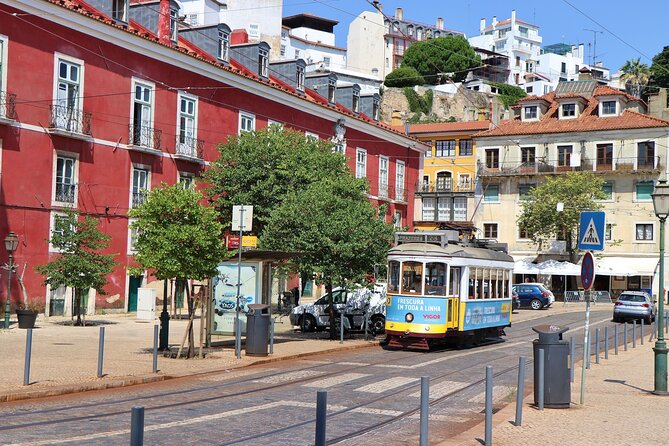
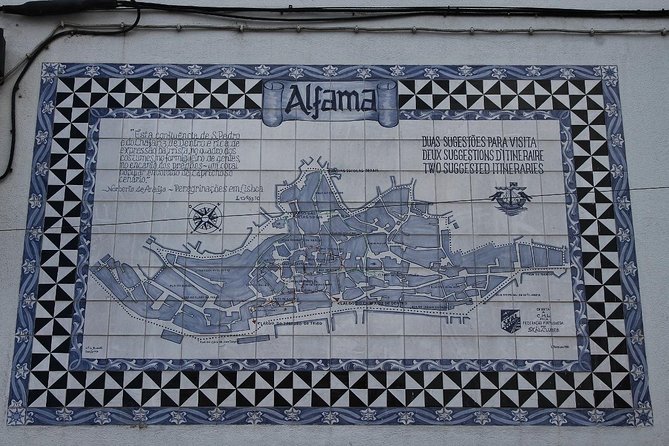
Lisbon’s hills and steps are the real physical issue. The required fitness level is described as moderate, but the route may be demanding if you have trouble with inclines, uneven pavement, or stairs. Tell the guide about your limits. The endpoint can change based on curiosity, physical ability, and weather, and it may finish somewhere in the Old Town rather than specifically in Alfama.
The maximum group size is eight. That is a useful limit for a subject that depends on conversation. You can hear the guide more easily, ask questions, and avoid the stop-and-start feel of a large city group.
The tour is offered in English and begins near public transportation. It does not include lunch or personal purchases. Entrance fees mentioned in the program are covered, and the operator says the group skips ticket lines. The synagogue admission is the main practical saving, since the rest of the route consists largely of public streets and squares.
Is $84.10 a fair price?
At $84.10 per person, this is not the cheapest way to see central Lisbon. You are paying for a half-day with a professional guide, a maximum group of eight, the synagogue admission, and a carefully connected story rather than simple directions between landmarks.
The value is strongest if Shaare Tikva Synagogue matters to you and if you want a guide to explain places that no longer look Jewish. The price is less attractive if you mainly want to stroll through Lisbon’s center or see preserved Jewish architecture. In that case, much of the route is free to enter, and the fee rests on the guide’s interpretation.
I would also compare this with the cost of a private guide. A small group gives you some of the benefits of personal attention without the full price of a private booking, though you may still share the guide’s time with several others.
Free cancellation is available up to 24 hours before the start time. Confirmation arrives within 48 hours, subject to availability. Book ahead if you need a Tuesday or Thursday synagogue visit, especially since the experience is often reserved well in advance.
Who will enjoy this Jewish heritage walk?
I would recommend it most to you if you:
- Want a clear introduction to Sephardic Jewish history in Portugal
- Care more about explanation and historical links than preserved buildings
- Are comfortable walking for several hours through central Lisbon
- Prefer a small group over a large coach tour
- Want to enter Shaare Tikva Synagogue
- Enjoy hearing about Portuguese culture alongside Jewish history
Families can enjoy the storytelling, and one guide even kept a reluctant younger participant engaged. Still, the length and serious subject matter may not suit every child.
I would be cautious if you have limited mobility, dislike hills, or expect a continuous series of visible Jewish landmarks. The synagogue is the strongest physical site. After that, you will often be standing in ordinary Lisbon spaces while the guide reconstructs what once happened there.
Should you book it?
Book this tour if you want Lisbon’s Jewish past explained by someone with a strong personal connection to the subject. Paulo Levy is a major part of the experience when he leads it, and the small group, included synagogue entry, and long route give you a substantial half-day of context.
Do not book it expecting a preserved Jewish quarter. Lisbon’s story is one of loss, erasure, and rediscovery. You will see fewer surviving sites than you might hope, but you will understand why they are missing and how Jewish life still shaped Portugal.
For the best fit, choose a Tuesday or Thursday, dress modestly for the synagogue, wear good walking shoes, and plan your afternoon without another tight appointment. If that sounds like your kind of history lesson, $84.10 is a reasonable price for a personal, serious, and distinctly Lisbon experience.
FAQ
Where does the tour begin?
It begins at Shaare Tikva Synagogue, R. Alexandre Herculano 59, 1250-010 Lisbon, Portugal.
Where does the tour end?
The listed endpoint is Alfama, but the tour may finish elsewhere in Lisbon’s Old Town depending on the group’s curiosity, physical abilities, and weather.
How long does the experience last?
The tour lasts approximately four hours.
Is the synagogue entrance included?
Yes. Admission to the inside of Shaare Tikva Synagogue is included in the tour price.
Can I visit the synagogue interior on any day?
No. The inside of the synagogue can only be visited on Tuesdays and Thursdays.
How large is the group?
The experience has a maximum of eight participants.
What should I wear to the synagogue?
You must cover your shoulders and avoid shorts or miniskirts. The synagogue has a dress code.
What happens if I need to cancel?
You can receive a full refund if you cancel at least 24 hours before the experience begins. Cancellations or changes made less than 24 hours before the start time are not accepted for a refund.
Recently reviewed around Lisbon
- Lisbon: Catamaran Luxury Sunset and Wine Tour★ 5.0 · 119 reviews
- Lisbon’s authentic Food and Wine tour with a Winemaker★ 5.0 · 67 reviews
- Morning Sailing Tour in Tagus River from Lisbon★ 5.0 · 68 reviews
- Lisbon: Belem Walking Tour with Jeronimos Monastery Tks Included★ 5.0 · 115 reviews
- PRIVATE Unforgettable Full Day Tour to Sintra from Lisbon★ 5.0 · 236 reviews
- Discover Lisbon’s Alfama: Secrets of the Old Town★ 5.0 · 104 reviews
- Sesimbra Wild Beach Tour from Lisbon★ 5.0 · 57 reviews
- Private Jeep Tour from Lisbon – Arrábida, Sesimbra & Beach Picnic★ 5.0 · 48 reviews
Historical Tours, compared.

Historical Sites, Wine Experience, Lunch & Cruise
Read our review →
Live Fado Show with Port Wine in Historic Center
Read our review →

Browse the lists this tour appears in