
Reviewed · HISTORICAL TOURS
Historical Walking Tour of Lisbon
Lisbon’s past comes at you in layers on this walk: ancient settlement, royal power, empire, disaster, art, and revolution, all packed into the route from Rossio Square to Carmo. The most memorable stretch links grand public spaces with ordinary city streets, so you see how Lisbon works as well as how it looks.
I like the clear historical storyline, which turns a set of handsome squares into a connected lesson. I also like the practical finish, where guides such as Logan, Nuno, Bruno, Kiara, Andre, and Constança share suggestions for food, shops, viewpoints, and things to do after the walk. The main drawback is the pavement and hills: you need comfortable shoes, water, and a willingness to walk for nearly three hours.
I especially value the small group limit of 20 people and the free cancellation up to 24 hours before departure. The listed price of $3.62 per person is remarkably low for a guided introduction, but you should still check the meeting details carefully, since one booking record reported a cancellation without notice.
In This Review
- Key points to know before you go
- Why this walk works as a first look at Lisbon
- Rossio Square and the first pages of Lisbon
- Praça da Figueira and the struggle for the crown
- Rua Augusta and the Enlightenment city
- Praça do Comércio and the city rebuilt after 1755
- Chiado, bookshops, poets, and café life
- Largo do Carmo and the Carnation Revolution
- Santa Justa and the final city view
- Guide style and what you can expect
- Price, pace, and physical demands
- Who should book this Lisbon walk?
- Should you book it?
- FAQ
- How long does the Historical Walking Tour of Lisbon last?
- Where does the tour begin?
- Where does the tour end?
- What language is the tour offered in?
- How much does the tour cost?
- What sights are included?
- Is the tour suitable for most people?
- How large is the group?
- Can I cancel for a refund?
Key points to know before you go
- Rossio to Carmo route: Begin in Praça Dom Pedro IV and finish near the Carmo Archaeological Museum in the upper part of downtown.
- Seven centuries of stories in one walk: Expect discussion of early settlement, Portuguese royal struggles, the Age of Discovery, the 1755 earthquake, and the 1974 Carnation Revolution.
- Old bookstores and literary Lisbon: Chiado brings in cafés, theaters, writers, poets, and the bookstore described as the oldest in the world.
- A guide-led introduction: Guides including Logan, Nuno, Bruno, Kiara, Andre, Constança, Antonio, and Tomàs are praised for storytelling and local suggestions.
- Uneven cobblestones and uphill streets: Wear walking shoes and carry water and sunscreen.
- A useful first-day choice: The route gives you a city framework before you explore Lisbon on your own.
Why this walk works as a first look at Lisbon
Lisbon can feel confusing at first. The streets rise sharply, the districts shift quickly, and grand monuments often hide behind everyday shops and cafés. This tour helps you place the city’s center on a mental map without asking you to spend a full day inside museums.
You begin in Rossio and move toward the river, then climb back into Chiado and Carmo. That route gives you changes in scenery and subject. You are not simply stopping for photographs. You are learning why each area mattered, what happened there, and how Lisbon changed after disaster and political upheaval.
The guide is central to the experience. The strongest descriptions of Logan, Nuno, Bruno, Kiara, Andre, Constança, Antonio, Maria, and Tomàs focus on lively storytelling, clear explanations, humor, and a willingness to answer questions. That matters in Lisbon, where a plain-looking square can hold a major chapter of Portuguese history.
The group limit is 20 people. That is not a private tour, but it is small enough for questions and for a guide to keep an eye on the pace. Several guides are also praised for checking that everyone could hear and keep up, and for adjusting the walk for a broad range of ages.
More Historical Tours in Lisbon
- Lisbon: History, Stories and Lifestyle Walking Tour
★ 4.8 · 10,902 reviews - Lisbon: Live Fado Show with Port Wine in Historic Center
★ 4.7 · 4,166 reviews - Lisbon: Fado Show with Wine in a Historic Venue
★ 4.8 · 1,294 reviews
Rossio Square and the first pages of Lisbon
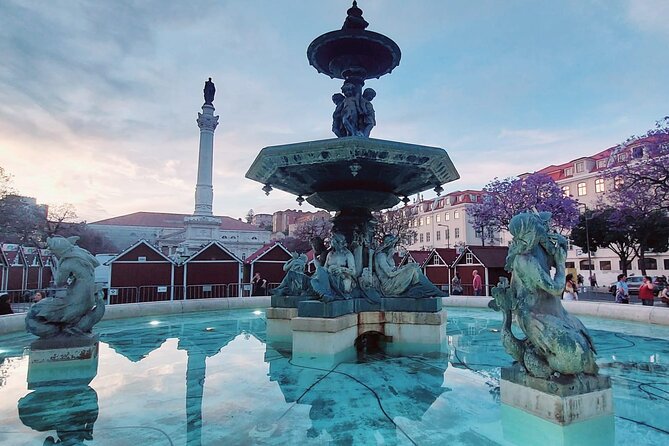
The meeting point is Praça Dom Pedro IV, usually called Rossio Square. It is an easy central starting place, and the patterned pavement gives you an immediate taste of Lisbon’s visual character.
The first stop lasts about 15 minutes. Here, the guide introduces the earliest inhabitants who established themselves in the city around 3,000 years ago. That opening is useful because it pushes your view of Lisbon beyond the Age of Discovery. Portugal’s capital was not created by one king or one era. Its story reaches back much further.
Take a moment to look down at the intricate stone floor before the group moves on. This is also where you should make sure your shoes are secure, since the same attractive pavement can be tiring when it is uneven or wet.
Rossio is a good place to meet because public transportation is nearby, and the square is simple to identify. Confirmation is provided when you book, but arrive with enough time to locate the guide and group without a last-minute rush.
Praça da Figueira and the struggle for the crown
The next stop is Praça da Figueira, known as Fig Tree Square. The stop lasts around 15 minutes and shifts the focus from early settlement to power, conflict, and disaster.
The square once held Lisbon’s largest public hospital, which was destroyed in the 1755 earthquake. That detail gives the disaster a human scale. The earthquake was not only about damaged churches and fallen buildings. It also disrupted essential public services in a city packed with people.
You also hear about major battles fought over the Portuguese crown between Portugal and neighboring powers. This part will appeal to you if you enjoy political history, though the tour is not designed as a detailed military study. The guide gives you a broad framework, then keeps the group moving through central Lisbon.
Fig Tree Square also makes the tour’s method clear. The guide uses a physical place as a doorway into a larger subject. A hospital becomes a way to understand the earthquake. A square becomes a way to discuss succession, rivalry, and national identity.
Rua Augusta and the Enlightenment city
Between the early squares and Praça do Comércio, you walk down Rua Augusta. This is Lisbon’s main central artery and one of the city’s most recognizable streets.
The route offers a useful lesson in urban design. You learn how Enlightenment ideas influenced the architecture of downtown Lisbon, especially after the destruction of 1755. The straight street and ordered buildings are not just attractive backdrops. They reflect a deliberate attempt to rebuild the city in a more rational form.
This section is best enjoyed at a measured pace. Rua Augusta is a busy city street, and the group must share space with pedestrians. Stay close enough to hear the guide, especially when the route passes through crowded stretches.
The walk through Rua Augusta also connects the two moods of Lisbon. Behind you is Rossio, with its older urban texture. Ahead is the open riverfront and the planned downtown rebuilt after catastrophe. You can feel the city changing as you walk.
More Walking Tours in Lisbon
- Best of Lisbon Small-Group Guided Walking Tour
★ 5.0 · 4,869 reviews - Lisbon: Food and Wine Small Group Walking Tour
★ 4.9 · 4,082 reviews - Best of Lisbon Walking Tour: Rossio, Chiado & Alfama
★ 4.9 · 2,700 reviews - Age of Discoveries Walking Tour in Belém
★ 5.0 · 1,513 reviews
Praça do Comércio and the city rebuilt after 1755
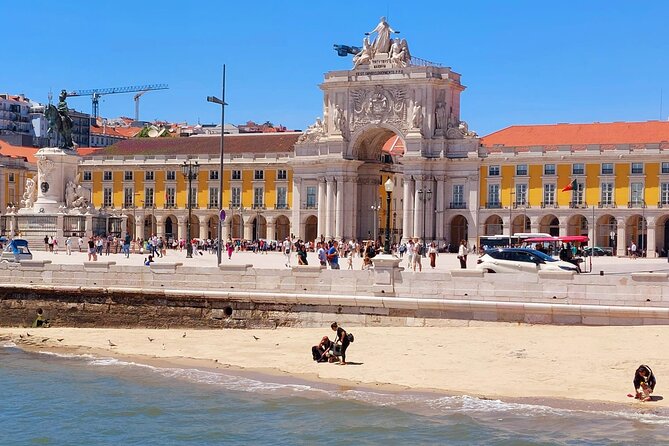
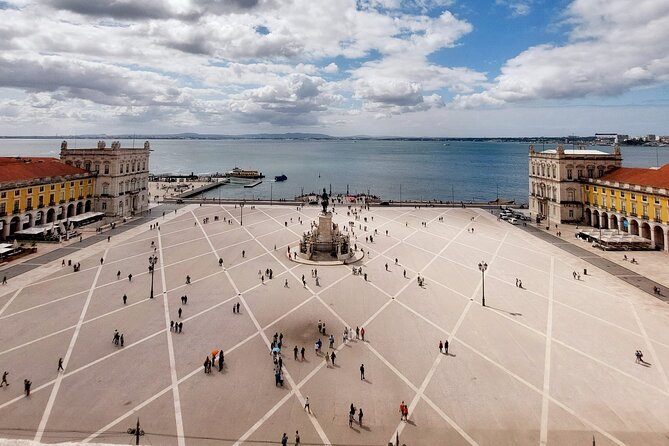
Praça do Comércio, also known as Terreiro do Paço, receives about 30 minutes. It is the longest stop on the first half of the route, and it deserves that time.
For thousands of years, this riverside square served as Lisbon’s entry point. Its position beside the Tagus helps explain the city’s role in trade, exploration, and contact with the wider world. The guide discusses the Age of Discovery here, linking the square to Portugal’s seafaring past.
The 1755 earthquake is another major subject. You learn about the destruction, the rebuilding effort, and the figures who helped shape the new city. This is where the tour’s earlier stops come together. The hospital at Praça da Figueira, the ordered streets of Rua Augusta, and the grand riverfront all become parts of one story.
I like the way this stop gives you space to look around instead of rushing from one fact to the next. The square is large and open, with strong views toward the river. It is also a good place to understand the scale of the rebuilding project.
The drawback is exposure. There may be little shelter in the open square, so weather matters. The experience requires good conditions, and poor weather can lead to a new date or a full refund.
Chiado, bookshops, poets, and café life
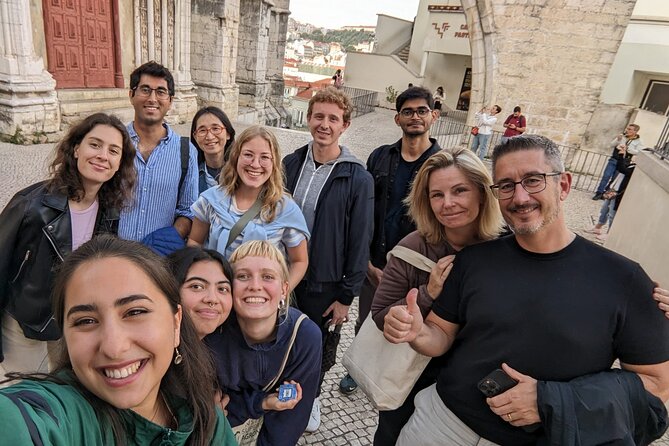
From the monumental riverfront, the route heads toward Chiado, Lisbon’s art district. This stop lasts roughly 20 minutes and brings a different side of the city into view.
Chiado is tied to cafés, theaters, bookshops, nightlife, poets, and writers. You get a look at how Lisbon’s cultural life took shape in public places where people met, read, argued, and watched performances.
One special feature is the chance to visit the bookstore described as the oldest in the world. It is a small detail, but it gives the walk a pleasant change of pace. You are not only hearing about the city. You are stepping into a living part of its literary culture.
The Chiado section should suit you if you like cities through their writers and daily habits. It is less about grand rulers and more about how people express themselves and spend time together. Guides also use this point in the tour to suggest shops and places to eat later.
Do not expect a long bookstore visit or a full literary lecture. The stop is about 20 minutes, so the guide has to balance cultural detail with the larger route.
Largo do Carmo and the Carnation Revolution
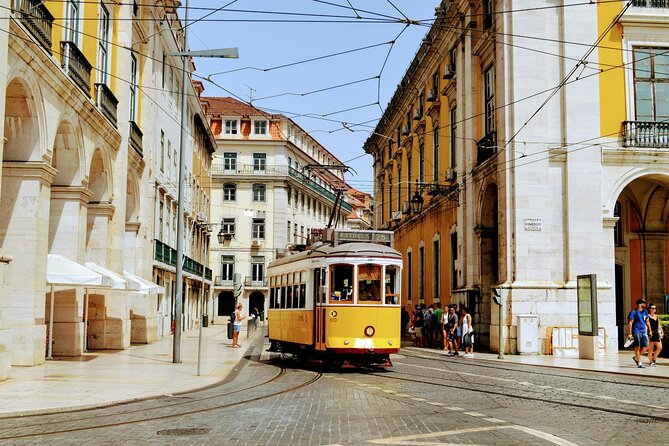
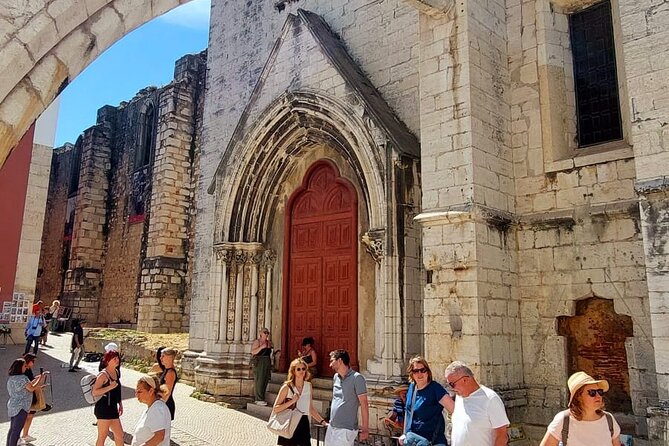
Largo do Carmo is one of the most important stops. The tour spends about 30 minutes here, and the square brings together architecture, disaster, and modern political change.
The Convento do Carmo is described as the second oldest building in the city. It survived the 1755 earthquake but remains visibly tied to that event. The open structure helps you understand how much of Lisbon was lost and how certain fragments were preserved.
The square also played a role in major social events, including the 1974 Carnation Revolution. This peaceful military coup ended decades of dictatorship and is often remembered for the flowers placed in soldiers’ rifles. The tour calls it one of the coolest coups in the world, a light phrase for a serious turning point.
This is one of the strongest parts of the route because it brings Portuguese history into the modern era. You move from ancient settlement and royal conflict to a revolution within living memory. If you are interested in how a country changed politically, stay engaged here and ask questions.
The climb to Largo do Carmo is part of the practical challenge. Several guides are praised for taking mercy on groups with different ages and for keeping the pace manageable, but the streets are still hilly. A slower pace can help you hear the story, yet it also means the full route may feel longer to someone unused to Lisbon’s inclines.
Santa Justa and the final city view
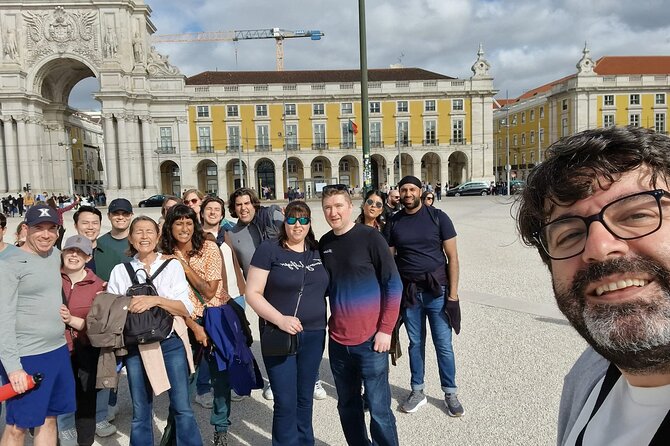
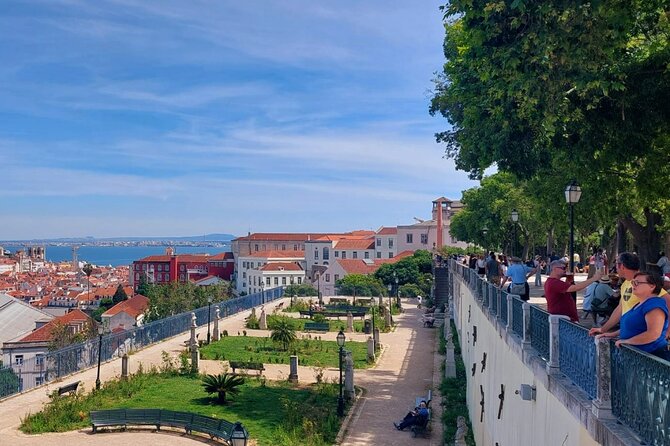
The final stop is the Elevador de Santa Justa, with about 15 minutes for a break and a view over downtown Lisbon. The tour ends at the Carmo Archaeological Museum, in the upper part of the center.
This ending is smart. After a long walk, you get time to pause, look over the city, and gather practical advice. Guides provide hand-picked suggestions for local food, viewpoints, shops, and additional activities.
The view helps fix the route in your mind. You have walked through the lower downtown area and climbed toward Carmo. From above, the relationship between the squares, streets, and hills becomes easier to understand.
The tour’s end point is not the same as its beginning, so plan your next move. The end is near public transportation, but the supplied details do not specify a particular route or station. Your guide can offer local tips, and this is a good moment to ask about your next stop.
Guide style and what you can expect
The clearest strength of this tour is the guide’s role as a storyteller. Logan is repeatedly described as animated and easy to follow. Nuno is praised for holding attention through stories. Bruno is singled out for friendly explanations and for going deeper when a subject interests the group.
Kiara is noted for adding cultural context and useful restaurant and shop ideas. Andre is praised for checking that people could hear him, inviting questions, and making the walk work for a family that included a 13-year-old. Constança is described as energetic, thoughtful, and good at adjusting the pace.
Those details suggest a tour that is not a fixed speech delivered word for word. The exact guide can vary, but the better guides respond to the group and add local advice. Antonio, Maria, Tomàs, and others are also described as engaging and well prepared.
You should still arrive with reasonable expectations. A two-hour-45-minute walk cannot explain every period of Portuguese history. It gives you the main structure and the places to explore further. If you want long museum visits or academic detail, choose a more specialized tour. If you want a clear first orientation, this format fits well.
Price, pace, and physical demands
At the listed price of $3.62 per person, the value is unusually strong. You receive about 2 hours and 45 minutes with a professional guide, a route through major central sights, and practical suggestions for the rest of your stay. Even if you later explore only a few of the recommended places, the orientation can save time.
The low price should not make you assume the walk is effortless. You cover a lot of ground, and the route includes hills and uneven cobblestones. Wear shoes with good support. Bring a water bottle, sunscreen, and enough patience to walk at a group pace.
Most people can participate, and service animals are allowed. The tour is offered in English and uses a mobile ticket. It is near public transportation, which makes the central meeting point convenient.
The tour is booked, on average, about 20 days ahead. That suggests you should reserve before arriving if your schedule is tight, especially during popular travel periods. You can cancel for a full refund up to 24 hours before the local start time. Changes or cancellations inside that window are not accepted, except when poor weather causes the operator to cancel.
One caution deserves attention: a single booking record reports that the tour was canceled without notice and that no guide appeared at the meeting point. That does not match the overwhelmingly positive response, but it is a reason to keep your confirmation and check for updates before setting out.
Who should book this Lisbon walk?
I would choose this tour for a first or second day in Lisbon. It covers the central districts you are most likely to visit and gives you enough context to make later sightseeing more meaningful.
It suits you best if you:
- Enjoy walking and history
- Want an overview rather than a specialist lecture
- Like asking questions and hearing local recommendations
- Are comfortable with hills and uneven stone pavements
- Want ideas for food, shops, viewpoints, and later activities
- Are traveling with older children or a mixed-age group
It may not suit you if you have difficulty with prolonged walking or need a completely flat route. The description does not promise step-free access, and the cobblestones and uphill streets are a real part of the experience.
Should you book it?
Yes, if you want an inexpensive, story-led introduction to central Lisbon. The route covers Rossio, Praça da Figueira, Rua Augusta, Praça do Comércio, Chiado, Largo do Carmo, and Santa Justa, while connecting them through the earthquake, the Age of Discovery, literary life, and the Carnation Revolution.
Book it early, wear serious walking shoes, and keep the rest of your day flexible. I would treat the restaurant and viewpoint suggestions as one of the tour’s practical payoffs. Skip it only if uneven streets and hills will make nearly three hours on foot unpleasant, or if you want a highly specialized history tour rather than a broad city introduction.
FAQ
How long does the Historical Walking Tour of Lisbon last?
The tour lasts approximately 2 hours and 45 minutes.
Where does the tour begin?
It begins at Rossio Square, officially Praça Dom Pedro IV, at Praça do Rossio, 1100-200 Lisboa, Portugal.
Where does the tour end?
It ends at the Carmo Archaeological Museum on Largo do Carmo, 1200-092 Lisboa, Portugal, in the upper part of downtown.
What language is the tour offered in?
The tour is offered in English.
How much does the tour cost?
The listed price is $3.62 per person.
What sights are included?
The route includes Rossio Square, Praça da Figueira, Rua Augusta, Praça do Comércio, Chiado, Largo do Carmo, and the Elevador de Santa Justa.
Is the tour suitable for most people?
Most participants can take part, but the route includes walking on uneven cobblestones and uphill streets. Comfortable shoes are recommended.
How large is the group?
The maximum group size is 20 people.
Can I cancel for a refund?
Yes. You can cancel at least 24 hours before the experience start time for a full refund. Cancellations or changes made less than 24 hours before the start time are not accepted, and poor weather may result in a different date or a full refund.
Recently reviewed around Lisbon
- Lisbon: Catamaran Luxury Sunset and Wine Tour★ 5.0 · 119 reviews
- Lisbon’s authentic Food and Wine tour with a Winemaker★ 5.0 · 67 reviews
- Morning Sailing Tour in Tagus River from Lisbon★ 5.0 · 68 reviews
- Lisbon: Belem Walking Tour with Jeronimos Monastery Tks Included★ 5.0 · 115 reviews
- PRIVATE Unforgettable Full Day Tour to Sintra from Lisbon★ 5.0 · 236 reviews
- Discover Lisbon’s Alfama: Secrets of the Old Town★ 5.0 · 104 reviews
- Sesimbra Wild Beach Tour from Lisbon★ 5.0 · 57 reviews
- Private Jeep Tour from Lisbon – Arrábida, Sesimbra & Beach Picnic★ 5.0 · 48 reviews
Historical Tours, compared.

Historical Sites, Wine Experience, Lunch & Cruise
Read our review →
Live Fado Show with Port Wine in Historic Center
Read our review →

Browse the lists this tour appears in