
Reviewed · WALKING TOURS
Half-Day Walking Tour about the African Presence in Lisbon
Lisbon’s African past is not confined to a museum. It appears in old port districts, church traditions, public squares, and the stories attached to ordinary streets. This three to four-hour walk connects those pieces, beginning in Alfama and ending near Rossio, with guide Alcides, often called Al, providing the historical thread.
I like the route for two reasons: it gives you a different reading of familiar Lisbon, and the small group, capped at 15 people, leaves room for questions. I also like that the tour links African presence to Moorish rule, slavery, religion, abolition, and colonialism rather than treating one subject in isolation.
The main drawback is the price, $179.74 per person. That is a serious cost for a walking tour with no paid admissions included, and the route is physically demanding. A late start or a guide who is hard to understand could make the price feel even less comfortable.
In This Review
- Key points to know before you book
- Why this Lisbon walk feels different
- Alfama introduces the African connection
- Chafariz D’El Rei and the old social order
- Campo das Cebolas recalls Lisbon’s port
- Praça do Comércio connects power and trade
- Central Lisbon after the 1755 earthquake
- Rua Rosa de Lisboa and overlooked women’s work
- Time Out Market and the city at work
- Jardim Dom Luís and the question of abolition
- The Brazilian consulate and the Atlantic connection
- Praça Dom Pedro IV and African integration
- Igreja de São Domingos and African Catholic life
- Rossio Station and Portugal’s colonial image
- Is $179.74 a fair price?
- Walking conditions and useful planning tips
- Who should book this experience?
- My verdict on the African Presence in Lisbon walk
- FAQ
- How long does the African Presence in Lisbon tour last?
- Where does the tour start?
- What time does the tour begin?
- Where does the tour finish?
- Is the tour offered in English?
- How large is the group?
- What level of fitness is needed?
- Are admission tickets included?
- Can I cancel for a refund?
- What happens if bad weather cancels the tour?
Key points to know before you book
- A history-first route: The walk focuses on African influence, slavery, religion, abolition, and Portugal’s colonial past.
- A long urban walk: You move from Restauradores through central Lisbon, Alfama, the old port area, and Rossio.
- Alcides is the guide to seek: He brings personal connection through his Cape Verdean ancestry and has been praised for clear, engaging storytelling.
- Small groups matter here: With no more than 15 people, you can ask questions and follow complex subjects at a sensible pace.
- No admission fees are included or needed: The experience takes place outdoors, in streets, squares, gardens, and churches viewed from the route.
- Plan for practical comfort: Wear firm walking shoes, carry water, and ask about a restroom stop before setting off.
Why this Lisbon walk feels different
Many city walks point out pretty buildings and leave the hard subjects untouched. This one does the opposite. Its purpose is to show how Africans shaped Lisbon and how Portugal’s relationship with Africa affected the city, its people, and its institutions.
You begin at Restauradores Square at 9 a.m. From there, the route moves through central Lisbon and toward the old waterfront before returning to the city center. The path covers several neighborhoods, so you get a useful first look at Lisbon as well as a focused history lesson.
The tour is offered in English and uses a mobile ticket. It is a group experience, but the maximum of 15 people keeps it smaller than a standard coach excursion. That matters when the guide is explaining subjects such as the slave trade, religious integration, or the long presence of Black communities in Portugal.
Alcides, also referred to as Al, receives the strongest praise for the experience. He is described as friendly, patient, personable, and well informed. His Cape Verdean ancestry gives some of the material a personal link to the present, though you should still expect a broad history of Portugal rather than a tour centered only on Cape Verde.
The tone is serious, but the walk is not simply a list of dates. You are asked to look at familiar places differently. A fountain becomes evidence of social divisions. A church becomes a place to discuss religious life. A modern market recalls African labor and the city’s working past.
More Walking Tours in Lisbon
- Lisbon: History, Stories and Lifestyle Walking Tour
★ 4.8 · 10,902 reviews - Best of Lisbon Small-Group Guided Walking Tour
★ 5.0 · 4,869 reviews - Lisbon: Food and Wine Small Group Walking Tour
★ 4.9 · 4,082 reviews
Alfama introduces the African connection
The first stop is Alfama, Lisbon’s oldest neighborhood, founded under Arab rule. You spend about 20 minutes here, using its old streets as the opening chapter for Africa’s connections with Lisbon and with other peoples who shaped the city.
Alfama is a good place to begin because it immediately complicates the usual postcard version of Lisbon. Its name and early development point toward the city’s Arab and North African past, while the tour uses the neighborhood to establish a wider discussion of movement, contact, and identity.
Do not expect a long architectural lecture at this stop. The purpose is to set the frame for the rest of the morning. You will be walking through a real neighborhood, not entering a dedicated exhibit, so the guide’s explanations do much of the work.
Chafariz D’El Rei and the old social order
At Chafariz D’El Rei, the tour pauses for about 10 minutes. This fountain is used to explain how social classes were divided in medieval Lisbon and where Africans appeared within that public order.
A fountain may seem like a small stop, but that is part of the value of the route. Rather than discussing history only through kings and battles, the tour looks at a place used in daily life. The subject becomes social: who had access, who worked, and how the city displayed status.
You will want to listen closely here. The stop is brief, and the significance comes from the explanation rather than from a long visit. If you prefer grand monuments and extended sightseeing, this may feel slight. If you like history tied to ordinary urban features, it should work well.
Campo das Cebolas recalls Lisbon’s port
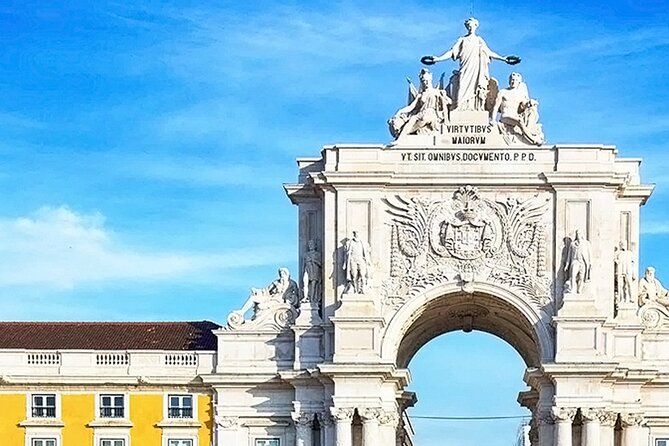
The walk continues to Campo das Cebolas, an area connected with Lisbon’s old port. The guide discusses the arrival of the first African slaves in Europe here, placing the slave trade within the physical setting of the waterfront.
This is one of the more sobering sections of the tour. The port was not just a place of commerce and departure. It was also tied to the forced movement of people, and the location helps you picture how economic life, maritime power, and human suffering were linked.
The stop lasts about 10 minutes. That is enough for an explanation, but not enough for a long pause or museum-style presentation. You should approach this part prepared for direct discussion of slavery. The tour’s value rests on its willingness to name that past rather than smooth it over.
More Lisbon walks with a guide:
- Best of Lisbon Walking Tour: Rossio, Chiado & Alfama
★ 4.9 · 2,700 reviews - Age of Discoveries Walking Tour in Belém
★ 5.0 · 1,513 reviews - Sintra & Cascais Day Tour with Pena Palace Entry and Gardens Walk
★ 5.0 · 962 reviews - Lisbon Roots – Small group Food & Culture Walking Tour w/tastings
★ 5.0 · 910 reviews
Praça do Comércio connects power and trade
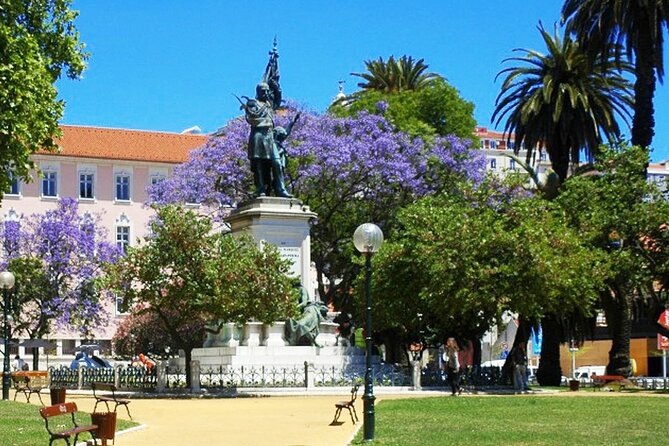
At Praça do Comércio, also known as Terreiro do Paço, you spend about 20 minutes. This grand riverside square is one of Lisbon’s best-known public spaces, and the guide uses it to discuss major events in Portuguese history and the square’s connection to the slave trade.
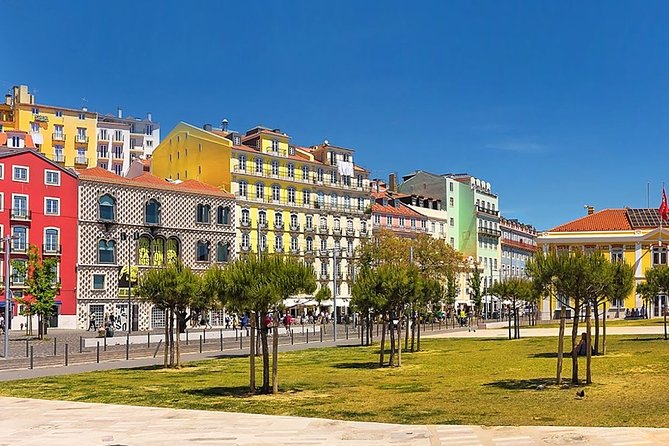
The setting creates a sharp contrast. Today, you see an open ceremonial square with bright façades and the river nearby. The tour asks you to consider the political and commercial power represented here, including the systems that helped Portugal profit from overseas expansion.
This is also a useful place to ask questions. The square is large enough for the group to spread out, and its importance reaches beyond one narrow subject. The discussion can connect maritime trade, government, empire, and the role of Africans in Portuguese society.
Central Lisbon after the 1755 earthquake
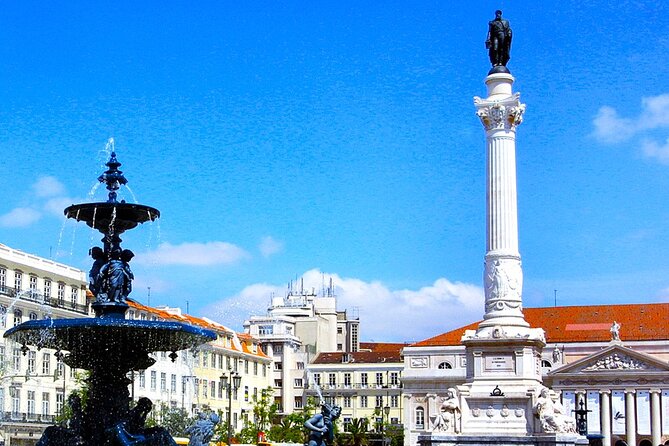
The route then moves into central Lisbon, an area reshaped by the devastating earthquake of 1755. The exact stop is not named, but the purpose is clear: use the rebuilt center to discuss how Africans interacted with Portuguese society before and after the city’s destruction.
This portion helps prevent the tour from becoming only a story about the past. Lisbon changed physically, but the people who worked, worshipped, traded, and lived there remained part of the city’s social fabric. The guide’s job is to connect those human experiences to the streets around you.
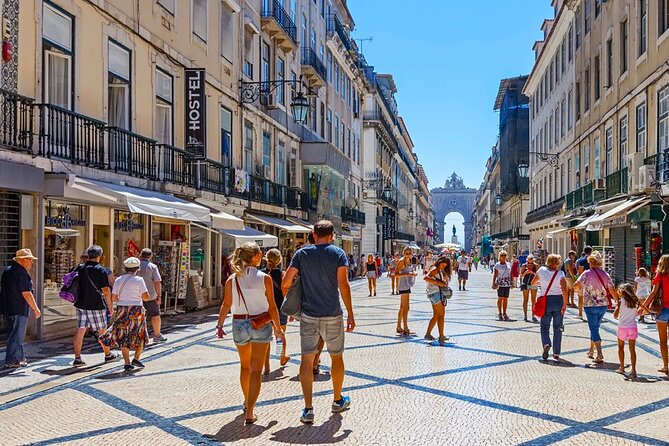
Because this is a walking tour, you see how quickly Lisbon’s character changes from old lanes to planned central avenues. That movement gives the history a physical rhythm. You are not simply standing in one square while listening to a lecture.
Rua Rosa de Lisboa and overlooked women’s work
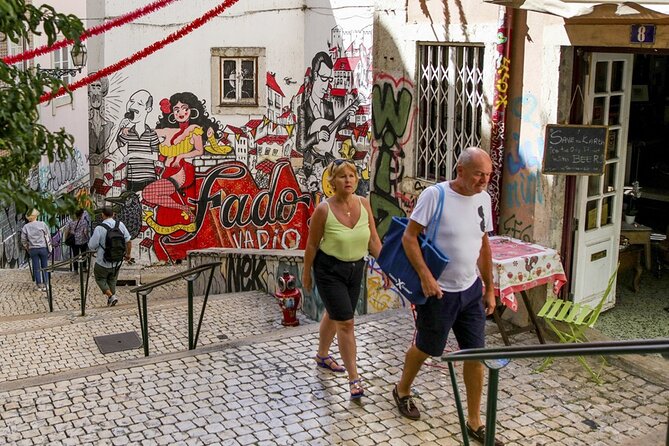
At Calle Rosa de Lisboa, the guide discusses African women who provided services in this part of the city. You spend about 10 minutes here.
This is an important correction to a male-centered account of empire and commerce. The stop brings attention to women’s labor and to the ways African women were present in Lisbon’s daily economy. The description of the stop is brief, so the amount of detail may depend on the guide and on the questions you ask.
I would use this moment to ask what kinds of services were provided and how these women fit into Lisbon’s social structure. The tour rewards curiosity, especially because some of its locations are not famous landmarks with built-in interpretation.
Time Out Market and the city at work
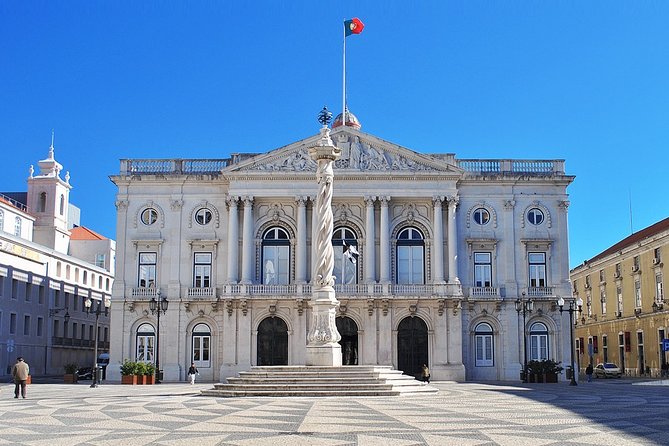
The next stop is Time Out Market Lisboa, now one of the city’s best-known food halls. The tour uses its earlier role as a workplace for many Africans to show how the area changed over time.
This is a smart modern contrast. You see a popular contemporary destination, then hear about the workers and labor systems that occupied the site before its current use. It reminds you that city spaces are constantly repackaged, while older communities and forms of work can fade from view.
The stop is about 10 minutes. It is not a meal break, and you should not assume food or wine is part of the scheduled route. One person described wine tasting at the end, but that does not appear to be a guaranteed feature, so treat it as a possible extra rather than a promise.
Jardim Dom Luís and the question of abolition
At Jardim Dom Luís, the route pauses for about five minutes beside the statue of Marquis Sá da Bandeira. He is presented as a figure responsible for abolishing slavery in Portuguese territory and colonies.
The short stop carries a large subject. Abolition is not the same as justice, and the tour’s broader focus encourages you to think about what changed legally and what may have continued socially and economically. You should listen for that distinction and ask questions if the discussion moves too quickly.
The garden also gives you a brief change of pace after several dense historical stops. Still, do not expect a long rest. Five minutes passes quickly, and the tour continues on foot.
The Brazilian consulate and the Atlantic connection
In front of the Consulate-General of Brazil, the guide turns to the transatlantic slave trade and its consequences. The stop lasts about 10 minutes.
The location allows the discussion to widen beyond Portugal alone. Brazil was central to the Atlantic system, and the subject connects Lisbon to the movement of people, money, culture, and power across the ocean. This is one reason the tour can feel broader than a neighborhood walk.
The guide may cover difficult material in a compact period, so this is another good point for questions. If you want a detailed academic treatment of the Atlantic slave trade, you may need a museum or book alongside the tour. If you want a clear starting framework while walking through Lisbon, the stop does that job.
Praça Dom Pedro IV and African integration
Praça Dom Pedro IV, commonly called Rossio, is one of Lisbon’s busiest central squares. Here, for about 10 minutes, the discussion turns to the integration of Africans and the creation of colonies.
Rossio is an effective place to consider public life. People pass through it, transport links surround it, and the square has long served as a meeting point. The guide uses that central role to discuss how African communities were part of Portuguese society and how colonial relationships shaped ideas of belonging.
The stop also gives you a practical advantage. Since Rossio is central, you can easily continue sightseeing afterward. The tour finishes back at the meeting point, so you are not left in an unfamiliar suburb or dependent on a special return transfer.
Igreja de São Domingos and African Catholic life
At Igreja de São Domingos, the guide explains how Africans integrated into Catholic religious life and discusses their achievements. You spend about 10 minutes here.
This part of the route is valuable because it shows that integration was not limited to work or trade. Religion could provide a place for community, status, organization, and expression, even within a society marked by inequality and coercion.
The church stop is also a reminder that Lisbon’s religious history has more layers than its famous architecture suggests. You are not simply checking off another church. You are considering who worshipped there, how people found a place within Catholic institutions, and what achievements have been overlooked.
Rossio Station and Portugal’s colonial image
The final named stop is Rossio Station, built in the 19th century in the Manueline style. The guide connects its decorative language with Portugal’s effort to claim a place among European powers that divided Africa into colonies during the Berlin Conference of 1884.
The building’s ornate design is easy to admire on its own. The tour adds a less comfortable question: how did architecture and national style help Portugal present itself as a major imperial country?
This is a strong final image because it links beauty, national pride, and colonial ambition. It also closes the route with a reminder that public buildings can express political goals, not just artistic taste.
The walk also includes a square connected with Portugal’s restoration of independence from Spain, where many African slaves fought. The exact square is not identified in the supplied details, but the subject reinforces the tour’s central point: Africans were not passive figures at the edge of Portuguese history. They were involved in the country’s conflicts and public life.
Is $179.74 a fair price?
At $179.74 per person, this is expensive for a three to four-hour walking tour. There are no entry tickets listed, so the price pays mainly for the guide, the small group, the route design, and the historical interpretation.
I would consider it worthwhile only if this subject is a high priority for you. A standard sightseeing walk may cost less and cover more famous landmarks, but it is unlikely to spend the same amount of time on African presence, slavery, religious life, abolition, and colonial memory.
The value rises when Alcides is leading the group. His personal connection, clear English, and ability to answer questions have been singled out as major strengths. The value falls if the start is late, the guide is difficult to understand, or the history is delivered without energy. At this price, those basics matter.
Group discounts may help reduce the cost. The tour is also booked an average of 37 days ahead, so it is wise to reserve early if your Lisbon dates are fixed. Confirmation is normally provided at booking, although bookings made within 12 hours of departure are confirmed as soon as possible and depend on availability.
Walking conditions and useful planning tips
Take the word walking seriously. One account describes the route as slow paced, while another warns that it felt like a true walking tour and recommends good shoes and preparation for sore legs. Lisbon’s hills and cobbled streets can make three hours feel longer than the clock suggests.
A moderate level of physical fitness is required. Service animals are allowed, and the route is near public transportation, but no special transport is provided during the walk.
Restroom planning deserves attention. One person found the breaks poorly organized and said the group stopped at a hotel that was not welcoming. The tour details do not promise regular restroom stops, so use facilities before meeting at Restauradores Square and ask the guide early about the next opportunity.
Weather matters. The experience requires good conditions, and a cancellation for poor weather brings an offer of another date or a full refund. You can cancel for a full refund up to 24 hours before the start time, but changes or cancellations inside that window are not accepted for a refund.
Who should book this experience?
I would choose this tour if you want history that reaches beyond Portugal’s most polished monuments. It suits people who enjoy asking questions, walking through several districts, and considering difficult subjects without a quick, cheerful gloss.
It is especially useful near the start of a Lisbon stay. The route gives you a broad sense of Alfama, the central neighborhoods, the waterfront, Rossio, and the city’s changing social story. You may find that later sightseeing has more meaning because you know what some of those places represented.
I would skip it if you want a relaxed stroll, frequent café stops, or a cheap overview of Lisbon’s main sights. I would also think twice if hills, cobbles, or long periods of standing are a problem.
My verdict on the African Presence in Lisbon walk
This is a serious, worthwhile history tour with a narrow and important purpose. Its best feature is the way it puts African lives and influence into the center of Lisbon rather than treating them as a footnote to Portuguese expansion.
The route is strongest with Alcides, whose personal link to Cape Verde and warm manner add force to the subject. The small group helps, too. The high price, uncertain restroom planning, and occasional risk of a late or unclear start keep it from being an easy recommendation for everyone.
Book it if you want a thoughtful introduction to Lisbon’s African and colonial past, and if $179.74 fits your budget. Wear good shoes, arrive ready to walk, and make this the history-focused part of your morning rather than squeezing it between casual sightseeing plans.
FAQ
How long does the African Presence in Lisbon tour last?
The walk lasts approximately three to four hours.
Where does the tour start?
It starts at Restauradores Square, Praça dos Restauradores, 1250-001 Lisbon, Portugal.
What time does the tour begin?
The scheduled start time is 9 a.m.
Where does the tour finish?
The activity ends back at the meeting point.
Is the tour offered in English?
Yes. The tour is offered in English.
How large is the group?
The maximum group size is 15 people.
What level of fitness is needed?
You should have a moderate level of physical fitness. The experience is a substantial walking tour, so good walking shoes are recommended.
Are admission tickets included?
The listed stops have no admission charge. The experience takes place at public streets, squares, gardens, churches, and landmarks along the route.
Can I cancel for a refund?
Yes. You can cancel at least 24 hours before the scheduled start time for a full refund. Cancellations or changes made less than 24 hours before the start are not refunded or accepted.
What happens if bad weather cancels the tour?
If poor weather causes cancellation, you will be offered another date or a full refund. A minimum number of participants is also required, and if that minimum is not met, you will be offered another date or experience, or a full refund.
More Half-Day in Lisbon
- Lisbon: 7 Hills Half-Day Electric Bike Tour
★ 4.9 · 1,592 reviews - Lisbon Private And Customizable Half-Day Tour
★ 5.0 · 633 reviews - Sintra Half-Day Private Tour – A Journey through Wonderland
★ 5.0 · 601 reviews - Lisbon: Half-Day Sintra Tour with Pena Palace and Regaleira
★ 4.9 · 570 reviews
Recently reviewed around Lisbon
- Lisbon: Catamaran Luxury Sunset and Wine Tour★ 5.0 · 119 reviews
- Lisbon’s authentic Food and Wine tour with a Winemaker★ 5.0 · 67 reviews
- Morning Sailing Tour in Tagus River from Lisbon★ 5.0 · 68 reviews
- Lisbon: Belem Walking Tour with Jeronimos Monastery Tks Included★ 5.0 · 115 reviews
- PRIVATE Unforgettable Full Day Tour to Sintra from Lisbon★ 5.0 · 236 reviews
- Private Jeep Tour from Lisbon – Arrábida, Sesimbra & Beach Picnic★ 5.0 · 48 reviews
- Discover Lisbon’s Alfama: Secrets of the Old Town★ 5.0 · 104 reviews
- Sesimbra Wild Beach Tour from Lisbon★ 5.0 · 57 reviews
Walking Tours, compared.
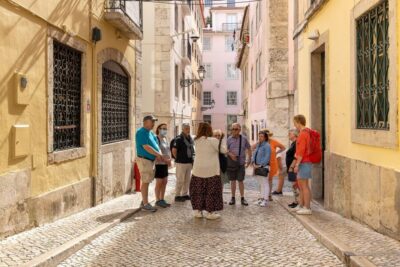
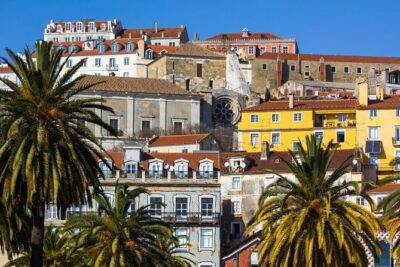
Best of Lisbon Small-Group Guided Walking Tour
Read our review →
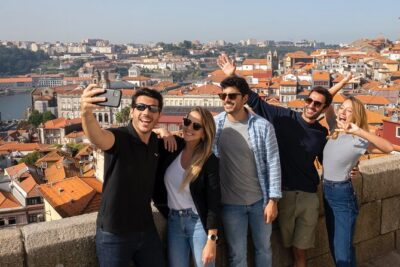
Porto Walking Tour, Lello Bookshop, River Cruise and Cable Car
Read our review →
Best of Lisbon Walking Tour: Rossio, Chiado & Alfama
Read our review →
Experience Porto’s Charm: 3-Hour Guided Walking Tour
Read our review →
Enjoy a Guided Levada Walk in the Rabaçal Valley
Read our review →Browse the lists this tour appears in