
Reviewed · HISTORICAL TOURS
Half Day Historical Walking Tour about the Slave Trade in Lisbon
Lisbon’s Age of Discovery story usually arrives with ships, explorers, and grand monuments. This three-hour walking tour puts enslaved people back into that story, tracing how slavery shaped Lisbon’s economy, neighborhoods, religion, and later political history. Guide Rui Fernandes uses images and historical documents to connect places you might otherwise pass without a second thought.
I like the small group limit of eight, which gives you room to ask direct questions and follow the discussion. I also like the route itself: it links Alfama, the waterfront, Baixa, Rossio, Restauradores, and Largo do Carmo, so you learn while seeing a useful slice of central Lisbon.
The subject is painful, and the tour does not turn it into light sightseeing. You should come ready for serious material and a fair amount of walking over about three hours. If walking is difficult, this is not the right choice, though the route is described as having no hills and includes regular stops.
In This Review
- Why this Lisbon walk is worth your time
- Lisbon beyond the Age of Discovery
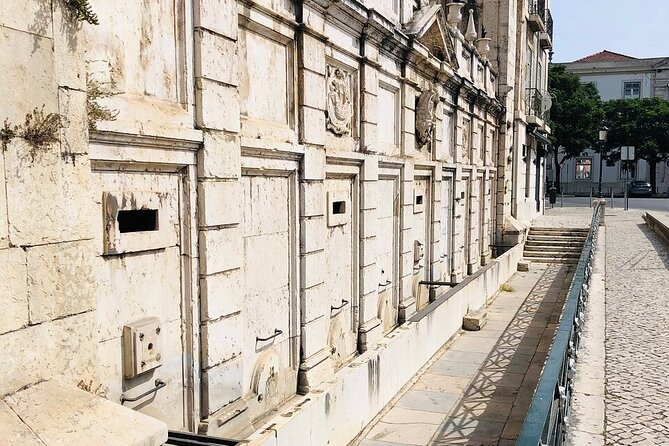
- Starting at Largo do Chafariz de Dentro
- Alfama and the long road to Atlantic slavery
- Campo das Cebolas and the question of public memory
- Praça do Comércio and colonial commerce
- Baixa, Rossio, and Restauradores: daily life in the city
- Igreja de São Domingos and the role of religion
- Largo do Carmo, revolution, and the end of empire
- How Rui Fernandes teaches a difficult subject
- Price, group size, and practical value
- Who should book this experience?
- Should you book this Lisbon slave-trade tour?
- FAQ
- How long is the historical walking tour?
- Where does the tour begin?
- Where does the tour end?
- Is the tour offered in English?
- How large is the group?
- Is the tour suitable for people with walking difficulties?
Why this Lisbon walk is worth your time
- Portugal’s global role comes into focus: Learn how Portuguese involvement in the Atlantic slave trade developed in the mid-15th century and how it fitted into older systems of slavery.
- Alfama becomes more than a postcard: The city’s oldest neighborhood helps explain Roman, Moorish, and Portuguese connections to slavery.
- Rui Fernandes brings prepared, visual teaching: Historical images and documents help place the discussion in front of you rather than leaving it as a string of dates.
- Lisbon’s daily life gets attention: The tour looks at where enslaved people lived, worked, and interacted with religious institutions.
- The route ends with the end of empire: At Largo do Carmo, Portugal’s 25th of April revolution leads into the collapse of the colonial empire in the 1970s.
- The small group keeps the conversation open: With no more than eight people, you can ask questions without fighting to be heard.
Lisbon beyond the Age of Discovery
I think this tour is most useful early in a Lisbon visit, especially if you plan to see monuments linked to Portugal’s maritime expansion. It gives you a frame for understanding what those monuments often leave out: the money, labor, violence, and racial hierarchy tied to colonial trade.
The walk begins at Largo do Chafariz de Dentro, at the edge of Alfama. This is a sensible starting point because the tour is not treating slavery as an isolated chapter from overseas. Instead, it begins with the long practice of enslavement across different societies and then follows Portugal into the Atlantic system.
The discussion includes Roman and Moorish periods before moving to Portugal’s involvement in the Atlantic slave trade in the mid-15th century. That broader opening matters. You are less likely to leave with the mistaken idea that slavery suddenly appeared with European expansion, while still seeing clearly how Portuguese activity helped build a new Atlantic system.
That balance is one of the tour’s strongest features. The focus remains on Portugal, Lisbon, and the people affected by Portuguese trade, but the story is placed within wider European, Islamic, African, and American connections.
More Historical Tours in Lisbon
- Lisbon: History, Stories and Lifestyle Walking Tour
★ 4.8 · 10,902 reviews - Lisbon: Live Fado Show with Port Wine in Historic Center
★ 4.7 · 4,166 reviews - Lisbon: Fado Show with Wine in a Historic Venue
★ 4.8 · 1,294 reviews
Starting at Largo do Chafariz de Dentro
Your meeting point is Largo do Chafariz de Dentro, in Lisbon’s 1100-605 postal area. The guide uses the opening minutes to introduce the theme, set the historical frame, and explain what you will be looking for during the walk.
This is a brief start, only about ten minutes, but it helps you understand the method. You are not simply being led to famous squares with a few facts attached. The places are used as evidence for a story about commerce, law, religion, family life, and memory.
Rui Fernandes is the guide most closely associated with this experience. The available details describe him as highly prepared, direct, patient, and willing to answer difficult questions. He also contacts the group before the walk with meeting instructions, then makes contact at the starting point.
His use of pictures and historical documents is especially helpful. Lisbon has changed considerably, and many of the people and activities being discussed are no longer visible. Images give you something concrete to compare with the streets around you.
Alfama and the long road to Atlantic slavery
The Alfama portion lasts about 30 minutes and is the first major stop. As Lisbon’s oldest neighborhood, Alfama provides a useful setting for discussing the many civilizations that settled in Portugal and the different systems of slavery they practiced.
You will hear about Roman and Moorish precedents before the conversation turns to the Portuguese role in the Atlantic slave trade. That sequence helps separate several ideas that are often blurred together. Slavery existed in earlier societies, but the Atlantic trade created its own scale, routes, commercial structures, and racial consequences.
I appreciate that the tour does not rush from medieval history straight to a simplified account of Portugal and Africa. It examines the religious, political, economic, and social reasons that allowed human beings to be treated as property. It also considers how slavery connected with feudal institutions, monarchies, religious organizations, and personal or family arrangements.
Alfama is also where the tour starts to make the subject local. You are walking through a neighborhood where enslaved people lived and worked, not merely hearing about distant plantations or ocean crossings. That shift from abstract history to actual streets makes the discussion harder to ignore.
The route is described as moderate, with planned breaks. One useful point from the experience is that the walking path avoids hills, even though Alfama is often associated with steep streets. Still, you should wear comfortable shoes and be able to walk for several hours.
Campo das Cebolas and the question of public memory
The next stop is Campo das Cebolas, where a monument to the victims of the slave trade is planned for the future. You spend only about ten minutes here, but the location raises a large question: how does a city remember people who were central to its economy but often missing from its public story?
A planned monument is not the same as an established memorial, and that distinction is worth keeping in mind. The stop is about absence as much as presence. You are asked to consider what Lisbon marks proudly, what it leaves quiet, and how the city’s understanding of its past may change.
This gives the tour a modern purpose. It is not only reconstructing events from centuries ago. It is also asking why the legacy of slavery is still rarely addressed in ordinary sightseeing, and how public spaces can acknowledge those who were exploited.
More Walking Tours in Lisbon
- Best of Lisbon Small-Group Guided Walking Tour
★ 5.0 · 4,869 reviews - Lisbon: Food and Wine Small Group Walking Tour
★ 4.9 · 4,082 reviews - Best of Lisbon Walking Tour: Rossio, Chiado & Alfama
★ 4.9 · 2,700 reviews - Age of Discoveries Walking Tour in Belém
★ 5.0 · 1,513 reviews
Praça do Comércio and colonial commerce
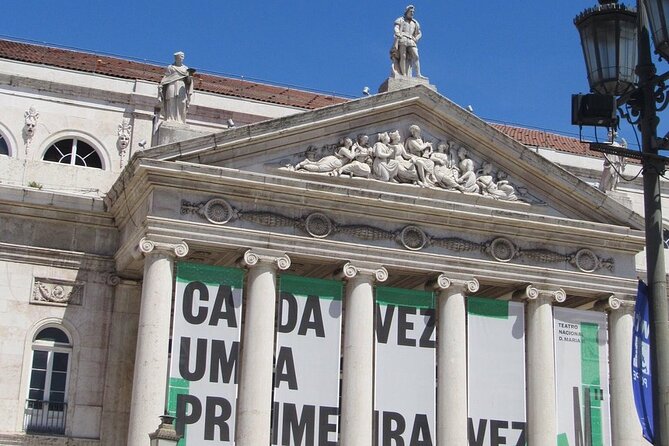
At Praça do Comércio, also known as Terreiro do Paço, the tour shifts toward trade and power. This was the commercial heart of Lisbon, making it a natural place to discuss how slavery fitted into colonial commerce.
The grand square can easily be read as a symbol of royal authority and maritime success. The tour adds another layer by showing that colonial trade was not separate from the city’s commercial life. Human beings were part of systems that moved goods, money, and labor through the Portuguese empire.
You should expect about 15 minutes here. That is enough to connect the square’s public grandeur with the economic forces behind it, but not enough for a full lecture on every colonial route. The guide’s larger point is clear: Lisbon’s prosperity and Portugal’s overseas expansion cannot be understood honestly without including slavery.
This is also a good place to ask questions. The tour’s small size makes it easier to pause over subjects such as who benefited from colonial trade, how religious and political institutions interacted with it, and how older forms of slavery fed into Atlantic commerce.
Baixa, Rossio, and Restauradores: daily life in the city
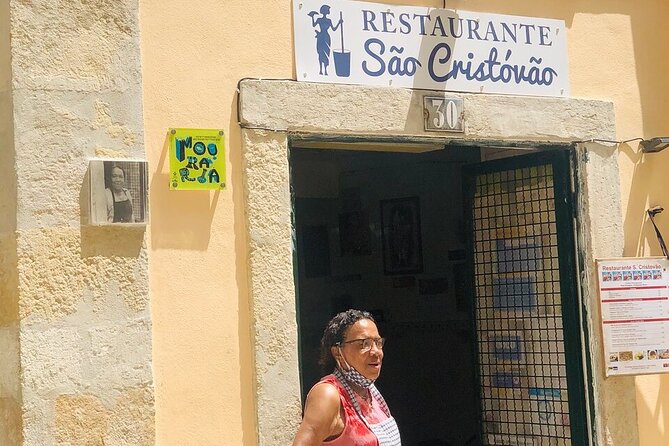
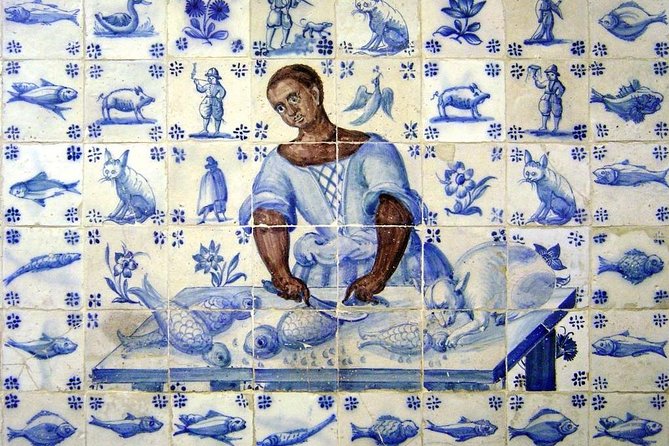
The longest central section takes place through Baixa, Rossio, and Restauradores, for about 30 minutes. Here the subject becomes more personal. Instead of focusing mainly on ships, laws, and commercial systems, you learn about the daily lives of enslaved captives from Africa and other parts of the world who lived in Lisbon.
This section is one reason I would choose the tour over a standard sightseeing walk. It shows how slavery operated inside an ordinary European capital. Enslaved people were not only distant figures in colonial records. They were part of the city’s domestic, commercial, religious, and social life.
The guide’s approach also appears to connect slavery with the wider development of Lisbon. That means considering not only who was enslaved, but also how the system affected Portuguese culture and contemporary history. African influence is treated as part of Portugal’s formation, not as a footnote added after the main story.
The route through Baixa and Rossio also makes the tour practical for a first visit. You are seeing major central areas while learning a subject that standard city tours may skip. The experience can work as a complement to a general Lisbon tour, especially if you want more meaning from the streets and squares you are already planning to visit.
Igreja de São Domingos and the role of religion
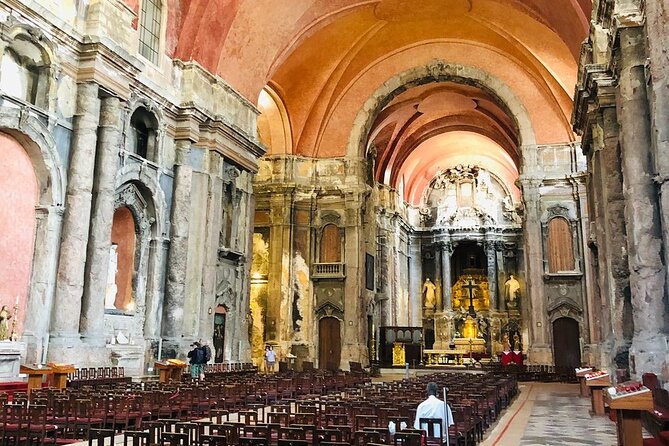
At Igreja de São Domingos, the discussion turns to religion and the ways enslaved people interacted with Lisbon’s religious organizations. The stop takes about ten minutes.
This part is important because religion was not a side issue in early Portuguese society. Religious institutions could shape community life, moral arguments, charity, records, and social control. A stop at a church lets the guide explore how enslaved people navigated those structures and how religious ideas were used in discussions about slavery.
You should not expect a long interior visit or a separate church tour. The church is a historical setting for the discussion. The value lies in seeing how slavery touched institutions that shaped everyday life, not only merchants and royal officials.
The subject can become complicated quickly, so this is another point where Rui’s style matters. The information is presented as a connected account of institutions and people rather than as a simple judgment delivered from a distance.
Largo do Carmo, revolution, and the end of empire
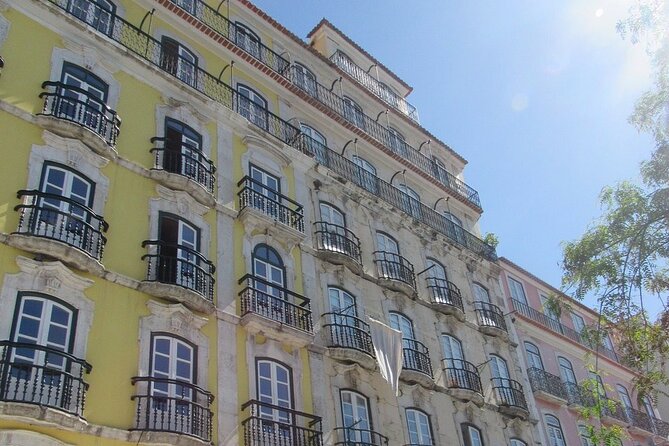
The final stop is Largo do Carmo, about 15 minutes from the scheduled itinerary. It is associated with the 25th of April coup and revolution, which ended Portugal’s dictatorship and led to major political change.
Here the tour moves into the 20th century and the later demise of the Portuguese colonial empire in the mid-1970s. This gives the walk a useful ending. You begin with older systems of enslavement, follow Portugal into Atlantic colonial trade, examine life in Lisbon, and finish with the political collapse of empire.
That final connection helps explain why the subject remains relevant. Colonialism did not end when the Atlantic trade changed, and the end of formal empire did not erase its effects. Portugal’s social and political history continued to be shaped by what happened overseas and by how the country remembered, or failed to remember, it.
Ending at Largo do Carmo is convenient, too. The tour starts in Alfama and finishes in a central part of the city, rather than returning you to the meeting point. Plan your next activity from Largo do Carmo, and remember that hotel transport is not included.
How Rui Fernandes teaches a difficult subject
The strongest praise for this walk centers on Rui Fernandes. The available experience details repeatedly point to his preparation, clear delivery, patience, and ability to answer questions without becoming defensive or vague.
That matters here. A tour about slavery can go wrong in two ways: it can soften the facts to keep the mood comfortable, or it can present history as a moral performance with little room for questions. Rui’s approach is described as factual and balanced while still acknowledging the human cost.
He uses visual material during the walk, including images and historical documents. He also connects the subject to his own family history, with a personal connection involving his grandfather revealed near the end of the experience. That detail adds a human element without replacing the larger historical account.
I would especially recommend this tour if you want a guide who can handle questions from different perspectives. The experience is described as direct when correcting misinformation, while remaining respectful and diplomatic. That combination is useful for a subject often discussed through national myths, schoolbook gaps, and political argument.
Price, group size, and practical value
At $39.78 per person, this is not the cheapest way to see Lisbon, but the price is reasonable for a three-hour specialist walk with a professional local guide and a maximum of eight people. You are paying for focused teaching, not for entrance tickets or transportation.
There are no admission fees included because the tour takes place in public streets and squares. Food, drinks, hotel pickup, and hotel drop-off are also not included. That keeps the cost fairly clear, but you should budget for your own refreshments and arrange your way to Largo do Chafariz de Dentro.
The small group is a major part of the value. With eight people or fewer, you can hear the guide more easily, see the visual materials, and ask questions without holding up a large crowd. It also allows the discussion to respond to the group’s interests.
The tour is offered in English and includes a mobile ticket. Confirmation arrives at booking, and free cancellation is available up to 24 hours before the scheduled start time. If you cancel later or make changes inside that period, the payment is not refunded.
Because the walk averages being booked 36 days ahead, I would reserve early if the timing matters to you. The strong demand also means you should not assume a last-minute place will be available.
Who should book this experience?
I would choose this walk if you want to understand Portugal beyond the polished Age of Discovery story. It suits history-minded adults, visitors interested in African and Portuguese connections, and anyone who wants a more honest reading of Lisbon’s central neighborhoods.
It also works well for older children and teenagers who can focus for a serious discussion. The subject is demanding, but the walking, images, and questions help keep it active rather than classroom-bound.
Black visitors, especially those looking for African history to be acknowledged in European sightseeing, may find the tour particularly meaningful. At the same time, the guide’s approach is not limited to one national or personal viewpoint. It addresses the global history of slavery and Portugal’s place within it.
I would skip it if you want a light introduction to Lisbon, dislike discussions of colonial violence, or have walking difficulties. The tour is not designed as a relaxed food walk or a general highlights tour. Its purpose is to examine an uncomfortable part of the city with care.
Should you book this Lisbon slave-trade tour?
Yes, if you want a small, serious, well-prepared history walk that changes how you see Alfama, Baixa, and the waterfront. The route covers familiar Lisbon sights, but the subject gives them a different meaning.
Book it for the guide’s clear teaching, the visual material, the chance to ask questions, and the careful link between slavery, colonial commerce, African influence, religion, and the end of empire. Wear comfortable shoes, allow the full three hours, and bring the patience needed for difficult material.
I would place this near the top of a history-focused Lisbon itinerary. It will not make the city simpler, but it will make your understanding of Portugal more complete.
FAQ
How long is the historical walking tour?
The tour lasts approximately three hours.
Where does the tour begin?
The meeting point is Largo do Chafariz de Dentro 30, 1100-605 Lisboa, Portugal.
Where does the tour end?
The tour ends at Largo do Carmo, 1200-092 Lisboa, Portugal.
Is the tour offered in English?
Yes. The experience is offered in English.
How large is the group?
The tour has a maximum of eight people.
Is the tour suitable for people with walking difficulties?
No. It is not recommended for people with walking difficulties, and participants should have a moderate level of physical fitness. Service animals are allowed, and the route is near public transportation.
Recently reviewed around Lisbon
- Lisbon: Catamaran Luxury Sunset and Wine Tour★ 5.0 · 119 reviews
- Lisbon’s authentic Food and Wine tour with a Winemaker★ 5.0 · 67 reviews
- Morning Sailing Tour in Tagus River from Lisbon★ 5.0 · 68 reviews
- Lisbon: Belem Walking Tour with Jeronimos Monastery Tks Included★ 5.0 · 115 reviews
- PRIVATE Unforgettable Full Day Tour to Sintra from Lisbon★ 5.0 · 236 reviews
- Discover Lisbon’s Alfama: Secrets of the Old Town★ 5.0 · 104 reviews
- Sesimbra Wild Beach Tour from Lisbon★ 5.0 · 57 reviews
- Private Jeep Tour from Lisbon – Arrábida, Sesimbra & Beach Picnic★ 5.0 · 48 reviews
Historical Tours, compared.

Historical Sites, Wine Experience, Lunch & Cruise
Read our review →
Live Fado Show with Port Wine in Historic Center
Read our review →

Browse the lists this tour appears in