
Reviewed · WALKING TOURS
Belém District and the Salazar Dictatorship Legacy – Private Walking Tour
Belém’s grand monuments tell only half the story. This private walk uses the district’s squares, gardens, monuments, and surviving traces of the 1940 Portuguese Exhibition to explain how Salazar’s dictatorship presented Portugal as a heroic, orderly empire. Luís Maio brings the political story down to street level, including the way ordinary people lived under Estado Novo rule.
I like the private format, which gives you room to ask questions and steer the conversation. I also like the sharp focus on the 1940 Exhibition rather than a quick parade of famous sights. You’ll hear why the Discoveries Monument looks the way it does, what the flower beds and lettering mean, and how modern Belém was shaped by propaganda as much as by architecture.
The main drawback is simple: this is an exterior walking tour. You do not tour inside the monastery or museums during the three hours, and one past participant felt too much time went to subjects that did not match their interests. Wear good shoes and tell Luís early what you want from the visit.
In This Review
- Key points to know before you book
- Why Belém makes such a good setting for this subject
- Starting at Afonso de Albuquerque Square
- Vasco da Gama Garden and the old Belém town
- Jerónimos Monastery and the meaning behind the façade
- Praça do Império and the 1940 Exhibition
- The Discoveries Monument and its giant wind rose
- The Popular Art Museum, a modernist oddity
- Belém Tower Garden and the end of the route
- What the private guide adds
- Timing, walking effort, and what to bring
- Is $33.55 good value for three hours?
- Who should book this Belém walk?
- Should you book it?
- FAQ
- How long is the Belém dictatorship legacy walking tour?
- Where does the tour begin?
- Where does the tour end?
- Is this a private tour?
- Is the tour offered in English?
- Are admission tickets included?
- Can I cancel for a full refund?
Key points to know before you book
- A dictatorship story told through Belém’s monuments: The tour connects Salazar’s Estado Novo with the 1940 Portuguese Exhibition and its celebration of empire.
- Luís Maio is the main guide: He uses historical images, dates, and political context, while adjusting the pace and subject matter to your questions.
- Private means your group gets the guide’s full attention: Only your party participates, with a minimum of two people per booking.
- The route runs about three hours: It begins at Belém River Station and ends in the Belém Tower Garden.
- The main sights are seen from outside: Plan extra time to visit the Jerónimos Monastery, museums, or Belém Tower on your own.
- The price is modest for a private tour: At $33.55 per person, the value is strongest for two or more people who want serious historical explanation rather than a basic photo walk.
Why Belém makes such a good setting for this subject
Most first visits to Belém focus on Portugal’s Age of Discoveries. You see the monastery, the tower, and the monument honoring explorers, then perhaps stop for a pastry. This tour asks a more useful question: why were these older monuments arranged and reused so carefully in the 20th century?
Salazar’s dictatorship looked backward to build its political image. The regime celebrated sailors, missionaries, kings, empire, religion, and national discipline. The 1940 Exhibition brought those themes together in Belém, using architecture and public space to make Portugal’s past serve the present government.
That approach gives the walk a clear thread. You are not simply hearing disconnected facts about a monastery and a tower. You are watching a district change from a riverfront center tied to exploration into a carefully designed stage for national propaganda.
This also helps explain why some parts of Belém can feel oddly grand or formal. The squares, lawns, monuments, broad avenues, and decorative details were not placed by accident. Luís Maio’s strength, based on the tour’s design and the detailed experiences described by past participants, is pointing out things you could easily pass without noticing.
More Walking Tours in Lisbon
- Lisbon: History, Stories and Lifestyle Walking Tour
★ 4.8 · 10,902 reviews - Best of Lisbon Small-Group Guided Walking Tour
★ 5.0 · 4,869 reviews - Lisbon: Food and Wine Small Group Walking Tour
★ 4.9 · 4,082 reviews
Starting at Afonso de Albuquerque Square
The meeting point is Belém River Station on Avenida Brasília. From there, the walk moves toward Afonso de Albuquerque Square, where you begin with the district’s changing identity, from the Discoveries period through the 1940 Exhibition.
The square is useful as an opening because it gives you the broad timeline first. You can expect about 15 minutes here, with no admission fee. The stop is not about entering a monument. It is about learning how Belém’s waterfront and public symbols were made to carry different political meanings over time.
A guide who simply lists dates could make this dry. Luís instead appears to use the setting as a visual lesson. The tour includes images from different periods, helping you compare what Belém looked like before the exhibition with what the regime wanted people to see in 1940.
That visual method is especially helpful if you do not already know Portuguese history. You do not need to arrive with a working grasp of Estado Novo politics. The story is built from the place in front of you.
Vasco da Gama Garden and the old Belém town
The next short stop is Vasco da Gama Garden, where the focus shifts to old Belém and what remains of it. Allow about 15 minutes.
This may be one of the quieter parts of the route, and that is part of its value. The most famous monuments can make Belém seem like a museum district that appeared fully formed. The garden helps show that there was an older town beneath the grand ceremonial version.
I like this stop because it gives the tour a human scale. Salazar’s government did not build its image in an empty space. It worked with an existing neighborhood, older routes, and long-established symbols. Seeing what survived, and what did not, makes the later discussion of the exhibition easier to follow.
If you want only headline sights, this section may feel slow. If you want to understand how Belém became the place you see today, it earns its time.
Jerónimos Monastery and the meaning behind the façade
The Jerónimos Monastery receives about 20 minutes. You will study the façade and the exterior spaces, with explanations of the late Gothic design, its historical role, and its religious symbolism.
The monastery is one of Lisbon’s great showpieces, so many people stop here only for photographs. This tour tries to slow that process down. The building’s connection to Portugal’s maritime past made it especially useful to later governments seeking a national story built around exploration and faith.
It is important to set your expectations correctly. The three-hour walk does not provide an interior visit to the monastery. One past participant specifically advised setting aside time afterward for the monastery and museums, and that is sound advice.
The distinction matters when comparing this tour with a standard sightseeing visit. You are paying for interpretation of the site, not an admission ticket. If you want to inspect the cloisters or interior spaces, you need another visit and enough time in your schedule.
More Lisbon walks with a guide:
- Best of Lisbon Walking Tour: Rossio, Chiado & Alfama
★ 4.9 · 2,700 reviews - Age of Discoveries Walking Tour in Belém
★ 5.0 · 1,513 reviews - Sintra & Cascais Day Tour with Pena Palace Entry and Gardens Walk
★ 5.0 · 962 reviews - Lisbon Roots – Small group Food & Culture Walking Tour w/tastings
★ 5.0 · 910 reviews
Praça do Império and the 1940 Exhibition
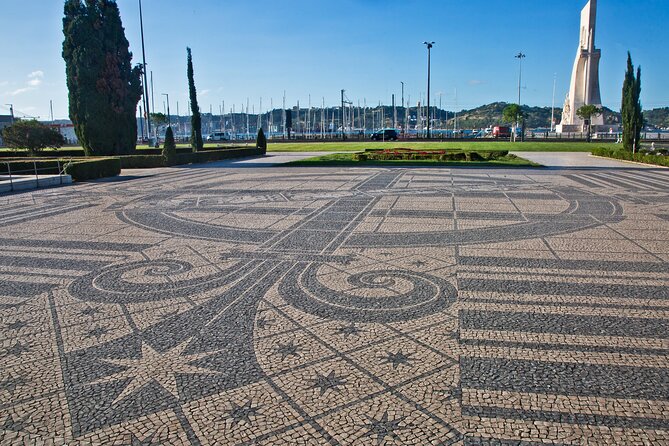
Jardim da Praça do Império is the tour’s central stage. Plan on roughly 20 minutes here, with quick stops at the heraldic flower beds, the monumental fountain, and the seahorse details.
This square was a hub of the Portuguese World Exhibition in 1940. The exhibition was designed to celebrate Portugal’s past, especially its imperial reach and the supposed virtues of the Estado Novo. The square’s decoration helped turn political ideas into something physical and easy to read.
This is where the tour’s subject becomes most concrete. Instead of treating fascism as a distant political label, Luís connects it to gardens, symbols, public ceremonies, and the way a government arranged a city for display.
The 1940 Exhibition also had a darker side. It promoted a carefully edited picture of national life and empire, leaving out poverty, repression, colonial violence, and political opposition. The tour brings out those tensions without losing sight of the architecture.
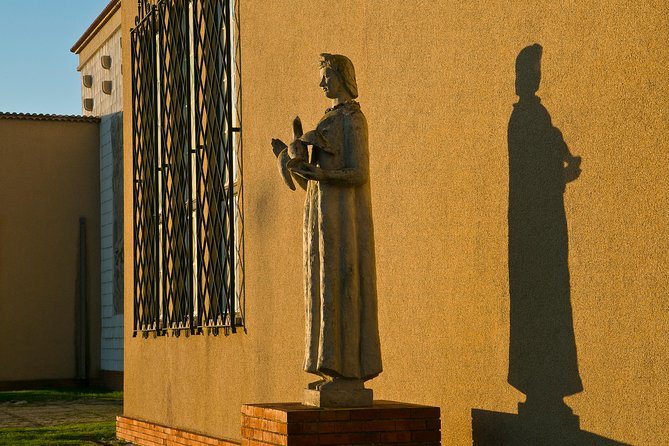
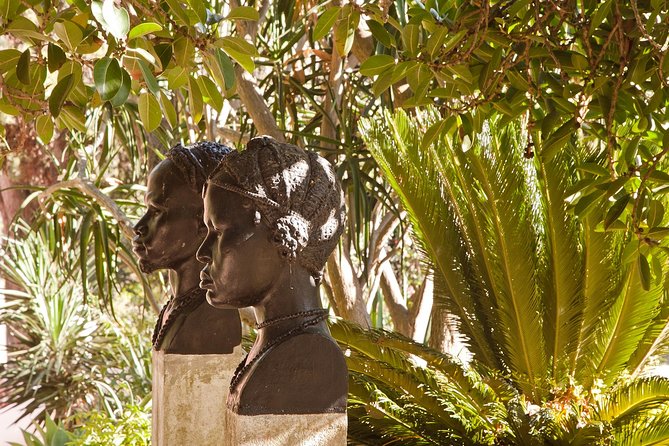
You may hear unusual details here. The exhibition included a human zoo, and the government misrepresented the contribution of ten female artists because it wanted Portuguese women reduced to domestic roles. A reconstructed 16th-century caravel, placed in the exhibition’s orbit and made with the involvement of a film director, reportedly sank. These details puncture the polished official story and show how spectacle can be both powerful and absurd.
The Discoveries Monument and its giant wind rose
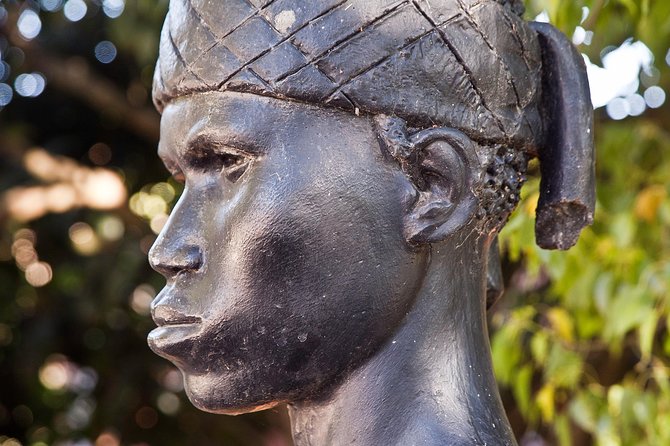
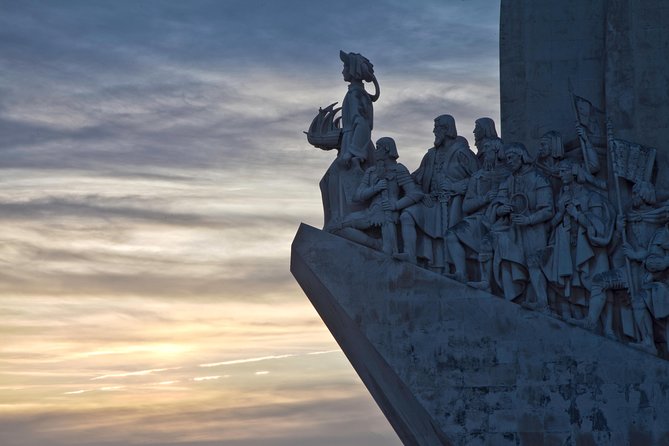
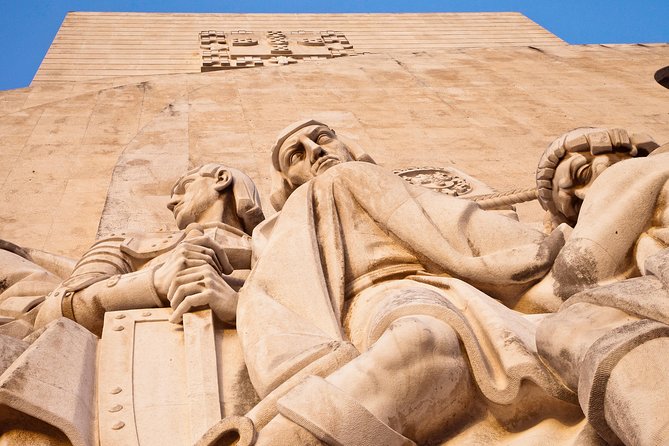
At the Padrão dos Descobrimentos, you spend about 20 minutes walking around the monument and the enormous wind rose set into the pavement.
This is one of the best parts of the tour for anyone who has wondered who the carved figures are. The monument is not just a tribute to sailors. Its design reflects the political mood of the 1940 Exhibition, presenting exploration as a national mission and Portugal as a central force in world history.
The wind rose matters because it extends the monument’s message across the ground. You can photograph it, but the better use of your time is to understand how the monument and pavement work together as one piece of public storytelling.
The monument was built in its present form after the exhibition period, but the tour places it within that wider political tradition. That context is more valuable than simply memorizing the names of figures in the stone.
Bring questions. This is the sort of stop where a private guide earns his fee. You can ask about the explorers, the symbols, the colonial dimension, or the way national monuments are used by governments. The conversation can go beyond the prepared route without turning into a lecture detached from the place.
The Popular Art Museum, a modernist oddity
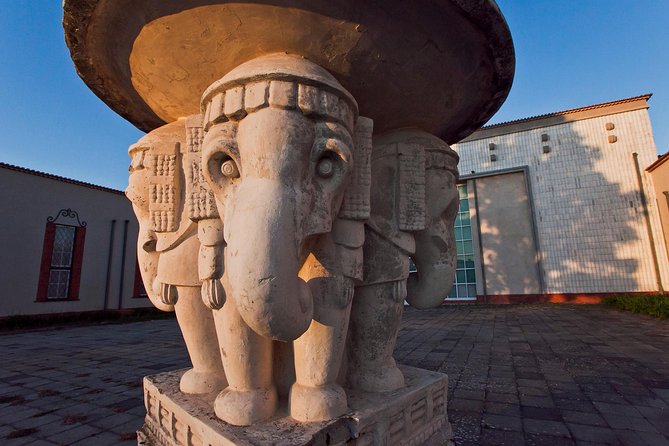
The Museu de Arte Popular gets around 10 minutes. The stop concerns the building itself and its unusual role in Modernist Lisbon.
The museum can seem out of place beside the monastery and tower. That awkwardness is exactly why it belongs on this route. The 1940 Exhibition used architecture and folk culture to define what counted as properly Portuguese. A museum of popular art could present regional customs as neat, fixed, and politically useful.
Do not expect an extended museum visit here. The tour is about the building’s place in Belém’s public story, and admission is not included. If folk art or Modernist design interests you, note it as a possible return visit rather than assuming the walking tour will cover the collections.
Belém Tower Garden and the end of the route
The final stop is the Belém Tower Garden, reached after about 15 minutes of discussion. The route ends here, at Avenida Brasília, 1400-038 Lisboa.
The tower is the other major monument tied to the Discoveries Age. The guide also connects it with Restelo, the upper-class neighborhood that developed after the 1940 Exhibition. That is a useful ending because it returns you to the question of how an exhibition can affect more than a temporary display.
You finish with the older maritime symbol in view, but now with a better sense of the modern district around it. The tower itself is an exterior stop on this walk. If you want to go inside, plan that separately.
The end point is also practical. Belém Tower is not far from Algés train, tram, and bus stations. The tour does not include transport to or from the sights, hotel pickup, or hotel drop-off, so you should arrange your own route to Belém River Station and away from the tower garden.
What the private guide adds
The strongest part of this experience is the guide’s flexibility. Luís Maio is described as patient with questions, careful about pace, and willing to adjust the discussion to your interests and background.
That can make a real difference with a political history tour. Some people want the structure of Estado Novo and its institutions. Others want daily life, censorship, colonial wars, resistance, or the fall of the regime. A private format lets you signal which path matters most to you.
The guide has also adjusted explanations to visitors from South Africa, drawing connections with their own national history. That does not mean the tour becomes a general comparison of dictatorships. It means Luís can use your questions to make Portuguese events easier to place.
He also pays attention to physical comfort. Past experiences describe stops in shade or sun as needed and chances to sit rather than stand for every explanation. That is helpful on a hot day, but do not treat it as a substitute for preparation. Lisbon weather can change, and the company may cancel in poor weather.
The photography element is another small plus. The guide is also described as a professional photographer guide, and the route provides plenty of strong angles around the square, monument, gardens, and riverfront. The focus remains history, but you should come away with useful photographs as well as notes.
Timing, walking effort, and what to bring
Three hours is long enough to build an argument but short enough to fit into a day in Lisbon. You will cover several points along Avenida Brasília and through Belém, with repeated stops for explanation.
Wear comfortable walking shoes. One critical experience was not about the guide’s expertise but about the tour’s subject matter and walking demands. If you prefer frequent indoor breaks, this may not suit you.
Smart casual clothing is requested. Bring water, weather protection, and sun protection when needed. The tour requires good weather, and a cancellation for poor conditions brings either another date or a full refund.
Morning and afternoon departures are offered. Morning can leave you time to visit the monastery or museums afterward. An afternoon start may work well if you already plan a morning in central Lisbon, but you should check the opening hours of any site you hope to enter later.
The meeting point is near public transportation, but hotel transfers are not part of the service. A parking fee, if applicable, is also not included and is payable at check-in. Since this is a walking tour, parking may be more trouble than it is worth.
Is $33.55 good value for three hours?
At $33.55 per person, this is inexpensive for a private, English-language tour lasting about three hours. The value is strongest if you have at least two people and want a serious conversation about Portugal’s 20th-century politics.
You are not paying for entry tickets, food, drinks, or transportation. You are paying for the guide’s time, preparation, route, historical material, and attention to your group. Since most of the major Belém sights charge admission if you want to enter, remember to budget separately for any follow-up visits.
A group discount may improve the price for a larger private party. The minimum booking is two people, and only your group participates. That is a good setup for couples, friends, or families with older children who can manage a long walk and an adult history discussion.
The price is less compelling if your goal is simply to see the three famous monuments and take photographs. You can explore the exteriors independently. This tour earns its cost by explaining why the monuments were selected, arranged, and used as national symbols.
Who should book this Belém walk?
I would choose this tour if you have already seen Lisbon’s basic sights and want the missing political chapter. It suits history fans, readers of European 20th-century history, architecture enthusiasts, and anyone curious about how authoritarian governments shape public memory.
It also suits visitors who prefer questions and conversation to a fixed speech. Luís appears comfortable with detailed dates, broad political questions, and comparisons with other countries. That makes the private format more than a smaller group size. It gives you a chance to set the level.
I would hesitate if you need interior access to the monastery, museums, or tower in the same three hours. I would also hesitate if your interest in Salazar’s dictatorship is only casual and you mainly want a quick highlights walk.
For more on resistance and the fall of the regime, you can follow this with a separate visit to the Aljube Museum in Alfama. That is not included here, but it pairs naturally with Belém’s official, public version of Portuguese history.
Should you book it?
Book it if you want Belém explained rather than merely photographed. The tour’s best feature is its clear connection between the Age of Discoveries, the 1940 Exhibition, Salazar’s political message, and the district’s later development.
Skip it if you expect a traditional monument tour with admission included. You will walk outside, listen closely, and think about propaganda, empire, religion, class, and daily life under dictatorship.
For the modest price, a private three-hour route led by Luís Maio offers unusual value, especially when you arrive with questions. Just reserve time afterward for the interiors that this walk intentionally leaves out.
FAQ
How long is the Belém dictatorship legacy walking tour?
The tour lasts approximately three hours.
Where does the tour begin?
It begins at Belém River Station, Avenida Brasília, 1300-598 Lisboa, Portugal.
Where does the tour end?
The walk ends at the Belém Tower Garden, Avenida Brasília, 1400-038 Lisboa, Portugal.
Is this a private tour?
Yes. Only your group participates, and a minimum of two people per booking is required.
Is the tour offered in English?
Yes. English is the listed language.
Are admission tickets included?
No admission ticket is charged for the listed walking stops, but the tour focuses on exterior visits. Food, drinks, transportation, hotel pickup, hotel drop-off, and any parking fee are not included.
Can I cancel for a full refund?
Yes, if you cancel at least 24 hours before the experience start time. Cancellations or changes made less than 24 hours in advance are not refunded or accepted. If poor weather causes the tour to be canceled, you will be offered another date or a full refund.
Recently reviewed around Lisbon
- Lisbon: Catamaran Luxury Sunset and Wine Tour★ 5.0 · 119 reviews
- Lisbon’s authentic Food and Wine tour with a Winemaker★ 5.0 · 67 reviews
- Morning Sailing Tour in Tagus River from Lisbon★ 5.0 · 68 reviews
- Lisbon: Belem Walking Tour with Jeronimos Monastery Tks Included★ 5.0 · 115 reviews
- PRIVATE Unforgettable Full Day Tour to Sintra from Lisbon★ 5.0 · 236 reviews
- Discover Lisbon’s Alfama: Secrets of the Old Town★ 5.0 · 104 reviews
- Sesimbra Wild Beach Tour from Lisbon★ 5.0 · 57 reviews
- Private Jeep Tour from Lisbon – Arrábida, Sesimbra & Beach Picnic★ 5.0 · 48 reviews
Walking Tours, compared.
Best of Lisbon Small-Group Guided Walking Tour
Read our review →
Porto Walking Tour, Lello Bookshop, River Cruise and Cable Car
Read our review →
Best of Lisbon Walking Tour: Rossio, Chiado & Alfama
Read our review →
Experience Porto’s Charm: 3-Hour Guided Walking Tour
Read our review →
Enjoy a Guided Levada Walk in the Rabaçal Valley
Read our review →Browse the lists this tour appears in