

Reviewed · WALKING TOURS
Alfama Walking Tour Lisbon
Lisbon’s oldest-feeling streets come into focus on foot, and this route takes you from broad Rossio Square into the steep lanes of Alfama. Along the way, you get church interiors, earthquake stories, castle views, and a finish at Lisbon Cathedral. The walk has the feel of a useful first look at the city, not just a march past monuments.
I like the small local details, especially the chance to try pastel de nata and ginja in a chocolate cup. I also like the range of guides, including Natalia, Belen, Guilherme, Ana, Vivian, and Valérie, who have been praised for making Lisbon’s past easy to follow. The main drawback is the climb, made tougher by heat, plus occasional concerns about start-time control and guide pace.
In This Review
- Key points to know before you book
- From Rossio Square into Lisbon’s oldest quarter
- Dona Maria II Theatre and the city beyond the postcard
- São Domingos Church reveals Lisbon’s scars
- The climb to Alfama and Portas do Sol
- St. George’s Castle and the story of Castle Hill
- Finishing at Lisbon Cathedral
- What the guides add to the walk
- Is the $0.35 price good value?
- Who should book this Lisbon walk?
- The practical verdict
- FAQ
- Where does the Alfama Walking Tour start?
- Where does the tour finish?
- How long does the walking tour last?
- Is the tour offered in English?
- Are food and drinks included?
- Can I cancel for a full refund?
Key points to know before you book
- Rossio to Alfama in 2.5 hours: You begin in central Lisbon and finish at the cathedral, with the city unfolding between the two.
- A real hill walk: Alfama is reached on foot, so bring sunscreen, a hat, and comfortable shoes.
- São Domingos includes an interior visit: This is more than a quick look at a church facade.
- Portas do Sol supplies the big view: The route includes a stop at this famous Alfama lookout.
- Local tastes may be part of the fun: Pastel de nata and ginja, or sour cherry liqueur, have featured during walks, though tastings are not included in the price.
- Strong overall rating, with a few service concerns: The experience is rated 4.9 out of 5 from 302 ratings, and 97 percent of participants recommend it, but punctuality and guide speed can vary.
From Rossio Square into Lisbon’s oldest quarter
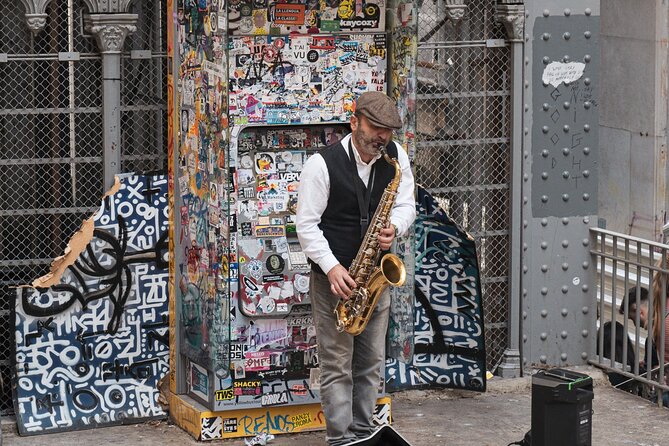
The walk starts at Praça Dom Pedro IV, usually called Rossio, at the heart of central Lisbon. This is a smart starting point because you are not dropped straight into Alfama’s maze. Instead, you begin with a clear city landmark and gradually move toward the older quarter.
Your guide uses the opening section to explain the city and point out important areas before the route turns uphill. That gradual change matters. Rossio feels open and formal, while Alfama becomes tighter, steeper, and more personal as you go.
The first listed stop lasts about 10 minutes and has no admission charge. Treat it as an orientation stop rather than a long sightseeing visit. You will have time to get your bearings, listen to the opening stories, and prepare for the walking ahead.
This part can also be the first test of the guide’s style. Natalia has been praised for being funny and informative, while Guilherme has been noted for answering questions and adapting the route to a group. If your guide brings that same energy, the opening talk should help Lisbon’s past feel connected to the streets around you.
More Walking Tours in Lisbon
- Lisbon: History, Stories and Lifestyle Walking Tour
★ 4.8 · 10,902 reviews - Best of Lisbon Small-Group Guided Walking Tour
★ 5.0 · 4,869 reviews - Lisbon: Food and Wine Small Group Walking Tour
★ 4.9 · 4,082 reviews
Dona Maria II Theatre and the city beyond the postcard
The next stop is the exterior of Teatro Nacional Dona Maria II. You will not be touring the inside, but the building gives the walk a useful cultural pause before the route heads deeper into the older city.
The stop lasts about 10 minutes and is free. This is a good place to ask your guide questions about Lisbon’s public life, architecture, or the way the city changed over time. The experience is strongest when you treat these pauses as short conversations, not as formal museum visits.
One practical point: a walking tour like this depends heavily on the guide. A guide who tells stories clearly can turn an exterior stop into a memorable one. A guide who rushes can make it feel like a photo stop. One participant found the commentary too fast to follow, so do not hesitate to ask your guide to slow down if needed.
The English-language format makes the tour easy to compare with other Lisbon walks, but the quality of your experience will still depend on the person leading your group. Named guides such as Ana and Vivian have been praised for making information entertaining and adjusting their pace to the group. That is especially helpful if you are visiting with children or family members who lose interest during long historical talks.
São Domingos Church reveals Lisbon’s scars
I consider Igreja de São Domingos one of the more useful stops because you go inside. The visit lasts about 15 minutes, and your guide explains the church’s past along with notable facts that are easy to miss if you pass by on your own.
Lisbon has suffered earthquakes, fires, and other destruction, and this walk puts those events into the city’s streets. The church gives those stories a physical setting. You are not simply hearing that Lisbon changed over time. You are looking at a place shaped by damage, rebuilding, and survival.
This stop also calls for basic courtesy. A poor experience occurred when a group was taken toward a church during a Good Friday service, creating a delay and raising concerns about respect for worshippers. Services can affect access and timing, so you should be prepared for a guide to adjust the order of the route if a religious ceremony is taking place.
The church visit is brief, not a full architectural tour. That is a strength if you want a broad introduction to Lisbon in one morning or afternoon. It is a limitation if you want long periods inside each monument. The tour gives you a sampler of the city, then leaves you to decide what deserves a return visit.
The climb to Alfama and Portas do Sol
From the central streets, the route climbs toward Alfama. This is the part to take seriously. One stop may last only 10 or 15 minutes, but the total experience runs about two and a half hours because you are walking between them.
The hills are not an unexpected surprise. They are central to the character of Lisbon, and Alfama is best understood at street level. You will pass through areas that feel quite different from Rossio, with narrower routes and frequent changes in elevation.
Wear shoes with a firm sole. Bring water, sunscreen, and a hat, especially in warm weather. A participant specifically advised preparing for heat, and the group appreciated drink stops along the way. The supplied information does not promise refreshments, so think of pastry or drink breaks as possible additions rather than guaranteed inclusions.
The route includes Miradouro Portas do Sol, one of the best-known viewpoints in Alfama. This is where the walk pays off visually. You get a pause from the climb and a chance to look across Lisbon from above. Your guide can also connect the view to the city’s past, helping you understand why Alfama feels so different from the grander streets below.
This is a good point to take photographs, but do not spend the whole stop looking through your phone. The value of Portas do Sol is the relationship between the view and the climb that brought you there.
More Lisbon walks with a guide:
- Best of Lisbon Walking Tour: Rossio, Chiado & Alfama
★ 4.9 · 2,700 reviews - Age of Discoveries Walking Tour in Belém
★ 5.0 · 1,513 reviews - Sintra & Cascais Day Tour with Pena Palace Entry and Gardens Walk
★ 5.0 · 962 reviews - Lisbon Roots – Small group Food & Culture Walking Tour w/tastings
★ 5.0 · 910 reviews
St. George’s Castle and the story of Castle Hill
The route includes Castelo de São Jorge, located on Castle Hill in the parish of Santa Maria Maior. Human occupation of the hill reaches back to at least the eighth century BC, with fortifications dating from the first century BC.
The listed stop is about 10 minutes, and no castle admission is included. The description does not promise an interior visit or a castle ticket, so you should view this as an outside introduction unless your guide tells you otherwise. If you want to explore the castle fully, plan a separate visit and budget for its admission.
That short stop still has value. The castle is tied to Lisbon’s long military and political story, and the hill helps explain the city’s layout. From here, Alfama’s position becomes easier to understand. You are not just passing another old building. You are seeing the high ground that has shaped the city for centuries.
The brief timing also keeps the group moving toward the cathedral. This tour is meant to connect several important places rather than give one monument a full morning. I would book it for context and orientation, not as a replacement for a dedicated castle visit.
Finishing at Lisbon Cathedral
The walk ends at Lisbon Cathedral, at Largo da Sé 1. Ending here works well because the route moves from Rossio’s central square, through São Domingos and Alfama, up toward the historic hill, then back into one of the city’s key religious landmarks.
The cathedral is the endpoint, not a confirmed guided interior visit. That distinction matters when you plan the rest of your day. You can use the ending as a convenient place to continue exploring on your own, but the supplied details do not include cathedral admission or a set amount of time inside.
The end location also gives you a practical choice. You can remain in the Sé and Alfama area, return to another part of Lisbon by public transport, or continue with another activity. No transport ticket is included, so you will need to pay separately if you use public transport afterward.
What the guides add to the walk
This experience depends more on the guide than on expensive entry tickets. The best accounts describe guides who make the past lively without losing the thread of the route.
Natalia has been praised for her humor and clear explanations. Belen is noted for holding attention while covering history, viewpoints, pastry, and ginja. Guilherme has been praised for customizing the walk and handling questions well. Ana’s style has been described as informative and fun, while Vivian adjusted her pace successfully for a group that included a 12-year-old. Valérie has also been praised for leading a full 2.5-hour walk.
These names do not guarantee who will lead your departure. They do show the range of personalities you might encounter. I would expect a social, story-led walk rather than a quiet academic lecture.
There is one caution. One participant found the guide’s delivery too fast, making it hard to follow. Another account describes a late start and a poor decision around a church service. The overall score is excellent, but these details are worth keeping in mind if you care strongly about precise timing or slow, carefully paced commentary.
Is the $0.35 price good value?
At the stated price of $0.35 per person, the value is unusually high if the departure runs as planned. You receive an English-language local guide, about two and a half hours of walking, stories about Lisbon’s destruction and rebuilding, several major sights, and a viewpoint in Alfama.
The price does not include wine or ginja tasting, and it does not include transport tickets. Pastry and ginja have appeared during the walk, including ginja served in chocolate cups, but you should not assume these treats are covered. If you want the castle or cathedral interiors, the listed information also does not include admission.
The tour’s real value is the structure. Lisbon can be confusing on your first day, especially when you combine Rossio, Alfama, the castle hill, and the cathedral. This route gives you a basic map in your head. Afterward, you can choose which places deserve more time.
The maximum group size is 100 people. That is large enough to affect how easily you can hear the guide, especially in narrow streets or at busy viewpoints. At the same time, the strongest guide accounts suggest that some leaders make an effort to adapt to the group and answer questions.
Who should book this Lisbon walk?
I would choose this experience if you want a fast introduction to Lisbon’s central sights and Alfama’s hills. It suits first-time visitors, families who prefer stories to long museum visits, and anyone who wants to decide which monuments to revisit independently.
It is also a good choice if you like food as part of a city walk. Pastel de nata and ginja can add a pleasant local touch, though neither is formally included. Ask your guide what is planned before counting on a tasting.
I would be more cautious if you dislike hills, hot weather, or group tours. The route is not a flat stroll, and the largest possible group is 100 people. You should also choose another experience if you want long interior visits at the castle, cathedral, or church.
Book early if your plans are fixed. The average booking lead time is nine days, which suggests that popular dates may fill ahead of time. You receive confirmation at booking, and free cancellation is available up to 24 hours before the start. Changes or cancellations inside that window are not refunded, and poor weather can lead to a new date or a full refund.
The practical verdict
Book this walk if you want Lisbon explained through its streets, hills, churches, viewpoints, and legends. The combination of Rossio, São Domingos, Portas do Sol, St. George’s Castle, and the cathedral gives you a useful first picture of the city in one outing.
The strongest reasons to go are the English-speaking local guide, the church interior, the earthquake stories, and the chance to add simple Lisbon tastes along the way. Go prepared for heat, a climb, a potentially large group, and some variation in guide pace. At the stated price, it is an easy way to get your bearings, as long as you understand that it is an introduction rather than a full tour of every monument.
FAQ
Where does the Alfama Walking Tour start?
It starts at Praça Dom Pedro IV, 1100 Lisboa, Portugal, in Rossio.
Where does the tour finish?
The tour ends at Lisbon Cathedral, Largo da Sé 1, 1100-585 Lisboa, Portugal.
How long does the walking tour last?
The walk lasts approximately 2 hours and 30 minutes.
Is the tour offered in English?
Yes. English is the listed tour language, and a local guide leads the walk.
Are food and drinks included?
No. Alcoholic beverages, including wine or ginja tasting, are not included. Pastel de nata and ginja may be available as optional stops, but they are not part of the included price.
Can I cancel for a full refund?
Yes. You can cancel at least 24 hours before the local start time for a full refund. Cancellations or changes made less than 24 hours before the start are not refunded, and poor weather may result in a different date or a full refund.
Recently reviewed around Lisbon
- Lisbon: Catamaran Luxury Sunset and Wine Tour★ 5.0 · 119 reviews
- Lisbon’s authentic Food and Wine tour with a Winemaker★ 5.0 · 67 reviews
- Morning Sailing Tour in Tagus River from Lisbon★ 5.0 · 68 reviews
- Lisbon: Belem Walking Tour with Jeronimos Monastery Tks Included★ 5.0 · 115 reviews
- PRIVATE Unforgettable Full Day Tour to Sintra from Lisbon★ 5.0 · 236 reviews
- Discover Lisbon’s Alfama: Secrets of the Old Town★ 5.0 · 104 reviews
- Sesimbra Wild Beach Tour from Lisbon★ 5.0 · 57 reviews
- Private Jeep Tour from Lisbon – Arrábida, Sesimbra & Beach Picnic★ 5.0 · 48 reviews
Walking Tours, compared.
Best of Lisbon Small-Group Guided Walking Tour
Read our review →
Porto Walking Tour, Lello Bookshop, River Cruise and Cable Car
Read our review →
Best of Lisbon Walking Tour: Rossio, Chiado & Alfama
Read our review →
Experience Porto’s Charm: 3-Hour Guided Walking Tour
Read our review →
Enjoy a Guided Levada Walk in the Rabaçal Valley
Read our review →Browse the lists this tour appears in