
Reviewed · CRUISES & BOAT TOURS
Lisbon: 72/96-Hour Hop-On Hop-Off Bus, Tram & Boat Ticket
Lisbon is easiest to understand from several angles, and this pass gives you all three: high above the traffic on an open-top bus, close to the old streets on a tram, and out on the Tagus River. The Hills Tramcar Tour is the star, tracing the city’s steep historic quarters without the long waits often found on the famous public trams.
I like the freedom to use the ticket over three or four days, and I like how it links far-flung Belém with modern Oriente. The drawback is coverage: the buses do not reach every historic street, and the tram and boat schedules need planning.
In This Review
- Key points to know before booking
- How this Lisbon pass works over three or four days
- The blue Belém route and Lisbon’s Age of Discoveries
- The pink Modern route to Oriente
- The Hills Tramcar through Alfama and Mouraria
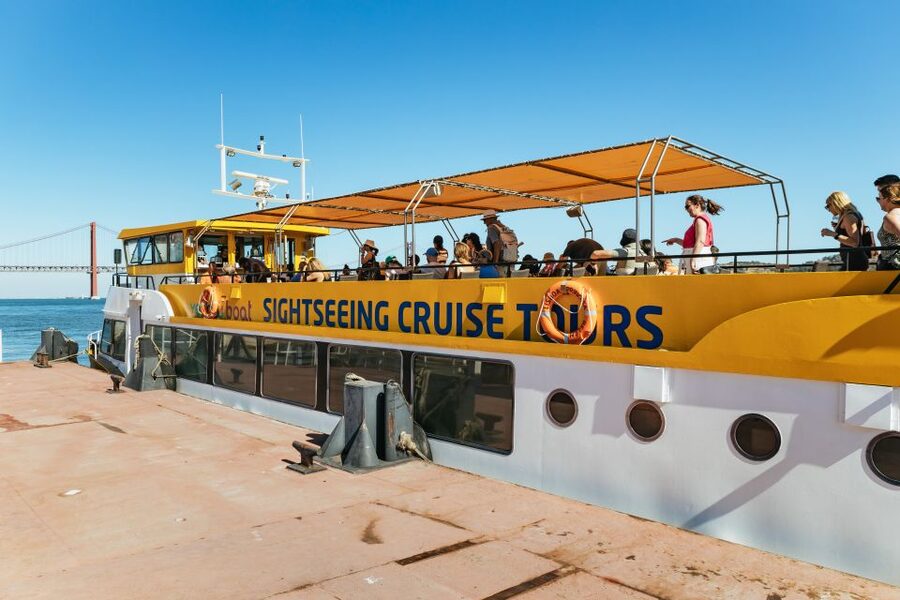
- The Yellow Boat on the Tagus River
- Using the pass with public trams and city lifts
- Audio guides, staff, and daily timing
- Is $55 good value for 72 or 96 hours?
- A practical plan for using the ticket
- Should you book this Lisbon bus, tram, and boat pass?
- FAQ
- How long is the ticket valid?
- What transport is included?
- Does the ticket include museum and monument entry?
- What languages are available for the audio guide?
- How often do the buses and tram run?
- When does the Yellow Boat operate?
Key points to know before booking
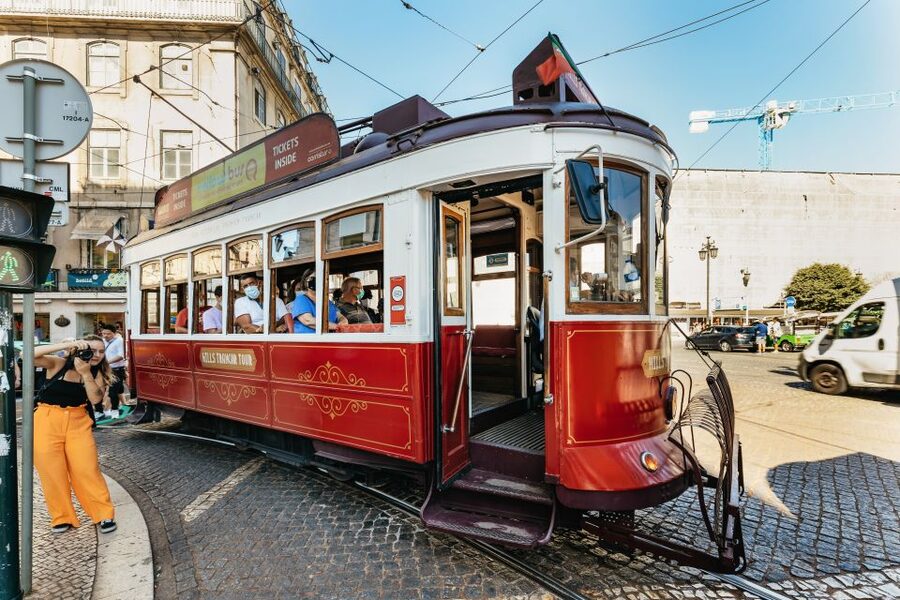
- The Hills Tramcar Tour is the highlight: Ride through Alfama, Mouraria, Baixa, Graça, and the streets below São Jorge Castle.
- Two bus routes cover opposite sides of Lisbon: The blue Belém line heads west, while the pink-marked Modern route heads east toward the Oceanário and Vasco da Gama area.
- The Yellow Boat adds a calm change of pace: Cruise between Terreiro do Paço and Belém, passing beneath the 25th of April Bridge.
- You receive audio commentary in 11 languages: English, Spanish, French, German, Italian, Portuguese, Dutch, Swedish, Russian, Chinese, and Japanese.
- The 72-hour pass suits most short visits: Choose 96 hours if you want slower sightseeing and repeat rides.
- Expect some confusion at first: Yellow Bus vehicles are mostly yellow, but the route signs and map use blue and pink markings.
How this Lisbon pass works over three or four days

The ticket costs about $55 per person and remains valid for 72 or 96 hours, depending on the option you choose. That makes the pass most useful when you plan to use several parts of it, rather than treating it as one long city loop.
You can ride the Belém Bus Tour, Modern Lisbon Bus Tour, Hills Tramcar Tour, and Yellow Boat. The ticket also includes access to Carris public trams during its validity, along with special discounts on selected monuments, museums, and leisure activities. Museum and monument admission is not included, so check the discount list before paying full price elsewhere.
I would use the first ride as an orientation tour. Sit back, listen to the commentary, and note the stops where you want to return on foot. Then use the pass as transport between areas, saving your legs for Lisbon’s tiled lanes, viewpoints, and stairways.
The pass is not a replacement for the entire public transport network. The supplied information specifically promises access to Carris public trams, but not local buses. That distinction matters if you expect to reach every neighborhood by public transport included with the ticket.
More Boat Tours in Lisbon
- Lisbon: Sunset Boat Party Cruise with DJ and Open Bar
★ 4.5 · 10,378 reviews - Lisbon: Daytime/Sunset/Night City Sailboat Tour with Drink
★ 4.9 · 3,114 reviews - Lisbon: Sunset Cruise with Welcome Drink and Snacks
★ 4.4 · 3,021 reviews
The blue Belém route and Lisbon’s Age of Discoveries
The Belém route begins at Restauradores Square and heads west toward the riverfront monuments. Departures are listed roughly every 30 minutes from 9:00 in the morning until 5:30 in the afternoon, though road works can cause temporary suspensions.
The route includes these useful stops:
- Restauradores Square
- Rossio Square
- Marquês de Pombal
- El Corte Inglés
- Parque Eduardo VII
- Amoreiras Shopping
- Basílica da Estrela
- Pilar 79
- Museu dos Coches
- Jerónimos Monastery
- Belém Tower
- Monument to the Discoveries
- MAAT
- Docas Cruise Terminal
- Jardim da Estrela
For a first ride, remain on board through central Lisbon so you can see the change from grand downtown avenues to the open riverfront of Belém. The audio guide gives context as you pass Manueline details, major squares, and monuments linked to Portugal’s seafaring past.
Belém deserves at least half a day if you plan to enter the monuments. The Jerónimos Monastery is the major stop, with its elaborate stonework and cloisters. Nearby, Belém Tower sits at the river’s edge, while the Monument to the Discoveries gives you a strong view along the water.
The bus stop names help, but do not assume every attraction is a quick hop off and on. Belém’s sights are spread along the waterfront and surrounding streets. Get off near the monument you want, allow time to explore, and check the next departure rather than rushing back to the curb.
The MAAT offers a different kind of stop, focused on art, architecture, and technology. Pilar 79 and the Docas Cruise Terminal add practical points for seeing the riverfront and dock area. Museu dos Coches is another good choice if you want a museum stop rather than another church or tower.
One limitation is that the route does not fully cover the oldest lanes of central Lisbon. It gives you the main historic and monumental picture, but you still need to walk Alfama, Mouraria, Baixa, and Bairro Alto yourself.
The pink Modern route to Oriente
The second bus route heads east from Restauradores toward Lisbon’s newer districts. It departs about every 30 minutes, with service listed from 9:15 in the morning until 5:15 in the afternoon.
Its stops include Rossio Square, Avenida da Liberdade, Graça, the National Pantheon and Feira da Ladra, Lisbon Cruise Terminal, Museu do Azulejo, Beato, Marvila, the Oceanário, Vasco da Gama Shopping, FIL, and the Vasco da Gama Tower and Hotel Myriad.
This is the route to choose when you want to see the city beyond its postcard center. The Oceanário is the main draw for many people, while the Vasco da Gama area shows Lisbon’s modern side with large contemporary buildings and broad public spaces.
The route also gives you access to parts of the eastern city that are awkward to combine with Belém in one outing. I would use it on a separate half-day, especially if you want to visit the Oceanário or spend time near the former Expo area.
Graça, the National Pantheon, and Feira da Ladra bring you closer to older Lisbon. Keep in mind that a bus stop near an attraction does not mean the ride replaces a visit. You will need separate entrance tickets for museums and monuments, although the pass may provide discounts.
The bus color system can be confusing. The company is Yellow Bus Tours, many vehicles are yellow, the Belém route uses a blue sign, and the Modern route uses a pink sign. Look at the sign in the windshield and confirm the destination before boarding.
The Hills Tramcar through Alfama and Mouraria
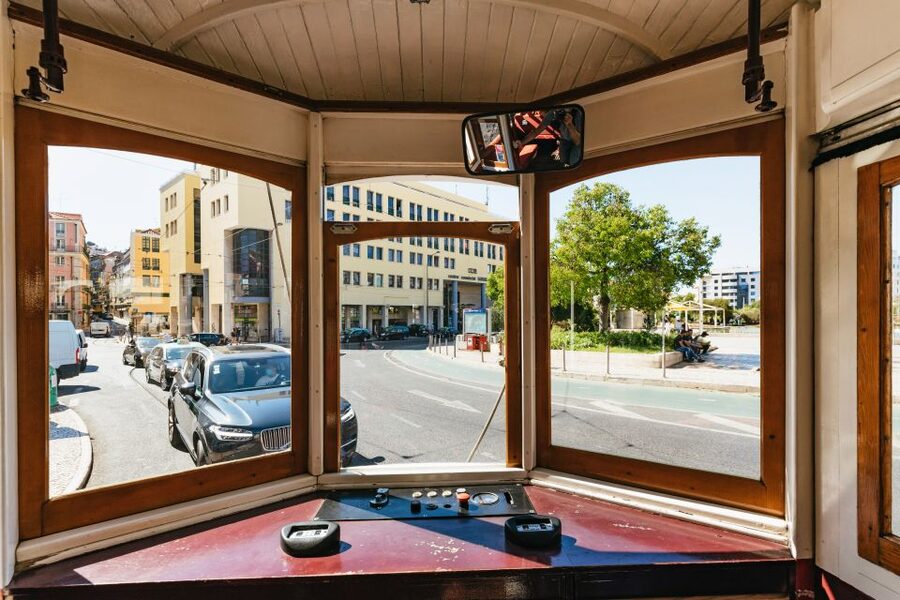
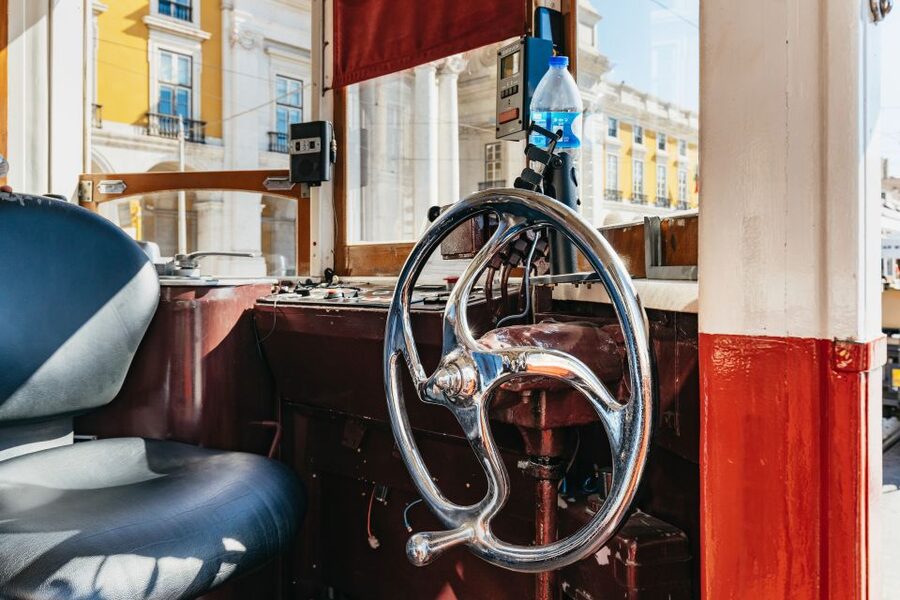
This is the part I would not skip. The Hills Tramcar Tour departs from Praça do Comércio and returns there, with no regular hop-on, hop-off stops along the route. It passes Portas do Sol, Lisbon Cathedral, Rua da Conceição, Graça, the National Pantheon, São Vicente, and Martim Moniz.
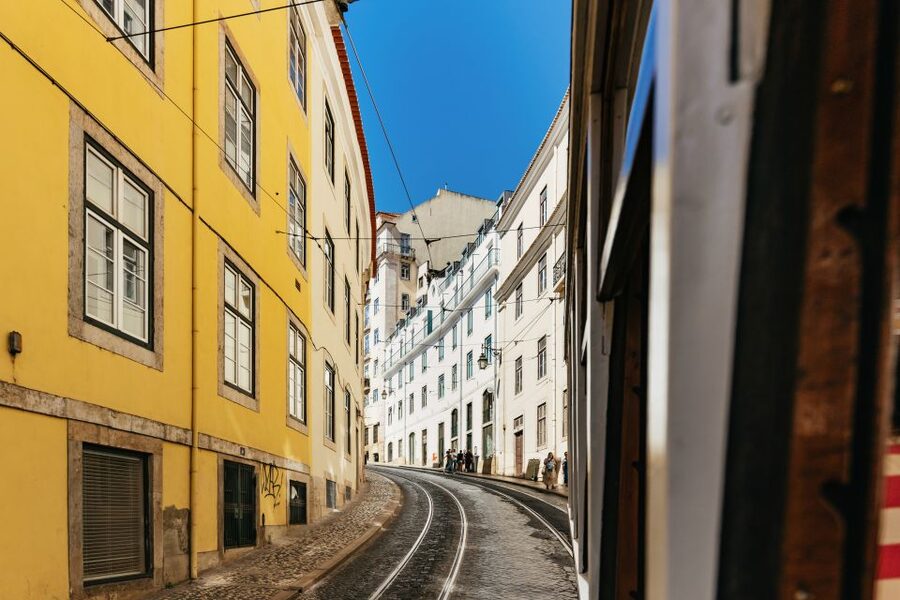
The route is valuable because it gives you the feel of Lisbon’s old tram streets without relying entirely on the crowded public Tram 28. You see the narrow lanes, steep climbs, and tiled façades associated with Alfama and Mouraria while listening to an audio guide.
The service is listed at roughly 35-minute intervals, from about 9:30 in the morning until 5:05 in the afternoon. Since this is a sightseeing circuit rather than a regular point-to-point tram, allow enough time for the complete ride.
There are no stops on the route, so you cannot simply hop off at Portas do Sol or the cathedral and continue later. Treat this as a moving introduction, then return on foot to the places that interest you.
This tram is also a smart alternative when the public trams are packed. At busy times, regular Tram 28 can have long queues, and boarding later along the route may be difficult if the car is full. The Hills Tramcar is designed for sightseeing, though it can still be popular.
The route’s old-fashioned character makes it more than basic transport. You get the narrow-street experience, the views toward the river, and a close look at how Lisbon’s historic neighborhoods fit together. I would ride it early in your pass period, then use it to decide where to walk later.
More Lisbon trips worth a second look
- Sintra: Pena Palace and Park Entrance Ticket
★ 4.2 · 17,410 reviews - Lisbon: Jerónimos Monastery Entrance Ticket
★ 4.1 · 14,164 reviews - Lisbon: Oceanário de Lisboa Entrance Ticket
★ 4.6 · 9,943 reviews - Quinta da Regaleira Skip-the-Ticket-Line Entry & Audioguide
★ 4.2 · 3,316 reviews
The Yellow Boat on the Tagus River

The boat links Terreiro do Paço with Belém and offers a welcome break from steep streets and road traffic. From the water, you can see Lisbon’s hills, towers, colorful buildings, riverfront squares, and the 25th of April Bridge from a wider angle.
The listed boat stops are:
- Terreiro do Paço, South and Southeast Station
- Belém, near Belém Tower
- Terreiro do Paço, South and Southeast Station
The schedule is more limited than the buses. Departures are listed on Monday, Wednesday, Friday, and Saturday, with times varying by season and date. One set of times gives Terreiro do Paço departures at 11:00, 13:00, and 15:00, with Belém departures at 12:00, 14:00, and 16:00 for a one-way return option. A later schedule lists departures at 11:30, 14:30, and 16:30 from Terreiro do Paço, and 12:30, 15:30, and 17:30 from Belém.
Check the current timetable before building your day around the boat. This is not an all-day ferry running every few minutes.
The best plan is to visit Belém by bus, see the monuments, then return by boat if the sailing time works. The ride is relaxing and gives you a different view of the city. Refreshments may be available on board, but food and drinks are not included in the ticket.
At Belém, pay close attention to the boarding point. The pier area can be hard to read, and the correct waiting area may not be obvious. Allow extra time and ask Yellow Bus staff if you are unsure, rather than assuming any nearby gate is the right one.
Using the pass with public trams and city lifts

The pass includes special-offer access to Carris public trams during its validity. This can add real value if you use the trams for short rides around the center instead of buying separate tickets.
Some people also use the pass for the Santa Justa Lift and the funiculars. The supplied information indicates that access to these may be part of the benefits attached to the ticket, so check the current benefits and discounts link on your voucher. Do not assume every attraction or transport service is included without checking the exact terms.
The historic public trams can be crowded, particularly on the famous Tram 28 route. I would not buy this pass mainly for Tram 28. Use the included Hills Tramcar first, then try public trams when the timing and crowds suit you.
Lisbon’s hills make this transport access useful even when you are fit. A ride can save your energy for the actual sightseeing, especially after walking through Belém or climbing around Alfama.
Audio guides, staff, and daily timing

Audio commentary is included on the buses and tram, with a speaker guide on the Yellow Boat. Earphones are provided for the bus and tram, and the commentary is available in 11 languages.
The commentary is useful for orientation and basic background. It will not replace a full museum guide, but it helps you understand what you are passing and gives structure to a first look at Lisbon.
Staff are present at some meeting points, and Raquel at the bus depot has been singled out for being helpful. Still, allow time to locate the first boarding point. Praça do Comércio and Restauradores are large areas, and the ticket information can initially feel less clear than it should.
A mobile voucher can be validated and exchanged for a physical ticket on a bus, tram, or at a designated point, depending on the option booked. Check your voucher instructions carefully. Some people lose time searching for a separate ticket office when the ticket can be handled on board.
Road works may temporarily suspend service. Check for updates with the Yellow Bus team before setting out, especially if a particular route is central to your plans.
Is $55 good value for 72 or 96 hours?

At $55, the pass earns its keep when you use several included services. A strong three-day plan could include the Belém bus and return boat on day one, the Modern route and Oceanário area on day two, and the Hills Tramcar plus public trams on day three.
The 96-hour option gives you more breathing room. Choose it if you want to spread museums and monuments across four days, take repeat rides, or avoid packing every major stop into a short visit.
The value is weaker if you only ride one bus loop and skip the tram and boat. You also need to budget separately for food, drinks, and admission to monuments and museums.
The pass is especially useful for first-time visitors, families, older adults, and anyone who wants a simple way to connect Belém, the city center, and Oriente. Independent walkers may prefer individual public transport tickets if they already know Lisbon and want to explore streets outside the bus routes.
Free cancellation is available up to 24 hours before the booked time, and you can reserve now and pay later. Meeting points vary by option, so confirm the starting details before arriving.
A practical plan for using the ticket
Day one: Start with the Belém route from Restauradores. Get off at Jerónimos Monastery, Belém Tower, and the Monument to the Discoveries. If the schedule works, return by Yellow Boat to Terreiro do Paço.
Day two: Take the Modern route east. Choose the Oceanário, Vasco da Gama area, Museu do Azulejo, or one of the eastern districts. Return to the center before the last bus departures.
Day three: Ride the Hills Tramcar early or late in the day, then walk Alfama and Baixa. Use Carris trams for short connections if needed.
Day four: If you have the 96-hour ticket, use the extra day for a museum, a repeat ride, a second tram trip, or any stop you rushed earlier.
Bring a phone charger, comfortable shoes, and a light layer for the open upper deck and boat. Check the route signs, confirm the next departure, and avoid assuming the last vehicle runs late into the evening. Bus service generally ends in the late afternoon or early evening, and several people would prefer later departures.
Should you book this Lisbon bus, tram, and boat pass?
I would book it for a first Lisbon visit of three or four days, especially if you want to see Belém and Oriente as well as the old center. The Hills Tramcar, boat ride, audio guide, public tram access, and monument discounts give the $55 price a fair chance of paying off.
I would skip it if your plans focus almost entirely on walking Alfama, Baixa, and Bairro Alto, or if you expect a bus route covering every historic street. Lisbon’s oldest areas still reward slow exploration on foot, and this pass works best as a framework around that walking.
For most short visits, choose 72 hours and use all four included experiences. Choose 96 hours when you value a slower pace and want time for museums, river views, and repeat rides.
FAQ
How long is the ticket valid?
You can choose a 72-hour or 96-hour ticket. The exact starting time depends on the option and availability selected.
What transport is included?
The ticket includes the double-decker Belém Bus Tour, Modern Lisbon Bus Tour, Yellow Boat Tour, Hills Tramcar Tour, and access to Carris public trams during the ticket’s validity.
Does the ticket include museum and monument entry?
No. Entrance fees are not included, but the ticket provides exclusive discounts for selected monuments, museums, and leisure activities. Check the benefits and discounts information on your voucher.
What languages are available for the audio guide?
Audio commentary is available in Spanish, Chinese, Dutch, English, French, German, Italian, Japanese, Portuguese, Russian, and Swedish.
How often do the buses and tram run?
The Belém Bus Tour is listed at about 30-minute intervals from 9:00 to 17:30. The Modern Lisbon Bus Tour runs about every 30 minutes from 9:15 to 17:15. The Hills Tramcar runs about every 35 minutes between approximately 9:30 and 17:05.
When does the Yellow Boat operate?
The Yellow Boat operates on Monday, Wednesday, Friday, and Saturday. Departure times vary, so check the current schedule before planning a boat trip.
Recently reviewed around Lisbon
- Portinho da Arrábida: Coasteering Boat Tour★ 4.9 · 78 reviews
- Setúbal: Dolphin-Watching Boat Tour★ 4.8 · 213 reviews
- From Lisbon: Private Óbidos and Nazaré Tour★ 5.0 · 152 reviews
- No Diet Club – Unique food tour in Lisbon with many Tastings★ 4.8 · 44 reviews
- Queluz National Palace & Gardens Ticket★ 4.6 · 447 reviews
- Melides: Horse Riding on the Beach with Wine Tasting★ 4.3 · 117 reviews
- Melides: Horseback Riding on Melides Beach★ 4.7 · 111 reviews
- Lisbon: Street Art Tuk Tuk Tour★ 4.9 · 372 reviews
Cruises & Boat Tours, compared.

Douro Valley w/ Boat Tour, Wine Tasting & Lunch
Read our review →
Complete Douro Valley Wine Tour with Lunch, Wine Tastings and River Cruise
Read our review →

Sunset Boat Party Cruise with DJ and Open Bar
Read our review →
Benagil Caves Speed Boat Tour with Sunset Option
Read our review →

Benagil Caves & Dolphin Watching Speed Boat Tour
Read our review →
Wine Tour with Lunch, Tastings & River Cruise
Read our review →Browse the lists this tour appears in