
Reviewed · HISTORICAL TOURS
LGBTour Porto: Walk through Porto, discover the LGBTQIA+ History
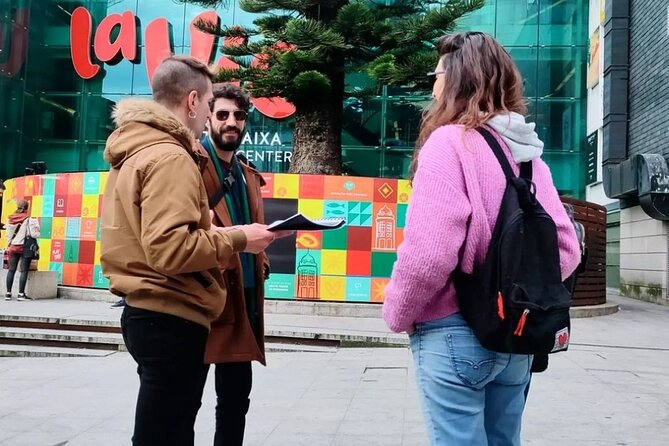
Porto looks different when you follow its LGBTQIA+ history instead of its usual churches, bridges, and port lodges. This three-hour walk with Ricardo Barros connects pride marches, queer businesses, legal milestones, local activism, and his own memories of growing up in the city. It is less a checklist of monuments than a thoughtful conversation held in the streets.
I like two things right away: the personal point of view and the attention given to queer life beyond nightlife. Ricardo brings lived experience to the story, while stops such as an LGBTQIA+-focused bookshop show how culture and commerce help a community remain visible.
The main consideration is focus. This is not a standard introduction to Porto, and it does not center the city’s grand tourist sights. You will walk through busy streets and historic areas, but the purpose is social and cultural history, not monument collecting.
In This Review
- What makes this Porto walk different
- A three-hour walk through queer Porto
- Campo 24 de Agosto and the first pride march
- Rua de Santa Catarina and the cost of change
- Praça da República, pride, and queer books
- Busy streets, students, and social change
- The Tribunal da Relação and the law
- Miradouro das Virtudes and Ricardo’s personal story
- Ricardo’s style: conversation rather than a script
- What you get for $38.45
- Who should book this experience
- Practical details before you go
- Should you book LGBTour Porto?
- FAQ
- Where does LGBTour Porto begin?
- Where does the tour end?
- How long does the experience last?
- What language is the tour offered in?
- How much does the tour cost?
- How large is the group?
- Are morning and afternoon start times available?
- Is the tour suitable for most people?
- What is the cancellation policy?
What makes this Porto walk different
- Ricardo Barros connects public history with his own life in Porto.
- Campo 24 de Agosto marks the starting point of the city’s first LGBTQIA+ pride march.
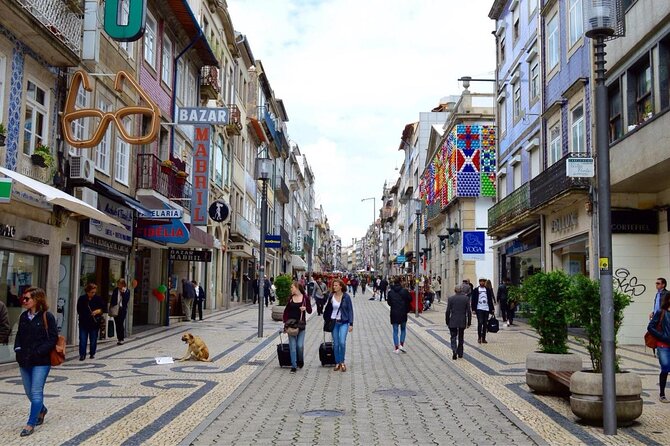
- Rua de Santa Catarina opens a discussion about tourism, change, and queer spaces.
- A queer bookshop adds literature, representation, and support for local businesses.
- The Tribunal da Relação do Porto provides a setting for legal and political milestones.
- The tour ends at Miradouro das Virtudes, with time to reflect above the Douro.
A three-hour walk through queer Porto
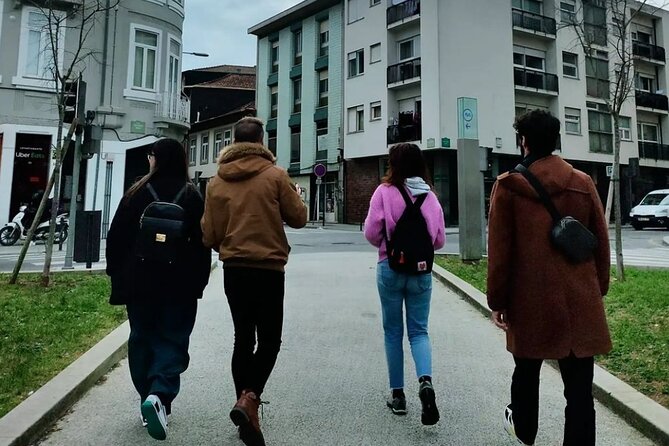
The walk begins at Avenida de Fernão de Magalhães, near Campo 24 de Agosto, and ends at Calçada das Virtudes. That point-to-point route matters. You are not simply circling the same central streets, and you finish in a place where locals and sightseers gather for one of Porto’s best-known views.
The experience is offered in English, with morning and afternoon start times. It is limited to a maximum of 15 people, although the format can feel much more intimate when the group is small. One booking even went ahead as a solo experience, which tells you something about the guide’s commitment to the walk.
Plan for about three hours. The listed stops add up to a substantial amount of time, and the tour includes conversation rather than quick photo stops. I would choose comfortable shoes and allow enough room afterward for the walk back into central Porto.
More Historical Tours in Porto
- Douro Valley: Historical Sites, Wine Experience, Lunch & Cruise
★ 5.0 · 5,133 reviews - Porto: Historic City Center Walking Tour
★ 4.7 · 1,172 reviews - Porto: An Intimate Fado Show in a Historical Tavern
★ 4.8 · 1,093 reviews
Campo 24 de Agosto and the first pride march
At Campo 24 de Agosto, Ricardo introduces the location of Porto’s first LGBTQIA+ pride march. It is a useful opening because it places queer history in an ordinary public space rather than behind the doors of a club or private organization.
You begin by asking a basic question: who gets to claim a city’s streets? A pride march turns a route through town into a public statement. The site also gives Ricardo a natural way to explain how local activism developed and how visibility changed over time.
Expect around 20 minutes here. There is no admission charge, since the stop is outdoors. The value comes from context, not a landmark building, so this part will appeal most if you enjoy learning why a place matters rather than simply photographing it.
Rua de Santa Catarina and the cost of change
Rua de Santa Catarina is one of Porto’s busiest commercial streets. On this tour, you look at it through a different question: what happens to a place that once mattered to the LGBTQIA+ community when time, tourism, and commercial change reshape it?
The stop lasts about 10 minutes, but the idea is larger than the clock suggests. Tourism can bring money and attention while also softening or erasing the local stories that made an area meaningful. Ricardo uses this street to show how a familiar shopping route can carry layers that are easy to miss.
This is a good example of the tour’s method. You may already know the street from shopping or from crossing the city, but the walk asks you to reconsider it. The drawback is that this is more discussion than sightseeing. If you want a long stop with dramatic architecture, you may find it brief.
Praça da República, pride, and queer books
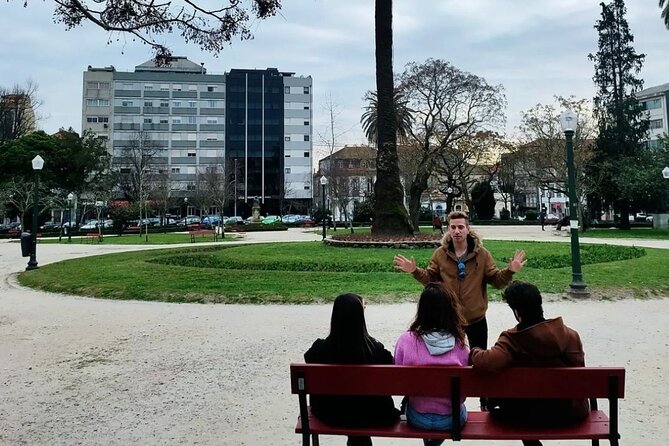
At Praça da República, the focus shifts to the current starting point for the Pride march. The nearby Teófilo Braga Garden offers an open setting for talking about public gatherings, visibility, and the role of civic space.
The stop lasts around 40 minutes, making it one of the more substantial parts of the walk. Ricardo also takes you to a bookshop devoted to LGBTQIA+ themes. That visit helps widen the idea of queer culture. The community is not represented only by bars, clubs, or annual parades. It also lives in books, publishing, ideas, and the simple act of keeping a specialist business open.
You can expect discussion of LGBTQIA+ writers and the effect of representation in culture. This part is especially useful if you want to understand how literature can give people language for their identity and help a wider public see lives that are often left out of official accounts.
The bookshop stop is listed separately for about 30 minutes. Since the tour information identifies it as linked to Diversity and Inclusion Books, you should expect a clear emphasis on inclusion and queer business. The exact selection of books or any purchase arrangements are not specified, so treat the visit primarily as a cultural stop rather than a guaranteed shopping session.
More Walking Tours in Porto
- Porto Walking Tour, Lello Bookshop, River Cruise and Cable Car
★ 5.0 · 3,354 reviews - Experience Porto’s Charm: 3-Hour Guided Walking Tour
★ 5.0 · 2,432 reviews - Porto: 3-Hour Guided City Highlights Walking Tour
★ 4.8 · 2,050 reviews - Porto: Wine Tasting with Tapas Walking Tour
★ 4.4 · 1,541 reviews
Busy streets, students, and social change

The route also passes through a busy part of Porto with several familiar tourist references and a large student presence. Here, Ricardo talks about education and social changes connected with diversity and inclusion.
This is a valuable bridge between the past and the present. Legal progress does not automatically change every classroom, workplace, family, or neighborhood. Student areas can reveal how attitudes shift across generations, but they can also show why social change remains uneven.
The supplied route does not give this section a numbered stop or a fixed duration. That means the exact pace may depend on the group and the conversation. I like that flexibility, although anyone hoping for a tightly timed walk should know the experience has room for discussion.
The Tribunal da Relação and the law
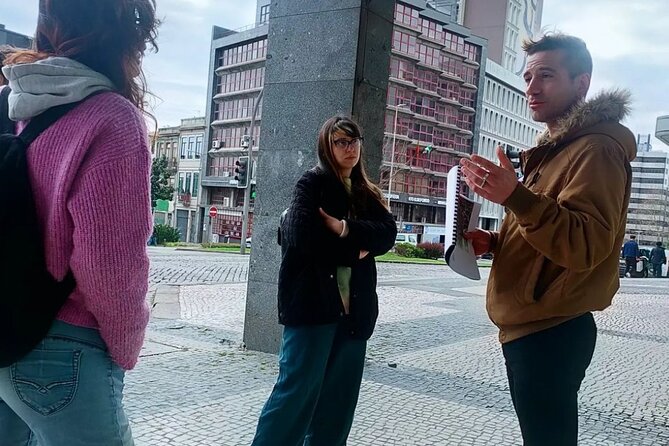
Near the end, the walk passes the Tribunal da Relação do Porto, the city’s appeals court. Ricardo speaks about important dates in queer history in Porto and Portugal while standing near the statue of Justice.
This is one of the tour’s strongest settings because it links personal life to public institutions. LGBTQIA+ rights are not only a story of marches and community spaces. They are also shaped by courts, governments, Parliament, policy, and the enforcement or denial of equal treatment.
The stop lasts about 25 minutes. You should expect historical explanation and political context, not a visit inside the court. No entrance ticket is listed, and the experience remains an outdoor walking tour.
Ricardo’s approach, as reflected in the tour description and the detailed accounts of the experience, includes both successes and setbacks. He addresses the struggle for rights, the growth of Porto Pride, current community activity, and the relationship between activists and local government. That makes the stop useful for anyone considering Porto not only as a holiday destination but also as a place to live or study.
Miradouro das Virtudes and Ricardo’s personal story
The tour finishes at Chafariz das Virtudes and the Miradouro das Virtudes. From here, you have views toward the Douro, and the setting gives the group a natural place to slow down after the walk.
The final 30 minutes are designed for a recap and reflection. Ricardo also speaks about his youth in Porto and how he saw the queer movement grow. This personal element is central to the experience. It turns dates and public events into a story about people who had to make choices, find one another, and create room for themselves.
I particularly value the ending because it does not rush you straight into another attraction. You have time to connect the historical material with the city in front of you. The viewpoint is also a practical finishing point. You can continue exploring Porto from there, or simply pause and enjoy the view.
Ricardo’s style: conversation rather than a script
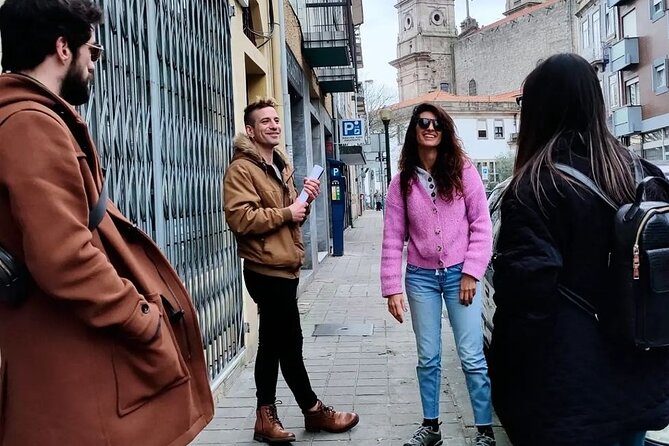
The strongest feature here is Ricardo himself. He is presented as the guide, historian, storyteller, and local voice of the walk. His style is personal, open, and willing to discuss difficult subjects without turning the tour into a lecture.
You should expect anecdotes from his own life alongside information about Portuguese law, activism, culture, and community change. He also welcomes questions about Porto and his experiences. Several accounts describe the walk as warm and relaxed, which is good news for solo participants or anyone who prefers a smaller social setting.
The conversation can also move into wider issues such as race, gender, sexuality, economic difference, colonial memory, and current LGBTQIA+ rights. That wider frame gives the tour more weight, but it may not suit someone looking for a light, purely entertaining stroll.
Ricardo’s approach is not designed to hide difficult subjects. The history includes struggle and exclusion as well as celebration and progress. I would book this walk if you want an honest account, not a polished version of Porto designed only to reassure visitors.
What you get for $38.45
At $38.45 per person, this is not the cheapest way to walk around Porto. You are paying for roughly three hours of a specialist, English-language experience, a maximum group size of 15, and access to a perspective that is not usually part of a standard city tour.
There are no admission fees included because the main stops are public spaces, and the bookshop visit is a cultural stop rather than a listed paid attraction. So the price is not buying entrance tickets. It is buying research, interpretation, conversation, and Ricardo’s lived connection to the subject.
That makes the value depend on your interests. If you want Porto’s famous architecture explained, a general walking tour may serve you better. If you want to understand how queer communities shaped and experienced the city, the specialist focus makes the cost easier to justify.
The personal element also matters. A guide can read dates from a page, but Ricardo’s stories help show how recent some of these changes are. The tour is not simply about a distant past. It connects history to people who remember when attitudes, laws, and public visibility were different.
Who should book this experience
I would recommend it to LGBTQIA+ visitors who want more than nightlife suggestions. The tour treats queer travel as culture, memory, politics, literature, and local business, not just bars and clubs.
It also suits allies, students, educators, and anyone interested in civil rights or social change in Portugal. You do not need to identify as LGBTQIA+ to follow the discussion. The emphasis is on listening, asking questions, and seeing Porto from a less familiar angle.
Solo visitors are a particularly good match. The format encourages direct conversation, and a small group can make the experience feel welcoming rather than anonymous. Couples and friends can also expect a chance to discuss the material together as they walk.
You should think twice if your priority is a packed route of major monuments. The walk passes through tourist areas, but the landmarks serve the story rather than the other way around. You may see familiar Porto without receiving the usual sightseeing commentary.
The walk is described as suitable for most participants, and service animals are allowed. One participant with a disability received a slower, shorter walking version after discussing fatigue with Ricardo. That shows a considerate approach, but you should raise any mobility needs before the tour because the published details do not promise a specific accessible route.
Practical details before you go
You can choose a morning or afternoon departure, which makes it easy to fit around a museum visit, meal, or other booking. Starting in the morning could also make this a useful first activity in Porto, since it gives you a local orientation before you explore alone.
The meeting point is Av. de Fernão de Magalhães 43, 4300-169 Porto. The endpoint is Calçada das Virtudes 5, 4050-629 Porto, at the Virtudes viewpoint. Check the two addresses carefully, since this is a point-to-point walk rather than a return trip.
The experience is offered in English and uses a mobile ticket. Booking confirmation is provided at the time of purchase. Public transportation is nearby, and most people can participate.
The group cap is 15 people. Smaller groups are possible, and the tone may feel more like a guided conversation than a formal presentation. Since the tour averages booking 22 days ahead, reserve early if your Porto dates are fixed.
Free cancellation is available up to 24 hours before the start time for a full refund. Changes or cancellations made less than 24 hours ahead are not accepted for a refund, with cut-off times based on Porto’s local time.
Should you book LGBTour Porto?
Book it if you want a personal, thoughtful account of Porto’s LGBTQIA+ past and present. Ricardo Barros brings together pride history, queer literature, public institutions, local businesses, and his own memories in a way that a standard sightseeing walk is unlikely to provide.
Skip it if you mainly want churches, viewpoints, and headline attractions explained in the usual order. For everyone else, especially queer visitors and curious allies, this is a meaningful way to see Porto with a sharper sense of who has claimed space in the city and how that claim continues to change.
FAQ
Where does LGBTour Porto begin?
The tour begins at Av. de Fernão de Magalhães 43, 4300-169 Porto, Portugal.
Where does the tour end?
It ends at Calçada das Virtudes 5, 4050-629 Porto, at the Miradouro das Virtudes viewpoint.
How long does the experience last?
The walking tour lasts approximately three hours.
What language is the tour offered in?
The tour is offered in English.
How much does the tour cost?
The listed price is $38.45 per person.
How large is the group?
The maximum group size is 15 people.
Are morning and afternoon start times available?
Yes. You can choose a morning or afternoon start time.
Is the tour suitable for most people?
The activity states that most participants can take part. Service animals are allowed, and the route is near public transportation.
What is the cancellation policy?
You can cancel at least 24 hours before the start time for a full refund. Cancellations or changes made less than 24 hours before the start are not accepted for a refund.
Recently reviewed around Porto
- Douro Valley Prime Tour: Wine Tastings, Boat & Lunch from Porto★ 5.0 · 572 reviews
- Port Wine Tour | 3 Cellars | 7 Tastings | 12 Participants Maximum★ 5.0 · 443 reviews
- PORTO city Walking Tour★ 5.0 · 132 reviews
- Private Vinho Verde Region Wine Tour from Porto Including Lunch★ 5.0 · 39 reviews
- Visit to Cockburn’s Cellars★ 5.0 · 526 reviews
- Wine Tasting with Tapas Walking Tour in Porto★ 4.5 · 544 reviews
- Porto to Lisbon with stop Aveiro-Fátima-Coimbra-Tomar-Nazaré-Óbidos★ 5.0 · 67 reviews
- 3 Hour Tuk tuk Tour in Porto★ 4.5 · 60 reviews
Historical Tours, compared.

Historical Sites, Wine Experience, Lunch & Cruise
Read our review →
Live Fado Show with Port Wine in Historic Center
Read our review →

Browse the lists this tour appears in