
Reviewed · FOOD & DRINK
Devour Lisbon: The Ultimate Portuguese Food Tour
Lisbon’s food story makes the city easier to understand, and this 3.5-hour walking tour tells it one bite at a time. You move through Baixa, Chiado, and Cais do Sodré, stopping for cod, cured ham, sardines, pork sandwiches, pastries, coffee, wine, and sour cherry liqueur.
I like the small maximum of 10 people, which gives your guide room to explain the dishes and keep the group together. I also like the range, from old pastry shops and traditional tascas to the lively Time Out Market. The main consideration is volume: nine tastings and three drinks can be a lot, and the sit-down meal may feel less exciting than the snack stops for some people.
In This Review
- Key points to know before booking
- Why this food walk works well at the start of a Lisbon visit
- Confeitaria Nacional brings pastry and coffee to the table
- Manteigaria Silva introduces cured meats and preserved foods
- Ginjinha Sem Rival serves Lisbon in a small glass
- O Trevo is the place for a bifana
- O Gaiteiro offers the sit-down Portuguese meal
- Time Out Market closes the route with sweets and a city view of food culture
- The food range is broad, but the pace is steady
- Why the small group and guide matter
- Dietary needs require planning before you arrive
- Is $95.53 a fair price?
- Practical details that affect your day
- Who should book this Lisbon food tour?
- Should you book Devour Lisbon?
- FAQ
- How long does the Devour Lisbon food tour last?
- How many people can join the tour?
- What food is included?
- Are drinks included?
- Where does the tour start and finish?
- Can the tour accommodate dietary restrictions?
- Is the tour suitable for vegans or people with celiac disease?
Key points to know before booking
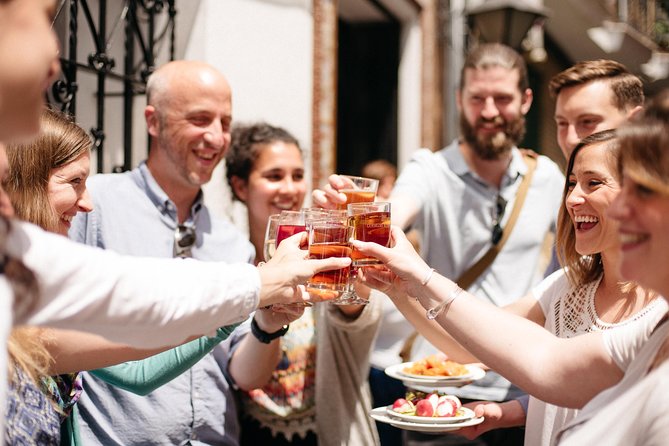
- Nine tastings and three drinks: Plan on enough food for breakfast and lunch, not just a few samples.
- Seven local businesses: You visit established shops, cafés, bars, and eateries rather than staying in one restaurant.
- Three central neighborhoods: The route links Baixa, Chiado, and Cais do Sodré on foot.
- A small English-speaking group: The tour has a maximum of 10 people, with guides such as Helena, Merritt, Nina, Alicia, and Cecilia leading recent departures.
- Strong introduction to Portuguese food: Expect bacalhau, bifana, sardines, alheira, fish rice, pastel de nata, and regional sweets.
- Dietary limits matter: Vegetarian, pescatarian, dairy-free, non-alcoholic, and pregnancy-friendly adjustments are possible, but the tour is not suitable for vegans or people with gluten intolerance or celiac disease.
Why this food walk works well at the start of a Lisbon visit
A good food tour should do more than feed you. It should give you a map of the city, a list of dishes to order later, and enough cultural context to make the meals that follow more interesting.
This Lisbon tour does that by using food as your guide through the downtown center. You begin at the Statue of John I in Praça da Figueira, a simple meeting point near public transport. From there, the route moves through central streets toward Chiado and eventually ends at Time Out Market Lisboa in Cais do Sodré.
I like this arrangement because you get both a walking orientation and a food lesson. You will see some of Lisbon’s best-known central areas while learning why salted cod, pork sandwiches, canned fish, pastries, and cherry liqueur matter to local eating.
The guides are a big part of the experience. Names that come up often include Helena, Cecilia, Merritt, Alicia, Nina, Natalia, Anastasiia, Agatha, Ann, and Borja. The best descriptions of the tour focus on guides who tell stories clearly, keep the pace lively, and maintain good relationships with the small businesses along the route.
You should book this early if your dates are fixed. The experience is often reserved about 44 days ahead, which suggests that popular departure times can fill well before a Lisbon visit.
More Food Tours in Lisbon
- Winner 2025 Undiscovered Lisbon Food & Wine Tour by Eating Europe
★ 5.0 · 6,390 reviews - Lisbon: Food and Wine Small Group Walking Tour
★ 4.9 · 4,082 reviews - Lisbon Small-Group Food Tour with 18 Tastings in Alfama District
★ 5.0 · 1,967 reviews
Confeitaria Nacional brings pastry and coffee to the table
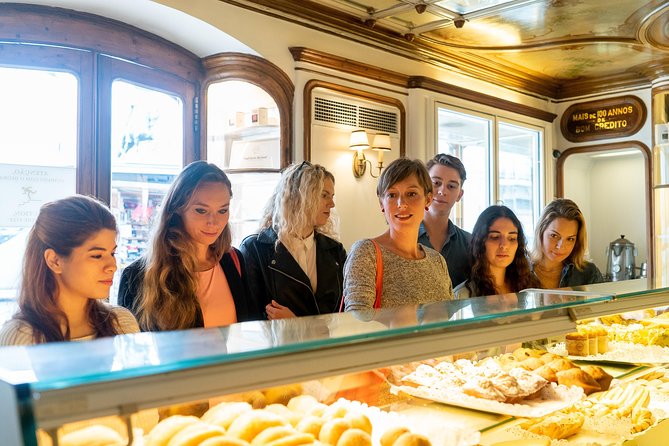
The first stop is Confeitaria Nacional, one of Lisbon’s classic pastry institutions. This is the right kind of opening for a food tour: something sweet, familiar, and tied to the city’s café culture.
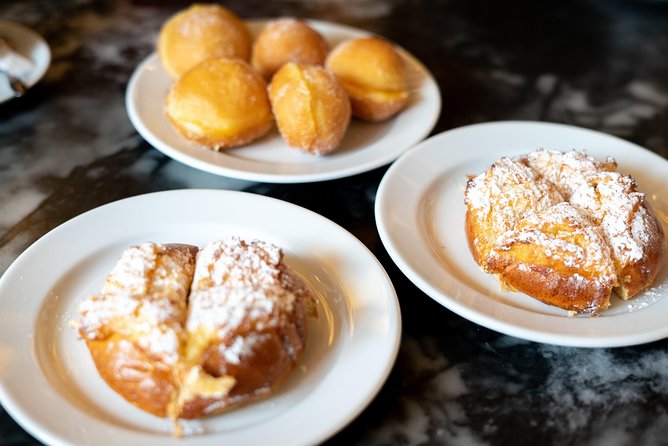
Expect coffee and a selection of traditional Portuguese sweets during the early part of the route. The sample menu includes pão de Deus and bola de Berlim, two pastries that show how broad Portuguese bakery traditions can be.
Pão de Deus is a soft sweet bun with a coconut topping. Bola de Berlim is a Portuguese doughnut-style pastry, often filled with cream. Neither is a minor snack if you are also planning to eat through lunch, so pace yourself from the beginning.
This stop also helps explain one of Lisbon’s most useful habits: taking time for a pastry and coffee. You will learn about the food, but you also get a glimpse of how cafés fit into daily life.
Manteigaria Silva introduces cured meats and preserved foods
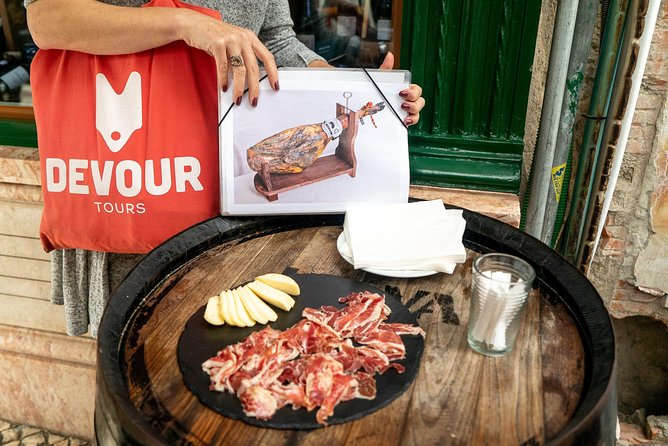
At Manteigaria Silva, the focus shifts from pastry to savory Portuguese products. Expect Iberian ham and other traditional ingredients, with your guide explaining how preserved foods fit into Portugal’s cuisine.
Salted cod and canned sardines are especially useful foods to try with some context. They are easy to spot in shops and restaurants throughout Lisbon, but a guide can explain why they became such familiar parts of the national diet.
The sardines may be served in canned form, which is not a shortcut or a lesser version of the dish. Portugal has a serious canned-fish tradition, and the tins you see in Lisbon shops range from everyday pantry food to carefully packaged gifts.
I find this kind of stop valuable because it helps you read Portuguese menus and grocery shelves later. You are not simply checking off foods. You are learning what ingredients locals consider normal, useful, and worth taking home.
Ginjinha Sem Rival serves Lisbon in a small glass
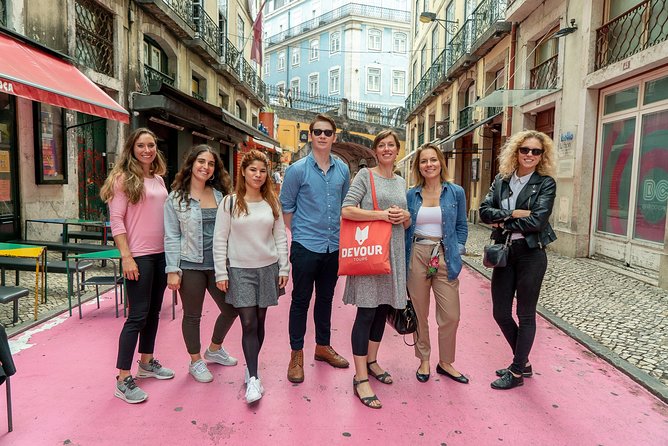
Next comes ginjinha, Lisbon’s signature sour cherry liqueur, at Ginjinha Sem Rival. The drink is sweet, tart, and strong enough that you should treat it as a tasting rather than a casual soft drink.
Ginjinha is one of those local specialties that makes more sense when you try it in the city where it belongs. Your guide will explain the drink’s place in Lisbon life and may also point out how the small bar culture differs from a formal wine tasting.
This is one of the three included drinks. Wine tastings are also part of the tour, and the precise drink selection can vary with dietary needs and the day’s arrangements. Non-alcoholic options are available, but you should tell the operator about that need after booking.
More Lisbon food and drink outings:
- Lisbon: Baixa District Food Tour with Dinner and Drinks
★ 4.9 · 1,870 reviews - Lisbon Food Tour with 10+ Tastings of Local Delicacies & Wines
★ 5.0 · 1,339 reviews - Award-Winning Original Lisbon Food Wine Tour: 19 Curated Tastings
★ 5.0 · 1,288 reviews - Lisbon Roots – Small group Food & Culture Walking Tour w/tastings
★ 5.0 · 910 reviews
O Trevo is the place for a bifana
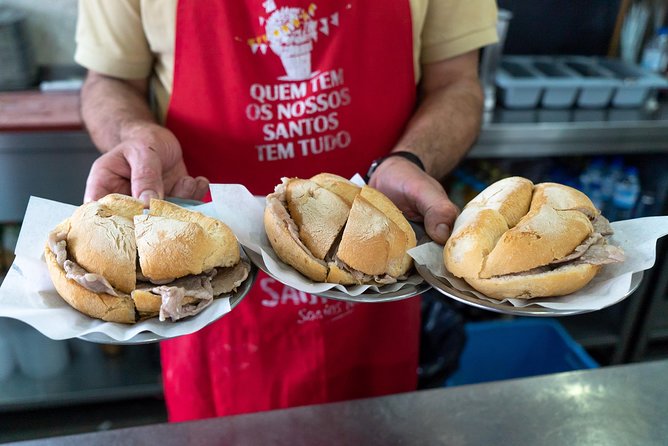
O Trevo is associated with one of Portugal’s most useful everyday foods, the bifana. This is a traditional pork sandwich, usually built around thin pork and a seasoned sauce inside a bread roll.
It is humble food, but that is part of its appeal. The bifana is not designed to be precious or complicated. It is quick, filling, inexpensive by restaurant standards, and closely tied to ordinary Portuguese eating.
Some menu descriptions also explain the pork as having been cooked for a long time, which gives the filling a deeper taste than the plain sandwich name might suggest. If you have eaten mainly pastries and ham up to this point, the bifana provides a welcome change.
This is also a good place to ask your guide what makes a local snack different from a dish aimed at visitors. Guides such as Helena, Nina, and Natalia are praised for connecting each food to Lisbon’s daily life rather than treating every bite as a museum piece.
O Gaiteiro offers the sit-down Portuguese meal
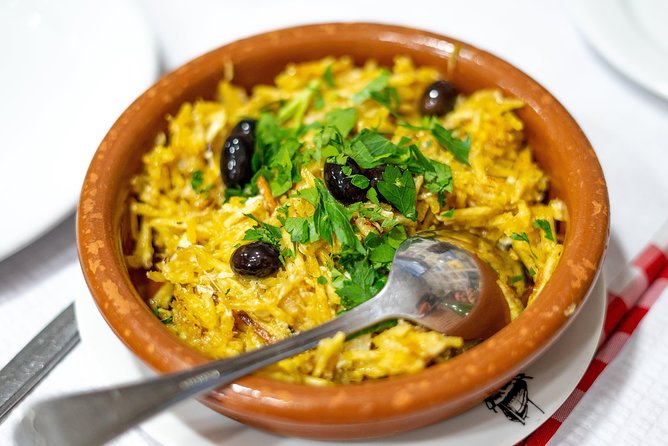
O Gaiteiro is where the food becomes more substantial. This traditional Portuguese tasca is the main meal stop, and the menu can include bacalhau à Brás, alheira, fish rice, and a bean stew with pork.
Bacalhau à Brás combines salted cod with potatoes and egg. It is one of the most recognizable cod dishes in Portugal, and it shows how a preserved ingredient can become soft, comforting, and suited to a shared meal.
Alheira has a complicated past connected to Portuguese Jewish communities and the need to disguise food practices during the Inquisition. The sausage is now part of mainstream Portuguese cooking, but its background gives your guide a chance to connect food with religion, survival, and social change.
Fish rice brings a different texture and mood. It is usually spoonable and savory, more like a loose rice dish than a dry entrée. The exact preparation and side dishes may vary, but the point is to give you several tastes at once.
This stop is where the tour’s generous food promise becomes clear. You are not only eating one main plate. You are trying several dishes, which is ideal if you want an introduction to Portuguese cuisine but less ideal if you prefer a long, quiet restaurant meal.
One caution is worth noting. The snack foods may be more memorable than the sit-down lunch, depending on the day’s preparation and your own taste. The meal is useful for breadth, but do not book this expecting a carefully paced fine-dining lunch.
Time Out Market closes the route with sweets and a city view of food culture
The final area is Cais do Sodré, ending at Time Out Market Lisboa in Mercado da Ribeira. The market is a natural finish because it gathers many food businesses under one roof and gives you a clear sense of Lisbon’s current food scene.
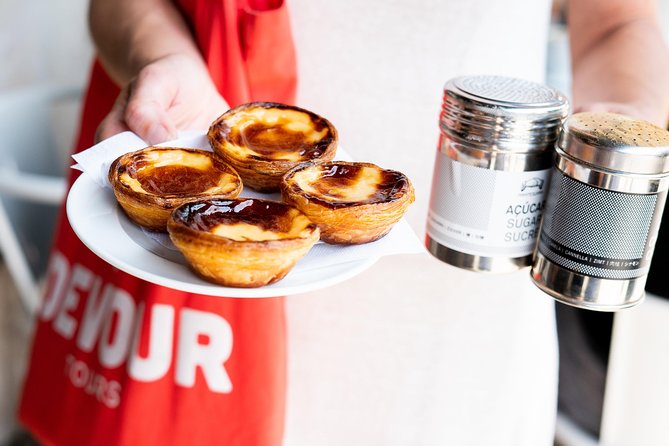
The route may include more sweets, coffee, wine, and the warm custard tart that has become one of Lisbon’s essential tastes. Manteigaria is listed among the stops, and its freshly made pastel de nata is a major highlight for many people.
A pastel de nata is best eaten warm, with crisp pastry and soft egg custard. You may be offered cinnamon or powdered sugar, depending on the stop. It is small, but after the earlier tastings, it can feel like the final course of a full meal.
Ending at the market is practical. You can continue eating, browse other stalls, or use the location as a starting point for your own plans in Cais do Sodré. The tour does not return you to Praça da Figueira, so note the one-way route when arranging your day.
The food range is broad, but the pace is steady

The menu moves from breakfast-style sweets to lunch dishes and ends with dessert and drinks. In one tour, you may taste:
- Iberian ham
- Bifana
- Canned sardines
- Bacalhau à Brás
- Alheira
- Fish rice
- Bean stew with pork
- Pastel de nata
- Pão de Deus
- Bola de Berlim
- Coffee
- Ginjinha
- Portuguese wine, including green wine
The published description counts nine food tastings and three drinks, though the precise combination may vary. The key point is quantity. You should not eat a large breakfast before the tour, or you may struggle to try everything.
There is enough food to cover breakfast and lunch, but the tour is not a series of full restaurant portions. The group shares or receives tasting portions, then sits down for a more complete meal. That balance lets you try foods you might not order alone.
The walking helps break up the eating. Still, you need to walk at a moderate pace for about three and a half hours. This is not the right pick if you have trouble walking through central Lisbon or want a tour with very little movement.
Why the small group and guide matter
Ten people is a useful maximum for a food tour. At each stop, you have a better chance of hearing the explanation, asking questions, and staying connected with the guide.
The small size also helps at neighborhood businesses. You are less likely to feel like a large organized crowd, and the guide can explain how to return to the places on your own. One useful feature is the Devouring Lisbon guidebook included with the tour, packed with recommended places to eat and drink around the city.
Guide quality can vary by departure, but the strongest pattern is clear. Helena is praised for weaving food, history, and social context together. Cecilia is described as energetic and welcoming. Merritt is noted for local food knowledge and for taking groups to places that feel less aimed at tourists.
Alicia, Natalia, Nina, Anastasiia, Agatha, Ann, and Borja are also singled out for warmth, clear explanations, and enthusiasm. Nina is noted for speaking English at an easy pace and for helping a vegetarian find suitable food at each stop.
That last point matters. An English-language food tour succeeds only if you can follow the stories. The guides are generally praised for speaking clearly, but food vocabulary and local names can still come quickly, so ask questions when you need to.
Dietary needs require planning before you arrive
The tour can adapt for pescatarians, vegetarians, dairy-free diets, non-alcoholic choices, and pregnant participants. You must email the Guest Experience team after booking so the ingredients can be arranged.
The wording is important: you may not receive a replacement item at every stop. This is not a fully customizable menu, and the tour is not suitable for vegans, people with gluten intolerance, or people with celiac disease.
Serious food allergies require an allergy waiver at the start. I would treat that as a reason to contact the operator well ahead of time rather than waiting until the meeting point.
If you eat meat, fish, dairy, and gluten, the tour offers the widest range. If you have several restrictions, you may still be able to join, but the tasting experience will not match the standard menu.
Is $95.53 a fair price?
At $95.53 per person, this is not a bargain lunch. But the price includes a small group, a local culinary guide, nine tastings, three drinks, the guidebook, and taxes and fees.
The value depends on how you use the tour. If you want only a few iconic bites, you can spend less by ordering pastries, a bifana, ginjinha, and canned fish on your own. You will not get the same explanations, route, introductions, or built-in range.
I think the price is easier to justify if you take it early in your stay. You gain a list of foods to order later, several central neighborhoods, and practical advice about eating in Lisbon. It also removes the guesswork of choosing your first Portuguese dishes.
The strongest value is for curious eaters who would otherwise order familiar food. The weaker value is for people who already know Portuguese cuisine and mainly want a relaxed sit-down meal.
Practical details that affect your day
The tour starts at the Statue of John I in Praça da Figueira and ends at Time Out Market Lisboa, Mercado da Ribeira, on Avenida 24 de Julho. Both points are near public transport, but you should allow time to find the starting statue in the square.
Wear comfortable shoes. Lisbon’s center is walkable, but the tour lasts around three hours and 30 minutes, with several stops and a moderate pace.
The experience is offered in English. It requires good weather, and if poor weather forces cancellation, you can choose another date or receive a full refund.
You can cancel for a full refund up to 24 hours before the start time. Changes or cancellations made inside that window are not accepted for a refund.
Who should book this Lisbon food tour?
I would book it for a first or second day in Lisbon, especially if you want a fast introduction to the city’s food and central neighborhoods. It suits people who enjoy tasting many things, asking questions, and walking between meals.
Families can also find it a good fit. The food range is broad, and one account specifically found the experience engaging for a 10-year-old. Still, children must be comfortable walking and trying unfamiliar foods.
It works for solo visitors and couples because the small group creates an easy social setting without the size of a bus tour. It can also suit a team-building outing, since the food and shared stops give a group something simple to talk about.
I would skip it if you need a vegan or gluten-free menu, dislike eating on a schedule, or want every dish to be a full restaurant portion. I would also avoid booking it late in a trip if you already have a long list of restaurants and prefer to spend the afternoon at one table.
Should you book Devour Lisbon?
Book this tour if you want a filling, well-rounded first taste of Portugal and like the idea of learning the story behind each dish. The combination of bifana, cod, sardines, alheira, pastries, wine, and ginjinha gives you a useful working knowledge of Lisbon’s food.
The small group and strong guide reports add real value, especially with guides such as Helena, Merritt, Nina, Cecilia, and Alicia. Just arrive hungry, contact the operator early about dietary needs, and remember that the lunch stop may be less memorable than the individual snack stops.
For food lovers who want history, local businesses, and enough samples to replace two meals, this is a sensible Lisbon booking.
FAQ
How long does the Devour Lisbon food tour last?
The tour lasts approximately 3 hours and 30 minutes.
How many people can join the tour?
The maximum group size is 10 people.
What food is included?
The tastings can include Iberian ham, bifana, canned sardines, bacalhau à Brás, alheira, fish rice, pastel de nata, pão de Deus, bola de Berlim, and coffee. The exact selection may vary.
Are drinks included?
Yes. Three drinks are included, with wine tastings and ginjinha among the listed offerings.
Where does the tour start and finish?
It starts at the Statue of John I in Praça da Figueira and ends at Time Out Market Lisboa in Mercado da Ribeira, Cais do Sodré.
Can the tour accommodate dietary restrictions?
The tour can adapt for pescatarians, vegetarians, dairy-free diets, non-alcoholic choices, and pregnant participants. You must contact the Guest Experience team after booking, and a replacement may not be available at every stop.
Is the tour suitable for vegans or people with celiac disease?
No. The tour is not suitable for vegans, people with gluten intolerance, or people with celiac disease. Serious food allergies also require an allergy waiver at the start.
More Food in Lisbon
- Private Lisbon Arrabida Wine Tour: Food & Wines, Mountain and Sea
★ 5.0 · 907 reviews - Lisbon Private Food Tour – Taste 10+ Local Dishes & Wines
★ 5.0 · 896 reviews - Lisbon: Segway Food Tour of Alfama and Old Town Lisbon
★ 4.8 · 770 reviews - Lisbon: Tastes and Traditions Guided Food Tour
★ 4.8 · 718 reviews
Recently reviewed around Lisbon
- Portinho da Arrábida: Coasteering Boat Tour★ 4.9 · 78 reviews
- Setúbal: Dolphin-Watching Boat Tour★ 4.8 · 213 reviews
- From Lisbon: Private Óbidos and Nazaré Tour★ 5.0 · 152 reviews
- No Diet Club – Unique food tour in Lisbon with many Tastings★ 4.8 · 44 reviews
- Queluz National Palace & Gardens Ticket★ 4.6 · 447 reviews
- Melides: Horse Riding on the Beach with Wine Tasting★ 4.3 · 117 reviews
- Melides: Horseback Riding on Melides Beach★ 4.7 · 111 reviews
- Lisbon: Street Art Tuk Tuk Tour★ 4.9 · 372 reviews
Food & Drink, compared.

Douro Valley w/ Boat Tour, Wine Tasting & Lunch
Read our review →
Winner 2025 Undiscovered Lisbon Food & Wine Tour by Eating Europe
Read our review →
Cálem Cellar Tour, Interactive Museum & Wine Tasting
Read our review →

Douro Valley Small-Group Tour with Wine Tasting, Lunch and Boat
Read our review →

Browse the lists this tour appears in