Reviewed · ALGARVE TOURS
Cork Factory Tour & Cork Shop
Cork is far more than a wine stopper. At Eco-Cork, you see how bark becomes sheets, stoppers, bowls, and everyday goods, with workers demonstrating the careful cutting and grading that give each piece its use. The live factory work makes this more than a talk with a few displays.
I like the chance to ask questions directly and the hands-on moments, including the possibility of trying a cork cut yourself. I also like the small shop, where you can compare the factory’s goods before buying. The main drawback is simple: this is an indoor factory visit, not a walk through a cork grove, and the working space can be hard to hear in heavy rain or with a large group.
In This Review
- Key points to know before booking
- Why this cork factory visit is worth your time
- Getting to Eco-Cork near Faro
- The opening explanation: from tree to factory
- Cutting, grading, and the skill of the factory floor
- The boiling vats and the less glamorous side of production
- What happens in the cork shop
- Price, timing, and overall value
- Who should book this experience
- Should you book the Eco-Cork factory tour?
- FAQ
- Where does the cork factory tour start?
- What time does the tour begin?
- How long does the experience last?
- Is transportation included?
- Is the tour offered in English?
- Can I cancel for a full refund?
Key points to know before booking
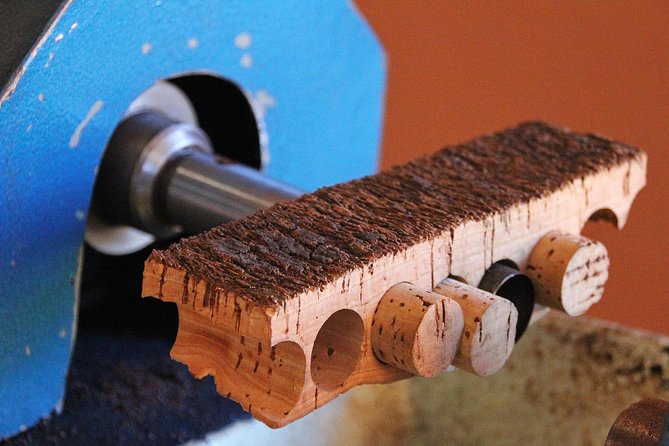
- Watch cork being cut and graded: Skilled workers show how large and small pieces are assessed and trimmed.
- See the factory stages: The tour covers harvesting, processing, boiling, flattening, grading, and preparation for shipment.
- Expect an English-language visit: Guide Elena has led the tour, and the presentation leaves room for questions.
- Plan your transport: The Eco-Cork factory is outside central Faro, and public transportation is not available to the site.
- Shop after the tour: The small cork shop carries practical and decorative items at factory prices.
- Allow about an hour: The listed experience lasts about 1 hour and 10 minutes, with the activity ending where it starts.
Why this cork factory visit is worth your time
Portugal is closely tied to cork production, but it is easy to miss the work behind the finished products. A cork stopper looks simple. The factory process is not. The bark must be removed from the tree without killing it, sorted by quality, boiled, flattened, cut, and assigned to different uses.
That chain of work is the real subject here. You learn why one piece is suitable for a bottle stopper while another is better for flooring, decoration, bags, bowls, or other goods. The tour also gives you a clearer sense of the labor involved. Cork is a natural material, but turning it into a dependable product takes plenty of human skill.
I find the experience most useful if you are already planning time in the Faro area and want something different from beaches, churches, and seafood. It is also a good choice for families. The demonstrations give children something concrete to watch, and some visitors have been allowed to try cutting the bark themselves.
The visit has a 4.6 rating from 150 published ratings, with 91 percent recommending it. Those figures suggest a strong experience, though not a perfect one. The most common praise centers on the explanations, the live demonstrations, and the chance to ask questions. The less positive comments focus on transport, noise, and the fact that the factory tour does not include cork trees in the field.
Other Faro days travellers weigh against this one:
- 4 Stops | 3 Islands & Ria Formosa Natural Park – From Faro
★ 5.0 · 3,080 reviews - From Faro: Benagil Cave, Marinha Beach, Algar Seco & More
★ 4.7 · 2,027 reviews - Ria Formosa – Boat trip to the 3 Islands: Armona | Culatra Island | Lighthouse
★ 5.0 · 1,872 reviews
Getting to Eco-Cork near Faro
The meeting point is Eco-Cork Factory, also called Eco-Fábrica de Cortiça, at Francisco Carrusca, Sítio da Mesquita Baixa, 8150-048, Portugal. The tour begins at 11:30 a.m. and ends back at the same place.
This is the first practical issue to solve. The factory does not have public transportation service, so you need to arrange your own way there. Hotel pickup and drop-off are not included. If you are staying in Faro without a car, check your transport plan before paying for the tour.
The setting is part of the appeal, but it is not a polished city attraction. You are visiting a working cork facility. That means the surroundings may feel plain, and the tour can be affected by factory noise or weather. One especially wet visit became difficult because rain striking the building made the guide hard to hear.
The group limit is 30 people. That is not enormous, but it is large enough to matter in a working space. If you want to hear every detail, stand close to the guide when possible. In poor weather, ask questions when the group pauses rather than relying on every word of the presentation.
The opening explanation: from tree to factory
The visit begins with an explanation of how cork is collected and prepared. You learn that the useful material is bark, not timber, and that the tree remains standing after the bark is removed. The process is not a quick chop-and-carry job. Harvesting, grading, and preparation all require care.
The guide also explains the markings used in cork production. If you have seen painted numbers or letters on cork trees, this visit helps you understand what they refer to. That detail links the factory work to the forest and gives more meaning to the trees you may see elsewhere in southern Portugal.
A short video may form part of the introduction, followed by spoken explanations. Guide Elena has been praised for clear English, a pleasant manner, and a strong grasp of the production process. The format is useful because you first receive the big picture, then see the machinery, vats, tools, and pieces of bark in front of you.
You will not simply be told that cork is sustainable or useful. You will see why the material needs different grades and why its final purpose depends on the quality and shape of the bark. Ask questions here. The guides leave room for them, and the question period is one of the better parts of the visit.
Cutting, grading, and the skill of the factory floor
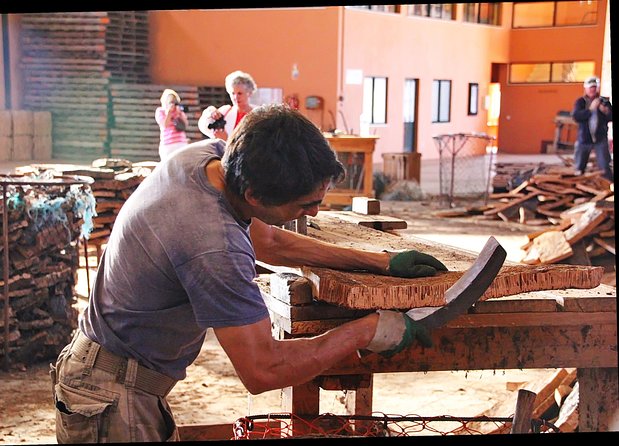
The most memorable section is the live demonstration. A worker trims pieces of cork bark and sorts them by quality and size. You may see both large and small sections being assessed. This is where the process becomes easy to understand: not every part of the bark has the same value or the same job.
The work also shows how much judgment is involved. A neat, finished cork item can look effortless in a shop. At the factory, you see the repeated cutting, checking, and shaping that come first. One demonstration included the making of a hand-crafted bowl, while another showed workers preparing bark for different products.
Knife sharpening is another striking detail. A skilled craftsperson demonstrates sharpening techniques alongside the cork work. It is a small moment, but it helps you notice the tools behind the finished products. This is not just a machine-led operation. Human hands still guide important parts of the job.
In some groups, participants get to try cutting cork themselves. This is particularly appealing for children, though it depends on the way the demonstration is organized that day. Do not expect a full workshop where you make and take home a finished object. Think of it as a short hands-on sample of the work.
The factory visit is also a useful correction to the idea that cork is only used for bottles. You learn about its role in stoppers and other products, as well as decorative and practical objects sold in the shop. The range of uses is one of the biggest surprises for first-time visitors.
A different kind of day out, same corner of Portugal:
- Ria Formosa Natural Park and Islands Boat Cruise from Faro
★ 5.0 · 1,314 reviews - 2 Stop | 2 Islands & Ria Formosa Natural Park – From Faro
★ 5.0 · 1,045 reviews - Faro: Deserta Island and Farol Island Catamaran Boat Trip
★ 4.6 · 955 reviews - From Faro: Benagil, Algar Seco, 7 Hanging Valleys, & Marinha
★ 4.9 · 890 reviews
The boiling vats and the less glamorous side of production
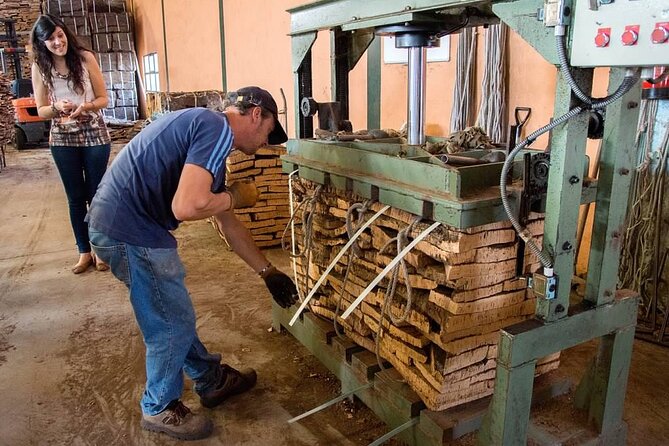
A visit to the factory floor gives you a look at the less polished side of cork production. Large water vats are used to boil the cork, after which it is flattened and prepared for sale. This step helps turn irregular bark into material that can be handled and shaped.
The vats are not a showpiece. They are working equipment, and the factory itself can feel basic. That is worth knowing before you book. If you expect an immaculate museum with quiet rooms and staged demonstrations, this may feel rough around the edges.
I think that plain setting adds some value, as long as you arrive with the right expectations. You are seeing a small, eco-focused business at work rather than a large attraction built only for sightseeing. The visit connects the final souvenir to the labor and machinery that produced it.
There is one limitation. The tour does not take you into a cork field or show the bark being removed directly from a living tree. You learn about harvesting and may already have seen cork trees elsewhere, but the factory experience begins with the material at the processing stage.
If seeing the full journey from tree to finished product is important to you, pair this visit with time in a cork-growing area. On its own, the factory tour explains harvesting well, but it does not provide that outdoor, first-hand view.
What happens in the cork shop
The tour ends at the Cork Shop, still at the meeting point. It is a small shop, not a sprawling market, but it gives you time to look at the finished goods after seeing how cork is handled.
This is where the tour’s lessons become practical. You can compare the texture and finish of cork products and think about the different grades discussed inside the factory. Items may include decorative pieces and useful objects, and the shop is known for offering good-quality goods at prices below some local shops.
The shop is also a reasonable place to buy a souvenir with a direct connection to Portugal’s cork trade. Unlike a generic airport purchase, you have just seen the material being sorted and prepared. That makes a small bowl, accessory, or other cork item feel more connected to the place.
Do not count on food or drinks as part of the visit. They are not included. One disappointed visitor expected a drink and a more comfortable closing room, so bring your own expectations, not a promise of refreshments.
Price, timing, and overall value
The cost is $21.17 per person. For about 1 hour and 10 minutes, that is a fair price if you value a focused educational stop and plan to use the shop. You are paying for access to a working factory, an English-language explanation, demonstrations, and the chance to ask questions.
The value is weaker if you are mainly seeking entertainment or a long half-day outing. The tour is short, and much of it involves listening to explanations and watching workers process cork. There is no meal, transport, extended countryside visit, or cork-tree walk included.
Still, the subject is unusual, and the demonstrations add something you cannot get from reading a sign in a shop. I especially like the balance between explanation and observation. You learn the process, then see cutting, grading, boiling, flattening, and shaping in front of you.
The published booking pattern shows that the experience is often reserved around 11 days ahead. That is a useful planning clue, particularly if you have a fixed schedule in Faro. Confirmation arrives at booking, and free cancellation is available up to 24 hours before the local start time. Changes or cancellations inside that final 24-hour period are not accepted for a refund.
Who should book this experience
I would choose this tour if you want to understand a Portuguese product rather than simply buy one. It suits curious adults, families, and anyone interested in traditional craft, natural materials, or small businesses.
It is also a good follow-up to a cork farm visit. One guide, Elena, clearly explained the next stage for someone who had already seen the trees. If you have viewed cork harvesting outdoors, the factory fills in the missing half of the story.
Families should find the short length manageable. Children may enjoy the live cutting demonstration and the chance to handle or cut cork when offered. Child seats are available on request if you provide that information when booking. Service animals are allowed, and most people can take part.
I would hesitate if you have limited time and cannot arrange transport to the factory. I would also hesitate if your main goal is to see cork being stripped from trees. This is a processing visit, not a farm tour.
The facility can hold up to 30 people, so the experience may feel less personal when full. In a crowded group, sound can be an issue, especially during rain. Ask the guide to repeat anything you miss. The staff are used to questions, and that interaction is part of what makes the visit worthwhile.
Should you book the Eco-Cork factory tour?
Book it if you want a short, distinctive stop near Faro that explains one of Portugal’s best-known natural products from bark to finished object. The strongest parts are the clear English presentation, the live cutting and grading, the explanation of the vats and quality grades, and the small shop at the end.
Skip it if you expect a scenic outdoor visit, a polished museum, refreshments, or hotel transport. Those are not part of the experience.
For me, the deciding question is simple: do you enjoy seeing how ordinary objects are made? If yes, the $21.17 price is reasonable, especially for families and curious shoppers. Arrange transport carefully, allow about an hour, and think of the factory as a working place rather than a show room. That approach gives you the best chance of appreciating what the tour does well.
FAQ
Where does the cork factory tour start?
It starts at the Eco-Cork Factory, also called Eco-Fábrica de Cortiça, at Francisco Carrusca, Sítio da Mesquita Baixa, 8150-048, Portugal. The activity ends back at the same meeting point.
What time does the tour begin?
The scheduled start time is 11:30 a.m.
How long does the experience last?
The experience lasts approximately 1 hour and 10 minutes. The factory itinerary itself is listed as about one hour.
Is transportation included?
No. Hotel pickup and drop-off are not included, and public transportation is not available to the factory. You need to arrange your own transport to the meeting point.
Is the tour offered in English?
Yes. The tour is offered in English, and guide Elena has led an English-language presentation.
Can I cancel for a full refund?
Yes, if you cancel at least 24 hours before the experience start time. Cancellations or changes made less than 24 hours before the start are not refunded or accepted.
Recently reviewed around Faro
- Highlights & Hidden Gems of Faro Private Tour★ 5.0 · 78 reviews
- Algarve Buggy Tours★ 5.0 · 429 reviews
- Tuk tuk Tour Tavira Total – 2h00 – Includes Tuna Museum and Fishing Village★ 5.0 · 71 reviews
- From Faro: Benagil Hiking Cliffs and the 4 Treasure Experience★ 5.0 · 424 reviews
- Tavira Tuk Tuk Tour – Chocolate Tour – Tavira City & Chocolate★ 5.0 · 63 reviews
- Tavira City Tuk Tuk Tour – 1h Tavira City Tour★ 5.0 · 100 reviews
- Tavira Olive Experience Factory Tour and Tasting★ 5.0 · 190 reviews
- Short boat trip of the Algarve’s Ria Formosa lagoon from Faro: 1 hour★ 4.5 · 56 reviews
Algarve Tours, compared.

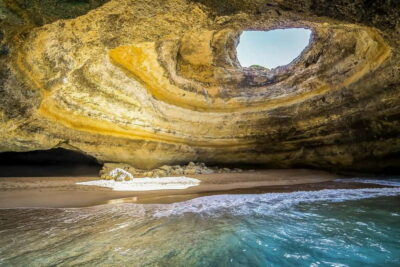
Benagil Caves Speed Boat Tour with Sunset Option
Read our review →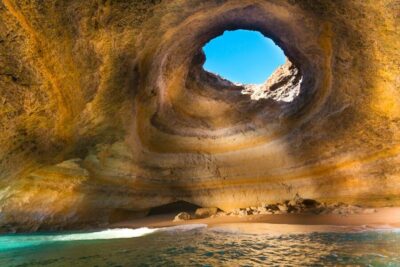
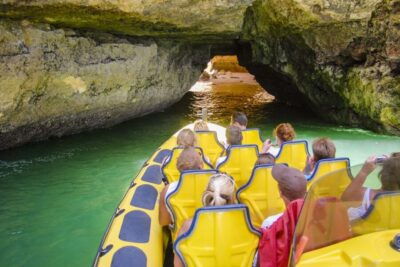
Benagil Caves & Dolphin Watching Speed Boat Tour
Read our review →

Dolphins Search and Benagil Caves from Albufeira
Read our review →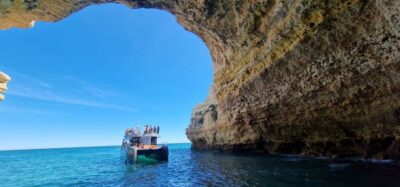
Coastline and Benagil Caves Tour by Catamaran
Read our review →