
Reviewed · WALKING TOURS
Aveiro: Stories, Canals, and Azulejos Guided Walking Tour
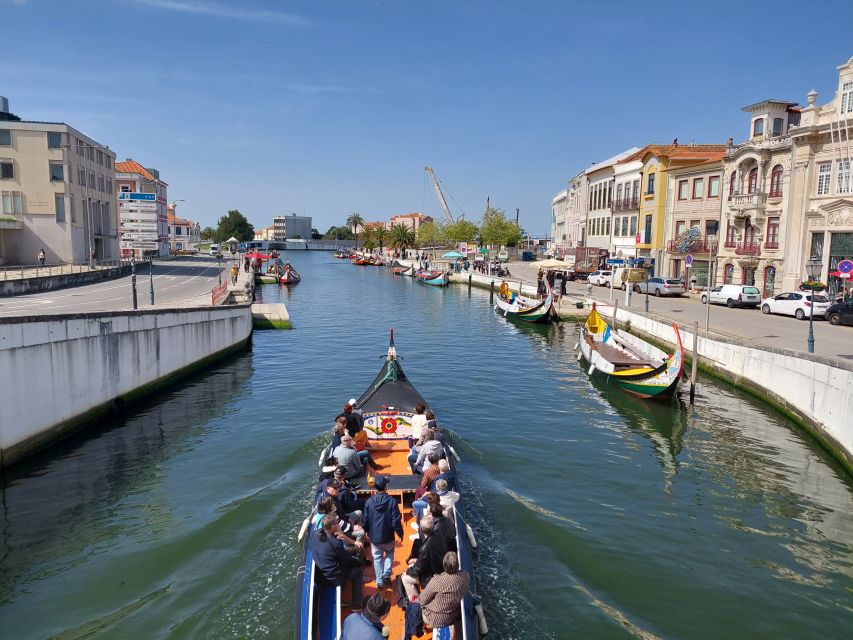
Aveiro’s charm is easy to miss if you only photograph the canals and colorful moliceiros. This two-hour walking tour connects those pretty scenes to the city’s churches, salt trade, ceramic factories, royal history, and tiled façades. The result is a fuller picture of a place that can seem small and decorative at first glance.
I like the route for two clear reasons: it gives you a strong introduction to azulejos and local architecture, and it treats Aveiro’s lagoon as part of the city’s working history, not just a backdrop for boat rides. The main consideration is the walking. Uneven calçada, outdoor exposure, and a route that is not suitable for wheelchair users, people with limited mobility, or anyone seeking a gentle stroll make comfortable shoes important.
- Praça da República begins the story: See Aveiro’s Town Hall and Misericórdia Church before heading into the old streets.
- Small churches receive close attention: The Carmelite Convent Church offers an intimate Baroque interior, while São Gonçalinho brings the tour to a festive finish.
- Tiles guide the walk: Look for panels, Art Nouveau decoration, Art Deco touches, and older azulejo work.
- The canals have a purpose: Learn how the lagoon shaped transport, salt production, ceramics, and traditional boats.
- Local food enters the conversation: Eel stew and ovos moles add a useful taste of Aveiro’s table.
- Tony Walker is a memorable guide: His background as a retired teacher helps turn buildings and dates into clear, lively stories.
In This Review
- Why Aveiro Makes More Sense on Foot
- Praça da República and the Language of the Pavement
- The Carmelite Convent Church and a Small Baroque Interior
- Santa Joana and the Cathedral
- Canal da Fonte Nova and the Working Lagoon
- Beira Mar, Tiles, and Changing Architectural Styles
- Saltpans and Aveiro’s Long Rise and Fall
- Ovos Moles, Eel Stew, and São Gonçalinho
- What Tony Walker Adds to the Walk
- Who Should Book This Aveiro Walk?
- Practical Details Before You Go
- Should You Book the Stories, Canals, and Azulejos Tour?
- FAQ
- How long does the Aveiro walking tour last?
- Where does the tour start?
- Where does the tour finish?
- Which languages are available?
- Is a boat ride included?
- Can children join the tour?
- Is the tour suitable for wheelchair users or people with mobility limitations?
Why Aveiro Makes More Sense on Foot
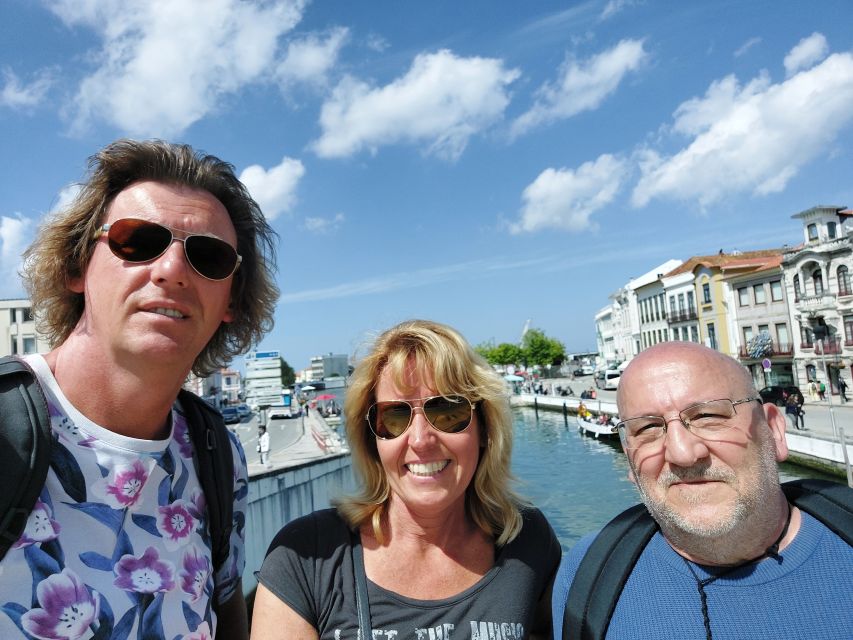
Aveiro is often sold as Portugal’s canal city, but that label can leave you with a thin view of the place. The canals, traditional boats, saltpans, tilework, and churches belong to one connected story. This walk helps you see those links while moving at a human pace.
The tour costs $20 per person and lasts two hours. That is good value if you want orientation, local context, and a list of places to revisit. All sites on the route are either viewed from outside or free to enter, so you are not paying for a stack of admission tickets. You are paying for the guide’s interpretation, which matters in Aveiro because many of the best details are easy to walk past.
The route starts and ends at the same meeting point, near the statue in the center of Praça da República. Look for the guide wearing a yellow and blue badge. Guides speak Portuguese, French, English, or Spanish, and Tony Walker is the named guide most often associated with this experience.
Praça da República and the Language of the Pavement
The opening square gives you a useful introduction to Aveiro’s civic and religious life. You begin with the Town Hall and the Misericórdia Church, then walk along Rua de Coimbra toward Marques de Pombal Square.
Here the pavement itself becomes part of the lesson. Portugal’s calçada à portuguesa uses contrasting black and white stones arranged in patterns. It can look like a minor street detail, but the guide gives you a reason to notice the design beneath your feet. This is one of the tour’s strengths: ordinary features become part of the city’s story instead of remaining background scenery.
At this early stage, you also get a sense of the walking conditions. Expect paved streets, traditional stone sidewalks, and time spent standing outdoors while the guide explains what you are seeing. Wear shoes with good grip, especially if the stones are wet.
More Portugal walks with a guide:
- Lisbon: History, Stories and Lifestyle Walking Tour
★ 4.8 · 10,902 reviews - Best of Lisbon Small-Group Guided Walking Tour
★ 5.0 · 4,869 reviews - Lisbon: Food and Wine Small Group Walking Tour
★ 4.9 · 4,082 reviews
The Carmelite Convent Church and a Small Baroque Interior
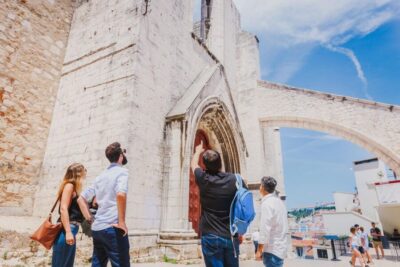
Marques de Pombal Square leads to the Carmelite Convent Church. It is described as a small but impressive Baroque treasure, and its modest scale is part of the appeal. You are not entering a giant monument where the decoration can blur into a general impression. Here, the details feel closer and easier to study.
The visit also shows how this tour differs from a quick self-guided walk. You can look inside a church on your own, but you may not know which decorative features deserve your attention or how the building fits into Aveiro’s religious past. A good guide provides that frame without turning the stop into a long academic lecture.
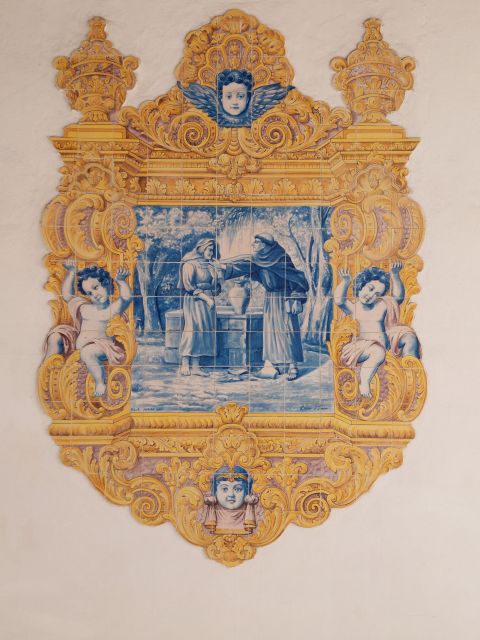
The tour continues with tile panels at Casa de Santa Zita and Sapataria Leão. These façades help you read Aveiro as an open-air display of ceramic art. Look beyond color and pattern. Notice how tiles advertise, decorate, protect, and give individual buildings their identity.
Santa Joana and the Cathedral
The route passes beside the Dominican Convent of Jesus, where the guide tells the story of Princess Santa Joana, Aveiro’s patron saint. This is one of the historical sections that gives the city a human face. Instead of only hearing about institutions and buildings, you meet a figure whose religious and royal associations remain part of Aveiro’s identity.
You then pass the cathedral before moving toward the Canal da Fonte Nova. The cathedral stop is part of the wider route rather than a promise of an extended interior visit, so adjust your expectations. This is a walking overview, not a museum tour with long indoor stays.
That balance works well for a first visit. You get several landmarks in a compact area and still have time for the canals and Beira Mar quarter. If your priority is detailed study of one church or museum, you will need separate time afterward.
Canal da Fonte Nova and the Working Lagoon
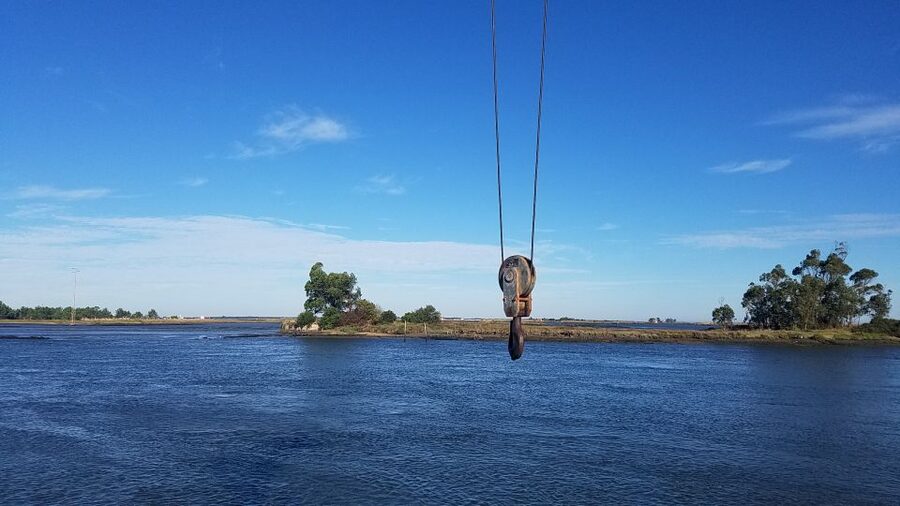
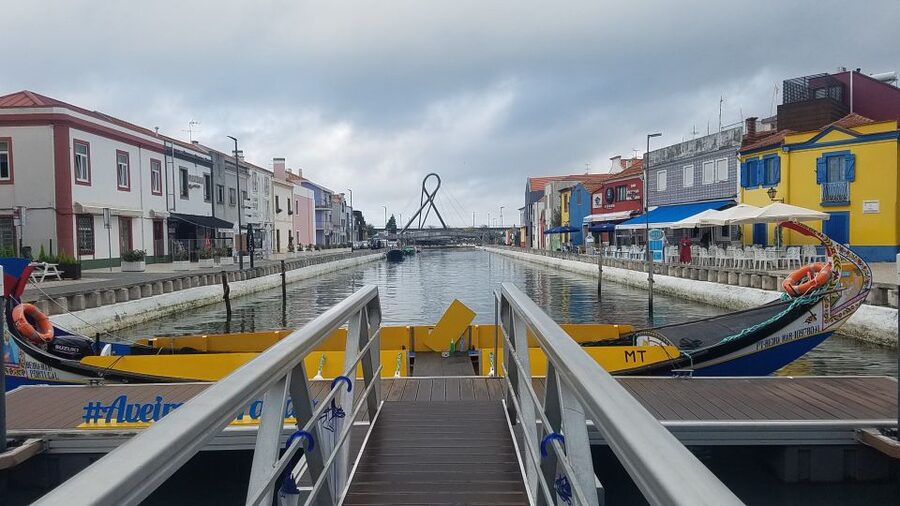
At the Canal da Fonte Nova, the tour turns from religious buildings to industry. One former ceramics factory still occupies a building along the canal, a reminder that Aveiro’s water routes once served more than sightseeing.
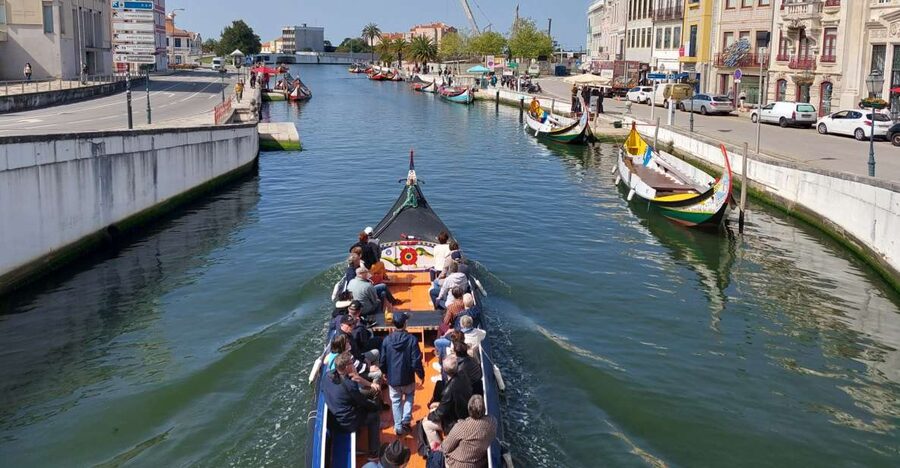
This is where the city’s relationship with the lagoon becomes clearer. The canals had practical uses, and traditional boats carried people, goods, seaweed, and other materials connected with the Ria de Aveiro. Your guide explains the difference between moliceiros, mercanteis, and other local boat types, so you can recognize more than the bright paintwork.
The smell of lagoon water and salt is part of the experience. That may sound like a small detail, but it helps you understand that Aveiro was shaped by a working coastal environment. The lagoon was not simply a pretty ribbon through town. It supported transport, fishing-related activity, salt production, and industry.
The route does not include a boat ride. That is useful to know before booking. You can arrange a moliceiro trip separately if you want to see Aveiro from the water, while this tour concentrates on streets, buildings, and explanation. One practical advantage is that the walk gives you context for a later boat ride instead of leaving you with a short circuit and a handful of painted boats.
More Portugal trips worth a second look
- Porto: Guided Tour by Tuk-Tuk & Optional Douro River Cruise
★ 4.5 · 5,980 reviews - Lisbon: Private Guided Tuk-Tuk Tour with Hotel Pickup
★ 4.9 · 4,552 reviews - Benagil: Guided Kayaking Tour to the Benagil Cave
★ 4.7 · 3,135 reviews - Porto: City Highlights 3-Hour Guided Electric Bike Tour
★ 4.8 · 3,092 reviews
Beira Mar, Tiles, and Changing Architectural Styles
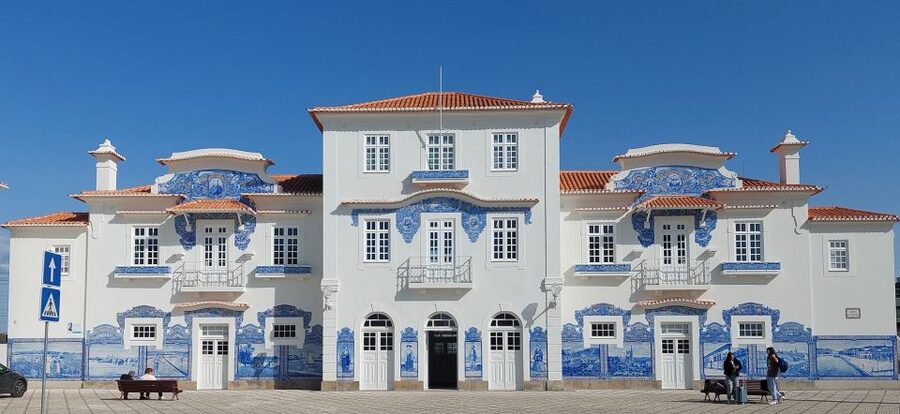
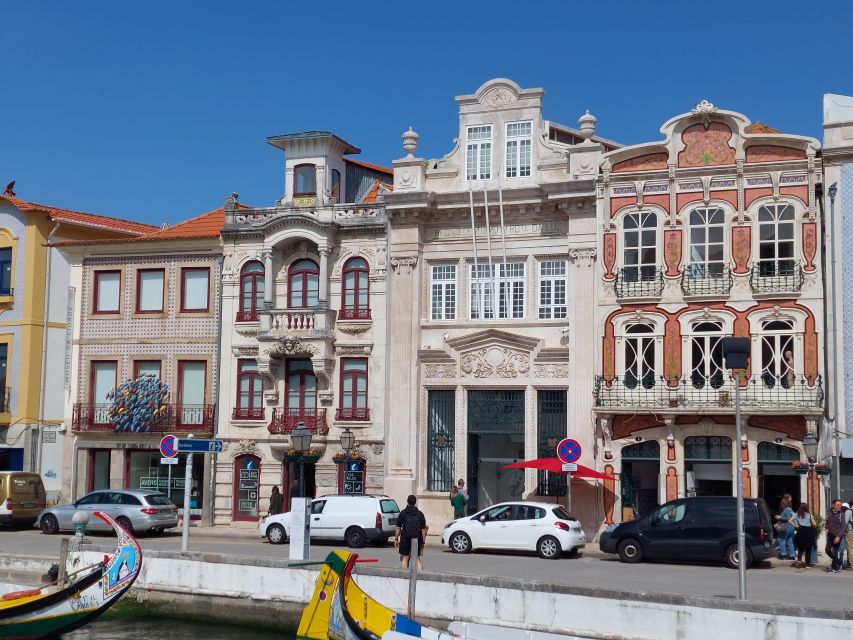
The Beira Mar neighborhood brings together many of the visual elements that make Aveiro distinctive. Tiles fill the streets, and the guide points out changes in style from early modern work to more recent façades.
You will also look for Art Nouveau and Art Deco details, along with iron architecture from the transition between the 19th and 20th centuries. This is the sort of material that can reward a slow eye. Curved metalwork, decorative lines, tile colors, and building fronts may seem unrelated until someone points out the design language connecting them.
The two façades of the Museum of Art Nouveau are especially useful stops. You may not enter the museum as part of the tour, but the exterior gives you a reason to return if architecture interests you. Since all sites are free or viewed as walk-through stops, check your schedule if you want to visit museums inside afterward.
Opening hours can affect what you see indoors. One Monday visit was less satisfying because museums were closed, while a festival day allowed free entry and gave the guide a chance to adapt the route. The lesson is simple: the walking tour can still work on a Monday, but a day with open museums may offer more options around it.
Saltpans and Aveiro’s Long Rise and Fall
The walk toward the saltpans widens the historical lens. The guide discusses Aveiro’s power from the 11th through the 15th centuries, its difficult period in the 17th and 18th centuries, and its revival in the 19th century.
This section is valuable because it prevents the city from feeling like a collection of attractive leftovers. Towns change when waterways shift, industries weaken, trade patterns move, or investment returns. Aveiro’s story includes all of those turns, and the route uses the saltpans to connect geography with economic life.
You should not expect a long countryside hike to remote salt fields. The itinerary describes the way to the saltpans and the return through the city, so the exact distance and views depend on the day’s route. Still, you will hear why salt mattered and how the lagoon influenced Aveiro’s fortunes.
The tour takes place rain or shine. Bring sunscreen, weather-appropriate clothing, and water for your own use. There is no food or drink included, and large bags, luggage, bicycles, baby carriages, alcohol, and drugs are not allowed.
Ovos Moles, Eel Stew, and São Gonçalinho
On the return route, the guide brings in local food. Eel stew reflects Aveiro’s lagoon setting, while ovos moles are the city’s best-known sweet. These egg-based confections are traditionally associated with Aveiro and often come in delicate forms linked to the region’s convent traditions.
Food talk is a welcome part of a walking tour because it gives you something practical to do afterward. You can look for ovos moles in town or choose a meal that includes eel, although you must pay for food separately. The guide can provide the cultural setting, but this experience is not a tasting tour.
The final stop is the Church of São Gonçalinho. The church is tied to the January festival honoring the local saint, when a hard, heavy traditional sweet is thrown over the heads of worshippers. It is a joyful and unusual custom, and ending with this story gives the tour a lively last note.
The finish also shows Aveiro at its most local. The city is not only churches, canals, and decorative houses. It has festivals, food, humor, and traditions that continue to shape daily life.
What Tony Walker Adds to the Walk
The guide can make or break a city walk, and Tony Walker’s style seems particularly suited to Aveiro. He is a retired teacher, has lived in the city for more than 20 years, and brings a clear teaching instinct to the route.
Expect plenty of questions and conversation. Tony has a reputation for explaining architecture, history, symbolism, and current city matters while keeping a good sense of humor. He also seems willing to spend extra time when the group is engaged, though you should not assume every departure will run long.
A small group can make the experience feel almost private. One solo participant had that kind of outing, with Tony adjusting the pace and discussing details in depth. Group size is not specified, so do not book on the assumption that you will receive a private tour. The useful point is that the guide appears comfortable adapting when the group asks questions.
You may also meet local people who know him during the walk. That personal connection helps the city feel less like a display and more like someone’s home town. It is a good fit if you like stories and conversation more than a rapid checklist of sights.
Who Should Book This Aveiro Walk?
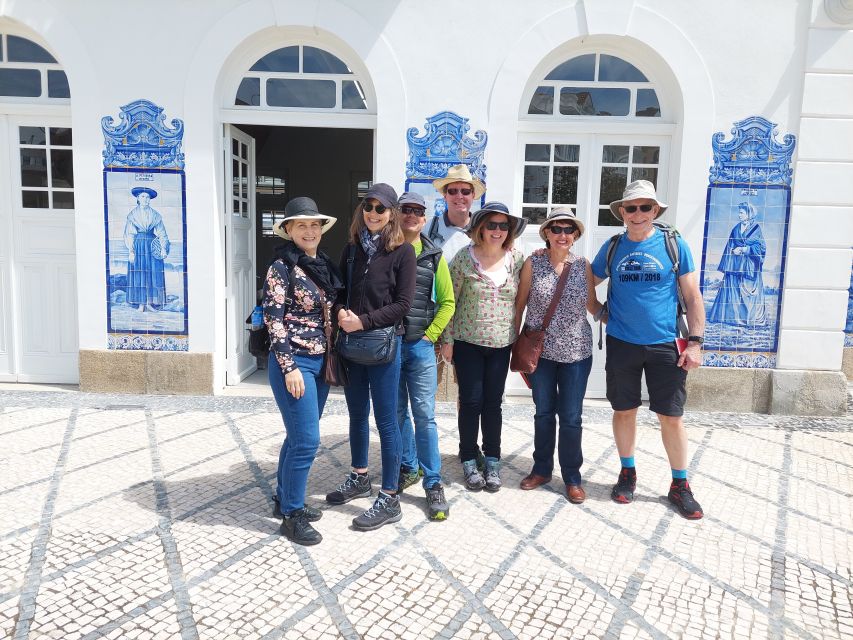
I would choose this tour for a first or second day in Aveiro, especially if you want to understand what you are looking at before exploring alone. It suits adults and children aged 10 or older who can walk steadily for two hours and manage uneven pavement.
It is also a strong choice for architecture fans, history-minded visitors, and anyone curious about Portuguese tilework. The walk gives you a useful framework for a later museum visit, canal cruise, meal, or independent wander.
I would think twice if you have limited fitness, mobility problems, are pregnant, use a wheelchair, or need a stroller. The route is not designed for those needs. Children under 10 are not accepted, and unaccompanied minors are not allowed.
At $20, the value is strongest when you use the tour as an introduction rather than an isolated activity. You receive two hours of guiding across churches, canals, architecture, salt, boats, and food traditions, with no extra admission fees built into the cost. You will still need to budget separately for meals, drinks, and a boat trip.
Practical Details Before You Go
Meet near the statue in the center of Praça da República. Find the guide with the yellow and blue badge, and allow enough time to locate the statue before the start.
The tour is offered in English, Portuguese, French, and Spanish. Starting times vary, so check the available departure when you book. You can reserve now and pay later, and cancellation up to 24 hours before the tour allows a full refund.
Bring a passport or identity card, comfortable shoes, sunscreen, and clothing suited to the weather. The tour runs in rain as well as fair weather, so a light waterproof layer can be sensible even when the forecast looks uncertain.
Should You Book the Stories, Canals, and Azulejos Tour?
Book it if you want Aveiro explained rather than simply photographed. The route covers the main visual highlights, but its real value is the connection between tiled buildings, lagoon boats, saltpans, religious history, industry, and local food.
Skip it if you want a boat-only outing, a museum-heavy visit, or an accessible route with minimal walking. For most independent visitors, though, $20 is a fair price for a focused introduction, especially with Tony Walker leading the conversation. Take the walk early in your stay, then return to the buildings, museum, canal, or pastry shop that caught your eye.
FAQ
How long does the Aveiro walking tour last?
The tour lasts two hours. Check the available dates and starting times when booking.
Where does the tour start?
It starts in Praça da República, near the statue in the center of the square. The guide will wear a yellow and blue badge.
Where does the tour finish?
The activity ends back at the meeting point in Praça da República.
Which languages are available?
The tour is available in Portuguese, French, English, and Spanish.
Is a boat ride included?
No. The walking tour explains Aveiro’s traditional lagoon boats, including moliceiros and mercanteis, but food, drinks, and boat rides are not included.
Can children join the tour?
Children under 10 are not permitted. Unaccompanied minors are also not allowed.
Is the tour suitable for wheelchair users or people with mobility limitations?
No. The tour is not suitable for wheelchair users, people with mobility impairments, pregnant women, or people with a low level of fitness. Comfortable shoes are recommended.
Recently reviewed around Portugal
- Bridges Cruise with World of Discoveries or Sunset Option★ 4.0 · 219 reviews
- Porto Card Walker (1, 2, 3 or 4 Days)★ 3.4 · 135 reviews
- Porto: 6 Bridges Yacht Cruise with Local Wine & Snacks★ 5.0 · 399 reviews
- Porto: 5D Flight over de City for all family.★ 4.0 · 281 reviews
- Porto:Aveiro, Cruise, Costa Nova & Capelha da Pedra Full Day★ 4.5 · 434 reviews
- Porto Private E-Bike Tour: Douro River, Parks & Beaches★ 4.7 · 104 reviews
- Porto: 3-Hour Walking City Tour & Lello Bookstore Visit★ 4.7 · 99 reviews
- Porto: 2-Hour City Highlights Guided Segway Tour★ 4.8 · 181 reviews
Walking Tours, compared.

Best of Lisbon Small-Group Guided Walking Tour
Read our review →

Porto Walking Tour, Lello Bookshop, River Cruise and Cable Car
Read our review →
Best of Lisbon Walking Tour: Rossio, Chiado & Alfama
Read our review →
Experience Porto’s Charm: 3-Hour Guided Walking Tour
Read our review →
Enjoy a Guided Levada Walk in the Rabaçal Valley
Read our review →Browse the lists this tour appears in