
Reviewed · COIMBRA & CENTRAL PORTUGAL TOURS
A tour between Cascades and Schist Villages, Piodão
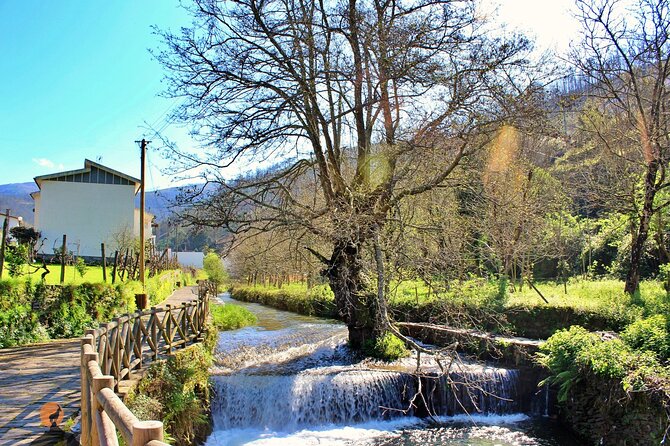
The best part of this day is the change of pace. You leave Coimbra behind and head into Portugal’s Açor mountains, where schist villages cling to steep hillsides and waterfalls, river pools, forest paths, and old windmills appear along the way. The famous village of Piodão is the headline stop, but the route gives you a fuller look at the region.
I like the private vehicle and hotel pickup, which save you from piecing together rural bus connections. I also like the guides, especially Sérgio, who explains local geography, trees, birds, village life, and Portuguese traditions in a warm, personal way. The main consideration is the long day on winding mountain roads, with short scheduled visits and no lunch included.
In This Review
- Key points to know before booking
- Why this Coimbra day trip feels different
- Montalto starts the day with a wide view
- Coja brings water and village life
- Benfeita shows the character of a schist village
- Fraga da Pena puts the forest in the foreground
- Mata da Margaraça adds native woodland
- Piodão is the day’s main event
- Foz d’Égua is small, steep, and memorable
- Poço da Broca closes with another waterfall
- What the private format really adds
- Timing, lunch, and what to bring
- Who should book this mountain tour?
- Should you book it?
- FAQ
- Where does the tour start?
- Does the tour return to the starting point?
- How long does the experience last?
- Is this a private tour?
- Is lunch included?
- Is pickup from Arganil available?
- What happens if the weather is bad?
Key points to know before booking
- Piodão is only one part of the day: You also see Foz d’Égua, Benfeita, Coja, Fraga da Pena waterfall, and Poço da Broca.
- Private touring keeps the pace personal: Only your group takes part, with pickup anywhere in the Coimbra region.
- Sérgio and Fátima bring local detail: Expect explanations about village history, plants, terrain, and daily Portuguese life.
- The route mixes short walks with scenic driving: This is a sightseeing day with outdoor stops, not a full-day mountain hike.
- Lunch is your responsibility: You can eat at a restaurant, or choose a picnic option.
- The tour suits active visitors best: Reduced mobility can make the rougher village and nature areas difficult.
Why this Coimbra day trip feels different
Many day trips from Coimbra point toward major monuments or coastal towns. This one heads inland, into a quieter part of central Portugal. The reward is not a single grand sight. It is the steady sequence of small discoveries: a hilltop view, a river beach, a village built from dark stone, a waterfall in the woods, and a narrow mountain settlement that seems shaped by the slope itself.
At $156.19 per person, this is not the cheapest way to fill eight hours. It is a private experience, though, and the price includes transportation, guiding throughout the route, photos, bottled water, coffee or tea, and personal accident and liability insurance. For a couple or small group, that package can make sense, especially when you value door-to-door service and local interpretation.
The day begins at 9 a.m. and ends back at the meeting point. Pickup is available anywhere in the Coimbra region. A transfer from Arganil is possible for an additional 30 euros. Since the route is rural and spread across several mountain areas, having a dedicated vehicle is a real advantage.
Other Coimbra & Central Portugal days travellers weigh against this one:
- From Lisbon: Fatima, Batalha, Nazare, Obidos – Small Group
★ 4.8 · 2,031 reviews - Coimbra: Live Fado Show with Glass of Port Wine
★ 4.7 · 998 reviews - University of Coimbra guided tours without queue
★ 5.0 · 518 reviews
Montalto starts the day with a wide view
The first stop is the Santuário de Nossa Senhora do Montalto, where you have about 20 minutes for a panoramic view. This is a smart opening stop because it lets you see the scale of the country you are about to cross. The mountains and valleys make a strong contrast with Coimbra’s urban setting.
You should treat this as a viewpoint and orientation stop rather than a long visit to a sanctuary. Twenty minutes is enough for photos and a quick look around, but not for a slow, extended exploration. The guide can help place the villages and ridges you see in context.
Coja brings water and village life
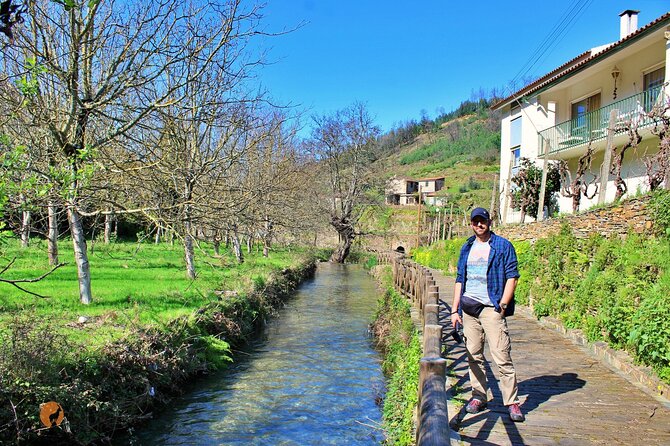
At Praia Fluvial do Caneiro de Coja, the tour reaches the village of Coja and one of the area’s river beaches. Portuguese river beaches are often simple, local places built around clear stretches of water, shade, and rocks rather than broad ocean sand.
The stop lasts about 20 minutes, so you should expect a look, a few photos, and an introduction to the setting rather than a proper swim. If you visit in warm weather, the river pools help explain why these inland villages are popular summer escapes. Bottled water is included, but you should still bring sun protection and comfortable shoes.
Benfeita shows the character of a schist village
Aldeia do Xisto de Benfeita is one of the day’s most atmospheric stops. The village is built around the dark, layered stone known as schist, with a river pool adding a natural focal point. Schist is not just a decorative building material here. It gives the village its color, texture, and close connection to the mountain.
The 20-minute stop is brief, so you will not have time to wander every lane. That is both a benefit and a limitation. You get a useful taste of Benfeita without losing the whole afternoon, but you should not book this trip expecting long, independent visits in every village.
Sérgio’s explanations are particularly useful in places like this. He has been praised for making the geology, topography, and local customs understandable without turning the day into a lecture. If you ask questions, this is the sort of stop where the private format pays off.
A different kind of day out, same corner of Portugal:
- Guided tour of the University and city of Coimbra.
★ 5.0 · 377 reviews - Coimbra: Mondego River Kayaking Tour
★ 4.7 · 324 reviews - Nazaré: 4×4 Buggy Tour with Guide
★ 4.8 · 283 reviews - Óbidos: Medieval Tales & Secrets Spots Guided Walking Tour
★ 4.9 · 171 reviews
Fraga da Pena puts the forest in the foreground
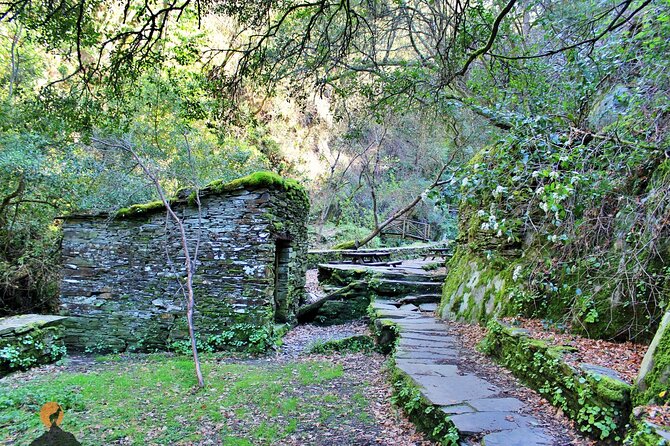
Cascata da Fraga da Pena brings you into a natural area centered on a waterfall. Water, rock, and woodland replace the stone lanes of Benfeita, giving the day a welcome change of texture.
You have around 20 minutes here. The tour information describes a walk through mountain villages, and this stop is one of the places where sturdy footwear matters. The exact walking conditions can vary, and the experience is not advised for people with reduced mobility. A walking stick was provided to one visitor’s wife during a previous outing, which shows that the guides take practical safety seriously.
Do not expect a long hike at Fraga da Pena. The value is the contrast between the built villages and the wooded watercourse. It is also a good place to slow down, listen to the water, and let the mountain setting do the work.
Mata da Margaraça adds native woodland
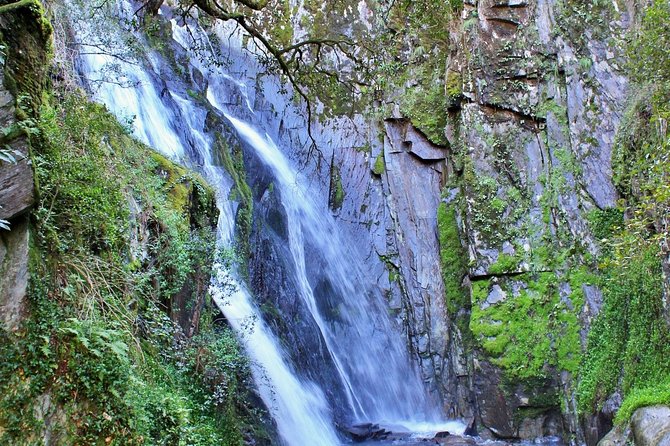
Mata da Margaraça, described as an autochthonous forest, gives the route an ecological side. The tour is not only about picturesque villages. You also get a chance to see a protected-feeling woodland setting and learn about local vegetation.
This is another short stop, listed at about 20 minutes. The guide’s knowledge of trees and birds can make a difference here, since forest scenery can blur together if you do not know what you are seeing. Sérgio has been singled out for explaining the area’s plants and wildlife, so ask him to point out what is distinctive.
The practical point is simple: wear shoes suitable for uneven ground. You will get more from the forest if you can walk comfortably instead of worrying about slippery stones or rough paths.
Piodão is the day’s main event
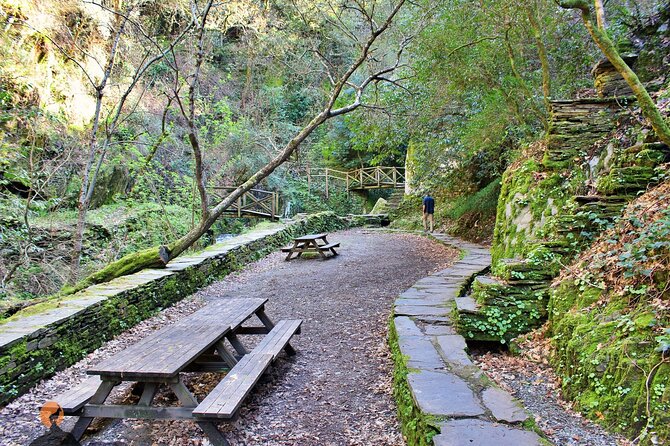
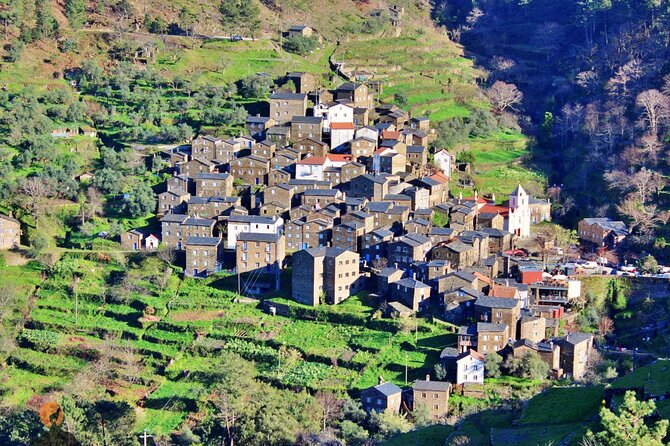
Aldeia Histórica do Piodão is the village most people picture when they consider this tour. Its schist houses step up the mountainside in a dense cluster, creating one of the most unusual village views in central Portugal. The setting feels remote, and the dark stone gives the settlement a strong visual unity.
The schedule allows about 20 minutes at the historic village, but the descriptions from this experience indicate that the day can include a walk through Piodão and time for lunch nearby. In practice, the exact rhythm may depend on the route, weather, traffic, and your group. If Piodão is your main reason for booking, tell the guide at the start so you can understand how much walking and free time will be possible.
This is where Sérgio’s storytelling matters most. He has been praised for pointing out historic details while walking through the village and for explaining typical Portuguese life. You are not simply dropped at a viewpoint and left to work out what you are seeing.
Piodão also provides the natural lunch break. Lunch is not included in the price, but restaurants are available, and a picnic is possible. The guide can help arrange an authentic Portuguese meal, including a reservation when needed. That assistance is valuable in a small mountain community, where the best choice may not be obvious from the road.
Foz d’Égua is small, steep, and memorable
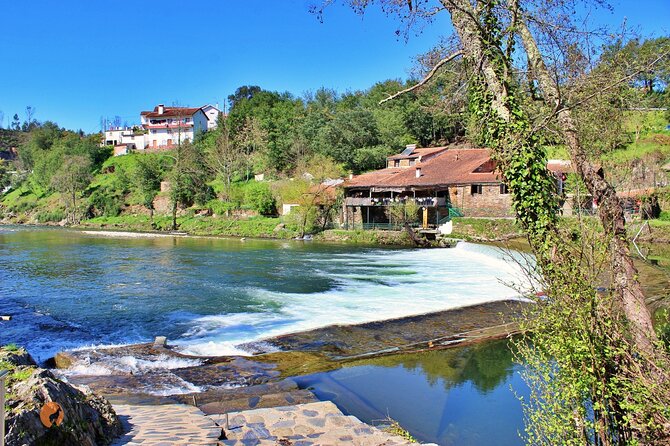
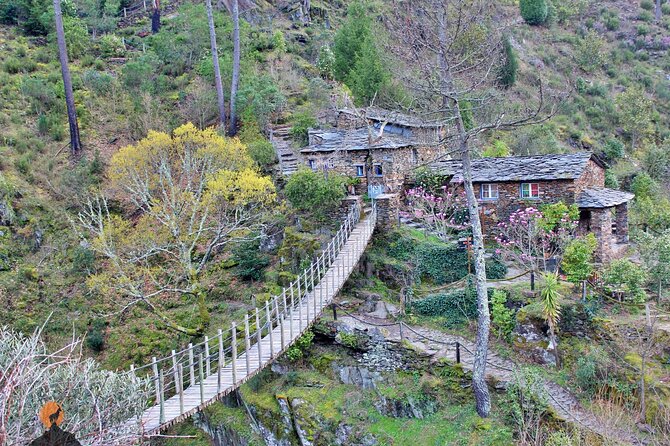
Foz d’Égua is another schist village, and it has a different feel from Piodão. Watercourses, stone structures, and steep terrain give it a compact, dramatic setting. It is the kind of place where a short stop can leave a strong impression because the village and its surroundings fit so tightly together.
The stop is listed at about 20 minutes and admission is free. You should be ready for uneven surfaces and changes in elevation. This is not the easiest part of the route for anyone with limited mobility, and comfortable footwear will help.
I like the inclusion of Foz d’Égua because it keeps Piodão from carrying the whole day. You see two schist settlements rather than one, and the comparison helps you notice how each village uses the mountain and water around it.
Poço da Broca closes with another waterfall
Cascata do Poço da Broca provides the final nature stop before the return to Coimbra. Like Fraga da Pena, it brings you close to falling water and rock, but it arrives after the villages, meal break, and mountain roads. It is a refreshing way to finish the sightseeing portion.
The visit lasts about 20 minutes. The schedule is designed for variety, not long stays. You will see a lot in one day, but you should keep your expectations realistic: this is a guided overview of the Açor mountain area, not a slow walking holiday.
What the private format really adds
The private format is more than a marketing label. Only your group participates, so you can ask Sérgio or Fátima to explain a village detail, pause for a photo, or clarify the plan for lunch. The guides also handle the driving, which lets you focus on the views along the mountain roads.
Past outings have included both Sérgio and Fátima, and the guiding style places strong emphasis on safety, local food, geography, and cultural context. Sérgio is noted for precise driving and for helping with questions throughout the day. That combination matters on a route with winding roads and several short stops.
You also receive photos of the tour. That is a useful extra, especially on a full day when you may not want to take out your phone at every viewpoint. Coffee or tea and bottled water are included, along with insurance.
The tradeoff is flexibility versus price. A private day costs more than joining a large coach, but you are paying for the vehicle, pickup, guide attention, and a route that would be awkward to organize alone. If you are traveling as a small group and want an easy rural day, the value improves.
Timing, lunch, and what to bring
The tour lasts approximately eight hours and starts at 9 a.m. Pickup is offered from accommodation anywhere in the Coimbra region, and the activity returns to the meeting point. The itinerary lists many stops at roughly 20 minutes each, so the day has a purposeful rhythm.
Lunch is not included. You can eat at a restaurant, and a picnic option is also available. Ask early in the day how lunch will work, especially if you have dietary needs or want to protect time for walking in Piodão.
Bring:
- Comfortable walking shoes with a firm sole
- Water and sun protection
- A light layer for changing mountain conditions
- Cash or a payment method for lunch
- A walking stick if uneven ground is a concern
The tour requires good weather. If poor weather forces cancellation, you can choose another date or receive a full refund. You can also cancel for a full refund up to 24 hours before the start time.
Who should book this mountain tour?
I would choose this experience if you want to see rural Portugal without renting a car, prefer a private guide, and enjoy a mix of short walks, viewpoints, villages, woodland, and waterfalls. It is especially well suited to couples, families, or small groups who want local explanation instead of a simple transfer to Piodão.
It is less suitable if you want a long, demanding hike, lots of free time in each village, or a leisurely lunch with no fixed schedule. People with reduced mobility should think carefully before booking because several stops involve uneven or sloping ground.
The tour has a five-star rating from 46 reviews, with 100 percent recommending it. The strongest praise centers on Sérgio’s kindness, safe driving, local knowledge, help with restaurants, and ability to explain both natural features and Portuguese life. Those are the qualities that can turn a busy route into a worthwhile day.
Should you book it?
Book this tour if Piodão interests you but you also want to see the waterfalls, river beaches, forest, Benfeita, and Foz d’Égua in the same day. The price is fair for a private, fully transported mountain outing with guiding and refreshments included, though lunch and an optional Arganil transfer cost extra.
Skip it if your priority is a single village explored at a slow pace. For most active visitors based in Coimbra, however, this is a practical way to reach a beautiful inland region that is difficult to cover by public transport.
FAQ
Where does the tour start?
The tour starts at 9 a.m., with pickup available anywhere in the Coimbra region.
Does the tour return to the starting point?
Yes. The activity ends back at the meeting point.
How long does the experience last?
The tour lasts approximately eight hours.
Is this a private tour?
Yes. Only your group participates in the activity.
Is lunch included?
No. Lunch is not included. Restaurants are available, and a picnic option is possible.
Is pickup from Arganil available?
Yes. Transfer from Arganil is possible for an additional 30 euros.
What happens if the weather is bad?
The experience requires good weather. If it is canceled because of poor weather, you can choose a different date or receive a full refund.
Recently reviewed around Coimbra & Central Portugal
- Nazaré – Jeep Safari★ 5.0 · 76 reviews
- Soft Canyoning, river Ceira, Góis, Serra da Lousa, Coimbra★ 5.0 · 48 reviews
- Time travel at the Convent of Christ Tomar★ 5.0 · 56 reviews
- Schist Villages at Lousa Mountain★ 5.0 · 127 reviews
- Lousa Mountain Private Tour★ 5.0 · 88 reviews
- Convent of Christ Tour “Portugal in the Map” – Visit Tomar with a local guide!★ 5.0 · 105 reviews
- Schist Villages of Lousã Mountain, half-day from Coimbra★ 5.0 · 42 reviews
- Conimbriga and The Roman Tour★ 5.0 · 132 reviews
Coimbra & Central Portugal Tours, compared.

Fatima, Batalha, Nazare, Obidos – Small Group
Read our review →

University of Coimbra guided tours without queue
Read our review →
Guided tour of the University and city of Coimbra.
Read our review →

Medieval Tales & Secrets Spots Guided Walking Tour
Read our review →
Browse the lists this tour appears in