
Reviewed · AZORES TOURS
Tours on Pico Island – Cultural and Natural Landscape
Pico’s appeal is its variety. In one long day, you can move from the misty heights of Lagoa do Capitão to black lava fields, old vineyard walls, coastal villages, and the island’s whaling story. Guide Norberto drives the route and adds the local context that turns a scenic drive into a portrait of Pico.
I like the small group of no more than eight, which keeps the van comfortable and makes it easier to ask questions. I also like that the tour works well without a rental car, including for solo visitors and people arriving by ferry. The main drawback is the length: 8.5 hours is a full day, and lunch is not included, so this is best for you if you want broad coverage rather than a slow afternoon in one place.
In This Review
- Key points about this Pico Island day tour
- Why this tour is a smart way to see Pico
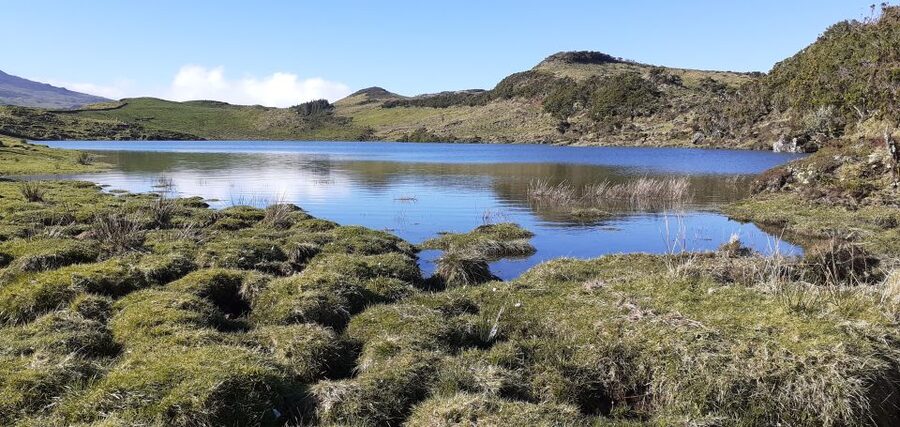
- Lagoa do Capitão and Pico’s inland side
- The UNESCO vineyard country
- Cachorro, Lajido, and the black volcanic coast
- Madalena, São Roque, and Lajes do Pico
- Whaling culture and the Whaling Museum
- What the vehicle and group size mean
- Lunch, timing, and practical value
- Who will enjoy this tour most
- Should you book the Pico Island cultural and natural tour?
- FAQ
- How long does the Pico Island tour last?
- What places does the route visit?
- Is hotel pickup included?
- Can I join the tour from public transport?
- Is lunch included in the price?
- Is entry to the Whaling Museum included?
- What languages does the guide speak?
- How large is the group?
- Who leads the tour?
- Can I cancel for a full refund?
Key points about this Pico Island day tour
- Three main villages in one route: See Madalena, São Roque do Pico, and Lajes do Pico while following the north and south coastal roads.
- Lagoa do Capitão: Reach one of Pico’s notable inland sites and look for the island’s native plant life.
- UNESCO vineyard country: Visit the unusual stone-walled vineyards shaped by volcanic ground and ocean weather.
- Black lava and sea views: Explore Cachorro, Lajido, and coastal areas where Pico’s volcanic past is easy to read.
- Whaling culture: Visit emblematic whaling sites and enter the Whaling Museum.
- Useful transport: Hotel pickup, drop-off, and transfers from public transport are included, with English- and Portuguese-speaking guiding.
Why this tour is a smart way to see Pico
Pico is not an island you fully understand from one postcard view. Mount Pico may dominate the horizon, but the island’s character is spread across villages, farms, lava, coast, and working traditions. This tour links those pieces in a single circuit.
The route uses Estrada Regional roads 1 and 2 along the north and south coast. That matters because you spend less time worrying about directions and more time watching the scenery. You also reach places that are easy to miss if you simply drive between your hotel and the ferry terminal.
Norberto is the guide named most often in the supplied material, and his role is central to the experience. He explains the island’s wine production, whaling past, natural environment, local people, and the Mistérios, the areas shaped by volcanic eruptions and lava flows. His safe driving and willingness to adjust stops are useful strengths on a day with this much ground to cover.
This is not a specialist wine tour, a dedicated hiking trip, or a whale-watching excursion. It is a broad introduction to Pico. You get a little of many subjects, with enough time at stops to look around rather than simply photograph them from a vehicle.
Other Azores days travellers weigh against this one:
- From Ponta Delgada: Whale and Dolphin Watching Trip
★ 4.7 · 4,109 reviews - Azores Whale Watching & Islet Boat Tour
★ 4.6 · 2,146 reviews - São Miguel West: Full-Day Van Tour with Lunch
★ 4.9 · 1,948 reviews
Lagoa do Capitão and Pico’s inland side
Lagoa do Capitão gives the day a change of mood. After coastal roads and villages, the route heads toward an inland setting where you can appreciate endemic vegetation found on Pico.
Weather matters here. Fog can limit the view, particularly in higher areas, and a cloudy day may make the stop less rewarding visually. The good news is that the tour has some flexibility. When one location has poor visibility, Norberto may adjust the timing or show you an alternative place, as long as conditions and the day’s schedule allow.
I would not book this tour expecting every viewpoint to be clear. Pico’s weather can shift, and the island’s atmosphere is part of the experience. Lagoa do Capitão is valuable even when the view is muted because it adds natural context to a route otherwise focused on settlements, vineyards, and the coast.
The stop is also a reminder that Pico is more than volcanic rock and seaside scenery. The island supports plant life adapted to its conditions, and a guide can point out details you might otherwise pass without noticing.
The UNESCO vineyard country
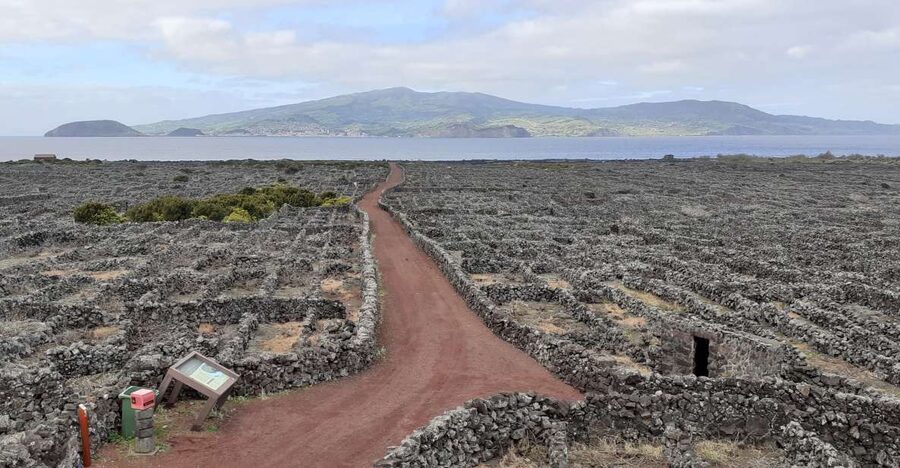
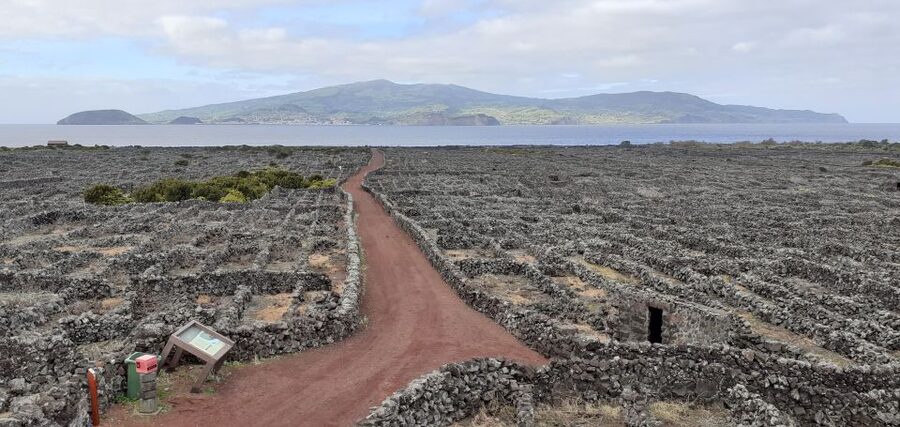
The Vineyard Culture Landscape of Pico is the tour’s strongest cultural stop. It is classified as a UNESCO World Heritage site, and its unusual appearance comes from the practical struggle to grow grapes on volcanic ground exposed to Atlantic weather.
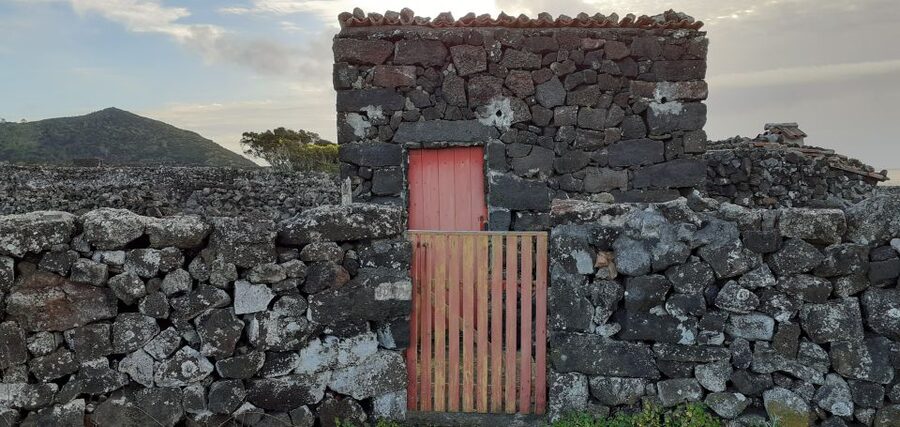
The vineyards are divided by dark stone walls. These walls protect the vines from wind and help make cultivation possible in a harsh setting. The pattern is striking, but the real interest is how much human work is hidden inside it. The walls are not decoration. They are the working structure of Pico’s wine culture.
This is where Norberto’s local explanation adds real value. You can learn how wine production shaped the island, why the fields look so different from ordinary vineyards, and how the tradition fits into Pico’s past and present.
Give yourself time to look closely. The best part is not simply seeing a large patch of vines. It is noticing the repeated walls, the dark volcanic stone, the narrow growing spaces, and the way the vineyards meet the coast. Wear shoes you can use comfortably on uneven ground, since volcanic surfaces can be rough. The supplied details do not promise a formal wine tasting, so do not book this as a tasting-focused outing.
Cachorro, Lajido, and the black volcanic coast
The stops at Cachorro and Lajido show Pico’s volcanic character at close range. Along the seashore, broad lava fields meet the Atlantic, creating a stark setting that feels very different from the inland lake and vineyard areas.
Here you can expect to examine the island’s Mistérios, the lava-formed areas that shaped settlement, farming, and travel. The rocks are not just scenic props. They explain why roads, fields, and buildings developed in particular ways.
Cachorro and Lajido are especially useful for understanding Pico through its geology. You see how a relatively young volcanic island can have such a strong visual identity, with black stone running toward the sea and human activity fitted into the available ground.
The tradeoff is that these coastal sites are about views and interpretation, not a long, marked walk. The itinerary is designed to cover much of the island, so you should expect short visits and time to explore rather than a full hiking session. If you like geology, photography, or unusual coastal scenery, these stops may be among the day’s highlights.
A different kind of day out, same corner of Portugal:
- São Miguel West Full Day Tour with Setes Cidades Including Lunch
★ 5.0 · 1,391 reviews - São Miguel East Van Tour with Lunch: Furnas & Nordeste
★ 5.0 · 1,210 reviews - São Miguel East: Full-Day Van Tour with Lunch
★ 4.9 · 1,124 reviews - Azores Whale Watching & Islet Boat Tour
★ 4.5 · 1,059 reviews
Madalena, São Roque, and Lajes do Pico
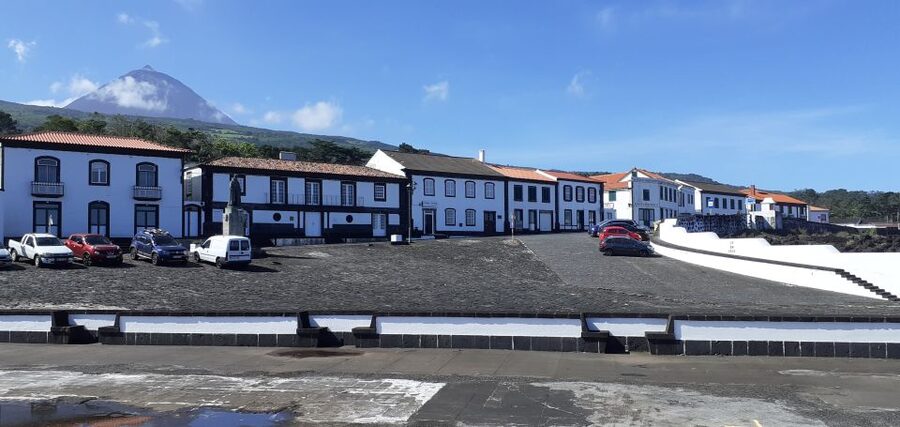
The three villages give the tour a useful human scale. Madalena, São Roque do Pico, and Lajes do Pico each help show how life on Pico is spread around the island rather than concentrated in one single center.
Madalena is a practical arrival point for many people coming from Faial, and the guide can meet you near the ferry according to the supplied experience details. That makes the tour a particularly handy option if you are using public transport or visiting Pico as part of an island-hopping trip.
São Roque and Lajes add further views of Pico’s coastal life and its connection to the sea. The route does not treat the villages as isolated photo stops. Instead, they fit into the larger story of wine, fishing, whaling, transport, and local settlement.
Do not expect a long independent visit in each village. This is a panoramic island tour, not a town-by-town walking program. The benefit is coverage. By the end of the day, you have seen how the island’s communities relate to both the coast and the interior.
Whaling culture and the Whaling Museum
Pico’s whaling heritage is one of the day’s most important historical subjects. The route includes emblematic places connected with whaling culture and a visit to the Whaling Museum.
The museum gives structure to the story. Instead of hearing only general facts from the van, you get a dedicated place where the island’s whaling past is presented. This helps you understand how deeply the industry affected work, family life, and coastal communities.
The tour also addresses present-day facts, not only earlier traditions. That balance matters. Pico is not a museum piece, and the whaling story belongs to a changing island whose economy and identity have moved in new directions.
Museum entry is included, so you do not have to decide on an extra admission during the day. The exact amount of time inside may depend on the pace of the group and the rest of the route. If whaling history is your main reason for booking, confirm the available museum time when you reserve.
What the vehicle and group size mean
The tour uses a van, and the group is limited to eight people. That is a useful middle ground between hiring a private car and joining a large coach.
A small group makes the day more personal. Norberto can answer questions, adjust the pace within reason, and handle practical requests more easily than a guide managing dozens of people. Several details point to flexible pickup and drop-off arrangements, including meeting people at the Madalena ferry and helping with public transport connections.
The van has been described as clean, spacious, comfortable, and safely driven. That matters on an 8.5-hour route. You will spend a fair amount of time on the road, and a calm driver makes the long circuit much more pleasant.
Solo visitors are accepted, which is not always the case with small-group island tours. The group format also suits couples, friends, and families who want company without a crowded bus.
Still, small-group does not mean private. You share the day with other people, and the pace must work for the group. If you want to stop wherever you wish, linger for an hour at one vineyard, or change the route completely, a private vehicle arrangement would offer more control.
Lunch, timing, and practical value
The tour lasts about 8.5 hours, so plan it as your main activity for the day. Hotel pickup and drop-off are included, as are transfers from public transport, entry visits, insurance, and the guide.
Food and drinks are not included. The guide can offer choices for lunch, and one reported outing used a buffet restaurant costing about 13 euros per person, including drinks. Treat that as a possible example rather than a fixed tour feature. Bring money for your meal and any personal purchases.
At $111 per person, the value depends on how you would otherwise get around Pico. If you rent a car, you may spend less for transport, but you will need to navigate unfamiliar roads, plan the route, research the sites, and provide your own interpretation. If you do not drive, this tour gives you a practical way to see most of the island in one day.
The price is especially reasonable for solo visitors, ferry passengers, and anyone who wants a guide rather than a self-guided loop. It is less compelling if you already have several days on Pico, enjoy slow travel, and prefer to explore one village or coastal area at a time.
The booking terms also reduce some planning risk. You can cancel up to 24 hours in advance for a full refund, and reserve now while paying later. Check the current starting times and pickup arrangements before booking, since those details can vary.
Who will enjoy this tour most
I would recommend it to you if this is your first time on Pico and you want a broad introduction. It is also well suited to people staying without a rental car, solo visitors, ferry passengers, and anyone who likes natural scenery paired with local history.
You will get the most from the tour if you ask questions. Norberto’s value is not only in driving the route. It is in connecting the vineyards, lava, villages, and whaling sites into a coherent story about the island.
The day may be less suitable if you want strenuous walking, a dedicated winery visit, or a relaxed schedule with long breaks. The route covers a lot, and even a well-paced circuit cannot turn every stop into a leisurely exploration.
The tour is also a good option for mixed interests. One person can focus on geology, another on photography, and another on village life or whaling history. The variety keeps the day from depending on one single attraction.
Should you book the Pico Island cultural and natural tour?
Book this tour if you want to see the main sides of Pico in one organized day, especially if you are not renting a car. The strongest reasons are the small group, the comfortable van, the included museum entry, and Norberto’s personal knowledge of the island.
Choose another format if you prefer a slow, independent trip or want to focus on one subject. For most first-time visitors, though, $111 buys more than transport. It buys a practical route, local explanation, and a much clearer sense of how Pico’s volcanic ground, vineyards, villages, and whaling culture fit together.
FAQ
How long does the Pico Island tour last?
The tour lasts approximately 8.5 hours, or about a full day.
What places does the route visit?
The route includes Madalena, São Roque do Pico, Lajes do Pico, Lagoa do Capitão, Cachorro, Lajido, the Vineyard Culture Landscape, coastal lava areas, whaling sites, and the Whaling Museum.
Is hotel pickup included?
Yes. Hotel pickup and drop-off are included.
Can I join the tour from public transport?
Yes. Transfers from and to public transportation are included. Ferry pickup arrangements can also be made, including at Madalena according to the supplied activity details.
Is lunch included in the price?
No. Food and drinks are not included.
Is entry to the Whaling Museum included?
Yes. Entry visits are included in the activity.
What languages does the guide speak?
The live tour guide speaks English and Portuguese.
How large is the group?
The group is limited to eight participants.
Who leads the tour?
The guide associated with this experience is Norberto, from LavaFaces Azores Experience Tours.
Can I cancel for a full refund?
Yes. You can cancel up to 24 hours in advance for a full refund.
Recently reviewed around Azores
- Canyoning Experience in Ribeira dos Caldeirões Sao Miguel -Azores★ 5.0 · 428 reviews
- Canyoning in Salto do Cabrito (Sao Miguel – Azores)★ 5.0 · 67 reviews
- Azores Canyoning Adventure in São Miguel – Half-day★ 4.5 · 122 reviews
- Wine, Cheese & Charcuterie Tasting, including complimentary tour★ 5.0 · 110 reviews
- Wine & Food Evening Walking Tour in Ponta Delgada, incl. dinner★ 5.0 · 177 reviews
- Terceira Island Highlights Tour – Azores★ 4.5 · 204 reviews
- Canyoning Adventure in Ribeira da Salga (Sao Miguel – Azores)★ 5.0 · 48 reviews
- Azores: Shore Excursion Furnas – Crater volcano and hot springs★ 4.5 · 47 reviews
Azores Tours, compared.

São Miguel West: Full-Day Van Tour with Lunch
Read our review →
São Miguel West Full Day Tour with Setes Cidades Including Lunch
Read our review →
São Miguel East Van Tour with Lunch: Furnas & Nordeste
Read our review →
São Miguel East: Full-Day Van Tour with Lunch
Read our review →
São Miguel Azores: Half-Day Whale Watching Trip
Read our review →Browse the lists this tour appears in