Reviewed · ALGARVE TOURS
Sagres: Coasteering – Swimming, Cliff Jump & Rock Climbing
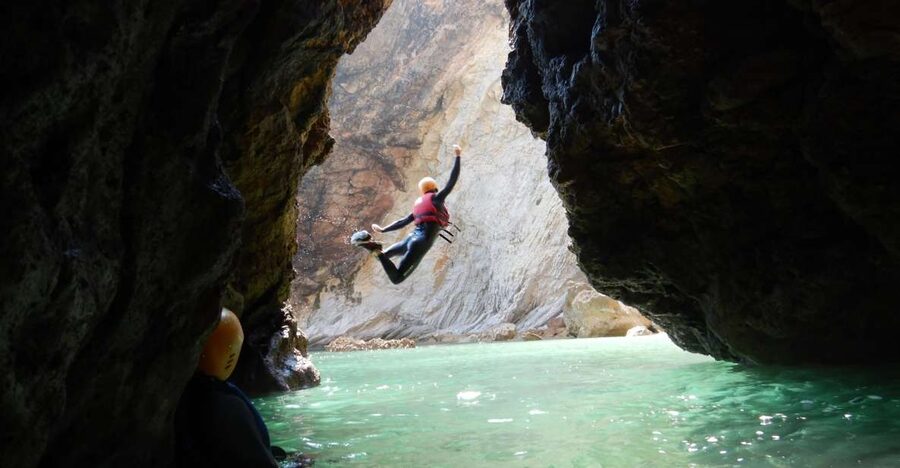
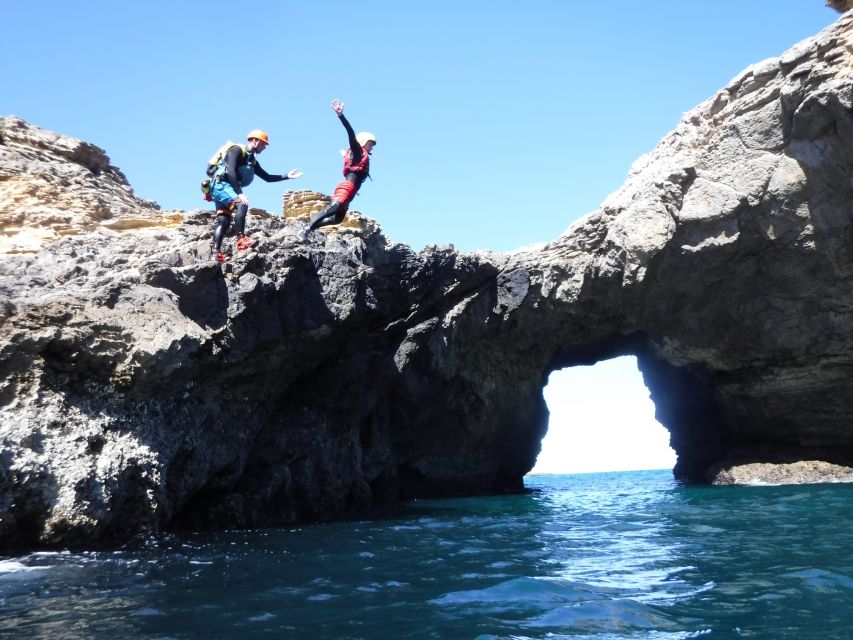
Sagres coasteering turns the Algarve coast into a natural adventure course. You scramble along sharp rocks, swim between cliffs, climb short sections, enter sea caves, and jump into deep water. The route builds from small jumps to bigger ones, with some past groups reaching about 12 meters.
I especially like the strong guide support and the freedom to choose your own challenge. Guides such as Jim, Callum, Bobby, and Anna Marie explain the moves clearly, keep an eye on safety, and offer lower jumps or easier routes when needed. I also like that photos are included, so you can focus on the experience instead of protecting your phone.
The main consideration is that this is a physical outing in open water, not a gentle sightseeing cruise. You need to swim, scramble over uneven rock, and tolerate heights. Water shoes with thin soles may leave your feet vulnerable on sharp rock, so sturdy shoes that can get wet are the better choice.
In This Review
- Key points to know before you book
- Sagres Coasteering Review: A Practical Look at the Experience
- Arriving in Raposeira and Getting Ready
- Starting Small Before the Bigger Jumps
- Scrambling Along the Cliffside
- Swimming Through Clear Water and Sea Caves
- Guides Who Set the Tone
- How Difficult Is the Four-Hour Session?
- What the $70 Price Includes
- Who Should Book This Adventure?
- Booking Advice for Your Algarve Itinerary
- Should You Book Sagres Coasteering?
- FAQ
- Where does the Sagres coasteering activity meet?
- How long does the activity last?
- What time does the tour start?
- Do I need to be an experienced swimmer?
- Are the cliff jumps compulsory?
- What equipment is included?
- Should I bring a towel?
- What footwear should I use?
- Is the activity suitable for children?
- Can people with mobility impairments join?
Key points to know before you book
- Jumps build from roughly 1 meter to about 12 meters: Bigger jumps are optional, and you can take an easier route.
- Swimming and cave exploration are central: The coast looks different from water level, especially inside the sea caves.
- Guides keep the mood friendly and pressure-free: Jim, Callum, Bobby, Anna Marie, and others are praised for patience, humor, and clear instructions.
- All major equipment is supplied: You get a wetsuit, buoyancy aid, helmet, gloves, and included tour photos.
- The tide controls the start time: The exact meeting time is confirmed the day before.
- The meeting point is in Raposeira: The office is at Good Feeling Surf School, at the bottom of the drive from the guesthouse.
Sagres Coasteering Review: A Practical Look at the Experience
Sagres is famous for wind, cliffs, open Atlantic views, and a rugged shoreline. Coasteering lets you experience that coast at close range. Instead of looking down from a viewpoint, you move through it, using your hands, feet, and swimming ability.
At $70 per person, this is not the cheapest way to spend half a day in the Algarve. The price makes more sense once you count the wetsuit, helmet, buoyancy aid, gloves, guide service, and photos. You are also paying for route planning and safety decisions in a place where tide, waves, rock shape, and water depth matter.
The advertised duration is four hours, with about three hours devoted to the coasteering session and the rest used for changing, fitting equipment, and getting organized. That is long enough to make the trip feel like a real outing rather than a quick swim with one jump.
Other Algarve days travellers weigh against this one:
- Albufeira: 2.5-Hour Benagil Caves & Dolphin Watching
★ 4.6 · 10,710 reviews - Portimão: Benagil Caves Speed Boat Tour with Sunset Option
★ 4.8 · 9,329 reviews - Portimão: Benagil Sea Caves Speedboat Adventure Tour
★ 4.8 · 6,546 reviews
Arriving in Raposeira and Getting Ready
You meet at the Good Feeling Surf School office in Raposeira, at the bottom of the drive from the guesthouse. This is useful to know because the activity does not begin at a random beach pin along the Sagres coast.
The exact start time depends on the tides. The local partner confirms it the day before, so do not build a tightly packed morning or afternoon around a time shown too far in advance. Tide timing is not a minor detail here. The water conditions determine which coastal sections are practical and safe.
Once you arrive, you are fitted with the supplied equipment:
- Wetsuit
- Buoyancy aid
- Helmet
- Protective gloves
- Tour photos at no extra charge
Bring a towel, since one is not supplied. You should also bring comfortable shoes and footwear that can get wet. The most useful advice from the experience is to avoid very thin-soled swim shoes. The rocks can be pointed, and ordinary sneakers with a more solid sole may protect your feet better.
The wetsuit helps with cooler Atlantic water and gives some protection against scrapes. The buoyancy aid is particularly useful during the swimming sections, but it does not remove the need for basic water confidence. You do not need to be an experienced swimmer, though swimming is a key part of the route.
Starting Small Before the Bigger Jumps
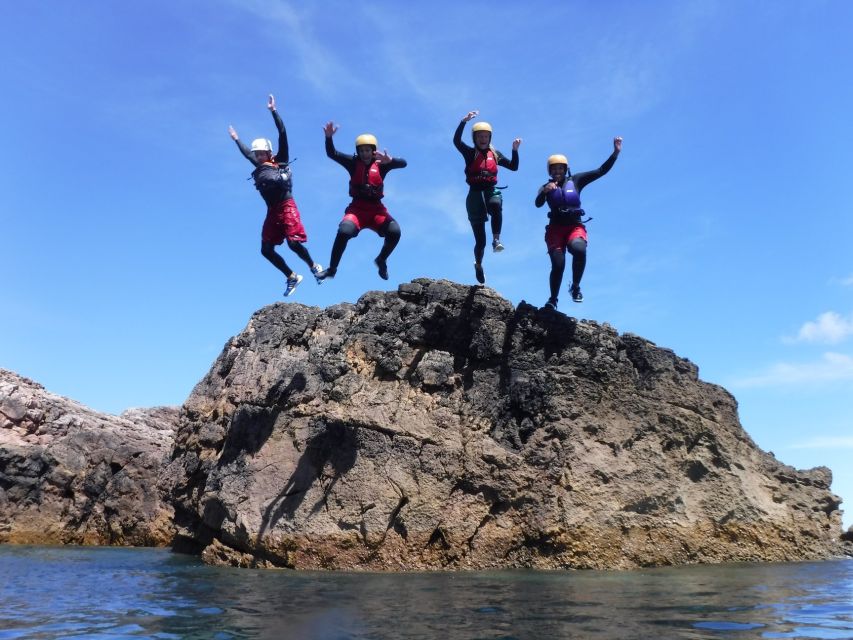
The route generally begins with easier movement along the rocks and smaller jumps. This gradual start matters. You learn how the guides give instructions, how to enter the water, and how the group moves from one obstacle to the next before the height increases.
The jumps are not presented as one all-or-nothing test. A lower option or another way around is available if you are not ready. That makes this suitable for a mixed group, where one person may be excited by heights and another may need time to settle in.
You might begin with a jump of around 1 meter, then work toward larger drops. The highest jumps described by past participants reached about 12 meters, but that is not a target you have to meet. You can stop at a height that feels right.
This is one of the best parts of the setup. The guide can encourage you without turning the experience into a contest. People who arrived nervous about heights were given step-by-step help, while confident jumpers had room to take on more.
You should still expect a genuine adrenaline rush. Even a modest jump feels different when you are standing on a sea cliff in a wetsuit, with the Atlantic below and no dry path back to the starting point.
Scrambling Along the Cliffside
Between jumps, you move over rock ledges and short climbing sections. This is closer to rock scrambling than a formal climbing-wall session. You use handholds, place your feet carefully, and follow the route your guide selects.
The rock can be rough and sharp, which is why sturdy wet footwear matters. Gloves help protect your hands, but they do not make the surface soft. You need to pay attention to each step, especially when the rock is wet.
The climbing sections add variety. If the outing were only a series of jumps, it might feel repetitive. Here, you alternate between climbing, walking over rock, swimming, and waiting for the group to regroup. That changing rhythm makes the coast feel like a natural obstacle course.
Guides such as Jim and Francisco are praised for giving simple instructions and helping people through harder sections. That support is important for beginners. You do not need previous climbing experience, but you should be comfortable using your body on uneven ground.
People with mobility impairments should not book this activity. The route requires movement over rock and into the water, and the supplied information specifically excludes this group. Children under 8 are also not permitted.
A different kind of day out, same corner of Portugal:
- Albufeira: Benagil Caves & Dolphin Watching Speed Boat Tour
★ 4.6 · 6,316 reviews - Albufeira: Dolphin Watching and Benagil Cave
★ 4.7 · 5,658 reviews - Dolphins Search and Benagil Caves from Albufeira
★ 5.0 · 4,814 reviews - Albufeira: Coastline and Benagil Caves Tour by Catamaran
★ 4.7 · 4,077 reviews
Swimming Through Clear Water and Sea Caves
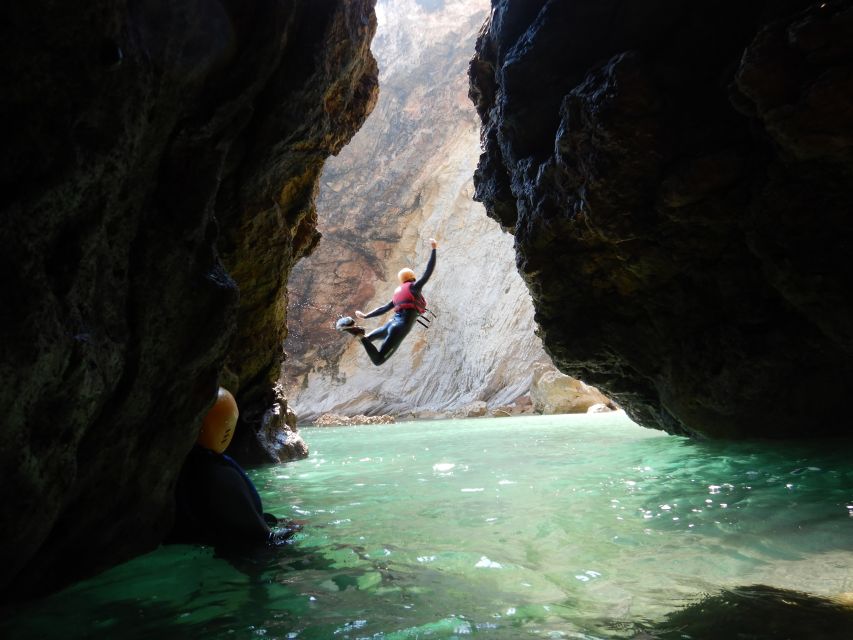
The swimming sections connect the rocky parts of the route. You may swim around cliff edges, across open stretches of water, and into sea caves. The caves are a major reason to choose coasteering instead of a standard coastal walk.
From above, many parts of this shoreline appear simply steep and inaccessible. At water level, you can enter spaces that are impossible to reach on foot. Inside the caves, the view changes to dark rock, reflected water, and openings back toward the sea.
The water is described as crystal clear, though conditions can change with tide and weather. You should expect a real swim, not just a quick dip between jumps. The buoyancy aid and wetsuit help, but you still need to follow instructions and stay with the group.
The guide controls the route based on conditions. This is a practical benefit of joining a guided outing. You are not left to guess which cave entrance is safe or which landing zone has enough depth.
The water can also be the part that tests you most. Swimming in open coastal water may feel more demanding than swimming in a pool, particularly after climbing or jumping. If you are unsure about your swimming ability, tell the guide before the session begins.
Guides Who Set the Tone
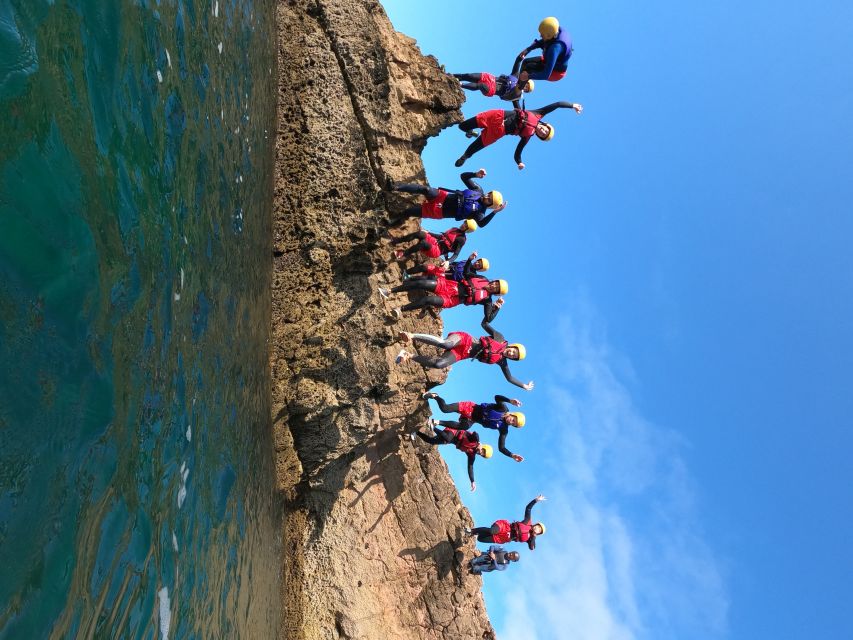
The guides are the strongest part of this experience. Names that appear repeatedly in connection with the sessions include Jim, Callum, Bobby, Anna Marie, Joao, Francisco, and Anton.
Their approach seems to combine firm safety instructions with a relaxed sense of humor. Callum is noted for a funny way of explaining things, while Anna Marie is praised for patience and encouragement. Jim and Bobby are often singled out for keeping people comfortable and making the outing fun.
That style matters because coasteering sits between an organized activity and a personal challenge. You need a guide who will tell you when to wait, where to jump, and how to climb, but you also need space to decide what you can handle.
The strongest feature is the absence of pressure. If a jump or climb feels wrong, you can use a lower point or easier route. At the same time, a good guide may help you attempt something you thought was beyond you, one careful step at a time.
This approach works well for families with older children, groups of friends, and solo participants. It can also suit a mixed-ability group, provided everyone understands that the pace may include waiting while others make their choices.
How Difficult Is the Four-Hour Session?
The activity is active rather than technically advanced. You do not need previous coasteering, climbing, or cliff-jumping experience. You do need enough fitness to swim, scramble, and stay engaged for several hours.
The route includes repeated cycles of movement:
- Climb or scramble along the rocks.
- Listen to instructions at a jump or water entry.
- Jump or choose an easier alternative.
- Swim to the next section.
- Regroup before continuing.
This pattern creates a steady physical demand. The wetsuit can feel warm while you are on land, then welcome once you enter the water. Gloves and a buoyancy aid add protection and support, but the activity still asks you to move confidently.
I would call it accessible to active beginners, with optional challenges for experienced thrill-seekers. It is not suitable if you want a relaxed coastal walk or if you have trouble with uneven surfaces.
The group’s ability affects the pace and route. The guides adapt the activities to the people present, so one session may feel more demanding than another. That flexibility is a strength, though it also means you should not expect a fixed sequence of exact jumps.
What the $70 Price Includes
The $70 fee includes the main equipment and a useful extra: high-quality photos. The photos are more than a small bonus here. You may not want to carry a camera over wet rock, and a phone in a waterproof case can still be awkward when you are climbing or swimming.
The fee also pays for the guide team’s judgment. On a self-guided outing, you would need to assess the water, landings, rock passages, and cave access yourself. A guide who knows how to alter the route for the tide and the group can make the difference between a good outing and a poor decision.
Some past sessions also included transport to and from the coastal area, and pickup and drop-off from Lagos has been available on at least some bookings. Confirm this when arranging your day rather than assuming it is part of every reservation.
For a four-hour adventure with equipment, instruction, and photos, I consider the price fair if you want an active highlight rather than a passive excursion. It is less attractive if you are unlikely to jump, swim, or climb. The value comes from taking part in the whole combination.
Free cancellation is available up to 24 hours before the activity for a full refund, and you can reserve now and pay later. Those terms help when the tide-dependent start time or wider Algarve plans are still being arranged.
Who Should Book This Adventure?
Book it if you want to see the Sagres coast from the water and enjoy a physical challenge. It is particularly well suited to:
- Active families with children aged 8 and older
- Friends who want a shared adrenaline activity
- Solo participants who like guided outdoor outings
- Beginners who want optional cliff jumps
- Experienced jumpers who want a bigger challenge
- Anyone who values photos of the experience
You should think twice if you dislike open water, heights, sharp rock, or getting wet. The route includes all four.
It is also not a good choice for anyone with a mobility impairment, and children under 8 cannot participate. Comfortable shoes and a towel are essential, while waterproof shoes with proper soles are strongly recommended.
Booking Advice for Your Algarve Itinerary
Keep the day flexible because the tide controls the exact start time. The time is confirmed the day before, so leave room before and after the session instead of booking a tightly timed meal, transfer, or attraction.
Raposeira is the stated meeting point, not central Sagres. Check your driving time and allow enough time to park, find the office, and change into equipment. If you are staying in Lagos, ask about pickup and drop-off before booking.
Plan to be tired afterward. You may not spend all four hours in the water, but climbing, swimming, and repeated jumps make this more demanding than a standard beach activity. A simple meal and an easy afternoon pair better with this than another strenuous excursion.
The included photos also mean you can travel light. Bring a towel, footwear, and any dry clothes you want afterward, but leave valuable electronics behind unless the operator gives clear instructions.
Should You Book Sagres Coasteering?
I would book this if your idea of a good Algarve day includes clear water, dramatic cliffs, sea caves, and a little fear that turns into a grin. The guides provide structure without forcing you to take the highest jump, and the route offers enough variety to keep the four hours moving.
The best reason to choose it is the balance between challenge and control. You can start with a small jump, ask for help on a climb, skip a height, and still experience the caves and coastline. The main warning is simple: this is an active water-and-rock outing, not sightseeing from a comfortable seat.
At $70, the included equipment, guide support, and photos make it a solid value for people who will use them. If you want the most memorable way to meet the Sagres coast, and you are ready to swim, climb, and get wet, this is an easy recommendation.
FAQ
Where does the Sagres coasteering activity meet?
The meeting point is the Good Feeling Surf School office in Raposeira, at the bottom of the drive from the guesthouse.
How long does the activity last?
The full activity lasts four hours. About three hours are set aside for the coasteering adventure, with additional time for preparation and equipment.
What time does the tour start?
The exact start time depends on the tides and is confirmed by the local partner the day before the activity.
Do I need to be an experienced swimmer?
No. You do not need to be an experienced swimmer, but swimming is an important part of coasteering, so you should be able to take part in the water sections.
Are the cliff jumps compulsory?
No. The guides provide easier alternatives if you do not want to make a particular jump. Lower jump points or different routes may be available.
What equipment is included?
A helmet, buoyancy aid, wetsuit, protective gloves, and high-quality photos are included.
Should I bring a towel?
Yes. Towels are not included, so bring your own.
What footwear should I use?
Bring comfortable shoes and waterproof footwear. Shoes with a solid sole are preferable because some of the cliffs can be sharp and pointed.
Is the activity suitable for children?
Children under 8 cannot take part. Children aged 8 and older may participate, with the activities adjusted to the group’s ability.
Can people with mobility impairments join?
No. The activity is not suitable for people with mobility impairments because it involves swimming, climbing, and moving over uneven coastal rock.
Recently reviewed around Algarve
- Wine Tasting and Art Tour★ 4.5 · 42 reviews
- Benagil Caves & Coast from Portimão on an Eco-Friendly Catamaran★ 5.0 · 303 reviews
- Boat tour Benagil Caves★ 5.0 · 508 reviews
- 2-Hour Surf Lesson in Alentejo★ 5.0 · 243 reviews
- Algarve Tandem Skydive 10k ft (3000m)★ 5.0 · 101 reviews
- Benagil Cave and Marinha Beach Boat Tour from Portimao★ 4.5 · 252 reviews
- Kayak Tours to Benagil & Marine caves – From Benagil Beach★ 4.5 · 86 reviews
- Superb Private caves tour with highly skilled skipper★ 5.0 · 161 reviews
Algarve Tours, compared.
Benagil Caves Speed Boat Tour with Sunset Option
Read our review →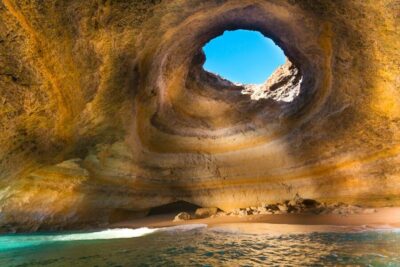
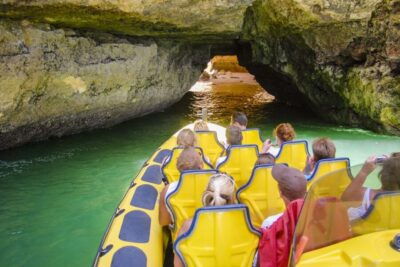
Benagil Caves & Dolphin Watching Speed Boat Tour
Read our review →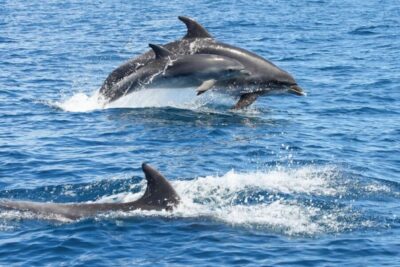
Dolphins Search and Benagil Caves from Albufeira
Read our review →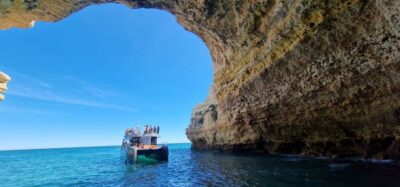
Coastline and Benagil Caves Tour by Catamaran
Read our review →