
Reviewed · CYCLING TOURS
Private e-Bike Tour in Porto – Explore Riverside, Beaches & Parks
Porto’s best e-bike route leaves the steep old center behind and follows the Douro River to the Atlantic coast. In three hours, you cover Miragaia, Foz, Matosinhos, broad city parks, and the riverfront squares that would take much longer on foot.
I like two things here: the electric assistance takes the sting out of Porto’s hills, and the route shows you a quieter, more open side of the city. Guides such as Eduardo, Felipe, Helio, and Emanuel add local stories about the river, bridges, neighborhoods, and food.
The trade-off is that this is not a calm pedal through empty lanes. You may share paths with walkers, cars, scooters, and trams, and the final approach to Dom Luís I Bridge can feel crowded and steep. Confident city cyclists will get the most from it.
In This Review
- Key points before you book
- Why this route works so well in Porto
- Miragaia and the old riverfront
- Massarelos and the Arrábida Bridge
- Cantareira, Passeio Alegre, and the river mouth
- Fortresses and the Atlantic edge
- Matosinhos Beach and Porto City Park
- Pasteleira and the return along the Douro
- Dom Luís I Bridge and the trickiest riding
- Guides, group size, and the private format
- Is the cycling difficult?
- Weather, timing, and value
- Should you book this Porto e-bike tour?
- FAQ
- How long is the private e-bike tour in Porto?
- Where does the tour start?
- What is included in the price?
- Does the tour include hotel pickup?
- Is the tour private?
- Can young children join the tour?
- What happens if the weather is poor?
Key points before you book
- The route reaches the Atlantic: Ride from Miragaia and Massarelos through Foz, past the Felgueiras Lighthouse, and on to Matosinhos Beach.
- Most of the ride is fairly flat: The e-bike helps on the few hills, though traffic and crowded paths require attention.
- You see more than Porto’s postcard center: Parks, fishing areas, beaches, fortresses, and modern waterfront spaces fill out the route.
- The private format gives you flexibility: Only your group participates, so the guide can adjust the pace and, when practical, the stops.
- The bikes and helmets are included: Bottled water, taxes, and a local guide are also part of the price.
- This suits active sightseers: It is a good match for anyone who wants an overview beyond the historic center and is comfortable riding in an urban setting.
Why this route works so well in Porto
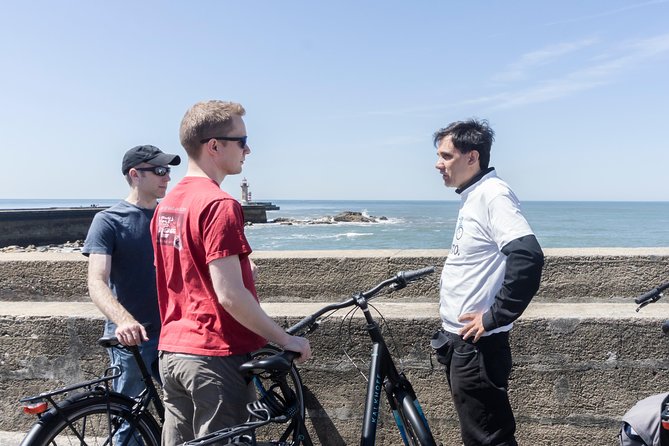
Porto is famous for its hills, tiled churches, narrow streets, and Douro views. Those sights matter, but the old center is not the whole city. The river runs west through neighborhoods that feel more spacious, leading to fishing quarters, sea walls, beaches, and parks.
That is the main value of this tour. You are not simply checking off monuments. You are connecting the historic city to the ocean and seeing how Porto changes along the way.
The e-bike matters, too. Several riders found the bikes easy to handle and appreciated the powered assistance after walking Porto’s hills. The route itself is largely gentle, but the motor gives you extra help when the road rises or your legs begin to tire.
At $71.20 per person, this is not the cheapest way to see Porto. I think the price makes sense if you value a private guide, quality equipment, and a broad route in a short time. It is less compelling if your main goal is the old town, since much of that area is better explored on foot.
More Bike Tours in Porto
- Porto: City Highlights 3-Hour Guided Electric Bike Tour
★ 4.8 · 3,092 reviews - Porto: 3-Hour Old Town & Riverside Bike Tour – Guided Experience
★ 5.0 · 481 reviews - Porto: Riverside Panoramic E-Bike Tour
★ 4.6 · 312 reviews
Miragaia and the old riverfront
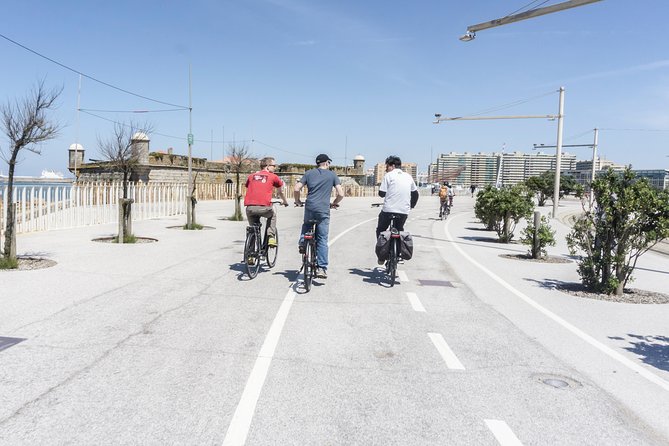
The tour begins at Biclas & Triclas, at Rua Nova da Alfândega 108, near the riverfront. From there, you enter Miragaia, one of Porto’s most appealing waterside districts.
Miragaia is known for cobbled streets, old villas, and small restaurants serving Portuguese food. It feels more intimate than the grand squares farther uphill. I like this opening because it gives you a quick sense of Porto’s working river past before the ride moves into wider spaces.
You do not spend long here, so treat it as an orientation stop rather than a full neighborhood visit. The cobbles also mean you should settle into the bike carefully and listen to the guide’s safety instructions before picking up speed.
The route then reaches the Alfândega Porto Congress Centre. This former customs area sits on a huge platform built beside the river, replacing the old Miragaia beach. The change reshaped this part of Porto in the 19th century, and it helps explain why the waterfront looks so different from the older streets behind it.
Massarelos and the Arrábida Bridge
At Massarelos, you pass the Museu do Carro Eléctrico, Porto’s tram museum. It occupies a former thermoelectric power station beside the Douro and tells the story of the city’s electric trams.
The tour does not include museum admission, so you see it from the outside unless you return later on your own. Even so, it is a useful reminder that Porto’s transport story is closely tied to its hills, river crossings, and waterfront neighborhoods.
Next comes the Arrábida Bridge, a large concrete arch linking Porto and Vila Nova de Gaia. When it opened in 1963, its reinforced-concrete arch was the largest of its kind in the world.
This is a quick photo and explanation stop, not a long bridge visit. The scale is easiest to appreciate from below and from the river’s edge. Your guide can also help place the bridge among Porto’s several crossings, including the much more famous Dom Luís I Bridge later in the ride.
Cantareira, Passeio Alegre, and the river mouth
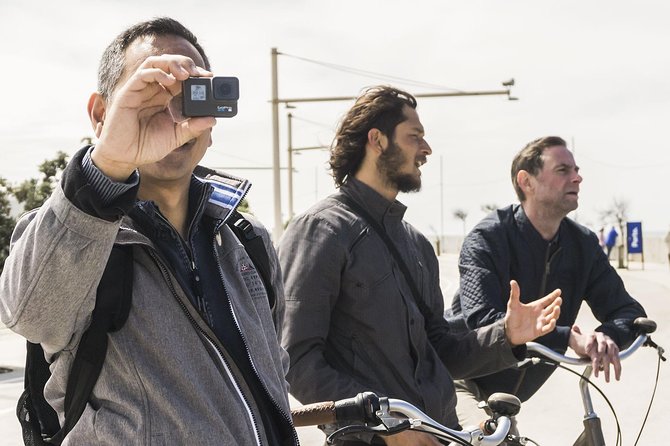
At Cantareira, the route returns to a distinctly local waterfront. The name refers to the many fountains that once supplied water to people carrying pitchers. The area has also long been linked to river fishermen, and small boats and fishing equipment still shape the view.
Across the Douro, you can see Afurada and Cabedelo near the river mouth. This is one of the places where the tour feels less like a standard city ride and more like a look at Porto’s everyday relationship with the water.
From Cantareira, you continue toward Jardim do Passeio Alegre in Foz do Douro. This public garden sits near several protected monuments and offers a pleasant pause among the river, trees, and old waterfront architecture.
Foz is one of Porto’s more polished districts, but the ride keeps you close to the water. You get a change of mood without losing the thread of the river route.
More rides around Porto:
- Porto: Highlights in 3 Hours E-Bike Tour
★ 4.9 · 290 reviews - Porto: 3-Hour Bike Tour
★ 4.8 · 260 reviews - Experience Porto by Bike: 3-Hour Private Tour
★ 5.0 · 212 reviews - Porto Highlights in 3 Hours E-Bike Tour – Historical, Sightseeing
★ 5.0 · 166 reviews
Fortresses and the Atlantic edge
The São João Baptista da Foz Fortress occupies a strong position at the Douro’s mouth. Its purpose was to guard access to Porto from the sea and river. The stop is brief, but the location explains why this point mattered to the city’s defenses.
A little farther on, the Farolim de Felgueiras marks the end of the pier. This lighthouse is one of the route’s most memorable photo points, especially because it places you between the broad river and the open Atlantic.
The sea air is part of the appeal here. Porto’s inland streets can feel dense and steep, while the coast gives you room to breathe. In cooler, rainy, or windy weather, though, the waterfront can feel exposed. Bring a layer even if the city center feels mild.
The ride continues past the Pérgola da Foz and the beaches of Ourigo, Ingleses, and Luz. The elegant colonnade is a quick stop, while the beaches offer a different view of Porto, one shaped by sand, waves, and seaside promenades rather than granite lanes.
At Praia do Castelo do Queijo, you see a 17th-century fortress built on a rocky hill shaped, at least in local description, like a piece of cheese. Its original role was to defend the coast from pirates from North Africa.
The nickname is memorable, but the setting is the real reason to pause. The fort sits at the meeting point of city, beach, and sea, making it one of the route’s clearest examples of Porto’s coastal character.
Matosinhos Beach and Porto City Park
Matosinhos Beach is the largest beach with easy access from central Porto. Its wide golden sand and surf-friendly waves make it a popular place to see the city’s seaside side.
This is a good point to compare Porto with Matosinhos. Porto’s central riverfront feels historic and enclosed. Matosinhos feels broader, more open, and more directly tied to the Atlantic.
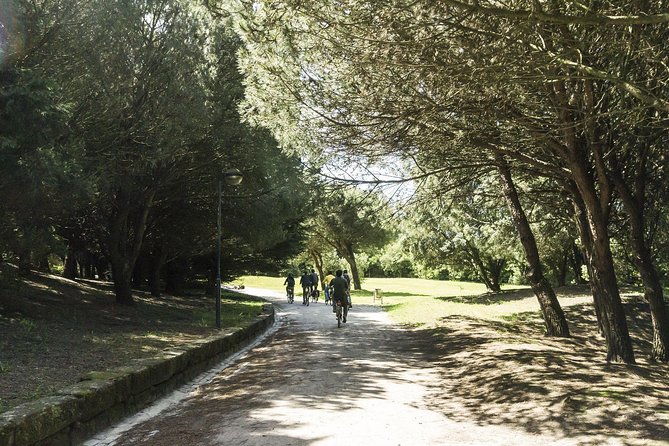
From the beach, you ride inland toward Parque da Cidade. At 83 hectares and about 10 kilometers of paths, it is the largest urban park in Portugal. The park includes lakes, plants, wildlife, and carefully planned paths woven into the city.
I especially like this section because it breaks up the waterfront riding. You move from salt air and fortifications into greenery and open space. One review praised the varied route through parks and along the coast, and that variety is exactly what makes the ride useful for first-time visitors.
Do not expect a long park walk during a three-hour tour. The listed stop is about 10 minutes, and time can shift with weather, traffic, and the pace of your group. If you want a slow visit with extended photo stops, tell your guide early.
Pasteleira and the return along the Douro
The return route passes through Parque Urbano da Pasteleira, a wooded public park split into two sections and joined by three wooden footbridges. It gives you another taste of Porto away from the main sightseeing corridors.
After that, Jardim do Cálem brings you back toward the Douro’s mouth. This small garden has river views and tall black poplars. It is a short stop, but it helps reconnect the park section with the water.
The route then heads east toward Praça da Ribeira. This old square sits beside the quay in Porto’s historic center and has been recorded in royal documents since 1389. The city’s early growth depended heavily on this riverfront commercial area.
The square also recalls the tragedy of the Ponte das Barcas, a temporary bridge where more than 4,000 people died in 1809 during an assault by French troops. A bronze relief marks the event.
You should think of Ribeira as a brief historical finish rather than a full old-town tour. The square is usually active, and pedestrians make riding more demanding. If you plan to explore Porto’s historic center, save time after the bike ride for a slow walk through the nearby streets.
Dom Luís I Bridge and the trickiest riding
The final major sight is Dom Luís I Bridge, Porto’s signature iron bridge connecting the city with Vila Nova de Gaia. It has been part of the UNESCO World Heritage area since 1996 and is one of the city’s defining views.
The bridge is impressive, but the approach can be the least enjoyable riding of the day. The area around Ribeira and the bridge is crowded, with pedestrians and other traffic competing for space. Some riders found the final stretch congested and steep, and felt it was better seen on foot.
That criticism is fair. The bridge is worth seeing, but the best way to enjoy it may be to pause, dismount when needed, and let the guide position the group safely. If you are a timid cyclist, tell the guide before the tour begins. The route is mostly easy, but Porto’s crowds do not always make for relaxed cycling.
The tour returns to the bike shop. Hotel pickup and drop-off are not included, so plan your route to Rua Nova da Alfândega 108. The meeting point is near public transport.
Guides, group size, and the private format
The guide can make a large difference on this experience. Guides named in the tour information include Eduardo, Felipe, Helio, Emanuel, Javier, Atur, Joachim, and Mirella. Their role is more than leading the turns. They explain the history of the bridges, parks, fortresses, river districts, and city traditions.
Eduardo is specifically praised for adjusting the ride for a couple, while Emanuel is noted for practical restaurant advice, including a fish area away from the most commercial tourist streets. Those details show why a private tour can be useful: you can ask about food, neighborhoods, and what to do next instead of receiving only a fixed script.
The private format means only your group participates. That does not guarantee a particular guide or unlimited changes, but it does give you a better chance to set a comfortable pace and ask for extra context.
Groups can still be sizeable when booked together. One group had eight people, and another had ten men with an average age of 60. Small groups are easier to manage than a large cycling convoy, but the ride is not a private car tour. You still need to follow the guide and watch the road.
Is the cycling difficult?
The e-bikes, helmets, and bottled water are included. The bikes have generally been described as new or well maintained, with no technical trouble reported during several rides.
The route is mostly flat, especially compared with Porto’s hillier central streets. That makes it a useful choice after a morning spent climbing around the cathedral, São Bento, or the Clérigos area.
Still, an e-bike does not remove every challenge. You may ride beside roads, tram tracks, pedestrians, and scooters. Busy paths can require quick braking and steady balance. If you rarely cycle, Porto may not feel effortless, particularly near the bridge and in crowded waterfront areas.
Children up to age five must use a child seat. The activity is described as suitable for most participants, but you should be honest about your cycling comfort when deciding. The guide can keep a slower pace, yet the traffic conditions remain part of the city.
Weather, timing, and value
The ride takes about three hours. Some stops are only two or three minutes, while the park visit is about 10 minutes. In practice, your exact stopping time depends on weather, traffic, photos, and how much conversation your group wants.
Poor weather can cancel the activity. You will then be offered another date or a full refund. This matters in Porto, where wind and rain can make the exposed coast unpleasant even when the route itself is easy.
Free cancellation is available up to 24 hours before the start time. Less than 24 hours before departure, you cannot receive a refund or make changes under the stated policy.
The tour is often booked about 27 days ahead, so I would reserve early if your Porto dates are fixed. At $71.20 per person, you are paying for the equipment, guide, water, and the ability to cover a broad section of the city in one morning or afternoon.
I see the strongest value for couples, families with older children, and active visitors who want the coast and parks without arranging bikes themselves. It is also a smart first-day activity if you want a quick sense of Porto’s geography before choosing where to return.
Should you book this Porto e-bike tour?
Book it if you want to connect Porto’s riverfront, Atlantic beaches, parks, and bridges in a single outing. The electric bikes make the distance manageable, and the local guide adds useful context that you would miss while simply following a waterfront path.
Skip it if your priority is Porto’s old churches, tiled interiors, and steep central lanes. You should also think twice if crowded urban cycling makes you nervous. The route is mostly flat, but the roads, pedestrians, scooters, and final bridge approach demand attention.
For confident cyclists, this is one of the better ways to see the parts of Porto beyond the usual center. Ask for a steady pace, speak up if you want more time in Parque da Cidade or at the coast, and treat the Dom Luís I section as a place to slow down rather than race through.
FAQ
How long is the private e-bike tour in Porto?
The tour lasts approximately three hours and ends back at the meeting point.
Where does the tour start?
It starts at Biclas & Triclas, Rua Nova da Alfândega 108 R/C, 4050-431 Porto, Portugal.
What is included in the price?
The price includes the e-bike, helmet, bottled water, local guide, and all taxes, fees, and handling charges.
Does the tour include hotel pickup?
No. Hotel pickup and drop-off are not included. You must make your own way to the meeting point, which is near public transportation.
Is the tour private?
Yes. Only your group participates in the activity.
Can young children join the tour?
Most travelers can participate, and children up to five years old must use a child seat.
What happens if the weather is poor?
The experience may be canceled in poor weather. You will be offered a different date or a full refund. Free cancellation for other reasons is available up to 24 hours before the start time.
More E-Bikes in Porto
- Porto Private E-Bike Tour: Douro River, Parks & Beaches
★ 4.7 · 104 reviews - Lisbon: Hills, Alfama, and Mouraria Tour by Electric Bike
★ 4.8 · 3,438 reviews - Lisbon E-Bike Tour Commerce Square, Mouraria and Alfama
★ 4.5 · 1,688 reviews - Lisbon: 7 Hills Half-Day Electric Bike Tour
★ 4.9 · 1,592 reviews
Recently reviewed around Porto
- Douro Valley Prime Tour: Wine Tastings, Boat & Lunch from Porto★ 5.0 · 572 reviews
- Port Wine Tour | 3 Cellars | 7 Tastings | 12 Participants Maximum★ 5.0 · 443 reviews
- PORTO city Walking Tour★ 5.0 · 132 reviews
- Private Vinho Verde Region Wine Tour from Porto Including Lunch★ 5.0 · 39 reviews
- Visit to Cockburn’s Cellars★ 5.0 · 526 reviews
- Wine Tasting with Tapas Walking Tour in Porto★ 4.5 · 544 reviews
- Porto to Lisbon with stop Aveiro-Fátima-Coimbra-Tomar-Nazaré-Óbidos★ 5.0 · 67 reviews
- 3 Hour Tuk tuk Tour in Porto★ 4.5 · 60 reviews
Cycling Tours, compared.
Hills, Alfama, and Mouraria Tour by Electric Bike
Read our review →
City Highlights 3-Hour Guided Electric Bike Tour
Read our review →
Lisbon E-Bike Tour Commerce Square, Mouraria and Alfama
Read our review →
Quad Biking – Sete Cidades from North Coast (Half Day)
Read our review →
Browse the lists this tour appears in